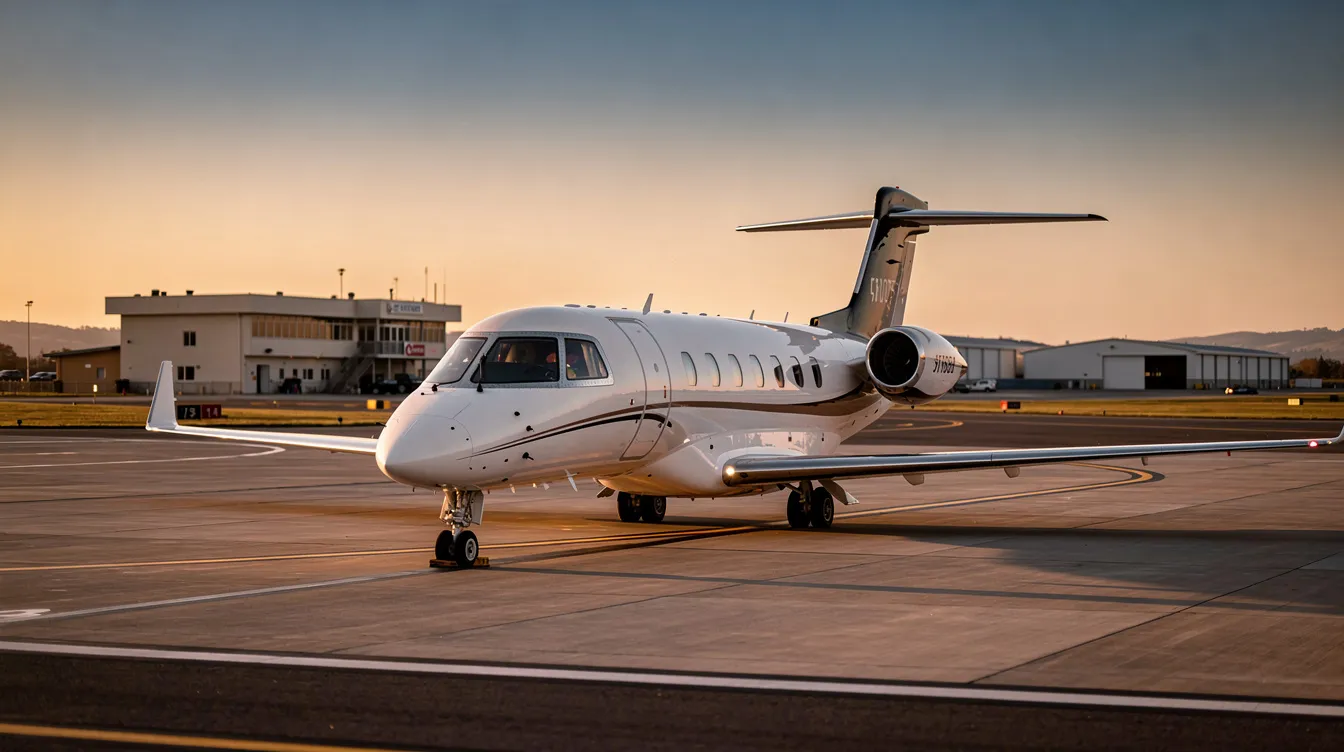
Small aircraft charter is one of the most effective ways to reclaim your time, access regional airports that commercial airlines ignore, and fly on your own schedule. For business executives and discerning travelers who need agility without the overhead of aircraft ownership, this category of private aviation represents a strategic sweet spot. Here's how it works, what it costs, and why BlackJet makes it seamless.
The Strategic Advantage of Small Aircraft Charter
Consider a common business corridor: New York to Boston. A commercial first-class ticket gets you roughly one hour of flight time, but the total door-to-door journey tells a different story. Factor in arriving 90 minutes early, navigating security lines, potential delays at JFK or LaGuardia, baggage claim, and ground transportation on both ends, and you're looking at four to five hours consumed. Private jet travel can save up to 50% of travel time compared to commercial alternatives.
Now picture the same trip via a small aircraft charter. You arrive at Teterboro (TEB) twenty minutes before departure. No lines, no boarding groups, no waiting. You land at Hanscom Field (BED), minutes from downtown Boston, roughly 90 minutes after leaving your office. That difference isn't a luxury-it's a strategic advantage.
The same calculus applies to routes like Dallas Love Field (DAL) to Houston Hobby (HOU), Los Angeles Van Nuys (VNY) to Las Vegas Henderson (HND), or London Luton (LTN) to Geneva (GVA). On each, small aircraft charter compresses what commercial airlines stretch into half-day ordeals, and the same time-saving logic scales up for large group private jet charters of around 100 passengers or dedicated private jets for 50 passengers when events or corporate movements require bigger aircraft.
Renting an entire aircraft for charter is fundamentally different from purchasing individual seats on a commercial flight. You control the departure time, the airport pair, the passenger list, and the pace. For groups of two to six passengers flying regional trips under 1,500 nautical miles, this is often the most efficient entry point into private jet charter services.
BlackJet's Jet Card model, available in 25-hour and 50-hour blocks, lets you lock in predictable charter costs on light jet and turboprop aircraft without owning a plane. For frequent flyers, understanding how 50-hour Jet Card pricing and value compare across providers helps contextualize where BlackJet fits in the broader market. Three pillars run through every BlackJet journey: rigorous safety through operator vetting and third-party audits designed to exceed broader industry standards, technology that delivers real-time aircraft availability and instant pricing, and sustainability through carbon-neutral charter flights.
Travelers can skip long lines at check-in and boarding with private charter flights, and private jets provide a more comfortable travel experience than commercial flights across every measurable dimension.
Factor | Commercial First Class | Small Aircraft Charter |
|---|
Door-to-door time (regional) | 4–5 hours | 90 minutes–2 hours |
Airport access | Major hubs only | 7,000+ airports worldwide |
Privacy | Shared cabin | Entire aircraft |
Scheduling | Airline timetable | Your timetable |
Check-in lead time | 60–90 minutes | 15–20 minutes |
What Is Small Aircraft Charter?
Small aircraft charter refers to the private charter of light jets, turboprops, and very light jets configured for two to eight passengers on short- to mid-range routes, typically under 1,500 nautical miles. These missions include same-day business flights, weekend leisure hops, and access to smaller airports that sit closer to your actual destination than any major hub.
The distinction from larger private jets is straightforward. Midsize, super-midsize, and heavy jets offer greater cabin volume, longer range (often 2,000 to 4,000+ nautical miles), full galleys, and more amenities. Small charter aircraft trade some of that cabin space for nimbleness, lower operating cost, and the ability to operate into airports that larger jets simply cannot reach. Private jet charters allow access to more airports than commercial airlines, and private jets offer access to over 7,000 airports worldwide, many of them only accessible by smaller airframes.
Real-world examples: a CEO charters a Phenom 100 (very light jet) for a 90-minute hop from Chicago Midway to Indianapolis. A management team books a King Air 350 (turboprop) to reach a manufacturing site with a 3,500-foot runway. A family takes a Citation Mustang from Scottsdale to Cabo for a long weekend. Each scenario matches a specific aircraft to a specific mission.
On the regulatory side, operators of small aircraft must hold a current FAA Part 135 Certificate for safety. FAR Part 135 governs commercial charter operations for safety, mandating qualification requirements for pilots, maintenance intervals, insurance coverage, and operational control procedures. Internationally, equivalent standards apply through EASA and IS-BAO certification frameworks. BlackJet uses a vetted network of operators so customers get small aircraft convenience with the safety oversight typically associated with larger private charter operations.
Very Light Jet vs Light Jet vs Turboprop:
Very light jets (e.g., Citation Mustang, Phenom 100): 3–4 passengers typical, range around 1,000–1,200 nm, minimal amenities, ideal for hops under two hours
Light jets (e.g., Phenom 300, Citation CJ3+): 6–8 passengers, range up to 2,000 nm, enclosed lavatory, better baggage capacity, suited for regional flights up to three to four hours
Turboprops (e.g., King Air 250/350, Pilatus PC-12): 6–9 passengers, shorter range but superior short-runway performance, lower fuel burn, excellent for remote airfields and mountain destinations
Key Aircraft Types for Small Charter Missions
The aircraft type you select defines your charter pricing, cabin comfort, and mission range. BlackJet's Jet Card programs cover multiple cabin classes, giving members the flexibility to choose the right aircraft for each trip rather than being locked into a single category.
Here are the most commonly chartered small aircraft, grouped by type:
Embraer Phenom 300E - A leading light jet carrying 6–8 passengers. The Embraer Phenom 300E has a range of 2,010 nautical miles, making it capable of nonstop flights from New York to Miami or Dallas to Denver. Wi-Fi, an enclosed lavatory, and generous baggage capacity come standard on most configurations.
Cessna Citation CJ3+ - Another popular light jet with 6–7 passenger seating, strong short-field performance, and a comfortable cabin for flights up to three hours. Often available on high-demand corridors like LA to Vegas or Miami to Nassau.
Cessna Citation Latitude - Sitting at the upper edge of the light/midsize boundary, the Cessna Citation Latitude has a range of 2,700 nautical miles and a flat-floor cabin that offers a step up in comfort for longer regional missions.
Citation Mustang - A very light jet seating 4 passengers, ideal for quick business hops under 1,000 nautical miles. Lower cost per flight hour, though amenities are more modest.
Embraer Phenom 100 - Another very light jet option for 4 passengers on short regional flights, commonly used for intra-state or cross-border missions where speed matters more than cabin volume.
Beechcraft King Air 350 - The King Air 350 accommodates up to 9 passengers and accesses runways as short as 3,000 feet. A turboprop workhorse for island hops, mountain destinations, and remote industrial sites.
Pilatus PC-12 - A versatile turboprop with strong short-field capability, lower operating costs, and flexible cargo/payload configurations. Excellent for ski destinations and Caribbean routes.
Baggage space on small aircraft is limited and often subject to weight restrictions, so it's worth confirming capacity with your advisor, especially if traveling with golf clubs, ski equipment, or oversized luggage. For context on the other end of the spectrum, the Gulfstream G650 can fly up to 7,000 nautical miles nonstop, but that capability comes with heavy-jet pricing that's unnecessary for regional missions.
BlackJet's booking platform displays cabin features, baggage limits, and aircraft availability clearly so you can compare options before committing. Small jets and turboprops are typically more plentiful on high-demand corridors like Paris to Geneva or Miami to the Bahamas, though availability tightens during peak travel periods.
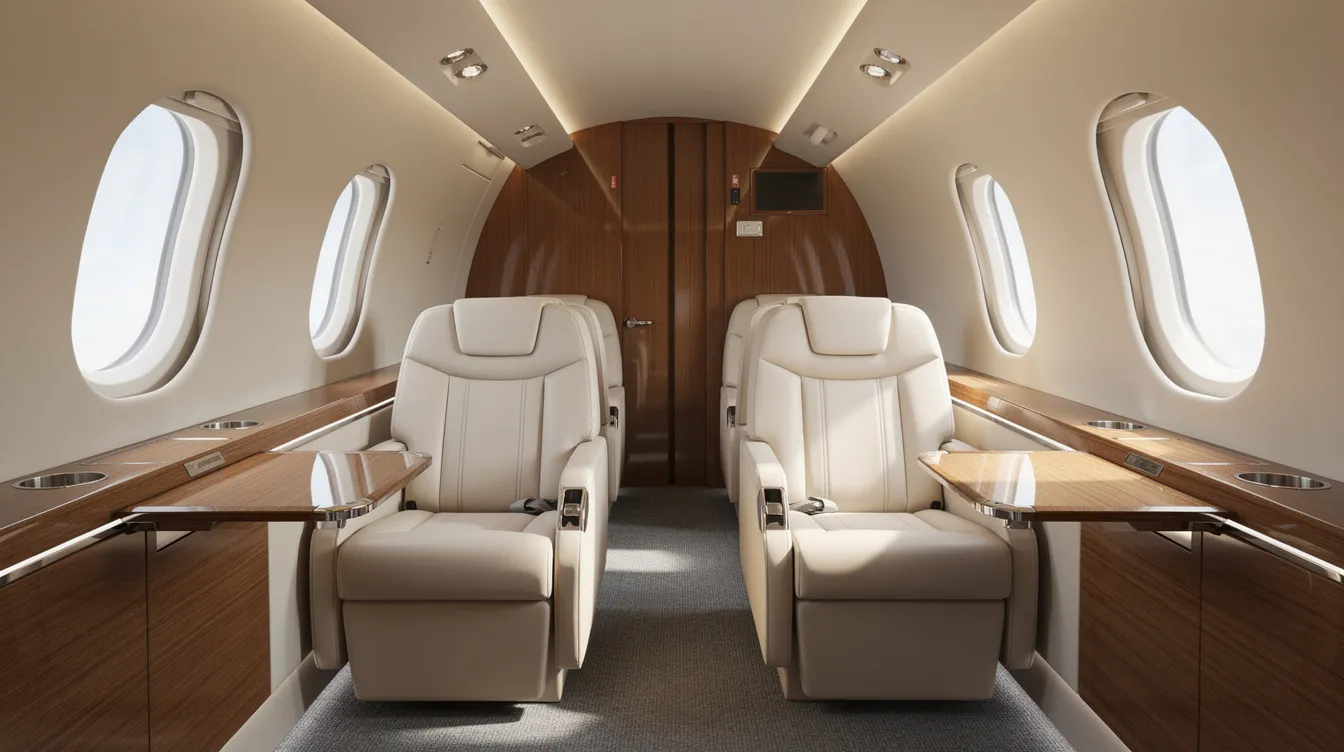
How Small Aircraft Charter Costs and Pricing Work
Charter costs for small aircraft are driven by four primary factors: the hourly rate for your aircraft type, minimum flight time requirements, repositioning distance (how far the aircraft must fly to reach your departure airport), and whether you're traveling during peak or off-peak demand windows. Understanding these mechanics helps you evaluate quotes accurately and avoid hidden fees.
Here are indicative hourly rate ranges for common small charter aircraft:
Turboprops (PC-12, King Air 250): Charter rates typically start around $2,000 per hour for turboprops, with all-in pricing in Jet Card programs reaching $3,000–$4,000 per hour depending on inclusions
Very light jets (Citation Mustang, Phenom 100): approximately $2,500–$3,500 per hour on base charters, higher in inclusive programs
Light jets (Phenom 300, CJ3+): roughly $3,500–$5,000 per hour for regional missions; pricing varies by program and season
For comparison, mid-sized jets start at approximately $7,000 per hour, and ultra-long-range jets can cost $12,000 per hour, underscoring why small aircraft make economic sense for shorter routes when you weigh the true value of chartering a private jet against commercial alternatives.
Key pricing concepts every charter buyer should understand:
Daily minimum flight time: Many operators impose a 1–2 hour minimum even for a 45-minute hop. A short flight doesn't always mean a small bill.
Repositioning and empty leg flights: If the aircraft must fly empty to your departure point, that cost may be built into your quote. Conversely, empty leg flights offer significant discounts on standard charters when you can match an aircraft's repositioning route.
All-inclusive vs. plus-fees pricing: Confirm whether your quote covers fuel, crew, landing fees, handling, and Federal Excise Tax (7.5% in the U.S.), or whether these appear as add-ons. Airport fees, crew overnights, and de-icing charges can add up quickly.
Peak surcharges: Charter costs fluctuate on peak travel days, and additional fees may apply during holidays, major sporting events, and summer weekends.
BlackJet's Jet Card approach simplifies this: prepaid 25- or 50-hour blocks lock in fixed hourly rates with transparent pricing that includes fuel, taxes, and carbon offsets. No surprise surcharges. Members see instant pricing estimates via BlackJet's digital tools before committing, making it easy to compare small aircraft versus midsize jets on any given route, and those needing access beyond small aircraft can leverage the BlackJet 25+ Hour Jet Card for mid, super-mid, and large cabin solutions. Cabins in private jets can be customized with personalized amenities, and your Jet Card advisor can help arrange catering, ground transport, and special configurations.
Cost Driver Checklist Before Signing:
Is the quoted price all-inclusive or base-rate-plus-fees?
What is the minimum flight time billed?
Where is the aircraft positioned, and is repositioning included?
Are peak-day surcharges possible on your travel date?
What are the cancellation and change fees?
Does the program include membership fees or initiation costs?
Scheduling, Aircraft Availability, Routes, and Operational Limits
One of the defining advantages of small aircraft charter is flexible scheduling. You depart on time, notable-not the airline's. Early morning takeoffs, late evening returns, and same-day adjustments are all standard when operationally possible. Chartering a private jet allows for flexible scheduling and last-minute trips, and charter flights can often be arranged within three hours when aircraft are positioned nearby.
Concrete route examples:
NYC (TEB) to Washington D.C. (IAD): Depart Teterboro at 7:00 AM in a light jet, land at Dulles or a smaller field like Manassas (HEF) by 8:00 AM, attend a full day of meetings, and return by 8:00 PM. Charters allow efficient same-day travel to locations, something commercial schedules make nearly impossible without an overnight stay.
Los Angeles (VNY) to Las Vegas (HND): Friday evening departure for four passengers in a very light jet. Fifty minutes of flight time, no TSA lines, no terminal crowds. Private charter travelers can access thousands of smaller regional airports, including Henderson Executive, which sits closer to the Strip than McCarran.
London (LTN) to Courchevel via Chambéry: Winter flight using a turboprop for mountain access. Turboprops handle shorter, higher-altitude runways that jets cannot, making them the right choice for ski destinations across the Alps.
Operational constraints to keep in mind:
Weather sensitivity: Lighter airframes, especially very light jets and turboprops, are more affected by icing, strong crosswinds, and turbulence. Light jets fly higher (35,000–45,000 feet) and can navigate above many weather systems; turboprops typically operate at 25,000–31,000 feet.
Runway length: Turboprops and VLJs excel at shorter strips. The PC-12 can operate from runways as short as 2,500 feet. Light jets generally need longer runways depending on weight and altitude.
Crew duty time: Regulations cap pilot duty days at roughly 14 hours. Multi-leg itineraries may require crew overnight stays or scheduling adjustments.
Fuel stops: Flights that push an aircraft's maximum range may require a fuel stop, typically adding 30–40 minutes. These are planned and factored into your itinerary.
BlackJet's 24/7 support team and trip-planning tools optimize routings, fuel stops, and airport selection automatically. Their operations team handles disruption management-weather reroutes, ATC delays, alternate airport selection-so you focus on your schedule, not logistics.
What to confirm before your charter flight:
Departure and arrival airports (runway length, distance to final destination)
Aircraft origin and whether repositioning is required
Crew duty times and any overnight plans
Whether the flight is nonstop or requires a fuel stop
Weather contingencies and alternate airports
Full quote including all fees
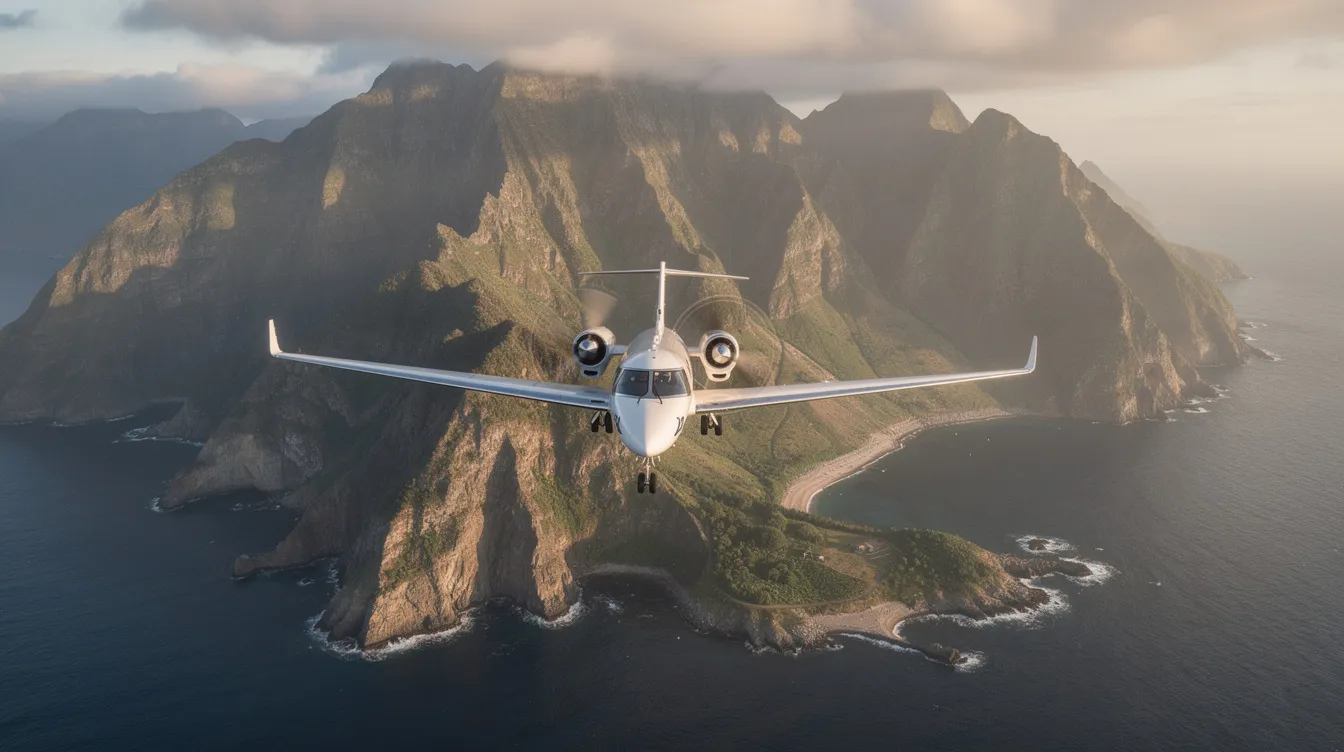
Safety, Sustainability, and Technology with BlackJet
Safety
Small aircraft charter must meet the same uncompromising safety expectations as any segment of private air travel. Whether you're boarding a turboprop or a very light jet, the operator, the crew, and the aircraft should be held to standards that exceed regulatory minimums.
Operators must adhere to strict pilot qualifications under FAR Part 135, the legal baseline for any paid charter flight in the United States. But baseline compliance is only the starting point. Third-party audit programs provide independent verification: ARGUS Platinum designation indicates high safety standards for charter services, while IS-BAO Stage 3 is a recognized safety designation for operators who have implemented a mature safety management system. Airshare, for example, is an FAA Part 145 Repair Station ensuring maintenance safety across its fleet. Private aviation enhances privacy and productivity during flights, and private jet charters provide an environment for confidential business meetings, but none of that matters if the safety foundation isn't rock solid.
BlackJet's proprietary vetting process reviews every aircraft and crew in its network, not just the operator certificate. This includes pilot flight-hour minimums, recurrent training records, maintenance logs, aircraft age, and accident-incident history. Two-pilot operations are standard on all jet charter services within the network.
Sustainability
On sustainability, BlackJet takes a measurable approach. Every Jet Card flight is carbon neutral via verified carbon offsets, at no additional cost to the member. Where available, integration of Sustainable Aviation Fuel (SAF) on select routes is targeted for expanded adoption through 2026. Members can view sustainability metrics directly in their account dashboard for full transparency on their environmental footprint.
Technology
Technology ties everything together. BlackJet's platform offers mobile and web booking with real-time aircraft availability for small jets and turboprops, instant pricing estimates per mission profile, and live flight support with proactive disruption management for weather and ATC delays.
Three pillars of the BlackJet experience:
Safety: Vetted operators with ARGUS/IS-BAO/Wyvern-level audits; two-pilot jet operations; strict maintenance and pilot qualification standards; ongoing certification checks
Sustainability: Carbon-neutral flights as standard; SAF integration where supply allows; transparent emissions reporting in member dashboards
Technology: Instant booking and pricing; real-time fleet availability; live flight monitoring and disruption management; digital tools for route optimization
Jet Cards vs On-Demand Small Aircraft Charter
Many travelers begin with on-demand charter flights for small aircraft-booking trips by trip, paying market rates, testing routes and aircraft types. Once they understand their annual flying pattern, the conversation naturally shifts to Jet Cards.
Over 20,000 unique aircraft are available for charter globally through networks like Jettly, which offers access to over 20,000 aircraft globally. On-demand charter gives you access to that diverse fleet without long-term commitments or upfront deposits, making it easier to match aircraft options to specific travel needs. But prices fluctuate with demand and repositioning, making budgeting unpredictable.
A Jet Card changes the equation. BlackJet's programs offer fixed hourly rates, guaranteed access within a set notice period (typically 24–72 hours), and priority scheduling during peak seasons-Christmas, major sporting events, summer weekends. For a client flying from New York to Chicago 20 times per year on a light jet, a 25-hour Jet Card stabilizes annual charter costs and eliminates the pricing volatility that comes with spot-market booking.
Feature | On-Demand Charter | Jet Card Program |
|---|
Pricing | Rates shift with demand, fuel, and repositioning | Fixed at purchase |
Commitment | No deposit required | Prepaid hour blocks (25 or 50 hours) |
Availability | Subject to market supply | Guaranteed within defined notice windows |
Peak access | May face high costs or limited inventory during holidays | Priority scheduling for members |
Flexibility | Choose any aircraft per trip | Defined cabin categories with upgrade options |
Administration | Separate invoices per trip | Centralized billing, reporting, and carbon accounting |
For travelers who fly fewer than 25 hours annually, on-demand charter almost always makes more economic sense. Beyond that threshold, the predictability, greater flexibility, and guaranteed access of a Jet Card program begin to deliver clear value, especially when you compare the best Jet Cards for frequent flyers on benefits and costs
Use Cases: When Small Aircraft Charter Makes the Most Sense
Small aircraft excel in scenarios where speed, proximity to destination, and privacy outperform both commercial airlines and larger private jets. Here are three real-world scenarios where the economics and logistics align perfectly.
Executive Day Trip: Dallas to Midland
A CEO based in Dallas needs to visit an oil-field operation in Midland (MAF), attend three meetings, and return home the same night. Commercial options require an early-morning connection or a flight schedule that forces an overnight stay. Instead, the CEO departs Dallas Love Field (DAL) at 6:30 AM in a light jet, lands in Midland by 7:45 AM, completes a full day of business, and is wheels-up by 6:00 PM for a return home by dinner. Time saved: roughly five hours. Meetings added: at least one. No hotel bill.
Leisure Weekend: Miami to the Bahamas
A family of four charters a Pilatus PC-12 from Opa-locka (OPF) to Marsh Harbor (MYAM) in the Abacos. They're bringing two dogs, fishing rods, and dive gear. Charter flights often allow pets to travel comfortably in the cabin-no cargo hold, no carrier anxiety. The turboprop handles Marsh Harbor's shorter runway with ease, and the family avoids the two-connection commercial routing through Nassau. Door-to-door: under three hours, gear included. Personalized service from departure to arrival.
Event Travel: London to Monaco
A small corporate team flies from Farnborough (EGLF) to Nice (LFMN) for the Monaco Grand Prix. Commercial traffic into Nice during race week is a controlled disaster: delays, overbooked flights, and gridlocked ground transfers. A light jet delivers the team directly, on schedule, with time to spare. The global network of charter options means aircraft are frequently available on popular event routes.
In each case, small aircraft charter serves as a cost-efficient alternative to owning a small jet. Once you account for hangar fees, crew salaries, maintenance, insurance, and depreciation, fractional ownership or full ownership often costs two to three times what a well-structured Jet Card delivers for the same number of flight hours. For travelers exploring the cheapest private aircraft options or wondering what the cheapest private jet choices are for entry into private aviation, on-demand small aircraft charter and Jet Cards frequently provide a smarter access model. And when your trip profile changes-a longer route, a larger group-BlackJet can seamlessly upgrade travelers from small aircraft to midsize or large cabins.
Frequently Asked Questions About Small Aircraft Charter
Can I charter very small planes like a Cessna 172?
Part 135-certified piston singles do exist, but they're rare in the charter services market due to payload limitations, weather sensitivity, and cabin comfort constraints. Most BlackJet missions use turboprops or jets to meet the safety, comfort, and payload expectations of private air travel.
What is the shortest charter flight I can take?
Operationally, there's no strict minimum distance; flights under one hour are common. However, billing minimums typically apply (1–2 flight hours), and repositioning fees can dominate cost on very short legs. Your advisor will help you determine whether a short hop makes practical sense.
What is the longest flight suitable for a light jet?
Most light jets fly nonstop up to 1,500–2,000 nautical miles, depending on payload and weather. Beyond that range, a fuel stop of 30–40 minutes may be planned. For missions requiring global reach, midsize or heavy jets are more appropriate.
How many people can fly on a small charter aircraft?
Very light jets seat 3–4 passengers comfortably. Most light jets carry 6–8 passengers. Popular turboprops accommodate up to 9. Exceeding these limits impacts baggage capacity and payload.
Can I bring my pet?
Yes. Many charter aircraft are pet-friendly. BlackJet confirms pet policies and any cleaning fees upfront, so there are no surprises. Your pet travels in the cabin with you-never in a cargo hold.
What in-flight amenities can I expect?
Many light jets offer Wi-Fi, snack and beverage service, and an enclosed lavatory. Very light jets have more modest amenities-lavatories may be basic, Wi-Fi optional. Turboprop cabins are increasingly well-appointed but tend to have higher cabin noise levels.
How is my personal information protected?
BlackJet handles passenger details, itineraries, and payment data with strict confidentiality protocols. Secure payment systems, minimal exposure of tail numbers and routes, and non-disclosure practices protect the privacy that private flight clients expect.
What's the difference between a charter and an air taxi?
Air taxis generally refer to shorter, on-demand private flights-often using very light jets or turboprops on regional routes. Charter is the broader term covering any private flight on a dedicated aircraft. In practice, the terms overlap significantly for small aircraft missions, and both operate under the same FAA Part 135 regulations via operators holding a valid air carrier certificate.
How to Book a Small Aircraft Charter with BlackJet
Booking with BlackJet is designed to be as streamlined as the flight itself. Whether you use the digital platform or speak with a dedicated flight advisor, the process follows four simple steps, and charter rights can be booked 24/7 online.
Share your mission profile: Provide your route (origin and destination airports), travel date, passenger count, and any special requirements-luggage volume, pets, children, catering preferences, or ground transportation needs. Example: NYC Teterboro to Nantucket in August for 4 passengers with golf clubs.
Receive tailored charter options: BlackJet presents aircraft options across very light jets, light jets, and turboprops with instant pricing or near-instant quotes. You'll see flight times, aircraft types, cabin features, and total cost side by side so you can search for and select the right fit.
Confirm schedule and extras: Select your preferred departure time, catering, and any special requests. Adjustments can be made up to your program's notice window.
Secure booking and fly: Use Jet Card hours or arrange on-demand payment. Receive a detailed itinerary with aircraft information, crew details, and expected departure and arrival times. BlackJet's operations team coordinates ground transportation, monitors your flight in real time, and manages any last-minute changes.
Jet Card members can often secure guaranteed aircraft availability within a 24–72-hour notice window on core fleet categories, providing access to private flights even during the industry's busiest travel windows.
Elevate Your Travel: Why Choose BlackJet for Small Aircraft Charter
Small aircraft charter unlocks a level of efficiency that neither commercial airlines nor larger private jets can match on regional missions: granular airport access, tailored schedules, compressed door-to-door times, and privacy that turns a flight into a productive or genuinely restful time. It is, for many travelers, the most practical and meaningful entry into private jet travel.
BlackJet brings this advantage to life through:
Jet Card programs that remove pricing uncertainty and guarantee aircraft availability across a diverse fleet of light jets, turboprops, and very light jets, with no high costs from market volatility
Rigorous, ongoing safety certification through operator vetting, third-party audits, and continuous monitoring of every pilot and aircraft in the network
Carbon-neutral flights as standard, with transparent reporting and SAF integration expanding across select routes
A technology-first platform paired with human expertise, providing access to instant booking, real-time availability, and live support that makes every journey seamless
Explore BlackJet's Jet Card options for light jets and turboprops, or speak with a BlackJet advisor to map your typical year of travel into an optimized private charter plan. When small aircraft charter is managed by the right partner, efficient and meaningful travel isn't aspirational-it's your new standard.
Elevate your travel effortlessly. Join BlackJet's Jet Card program for seamless, premium private travel with safety, sustainability, and flexibility built in.


 Sign up with google
 Sign up with Apple