
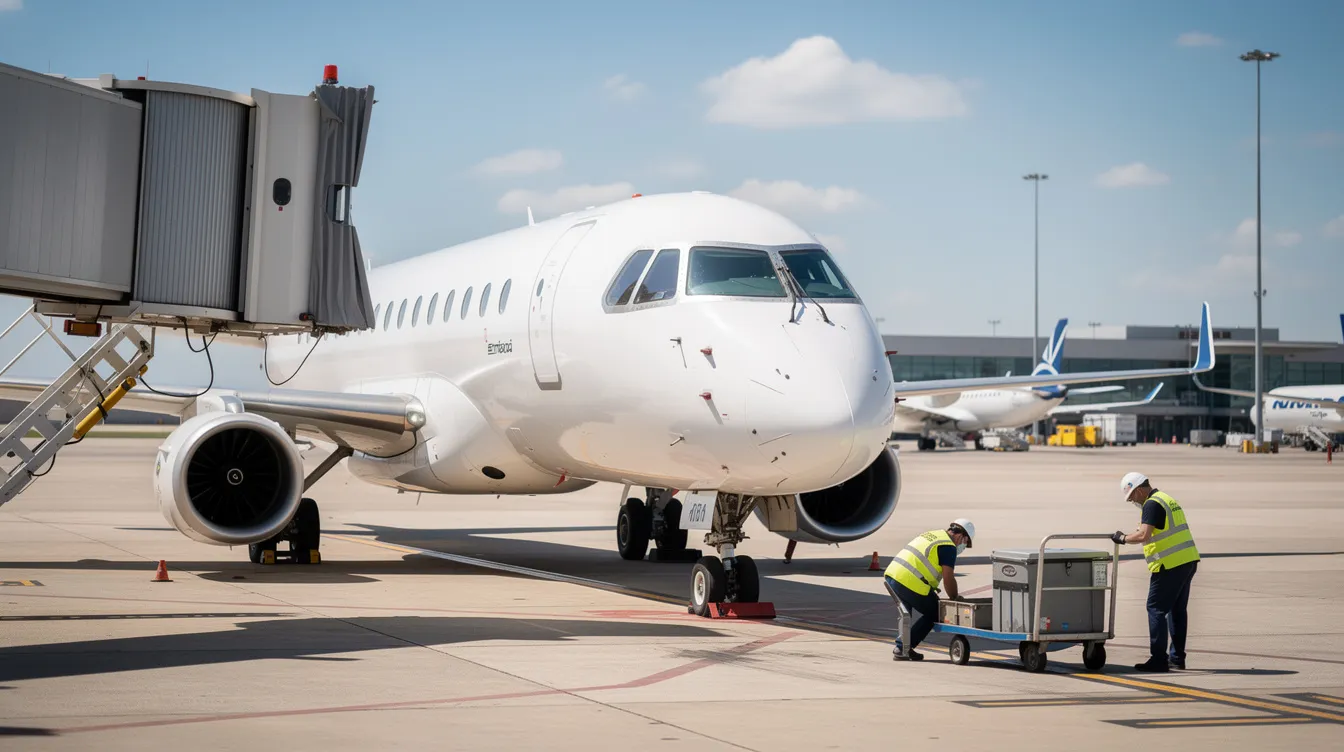
The Embraer 175 is the workhorse of U.S. regional aviation, and SkyWest Airlines flies more of them than any other carrier. If you're a frequent flyer who knows the difference between seat 2A and 8F, this guide breaks down every class, row, and trade-off on the SkyWest E175 so you can make better choices on your next booking.
Overview of the SkyWest Embraer 175 Seat Map for American Airlines
Understanding the SkyWest Embraer 175 seat map is a practical advantage for travelers who fly regional routes multiple times a month. These passengers often compare the experience of regional first class against private jet access, and the seat map is where that comparison starts.
SkyWest operates E175 jets primarily for major airlines such as Delta and United, as well as for American Airlines through the American Eagle brand and for Alaska Airlines. The company flew roughly 262 Embraer 175 aircraft by the end of 2024, making it the largest E175 operator in the country. Cabin and seating layout details fluctuate depending on the major airline partner operating the flight, but the core footprint stays consistent, unlike the varied cabin experiences you’ll see when comparing Flexjet-style jet card programs and fleets.
The Embraer 175 typically seats 76 passengers in a 2-2 layout. It features a 2-2 seating configuration with no middle seats in any row, across both first and economy cabins. Some configurations can accommodate up to 88 passengers on high-density variants operated by other airlines, though SkyWest's standard setup remains at 70 or 76 seats—a sharp contrast to the broad spectrum of private jet types available for smaller, tailored groups.
A common SkyWest Embraer E175 for American Eagle breaks down like this, and it’s fundamentally different from the wide-cabin aircraft that qualify as the best private jets for 15 passengers:
Cabin | Seats | Layout | Rows |
|---|---|---|---|
First Class | 12 | 1-2 (A side solo, D/F side pair) | 1–4 |
Main Cabin Extra (extra legroom) | 20 | 2-2 | ~5–9 |
Standard Main Cabin | 44 | 2-2 | ~10–21 |
American Eagle's version has 12 First Class seats in a 1-2 layout, with the solo A-side seats offering the most privacy on the aircraft. The E175's Main Cabin typically has 61 to 64 economy seats when counting extra-legroom and standard rows together, though SkyWest's E175 configurations include extra-legroom sections that vary by airline. Alaska, for instance, offers 16 premium seats while American provides 20, still well below the capacity of large-cabin private jets built for around 20 passengers.
Every seat on the E175 is either a window or an aisle. No passenger is stuck in a middle seat. That alone makes this aircraft feel more private and less cramped than typical narrow-body jets like the Boeing 737 or Airbus A320, where roughly a third of all passengers sit in middle seats, and helps explain why some travelers graduate to private plane rideshare options once they value privacy and space even more.
While this article focuses on SkyWest's Embraer 175 seat map, BlackJet clients often fly the same regional routes and airports, with the added control, privacy, and time savings that come with chartering a private jet instead of flying commercial.
One update worth tracking: American Airlines will introduce RECARO slimline seats in 2026, and retrofits on E175 fleets are expected to roll into 2027. These thinner seat frames may allow slightly improved pitch without changing the 2-2 cabin footprint that defines the aircraft.
Cabin Layout by Class: Best and Worst Seats on the SkyWest E175
This section is a seat-by-seat guide for choosing the best position on a SkyWest Embraer 175. Whether you're optimizing for legroom, quiet, or a fast exit at your destination, the specifics matter.
First Class (rows 1–4)
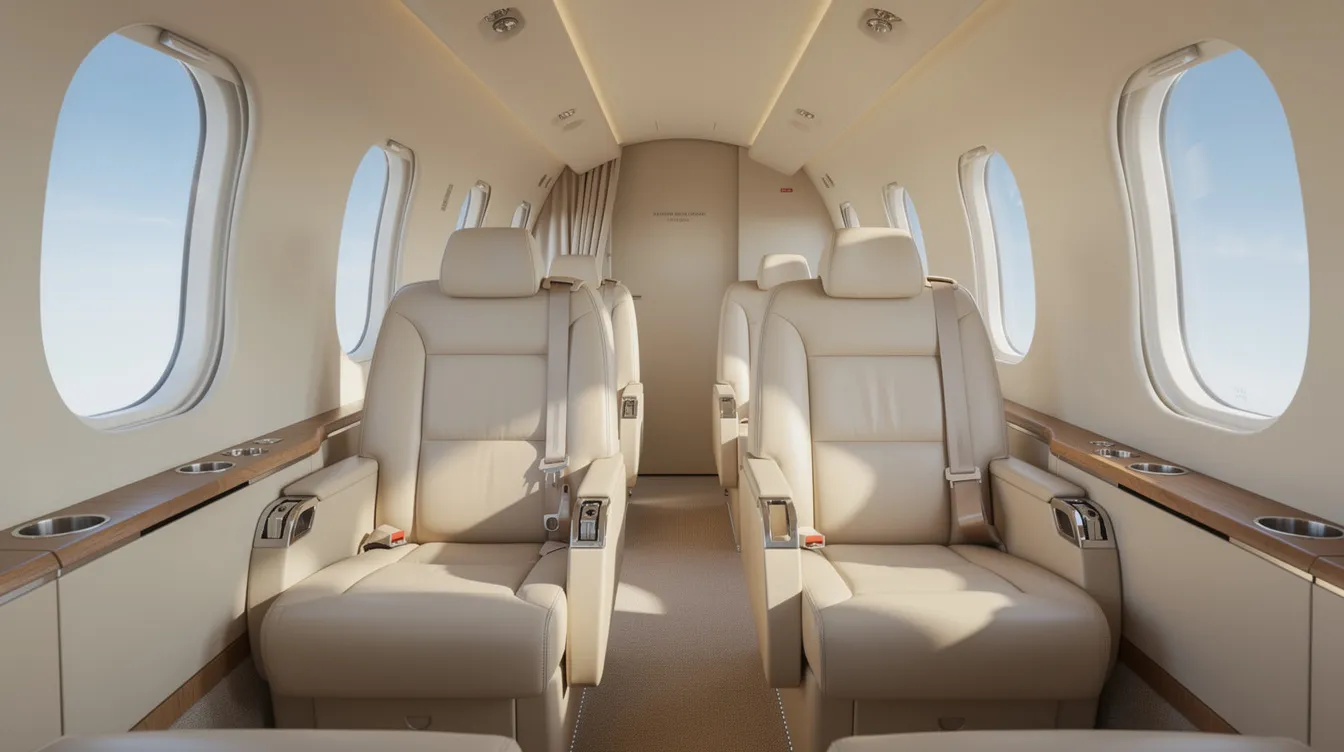
First class holds 12 seats in a 1-2 layout. On the left (A) side, each row has a single seat with no neighbor. On the right (D/F) side, each row has a pair. The solo A-side seats, specifically 1A, 2A, 3A, and 4A, are the top picks for business travelers and executives who want to work without someone reading their screen.
Comfort metrics in first class:
These dimensions are wider and more generous in pitch than many domestic mainline narrow-body first class cabins, where seats often measure 18 to 19 inches wide.
The cabin features big windows and a quiet environment, particularly in first class where engine noise is lowest because commercial jets cruise lower than many private aircraft that fly at higher altitudes. That said, row 1 has a trade-off: the bulkhead wall ahead limits flexible leg positioning, and under-seat storage is restricted during takeoff and landing. Rows 2 and 3 on the A side tend to be the most popular for repeat flyers who know the layout.
Main Cabin Extra / Extra-Legroom Rows
Extra-legroom economy seats vary in count but typically offer more space compared to standard economy. On many SkyWest-configured E175s, these rows sit immediately behind first class, often around rows 8 through 12, yet they still can’t match the space and amenities of 16-seat large-cabin private jets.
Key details for extra-legroom rows:
Pitch: approximately 34 to 35 inches
Width: approximately 18.2 to 18.3 inches
Layout: 2-2 with no middle seats
Passengers praise the extra legroom in row 8. Seats 8A and 8F in particular are frequently singled out as the sweet spot: enough pitch to stretch, under-seat storage for a laptop bag, and no bulkhead wall restricting foot placement. These are popular with taller travelers and anyone who prefers not to pay the first class premium.
Overhead bin space on the E175 is relatively limited compared to larger aircraft. In extra-legroom rows, bins fill fast because first class passengers board first and often stow bags above these rows. On business-heavy flights, expect to gate-check a roller bag if you board in the later groups, which leads some frequent travelers to explore buying a single seat on a private jet when timing and baggage are critical.
Power outlet availability on the E175 varies by airline and cabin class. On some Delta Connection flights, every seat includes a power port; on certain United Express configurations, outlets may be limited to first class. SkyWest E175 aircraft feature Wi-Fi and streaming entertainment to personal devices, though the quality depends on the airline partner's platform.
Standard Main Cabin (rows ~10–21)
Standard economy typically consists of 26 to 48 seats arranged in a 2-2 layout, depending on the partner airline's configuration. On the common 76-seat SkyWest E175, that number is 44 standard main cabin seats, a far cry from the very light jets and turboprops discussed among the most affordable private jet options.
Pitch: approximately 30 to 31 inches
Width: approximately 18 to 18.25 inches
Recline: 3 to 4 inches
The 2-2 layout with no middle seats makes even economy on the E175 feel less cramped than 3-3 narrow-body jets. Mid-cabin rows (around 13–17) tend to be the calmest in terms of noise, with reasonable overhead bin access.
Two lavatories are typically located on E175 aircraft, one forward and one rear. That rear lavatory creates specific problems for the last rows.
Problem Seats and Trade-Offs
Not all seats on the SkyWest Embraer 175 seat map are equal. Known issues, based on consistent traveler feedback, become even more noticeable when compared with private jet layouts that can accommodate 30 passengers in comfort:
Last-row recline: Seats in rows 20 and 21 may have limited or zero recline because the seatback meets the rear galley bulkhead.
Vibration: Rear rows sit closer to the engines and experience more turbulence sensation during cruise and landing.
Misaligned windows: Certain mid-cabin window positions (particularly around rows 14–16 on some configurations) place the passenger next to a wall panel instead of a window opening.
Rear overhead bins: Equipment brackets and structural elements can reduce usable bin space in the final three rows.
Galley and lavatory noise: Row 1 (forward galley) and rows 20–21 (rear galley and lavatory) bear the most crew activity and foot traffic.
Where to Sit Based on Your Priority
Priority | Best Seats | Why |
|---|---|---|
Privacy and quiet | 2A or 3A (First Class) | Solo seat, away from both galleys and lavatories |
Fast exit for tight connections | 8D or 8F (Main Cabin Extra) | Close to the boarding door, aisle access |
Legroom without first-class price | 8A or 8F | 34-inch pitch, no bulkhead restriction |
Family seating | Mid-cabin rows 13–16 | Aligned windows, balanced bin and restroom access |
Budget with least discomfort | Rows 11–14, any seat | Avoids rear vibration and forward galley noise |
How This Compares to Flying Privately
While the SkyWest E175 is efficient and reasonably comfortable for regional routes, BlackJet's jet card members avoid crowded terminals, boarding queues, and overhead bin limitations entirely. Consider a same-day round-trip between Dallas and Aspen: on a commercial itinerary, that trip requires a connection through Denver or Phoenix, adding three to four hours of transit time each way. A BlackJet client departs from a private terminal, flies point-to-point, and returns home the same evening with hours to spare.
Comparing SkyWest's E175 to Private Jet Travel with BlackJet
The SkyWest Embraer 175 is one of the most comfortable regional jets flying U.S. domestic routes. Its 2-2 layout, relatively large windows, and quiet cabin put it ahead of older regional aircraft like the CRJ-200 or ERJ-145. Still, regional first class and private jet access occupy different categories of travel, with very different economics when you look at how much it costs to rent a private jet.
Time and Schedule Control
E175 first class passengers still arrive 60 to 90 minutes before departure to clear security, board, and wait for pushback. A private jet departure through a fixed-base operator (FBO) requires 20 to 30 minutes of lead time, with no TSA lines and no boarding groups, and can be made more accessible by using strategies for flying private at lower cost.
SkyWest flights depend on airline schedules, hub connections, and partner inventory. A delay on one leg cascades into missed connections and rebooking queues. With BlackJet's Jet Card, travelers pre-purchase flight hours across multiple cabin categories and can fly point-to-point, bypassing major hubs and regional connectors entirely. For buyers comparing different membership structures, a separate guide breaks down Jet Card membership pricing and cost factors. If a meeting in Boise runs long, the departure time adjusts. That flexibility does not exist on a commercial itinerary.
Safety and Reliability
SkyWest and American Airlines operate under FAA Part 121 regulations and maintain strong safety records across thousands of daily flights. That regulatory framework is rigorous and well-documented.
BlackJet applies additional vetting layers on top of regulatory minimums. Every operator in BlackJet's network undergoes proprietary safety audits aligned with ARGUS and IS-BAO standards, reflecting industry data on how safe private jets are relative to other air travel. Crews and aircraft are curated for each trip rather than assigned through rotation schedules. If an issue arises mid-journey, such as a mechanical delay or weather diversion, BlackJet's real-time support team reroutes the client based on their schedule, not the airline's network optimization.
Comfort and Cabin Experience
The E175 delivers respectable comfort for a regional jet. First class pitch of 37 inches and 20-inch-wide seats are competitive with many mainline domestic products. Passengers still share the cabin with 70 to 80 others and must comply with published baggage rules and bin limitations.
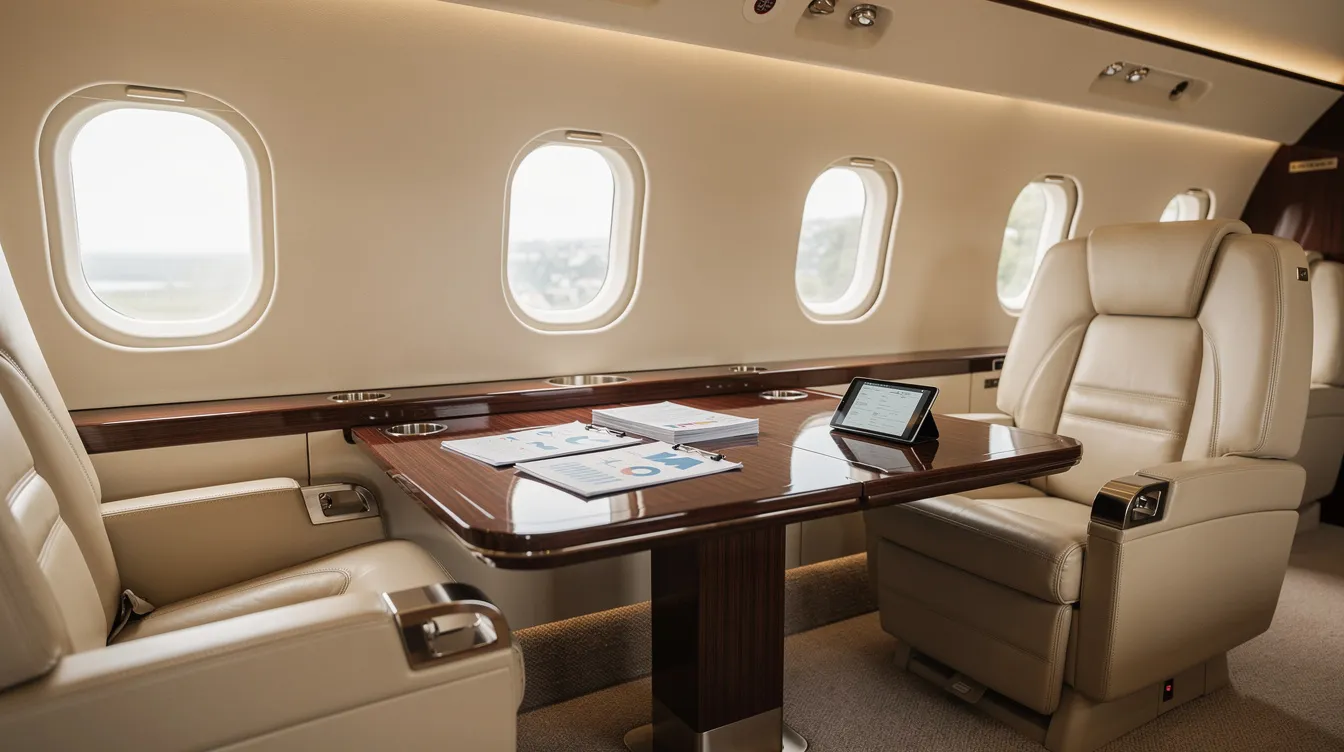
On a private jet, cabin layout is configured to the mission: meeting setup for a working flight, lounge configuration for leisure, or a mix of both. Catering is fully bespoke. There are no constraints on recline, laptop space, or personal items imposed by fellow passengers, because there are no fellow passengers—and travelers can choose from different private jet sizes tailored to each trip.
Sustainability and Carbon Offsets
Large carriers, including American Airlines, have published long-term net-zero goals, but regional operations are optimized for network efficiency rather than per-flight sustainability. SkyWest's ESG reporting tracks metrics like grams of CO₂ per available seat-mile, noting that seat configuration changes between 70 and 76 seats affect those calculations, just as capacity choices do on large private jets for up to 50 passengers.
BlackJet offsets 100% of client flight emissions as standard, making every trip carbon-neutral without the member needing to manage offsets or pay extra fees. For ESG-conscious executives and family offices who travel 30 or more times per year, that built-in offset removes one more administrative burden, especially when they are also comparing the cheapest private aircraft options for budget-conscious flying.
Booking and Technology
SkyWest-operated flights are booked through partners like American Airlines, Delta, or United, using their apps and subject to fare buckets, award availability, and inventory controls. Upgrades to first class depend on status tiers and load factors.
BlackJet members use a 24/7 digital platform (web and mobile) to see real-time aircraft availability, confirm trips with their Jet Card hours, and receive concierge-style support for ground transport and special requests as part of BlackJet’s premium private jet card programs. No fare codes, no upgrade waitlists, no partner airline complexity.
The Logical Next Step Beyond Regional First Class
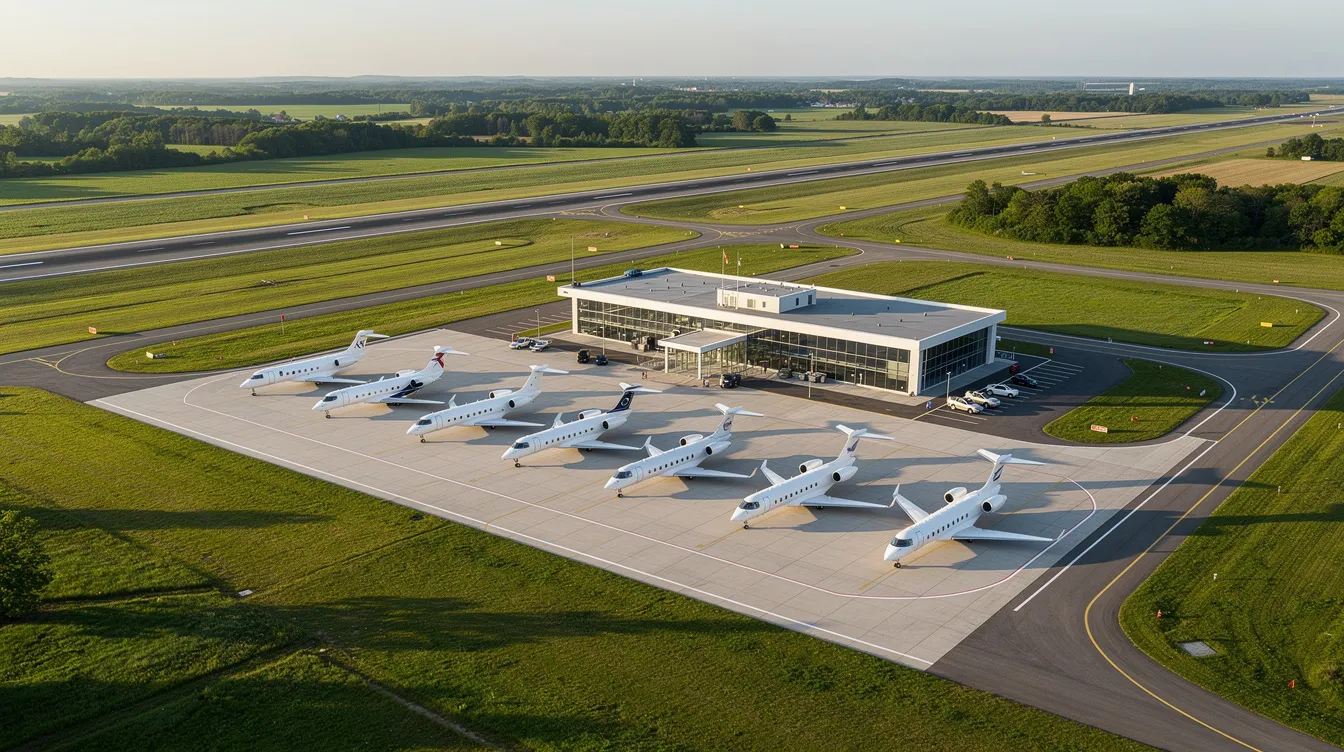
If you know the SkyWest Embraer 175 seat map well enough to request 2A or 8F by memory, you're flying often enough to reclaim the hours you lose to terminals, connections, and boarding queues. Explore BlackJet's Jet Card programs as the next step beyond regional first class: preserving flexibility and comfort while giving you control over every departure, and compare them with other top jet card options for frequent flyers.
Frequently Asked Questions About the SkyWest Embraer 175 Seat Map
How many seats are on a SkyWest Embraer 175?
Most SkyWest E175 aircraft have 70 or 76 seats, depending on the airline partner and cabin configuration. The common 76-seat layout includes 12 First Class seats and a Main Cabin split between extra-legroom and standard economy. Seat maps can vary, so check the operating airline’s current map before booking.
Does the SkyWest E175 have middle seats?
No. The E175 uses a 2-2 layout in economy, so each passenger has either a window or an aisle seat. First Class is commonly arranged 1-2, with a single seat on one side and a pair on the other.
Which seats offer the most legroom on the E175?
Extra-legroom rows generally provide more space than standard economy, and row 8 is frequently praised by passengers. The precise row and seat assignments vary by aircraft and airline partner; review the seat map for your flight to confirm the layout.
Are there power outlets and Wi-Fi on SkyWest E175 flights?
Wi-Fi and streaming entertainment to personal devices are available on SkyWest E175 aircraft, but service depends on the airline partner and route. Power outlet availability also varies by cabin and configuration, so check the operating carrier’s amenities before departure.
Where are the lavatories, and how much overhead-bin space is available?
E175 aircraft typically have two lavatories, one near the front and one at the rear. Overhead-bin space is relatively limited compared with larger aircraft, and some bags may need to be gate-checked, particularly on full flights.
Is the Embraer 175 comfortable for a regional flight?
Its 2-2 economy layout avoids middle seats, while large windows and a comparatively quiet cabin make the E175 a comfortable option for many regional journeys. Comfort details—including seat pitch, recline, outlets, and extra-legroom sections—vary by airline and aircraft. For travelers who prioritize private departures, tailored schedules, and a more controlled cabin experience, a Jet Card offers a different kind of access.
Conclusion: Choosing the Right Seat—and the Right Way to Fly
The SkyWest Embraer 175 seat map makes it easy to find a window or aisle seat, with no middle seats in its familiar 2-2 economy layout. For extra legroom, row 8 is a popular choice; for a quieter, more private commercial-cabin experience, a solo First Class seat such as 2A or 3A may suit business travelers. Because layouts and amenities vary by airline partner, check the operating carrier’s seat map before booking.
For frequent flyers, seat selection is only one part of the travel equation. Commercial E175 service offers an efficient regional option, while private jet access through a Jet Card can provide greater schedule control, point-to-point routing, and a tailored cabin. BlackJet members also have access to 24/7 booking support, operator safety vetting, and carbon-neutral flights. For travelers weighing the alternatives, learn more about chartering a private jet. When your travel demands more flexibility than a published airline schedule can offer, explore BlackJet’s Jet Card programs and discover a more seamless way to travel.