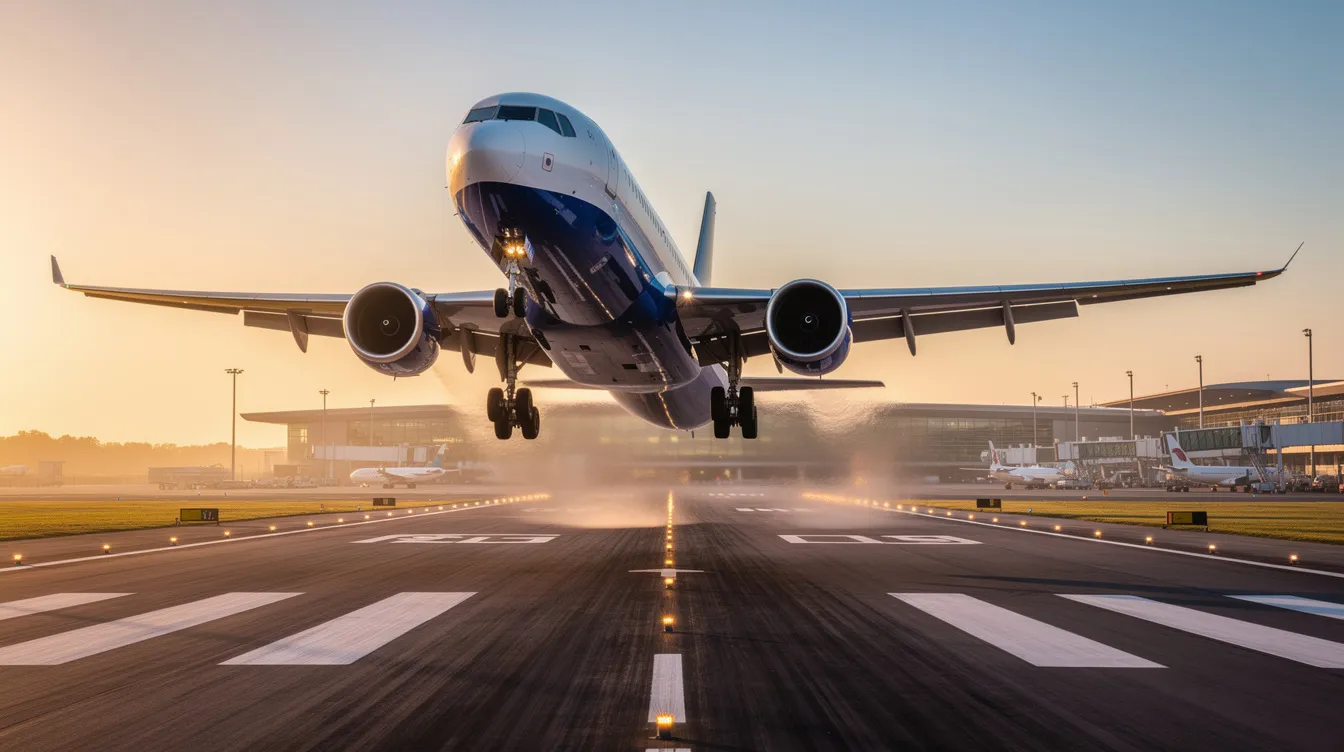
For discerning travelers, the size of planes is not just an aviation detail. It determines how close you can land to your destination, how much cabin space you enjoy, how far you can fly nonstop, and how much time you save before and after the flight. For BlackJet members, understanding aircraft size becomes a strategic advantage: the right plane can turn a complex itinerary into a seamless private aviation experience.
Why Aircraft Size Matters for Elite Travelers
Private jet access is not simply luxury; it is control. While the Airbus A380 is the world's largest passenger aircraft, many BlackJet members intentionally choose smaller aircraft because privacy, airport access, and schedule freedom matter more than more seats.
Aircraft dimensions vary based on their intended range and passenger capacity. Aircraft size dictates runway access, cabin experience, range, operating costs, and whether an airport can accommodate a specific plane.
For example, a New York–London trip on a commercial widebody aircraft may mean major hubs, long terminals, fixed schedules, and customs queues. A super-midsize private jet arranged through a BlackJet Jet Card can use private terminals, board in minutes, and tailor the flight around the traveler’s business calendar, whether you purchase the whole aircraft or simply buy a seat on a private jet.
How Planes Are Classified by Size and Weight
Aircraft are classified into regional, narrow-body, and wide-body types (Fact: 1), and airliners fall into three main categories: regional, narrow-body, and wide-body (Fact: 2).
Commercial airplanes are categorized by size and capacity. Commercial airplanes are categorized by fuselage width, passenger capacity, and flight range. Aircraft are classified into regional, narrow-body, and wide-body types, and airliners fall into three main categories: regional, narrow-body, and wide-body.
Regulators also classify by weight. Aircraft are categorized into four weight categories: light, medium, heavy, and super. Under ICAO wake rules, the Airbus A380 is “super,” while the Boeing 747, Boeing 777, Boeing 787, and Airbus A350 are heavy. All current wide-body aircraft are classified as 'heavy' or 'super', and super- and heavy-category aircraft require greater separation in air traffic control. In the U.S., aircraft must suffix their call sign with 'heavy' or 'super'.
Key practical categories:
Category | Typical role | Capacity |
|---|
Commuter | Very small scheduled service | Commuter aircraft are limited to 19 passengers and under 19,000 pounds. |
Regional | Smaller city links | Regional aircraft typically have a capacity of 50 to 100 passengers. Regional aircraft typically carry between 70 and 100 passengers. |
Narrow-body | Domestic and medium routes | Narrow-body aircraft typically have a capacity of 100 to 230 passengers. |
Wide-body | Long-haul international | Wide-body aircraft capacity can range from 250 to 400+ passengers. |
Normal aircraft are small and limited to 9 passengers and under 12,500 pounds. Jet engine aircraft designed to carry over 10 passengers weigh more than 12,500 pounds. Regional jets are used to connect smaller cities to major hubs.
Weight, fuselage width, wingspan, and length influence runway strength, taxiway clearance, and gate size. This is why the largest commercial aircraft are concentrated at major hubs.
Single-Aisle vs Widebody Aircraft: What Size Means Onboard
Typical narrow-body aircraft have a single aisle and narrower fuselages. Narrow-body aircraft examples include the Boeing 737 and the Airbus A320. Narrow-body aircraft examples include the Embraer E175 and the Bombardier CRJ series. Other narrow-body aircraft include the Boeing 757, Airbus A220, and A320 family.
Narrow-body planes are designed for efficiency on 2–6-hour flights. Narrow-body aircraft generally seat up to 200 passengers, although some models approach 230.
Wide-body aircraft feature two aisles for passenger seating. Wide-body aircraft typically have two aisles for passenger comfort. The capacity of wide-body aircraft can accommodate 7 to 10+ passengers abreast. Wide-body aircraft are built for endurance and long-range flights, with examples including Boeing 767, Boeing 777, Boeing 787, Boeing 747, Airbus A330, A340, Airbus A350, and A380.
Wide-body aircraft can carry 300 to over 400 passengers. Wide-body aircraft examples include Boeing 777-300ER and Airbus A350-1000. Compared with a single-aisle airliner, a wide-body airliner offers more room for premium cabins, larger galleys, lie-flat seat layouts, and better passenger comfort.
Since around 2010, longer-range single-aisle aircraft such as the A321neo and Boeing 737 Max have entered transatlantic and transcontinental markets. Many airlines value efficiency, but private aviation can still offer superior space per passenger, discretion, and schedule control.
The Giants: The World's Largest Passenger Aircraft
The largest passenger aircraft became icons because they changed what commercial air travel could carry. The Airbus A380 is the world's largest passenger aircraft. The A380 can accommodate a maximum of 853 passengers, and the Airbus A380 can carry a maximum of 853 passengers; in rare cases, it is even considered as a platform for an ultra-exclusive private jet Airbus A380.
According to Airbus, the A380 has a wingspan of 79.75 m (261 ft 8 in). Its length is about 72.7 m. The A380 entered service on October 25, 2007, after its first flight in 2005. Production ended in 2021, and Airbus delivered 251 A380S to around 20 operators. Emirates remains the largest operator; Singapore Airlines was the launch customer. The superjumbo jet was often powered by engines such as RR Trent variants or Engine Alliance powerplants.
The Boeing 747 set the jumbo benchmark. The Boeing 747-400 has a seating capacity of 660 passengers, while the 747-8 stretches about 76.3 m in length with a 68.4 m wingspan. With four engines and a semi-double-deck fuselage, it shaped global air service for decades.
Other giants include the Airbus A340-600, sometimes described as one of the longest passenger aircraft; the Boeing 777, the largest twin-engine passenger aircraft; and the Airbus A350, a modern long-range twinjet. Aircraft such as those operated by Lufthansa, Air France, Qatar Airways, Turkish Airlines, United Airlines, American Airlines, Delta Air Lines, Singapore Airlines, and Emirates show how wide bodies serve global commercial networks.
To match one A380 carrying 500–800 passengers, it could take dozens of mid-size private jets. Private aviation trades sheer capacity for exclusivity, security, customization, and personal service, especially when you select the best private jet for 20 passengers or other large-group configurations.
Iconic Widebody Aircraft and Their Dimensions
Widebody aircraft size supports long-haul performance, range, and onboard service. The Boeing 787 Dreamliner uses composite technology for efficiency compared with older aircraft like the Boeing 767. The 787-8 seats about 240 in typical two-class layouts, the 787-9 about 296, and the 787-10 about 330; the Boeing 787-10 can carry up to 440 passengers in high-density layouts. Its wingspan is about 60 m.
The Boeing 777 includes the 777-200 and 777-300ER. The Boeing 777-300 can accommodate 550 passengers, while typical airline layouts are lower. Ranges can exceed 5,000–7,000 nautical miles, depending on model and payload.
The Airbus A330 family spans roughly 58–63 m in length, with capacity from about 250 to 460 passengers. The Airbus A350 family includes the A350-900 and A350-1000; the A350-1000 can carry up to 480 passengers. The A350’s advanced materials and engines reduce fuel burn.
Older wide bodies, including the Airbus A340, McDonnell Douglas MD-11, and DC-10, show how development eventually shifted from three or four engines toward reliable, efficient twin-engine aircraft.
Beyond Passengers: How Large Aircraft Are Used Outside Airline Service
The dimensions of aircraft can vary drastically based on their primary use. Freighter aircraft are designed specifically to carry freight instead of passengers. Large airframes such as the Boeing 747 and Airbus A330 are converted into freighters for high-volume logistics and outsized cargo.
Specialized aircraft such as the Airbus Beluga and Boeing Dreamlifter use modified fuselage shapes to maximize volume rather than seat count. Military and government fleets also use large airliners for AWACS, command posts, and VIP transport.
Special missions include aerial firefighting, where converted DC-10s or 747 Supertankers carry immense water or retardant loads. Private jets are smaller, but they can also be configured for heads of state, corporate shuttles, boardrooms, bedrooms, and bespoke cabin layouts, reflecting the wide spectrum of types of private jets available for different missions.
How Private Jets Compare in Size to Commercial Aircraft
Private jets optimize for individual travelers’ time, privacy, and access rather than mass transport. Travelers can compare private jet sizes to match comfort, range, and budget. Typical categories include:
Category | Typical Seats | Typical Range |
|---|
Very light jets and other small private jets | 4–6 | Short-haul |
Light jets | 6–8 | Short to medium-haul |
Midsize jets | 8–9 | Medium-haul |
Super-midsize jets | 9–12 | Long-haul |
Large-cabin/long-range jets | 12–16+ | Long-haul/intercontinental |
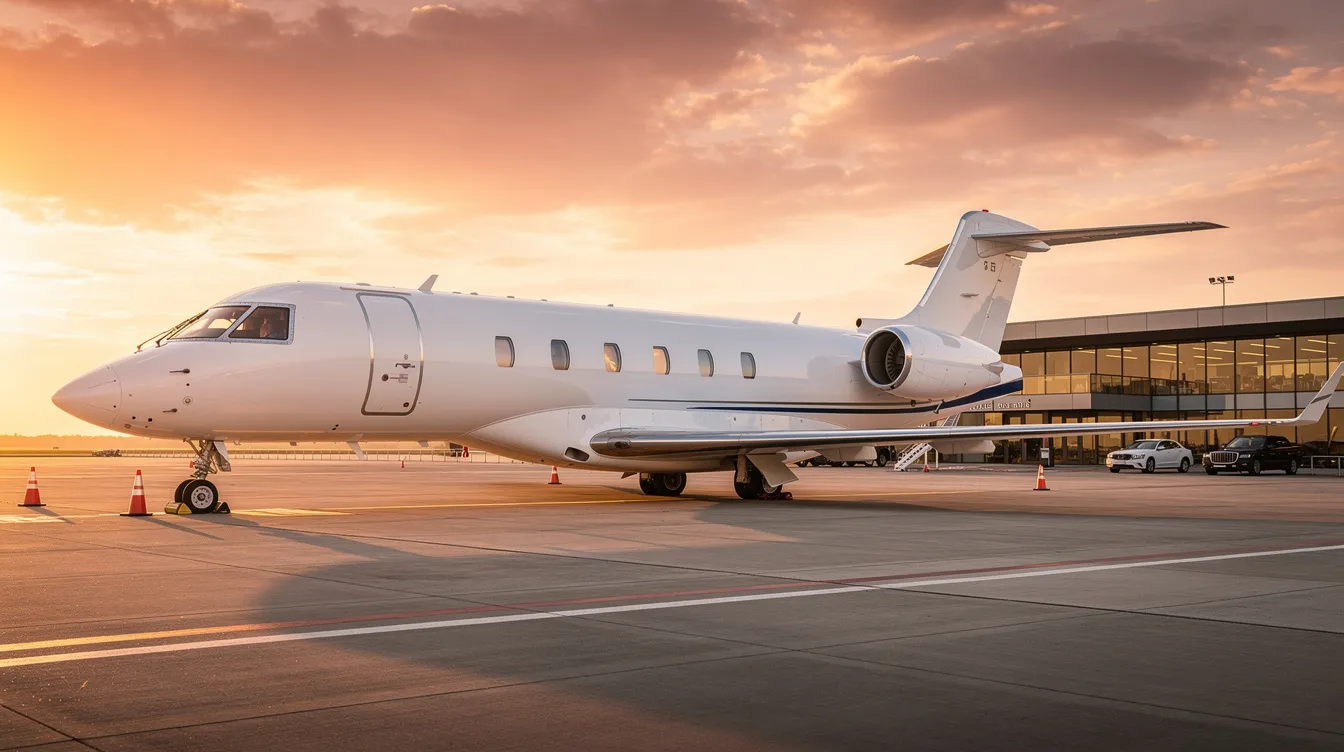
A large-cabin private jet may feel expensive because only a few passengers share the cabin, yet its cabin length is comparable to only a small section of a Boeing 787 or Airbus A350. The largest private jets push this even further with wide cabins, long-range performance, and ultra-luxury interiors. The commercial aircraft has far greater capacity; the private aircraft has far greater personal space.
Because private jets are smaller and lighter, they can use shorter runways and reach thousands more airports worldwide. A BlackJet member flying New York–Los Angeles in a super-midsize jet can often avoid hub congestion, choose a closer airport, and save hours compared with connecting through a large commercial airport.
BlackJet’s Jet Card programs let members choose cabin size by passenger count, luggage, route length, and service preferences rather than accept a fixed airline fleet assignment.
Wake Turbulence, Separation, and Safety for Large and Small Aircraft
Wake turbulence is created by lift, especially when an aircraft is heavy, slow, and configured for takeoff or landing. Heavy and super aircraft such as the Boeing 747, Boeing 777, Boeing 787, Airbus A350, and Airbus A380 generate stronger wakes, so air traffic control mandates greater spacing behind them.
Even when flying on smaller private jets, ATC applies separation rules when following large commercial aircraft. This is not optional; it is a core safety procedure.
BlackJet partner operators must meet strict regulatory safety protocols, advanced pilot training standards, and operational procedures for approaches, runway performance, and wake awareness. Modern avionics, precision approaches, and airport sequencing tools help both private jets and large airliners maintain safe spacing into busy hubs.
Sustainability and Aircraft Size: Fuel Burn, Efficiency, and Carbon Neutral Flights
Aircraft size and weight influence fuel burn per hour, while passenger load affects emissions per passenger. A full commercial airliner can be efficient per seat, but a poorly matched aircraft can waste fuel.
Modern widebody aircraft such as the Boeing 787, Airbus A350, and newer Boeing 777 variants use advanced engines, composites, and aerodynamic technology to improve efficiency compared with older early 747s and A340S. SAF, or sustainable aviation fuel, can reduce lifecycle CO2 emissions for both commercial and private aircraft where available.
BlackJet makes carbon-neutral flights standard for Jet Card members. Emissions are calculated using route distance, aircraft type, estimated fuel burn, and operating profile, then addressed through certified carbon offsets and SAF access where practical—core considerations as you evaluate the cost to charter a small plane versus flying commercial.
Per-passenger efficiency often favors large commercial aircraft.
Total private-flight emissions can be mitigated through efficient aircraft selection, smart scheduling, reduced repositioning, and mandatory offsetting.
Choosing the Right Aircraft Size with a BlackJet Jet Card
Choosing aircraft size is a business decision as much as a comfort decision. The right jet depends on itinerary, passengers, luggage, runway access, schedule sensitivity, and desired cabin experience, whether you are comparing the best small private aircraft or large-cabin jets.
BlackJet’s 25+ Hour Jet Card model, including 25-hour and 50-hour programs, allows travelers to prepay flight time and then select among multiple cabin classes when booking. This avoids ownership complexity while preserving flexibility.
Use this simple guide:
Light jet: short regional hops, 1–3 hours, smaller groups.
Midsize or super-midsize: U.S. coast-to-coast, more luggage, 7–10 passengers.
Large-cabin: long-range missions such as New York–London or Los Angeles–Paris, more room, a full galley, and multiple cabin zones.
Commercial travel locks passengers into whichever aircraft the airlines assign, whether a Boeing 767, Airbus A330, or another model, along with hub schedules and limited premium seats. BlackJet uses vetted ARGUS, IS-BAO, or equivalent safety-certified operators and modern aircraft to match the right jet size to each trip.
Explore BlackJet’s Jet Card programs for private jet access across multiple aircraft sizes, carbon-neutral performance, 24/7 digital booking, and real-time flight support.
Frequently Asked Questions About Aircraft Size and Private Jet Travel
What is currently the world's largest passenger aircraft?
The Airbus A380 is the world's largest passenger aircraft. It can accommodate a maximum of 853 passengers, although most airlines use lower-density layouts for premium service. Some operators, especially Emirates, still fly the A380 because it offers exceptional capacity on dense international routes.
How does a private jet cabin compare in size to a commercial widebody like a Boeing 787?
A Boeing 787 is much wider and longer, with twin aisles and hundreds of seats. A private jet cabin is smaller, but each passenger receives more personal space, privacy, and flexibility. The experience is less about scale and more about control.
Are larger planes safer than smaller ones?
Both large commercial aircraft and private jets are extremely safe when operated under modern regulations. Safety depends on maintenance, crew training, certification, reliability, and operating standards, not simply size.
Can private jets fly as far as big commercial jets?
Some long-range business jets are capable of flying 6,500–8,000 nautical miles, comparable to many routes served by the Boeing 777 and Airbus A350. Very high-capacity routes or heavy cargo missions still favor big airliners.
How does BlackJet ensure safety and sustainability regardless of aircraft size?
BlackJet works through vetted operators, safety-certified standards, and modern fleet access. Sustainability is built into the service through carbon-neutral commitments, offset verification, and SAF use where available.
Conclusion: Using Aircraft Size to Your Advantage
The size of planes shapes everything from runway access to cabin comfort, from market economics to environmental impact. Commercial aviation relies on regional aircraft, narrow-body aircraft, and wide-body aircraft to move the world at scale.
For high-level travelers, the goal is not always the biggest plane. The goal is the right aircraft for the mission: enough range, enough space, the right airport access, strong safety standards, and responsible carbon performance.
BlackJet helps members navigate these choices through Jet Card access, expert flight support, and technology for real-time booking and itinerary management. Explore how BlackJet can tailor aircraft size, schedule, and service level to your exact needs on your next trip.


 Sign up with google
 Sign up with Apple