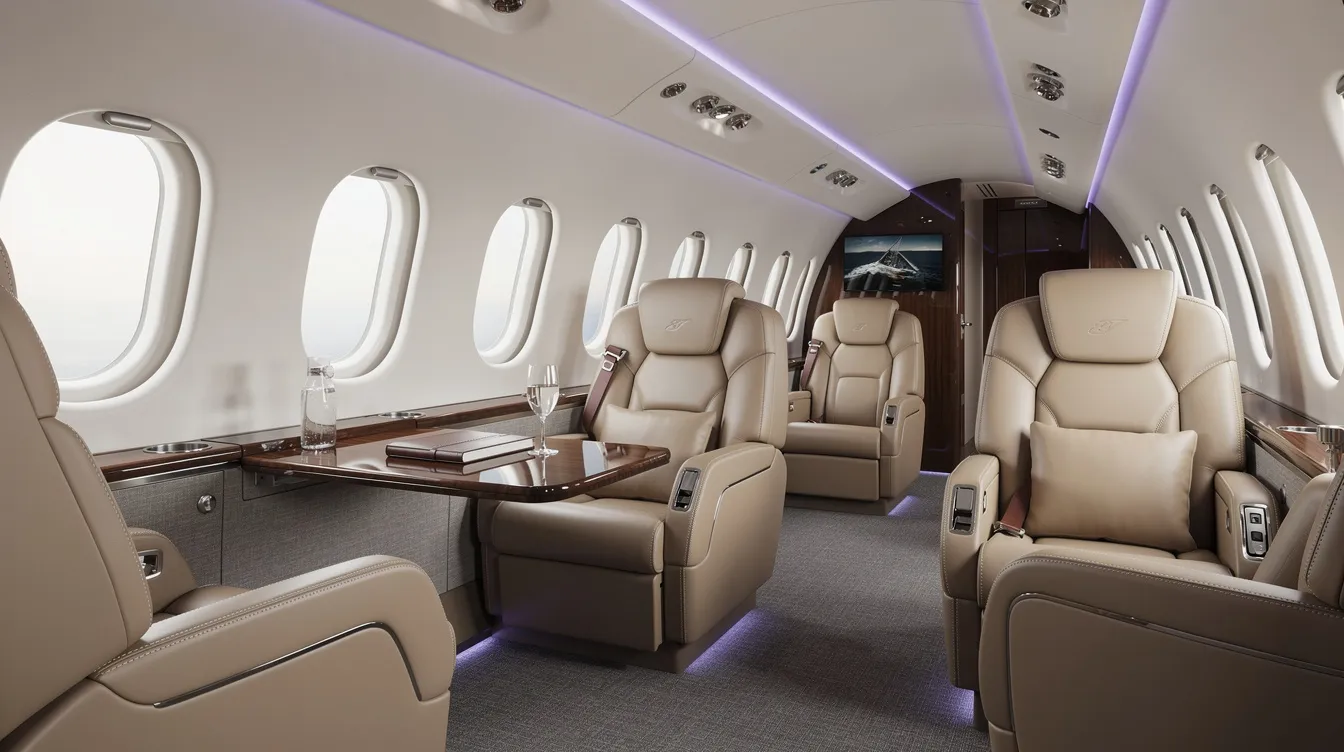
For today's high-net-worth executives, shared aircraft ownership and private jet access are less a luxury than a strategic advantage—reclaiming hours lost to commercial terminals, maintaining privacy during sensitive business travel, and gaining reliability when airline schedules falter. But choosing how you access that plane matters as much as deciding to fly privately in the first place.
This article compares shared aircraft ownership, fractional programs, and jet cards, helping business owners, executives, and frequent private flyers understand which model best fits their travel needs, budget, and lifestyle. Making the right choice can optimize costs, maximize flexibility, and minimize operational burdens.
Key Takeaways: Navigating Shared Aircraft Ownership and Fractional Programs
Shared aircraft ownership offers a way to split fixed costs and operational responsibilities with trusted partners, making ownership more accessible while requiring clear agreements and coordination.
Fractional ownership provides guaranteed access to a professionally managed fleet with predictable hours and reduced operational burdens but involves a multi-year commitment and ongoing management fees.
Jet Cards deliver ultimate flexibility without ownership responsibilities, ideal for travelers with under 75 annual flight hours or those seeking diverse aircraft categories without capital investment.
Understanding fixed costs—such as hangar, insurance, and pilot training—is critical when evaluating shared ownership, as these are divided among co-owners and impact overall expenses.
Operational control, scheduling flexibility, tax implications, and sustainability goals vary significantly across ownership models; aligning these factors with your travel profile ensures the smartest choice.
BlackJet’s Jet Card program combines safety, carbon-neutral flights, and seamless digital booking to offer an elegant alternative to ownership, balancing luxury with practicality.
Explore how each model fits your unique needs by consulting with a BlackJet aviation advisor to unlock the most strategic, efficient, and luxurious private aviation experience.
Strategic Advantages of Shared Aircraft Ownership in Modern Private Aviation
Shared aircraft ownership means multiple owners hold an interest in a specific aircraft, splitting costs and scheduling among partners. It differs from fractional aircraft ownership, where you purchase a fraction of a fleet-managed jet, and from fractional jet ownership programs that bundle management, insurance, and crew into a single arrangement.
Consider a New York–based executive flying to Dallas. Commercially, that trip consumes four to six hours each way once you factor in airport time and connections. With a co-ownership structure on a midsize aircraft, the same trip becomes a same-day out-and-back, freeing half a business day every round trip.
BlackJet offers an alternative to owning altogether. Its premium Jet Card programs offer prepaid access to private jets through 25-hour and 50-hour memberships, delivering many benefits of aircraft co-ownership without capital lock-up or partnership complexity. Users can book flights 24/7 with digital tools, and jet card users can enjoy carbon-neutral flights on every trip, backed by third-party safety certification.
This article compares co-ownership, fractional programs, and Jet Cards across economics, operations, risk, and lifestyle-helping you choose based on your annual flight hours, capital appetite, and tolerance for complexity, complementing broader insights into the private jet price list and access options.

What Shared Aircraft Ownership Actually Is (and How It Differs from Fractional Ownership)
Shared aircraft ownership is an arrangement where two or more individuals or businesses co-own a specific tail number-typically structured via tenancy in common, joint tenancy, or an LLC granting each co owner an undivided interest. Joint aircraft ownership involves two registered owners sharing costs, and a strong ownership agreement defines scheduling and maintenance responsibilities so the partnership functions smoothly. Shared ownership works best with clear agreements to prevent conflicts between owners.
Fractional aircraft ownership works differently. You purchase a fractional share-shares in fractional ownership can be as small as one sixteenth-in an aircraft type managed by a fractional program operator. The purchase agreement typically spans five years, during which the provider handles aircraft management, crew, and maintenance across multiple aircraft of the same type. Fractional ownership allows shared ownership of an aircraft without the governance burden of a direct partnership, but understanding fractional jet ownership depreciation is critical when evaluating long-term costs and exit value.
Non-ownership models like charter and Jet Cards sit at the other end of the spectrum. Jet card programs provide flexibility without ownership responsibilities. A traveler loading 25 hours onto a BlackJet Jet Card, for instance, gains access to professionally managed aircraft without drafting an owner agreement, hiring professional pilots, or negotiating an exit contract.
The key legal distinction: shared and fractional arrangements make you one of the aircraft owners for tax and regulatory purposes, while Jet Cards keep you firmly in "service user" status-often simplifying liability and compliance. Always consult aviation counsel before signing any co-ownership or fractional agreement, and review potential tax benefits of fractional jet ownership alongside your advisor.
Economics of Co‑Ownership, Fractional Ownership, and Jet Cards
Most prospective aircraft owners are trying to change the math of private aviation-reducing total expense per hour while preserving control and comfort, which makes it essential to understand Jet Card cost per hour when comparing against ownership models. Traditional aircraft ownership offers complete control but higher financial responsibility; shared structures distribute that load, and selecting among the best small private aircraft can further align performance, cost, and mission profile.
Aspect | Shared Aircraft Ownership | Fractional Ownership | Jet Cards |
|---|
Ownership Structure | Co-owners share a specific aircraft | Purchase share in a managed fleet | Prepaid access without ownership |
Capital Investment | High (split among owners) | High (buy-in for share) | None |
Commitment Length | Flexible, depends on agreement | Typically 5 years | None |
Scheduling Flexibility | Limited by co-owner coordination | Guaranteed access within notice period | Ultimate flexibility, book 24/7 |
Operational Responsibility | Shared among owners | Managed by fractional program operator | None |
Fixed Costs | Shared among owners (hangar, insurance, training) | Included in management fees | Included in hourly rate |
Variable Costs | Paid per flight hour by each owner | Paid per occupied flight hour | Included in hourly rate |
Tax Implications | Owners for tax purposes, potential benefits | Owners for tax purposes, potential benefits | Service user status, simpler tax treatment |
Exit Strategy | Requires agreement and market conditions | Defined exit policies, may have penalties | No exit needed |
Aircraft Control | Full control over specific aircraft | Access to fleet, not specific aircraft | Access to multiple aircraft categories |
Sustainability | Depends on usage and management | Higher utilization improves efficiency | Carbon-neutral flights offered by BlackJet |
Co-ownership economics. Joint ownership can lower the net capital commitment for aircraft buyers. Two partners splitting the purchase price of a $4M light jet each commit a significant investment, but half what sole ownership demands. Owners in joint ownership split fixed operating costs-hangar, insurance, pilot fees, and pilot training- while some choose to lease a private jet instead to balance flexibility with predictable expenses. Variable costs like fuel and maintenance are often paid based on hours flown in shared ownership. Shared aircraft ownership reduces financial burdens and maintenance responsibilities, particularly when the plane is professionally managed by a third-party aircraft management company that also handles engine reserves and scheduling.
Fractional programs. Buying a fractional share in a light jet can start around $500,000 for a 1/16 interest, with midsize shares running higher. Fractional owners typically receive 50 to 70 occupied flight hours per year for a 1/16 share. On top of the buy-in, expect a monthly management fee-often $20,000 to $50,000 for a 1/8 share-plus an occupied hourly rate covering fuel, maintenance, and crew. Understanding how fractional jet ownership depreciation interacts with these cash costs is key to an accurate total ownership picture. Most fractional ownership programs require a five-year commitment across the entire term, whereas a 100-hour Jet Card can offer comparable access over a similar flying profile without tying up capital in an asset. Professional management in fractional ownership removes the burden of scheduling and maintenance, but fleet utilization of 1,000-plus hours annually can pressure the residual value when your share is sold at contract end.
Jet Cards. There is no capital purchase, no depreciation, and no hourly charge surprises beyond the agreed rate. Access to multiple cabin types is available through jet cards, and operating costs are bundled into a straightforward hourly rate, but structures and inclusions vary, so it pays to understand Jet Card pricing and benefits. Frequent flyers may find fractional ownership more suitable than traditional ownership, but travelers under approximately 50 to 75 flight hours per year typically save money with a Jet Card or charter, especially once they compare Jet Card membership pricing to charter quotes. Between 75 and 200 hours, larger Jet Card blocks or a carefully chosen fractional program may work, and a detailed look at 50-hour Jet Card cost often helps benchmark value versus fractional commitments. Whole aircraft ownership or structured co-ownership tends to pencil out above 200 hours with consistent missions.

Operational Realities: Scheduling, Control, and Aircraft Management
Cost is only half the equation. For many owners, control over schedule, cabin experience, and safety standards carries equal weight.
Co-ownership operations. Partners create an owner agreement or LLC operating agreement defining scheduling priority, peak-day rules, maintenance downtime, and dispute resolution. Joint ownership provides a structured way to share aircraft responsibilities, yet scheduled access may be limited in shared ownership arrangements, leading to potential scheduling conflicts-especially around holidays. Many groups hire an aircraft management company to handle crewing, dispatch, and regulatory compliance, turning a hands-on arrangement into a professionally managed one, and pairing this with a clear understanding of types of private jets ensures the aircraft category matches your mission. Shared ownership can provide tax advantages depending on usage and jurisdiction, but the operational coordination among multiple owners remains.
Fractional program operations. You gain guaranteed access to a fleet within a prescribed call-out window-often six to ten hours' notice. Flights may not always be on your titled tail number, but cabin class and availability remain consistent across the fractional program. The contract governs the entire term, including peak-day surcharges and position fees.
BlackJet Jet Card operations. Members book via app, web, or phone around the clock, choosing aircraft category and departure window. BlackJet sources every flight from audited, certified operators with recurrent training for professional pilots, providing real-time flight support before, during, and after each mission.
Consider a three-day, multi-city business roadshow. In a co owned plane, schedule changes require coordinating with your partners and possibly repositioning a specific aircraft. In a fractional program, adjustments must fit program rules and fleet availability. With a BlackJet Jet Card, you adjust departure times, swap cabin categories, and source the nearest suitable aircraft through the provider network-same-day flexibility without negotiation, especially in dedicated programs like the BlackJet 25+ Hour Jet Card.
Risk, Liability, Tax, and Sustainability Considerations
Becoming an aircraft owner-whether through co-ownership or a fractional share-brings legal, tax, and operational responsibilities many travelers underestimate. Selling a shared ownership interest can take time and requires understanding of market conditions, and exit provisions in a purchase agreement or fractional contract must be negotiated carefully upfront.
Fractional share owners are generally treated as aircraft owners for tax purposes, potentially eligible for bonus depreciation in some jurisdictions but also exposed to state sales and use tax on the occupied hourly rate. Jet Card members, by contrast, purchase transportation service-not an equity interest-simplifying tax reporting and limiting liability to the terms of a service contract.
On sustainability, higher utilization in fractional ownership and charter can improve per-flight efficiency versus underused sole ownership, dovetailing with strategies to fly private more affordably by maximizing aircraft usage and smart access models. BlackJet goes further: every flight is carbon neutral through integrated offset programs, with no additional expense or reporting for the member, even on missions that match popular 10 million dollar private jet options in range and comfort.
Whether you choose a professionally managed fractional program or a Jet Card, rigorous maintenance and pilot training standards protect you. Informal co ownership arrangements, however, can fall short if not carefully structured with qualified operators and aviation counsel.
Frequently Asked Questions About Shared Aircraft Ownership and Fractional Programs
What is the main difference between shared aircraft ownership and fractional ownership?
Shared aircraft ownership involves co-owning a specific aircraft with one or more partners, sharing costs and scheduling responsibilities directly. Fractional ownership means purchasing a share in a managed fleet of aircraft, providing guaranteed access without the complexities of direct partnership management.
How are costs typically divided in shared aircraft ownership?
Owners share fixed operating costs such as hangar fees, insurance, and pilot training equally or proportionally, while variable costs like fuel and maintenance are usually paid based on hours flown by each owner.
Can I sell my share in a shared ownership or fractional program easily?
Selling a shared ownership interest can take time and depends on market conditions and the terms of the ownership agreement. Fractional programs often have defined exit policies but usually require commitment periods, such as five years.
What are the tax implications of shared and fractional ownership?
Owners in both models are considered aircraft owners for tax purposes and may be eligible for tax benefits such as depreciation. However, tax obligations like state sales and use taxes may apply. Consulting a tax professional is recommended.
How does scheduling work in shared ownership versus fractional programs?
Shared ownership requires coordination among co-owners, which can limit scheduling flexibility. Fractional programs provide guaranteed access within a specified notice period, often six to ten hours, with professional management handling scheduling.
Are there sustainability benefits to fractional ownership or Jet Cards?
Higher utilization in fractional ownership and Jet Card usage can improve per-flight efficiency, and choosing the right private jet size for each mission avoids flying more cabin than you need. BlackJet enhances sustainability by offering carbon-neutral flights at no extra cost, integrating offsets seamlessly into every trip, whether you’re moving a small team or chartering one of the best private jets for 20 passengers.
What level of operational responsibility do I have in each model?
Shared ownership demands active management and collaboration between owners. Fractional ownership transfers operational duties to the program operator, while large-group charters on the best private jets for 50 passengers rely on specialist operators to manage complex logistics end-to-end. Jet Cards require no operational responsibility, offering fully managed private jet access.
Is a Jet Card a good alternative to ownership?
Yes. Jet Cards provide flexible, prepaid access to a variety of aircraft without capital investment or ownership responsibilities, ideal for travelers flying under 75 hours annually or those seeking maximum convenience, and they complement other ways to buy a seat on a private jet such as shared charters and semi-private flights.
Which Model Fits You Best? Decision Framework and BlackJet's Perspective
Whether you are a business owner, family office principal, or frequent leisure traveler, four questions clarify your path:
How many hours do you realistically fly per year? Under 50 hours with variable destination points toward a Jet Card. Between 50 and 150 hours on consistent routes, a larger Jet Card block or fractional program may fit. Above 150 hours with stable missions, whole or co-ownership merits serious analysis, including evaluating premium private jets for sale if outright acquisition aligns with your strategy.
How stable is your mission profile? Varying cabin needs and route lengths favor the flexibility of a Jet Card over owning a specific aircraft.
Are you comfortable tying up capital and accepting depreciation risk? If not, non-ownership models remove that money concern entirely.
How much operational responsibility do you want? Co-ownership demands governance; fractional programs handle it for you; Jet Cards eliminate it.
One technology founder originally explored fractional jet ownership but chose a 50-hour BlackJet Jet Card instead-gaining flexible access to light, midsize, and super midsize jets to meet evolving travel needs without a five-year commitment or concerns about residual value.
The smarter way to fly is the model that aligns your hours, capital, and lifestyle. Discover how BlackJet can reshape your travel-speak with a BlackJet aviation advisor to compare the real cost, commitment, and experience of fractional ownership, aircraft co-ownership, and Jet Card membership.


 Sign up with google
 Sign up with Apple