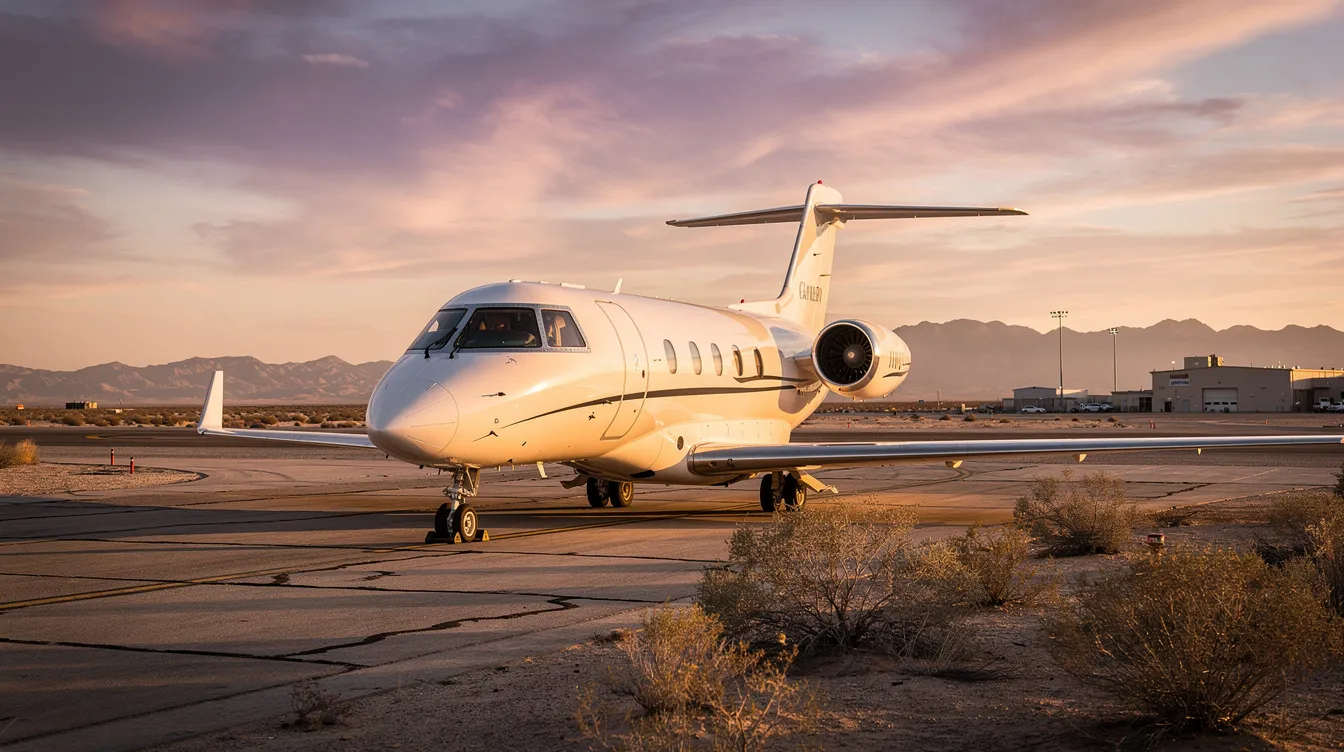
For discerning travelers, private jet access is not simply a luxury. It is a strategic advantage: less time in terminals, more control over the day, and a quieter environment for decisions that matter.
Set Jet helped popularize that idea for a wider audience. Founded in 2014 and based in Scottsdale, Arizona, the company created a membership-based, semi-private aviation model that sat between commercial first class and traditional private jet charter. Instead of renting a whole aircraft, members could buy a seat on scheduled private flights across the American West Coast and Southwest.
At BlackJet, we view Set Jet as part of a broader private aviation ecosystem. Its model was not the same as a jet card, and it was not a full charter solution. But it showed how much demand exists for faster, more refined air travel, especially on routes like Scottsdale to Los Angeles or Scottsdale to Las Vegas, where bypassing TSA lines and commercial terminals can save meaningful time.
Travel model | Cabin access | Typical flexibility | Cost profile | Best for |
|---|
Commercial first class | Shared airline cabin | Airline schedules | Lower than private | Price-sensitive premium travelers |
Set Jet-style semi-private | Shared private cabin by seat | Fixed routes and schedules | Lower than full charter | Regional shuttle travelers |
Classic private jet charter | Entire aircraft | Custom routing and timing | Often tens of thousands of dollars | Executives, families, groups |
BlackJet jet card | Entire aircraft | Prepaid, flexible private access | Predictable hourly structure | Frequent private aviation clients |
What Is Set Jet and How Does It Work?
Set Jet was a members-only, seat-based semi-private jet service founded by Tom Smith, with a founding team that brought decades of aviation and luxury business experience, and headquartered in Scottsdale, Arizona. The company was conceived around a simple but powerful idea: make private air travel more accessible by allowing approved members to purchase individual seats rather than chartering an entire aircraft.
Set Jet pioneered a crowdsourced semi-private model for air travel. That meant demand from a group of members could support scheduled service operations on popular city pairs, while travelers still enjoyed private terminals, smaller cabins, and a more refined boarding experience.
Here is how the model worked:
Members applied to join and were required to undergo security pre-screening before approval, creating a controlled cabin experience.
After approval, members could log in through the Set Jet website or app-style platform and purchase seats on regularly scheduled flights or initiate new flights at least 24 hours in advance.
Instead of buying prepaid hours, members paid for access through a recurring membership and then purchased each seat separately.
Public reporting near the company’s closure cited dues of about $99 per month, with per-seat fares often ranging from roughly $750 to $1,550 depending on the route.
Membership-based private jet services allow individuals to buy a seat on a private jet rather than chartering the entire aircraft, making private air travel more accessible.
These services typically require members to pay a monthly fee, and the total trip economics, monthly dues plus the seafare, can be comparable to first-class commercial tickets while avoiding many commercial airport delays.
Traditional private jet chartering requires renting the entire aircraft, costing tens of thousands of dollars on many regional or cross-country missions.
Membership-based private jet services often emphasize a community aspect, connecting like-minded travelers who seek a luxurious and seamless travel experience.
The model differed from BlackJet’s 25+ hour jet card programs. A BlackJet client pre-purchases flight hours, such as a 25-hour or 50-hour card, and reserves the entire aircraft for themselves, their guests, their team, or their family. Set Jet customers purchased a seat on a scheduled shared flight.
Set Jet Routes and Focus on Scottsdale, Arizona
Scottsdale was central to the Set Jet story. The company’s identity was tied closely to Scottsdale, Arizona, one of the country’s most active private aviation markets, with affluent residents, business owners, golf travelers, and seasonal visitors who routinely fly between Arizona, coastal California, Nevada, and Mexico.
Set Jet’s model primarily operated fixed routes along the American West Coast and Southwest, including hubs like Los Angeles, San Diego, Scottsdale, Las Vegas, and Orange County. Its network focused on city pairs where commercial flying can feel inefficient for short distances: Scottsdale to Los Angeles, Scottsdale to Las Vegas, Scottsdale to Orange County, and Scottsdale to San Diego or Carlsbad.
The company also became associated with leisure routes such as Cabo San Lucas and Los Cabos, where private terminals and faster boarding can be especially attractive to weekend travelers. Some customers also looked for seasonal access to destinations like Aspen, although fixed-route operators can only provide what their published network supports.
Scottsdale works well as a private aviation hub because:
Scottsdale Airport and nearby Phoenix-area airports serve high-income residential and business communities.
The region has a strong demand for short-haul flights to California, Nevada, and resort destinations.
Travelers can often save time by using private VIP terminals instead of crowded commercial airports.
The market includes executives, founders, real estate principals, family offices, and leisure clients who travel repeatedly throughout the year.
The city has been a place where alternative aviation models can participate in a growing luxury mobility world.
BlackJet takes a different approach. Rather than focusing on one fixed network, BlackJet’s jet card model is designed for flexible point-to-point travel across multiple types of private jets: Scottsdale to New York, Los Angeles to London, Miami to Aspen, or multi-leg executive itineraries across several days.
Membership Model: Set Jet vs. Traditional Private Jet Access
The word membership can mean several things in private aviation. It may refer to a semi-private seat program, an on-demand charter account, a jet card, fractional ownership, or a full aircraft ownership structure, each with its own jet card cost structure and benefits. Understanding the difference is essential before making a decision.
Set Jet’s membership gave approved members access to booked flights on scheduled routes. Members paid dues, bought each seat separately, and accepted the published schedule. That could be efficient for travelers who repeatedly move between the same cities and do not need complete control over timing.
A BlackJet jet card is different. BlackJet clients purchase a defined number of hours and use those hours to reserve the whole jet, evaluating jet card cost per hour against their typical usage. The cardholder chooses the airport pair, travel time, cabin category, and passenger list, subject to aircraft availability, duty-time rules, and operational planning.
Set Jet-style membership
Pros:
Lower cost of entry than chartering a full aircraft
Access to private terminals and faster boarding
Useful for repeat routes such as Scottsdale–Los Angeles or Scottsdale–Las Vegas
Shared-cabin environment with vetted members
Less money is committed upfront compared with many full private aviation plans
Cons:
Fixed route network
Shared cabin, not fully private
Limited schedule control
Seat availability can vary
Less suitable for complex, international, or multi-city travel
BlackJet jet card membership
Pros:
The entire aircraft is reserved for the client and guests
Multiple aircraft categories, including light, midsize, super midsize, and large-cabin jets
More flexible routing across domestic and international trips
Transparent hourly access through 25-hour jet card options and 50-hour options
Stronger fit for confidential meetings, family travel, and business-critical flights
Cons:
Higher overall cost than buying one semi-private seat, especially when you look at a detailed 50-hour jet card cost breakdown
Better suited to clients who fly multiple times per year
Requires more consideration of aircraft category, range, and mission profile, particularly when comparing the value of chartering a private jet against semi-private options
For the frequent West Coast traveler, Set Jet offered a practical way to fly semi-private without the price premiums of a full charter. For executives and families who need privacy, flexibility, and guaranteed mission planning, a jet card becomes the more strategic service.
Onboard Experience: Semi-Private Cabin vs. Full Private Jet
Set Jet’s onboard experience was designed to feel elevated without requiring a whole-aircraft charter. Passengers skipped long lines and crowds of busy commercial terminals and arrived at private VIP terminals for faster boarding. In many cases, passengers bypassed long TSA security lines and crowded terminals by utilizing private VIP terminals, allowing them to arrive as little as 20 to 30 minutes before departure.
Set Jet’s passengers enjoyed enhanced privacy and comfort on fewer-passenger aircraft, making it suitable for confidential meetings or rest. However, the cabin was still shared. It was more private than commercial first class, but not the same as controlling the entire aircraft.
Semi-private operations similar to Set Jet often use aircraft configured for fewer passengers, including regional jet-derived cabins such as Bombardier Challenger 850 or CRJ-style aircraft. These aircraft can offer space, range, and comfort, but they also carry meaningful operating costs for crew, maintenance, fuel, and compliance, similar to the factors that shape the cost to charter a small plane.
With BlackJet, the onboard experience is fully private:
The aircraft is reserved for the client and chosen guests, whether they need a light jet for a few people or a 12-seater private jet for a larger group.
Cabin categories can be matched to the mission: light jets for short regional flights, midsize jets for added comfort, super midsize aircraft for longer domestic routes, and 16-seat private jet large-cabin jets for transcontinental or international travel.
Catering, ground transportation, luggage needs, family requirements, pets, and working layouts can be arranged in advance.
The cabin can function as a secure meeting room, a quiet rest space, or a family lounge in the sky.
Consider a Scottsdale founder flying to Los Angeles for investor meetings. With a Set Jet seat, the founder may arrive at an FBO 20 minutes before departure, board quickly, and share the cabin with other approved members. With a BlackJet card, the same founder can choose the exact departure time, bring the executive team, prepare confidential documents onboard, and continue directly to a second meeting in San Francisco or Orange County without being tied to a shuttle schedule.

Safety, Certification, and Operating Standards
Safety is the non-negotiable pillar of private aviation. Luxury matters. Convenience matters. But no traveler should evaluate a private jet, semi-private service, or jet card program without understanding who operates the aircraft and what standards are applied.
Set Jet generally functioned as a membership and marketing platform, while flights were operated by licensed air carriers. Depending on aircraft and service structure, semi-private flights may fall under FAA Part 135 or Part 121-style operating frameworks. Safety oversight typically sits with the certificated operator, not merely the membership brand.
Common safety benchmarks include:
For larger groups and corporate movements, these standards also apply to chartering planes for around 100 passengers, where operator oversight and certification are especially critical.
Pilot minimum flight hours and recurrent simulator training
Crew duty-time compliance and fatigue management
Maintenance programs for business jets and regional aircraft
Operator audits and third-party ratings, such as ARG/US, Wyvern, and IS-BAO, which are equally important whether you charter, own, or lease a private jet
Clear communication about the operator, aircraft, and contingency plans
BlackJet’s approach is built around strict operator selection. We work with charter operators that meet defined safety standards, verify crew qualifications, review aircraft maintenance status, and provide real-time operational support when weather, mechanical issues, slot constraints, or airport restrictions affect a trip.
Before booking any private aviation service, travelers should verify:
Who is the actual aircraft operator?
Is the operator properly certified?
What third-party safety ratings are current?
How are aircraft maintained and inspected?
What happens if a flight is delayed, canceled, or substituted?
How are future flights protected if the provider changes service operations?
That final question became especially important after Set Jet’s shutdown. Set Jet was a membership-based, semi-private aviation company that ceased operations in February 2024 after a failed public merger. Reports at the time described failed financing, a stalled public merger process, and investor issues involving a London-based group. For customers, the lesson is clear: safety includes operational reliability, financial transparency, and contract clarity.
Sustainability and Carbon-Neutral Private Aviation
The environmental impact of aviation is now part of the conversation for every serious traveler. Commercial airlines, private jets, and semi-private flights all consume fuel. The question is how responsibly each model manages aircraft utilization, routing, offsets, and fuel alternatives.
Semi-private services like Set Jet can improve seat utilization compared with an underfilled private charter. When several passengers share one aircraft on a fixed route, emissions per passenger may be lower than a lightly occupied full charter on the same city pair. That does not eliminate environmental impact, but it changes the efficiency profile and can complement other strategies for flying private more affordably.
BlackJet’s jet card programs take a more explicit sustainability position. Every BlackJet jet card flight is made carbon-neutral through high-quality carbon offset projects at no additional cost to the client. We also continue to evaluate sustainable aviation fuel, often called SAF, where supply is available at major FBOs in Scottsdale, Phoenix, Los Angeles, and other hubs.
Responsible private aviation choices include:
Choosing the right aircraft size for the mission, whether that is a light jet for a couple, a large private jet for 20 passengers, or other private jets for 15 passengers
Avoiding unnecessary repositioning when possible
Using carbon offsets tied to verified environmental projects
Considering SAF availability on routes where supply exists
Consolidating passengers and meetings to reduce duplicate flights
Comparing available options by cost, flexibility, and environmental profile
Carbon offsets do not make fuel burn disappear. They fund projects designed to reduce, remove, or avoid emissions elsewhere. SAF can reduce lifecycle carbon intensity depending on feedstock and production method. Together with better routing and aircraft selection, these tools help make private aviation more responsible and factor directly into modern jet card pricing and fee structures.

Technology and Booking Experience
Set Jet’s technology was part of its appeal. Members could use a proprietary website or mobile-style booking platform to view schedules, select a route, and reserve a seat, very similar to other platforms that let you buy a seat on a private jet. That simplified the booking experience for repeat city pairs.
The limitation was the network. Set Jet’s digital flow worked best when customers wanted a published flight between familiar markets such as Scottsdale and Los Angeles. It was less useful for a last-minute trip to New York, a multi-city roadshow, or an international itinerary.
A typical Set Jet booking flow looked like this:
Search the fixed route network
Select a published departure
Choose and purchase a seat
Manage booked flights in the member account
Arrive at the private terminal shortly before departure
BlackJet’s digital jet card experience is designed for more complex travel:
24/7 web and mobile access to request or confirm flights, including access to the largest private jets for sale and charter when missions demand maximum space and range
Real-time support from aviation specialists
Aircraft category selection across light, midsize, super midsize, and large-cabin jets, including some of the top private jets in the world
Trip management for ground transfers, catering, passenger details, and multi-leg routing
Operational visibility around duty-time limits, airport slots, weather, and aircraft suitability, especially when leveraging the newest private jet innovations for long-range trips
Technology in private aviation is not just about screens. It is about predictability and control. A semi-private platform provides a streamlined airline-like booking experience for specific routes. A jet card platform provides broader command over time, aircraft, routing, and onboard requirements.
When to Choose a Set Jet vs. a Jet Card Program
Set Jet made the most sense for travelers whose plans matched its routes. If a Scottsdale entrepreneur needed to fly to Los Angeles once or twice per month, the model could be compelling. If a couple wanted a weekend in Las Vegas or Orange County, buying two seats might cost far less than chartering the whole aircraft or investing in the cheapest private aircraft options.
Set Jet-style semi-private flying can fit many travelers who are exploring the cheapest private jet options or are comparing how much to rent a private jet, and are willing to trade some privacy for lower cost:
A Scottsdale founder commuting monthly to Los Angeles or San Diego
Couples taking regular leisure trips to Las Vegas or Southern California
Members who value lower cost and accept sharing the cabin
Travelers who can plan around scheduled departure times
Customers who want private-terminal convenience without full charter pricing
A BlackJet jet card is stronger when the trip itself is mission-critical. An executive flying from Scottsdale to New York, London, or Aspen on short notice needs a different level of access. A family traveling with pets, nannies, skis, golf equipment, or several generations may need the whole cabin. A corporate team conducting sensitive negotiations may not want unknown members seated nearby and should understand the best jet cards for frequent flyers before committing.
BlackJet is often the better fit for:
Last-minute point-to-point flights outside a fixed network
Multi-city roadshows across several days
International travel requires long-range aircraft
Confidential meetings on the board
Families needing schedule control and customized cabin service
Clients who fly frequently enough to benefit from a structured jet card
Many seasoned flyers use more than one model over the years. Semi-private can work well for routine regional travel. Jet cards are better reserved for the flights where privacy, time, range, and service certainty matter most.
Decision criteria for choosing between semi-private membership, full charter, or a jet card often overlap with the broader private jet price list and access options, and a more detailed 100-hour jet card cost analysis:
Price: Are you buying one seat or reserving the whole aircraft, and how does that compare with well-known NetJets jet card costs and Flexjet jet card pricing?
Privacy: Can you share the cabin, or do you need exclusivity?
Range: Are you staying within a regional network or flying cross-country?
Flexibility: Can you accept a published schedule, or do you need the open access of unlimited private jet flight memberships?
Sustainability: Does the provider offer offsets, SAF consideration, or efficient planning?
Support: Is there real-time help when plans change?
For very large groups or event travel where semi-private seats are impractical, some clients instead evaluate private jets that can carry up to 50 passengers or other private jets for 30 passengers as part of their aviation mix.
FAQs About Set Jet and Private Aviation Options
Is Set Jet a private jet charter company or a membership club?
Set Jet was primarily a semi-private, seat-based membership club. Members purchased individual seats on private aircraft rather than chartering the entire private jet.
Do I fly from commercial terminals or private FBOs with Set Jet?
Set Jet passengers typically used private VIP terminals or FBOs, not crowded commercial terminals. That is one reason the service appealed to travelers in Scottsdale, Arizona, and other regional markets.
How does Set Jet’s pricing compare to chartering an entire private jet?
Set Jet’s per-seat pricing was far lower than full charter in many cases. Traditional private jet charter can cost tens of thousands of dollars because the customer rents the entire aircraft.
What is the difference between Set Jet’s membership and a BlackJet jet card?
Set Jet sold seats on scheduled shared flights. BlackJet jet cards provide prepaid access to fully private aircraft, with the entire cabin reserved for the cardholder and guests.
Can I book international flights with Set Jet, or do I need a charter provider?
Set Jet’s network was limited and focused mainly on the American West Coast, Southwest, and select leisure destinations such as Cabo San Lucas. For broader international travel, a jet card or charter provider is usually the better option.
How safe is semi-private air travel compared with traditional private jets?
Safety depends on the licensed operator, aircraft maintenance, crew training, and oversight. Semi-private air travel and traditional private jets can both be safe when operated by properly certified carriers with strong audit standards.
What happened to Set Jet in February 2024?
Set Jet ceased operations in February 2024 after a failed public merger and financing challenges. Some reports used the date shorthand Feb 2024 when describing the shutdown.
Could members get refunds for future flights?
Public reports indicated that when operations stopped, future flights and memberships were canceled, and some customers did not receive refunds for paid reservations. That is why contract terms and provider stability deserve careful consideration.
Was Set Jet operating for many years?
Yes. Set Jet launched in 2014 and operated for nearly a decade. In aviation, even companies with years of demand can face pressure from fuel, maintenance, aircraft availability, and investor funding.
How BlackJet Complements (and Differs From) Set Jet’s Model
Set Jet demonstrated that many travelers want something better than commercial first class but more accessible than full-time aircraft ownership. Its model is centered on semi-private seats, a fixed West and Southwest network, and a membership community built around Scottsdale, Los Angeles, San Diego, Orange County, Las Vegas, and select leisure markets, alongside established top private jet companies in the industry.
BlackJet serves the next level of need. Our premium private jet cards and jet card programs are built for clients who want the entire cabin, multiple aircraft categories, carbon-neutral flights, 24/7 digital booking, real-time support, and strict safety oversight, while also allowing qualified users to maximize jet card tax deductions with proper planning. The difference is not simply luxury. It is control.
The Set Jet story also shows why provider stability matters. During the first six months of 2023, public reporting cited about $7 million in revenue and significant operating losses. When an investor process fails, when aircraft availability changes, or when a company has not reached durable profitability after exhaustive deliberation, customers can be left with fewer options than expected. A Saturday departure, an October family trip, or a board meeting flight can be disrupted if the provider’s operations are not resilient.
BlackJet is not a replacement for every semi-private seat model. It is the natural next step for clients whose needs have moved beyond regional shuttle flights: executives managing sensitive work, families seeking seamless travel, and frequent flyers who want private aviation designed around them, whether they are flying from Scottsdale, Los Angeles, or using bespoke private jet charters in Karachi, private jet charters in Lahore, and other global hubs.
To explore what a jet card can unlock:
Compare BlackJet’s 25-hour and 50-hour jet card options.
Schedule a consultation to review your current semi-private or charter usage.
Transition high-value trips, major meetings, family holidays, and international flights to a fully private, carbon-neutral BlackJet experience.
Join a private aviation program designed around safety, sustainability, technology, and time.
Elevate your travel effortlessly. With BlackJet, private flight is accessible on your terms through jet card programs built for privacy, precision, and confidence.
Conclusion: The Future of Private Aviation Access
Set Jet’s innovative semi-private model reshaped expectations around private jet access, proving that private air travel can be more attainable without sacrificing key luxury elements like privacy, convenience, and time savings. While its fixed routes and shared cabins served a specific niche, the evolving needs of today’s discerning travelers call for greater flexibility, control, and comprehensive service — all pillars that BlackJet’s jet card programs deliver with unmatched safety, sustainability, and technology integration.
For CEOs, entrepreneurs, and frequent travelers who value privacy, seamless scheduling, and carbon-neutral performance, fully private jet access via a jet card is a strategic investment in time and peace of mind. Whether flying cross-country or internationally, BlackJet ensures every journey is charged with precision and care, elevating travel beyond mere transportation to a refined experience tailored to your lifestyle.
As private aviation continues to innovate, the choice between semi-private seats and full private charters will depend on your unique travel profile, whether you prioritize value or the most expensive private jet experiences. But one thing remains clear: access to private aviation is no longer a rare privilege reserved for a few—it’s a vital tool for those who demand efficiency, safety, and luxury on their terms.
Discover how BlackJet can reshape your travel, whether you prefer on-demand access or are exploring UK private jets for sale as a longer-term strategy. Join our Jet Card program and experience a private flight that puts you in control, every mile of the way.


 Sign up with google
 Sign up with Apple