Private aviation is not only a luxury; for high-net-worth travelers, corporate leaders, and aviation enthusiasts, it is a strategic advantage measured in time, privacy, and access. A seaplane is any fixed-wing aircraft capable of taking off and landing on water. Sea aircraft extend that advantage beyond the runway, turning lakes, sheltered bays, island harbors, and remote coastlines into usable arrival points.
This article explores the full scope of sea aircraft: their history from early flying boats to modern amphibious designs, the different types (including seaplanes, flying boats, floatplanes, and amphibious designs), their modern uses in both luxury and utility roles, and how BlackJet integrates these unique aircraft into seamless, premium travel experiences. The target audience includes high-net-worth travelers, corporate leaders seeking strategic mobility, and aviation enthusiasts interested in the evolution and application of sea aircraft.
Sea aircraft matter because they offer unique access, flexibility, and strategic value—enabling direct point-to-point travel to destinations unreachable by traditional jets or ground vehicles. Whether for private island getaways, executive site visits, or adventure travel, seaplanes transform complex itineraries into coordinated, efficient journeys.
Types of Sea Aircraft Explained
Understanding the main types of sea aircraft is essential for appreciating their unique capabilities and uses. Here’s a clear breakdown:
Seaplane
A seaplane is any fixed-wing aircraft capable of taking off and landing on water. Seaplanes are designed for water operations and are the broad category that includes both flying boats and floatplanes.
Advantages:
Access to lakes, rivers, and coastal areas without runways
Versatile for remote and waterfront destinations
Limitations:
Flying Boat
Flying boats are custom-built aircraft with a fuselage shaped like the hull of a boat. The hull itself provides buoyancy and allows the aircraft to rest directly on the water.
Floatplane
Floatplanes are traditional land planes modified by replacing their wheels with hollow, boat-shaped pontoons (floats). The floats provide buoyancy, allowing the aircraft to operate from water.
Amphibious aircraft are floatplanes or flying boats equipped with retractable wheels, allowing them to operate on both water and traditional airport runways. Amphibious variants of seaplanes maximize operational options by being able to land on both land and water.
Key distinctions:
An amphibious aircraft can operate from both water and traditional runways, while a seaplane is designed for water operations only, affecting their weight, performance, and operational flexibility.
Amphibious aircraft often have retractable wheels that allow them to land on both water and land, whereas seaplanes are equipped solely for water landings.
With these foundational definitions in mind, let’s explore how sea aircraft have evolved and why they remain strategically valuable for discerning travelers.
Strategic Value of Sea Aircraft for High-Net-Worth and Executive Travelers
Sea aircraft convert water surfaces into practical air access. This is especially important when the destination is not a major airport, but a private island, fishing lodge, yacht anchorage, coastal estate, or a project site where roads are poor, and docks are the only infrastructure.
Seaplanes can access thousands of lakes, rivers, and coastal areas where no runways exist, making them invaluable for wilderness exploration and remote transport. They also provide direct point-to-point transportation, enhancing operational flexibility and access to remote areas.
Seamless Itineraries and Time Savings
Consider a BlackJet Jet Card member flying from Vancouver to a British Columbia fishing lodge. A commercial itinerary might involve an airline flight, a connection to an inland airport, then a 3–4 hour drive and ferry before reaching the water. By contrast, a private amphibious aircraft can depart from a suitable Vancouver-area base and fly directly to a water landing near the lodge, often turning a full-day movement into a short hop.
Complementing Private Jets
Sea aircraft complements traditional private jets rather than replacing them. A heavy jet or ultra-long-range aircraft may handle New York–London, Los Angeles–Honolulu, or Miami–Nassau with speed and cabin comfort. Then an amphibious aircraft or floatplane can manage the “last 100 miles” to a waterfront estate, island resort, or yacht rendezvous.
Strategic Flexibility for BlackJet Members
From our perspective at BlackJet, sea-capable aircraft are among the most flexible tools for members who own island properties, operate in resource or tourism sectors, or require rapid access to coastal project sites. This article moves from the history of flying boat development through World War I and World War II, then into modern amphibious aircraft, safety standards, sustainability, and how BlackJet integrates these capabilities into carbon-neutral, technology-enabled private travel.
Transition: With the strategic value established, let’s look back at how sea aircraft first emerged and evolved into the versatile tools they are today.
From Early Flying Boats to Global Icons
Sea aircraft emerged in the 1910s because aviation was developing faster than airport infrastructure. In many regions, water was the most available runway, especially near cities, harbors, islands, and military bases.
The very first seaplane was built in the US by Glenn H. Curtiss between 1911 and 1912, marking the beginning of the seaplane industry. Curtiss’s flight tests in the United States helped define the first aircraft concepts that could operate from water, including the idea that a fuselage could be shaped as a hydrodynamic hull. A step in the design of seaplanes allowed them to break water suction and gain speed for takeoff, a key breakthrough in early flying boat design.
The Benoist XIV flying boat followed soon after. In 1914, it operated on the St. Petersburg–Tampa Airboat Line, often cited as the world’s first scheduled heavier-than-air airline service operating over water. It was small, with space for a pilot and one passenger, but it proved that water-based passenger aviation could operate commercially.
In 1913, the Daily Mail newspaper offered a £10,000 prize for the first non-stop aerial crossing of the Atlantic, which spurred the development of flying boats like the Curtiss Flying Fish. The broader push toward a transatlantic crossing also encouraged larger hulls, better wings, more reliable engines, and more sophisticated aircraft design for the Atlantic Ocean. Designs such as the Curtiss “America” were originally intended for long-range oceanic flight, with the intended mission shaping the hull, weight, fuel capacity, and stability.
A classic flying boat differed from a floatplane in one essential way: flying boats are custom-built aircraft with a fuselage shaped like the hull of a boat. Floatplanes are traditional land planes modified by replacing their wheels with hollow, boat-shaped pontoons. In simple terms, a flying boat sits in the water on its hull, while a floatplane sits on seaplane floats.
That distinction mattered. Flying boat hulls could be engineered for open ocean use, rough water, and greater displacement, while floats were often easier to attach to other aircraft but added drag and reduced performance.
Transition: As aviation matured, the demands of global conflict would push sea aircraft to new heights of innovation and capability.
Flying Boats in World War I and the Interwar Expansion
World War I accelerated the development of seaplanes because naval forces needed patrol, reconnaissance, and anti-submarine capability over water. Land runways near strategic coastlines were limited, and ships could not be everywhere. Flying boats offered runway-independent capabilities for military and civilian operations in water-centric regions.
During World War I, the Royal Naval Air Service developed the Felixstowe F.2 flying boat, which became a significant design for future flying boats and was used extensively for patrols. The Royal Navy operated a fleet of Felixstowe F.2 flying boats for coastal patrols and to search for German U-boats during World War I, with about 100 units produced by the end of the conflict. John Cyril Porte’s improvements at Felixstowe refined the hull, improved stability, reduced spray, and made aircraft such as the Felixstowe F.2A and F.3 more reliable in harsh conditions.
These aircraft performed anti-U-boat patrols in the Atlantic approaches, convoy escort, and long-range reconnaissance from bases such as Felixstowe and Killingholme in the UK. Their crews worked in difficult weather conditions, often over cold water with limited navigation aids.
After the war, commercial aviation began to adopt the same logic. The inaugural successful commercial flying boat service commenced in 1923, offering flights to and from the Channel Islands and marking a pivotal moment in civil aviation history. The Dornier Wal flying boat, first flown in 1922, became one of the most commercially successful flying boats, with over 250 units built and used for various purposes, including passenger transport and military operations.
By the 1920s and 1930s, Short Empire boats for Imperial Airways and Pan Am’s Boeing 314 “Clipper” made long-distance routes across the Atlantic and Pacific practical before adequate land-based runways were common. These aircraft brought dining rooms, sleeping berths, and private cabins into early long-haul aviation. In many ways, they foreshadowed the privacy and comfort BlackJet now delivers more efficiently through modern jets and tailored itineraries.
Transition: The outbreak of World War II would mark the golden age of large flying boats, as their strategic importance reached its peak.
World War II and the Golden Age of Large Flying Boats
World War II was the period when flying boats became critical strategic assets, even as they approached their peak before decline. The combination of long range, water access, and endurance made them valuable for maritime patrol, search and rescue, reconnaissance, and direct combat roles.
Three flying boats define the era: the Consolidated PBY Catalina, first flown in 1935; the Short Sunderland, first flown in 1937; and the Kawanishi H8K “Emily,” introduced in 1942. During World War II, flying boats such as the PBY Catalina and Short Sunderland were extensively used for anti-submarine patrols, air-sea rescue, reconnaissance missions, and combat operations. These aircraft participated in notable battles, including the Battle of Midway and dogfights over German ports, demonstrating their operational effectiveness in warfare. The U.S. Navy utilized the PBM Mariner and PBY Catalina flying boats for various roles during World War II, including maritime patrol and search and rescue operations, with over 2,661 Catalinas produced.
The United States Navy used these craft to search for submarines, escort convoys, and rescue survivors from ships and other aircraft. In the Battle of the Atlantic, long-range maritime reconnaissance helped close gaps where submarines had once operated with relative freedom. In the Pacific, flying boats connected island bases where runways did not yet exist.
Some missions went beyond patrol. Flying boats supported clandestine insertions along occupied coasts, long-range liaison flights, and supply movements to remote bases. Their engines installed high on the wings helped reduce spray ingestion, while the hull allowed crews to land near ships, islands, and survivors when sea conditions permitted.
Yet by the late 1940s, the same world that had needed very large flying boats began to outgrow them. Land-based aircraft gained longer range, better speed, and access to improved runway infrastructure. Compared with other aircraft operating from concrete airports, large flying boats carried weight and maintenance burdens that became harder to justify.
With the end of World War II, the role of flying boats began to change as new technologies emerged.
Post-War Decline and the Rise of Amphibious Aircraft
After 1945, jet-powered landplanes, global airport expansion, and aircraft such as the Lockheed Constellation made oceanic flying boats less competitive. Early jets then widened the gap in speed, altitude, and operating economics.
The Hughes H-4 Hercules, often remembered as the “Spruce Goose,” became a symbol of the transition. It was the largest flying boat ever constructed and was first and only flown in 1947, but it arrived too late for its wartime purpose. The Martin Mars flying boats also survived into the late twentieth century as water bombers, especially in Canada, where firefighting became a practical post-war role.
The successors that endured were smaller and more flexible. Amphibious aircraft are floatplanes or flying boats equipped with retractable wheels, allowing them to operate on both water and traditional airport runways. Amphibious variants of seaplanes maximize operational options by being able to land on both land and water. An amphibious aircraft can operate from both water and traditional runways, while a seaplane is designed for water operations only, affecting their weight, performance, and operational flexibility.
Post-war workhorses included the de Havilland Canada DHC-2 Beaver, first flown in 1947, and the DHC-3 Otter, first flown in 1951. Equipped with floats, these aircraft helped open remote regions in Canada, Alaska, Norway, and beyond. They carried passengers, cargo, fuel, tools, and supplies into regions where a road or runway was not practical.
Seaplanes play a vital role in connecting remote areas and stimulating tourism by providing direct access to resorts and scenic locations. They also minimize the need for constructing new paved infrastructure, thereby reducing environmental disruption. Those lessons now inform how BlackJet can organize bespoke access to hard-to-reach destinations through local amphibious operators integrated into a Jet Card itinerary.
Transition: As technology advanced, modern sea aircraft diversified into specialized roles, from firefighting to luxury travel.
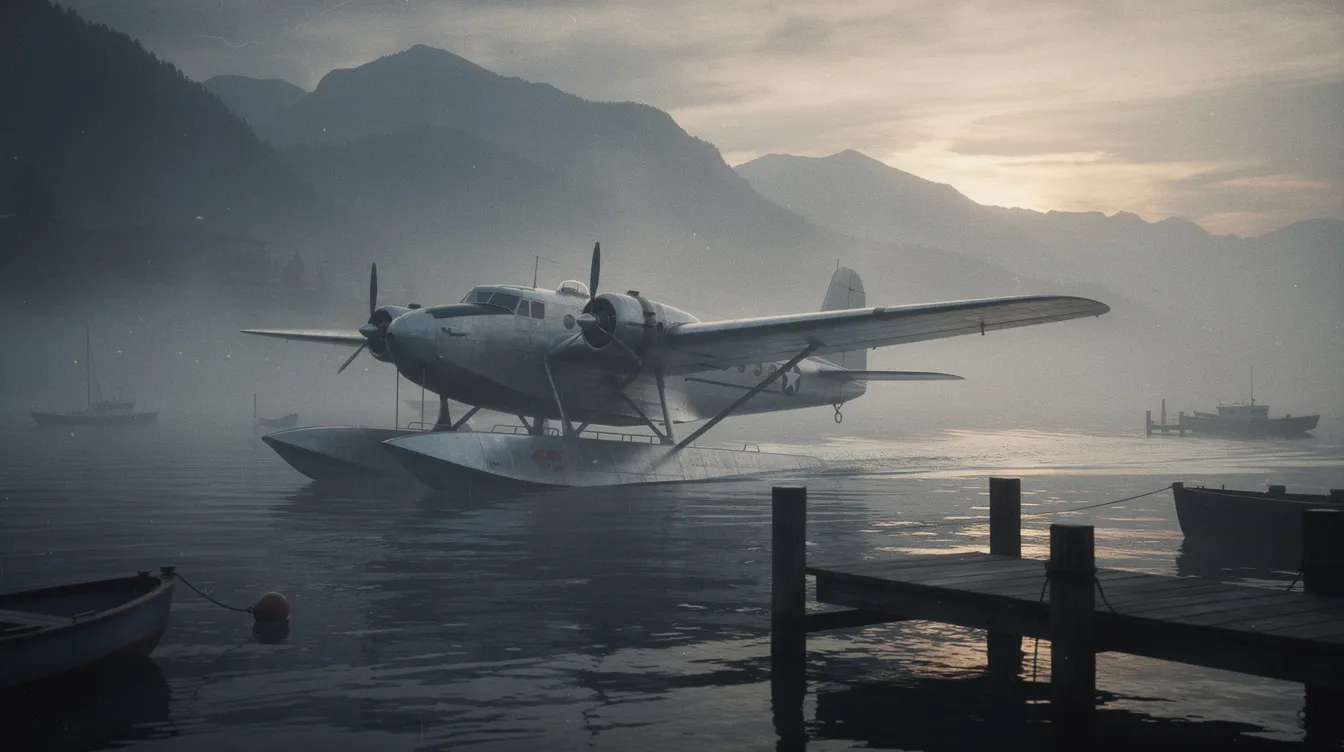
Modern Sea Aircraft: Amphibious Aircraft and Specialized Flying Boats
Modern seaplanes are rare in the classic flying boat form, but they remain essential in rescue, firefighting, maritime patrol, and premium leisure travel. Their value is simple: they can operate where pavement ends.
Firefighting and Patrol
The Canadair CL-415, an improved model of the Canadair CL-215, remains in production and is primarily used for forest fire suppression and maritime patrol. Often called a “Super Scooper,” the CL-415 can scoop water from lakes or coastal areas and deliver it to fires without returning to an airport each cycle.
Purpose-built modern aircraft show how far the category has evolved. The Beriev Be-200, first flown in 1998, is a jet-powered amphibious aircraft used for firefighting, maritime patrol, and search and rescue. The ShinMaywa US-2 is a large STOL amphibious aircraft designed for air-sea rescue work, with the first example delivered to the Japan Maritime Self-Defense Force in 2009. According to ShinMaywa, the US-2 is designed for short take-off and landing performance on water, with advanced spray suppression and rescue capability in demanding conditions.
The AVIC AG600, developed by the Aviation Industry Corporation of China, is a massive amphibious aircraft that made its maiden flight on December 24, 2017, and is designed for firefighting and maritime patrol. Modern military applications are seeing renewed interest in seaplanes for unconventional warfare and expeditionary missions, especially where island chains and dispersed maritime operations make runway access uncertain.
Light-Sport Amphibians
There is also a light-sport side to the market. The ICON A5 is a modern amphibious plane designed for light-sport aviation, featuring a capacity of two passengers and a range of approximately 390 nautical miles. The Progressive Aerodyne SeaRey, SeaMax, Super Petrel LS, and Volmer Sportsman are versatile amphibious planes that serve private owners seeking sport flying from lakes and coastal waters, offering suitability for both water landings and takeoffs. Modern amphibious aircraft like the Progressive Aerodyne Searey and the Volmer Sportsman are available as kit-built experimental or factory-built options, catering to the light-sport class.
Premium Itinerary Aircraft
These small recreational seaplanes are very different from the larger turboprop amphibious aircraft BlackJet members may encounter as part of a premium itinerary. A two-seat airplane for sport flying is not the same operating proposition as a turbine Caravan, Twin Otter, or Otter on floats carrying a family, luggage, and provisions to a lodge.
Transition: As technology continues to advance, the next frontier for sea aircraft is the rise of unmanned and autonomous platforms.
Unmanned Sea Planes: The Rise of Autonomous Maritime Aviation
The next frontier in sea aircraft development is the emergence of unmanned sea planes—autonomous maritime aircraft designed to operate without a pilot on board. Leveraging advanced sensors, GPS navigation, and sophisticated onboard systems, these aircraft can take off, fly, and land on water surfaces entirely under remote or pre-programmed control. This innovation is transforming how maritime operations are conducted, particularly in roles where human presence is either risky or impractical.
Unmanned sea planes are already being tested for a variety of missions, including coastal surveillance, environmental monitoring, and rapid-response search and rescue. Their ability to operate in challenging or remote environments—where traditional aircraft or boats might struggle—makes them invaluable for monitoring marine life, detecting oil spills, or conducting reconnaissance over vast stretches of ocean. By removing the need for a human pilot, these aircraft reduce operational risk and can be deployed for longer durations or in harsher conditions.
Companies such as Warrior Aero and Oregon Iron Works are at the forefront of this development, with prototypes like the GULL 36 and Sea Scout undergoing rigorous flight tests. These aircraft are engineered to handle the unique demands of water operations, from autonomous take-off and landing to adapting to changing sea states. As the technology matures, we can expect unmanned sea planes to play a growing role in both civilian and military operations, offering new levels of efficiency, safety, and reach for maritime aviation.
Transition: With a clear understanding of the types and evolution of sea aircraft, let’s see how BlackJet clients leverage these unique capabilities for real-world travel solutions.
Use Cases: How BlackJet Clients Leverage Sea Aircraft
BlackJet views sea aircraft as part of a broader mobility strategy. The goal is not to romanticize a niche aircraft type; it is to eliminate friction. Long-range jets handle the main flight, while regional amphibious aircraft create the final connection to a shoreline, lodge, yacht, or island, all supported by transparent jet card pricing structures and a clear understanding of jet card cost per hour that keeps costs predictable.
Leisure Example
A family uses a BlackJet 50-hour Jet Card to fly from Los Angeles to Vancouver in a super-midsize jet. On arrival, BlackJet’s 24/7 support team coordinates transfer to an amphibious Caravan 208 on Wipline 8750 floats for a 30-minute flight to a British Columbia island lodge. Luggage, catering, and local handling are synchronized so the journey feels like one itinerary, not three separate bookings.
Business Example
An executive team flies from London to Oslo by private jet, then connects to a float-equipped DHC-3 Otter for site visits to offshore aquaculture facilities or similar coastal projects near key hubs such as Karachi’s private jet terminals. Compared with scheduled flights plus roads and boats, the routing can save a full day while giving the team privacy, schedule control, and access close to the worksite.
Lifestyle Example
BlackJet arranges a jet flight from New York to Nassau, then pairs it with an amphibious transfer to a Bahamian private cay timed with yacht movement. The yacht captain, concierge, and security team receive aligned timing while luggage and catering are pre-positioned.
BlackJet does not manufacture sea aircraft. Our role is to give Jet Card members controlled access to vetted amphibious and floatplane operators with harmonized safety standards, so the client experiences one continuous premium-level service, comparable in clarity and value to well-known NetJets jet card programs.
Transition: To ensure every journey is safe and seamless, rigorous safety, certification, and operational standards are essential for water operations.
Safety, Certification, and Operational Standards on Water
Water operations introduce variables that land runways do not: waves, swell, currents, debris, tide, glare, and limited visual references. Sea conditions can change quickly, and rough water can affect both comfort and safety. That is why experienced pilots, disciplined dispatch, and maintenance oversight matter.
Flying a seaplane requires specific certification, often referred to as SES for Single-Engine Sea or MES for Multi-Engine Sea. In the United States, pilots generally need the appropriate seaplane rating, and commercial operators must comply with FAA Part 91 or Part 135 requirements depending on the mission. In Europe, EASA equivalents govern commercial operations, airworthiness, and crew standards.
Modern sea aircraft may include:
Corrosion-protected structures for saltwater environments.
Reinforced hull or floats for repeated water impact.
Gear advisory systems to prevent landing with wheels down on water.
Modern avionics, including GPS, traffic, weather tools, and radios.
In some light aircraft, whole-aircraft parachute systems.
Portable tools such as Garmin aera navigation units and panel systems with ADS-B traffic can support situational awareness, although certified cockpit equipment and operator procedures remain central. A test pilot evaluating a new amphibious aircraft will also assess handling, spray, stall behavior, water rudder authority, and performance at different weight levels. A chief engineer must balance aircraft design, corrosion control, payload, engines, and hull strength against the intended mission.
BlackJet’s approach is conservative. We partner only with sea-aircraft operators who meet or exceed our proprietary safety vetting, including third-party audits, recurrent pilot training on water operations, and documented maintenance histories for floats, hulls, and powerplants, similar to the rigorous standards upheld by leading private jet companies worldwide. Our real-time flight support team monitors weather and sea-state data for water segments and can adjust routing or timing to preserve safety and comfort.

Transition: Alongside safety, sustainability is a growing priority for modern sea aircraft operations.
Sustainability and Sea Aircraft: Carbon-Neutral, Purpose-Built Missions
Sea aircraft can support more responsible access when they reduce the need for long boat journeys, new roads, or helicopter transfers. That does not remove the carbon impact of flight, but it changes how each mission is planned.
All flights arranged through BlackJet, including segments operated by amphibious aircraft or floatplanes, are supported by our carbon-neutral program. We calculate emissions per mission and retire verified carbon offsets at no extra cost to Jet Card members, even when using more cost-conscious private jet options for certain routes.
Modern turboprop sea aircraft, such as the DHC-6 Twin Otter or Cessna Caravan on amphibious floats, can be more fuel-efficient per passenger than helicopters for certain short coastal hops, especially when fully loaded. Amphibious aircraft can also land in high-sea states to conduct search and rescue operations, offering greater range and speed than helicopters in appropriate missions.
There is also a broader environmental infrastructure benefit. Seaplanes minimize the need for constructing new paved infrastructure, thereby reducing environmental disruption. For sensitive regions, that can mean access without carving a runway into a shoreline or forest.
BlackJet also monitors emerging technologies, including experimental electric seaplanes being explored for short commuter routes in Scandinavia and British Columbia. These aircraft are not yet a universal solution for premium private travel, but they may become relevant where certification, reliability, range, and safety standards meet BlackJet expectations, particularly for clients who structure flying to optimize jet card-related tax deductions.
Transition: Technology and real-time coordination are key to integrating sea aircraft into complex, multi-modal itineraries.
Technology, Booking, and Real-Time Coordination for Complex Itineraries
Combining jets, amphibious aircraft, ground transfers, and yacht movements requires precise coordination. A single delay can affect customs, daylight windows, dock access, refueling, tide, or crew duty limits. Technology turns that complexity into a managed experience.
BlackJet’s digital and mobile booking tools allow members to request multi-leg itineraries in one interface. Instead of thinking only in airport codes, members can specify waterfront destinations: private docks, island lodges, marina locations, or yacht coordinates.
Behind the scenes, our operations team aligns jet arrival times with sea-aircraft departures. That includes customs, immigration, local permissions, water operations rules, baggage planning, and weather conditions. Secure document handling and manifest coordination allow clients, yacht captains, hotel concierges, and security teams to work from the same timing.
This is what transforms sea aircraft from curiosities into practical instruments of strategic mobility. The value is not only the aircraft; it is the orchestration.
Transition: For those inspired to go further, becoming a seaplane owner or pilot is a unique pathway into this world.
Becoming a Sea Aircraft Owner or Pilot: Pathways and Considerations
For those drawn to the unique world of seaplanes, becoming an owner or pilot opens up a realm of adventure and utility that few other forms of aviation can match, while others may prefer to access private aviation one seat at a time or through unlimited private jet membership programs via shared or semi-private options. The first step is to determine which type of seaplane best fits your intended mission—whether it’s a classic flying boat, a versatile amphibious aircraft, or a practical floatplane. Each offers distinct advantages: flying boats excel in open water and rougher conditions, amphibious aircraft provide flexibility to operate from both land and water, and floatplanes are ideal for lakes and sheltered bays.
Prospective pilots must pursue specialized training, as operating on water introduces new variables compared to land-based flight. In most regions, earning a seaplane rating—such as Single-Engine Sea (SES) or Multi-Engine Sea (MES)—is required in addition to a standard pilot’s license. Training covers water takeoffs and landings, docking, beaching, and handling varying sea conditions. For owners, considerations extend to maintenance (especially corrosion control), insurance, hangar or dock storage, and compliance with local regulations.
Costs can vary widely depending on whether you choose to purchase a light floatplane, a larger amphibious aircraft, or even a restored flying boat, much like the spectrum of budget-friendly private aircraft options and the cheapest single-engine planes for new owners available in general aviation. Renting or joining a flying club can be a practical entry point. Responsible operation also means respecting environmental guidelines, minimizing noise, and safeguarding marine habitats. With the right preparation and mindset, piloting or owning a sea aircraft is both a privilege and a responsibility—offering unparalleled access to waterborne destinations and a unique perspective on the world of aviation.
Transition: When planning a journey, it’s important to compare sea and air travel with other access options to choose the best fit for your needs.
Sea Aircraft Versus Other Access Options: Comparative Advantages
Sea aircraft sit within a spectrum of access options that includes helicopters, small landplanes, yachts, ferries, and ground vehicles. The right answer depends on safety, comfort, sustainability, route length, and schedule.
Comparison Table:
Option | Advantages | Limitations/When Not Ideal |
|---|
Sea Aircraft | - Direct access to water-based destinations<br>- Flexible routing<br>- Efficient for 100–300 nm over-water hops | - Limited by water conditions<br>- Not for all weather |
Helicopters | - Vertical access<br>- Land in tight spaces<br>- Good for short hops | - Less efficient for longer distances<br>- Smaller cabins |
Small Landplanes | - Efficient for remote runways<br>- Good speed and range | - Require runways<br>- Not suitable for water-only destinations |
Boats/Yachts | - Scenic, leisurely travel<br>- Direct water access | - Slower over long distances<br>- Exposed to sea state |
Ground Vehicles | - Flexible for land-based travel<br>- No weather limitations (except extreme) | - Limited by road access<br>- Not suitable for islands or remote coasts |
Key Points:
For over-water routes of 100–300 nautical miles, an amphibious turboprop may offer more cabin volume, greater range, less perceived noise, and better fuel efficiency per passenger than helicopters.
A small landplane still needs a runway, while a floatplane can use lakes and sheltered bays where no land-based runway exists.
In the Caribbean, Mediterranean, or Pacific Northwest, a 40-minute amphibious flight can replace a 3–5 hour high-speed yacht or ferry journey.
BlackJet advisors help members choose the optimal mode, or combination of modes, rather than defaulting to a single type of aircraft, drawing on a detailed understanding of private jet pricing and access options and the full economics of chartering a small private plane. The priority is the best itinerary: safe, efficient, comfortable, and refined.
Transition: To address common questions, here are answers to frequent queries about sea aircraft and BlackJet Jet Cards.
Frequently Asked Questions About Sea Aircraft and BlackJet Jet Cards
Are sea aircraft safe?
Yes, when operated under proper regulation, by trained pilots, in suitable weather and sea conditions. Safety depends on certification, recurrent training, disciplined maintenance, and conservative go/no-go decisions. BlackJet adds proprietary vetting for operators, crews, aircraft, maintenance records, and water operations procedures.
Can my BlackJet Jet Card be used for amphibious or floatplane segments?
Core Jet Card hours are designed around private jet access, including 25-hour, [50-hour](LINK 4), and dedicated 100-hour Jet Card programs across multiple cabin categories. However, our team can integrate and arrange sea-aircraft segments through vetted partners under a coordinated itinerary and billing structure, making the journey feel seamless.
How much luggage can I bring on a sea aircraft?
It depends on the aircraft. A two-seat light amphibious aircraft, such as an ICON A5, is not suitable for a family transfer with substantial baggage, while larger turboprops may seat 8–19 passengers depending on configuration, floats, fuel, and gross weight. BlackJet plans luggage, passengers, catering, and alternates before confirming the route.
What about customs and immigration when landing on water?
International entry generally still occurs at approved airports or designated ports of entry. In many itineraries, the jet segment clears formalities first, and the sea-aircraft leg begins afterward. BlackJet coordinates regulatory compliance before departure, so the client is not left managing local rules.
Can sea aircraft operate in any weather?
No. Wind, visibility, swell, tide, and daylight can all affect water operations. Seaplanes rely on displacement and hydrodynamic lift for landing and takeoff, so water surface conditions matter. BlackJet’s operations team monitors conditions and adjusts timing when needed.
Transition: BlackJet’s integrated approach ensures that every segment of your journey is seamless, safe, and tailored to your needs.
BlackJet’s Perspective: Integrating Sea Aircraft into a Seamless Private Travel Strategy
Flying boats once symbolized the frontier of aviation in World War I and World War II. Today, their legacy lives on through practical amphibious aircraft, floatplanes, and specialized rescue or firefighting designs. The technology has changed, but the strategic idea is the same: use the water as access when pavement is too far away. For discerning travelers, this can turn a difficult journey into a controlled movement.
BlackJet uses its Jet Card programs as the anchor for consistent private jet access, then layers in bespoke sea-aircraft solutions for coastal, lakefront, and island destinations. The result is a premium travel portfolio: private jets for trunk routes, amphibious aircraft for the final shoreline connection, and real-time support across the entire journey.
Our pillars remain the same across every segment: safety through proprietary vetting of aircraft and crews, sustainability through carbon-neutral flights, and technology through mobile booking and real-time coordination. Whether the mission involves a major city, a remote lodge, or a private cay, BlackJet builds the itinerary around access, discretion, and confidence.
Explore how BlackJet’s Jet Card programs can unlock direct access from city runway to private shoreline in one seamless, expertly managed experience, and review our broader guide to jet card costs and options, and best jet cards for frequent flyers when comparing membership models.
Conclusion and Future Outlook for Sea Aircraft
The journey of sea aircraft, from the pioneering flying boats of the early twentieth century to today’s advanced amphibious aircraft and emerging unmanned platforms, reflects a legacy of innovation and adaptability. Each era has brought breakthroughs in aircraft design, materials, and mission capability—expanding the range, performance, and operational flexibility of these remarkable craft. As aviation continues to evolve, the integration of autonomous systems, electric propulsion, and lightweight composites promises to further enhance the efficiency and sustainability of seaplanes.
Looking ahead, amphibious aircraft are poised to play an even greater role in connecting remote communities, supporting military and humanitarian operations, and enabling environmentally sensitive access to water-rich regions, complementing the broader wave of next-generation aircraft entering service by 2026. The development of unmanned sea planes will open new possibilities for maritime surveillance, environmental stewardship, and rapid response in challenging conditions. As the world seeks more sustainable and versatile transportation solutions, seaplanes stand ready to meet the demands of a changing global landscape alongside the newest generation of private jets that emphasize efficiency and reduced emissions.
For travelers, operators, and innovators alike, the future of sea aircraft is bright—marked by continued development, expanding missions, and a commitment to safety, performance, and environmental responsibility. At BlackJet, we remain dedicated to integrating these advancements into seamless, premium travel experiences, ensuring that the spirit of exploration and access that defined the first flying boats continues to inspire the next generation of aviation.


 Sign up with google
 Sign up with Apple


