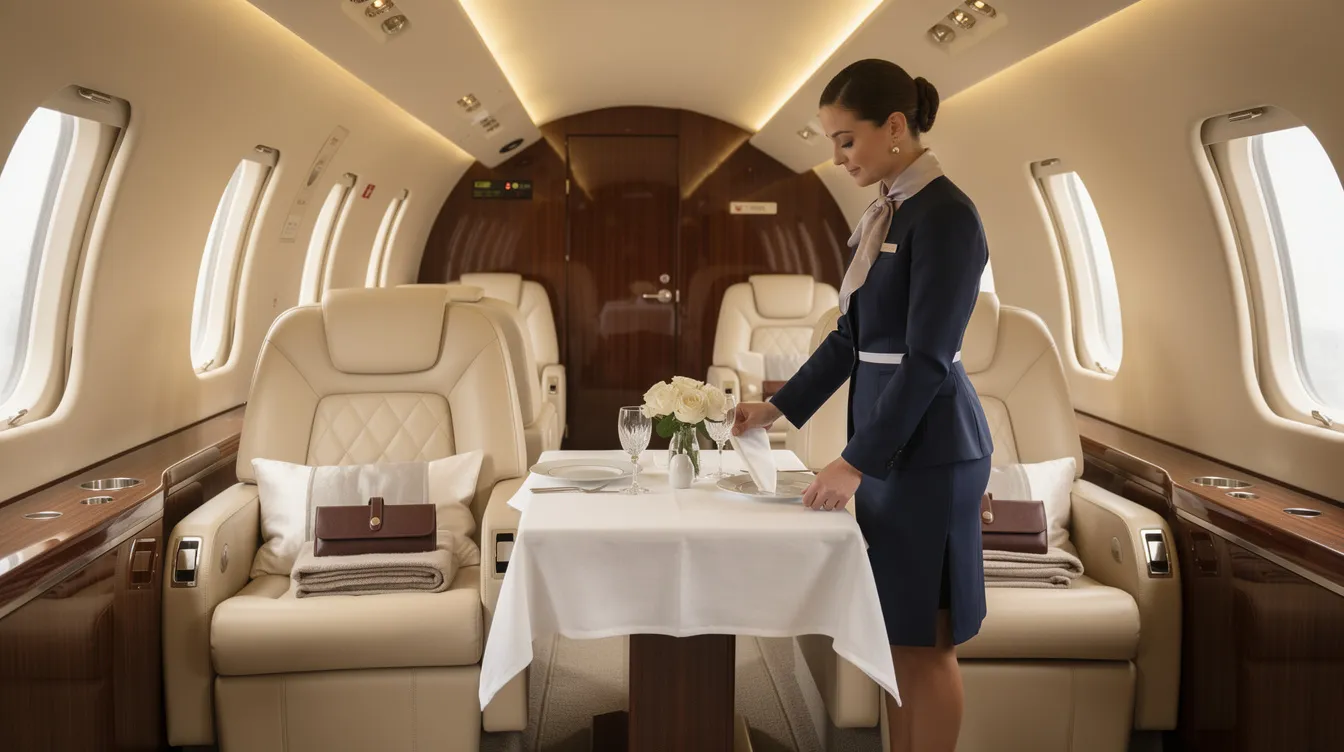
The life of a flight attendant is defined less by glamour and more by a complex, regulation-driven scheduling system that most passengers never see. Whether you are considering a career in the aviation industry or simply want to understand the operational precision behind every journey, this guide breaks down how flight attendants work schedules in both commercial airlines and private aviation.
Key Takeaways: How Many Hours Flight Attendants Really Work
Here is what the numbers actually look like for a working flight attendant schedule across the industry:
Full-time flight attendants typically log 65 to 90 flight hours per month, plus roughly 50 hours monthly on ground tasks such as briefings, boarding, delays, and post-flight procedures.
Flight hours refer to the time from when the aircraft leaves the gate until it arrives at the destination gate, while duty hours include all time spent on work-related tasks, including preflight and post-flight duties.
Total duty hours for flight attendants can exceed 120 hours per month, meaning duty hours can exceed 40 hours per week even though the job involves fewer calendar days than a traditional office role.
This usually translates to 12 to 15 working days per month, with roughly 15–16 days off - flight attendants may work fewer calendar days than traditional office jobs but with demanding work hours.
Flight hours measure block time from when the boarding doors close and the plane pushes back to arrival and chocks on. Duty hours cover everything from sign-in to release. For example, a New York–Dallas–Los Angeles sequence starting at 05:30 sign-in and ending at 19:45 release might include only 7.4 flight hours but 14.25 duty hours.
In private aviation, cabin crew hours can be more flexible, tailored around client itineraries under a Jet Card model like BlackJet's 25-hour or 50-hour programs and the broader BlackJet 25+ Hour Jet Card.
While commercial flight attendants must work around rigid rosters, BlackJet's operations team designs schedules around member demand, safety regulations, and sustainable, fatigue-aware duty planning.
How a Flight Attendant Schedule Is Built (Trips, Pairings, and Rotations)
Flight attendant schedules are built around trips - also called pairings or sequences - not simple daily shifts. This structure applies across most airlines and private operators alike. Flight attendant shifts, or trips, usually last 1 to 4 days.
Same-day turns involve flying out and back in one duty period (e.g., Chicago–Atlanta–Chicago), often including two or three flights within a single duty day.
Multi day trips with overnights might span two or three days, such as Toronto–Vancouver–Calgary with a Vancouver layover, providing longer layovers in different cities.
Long-haul trips covering 4–6 days involve international rotations like New York–London–Rome–New York over five days, with long legs crossing multiple time zones and exposing crews to passengers and service expectations from different cultures.
A typical monthly line for a mid-seniority commercial flight attendant might include four 3-day trips, two 2-day trips, and 14–16 days off. A flight attendant's schedule is shaped by factors including seniority and home base airport.
In private aviation, trips are more bespoke. A three day trip on a BlackJet itinerary might involve a member flying London–Geneva–Dubai, with personalized service planning informed by precise private jet flight time calculations and premium hotel stays between legs. Regardless of the operator, every trip is framed between sign-in at base and release after the last leg, and all duty time in between is regulated.
Flight Hours vs Duty Hours: What Counts as Work Time?
Confusion about flight attendant hours almost always comes from mixing up flight hours and duty hours.
Flight hours (block time) measure the period from pushback at origin to arrival at destination. A 2-hour 35-minute Los Angeles–Denver sector counts as 2.58 flight hours - that is the flight time recorded for pay purposes.
Duty hours encompass everything from the required report time (flight attendants must arrive at the airport 1 to 2 hours before the first flight) through post-flight checks, paperwork, and any time waiting between legs.
A flight attendant's duty day can range from 4 to over 14 hours. Consider a realistic day: 06:00 sign-in, three domestic legs totaling 7.4 flight hours, release at 19:30. That is 13.5 duty hours for 7.4 hours of recorded flight time.
At most airlines, pay is tied to flight hours rather than full duty hours, which means considerable unpaid or partially paid ground time. In private aviation, compensation can be more holistic, reflecting standby and personalized service time.
The Federal Aviation Administration caps duty hours and mandates minimum rest periods. Operators like BlackJet design crew pairings to stay well within these limits for safety and service consistency.
How Many Hours and Days Do Flight Attendants Work Per Month?
Here is how many hours and days the numbers break down to on a monthly basis:
Flight attendants can log 65 to 90 flight hours monthly, with monthly flight hours capped at around 95 to 100 hours by regulation and contract. Many crews average around 85 flight hours per month during moderate seasons.
Flight attendants work 12 to 14 days per month. A mid-seniority airline flight attendant in October might fly 82 hours across 14 duty days with 17 days off, including two blocks of four consecutive days at home.
Compare that to a standard 40-hour office week (about 160 hours over 20 days per month). Flight attendants work fewer days but with longer flights and irregular shifts.
New hire flight attendants might be scheduled closer to 90–95 flight hours in a busy summer month, while senior flight attendants may bid down toward 65–70 hours for lifestyle flexibility and more control over their own schedule.
Cabin crew in private aviation see more variability. Those supporting BlackJet missions may have months clustered with intense flying during peak travel seasons and quieter periods in between, often aligned with member demand under predictable-cost jet card membership programs that are evaluated using hourly jet card cost comparisons. Part-time or reduced-schedule crew may target 40–50 flight hours per month.
Duty Limits, Rest Rules, and Safety Regulations
Flight attendants work schedules that are tightly controlled by aviation authorities and operator policies to protect safety. FAA regulations govern flight attendants' working hours and rest periods, and these rules are non-negotiable.
Flight attendants cannot work more than 14 duty hours daily under standard conditions. A duty period cannot exceed 14 hours, though flight attendants can work up to 16 hours in emergencies or when additional crew is added.
The FAA mandates specific rest periods between duty periods. After the 2022 regulatory update, flight attendants must receive at least 10 consecutive hours of rest after a standard duty period. Previously, a minimum of 9 consecutive hours of rest applied under certain circumstances.
These rest periods must be free from work, transportation, and any airline duties.
Example: a 13-hour duty day ending at 21:30 cannot be followed by another sign-in earlier than 07:30 the next day - regardless of schedule disruptions.
Premium providers like BlackJet often exceed minimum rest standards as part of their safety and certification commitments, designing pairing structures, crew hotels, and transport so cabin crew arrive rested and ready.
Reserve vs Lineholder: How Flight Attendants Get Their Schedules
Two schedule types shape life for airline flight attendants: reserve (on-call) and lineholder (pre-assigned trips). A lineholder is a flight attendant with a pre-assigned schedule of trips, while a reserve is on-call to fill in as needed.
Junior flight attendants typically work on reserve and must be on call. Reserve flight attendants are on-call 24 hours a day during their assigned windows. A junior flight attendant based in Atlanta might have 18 reserve days in a month, required to be contactable and able to report on short notice - usually within 2–3 hours. Reserve schedules offer less control over destinations and timing; reserve crew typically work flights rejected by more senior staff.
Line holders receive a published line of trips before the month starts. A lineholder might have four 3-day trips to Los Angeles and San Francisco, two 2-day trips to Miami, plus 15 specified days off. Lineholders bid for trips based on seniority each month, much like frequent travelers evaluate the best jet card programs for their flying patterns.
The monthly bidding process lets flight attendants submit preferences for desired routes, days off, and layovers in advance. The system awards schedules in strict seniority order. With more seniority, crew members gain access to long haul international pairings, more pay, and better layovers. Senior flight attendants have fixed schedules that they can bid on, while those with less seniority take what remains. Crew at the same airline can also swap trips or drop trips through internal trading systems.
In private aviation, formal bidding is less common. BlackJet's scheduling team matches flight attendants and cabin crew to missions based on experience, language skills, and member expectations - while protecting adequate rest.
Days Off, Layovers, and Work–Life Balance for Flight Attendants
Flight attendants work various shifts including early mornings, overnights, weekends, and holidays. They work nights and cross time zones regularly. Yet they often enjoy more total days off per month than most office workers - commonly 12–18 days depending on the airline and seniority.
Not all days off are spent at home. Some are embedded within long trips as layover days in different cities, including spending the night in a hotel on a layover in another city during longer trips - a 36-hour layover in Paris or a 24-hour stop in São Paulo between long haul legs.
Consider a three day trip: Day 1, New York–London flight. Day 2, a full layover in London where crew rest, explores, and spend time in a different culture. Day 3, return London–New York, performing post flight procedures before release.
Flight attendants strategically bid for longer layovers or specific destinations to turn work trips into mini city breaks. Those with more seniority secure holiday dates, preferred layovers, or routes. Flight attendants often have 15–16 days off each month that are rarely consecutive.
On BlackJet missions, cabin crew may stay at an exclusive resort location until the member is ready to return, benefiting from premium accommodation but remaining flexible on departure times—particularly on high-usage products such as 100-hour jet card programs or mid-tier 50-hour jet card options.
A flight attendant's schedule is often irregular and flexible. Managing sleep, jet lag, and relationships around irregular duty hours is central to the job, and well-structured schedules are crucial to long-term wellbeing.
What Flight Attendants Do During Preflight, Inflight, and Post-Flight Duty
A flight attendant's duty hours are filled with safety-critical and service-focused work before, during, and after every flight segment.
Preflight: report to the crew room 60–90 minutes before departure, attend a briefing with the flight crew, check emergency equipment, review the passenger manifest (including unaccompanied minors or VIPs), and prepare the cabin and galley. Flight attendants conduct preflight safety briefings for each flight.
Boarding: assist passengers during boarding and help with baggage, verify seating, brief passengers near exits, and coordinate with gate agents on processing passengers and takeoff readiness.
Inflight: enforce safety regulations like seatbelt signs, manage turbulence protocols, handle medical events, and coordinate with the flight deck. They serve food and beverages based on dietary needs - from espresso on a short domestic hop to a full multi-course meal on longer flights.
Post-flight: after flights, they clean the cabin and prepare for the next flight, secure galleys, complete safety and incident reports, and check for left items. This phase of performing post flight procedures often adds 20–45 minutes to a duty period.
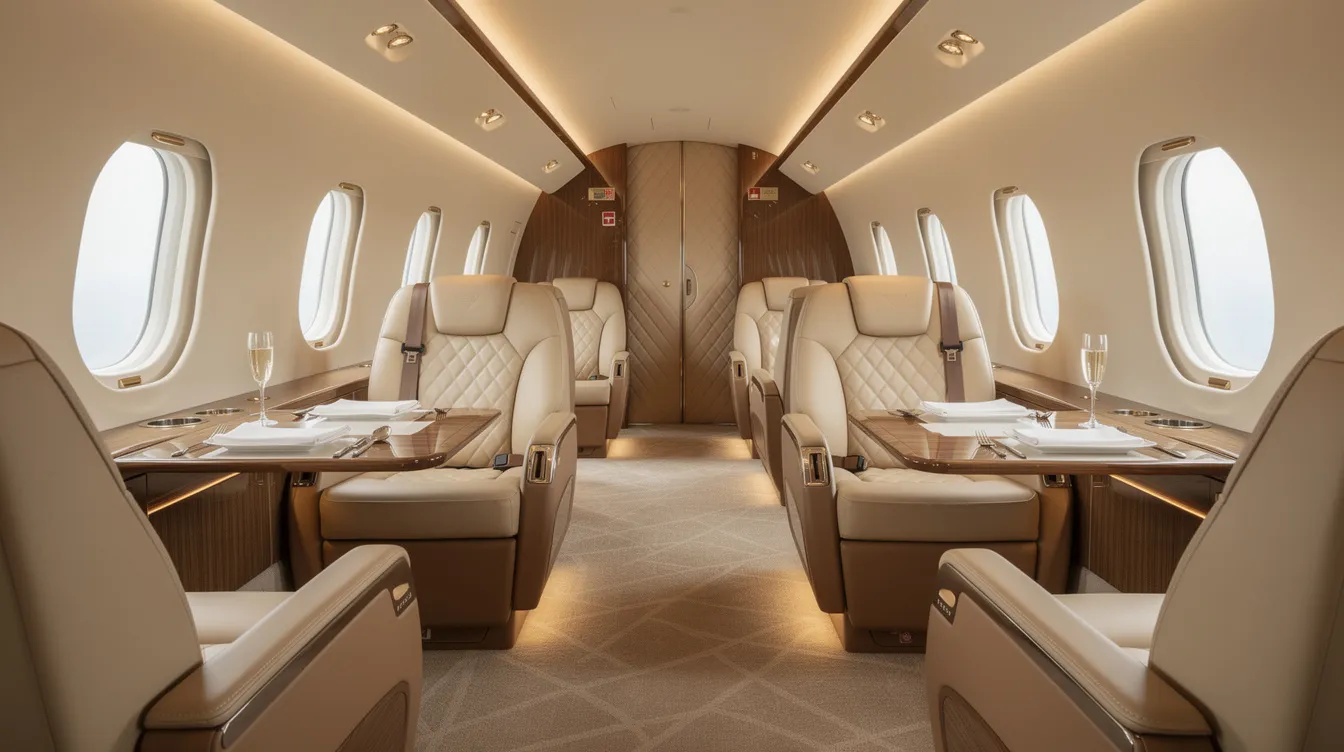
In private aviation, BlackJet cabin crew take on additional bespoke roles - coordinating special catering, arranging ground transportation, and adapting service to individual members across multiple legs in a single day, often across different types of private jets tailored to each mission and a range of private jet sizes matched to group and range needs.
Even when only three flights totaling 3–4 flight hours are scheduled, the total duty period can be much longer due to these before- and after-flight responsibilities.
How Private Jet Cabin Crew Schedules Differ from Airline Flight Attendants
For those considering career opportunities in private aviation or exploring roles beyond cabin crew, such as private jet pilot careers and salary paths, or even high-end private jet sales careers and earnings potential, or trying to understand how BlackJet operates differently from commercial carriers, this comparison matters.
Airline flight attendants usually have fixed bases (Miami, Heathrow, Dubai) and bid on published monthly schedules. Private jet cabin crew often work from a broader region and are rostered against client bookings that can shift closer to departure.
A comparative week: an airline flight attendant works a pre-planned three-day New York–Los Angeles–Phoenix rotation. Meanwhile, a private cabin crew member supporting a BlackJet Jet Card client flies New York–Nantucket on Thursday, Nantucket–Teterboro on Sunday, and Teterboro–Miami on Monday - each leg driven by member needs, especially under high-frequency options like unlimited private jet membership programs.
Private jet cabin crew typically serve fewer passengers per aircraft but provide far more individualized service, which changes the cadence of the day even when total flight hours are similar. The starting salary and compensation structure also reflects this elevated service expectation and connect to the broader cost of employing private jet pilots and crew, especially on larger aircraft such as private jets configured for around 20 passengers.
Safety regulations on duty hours and rest still apply under FAA Part 135. Premium operators add internal safeguards: BlackJet's scheduling software flags back-to-back transatlantic missions to ensure additional rest or rotational crew, similar to leading private jet companies known for their safety and service standards that operate large-group private jets for up to 50 passengers.
Private crews may spend more time in high-end hotels and exclusive FBOs but must adapt to last-minute itinerary changes. It is a job that rewards flexibility and composure in the air and on the ground, and is closely tied to services like BlackJet's premium private jet card and charter solutions.
Optimizing Flight Attendant Schedules with Technology, Safety, and Sustainability
Modern flight attendant and cabin crew schedules are created using advanced crew-management technology that juggles regulations, aircraft routing, and human factors like fatigue.
Airline scheduling systems automatically apply rules for maximum duty hours, minimum rest periods, time-zone crossings, and required crew counts per aircraft type, then generate trip pairings that planners refine, often integrating tools similar to advanced private jet flight time calculators.
BlackJet uses digital tools and real-time operational support to align flight crew schedules with member bookings, aircraft availability across cabin classes, and carbon-neutral routing where possible.
Sustainable aviation considerations - optimizing routes to reduce fuel burn and consolidating long legs where practical - also shape when flight attendants fly, while ensuring no compromise on rest or safety.
Example: a sequence of private flights re-timed by two hours to avoid a curfew, reduce holding patterns, and keep the cabin crew within a 12-hour duty window instead of pushing toward the 14-hour maximum.
Technology enables efficient scheduling. Safety rules set the non-negotiable boundaries. Understanding how private jet pricing and access models work helps align these schedules with the right aircraft and ownership structures, while sustainability - including BlackJet's carbon-neutral commitment - adds a modern dimension to how every flight attendant schedule is designed across the aviation industry.
FAQ: Common Questions About Flight Attendant Schedules and Hours
How many hours does a flight attendant work in a month? Flight attendants can log 65 to 90 flight hours monthly, with additional duty time pushing totals above 120 hours per month. Variability depends on airline, base, season, and seniority.
How many days a week do flight attendants work? Scheduling is monthly, not weekly. Flight attendants typically work 12 to 15 days per month, which averages roughly 3–4 duty days per week but in irregular patterns.
Do flight attendants choose their own schedule? Senior crew bid on preferred schedules each month, selecting desired routes and days off. Junior crew on reserve has less control. Schedules for flight attendants are influenced by seniority, union contracts, and FAA regulations.
Are flight attendants paid during layovers and delays? At most airlines, pay is primarily tied to flight hours - not layovers or delays. Some private operators structure more holistic compensation covering duty time and standby.
What is the most hours a flight attendant can work in a day? A flight attendant's duty period cannot exceed 14 hours under standard conditions, with a mandatory rest of at least 10 consecutive hours afterward.
How does this differ for private jet cabin crew? BlackJet and similar operators follow strict duty limits but have more flexibility to craft premium, fatigue-aware schedules around member needs - matching crew to each journey with precision rather than mass rosters.
Conclusion: The Strategic Advantage of Understanding Flight Attendant Schedules
Flight attendant schedules embody a sophisticated balance of regulatory compliance, operational demands, and personal well-being—elements that are critical to safety and service excellence in aviation. For commercial crews, seniority and bidding shape a complex monthly mosaic of trips, rest, and travel, while reserve duty tests adaptability with on-call unpredictability. In private aviation, exemplified by BlackJet's Jet Card programs, schedules become bespoke instruments tailored to client needs, integrating cutting-edge technology, sustainability commitments, and elevated safety protocols.
Understanding these schedules reveals why private jet access is more than luxury—it is a strategic advantage for discerning travelers who value seamless, fatigue-aware service and unparalleled flexibility. Whether you are a professional considering a career in cabin crew or a traveler seeking premier jet access, appreciating the intricacies of flight attendant hours underscores the dedication behind every journey—from regional missions such as private jet charters in Karachi to tailored private jet charters in Lahore. Discover how BlackJet can elevate your travel experience with expertly crafted schedules that prioritize safety, sustainability, and personalized service.


 Sign up with google
 Sign up with Apple