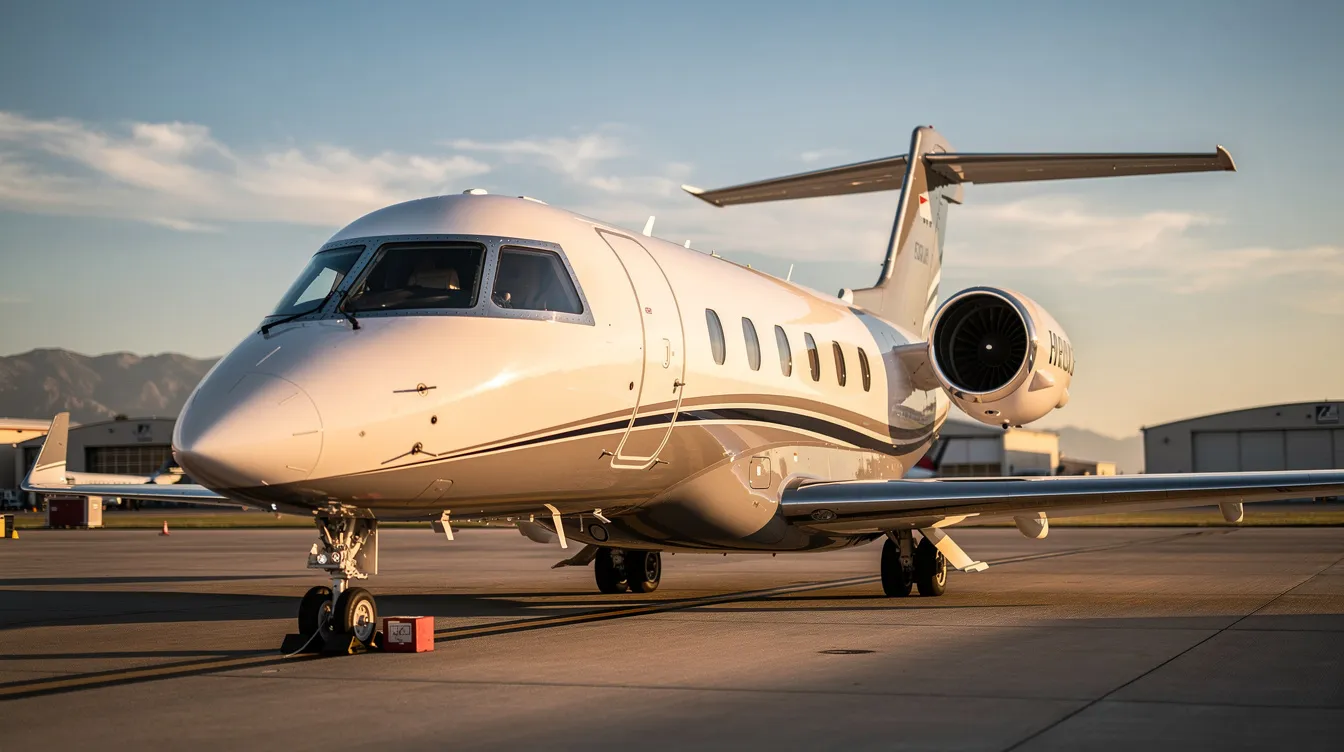
For discerning travelers seeking to reclaim hours lost to commercial travel, ride-share private jet options have emerged as a strategic middle ground—bridging the gap between crowded airport terminals and the full commitment of chartering an entire aircraft. Typically operated by a charter company that manages the aircraft and all logistics, this model isn’t merely about luxury; it’s about intelligent access to private aviation without the price tag of booking the entire plane.
Why Ride-Share Private Jets Matter Now
The calculus of premium air travel shifted dramatically in recent years. While commercial first class still means navigating long security lines, arriving two to three hours early, and accepting rigid schedules, private jets operate on an entirely different paradigm. Travelers arrive just 20 to 30 minutes before departure, proceed through a private terminal, and board directly—no TSA queues, no gate changes, no crowded lounges.
Full private jet charter, however, comes with substantial operating costs. The cost of chartering a private jet typically ranges from $2,000 to over $20,000 per hour, depending on factors such as aircraft type and flight distance. Annual operating expenses for private jets vary widely, with very light jets typically costing between $500,000 and $1 million, while larger jets can reach $2 to $4 million, largely driven by fuel costs. For those flying less than 200 to 300 hours per year, on-demand charter services often prove more economical than ownership, as they eliminate fixed expenses such as crew salaries, hangar fees, and insurance.
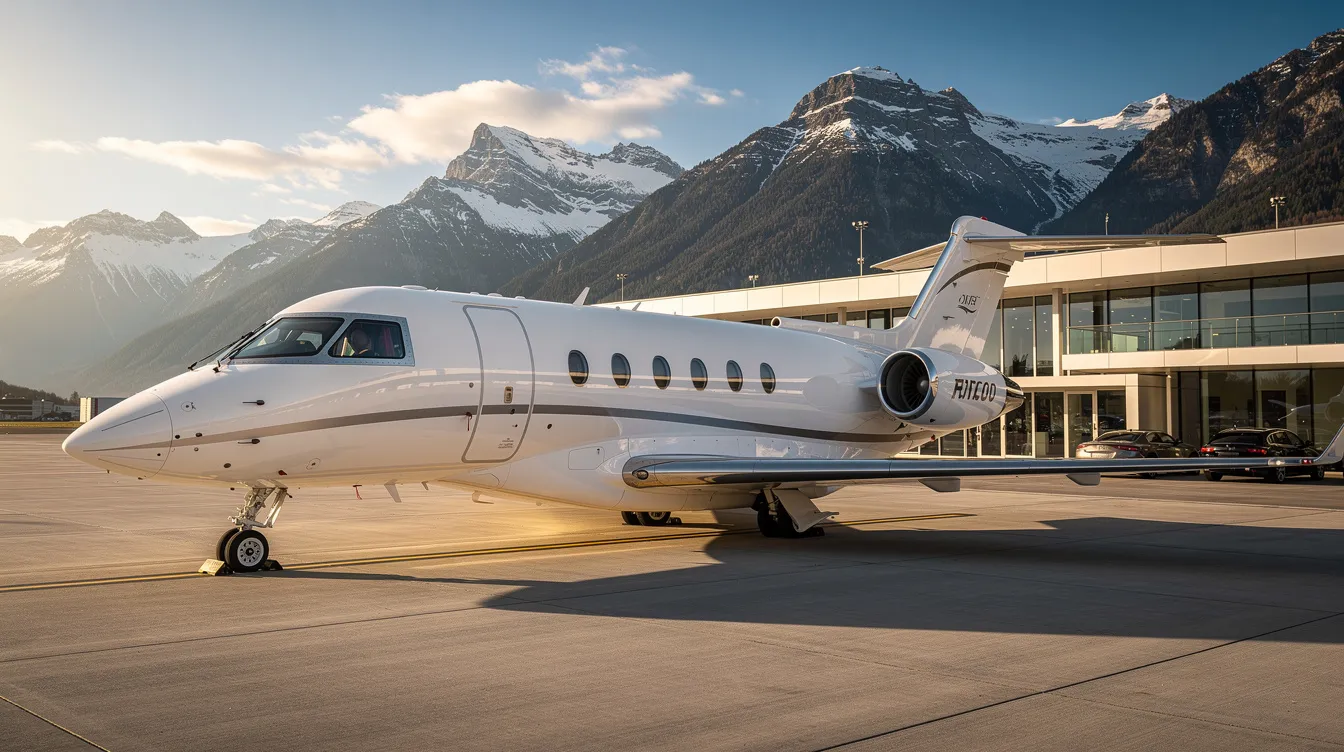
Typical hourly charter rates for a 10-to-12-seat aircraft hover between $5,000 and $9,000 as of 2025-2026, making exclusive access prohibitive for many travelers seeking premium service on shorter or more frequent trips. This is where ride-share and semi-private jet flights enter the equation: they allow individual seats to be purchased on private aircraft, distributing costs across multiple passengers and enabling passengers to access private flying at rates competitive with—or only marginally above—commercial first class on peak routes.
BlackJet positions itself at the intersection of these options. As a premium private aviation company, BlackJet offers Jet Card memberships that integrate ride-share, semi-private, and traditional private jet charter on a single platform. Members gain prepaid hours with predictable pricing, 24/7 digital booking, and access to vetted operators meeting rigorous safety standards. Whether you need a full charter for a business trip with partners or a single seat on a high-demand corridor, BlackJet’s Jet Card structure accommodates both.
This article will show you exactly how to access ride-share private jet options with a Jet Card, then examine the different models available, popular routes where semi-private economics shine, onboard experience, safety protocols, sustainability practices, and practical booking steps. For business travelers and frequent travelers alike, understanding these options can transform how you approach private air travel.
What Is Ride-Share Private Jet Travel?
Ride-share private jet travel fundamentally involves multiple unrelated passengers sharing a single private aircraft and splitting the cost on a per-seat basis. Think of it as carpooling—but at 35,000 feet in a spacious cabin with six to twelve fellow passengers, maximum rather than hundreds. This model is often facilitated by apps and membership platforms that enable pre-scheduled or dynamically matched bookings based on demand.
The contrast with other models is significant:
Full private charter: One party books and controls the entire jet via a charter flight, enjoying maximum customization, absolute privacy, and the freedom to create custom routes or multi-stop itineraries. Ideal for groups of 4-12 or travelers seeking the entire aircraft for sensitive conversations or complex schedules.
Commercial business or first class: Padded seats and better service than economy, but you’re still subject to crowded airports, rigid departure times, and commercial airlines’ operational constraints.
Traditional ownership or fractional ownership: Substantial upfront investments—fractional shares can require $500,000 or more for 50-400 guaranteed annual hours, with long-term commitments and ongoing fees.
Ride-share and semi-private flight services predominantly deploy light jets like the Citation CJ3 (approximately 2,000 nautical miles range, 6-9 seats) or turboprops such as the King Air 350 on high-demand corridors. Routes like Los Angeles to Las Vegas or New York to Miami see consistent demand, with schedules fixed in advance or dynamically aggregated based on bookings.
Key trade-offs exist. You’ll typically see 40-70% cost reductions per seat compared to commercial flights with full charters, but with diminished privacy (strangers share your cabin), fixed departure windows (less flexibility than on-demand charters), and baggage limits typical of light jets (usually 50-100 pounds per passenger). Shared flights often have strict weight limits due to careful balancing of the jet's total weight. Ride-sharing means sharing the space with 6–12 other passengers, which reduces privacy compared to a full charter. Tech platforms—including BlackJet’s Jet Card system—make it possible to browse, book, and manage semi-private and ride-share seats around the clock via web and mobile interfaces.
Models of Ride-Share & Semi-Private Jet Access
No monolithic ride-share private jet model exists. Instead, several access types cater to different traveler profiles, budgets, and flexibility requirements. Understanding these distinctions helps you select the approach that fits your travel patterns.
Semi-private scheduled flights operate on fixed routes and times, similar to commercial airlines but using private aircraft. Think of departures from Van Nuys to Las Vegas or Teterboro to West Palm Beach on a Phenom 300 (1,900 nautical mile range, 7-11 seats, cruising at approximately 450 knots). Semi-Private Shuttles operate fixed routes on a set schedule with only 6–16 other passengers. Passengers purchase individual seats at published prices, gaining near-private comfort without needing to fill an entire plane. Providers like JSX, Aero, Blade, and Surf Air have built networks on this model, particularly on leisure and commuter corridors.
Shared charter begins as one party’s private booking, with unused seats then released via private plane rideshare platforms to offset costs. If a group of three books a Citation CJ3 with seven seats, the remaining four seats might be made available to other travelers at reduced rates, often 40%–75% off. The original party maintains some itinerary control while splitting operational expenses with fellow passengers seeking the same route.
Membership and Jet Card solutions like BlackJet’s prepaid hours and credits can be applied to per-seat opportunities, empty leg flights (discounted repositioning flights at 20-75% off retail charter rates), and traditional full charters, with Jet Card cost structures designed to provide predictable pricing. Many providers offer membership plans that provide flexible access to aircraft, priority booking, and discounted rates for frequent travelers. This flexibility allows frequent travelers to mix access modes based on trip requirements—semi-private for routine hops, full charter when privacy matters.
Concrete aircraft examples illustrate the range: the Citation CJ3 suits East Coast corridors like Teterboro to West Palm (approximately 2 hours), the Phenom 300 handles transcontinental routes like LA to Jackson Hole, and the King Air 350 excels on regional trips like Dallas to Aspen, while larger groups may opt for top 16-seat private jets on longer or higher-capacity missions. All operate under Part 135 certification, ensuring commercial-grade safety standards.
How Ride-Share, Charter, and Jet Cards Compare
Selecting between traditional on-demand charter, ride-share, or semi-private options, and Jet Card memberships requires understanding each model’s strengths and constraints.
Traditional on-demand charter demands full-aircraft payment. As a reference for how much it costs to rent a private jet, hourly rates range from $2,000-$3,500 for light jets to $8,000 or more for long-range aircraft. This grants total control: you dictate departure times, routing, passenger manifest, and onboard amenities. Maximum privacy comes standard—the entire plane is yours. This model excels for groups of 4-12 on irregular trips, multi-stop business tours, or when confidentiality is paramount. The drawbacks: repositioning fees can add costs, peak-season availability is tight, and solo travelers or couples find it economically impractical.
Ride-share and semi-private shifts to seat-based pricing. Expect $200-$1,000 per seat on short-haul routes, with longer corridors running $1,500-$2,500. This suits solo travelers or small groups on popular fixed routes who don’t need full aircraft control. The comfort level approaches true private—6-12 passengers maximum, club seating, premium service—but departure times are fixed, routes are predetermined, and you’ll share space with strangers. Privacy is intimate compared to commercial airlines but not absolute. The cost benefits of ride-share and semi-private models are significant, as they reduce overall expenses compared to full private jet ownership or charter, especially for those who fly less frequently or prefer not to pay for the entire aircraft, and they align with broader strategies for flying private more affordably.
Jet Card memberships, exemplified by BlackJet’s offerings, provide prepaid hours at fixed rates. Tiers like 25-hour and 50-hour cards unlock priority access across full charters, per-seat semi-private options, and empty leg deals. Ideal for travelers logging 25 or more flight hours annually, Jet Cards deliver consistent service, vetted operators, and the flexibility to mix models. Unlike fractional ownership with its long-term commitments and substantial entry costs, Jet Cards require no aircraft equity position.
Model | Pricing Structure | Best For | Privacy Level |
|---|
Full Charter | Full aircraft ($5K-$9K/hour) | Groups, multi-stop trips | Complete |
Ride-Share/Semi-Private | Per-seat ($500-$2,500) | Solo/couples on fixed routes | Intimate (6-12 pax) |
Jet Card | Prepaid hours (fixed rates) | Frequent travelers mixing access | Flexible |
Decision factors come down to frequency, route predictability, and desired privacy. Charter excels in flexibility and exclusivity but at variable costs. Semi-private offers affordability and efficiency but with schedule rigidity and notable cost benefits. Jet Cards provide the best value for regular travelers who want fixed pricing, 24/7 support, and the ability to toggle between full and shared flights based on each trip’s needs.
Popular Routes & Use Cases for Ride-Share Private Jets
Ride-share private jet economics perform best on dense, high-yield corridors where affluent travelers move in predictable patterns. These routes support consistent seat sales, high aircraft utilization (often 70-90%), and schedules that align with business and leisure cycles.
Domestic U.S. corridors dominate the semi-private landscape:
New York (Teterboro, White Plains) to Miami/Opa-Locka: Phenom 300, approximately 2.5 hours. High demand year-round, peaking during the winter season and major events.
Los Angeles (Van Nuys) to Las Vegas (Henderson Executive): Citation CJ3, approximately 1 hour. Weekend leisure traffic and convention-driven business demand.
Dallas Love Field to Aspen: King Air 350 or light jet, approximately 2 hours. Ski season and luxury resort access.
San Francisco (Hayward) to Jackson Hole: Light jet, approximately 2.5 hours. Seasonal but predictable leisure corridor.
These routes share a critical advantage: private jets land at smaller airports located 10-30 miles closer to final destinations than major commercial hubs. Henderson Executive sits minutes from the Las Vegas Strip, while Opa-Locka provides direct access to Miami Beach without navigating Miami International’s congestion.
European examples include London (Farnborough) to Paris (Le Bourget) by turboprop (approximately 1 hour) and Geneva to Nice by light jet during seasonal peaks. These corridors support weekend schedules and serve travelers seeking an exclusive and comfortable experience without the hassle of major hub airports.
Use cases thrive on predictability. Business travelers on the New York-Miami corridor can save 3-5 hours round-trip compared to commercial travel when factoring in airport arrival, security, boarding, and deplaning, especially when they understand how to buy a seat on a private jet through shared and semi-private models. Leisure groups fill semi-private flights for events—a bachelor party heading to Vegas, a family accessing Key West, or business partners convening in Aspen, while very large parties may instead charter private jets for around 20 passengers to keep everyone on the same aircraft.
Sample Trip Scenario: A Weekend Ride-Share Escape
Four friends in Los Angeles spot a Friday afternoon opportunity: a quick weekend escape to Las Vegas. Checking BlackJet’s app, they find a semi-private departure from Van Nuys to Henderson Executive on a Phenom 300 with six seats available. The per-seat price: $800.
For comparison, commercial first class tickets for the same Friday evening show prices of $1,200 or more per person with last-minute booking. The semi-private option costs less while delivering vastly superior convenience.
The group books instantly using their shared Jet Card credits. They arrive at the Van Nuys FBO twenty minutes before departure, bypassing any security theater. The lounge is quiet—leather seating, complimentary refreshments, and direct views of the aircraft on the ramp. A staff member escorts them to the Phenom, baggage already loaded. They’re airborne within minutes of walking through the door.
Total trip cost: approximately $3,200 for the group, or $800 per person. This beats commercial hassles comprehensively: no rideshare to LAX, no two-hour early arrival, no security lines, no gate changes, no boarding delays. The flight itself takes roughly an hour, landing them at Henderson Executive—a short drive from the Strip.
The upgrade path remains open. Next month, when two of them need to discuss confidential business matters en route to a meeting in Dallas, they can use their Jet Card hours to book a full CJ3 charter for approximately $8,000 total, securing complete privacy and schedule flexibility.
The Onboard Experience on Semi-Private & Shared Flights
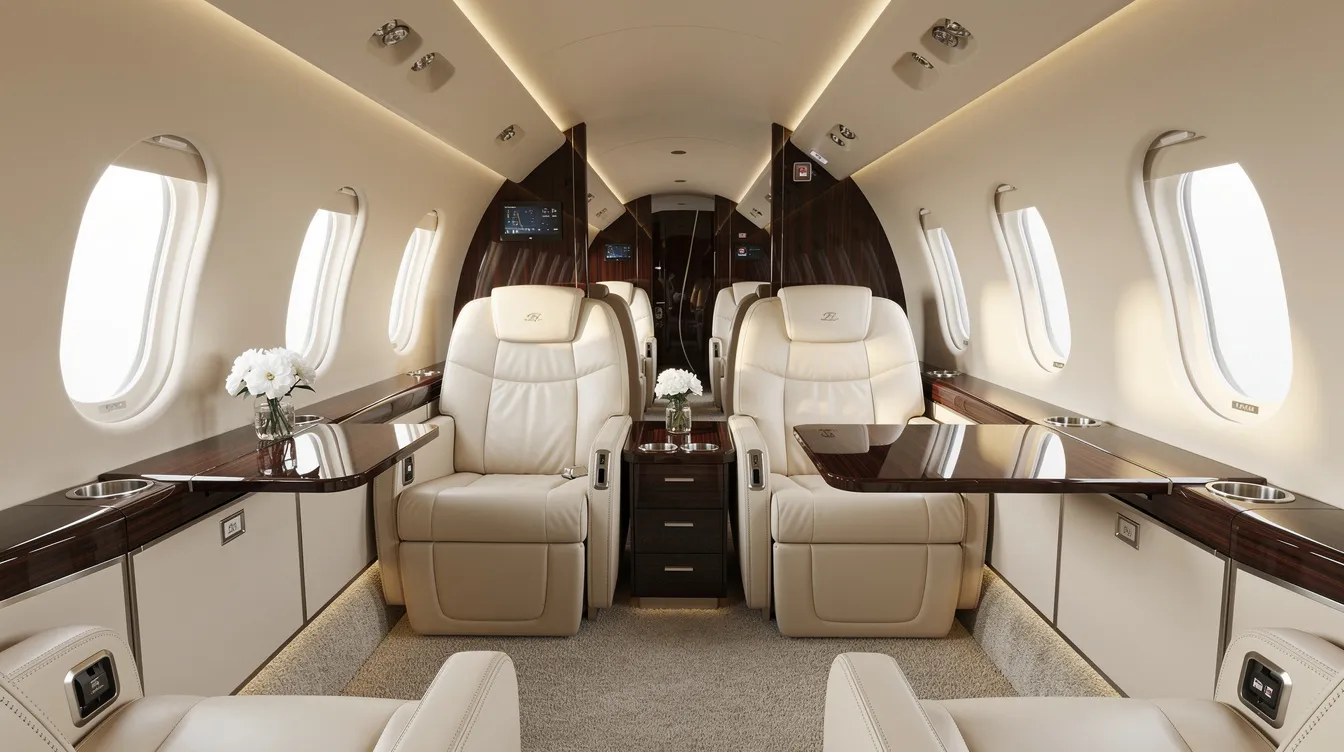
Even in ride-share and semi-private formats, the aircraft and service remain closer to true private aviation than to any commercial airline cabin. Fewer passengers mean personalized service, spacious seating, and an atmosphere designed for productivity or relaxation rather than crowd management. Semi-private jet fares are typically transparent, with no hidden fees, so travelers know exactly what is included in their booking.
Light jet cabins (Citation CJ3, Phenom 300) typically accommodate 6-8 passengers in club seating configurations. Expect leather seats with 6 feet or more of legroom, face-to-face seating for conversation, and noise levels below 75 decibels—quiet enough for phone calls or focused work. Turboprops like the King Air 350 offer similar passenger capacity (6-9) with comfortable interiors optimized for regional hops.
Amenities vary by operator but commonly include premium snacks, espresso or champagne on request, Wi-Fi on most aircraft manufactured after 2020, and attentive two-pilot crews who review the passenger manifest before departure. Unlike commercial flights, where crew ratios approach 1:50, semi-private services often deliver 1:4 ratios, enabling genuinely personalized service.
The FBO experience sets the tone before boarding. Private terminals feature quiet lounges with executive seating, conference facilities for last-minute calls, and direct car-to-aircraft transfers. No announcements interrupt your focus. No lines formed. You walk from your vehicle to the aircraft in minutes, with staff handling luggage seamlessly.
The sensory contrast with commercial travel is immediate: natural light streams through cabin windows, leather interiors replace industrial fabric, and the absence of middle seats—or any seat closer than several feet away—creates space that commercial business class cannot match, particularly on aircraft comparable to the best private jets in the world.
Safety & Certification: What to Check Before You Share a Jet
Ride-share private jet models must operate under the same strict safety regulations as any Part 135 (or equivalent) charter operator, just as the top private jet companies emphasize rigorous safety cultures alongside service quality. The shared nature of the flight doesn’t diminish certification requirements—it simply distributes costs across more passengers.
Regulatory frameworks provide the foundation. In the United States, FAA Part 135 governs commercial charter operations with fewer than 30 seats. European equivalents fall under EASA regulations. These frameworks mandate pilot training, aircraft maintenance standards, operational procedures, and regular inspections that exceed Part 91 (private, non-commercial) requirements.
Third-party auditors add additional verification layers. ARGUS Platinum rating indicates an operator ranks in the top 5% of the industry. WYVERN Wingman certification benchmarks pilot hours—typically 1,500 or more total flight hours, with 500 or more hours on the specific aircraft type—along with recurrent training every six months. These audits verify aircraft age (under 10 years is ideal), maintenance provider credentials, and operational history.
Private aviation carries higher fatality rates compared to commercial airlines, with general aviation accidents averaging between 0.84 and 1.19 fatalities per 100,000 flight hours. In contrast, charter flights operating under FAA Part 135 regulations demonstrate significantly safer statistics, with only 0.201 fatalities per 100,000 hours flown. The majority of private aviation accidents stem from pilot error, mechanical failure, and adverse weather, with landing accidents being the most common, which is why understanding whether chartering a private jet is worth it must include both safety and cost considerations.
Before booking any semi-private or shared flight, travelers should confirm:
The operator holds a current Part 135 certificate (searchable via FAA databases)
The captain and first officer meet or exceed 1,500 total flight hours with at least 500 hours on the specific aircraft type
Aircraft maintenance follows FAA-approved programs
Insurance coverage meets or exceeds $10 million liability
When choosing a ride-share or semi-private provider, it is important to verify if pilots are ARGUS or Wyvern-rated and if the operator maintains a Part 135 certification, as these factors significantly impact safety standards.
Data protection and identity verification matter in shared environments. Reputable providers pre-screen passenger lists, process payments securely, and conduct baggage screening tailored to smaller aircraft operations.
BlackJet only partners with rigorously vetted, safety-certified operators. Beyond standard certifications, BlackJet applies proprietary safety and quality benchmarks across all flights—including shared and semi-private options—providing members assurance that exceeds anonymous app-only booking platforms.
Due Diligence Checklist for Ride-Share Private Jets
Before committing to any ride-share or semi-private booking, verify operator credentials systematically. This process takes minutes but provides critical assurance.
Confirm current certification. Search the FAA database to verify the operator holds an active Part 135 certificate. Certificates can be suspended or revoked; current status matters more than historical approval.
Verify pilot qualifications. Ask whether both the captain and the first officer meet or exceed 1,500 total flight hours with at least 500 hours on the specific aircraft type. Recurrent training should occur every six months, including simulator sessions for emergency procedures.
Check audit ratings. Request ARGUS or WYVERN ratings. ARGUS Platinum and WYVERN Wingman represent the highest tiers. Operators without third-party audits may still be safe, but independent verification reduces uncertainty.
Review insurance coverage. Minimum liability coverage should reach $10 million or more. Ask for the certificate of insurance documentation before booking significant trips.
Confirm the Safety Management System (SMS) presence. An SMS formalizes how incidents and near-misses are reported, reviewed, and addressed. Operators with mature SMS programs demonstrate commitment to continuous improvement rather than mere compliance.
BlackJet’s team walks Jet Card members through each of these points, providing documentation and verification that independent booking through fragmented apps cannot match. Members can request operator credentials, pilot backgrounds, and aircraft maintenance histories—an extra layer of assurance that makes flying private both enjoyable and responsible.
Sustainability & Efficiency in Ride-Share Private Aviation
Private aviation carries a higher per-passenger carbon footprint than economy-class commercial flights. This reality demands acknowledgment—and action, even for operators of the largest private jets designed for intercontinental missions. Ride-share models and modern fleets can meaningfully reduce waste while advancing toward more responsible operations.
Higher seat utilization represents the most immediate efficiency gain. Semi-private and shared flights often achieve 75-90% seat utilization compared to 50% or less for traditional private charter. When an aircraft flies anyway—repositioning between cities to serve the next booking—filling those seats reduces emissions per passenger mile dramatically. Empty leg flights, which would otherwise carry zero passengers, become opportunities rather than waste.
Modern semi-private jets are also designed for improved fuel efficiency, further reducing both operating costs and environmental impact.
Sustainable aviation fuel (SAF) adoption is expanding, though availability remains limited. As of 2024-2025, major business aviation hubs like SFO Executive and select European airports offer SAF blending options. SAF reduces lifecycle carbon emissions by approximately 80% compared to conventional jet fuel. Adoption rates currently sit at 1-5% of total business aviation fuel consumption, but infrastructure investments are accelerating availability.
Carbon offsetting provides a bridge while SAF scales, complementing alternative models like unlimited private jet flight memberships that also seek to balance frequent travel with responsible practices. Reputable offset programs calculate flight-specific CO₂ emissions—a Citation CJ3 flying New York to Miami generates approximately 5 tons—and invest in verified projects (forestry, renewable energy, methane capture) through standards like Gold Standard or Verra. Automatic offsetting simplifies the process for travelers who want sustainability without an administrative burden.
BlackJet prioritizes younger, fuel-efficient aircraft in its operator network. Every flight booked through BlackJet Jet Card programs is carbon neutral via included offsets at no extra cost to members. This isn’t an optional add-on; it’s a standard feature of membership.
How BlackJet Makes Shared Private Flights More Responsible
BlackJet’s platform connects sustainability principles directly to booking technology and operational partnerships.
Fuel burn tracking estimates consumption for each flight based on aircraft type, flight distance, and routing. A Van Nuys-to-Henderson trip on a Citation CJ3 burns approximately 800 gallons; the platform calculates associated CO₂ and automatically links to offset programs without requiring member action.
Shared over empty represents a core principle. When BlackJet identifies repositioning legs—aircraft returning empty after dropping passengers—the platform promotes these as empty leg flights to members at discounted rates. One New York-to-Miami semi-private flight can replace two or three under-filled positioning legs, cutting emissions 30-50% versus the alternative scenario.
Operator partnerships favor those investing in SAF-compatible operations, modern avionics, and efficient routing practices. Selecting closer business airports—Hayward instead of SFO, Teterboro instead of JFK—reduces taxi times, fuel consumption, and ground delays simultaneously.
Concrete example: A member books a shared flight from White Plains to Opa-Locka. The aircraft was already repositioning from Teterboro for another booking. By filling those seats, three passengers travel at reduced cost while the flight’s emissions get distributed across actual travelers rather than dead-heading empty—a 40% per-passenger reduction compared to booking a separate charter.
Accessing Ride-Share Private Jets with a BlackJet Jet Card
A Jet Card functions as prepaid access to private aviation: a set number of flight hours or credits purchased at fixed rates, deployable across multiple aircraft categories without ownership commitment. As the charter industry evolves with technological advancements, including Jet Cards and ride-share models, private aviation has become more accessible and flexible for a wider range of travelers. Unlike fractional programs requiring equity positions, Jet Cards offer flexibility without long-term entanglement.

BlackJet’s Jet Card structure includes tiered options—BlackJet’s 25+ Hour Jet Card and 50-hour cards provide access to light jets, midsize jets, and large cabin aircraft. Hourly rates are locked at purchase, protecting members from peak-season surcharges or fuel price volatility that affects charter pricing.
Leveraging Jet Cards for ride-share options multiplies value, especially when you understand the best Jet Cards for frequent flyers and how their benefits align with your route patterns. Members can apply card credits toward:
Per-seat semi-private flights on scheduled routes
Shared charter seats when operators release unused capacity
Empty leg opportunities at 20-75% below retail charter rates
Full private jet charter when privacy or custom routes require the entire aircraft
Guaranteed availability within specific notice windows—typically 24-48 hours—ensures members aren’t left scrambling for capacity during high demand periods. This guarantee proves invaluable for executives and families with frequent but variable travel needs.
A practical annual example: A member purchases a 25-hour Jet Card. Over twelve months, they use 8 hours on semi-private seats (four short trips between New York and Miami), capture an empty leg deal from Teterboro to Chicago (2 hours at 50% discount), and deploy the remaining 15 hours on full charters for sensitive business travel, similar to how a 50 hour Jet Card program might be structured for even more frequent use. The card provides flexibility without the complexity of managing multiple booking relationships.
Step-by-Step: From Search to Takeoff with BlackJet
The booking process translates Jet Card membership into actual flights through a streamlined digital experience.
Search and discover. Log in to the BlackJet platform via web or mobile, much like the process described when learning how to buy a seat on a private jet through modern booking tools. Enter your origin and destination—New York to Miami on a Friday, for instance. The system displays available options: full charter on a Phenom 300 at $7,000, semi-private seats at $1,200 each, or an empty leg opportunity on a midsize jet repositioning that afternoon.
Compare and select. Instant pricing includes aircraft type, estimated flight time, departure window, and carbon-neutral status, reflecting the underlying Jet Card pricing structures and per-seat economics that drive overall trip cost. Options eligible for ride-share or semi-private booking are clearly marked. Select the flight that matches your needs—budget-conscious travelers choose per-seat; groups needing privacy book full charters.
Customize and confirm. Add passenger details, catering preferences (light snacks, full meal, champagne service), and ground transportation requests, while your Jet Card balance automatically reflects how much of your 100-hour Jet Card allocation or other program you’re using for the trip. The platform displays your Jet Card balance, confirms carbon-neutral flight status via included offsets, and presents the final cost before payment confirmation.
Pre-flight coordination. BlackJet’s concierge team sends the exact FBO address, recommended arrival time (typically 20-30 minutes before departure), and any specific guidelines for luggage or pets. No guesswork about where to park, which building to enter, or how early to arrive.
Departure. Arrive at the private terminal. Staff greets you, handles luggage, and escorts you to the aircraft. Walk-on boarding means no queues. Settle into your seat, and you’re airborne within minutes.

FAQs About Ride-Share Private Jets & BlackJet
Is a ride-share private jet really cheaper than buying a whole charter?
Yes, substantially. Per-seat pricing on semi-private flights typically ranges from $500-$2,500, depending on route length, compared to commercial flights, where full charter costs of $5,000-$15,000 for the same trip would apply. On popular corridors like Los Angeles to Las Vegas, a semi-private seat can cost $800 versus $8,000 or more for the entire jet. The economics work for solo travelers and small groups who don’t need—or want to pay for—an entire plane.
How does privacy compare to full privacy?
Semi-private cabins accommodate 6-12 passengers maximum, creating an intimate environment far removed from commercial travel’s hundreds of strangers. You’ll share space with other travelers, but the atmosphere resembles a quiet business lounge more than an airline cabin. For absolute privacy—confidential conversations, high-profile passengers, or simply preferring to fly alone—booking the entire jet remains the answer. Many travelers toggle between semi-private for routine trips and full charter when circumstances demand exclusivity.
Can I use ride-share private jets internationally?
Options exist on select corridors. New York to Toronto, London to Paris, and Geneva to Nice support semi-private scheduling, particularly during peak seasons. However, domestic U.S. routes dominate current semi-private availability due to higher demand density and simpler regulatory frameworks. International expansion continues as providers build passenger volume on proven corridors. Semi-private and private jet flights often serve airports and routes not accessible by major commercial airlines, offering greater flexibility and convenience for travelers.
Why use a Jet Card instead of just booking ad hoc seats?
Jet Cards through BlackJet provide several advantages over fragmented booking:
Fixed rates protect against peak-season price spikes
Priority access to on-demand flights and aircraft availability during high-demand periods
Safety vetting ensures every operator meets rigorous standards
Integrated sustainability with carbon offsets included automatically
Single relationship for full charters, semi-private seats, and empty leg deals
Centralizing travel with BlackJet eliminates the friction of managing multiple apps, unknown operators, and inconsistent service levels.
What happens if my plans change?
Jet Card members typically benefit from flexible cancellation policies. Specifics vary by booking type—semi-private seats on scheduled routes may have different terms than full charters—but BlackJet’s concierge team can advise on options for rebooking, applying credits to future travel, or adjusting itineraries with minimal friction.
Experience Strategic, Shared Luxury with BlackJet
Ride-share private jets represent more than convenient luxury—they’re a strategic tool for reclaiming time, maintaining control, and accessing private aviation without full charter commitment. For many travelers, the decision isn’t between commercial and private but between different modes of private access optimized for each trip’s specific requirements.
Semi-private and shared flights make premium service accessible on popular routes where demand supports consistent scheduling. Paired with a robust Jet Card membership, travelers gain flexibility to move seamlessly between per-seat bookings for routine trips and full charters when privacy, schedule, or passenger count requires the entire aircraft.
BlackJet’s foundation—rigorous safety certification, carbon-neutral operations, 24/7 digital booking, and vetted operator partnerships—transforms what could be fragmented experiences across multiple providers into a coherent, reliable system. Whether you’re providing access for a team traveling to a conference, coordinating family travel to exclusive destinations, or simply seeking a cost-effective alternative to commercial first class, the infrastructure exists to support your requirements.
The distance between commercial first class and flexible private jet access collapses when the right membership structure removes friction. For travelers seeking to experience private aviation without the complexity of ownership, ride-share models accessed through a Jet Card deliver time-saving benefits that compound with every flight.
Discover how a BlackJet Jet Card can transform your next New York–Miami flight—or your regular corridor—into a seamless, shared private experience.
Conclusion: Elevate Your Travel with BlackJet
In today’s fast-paced world, private jet access is no longer solely a symbol of luxury but a strategic advantage for those who value time, safety, and flexibility. BlackJet redefines private aviation by offering an innovative Jet Card program that seamlessly integrates ride-share, semi-private, and full charter options on a single platform. This approach empowers travelers to customize their experience while benefiting from predictable pricing, exclusive access to smaller airports, and uncompromising safety standards.
By choosing BlackJet, you gain more than just a seat on a private jet—you unlock a world of effortless, sustainable, and secure travel tailored to your unique needs. Whether flying solo on a semi-private route or chartering an entire jet for your team, BlackJet ensures every journey is efficient, luxurious, and carbon neutral.
Explore premium private jet access today at BlackJet.com and discover how smart, shared luxury can elevate your travel experience to new heights.


 Sign up with google
 Sign up with Apple