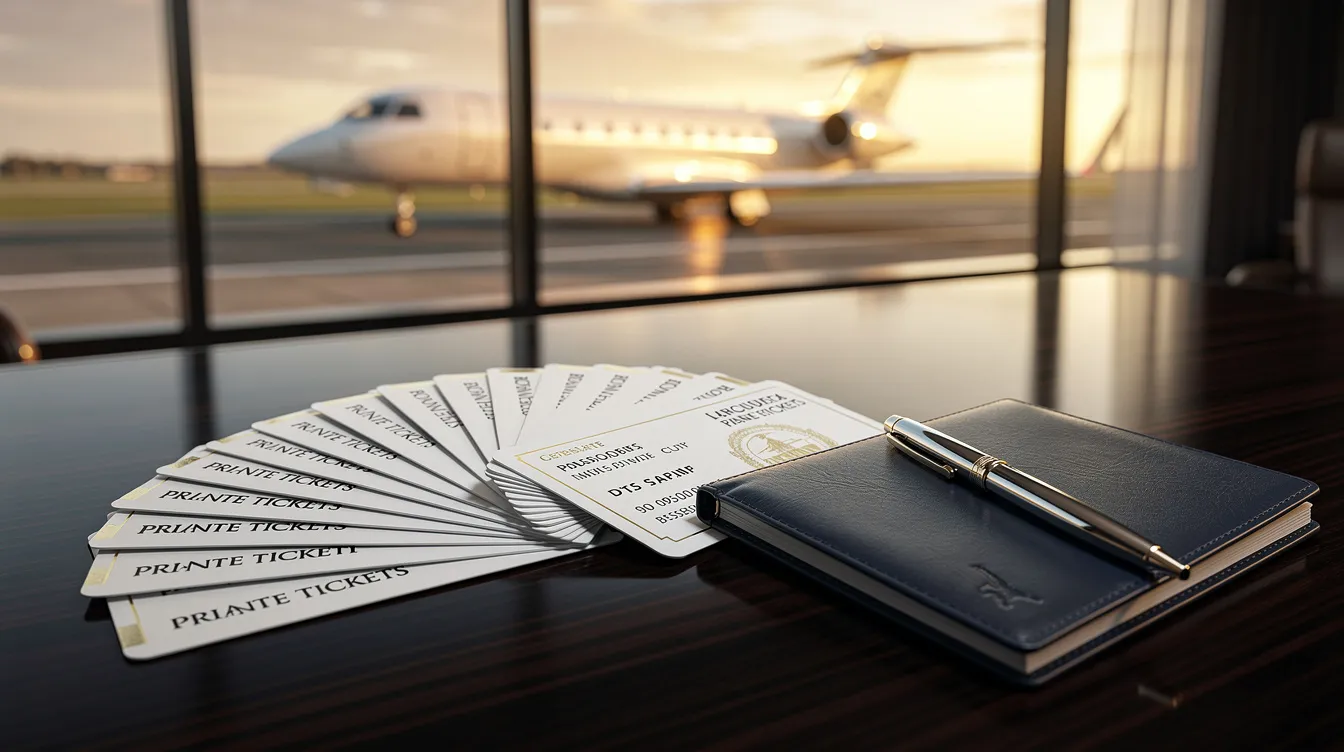
For high-net-worth individuals and executives who measure success in outcomes rather than hours logged, private plane tickets represent something fundamentally different from the vouchers you’d purchase through a commercial airline. Think of them less as tickets and more as on-demand access rights—a strategic tool that transforms how you move through the world.
Why “Private Plane Tickets” Are a Strategic Advantage, Not Just a Luxury
BlackJet operates as a premier jet card provider in the private aviation space, offering prepaid blocks of private plane tickets—measured in flight hours—across multiple cabin classes. This model delivers all the benefits of private jet travel without the capital requirements of fractional or full ownership. BlackJet's jet card program features flexible scheduling, allowing clients to adapt departure times to their needs for maximum convenience and personalized service. For clients who fly twenty to fifty hours annually, it represents the optimal intersection of cost efficiency and travel flexibility.
Private jet charter services are increasingly popular for both business and leisure travel, offering unmatched flexibility and the ability to customize itineraries based on individual needs. Chartering a private jet also grants access to a wider range of airports, including smaller regional airports, significantly enhancing convenience and reducing travel time compared to commercial hubs.
How Private Plane Tickets Actually Work
Booking Flow for Jet Card Members
Unlike commercial flights, where you purchase a seat on a scheduled departure, private plane access involves no physical ticket. Instead, your journey is managed through digital contracts, jet card hour balances, or app-based bookings tied to specific aircraft and departure windows.
For a typical BlackJet jet card member, the booking flow is straightforward:
Select your route — Choose origin and destination airports (e.g., Teterboro to Opa-locka)
Pick date and time — Depart when your schedule demands, not when an airline permits
Choose cabin class — Light jet, super midsize, heavy jet, or ultra long range based on your trip requirements
Confirm pricing — Review your locked-in hourly rate and total hour deduction
Receive itinerary — Flight details arrive within minutes, often via mobile app
BlackJet’s digital platform offers real-time flight support, providing immediate assistance and updates throughout your journey. With 24/7 availability of aviation experts, travelers receive timely help managing last-minute changes or emergencies, ensuring seamless operations. This integration of technology and expert support elevates the private flying experience, similar to platforms like Jettly, which facilitate instant pricing, booking options, and access to a vast range of aircraft worldwide.
Key Private Aviation Terms
Understanding key terminology helps you make informed decisions about your private charter experience:
Occupied flight hour — Only the time you’re actually aboard counts against your balance; repositioning (when the aircraft moves to pick you up) is handled separately, often included in jet card terms
Peak days — High-demand periods like Christmas week (December 20–27), New Year’s (December 28–January 5), Art Basel Miami (early December), and F1 Miami (early May) typically carry 20–50% surcharges on charter flights
Off-peak — Standard rate periods that offer predictable pricing for business travelers and leisure travelers alike
Your aircraft category directly affects your “ticket” parameters and overall budget; reviewing a broader private jet price list and options can help you benchmark where each class sits in the market. Very Light Jets typically seat 2–4 passengers and cover up to 1,500 miles, ideal for short trips like Boston to Nantucket. Heavy Jets, designed for long-distance travel with ranges around 7,000 miles, accommodate larger groups and more luggage, suitable for transoceanic flights such as New York to London nonstop, and they sit just below the largest private jets for sale and charter in terms of sheer cabin volume and range.
Types of Private Plane Tickets: Charter, Membership, and Jet Cards
On-Demand Charter
The private aviation market offers three primary models for securing access: on-demand charter, membership platforms, and jet cards, alongside more granular options if you simply want to buy a seat on a private jet. Each serves different travel needs, and understanding the distinctions ensures you select the right aircraft access structure for your lifestyle.
On-demand charter functions as a “single-use private ticket” for one specific trip. You contact a charter operator, request a quote based on current aircraft availability and market conditions, and book that individual journey. This approach works well for sporadic private jet travelers who fly privately once or twice annually. However, pricing fluctuates significantly—a 40-minute light jet hop might cost $2,800 one week and substantially more during peak demand. There’s no rate protection, and you’re subject to whatever the market dictates at booking time.
Membership Platforms
Membership platforms like certain apps charge annual dues (entry-level options around $370/month) for discounted per-flight access to large fleets—sometimes 23,000+ aircraft worldwide. You gain app convenience and potentially lower rates than pure charter, but you still pay per flight at booking and retain exposure to some pricing volatility. These platforms suit aviation enthusiasts who value technology-driven booking but don’t fly frequently enough to justify prepaid hours.
Jet Cards
Jet cards represent prepaid bundles of private plane tickets in 25-hour or 50-hour increments, and a detailed look at jet card cost and membership pricing shows how these programs compare to ad-hoc charter. BlackJet’s programs lock in fixed hourly rates across cabin categories, guaranteeing aircraft access without the guesswork of charter pricing, with options like the BlackJet 25+ Hour Jet Card tailored to mid and long-range travelers. Jet card holders enjoy guaranteed availability, enabling flights on short notice—a critical benefit for frequent travelers. Additional perks include access to a wide range of aircraft types, concierge services, and flexible scheduling options.
Private jets are usually priced by the hour, with costs ranging from $1,200 to over $10,000 for the entire aircraft depending on size and range, and understanding private jet charter pricing helps clarify how those hourly figures are built. Jet cards transform this variability into predictable, locked-in hourly rates, smoothing out market fluctuations and peak surcharges; understanding jet card cost per hour is essential for comparing competing programs.
Consider a client who flies twenty to thirty times annually: regular routes between New York and Miami (approximately 1,100 miles, 2.5 hours on a super midsize), occasional trips to Los Angeles, and quarterly business in London—an ideal profile for evaluating a 25 hour jet card’s features and costs. Through ad-hoc charter options, this traveler faces unpredictable costs—especially during peak winter travel to Florida or summer escapes to the West Coast. With a jet card, the same routes carry consistent hourly rates regardless of season; a detailed breakdown of the 50-hour jet card cost and value can clarify long-range budget planning for heavy users. The annual savings typically range from 10–25% compared to booking equivalent charter flights individually, with added benefits like complimentary catering and ground transportation coordination.
Why Jet Cards Are the Smartest Form of Private Plane Ticket
Jet cards transform the volatility of private jet charter into predictable, locked-in hourly rates across every cabin type, and comprehensive guides to jet card pricing structures can help you evaluate which model best fits your flying profile. Where charter pricing fluctuates based on fuel costs, aircraft positioning, and demand surges, your jet card rate remains fixed from purchase through expiration.
The strategic advantage for corporate and frequent leisure travelers lies in guaranteed availability. BlackJet cardholders booking on non-peak days typically secure aircraft within a 12–24 hour call-out window. During a busy finance week, a 25-hour cardholder can arrange last-minute flights between London and Geneva without surge pricing—impossible through standard charter where demand dictates cost.
Cost transparency further distinguishes jet cards from alternatives. There’s no acquisition fee as with fractional ownership. No depreciation risk—fractional shares often lose 5–10% of resale value annually. No $500,000+ yearly fixed costs that come with full ownership. Your hours cover crew, fuel, and standard services, with only specific extras like de-icing billed separately.
For travelers ready to move beyond fragmented charter bookings or frustrating commercial flights, jet cards represent the most strategic path to consistent private access, especially when you compare the best jet cards for frequent flyers across providers.
Choosing the Right Aircraft Category for Your Private Plane Ticket
Aircraft Categories and Use Cases
Selecting the right aircraft category is the fastest way to optimize cost, comfort, and range for each private plane ticket, and a clear grasp of private jet sizes and categories makes that choice far easier. Aircraft size and capability should match your specific trip requirements—overspending on a heavy jet for a 400-mile hop wastes resources, while attempting a transatlantic crossing in a light jet simply won’t work.
Key aircraft types and their optimal use cases:
Category | Example Aircraft | Typical Range | Best For |
|---|
Turboprop | King Air 350 | ~1,800 miles | Short regional hops, 6–9 passengers |
Light Jets | Phenom 300 | ~1,971 nm | Routes under 1,500 miles, 7–10 passengers |
Midsize Jets | Citation XLS+ | ~2,100 nm | Cross-country, 8–12 passengers |
Super Midsize | Challenger 3500 | ~3,200 nm | Transcontinental, 10 passengers, luxury cabins |
Heavy Jets | Gulfstream G450/G550 | ~4,350 nm | International, 14–19 passengers |
Ultra Long Range | Global 6500 | ~6,600 nm | Transoceanic, 13–17 passengers |
Practical range applications help illustrate selection logic. Light jets handle Boston to Nassau comfortably at approximately 1,200 miles. Super midsize aircraft manage Dallas to Seattle at roughly 1,700 miles with cabin space for productive work or rest. Ultra-long range jets fly New York to Dubai nonstop—critical for business travelers who need to arrive ready for meetings rather than exhausted from connections
Passenger count and luggage requirements significantly influence aircraft selection and ticket cost. Traveling with two colleagues differs vastly from transporting a family of ten. Specialized cargo—golf bags requiring 50–100 cubic feet of hold space, skis needing external checks, or film equipment demanding careful handling—can push you from midsize jets to larger premium aircraft. Pre-advising your aviation experts about unusual luggage ensures the right aircraft meets your party at the FBO.
Sample Itineraries: What Your BlackJet Private Plane Ticket Looks Like in Practice
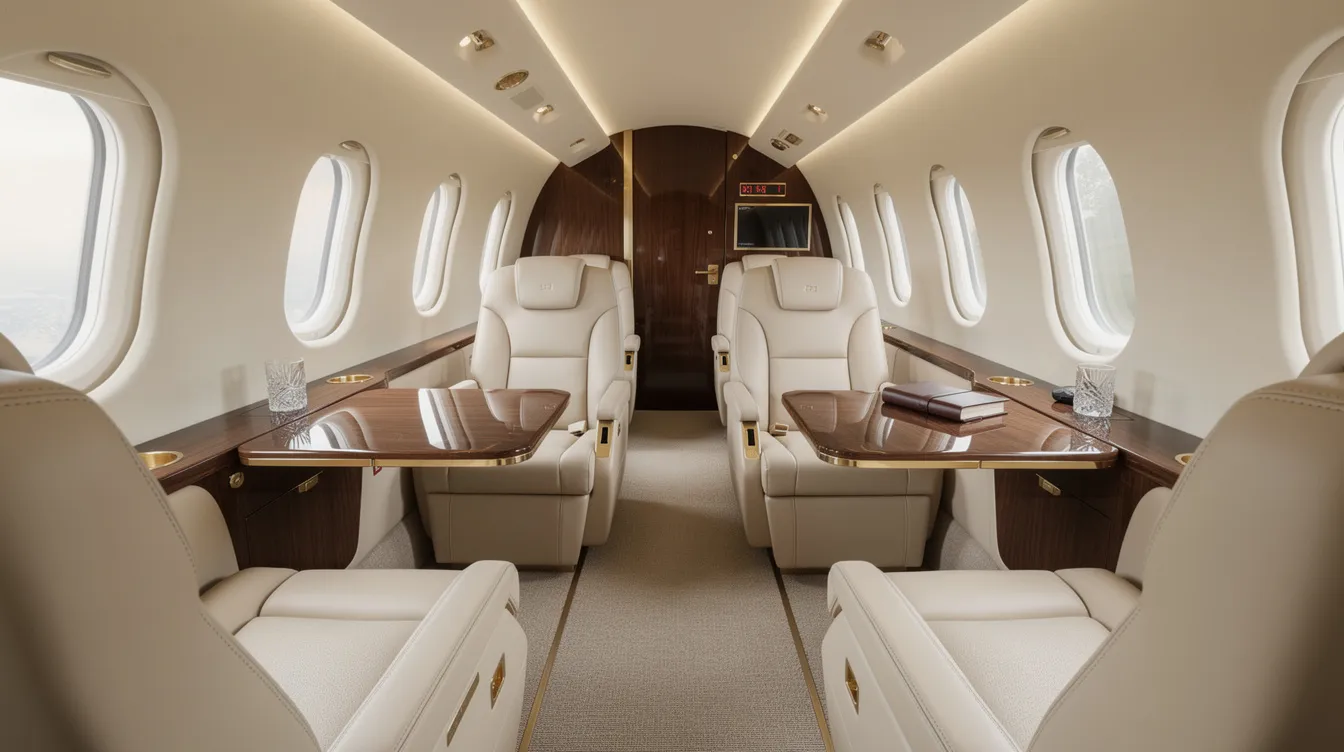
Understanding how private plane tickets work in real scenarios brings the concept to life. These three itineraries illustrate how BlackJet clients fly across different seasons, aircraft types, and trip purposes.
January: New York to Aspen Ski Weekend
A family of six departs Teterboro on a Friday morning aboard a super midsize jet bound for Aspen-Pitkin County Airport. Block time runs approximately four hours. During peak ski season, charter flights to Aspen routinely carry 30%+ surcharges due to runway constraints and overwhelming demand. The BlackJet jet card holder enjoys a fixed hourly rate locked in at purchase—no surprises, regardless of how packed the slopes become. Ground transportation awaits on the tarmac; skis and gear fit comfortably in the hold. The family maximizes their weekend, arriving by early afternoon and departing Sunday evening.
June: Los Angeles to Napa Overnight Wine Trip
Four friends coordinate a last-minute getaway from Van Nuys to Napa County Airport. A light jet handles the 400-mile journey in roughly 1.5 hours—door-to-door faster than driving to a commercial airport alone. The personalized service includes preferred catering (local cheeses, the group’s favorite wines) arranged with 24-hour notice. This leisure travel use case demonstrates how jet cards remove friction: one member books via the app, hours are deducted automatically, and everyone arrives refreshed rather than road-weary.
September: New York to London Business Trip
An executive boards a Gulfstream G600 at Teterboro for a six-hour overnight crossing to London Farnborough. Longer flights like this demand ultra-long range capability and a cabin configured for rest—lie-flat seats, quiet environment, secure Wi-Fi for early morning emails before landing. The return journey two days later follows the same pattern: depart Farnborough in the evening, arrive back in New York the same calendar day. The jet card structures this round trip with predictable costs, and BlackJet’s operations team handles international clearances, customs arrangements, and crew positioning seamlessly.
Booking Private Plane Tickets with BlackJet’s Technology
Core Platform Capabilities
BlackJet’s digital platform serves as your control center for private plane tickets, accessible 24/7 via web and mobile applications. The technology brings the convenience of modern booking to private aviation without sacrificing the personalized service that defines the experience.
Core platform capabilities include:
Instant route search across thousands of airports
Real-time aircraft availability displays
Dynamic pricing visibility for cardholders showing exact hour deductions
Secure payment processing and automatic balance updates
Many mobile booking platforms offer instant pricing and the ability to book flights within minutes, enhancing convenience for travelers.
Typical Booking Flow
The typical booking flow takes minutes. Log in to your account, enter your origin (perhaps White Plains), destination (West Palm Beach), date, departure time, and passenger count. Select your preferred cabin class based on the journey’s requirements. Review the confirmation screen showing aircraft type, total block time, and hours debited. Confirm, and your itinerary arrives immediately.
Expert Support for Complex Arrangements
For complex arrangements—multi-leg trips spanning several destinations, international itineraries requiring landing permits, or flights to more airports outside standard business aviation hubs—aviation experts remain available 24/7 by phone or chat. The technology handles routine bookings efficiently; human expertise manages the exceptions.
One client, mid-way through a London business trip, decided to extend their stay and add a meeting in Geneva. Through the app, they initiated a search for London to Geneva options two days out. A BlackJet coordinator confirmed availability within the hour, adjusted the original return routing, and handled Swiss landing permits. The client never experienced uncertainty—digital tools and human support worked in parallel to reshape the itinerary.
Real-Time Support for Every Ticket
Once a private plane ticket is confirmed, BlackJet’s operations team monitors conditions continuously. Weather systems, crew duty limits, NOTAMs (Notices to Airmen), and airport conditions receive ongoing attention to pre-empt disruptions before they affect your journey.
Consider a scenario: a storm system develops over the Midwest, threatening a Chicago to Houston departure. Rather than leaving the client to discover delays at the FBO, BlackJet’s team proactively adjusts departure time, identifies alternate routing, or repositions to a clearer departure point. The client receives updates via app notification and phone call, with revised flight details confirmed before they leave for the airport.
This concierge-style assistance extends beyond weather. Catering changes—a last-minute dietary restriction, a request for a specific champagne—route through the support team. Ground transfers get coordinated to meet aircraft arrival times. Pet arrangements, including documentation verification and cabin preparation, happen behind the scenes. Last-minute passenger additions subject to security protocols get processed quickly.
For clients crossing time zones—flying between London, Dubai, and Singapore, for instance—24/7 global coverage ensures support regardless of local hour. Private jet travel operates on the client’s schedule, and BlackJet’s team matches that commitment.
Safety and Certification Behind Every Private Plane Ticket
Operator Certification and Audits
BlackJet treats safety as a non-negotiable foundation, not an optional extra or a marketing checkbox. Every flight operated through the BlackJet network adheres to rigorous standards that exceed baseline regulatory requirements.
Flights are operated only by FAA Part 135 certified operators (or international equivalents for non-U.S. routes), comparable in rigor to leading private jet companies and operators recognized for safety and service. This direct air carrier certification governs commercial operations under 30 seats, establishing minimum standards for crew training, aircraft maintenance, and operational procedures. Beyond Part 135, BlackJet screens operators for additional third-party audits:
ARGUS ratings — Independent safety audits evaluating operational history and management practices
Wyvern certifications — Rigorous standards placing operators in the top 10% of the industry
IS-BAO registration — International Standard for Business Aircraft Operations compliance
Private Aviation Safety Metrics
Private aviation does present higher fatality risks compared to commercial airlines, with general aviation accidents averaging 0.84–1.19 fatalities per 100,000 flight hours. However, charter flights under FAA Part 135 regulations demonstrate significantly better safety metrics at 0.201 fatalities per 100,000 hours, reflecting the rigorous standards and oversight in place.
The majority of private aviation accidents stem from pilot error, mechanical failure, and adverse weather, with landing accidents being the most common. Every private jet flight arranged by reputable companies is operated by FAA Part 135 certified providers who meet or exceed industry-leading safety standards, ensuring rigorous safety protocols are followed.
Key Safety Protocols
Key safety elements embedded in every private flight include dual-pilot crews on all jet missions, stringent maintenance schedules (A/B checks every 200–600 flight hours), and strict duty-time limits preventing crew fatigue. These aren’t abstractions—they’re the operational realities ensuring your aircraft and crew perform at the highest level.
For a New York to London overnight flight, the vetting process examines whether the air carrier and specific Gulfstream G600 operator hold experience on North Atlantic tracks and meet ETOPS (Extended-range Twin-engine Operations Performance Standards) requirements—similar to the diligence applied when evaluating ultra long range private jets for sale. Crossing oceans demands operators familiar with oceanic procedures, HF radio communications, and the unique demands of flights where diversion airports are hours away.
Confidentiality, Security, and Discretion in Private Travel
Private terminals—known as FBOs (Fixed-Base Operators)—eliminate the exposure inherent in commercial travel. You arrive at a dedicated facility, often driving directly to your aircraft. No crowds, no public areas, no chance encounters with people you’d rather avoid.
For high-profile clients, NDAs protect sensitive information about travel patterns and destinations. Strict company policies govern sharing client names or itineraries—your movements remain your business. Secure payment processing protects financial data, while encrypted Wi-Fi aboard aircraft allows executives to conduct board calls, review M&A documents, or handle sensitive communications without concern.
Privacy isn’t a perk with BlackJet—it’s a baseline expectation woven into every private plane ticket. The world of commercial airline travel requires accepting constant exposure; private aviation restores discretion as the default.
Sustainable, Carbon-Neutral Private Plane Tickets
Carbon Offsets and Environmental Commitment
Discerning travelers increasingly weigh environmental impact alongside convenience and cost, even when flying private. BlackJet addresses this directly through a commitment to carbon-neutral flights as standard practice.
Every booked flight hour includes the purchase of high-quality carbon offsets at no additional cost to the cardholder. This isn’t an opt-in program or an upcharge—sustainability is embedded into the private plane ticket itself. Offsets fund verified climate projects, including reforestation initiatives and renewable energy development, with BlackJet’s 2024–2026 portfolio supporting measurable environmental outcomes.
Sustainable Aviation Fuel (SAF)
Where airport infrastructure supports it, Sustainable Aviation Fuel (SAF) enters the equation. Hubs like Van Nuys in Los Angeles and London Luton offer SAF, which can cut lifecycle CO₂ emissions by up to 80% compared to conventional jet fuel. BlackJet incorporates SAF into flights where available, further reducing the environmental footprint of private aviation—an increasingly important factor even for clients considering the most expensive private jet options.
Innovations in Aviation Sustainability
The aviation industry is also focusing on innovative technologies and practices to enhance sustainability, including the development of electric and hybrid aircraft, which aim to reduce reliance on fossil fuels, even among the top private jets in the world. BlackJet remains engaged with these advancements, ensuring clients benefit from the latest environmentally responsible options.
This approach reflects the reality that private jet travel carries higher per-passenger emissions than commercial flights. Rather than ignoring this fact, BlackJet provides transparency and action—measuring impact, purchasing offsets, and pursuing lower-emission fuel options as they become available worldwide.
How Your Ticket’s Footprint Is Measured and Balanced
The offset process follows a straightforward chain:
Flight completion — Your private flight operates as booked
Fuel burn estimation — Aircraft performance data determines actual fuel consumption
CO₂ calculation — Emissions output computed based on fuel type and quantity
Offset purchase — Equivalent carbon credits acquired from verified projects
Retirement — Offsets retired in your name or on your company’s behalf
A practical example: a three-hour New York to Miami journey on a super midsize jet burns fuel, producing approximately 5–7 tonnes of CO₂. The offset purchase covers this exact amount through standards like Gold Standard or Verified Carbon Standard (VCS), ensuring a legitimate environmental benefit.
No action is required from you. The calculation and offset happen automatically, making every private plane ticket carbon-neutral without adding complexity to your travel experience.
What Do Private Plane Tickets Cost? Key Factors and Benchmarks
Private aviation pricing operates differently from commercial airline ticketing. There’s no fixed schedule of fares—costs depend primarily on aircraft category, flight time, and market conditions at the moment of booking.
Illustrative hourly ranges by category (actual rates vary based on specific aircraft, operator, and region):
Aircraft Category | Approximate Hourly Rate |
|---|
Turboprop | $2,500–$3,500/hour |
Light Jet | $3,500–$5,000/hour |
Midsize Jet | $5,000–$7,000/hour |
Super Midsize | $6,000–$8,500/hour |
Heavy Jet | $8,000–$12,000/hour |
Ultra Long Range | $10,000–$15,000/hour |
Beyond base hourly rates, several variables affect your total cost:
Peak day surcharges — Holidays (Christmas, New Year’s), major events (Super Bowl, Cannes Film Festival), and high-demand routes carry premiums of 20–50%
International handling fees — Landing permits, customs facilitation, and ground handling at foreign airports
Seasonal factors — De-icing in winter climates, positioning costs when aircraft must reposition from distant locations
Public charters and empty legs — Occasionally available at discounts but with limited flexibility on timing and routing
To illustrate seasonal variation: a New York to Miami round trip on a super midsize jet in February—peak winter escape season—might run $20,000+ through ad-hoc charter. The same route in August could cost closer to $15,000 when demand softens. Jet cards eliminate this guesswork by locking rates at purchase.
How BlackJet Jet Cards Turn Variable Costs into Predictable Tickets
BlackJet’s 25-hour and 50-hour jet cards bundle flight time at fixed, all-in hourly rates. This structure smooths out seasonal price spikes and market volatility, providing access to private charter without the cost uncertainty, especially when you compare their jet card cost per hour with traditional charter invoices.
Hours typically cover:
Aircraft and crew
Standard catering and beverages
Most airport fees and handling
Fuel surcharges (often built into the hourly rate)
Certain extras bill separately—de-icing during winter operations, extended ground holds beyond standard windows, or specialty catering requests. The key distinction: these are known variables, not surprises.
Consider a client planning their 2026 calendar: board meetings quarterly across the U.S. and Europe, occasional family trips, and ad-hoc business opportunities requiring flights at a moment’s notice—exactly the scenario where understanding 100-hour jet card cost and structure becomes critical. With a 50-hour jet card, they budget accurately for the year—perhaps $150,000–$200,000 total depending on aircraft categories selected. Finance teams appreciate the predictability; family offices value the transparency. Rather than reconciling dozens of variable invoices from different charter operators, there’s one program, one rate structure, one relationship.
Frequently Asked Questions About Private Plane Tickets
This section addresses the most common questions BlackJet receives from prospective jet card members and clients exploring charter options.
Can I change the names on my private plane ticket?
Yes. Manifest changes remain flexible until a defined cut-off, typically 2–4 hours before departure, depending on the route. Security regulations require accurate passenger information, so last-minute changes may need verification, but the process is designed for the realities of business travel, where attendees shift.
How close to departure can I book?
BlackJet cardholders booking on non-peak days typically secure aircraft with 12–24 hours' notice. During peak seasons or for larger aircraft, earlier booking improves options. The digital platform shows real-time aircraft availability, letting you search and confirm quickly, even for short-notice travel needs.
Can I bring my pet?
Absolutely—with advance notice and proper documentation. Health certificates and vaccination records ensure compliance with destination requirements. A cleaning fee (typically around $500) applies to prepare the cabin post-flight. Many clients travel regularly with pets, appreciating the privacy and comfort unavailable on commercial flights.
What about luggage limits?
Baggage capacity varies by aircraft class. Light jets accommodate 50–100 cubic feet of luggage; heavy jets offer 200+ cubic feet. Specialized items—skis, golf clubs, film equipment—fit comfortably with advance coordination. Pre-advise BlackJet about unusual cargo so the right aircraft with appropriate hold space meets your group.
Which airports can I use?
Private aviation accesses over 19,000 airports across the U.S. and thousands more worldwide—far exceeding the hub-focused commercial network. Business aviation centers like Teterboro (New York), Van Nuys (Los Angeles), Love Field (Dallas), and London Farnborough offer seamless FBO services.less FBO services. Your destinations expand dramatically compared to commercial airline options.
How to Get Started: Turning Your First Trip into a BlackJet Private Plane Ticket
For travelers ready to move beyond commercial first class or the fragmented experience of booking ad-hoc charter flights, BlackJet provides a structured path to consistent private access.
The onboarding sequence:
Speak with a BlackJet aviation advisor — A dedicated expert reviews your current travel patterns, understanding frequency, typical destinations, and trip characteristics
Review your 6–12 month travel outlook — Identifying projected flights helps determine the optimal program structure
Select the right jet card tier — 25-hour or 50-hour programs providing access based on your anticipated usage
Activate your account — Gain immediate access to the digital platform and 24/7 support team
Your first flight might be a specific upcoming trip—perhaps a June 2026 New York to London journey for a board meeting. Your advisor proposes aircraft options matching the route, walks through cabin configurations, confirms availability, and guides you through each step. Within hours, your itinerary is set, and you’ve experienced the difference between commercial complexity and private simplicity.
BlackJet membership is designed for clients who value time above all else, who require discretion as standard rather than exception, and who expect consistency across every journey. It’s not about luxury for its own sake—it’s about travel services that respect how you work and live.

Conclusion: Elevate Your Travel Experience with BlackJet
Securing private plane tickets through BlackJet is more than purchasing flight hours—it’s adopting a strategic advantage that redefines how you travel. With BlackJet’s blend of cutting-edge digital booking tools, expert aviation advisors, and unwavering commitment to safety and sustainability, you gain seamless access to the world’s most exclusive aircraft and destinations. Whether for business or leisure, BlackJet’s flexible jet card programs eliminate the unpredictability of commercial flights and ad-hoc charters, delivering consistent, reliable, and discreet private aviation experiences.
Discover how BlackJet can transform your travel by visiting www.blackjet.com. Join the elite cadre of travelers who choose efficiency, privacy, and sophistication every time they fly. Your next journey awaits—elevate it with BlackJet.
For travelers ready to move beyond commercial first class or the fragmented experience of booking ad-hoc charter flights, BlackJet provides a structured path to consistent private access.
The onboarding sequence:
Speak with a BlackJet aviation advisor — A dedicated expert reviews your current travel patterns, understanding frequency, typical destinations, and trip characteristics
Review your 6–12 month travel outlook — Identifying projected flights helps determine the optimal program structure
Select the right jet card tier — 25-hour or 50-hour programs providing access based on your anticipated usage
Activate your account — Gain immediate access to the digital platform and 24/7 support team
Your first flight might be a specific upcoming trip—perhaps a June 2026 New York to London journey for a board meeting. Your advisor proposes aircraft options matching the route, walks through cabin configurations, confirms availability, and guides you through each step. Within hours, your itinerary is set, and you’ve experienced the difference between commercial complexity and private simplicity.
BlackJet membership is designed for clients who value time above all else, who require discretion as standard rather than exception, and who expect consistency across every journey. It’s not about luxury for its own sake—it’s about travel services that respect how you work and live.


 Sign up with google
 Sign up with Apple