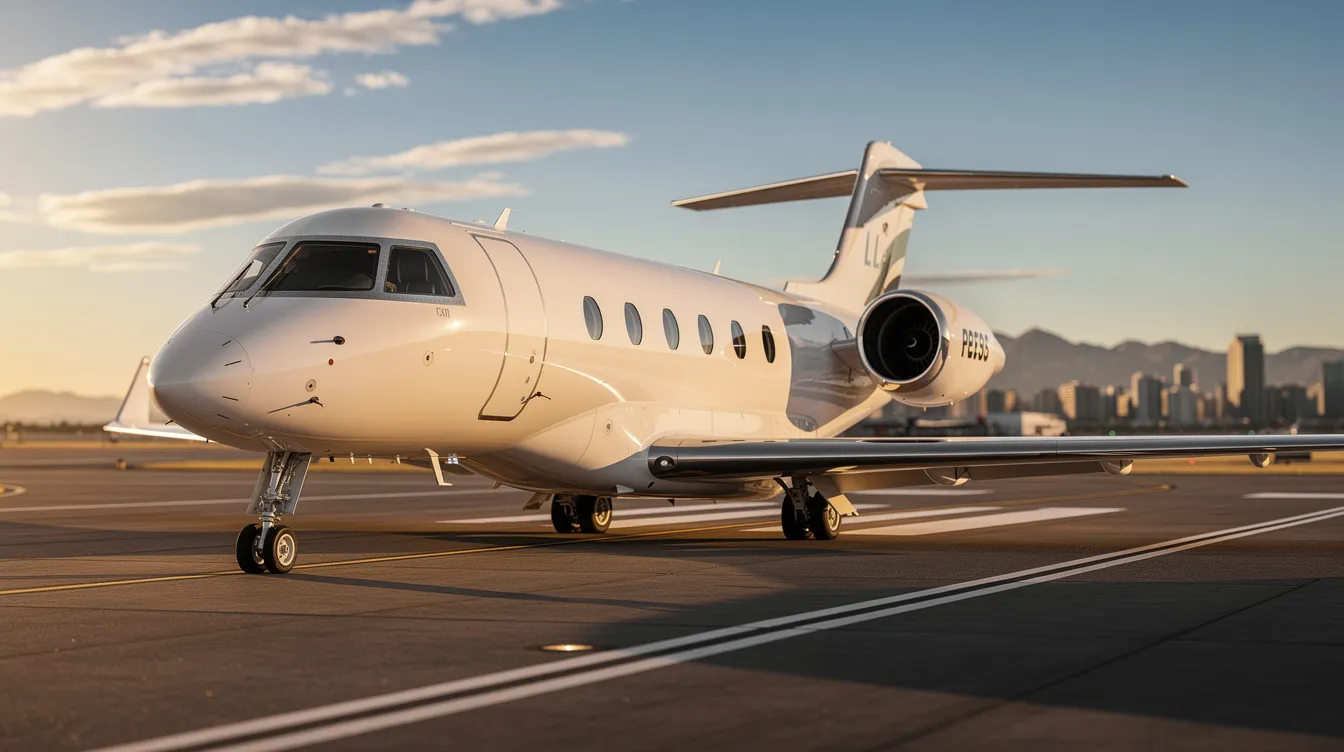
For global billionaires, private jets are not just luxury toys—they are time-multipliers, mobile headquarters, and strategic weapons against the constraints of commercial aviation. This article explores the private jets owned and used by billionaires, the features that set them apart, and how these aircraft redefine business travel and luxury. Designed for business leaders, aviation enthusiasts, and anyone curious about the world of elite private aviation, this guide reveals how the private jets of billionaires enable them to leverage time, access, and technology for competitive advantage. Understanding these aircraft reveals how billionaires maximize productivity, privacy, and comfort, transforming the way global business is conducted.
Purpose-built business jets, such as those manufactured by Gulfstream, Bombardier, and Dassault, are designed specifically for private aviation, offering advanced technology, luxury, and efficiency. In contrast, some billionaires opt for converted commercial airliners for even greater space and amenities, transforming these aircraft into flying palaces.
Ultra-long-range heavy jets, produced by manufacturers such as Gulfstream, Bombardier, and Dassault, are designed for nonstop intercontinental travel and offer spacious, luxurious cabins. These jets often exceed 6,000 to 7,500 nautical miles in range, allowing non-stop city-pair connections worldwide. Billionaires typically prefer ultra-long-range heavy jets for their ability to provide global reach, privacy, and maximum comfort.
Notable Billionaire-Owned Private Jets: At a Glance
Below is a summary table of some of the most iconic private jets of billionaires, their owners, and unique features:
Billionaire | Aircraft | Key Features | Estimated Value |
|---|
Jeff Bezos | Gulfstream G650ER | 16 oval windows, kitchen with touch sensors, leather recliners | $75M+ |
Bill Gates | Bombardier Global Express | 13,000-mile range, seats up to 16, ideal for international travel | (International travel) |
Elon Musk | Gulfstream G650ER | Speed, efficiency, advanced technology | (Rolls-Royce of jets) |
Roman Abramovich | Boeing 767 "The Bandit" | Dining room, library, 200+ passengers | $170M |
Al-Waleed Bin Talal | Airbus A380 | Private theatre, jacuzzi, gym, conference hall | (Extravagant features) |
Mukesh Ambani | BBJ2 | Multiple living rooms, boardroom, 50 passengers | $73M |
These aircraft exemplify the extraordinary customization, range, and luxury that define the private jets of billionaires.
These aircraft exemplify the extraordinary customization, range, and luxury that define the private jets of billionaires.
Why Billionaires Rely on Private Jets in 2026
Consider the arithmetic: a G650ER departing Teterboro lands at Farnborough roughly 6.5 hours later. No security theater, no layovers, no waiting at gates. The aircraft’s 7,500 nautical mile range and Mach 0.925 maximum speed mean Austin to Berlin flies nonstop. The Gulfstream G700 extends that reach to 7,750 nm—the longest in its class—while the Bombardier Global 7500 matches closely at 7,700 nm with a cabin refreshing 100% fresh air every 90 seconds.
Ultra-long-range heavy jets, produced by manufacturers such as Gulfstream, Bombardier, and Dassault, are designed for nonstop intercontinental travel and offer spacious, luxurious cabins. Billionaires typically prefer ultra-long-range heavy jets for their ability to provide global reach, privacy, and maximum comfort.
These aircraft are selected not for prestige alone, but for cabin productivity:
Ka-band Wi-Fi delivering 50 Mbps
Conference rooms configured for eight
Lie-flat seating for rest between meetings
Quiet cabins under 50 decibels, allowing focused calls at 45,000 feet
Private jets enable same-day returns for transcontinental meetings, significantly multiplying available productive hours for executives. This time, multiplication is critical for business leaders who need to attend international business meetings across multiple cities within a single day.
Private aviation also allows executives to depart according to their own schedules and land at smaller airports closer to final destinations, eliminating many logistical barriers associated with commercial air travel. This flexibility boosts efficiency and security, enabling seamless transitions from air to ground.
Full private jet ownership, however, ties up $70-80 million upfront plus $3-5 million in annual operating costs. This reality has accelerated shifts toward access models. BlackJet’s Jet Card programs, for instance, provide prepaid hours on large-cabin jets at transparent rates—delivering billionaire-grade aircraft without capital outlay or idle-asset burden. This service also includes on-demand charter options, providing strategic flexibility for executives to respond quickly to emerging business opportunities or crises, which is crucial in fast-moving markets.
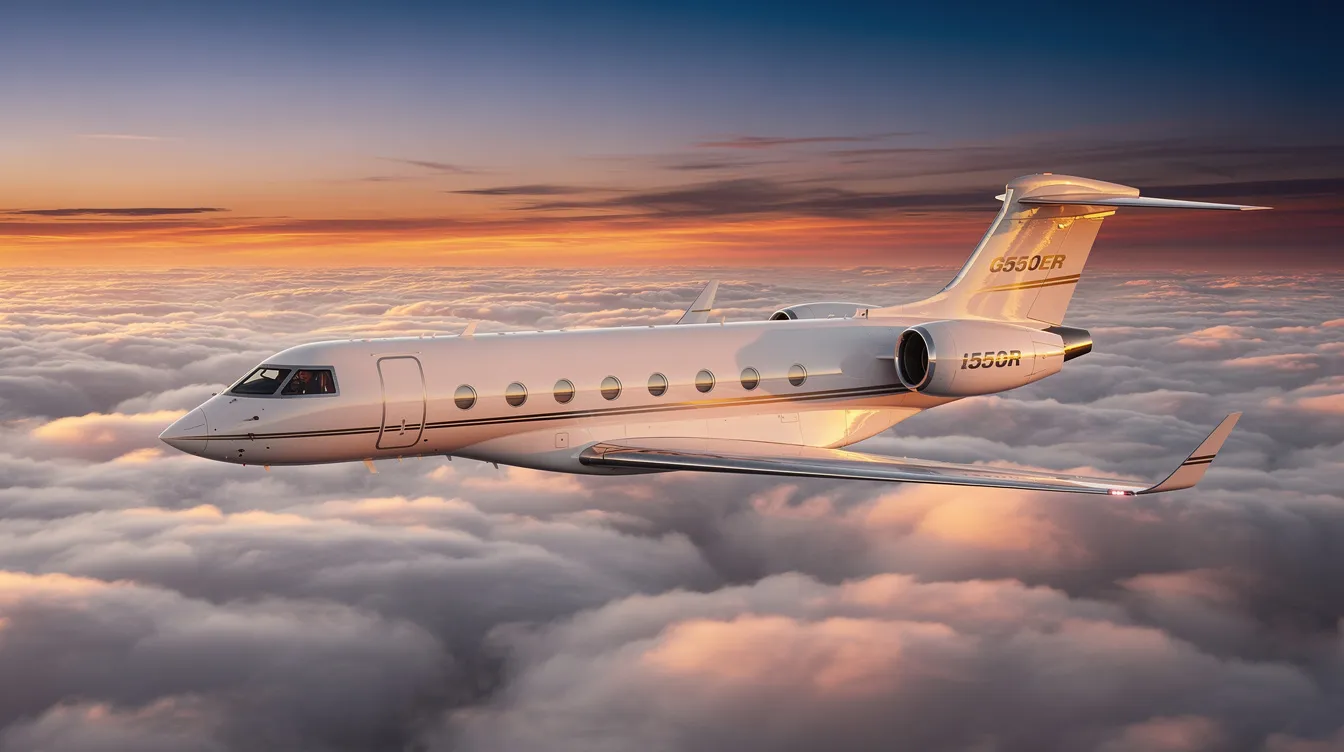
Private aviation has become essential for maintaining competitive advantage in today’s fast-paced business environment, offering enhanced security and operational control—critical for high-profile executives traveling internationally. Many jets are equipped with military-grade defense systems for enhanced security, ensuring peace of mind for their discerning owners.
Elon Musk’s Gulfstream G650ER: A Flying Innovation Lab
Elon Musk’s travel demands span Tesla headquarters in Austin, SpaceX facilities in Hawthorne and Boca Chica, and Neuralink in Fremont. His Gulfstream G650ER, delivered in the mid-2010s at a list price around $70-75 million, serves as the connective tissue linking these operations across time zones.
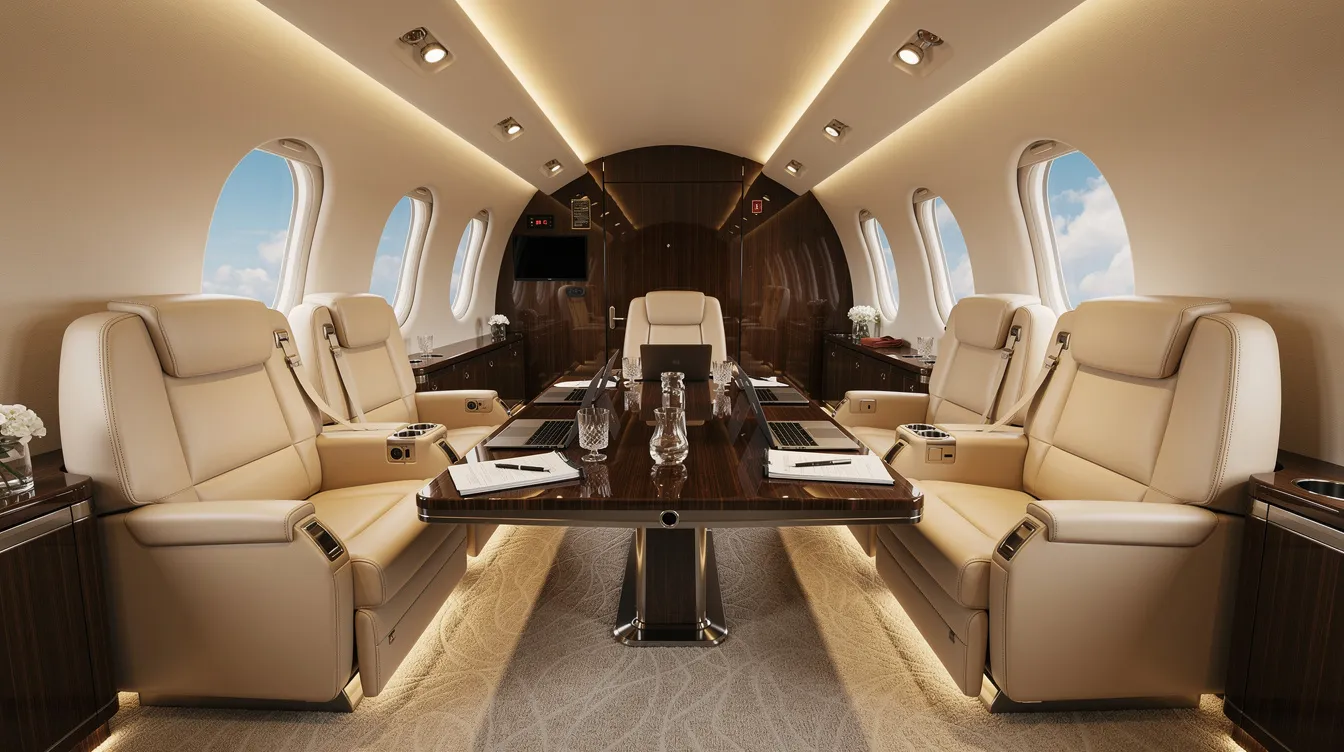
The aircraft delivers a 7,500 nm range at Mach 0.925, enabling Los Angeles to Tokyo or Austin to Berlin nonstop. The interior, configured for 14-16 passengers, features:
Forward galley
Club seating with dual HD screens
Mid-cabin conference table seating eight
Lie-flat divans
High-speed encrypted Wi-Fi
The certified 51,000-foot ceiling—typically flown around 45,000 feet for passenger comfort—keeps cabin altitude at 4,800 feet, minimizing fatigue on long hauls. This plane is known for its speed and efficiency and is often referred to as the Rolls-Royce of jets due to its sleek design and advanced technology.
Custom private jets like Musk’s often include extensive personalizations such as gold-plated fixtures and onboard spas. Billionaire-tier jets frequently feature bespoke amenities that exceed standard luxury, including en-suite bathrooms with walk-in showers and high-speed satellite internet. Interiors showcase high-end materials such as leather, rare wood veneers, and marble surfaces, transforming the cabin into a comfortable living environment rather than just transportation.
The G650ER’s pedigree includes a 2014 Guinness record for fastest around-the-world flight: 46 hours, 39 minutes. This reliability appeals to innovators managing enterprises across continents.
Why the G650ER Fits a Visionary Schedule
The aircraft functions as a flying command center. Secure PlaneConnect systems link to Tesla and SpaceX operations centers, enabling board meetings mid-flight between Austin, New York, and London with just 1-2 hours ground time per stop—no refueling required.
Gulfstream’s PlaneView II flight deck features synthetic vision rendering 3D terrain maps, reducing pilot workload by 30% on night or instrument flights. Fly-by-wire controls and predictive wind optimization cut fuel use by 5-10% on long-haul missions. Modern private jets like this are equipped with advanced avionics systems that provide precise navigation across complex international routes, enhancing operational efficiency.
BlackJet Jet Card holders in large-cabin categories can replicate this productivity for 50-hour blocks, accessing G650/G650ER-class aircraft for US-Europe or coast-to-coast flights without assuming the $4 million yearly overhead that ownership demands.
Like Musk, other tech and business leaders rely on private jets to support their global operations, as seen in the case of Bill Gates.
Bill Gates: Global Philanthropy Powered by Gulfstreams and Globals
Bill Gates’ dual role as Microsoft co-founder and Gates Foundation co-chair requires intense global reach. Since the early 2000s, his fleet has included multiple long-range business jets: Gulfstream G650ERs for ultra-long missions, Bombardier Global Express aircraft for flexible routing, and Challenger 350s via fractional programs for regional access.
The Bombardier Global Express, valued for its remarkable 13,000-mile range, offers seating for up to 16 passengers—ideal for international travel and business meetings. Its quiet cabin, secure satellite communications, and conference-ready layout enable Gates to seamlessly coordinate philanthropic initiatives from health projects in Nigeria to vaccine programs in India.
Strategic Fleet for Philanthropy and Business
Multiple aircraft ensure near-perfect availability. Challenger 350s access over 5,000 smaller airports for field visits to remote clinics, while G650ERs handle oceanic spans. A sample itinerary—Seattle to Geneva to Addis Ababa to Nairobi within 48 hours total flight time—demonstrates why business leaders operating at a global scale require diversified fleets.
BlackJet mirrors this approach through its Jet Card platform, allowing clients to select super-midsize jets for domestic hops and long-range private aircraft for intercontinental missions. Safety certifications, including ARGUS Platinum and IS-BAO Stage 3, match the standards high-profile travelers demand.
As with Gates, other billionaires like Jeff Bezos have assembled fleets that combine luxury, range, and operational flexibility.
Jeff Bezos and the Gulfstream G650ER & G700: Ultimate Long-Range Luxury
The Amazon founder’s travel profile—spanning Amazon oversight, Blue Origin development, and personal interests—demands relentless long-range capability. Jeff Bezos owns a Gulfstream G650ER valued at over $75 million, featuring a luxurious interior with:
16 oval windows that flood the cabin with natural light
Kitchen equipped with touch sensors
Living room area furnished with leather recliners
This aircraft is perfectly suited for transcontinental and intercontinental travel without compromise.
Bezos has also added a Gulfstream G700 to his fleet, delivered in the early 2020s at roughly $80 million.
The G700 represents the pinnacle: 7,750 nm range enabling Seattle to Dubai or New York to Tokyo nonstop. Its 56-foot cabin spans multiple living zones, including conference areas and private sleeping quarters, with bespoke features such as en-suite bathrooms, full-service kitchens, and large dining areas.
The Pinnacle of Billionaire Private Aviation
Custom G700 interiors feature:
The Gulfstream Symmetry Flight Deck combines synthetic and enhanced vision systems, fusing infrared imagery for Category III landings in low visibility.
Versus the G650ER, the G700 adds 10% range and 20% larger cabin volume. Rolls-Royce Pearl 700 engines deliver 17% fuel efficiency improvements over predecessors.
BlackJet large-cabin Jet Cards provide analogous New York to Dubai or Los Angeles to Tokyo access, sidestepping the $5 million annual ownership burden, including $3 million depreciation.
While many billionaires choose purpose-built business jets, others opt for converted commercial airliners for even more space and customization.
Other Iconic Billionaire Aircraft: From Boeing 757s to Flying Palaces
Purpose-built business jets are designed specifically for private aviation by leading manufacturers such as Gulfstream, Bombardier, and Dassault, offering advanced technology, luxury, and efficiency. In contrast, some billionaires operate converted commercial airliners as flying mansions, offering thousands of square feet of cabin space and extensive amenities.
Trump’s Boeing 757
Donald Trump’s Boeing 757, acquired in 1991 for approximately $100 million, including a $10 million refurbishment spent on custom interiors, seats 40+ in a gold-accented configuration with a private bedroom and dine-in galley. Its 4,000 nm range requires stops for transatlantic crossings, but the Boeing Business Jet platform offers unmatched interior volume.
Mukesh Ambani’s BBJ2
Mukesh Ambani’s BBJ2, valued at around $73 million, delivers a 7,000 nm range with multiple living rooms, boardroom-style conference areas, and capacity for 50 passengers. The richest man in India uses it as a mobile headquarters spanning the Middle East and beyond.
Roman Abramovich’s Boeing 767
Roman Abramovich, the owner of a Boeing 767 nicknamed 'The Bandit', has a jet valued at $170 million featuring a dining room, library, and the ability to accommodate over 200 passengers, showcasing the most expensive private jet-style luxury of billionaire private jets.
Al-Waleed Bin Talal’s Airbus A380
Al-Waleed Bin Talal owns an Airbus A380 equipped with:
Private theatre
Jacuzzi
Gym
Conference hall
This highlights the extravagant features of billionaire-owned private jets. These widebody cabins are converted into palaces with spas, theaters, and banquet halls.
Custom private jets often include extensive personalizations such as gold-plated fixtures and onboard spas. Billionaire-tier jets often include bespoke features that exceed standard luxury, such as en-suite bathrooms with walk-in showers and high-speed satellite internet. Private jets frequently feature master bedrooms with en-suite bathrooms, full-service kitchens, and large dining areas.
Customization distinguishes billionaire aircraft from standard business jets, with interior designers collaborating with aviation engineers to create bespoke cabin environments tailored to each owner. Luxury private jets often feature high-end materials such as leather, rare wood veneers, and marble surfaces, transforming the cabin into a comfortable living environment rather than just a mode of transportation.
Why Some Billionaires Choose Converted Airliners
Wide fuselages allow dining rooms, libraries, and guest suites comparable to penthouses. An A380’s 20,000+ cubic feet of cabin volume dwarfs the G700’s 6,500.
However, these aircraft incur $10-20 million yearly in operating costs—fuel consumption double that of business jets, crews exceeding 20 people, and maintenance complexity few organizations can manage efficiently.
BlackJet offers an alternative: large-cabin and ultra-long-range access without the overhead of airline-sized aircraft, delivering global reach through efficient business jets rather than converted airliners.
The strategic use of these aircraft is not just about luxury, but about transforming geography into a competitive advantage.
How Billionaires Actually Use Their Jets: Strategy, Not Just Status
For business leaders, the jet primarily transforms geography into a competitive advantage. A tech CEO executes San Francisco to London to Berlin in 36 hours—two 7-hour legs with 2-hour London ground time—hosting due diligence sessions mid-flight, making the underlying private jet price structure secondary to strategic value. A private equity team visits three portfolio companies in one day via short-field access to regional airports that commercial carriers cannot reach.
Time Multiplication and Security
Time multiplication converts 8-10 otherwise lost hours into board meetings, strategy sessions, or rest before critical negotiations. FBO access provides security:
This reinforces how safe private jets are when operated under top-tier standards.
Commercial first class may match seat comfort, but it cannot deliver bespoke schedules, smaller airport access, or 15-minute turnarounds.
Advanced Avionics, Safety, and Connectivity
Modern aircraft like the G650ER, G700, and Bombardier Global 7500 feature:
IS-BAO registration and ARGUS/Wyvern ratings mandate 10,000+ hour pilots and rigorous maintenance standards.
Cabin connectivity includes:
CEOs run earnings calls or board updates en route, as seamlessly as from any ground office.
BlackJet vets partner operators against equivalent safety standards, providing real-time ops support to mirror the reliability billionaires expect.
The decision to own or access a jet is shaped by cost, flexibility, and travel frequency.
Owning vs Accessing: How Jet Cards Give Billionaire-Level Travel Without the Jet
A G650ER-class aircraft exceeds $3-5 million annually in operating costs alone—before accounting for the initial purchase price of $70+ million, crew salaries ($1.2 million), hangar fees, insurance, maintenance, and depreciation.
BlackJet’s Jet Card model offers an alternative: 25-hour and 50-hour programs across light, midsize, super-midsize, and large-cabin categories. Clients select aircraft based on trip profile, not portfolio burden.
The booking experience spans a 24/7 digital platform with mobile access, transparent hourly jet card pricing, guaranteed availability windows, and real-time support. Every BlackJet flight flies carbon-neutral via verified offsets with audited, safety-certified operators.
Jet Card vs On-Demand Charter vs Ownership
Full ownership: Suits those flying 200+ hours annually with predictable routing.
Ad-hoc charter: Works for occasional travelers accepting variable rates and availability risks.
Jet Cards: Bridge the gap for 25-100 hour travelers seeking locked-in rates, priority access during peak periods, and simplified budgeting, making it important to understand overall jet card cost structures.
A client flying 60-80 hours annually between New York, Miami, and London finds a 50-hour or 100-hour jet card balances cost and consistency when they understand the underlying jet card cost per hour. BlackJet clients fly on cabins similar to those owned by Musk, Gates, and Bezos—under a predictable membership structure.
As sustainability becomes a growing concern, the future of billionaire jets is increasingly shaped by environmental considerations.
Sustainability and the Future of Billionaire Jets
High-profile scrutiny of billionaire emissions has intensified through 2024-2026. A G650ER burns approximately 2,200 gallons per hour, producing roughly 10 tons of CO2 on a transatlantic crossing.
Sustainable Aviation Fuels (SAF) are increasingly adopted by leading operators to reduce environmental impact while maintaining performance standards, even as some travelers seek more affordable private aircraft options to balance cost and sustainability. These plant- and waste-derived feedstocks reduce lifecycle CO2 emissions by up to 80%. Current blends range from 10-50%, with full adoption projected by 2030. The G700 and Global 7500 incorporate aerodynamic improvements such as winglets and composite materials, trimming fuel consumption by 15%.
Emerging technologies promise quieter and more efficient aircraft, particularly for short and medium-range flights, which contribute significantly to sustainability efforts. Electric and hybrid propulsion systems are in development, aiming to reduce reliance on traditional fossil fuels and transform regional aviation in the coming decade.
BlackJet renders all flights carbon-neutral via Gold Standard verified offsets—reforestation and renewable energy projects—with transparent dashboards showing clients exactly where their impact is mitigated.
What This Means for Discerning Travelers
Executives can align private aviation with ESG commitments by choosing providers prioritizing SAF and automatic offsetting while still considering private jet rental costs on specific routes. A BlackJet client flying from New York to London ten times annually in a large-cabin jet sees their emissions measured and offset at no additional cost.
Sustainable private aviation increasingly represents a competitive advantage for leaders reporting carbon exposure to boards and stakeholders.
FAQs: Experiencing Billionaire-Level Private Jets with BlackJet
Can I fly on the same types of jets billionaires use?
Yes. BlackJet Jet Cards unlock access to Gulfstream, Bombardier Global, and large-cabin fleets comparable to those operated by Oprah Winfrey, Mark Cuban, or Richard Branson. The aircraft remains the same—the access model changes.
How much does it cost to fly a jet like a Gulfstream G650ER without owning it?
Large-cabin charters typically run $12,000-$18,000 per hour. Jet Card pricing programs average 10-20% savings via prepaid blocks, with transparent rates and no repositioning fees.
Is it safe to fly private compared to commercial?
Private aviation under ARGUS/Wyvern standards achieves fatality rates of 0.04 per million miles—matching or exceeding commercial benchmarks, as detailed in analyses of private jet safety. BlackJet requires partner operators to maintain 15,000-hour captains and triple-redundant systems.
How quickly can I be airborne?
Members can book with 2-4 hour lead times. FBO check-in takes 15-30 minutes—no security lines, no gate waits, one of the core benefits highlighted in many best jet card for frequent flyers comparisons.
How does carbon-neutral private flying work?
BlackJet calculates trip CO2—approximately 15 tons for New York to London—and retires equivalent offsets through verified projects. SAF upgrades are available where airports support them, and these sustainability initiatives are increasingly factored into billionaire private jet price trends.
Conclusion: From Billionaire Runways to Your Own Flight Plan
Aircraft managed by Elon Musk, Bill Gates, and Jeff Bezos illustrate what becomes possible at 45,000 feet: global reach compressed into single duty days, cabins equipped as boardrooms and private residences, and flight hours transformed into productive assets rather than dead time.
While owning a G650ER or G700 remains reserved for those whose net worth permits $5+ million annual carrying costs, accessing comparable aircraft categories is now feasible through BlackJet’s 25+ Hour Jet Card and charter solutions. Safety-first operations, certified operators, carbon-neutral flights, and technology-enabled booking deliver the experience without the burden.
Discover how BlackJet can reshape your approach to seamless travel. Explore membership options, request a tailored flight plan, or speak with an aviation advisor about aligning aircraft category, budget, and travel pattern to your ambitions—whether you are comparing 5 million dollar jet ownership to access models or evaluating alternatives by reviewing [NetJets jet card costs](https


 Sign up with google
 Sign up with Apple