
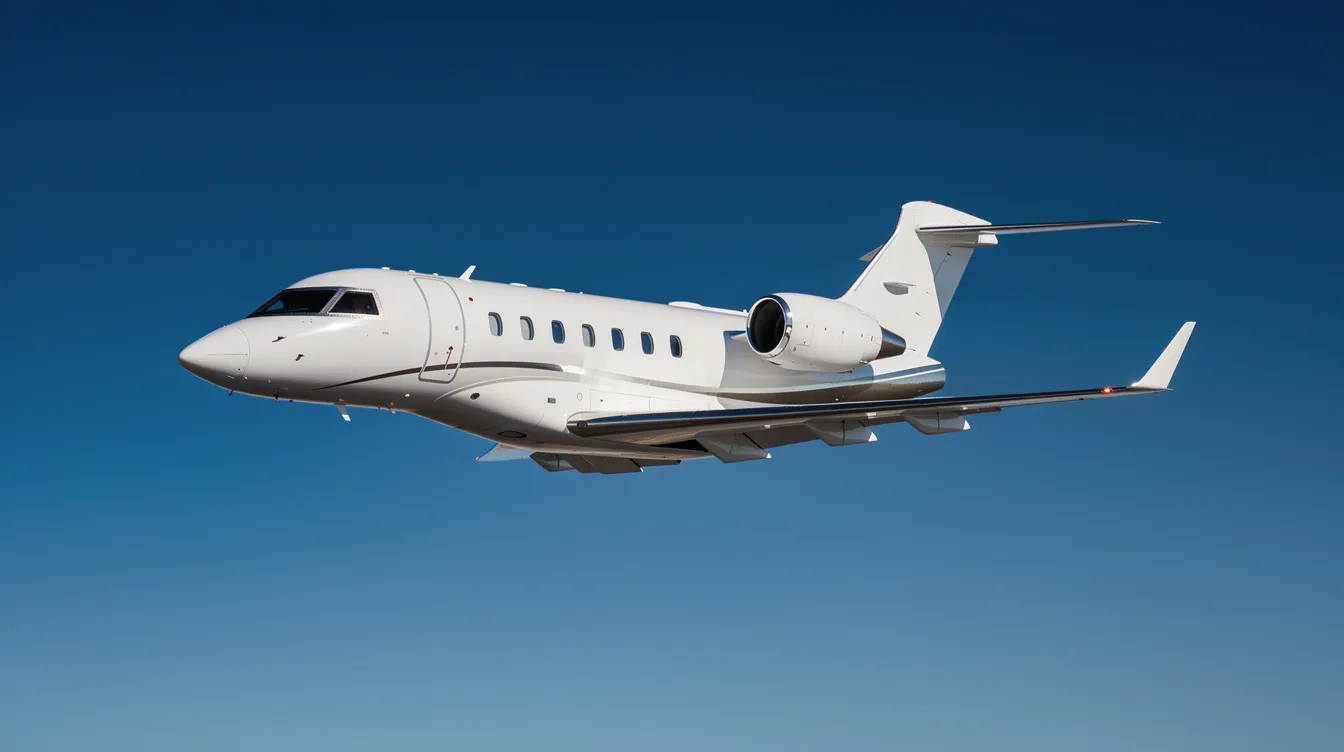
HondaJet Overview: Why This Private Jet Changed the Light-Jet Market
When Honda Aircraft Company introduced the HA-420 HondaJet, it did something rare in aviation: it built a very light jet from a completely clean-sheet design that outperformed established competitors in fuel efficiency, cabin comfort, and operating cost. The aircraft's combination of natural laminar flow surfaces, a composite fuselage, and the proprietary GE Honda HF120 turbofan engines created a machine that made private jet travel genuinely practical for regional missions—not just aspirational.
For high-net-worth travelers and corporate flyers who lose entire business days navigating commercial airports, the HondaJet turned a luxury into a strategic advantage.
The name "HondaJet" refers primarily to the Honda HA-420 and its progressively upgraded variants: the original Classic, the APMG, the Elite, the Elite S, and now the Elite II. First certified by the FAA in December 2015, the aircraft quickly became a popular entry point into private jets for founders, physicians, attorneys, and regional executives who needed speed without the overhead of a midsize cabin.
Key facts at a glance:
Seating: 4–6 passengers typical; up to 7 in alternate layouts
Range: approximately 1,223 nm (Classic) to 1,547 nm (Elite II) with 4 occupants under NBAA IFR reserves
Cruise speed: ~422 knots true airspeed
Cabin dimensions: 17.8 ft total length, 5.0 ft width, 4.83 ft height
Optimum missions: New York–Miami, Los Angeles–Seattle, London–Rome (Elite II with favorable payload)
What makes the HondaJet visually and aerodynamically distinct is Honda's over-the-wing engine mount design, known as OTWEM. Instead of positioning engines below or at the rear fuselage, the two turbofans sit above the wings on short pylons. Picture the silhouette: the wing is clean underneath, the engines ride on top, and the fuselage behind is unencumbered.
This design frees up interior cabin and baggage space that would normally be compromised by structural engine supports. It also moves engine noise further from the passenger compartment, making the cabin noticeably quieter than many legacy VLJs. Because the airflow over the wing remains less disturbed, the OTWEM configuration contributes to the aircraft's aerodynamic efficiency—complemented by Honda's natural laminar flow surfaces across the nose and wing.
Compare this to a typical commercial flight on a business day trip. A founder flying Boston to Chicago on a commercial airline, even in first class, faces TSA screening, gate waits, boarding procedures, and often a connection—consuming three to four hours in each direction before accounting for ground transportation at both ends. On a HondaJet, departure happens from a private FBO terminal where boarding takes ten to fifteen minutes, routing is direct, and arrival can be at a smaller executive airport closer to the final destination.
The hours recovered in a single round-trip often justify the cost for travelers whose time carries real economic weight.
While some buyers choose to purchase a HondaJet as their first private jet, many BlackJet clients prefer access over ownership. When accounting for the capital outlay, crew salaries, hangar costs, insurance, maintenance risk, and resale uncertainty that come with owning an aircraft, Jet Card programs offer a lower-risk path to the same cabin experience—without the management burden.
HondaJet Specifications, Ownership Costs & Real-World Use Cases
Whether you're seriously considering buying a HondaJet or evaluating how to access similar aircraft through a private jet membership like the BlackJet Jet Card or premium private jet card programs, understanding the real numbers is essential. This section lays out the specs, the costs, and the practical missions where this model excels—and where it doesn't.
Performance Specifications
The HondaJet line shares a common airframe, but each variant brings meaningful improvements in range, payload, and avionics.
Specification | HA-420 Classic | Elite / Elite S | Elite II |
|---|---|---|---|
Typical seating | 4–6 | 4–6 | 4–6 (up to 7) |
Cabin (L × W × H) | ~17.8 ft × 5.0 ft × 4.83 ft | Same | Same |
Baggage capacity | ~57 cu ft | ~66 cu ft (Elite S) | 62 cu ft (53 aft + 9 nose) |
NBAA IFR range (4 pax) | ~1,223 nm | ~1,437 nm | 1,547 nm |
Max cruise speed | ~420 KTAS | ~422 KTAS | ~422 KTAS |
Service ceiling | 43,000 ft | 43,000 ft | 43,000 ft |
Max takeoff weight | ~9,200 lb | ~10,700–10,900 lb | 11,100 lb |
The cabin layout in all variants follows a four-club seating arrangement with an optional fifth or sixth seat (and a belted lavatory option bringing the maximum to seven). With a cabin height of roughly 4 feet 10 inches and a width of 5 feet, it's comfortable for regional flights of two to three hours but noticeably tighter than midsize jets on longer legs.
Acquisition Pricing
Private Jet Acquisition Pricing (2026–2027):
New HondaJet Elite II: approximately $6.95 million factory list, making it one of the most affordable new light jets on the market
Pre-owned HA-420 / Elite / Elite S: generally listed between $2.9 million and $4.5 million, depending on model year, total flight hours, avionics upgrades, and maintenance history
For a full breakdown of how private jet pricing works across categories, see the Private Jet Price List.
Ownership Cost Reality
Owning a HondaJet means absorbing two layers of cost—fixed and variable—regardless of how often the aircraft flies, including high private jet pilot and crew costs.
Fixed annual costs include:
Hangar rental
Pilot salaries, benefits, and recurrent training
Insurance
Aircraft management fees
Data subscriptions and regulatory compliance
Variable costs scale with utilization:
Fuel burn per flight hour
Maintenance reserves and unscheduled repairs
Engine overhaul program contributions
Landing and handling fees
Crew positioning for one-way flights
Industry estimates paint a clear picture. Liberty Jet calculates total annual costs of roughly $579,000 at 200 hours per year, rising to approximately $928,000 at 400 hours. For owners flying fewer than 150 hours annually, the effective hourly cost can exceed $5,000 when fixed overhead is spread across limited utilization. Including acquisition, financing, and depreciation, yearly ownership can push well past $1 million.
The fundamental tension: fixed costs don't shrink when the aircraft sits idle. For anyone flying fewer than 200–250 hours per year, the math increasingly favors access over ownership, making it critical to understand jet card membership pricing.
Real-World Travel Scenarios
Compared with on-demand chartering of small aircraft, where pricing can swing widely by route, season, and operator, understanding how much it costs to charter a small plane helps put HondaJet-class economics into perspective.
Scenario 1 — Founder's Day trip, Boston to Chicago: An Elite II carrying four passengers and light bags covers the ~850 nm route comfortably within its range. Departing from Hanscom Field (BED) rather than Logan eliminates ground congestion. Total door-to-door time: roughly five hours for a round-trip that would consume ten or more hours commercially, making a same-day investor meeting realistic rather than aspirational.
Scenario 2 — Family ski weekend, Dallas to Aspen: At ~650 nm each way, this flight is well within range even with a full cabin. The 62 cu ft of baggage capacity across the aft compartment and nose storage handles ski equipment and luggage. The cabin seats children comfortably in the club configuration, and the belted lavatory option adds practicality on a flight with young travelers.
Safety and Avionics
Every HondaJet variant uses the Garmin G3000 avionics suite in the cockpit, providing synthetic vision, envelope protection, and intuitive touchscreen flight management. The Elite II goes further with autothrottle and Emergency Autoland—making it the first twin-turbine VLJ certified with an autonomous landing system that can guide the aircraft to the nearest suitable runway if the pilot becomes incapacitated. It still competes directly with the best and cheapest single-pilot jets for owner-operators focused on efficiency.
The fleet's safety record supports confidence: FYI Aero reports 10 HondaJet incidents across the U.S. registered fleet of ~239 aircraft over the past decade, with no fatalities or hull losses. Still, safety ultimately depends on operator standards, pilot training currency, and maintenance discipline—areas where BlackJet's proprietary certification process adds a layer of oversight that individual owners must build from scratch.
How HondaJet Compares to Other Light Jets
BlackJet customers often select from several aircraft in the light jet category depending on mission requirements:
Aircraft | Typical Cruise | Range (NBAA IFR) | Cabin Size | Key Difference |
|---|---|---|---|---|
HondaJet Elite II | ~422 KTAS | 1,547 nm | Smaller, efficient | Lowest operating cost, OTWEM design |
Embraer Phenom 100EV | ~406 KTAS | ~1,178 nm | Similar | Conventional design, slightly lower range |
Cessna Citation CJ3+ | ~416 KTAS | ~1,875 nm | Larger cabin | Greater payload, higher operating cost |
Cessna Citation CJ4 | ~451 KTAS | ~2,165 nm | Largest in class | Near-midsize capability, requires two-crew ops |
For travelers whose missions consistently exceed 1,500 nm or require more cabin space, stepping up to a midsize or super-midsize category or even evaluating 12-seater private jet options often makes more sense—something easily done through a Jet Card but impossible without buying a second aircraft under an ownership model.
Ownership vs. Jet Card Access
Capital-intensive full ownership of a HondaJet suits operators flying 250+ hours per year with consistent, predictable routes. For everyone else—founders who travel in bursts, families who fly seasonally, executives whose schedules shift quarterly—the BlackJet Jet Card eliminates the financial drag of idle assets by converting ownership overhead into predictable jet card pricing structures. Clients fly HondaJet-class aircraft on an hourly basis with predictable all-inclusive pricing, 24/7 real-time support, and zero exposure to resale uncertainty or depreciation risk.
Accessing HondaJet-Class Private Jets with BlackJet Jet Cards
For travelers drawn to the HondaJet's efficiency and comfort but reluctant to commit $6–7 million in capital and $700,000+ in annual overhead, BlackJet offers a fundamentally different equation. Jet Cards provide guaranteed access to light private jets—including aircraft comparable to the HondaJet—across the world, without long-term commitment or the operational complexity of ownership.
They also make the jet card cost per hour fully transparent in advance.

How BlackJet Jet Cards Work
The structure is straightforward. Clients purchase prepaid blocks of flight time—either 25-hour or 50-hour cards—at a fixed hourly rate locked in for 12 months. Hours never expire. Multiple cabin categories are available:
Very Light / Light Jet (HondaJet class)
Midsize
Super-Midsize
Large Cabin
This means you're never locked into a single aircraft type. A two-hour hop from New York to Miami might call for a light jet, where understanding private jet charter pricing provides a useful benchmark against Jet Card rates. A nonstop New York to Los Angeles board meeting demands a super-midsize. The same card covers both, with the flexibility to select the right aircraft for each mission.
Booking Experience
Trip requests happen through BlackJet's mobile and web platform, with real-time quotes that include fuel surcharges, Federal Excise Tax, and all standard fees. Pricing previews are transparent before confirmation, so you can benchmark them against typical private jet rental costs.
Need a HondaJet-class aircraft for a next-day Paris–Zurich flight? The platform surfaces availability and locks in cost within hours. For complex itineraries—multi-leg business tours, last-minute schedule shifts, international routing—24/7 live support handles the details.
Safety That Exceeds Individual Ownership
BlackJet's safety framework operates at a scale no single-owner operation can match, even for owners of top affordable private planes who try to manage safety oversight on their own. The proprietary "BlackJet Certified" process independently evaluates four dimensions: operator, aircraft, pilot, and flight.
The dataset behind this certification spans over 300 million operational safety data points collected across more than a decade of operations. Partner operators are vetted against benchmarks including ARGUS Platinum, Wyvern Wingman, and IS-BAO standards. Cardholders receive pre-flight safety reports in the app.
The governance layer includes a Safety Advisory Board with former FAA and NTSB officials. For many travelers, this curated network delivers a higher safety floor than what a single HondaJet owner can achieve independently.
Carbon-Neutral by Default
Since 2021, every BlackJet Jet Card flight is carbon and emissions neutral—at no extra cost to customers, a meaningful differentiator for sustainability-conscious travelers in markets from Europe to regions like India where private jet prices in rupees are a growing focus. The offset program covers not just CO₂ but non-CO₂ effects including water vapor, aerosols, and nitrous oxide, calculated per flight using aircraft type, distance, and fuel burn.
Individual HondaJet owners who want equivalent sustainability credentials must arrange and fund their own offset programs separately.
Jet Card vs. Ownership vs. Charter
Factor | HondaJet Ownership | BlackJet Jet Card | Ad-Hoc Charter |
|---|---|---|---|
Capital commitment | $6–7M+ upfront | Prepaid hours only | Pay per trip |
Annual fixed costs | $300K–$500K+ regardless of flying | None | None |
Hourly cost transparency | Variable, often opaque | Fixed, all-inclusive | Variable by operator |
Fleet flexibility | Locked to one aircraft | Multiple cabin classes | Depends on availability |
Scheduling priority | Full control | Guaranteed availability | Market-dependent |
For a deeper comparison framework, see Jet Card vs. Charter vs. Fractional vs. Ownership, as well as our breakdown of the cheapest private aircraft and access models.
A Real Client Path
Consider a European executive who frequently flies Paris–Zurich and Milan–Frankfurt—routes perfectly suited to HondaJet-class aircraft. For years, she chartered individually, negotiating rates trip by trip and dealing with inconsistent operator quality. In September 2027, she signed a 50-hour BlackJet Jet Card, locking in fixed rates and guaranteed availability across her regular routes.
When quarterly board roadshows required larger cabins and longer nonstop range, she simply upgraded to midsize jets on the same card—no second aircraft purchase, no additional crew hiring, no complexity, and the option to scale up to 20-passenger private jets when the entire leadership team traveled together.
The Smarter Path to HondaJet-Class Flying
The HondaJet proved that innovation in design could make light jet travel more efficient, quieter, and more accessible than the world of private aviation had seen before. But ownership isn't the only way to experience it; between 100-hour jet card solutions, private jet leasing structures, and the most affordable private jet options, there are multiple paths to HondaJet-class flying.
Whether you're exploring your first private jet purchase, comparing light aircraft for regional missions, or simply looking for a way to reclaim the hours that commercial travel consumes, there's a question worth asking: does it make more sense to own the asset, or to own the access?
Frequently Asked Questions About the HondaJet
How much does a HondaJet cost?
A new HondaJet Elite II has a factory list price of approximately $6.95 million, while pre-owned HA-420 models generally range from about $2.9 million to $4.5 million, depending on age, flight hours, equipment, and maintenance history. Purchase price is only part of the cost: owners also pay for crew, hangar space, insurance, maintenance, and operating expenses.
What is the HondaJet’s range?
Range varies by model and operating conditions. Under NBAA IFR assumptions with four occupants, the Classic is listed at approximately 1,223 nautical miles, while the Elite II reaches about 1,547 nautical miles. Payload, weather, routing, and required reserves affect the range available on a particular flight.
How many passengers can a HondaJet carry?
HondaJet cabins typically seat four to six passengers, with some configurations offering up to seven seats. The compact cabin is well suited to regional trips, but travelers should confirm passenger and baggage requirements with the operator before booking.
Is a HondaJet a good choice for every private flight?
No aircraft suits every mission. The HondaJet is designed for efficient regional travel, but longer routes, larger groups, or substantial luggage may call for a midsize or larger aircraft. A Jet Card can provide access to different cabin categories, so travelers can match the aircraft to each itinerary rather than relying on one owned jet.
Is owning a HondaJet better than using a Jet Card?
Ownership can suit travelers with frequent, predictable flight schedules who are prepared to manage substantial fixed and variable costs. A Jet Card offers prepaid access without aircraft acquisition, staffing, or resale responsibilities. Compare expected annual hours, routes, aircraft needs, and the value of scheduling flexibility before choosing.
What safety features does the HondaJet Elite II have?
The Elite II includes Garmin G3000 avionics, autothrottle, and Emergency Autoland, a system designed to guide the aircraft to a suitable runway if the pilot becomes incapacitated. These aircraft features complement—not replace—operator oversight, qualified pilots, and disciplined maintenance. BlackJet also evaluates operators, aircraft, pilots, and flights through its proprietary certification process.
Conclusion: HondaJet Innovation, With Access That Adapts
The HondaJet demonstrates how thoughtful engineering can make regional private aviation faster and more efficient, with a distinctive cabin and advanced cockpit technology. For travelers whose routes, passenger counts, and annual flight hours remain consistent, private jet ownership may be worth evaluating—but purchase price is only one part of the commitment. Crew, maintenance, insurance, hangar, and operating costs all shape the true economics; explore our guide to private jet pricing for a closer look.
For those who value flexibility without managing an aircraft, a private jet card offers another way to access HondaJet-class light jets alongside larger private jet cabin classes when the itinerary demands them. BlackJet combines prepaid flight time with digital booking and real-time support, independent private aviation safety vetting, and carbon-neutral flights, helping travelers match aircraft access to each journey. Compare the routes you fly, the time you want to reclaim, and the level of flexibility you need to decide which model fits. When you’re ready to explore premium private jet access, discover how a BlackJet Jet Card can reshape your travel.