Private jet demand is no longer a pandemic-era anomaly. It has surged by more than 30% since 2019 and remains strong in 2026 as frequent business travelers, executives, and high-net-worth flyers prioritize time savings, privacy, safety, and dependable access over the complexity of owning an aircraft. This guide is for business travelers, executives, and high-net-worth individuals considering private aviation options. Understanding private jet demand is crucial for making informed travel and investment decisions in 2026.
What follows looks at the data behind that shift, who is driving growth, where demand is strongest, and how business aviation is changing through Jet Cards and other membership models, aircraft categories, business travel use cases, safety and sustainability standards, and digital booking tools. For readers weighing private access against ownership, these trends show why private aviation has become a lasting change in luxury and corporate travel rather than a short-term spike.
Executive Snapshot: Why Private Jet Demand Is Redefining Luxury Travel in 2026
The numbers leave little room for debate, and a detailed look at how many private jets are in the world underscores just how global and entrenched this market has become. Private jet demand surged by 34% during the pandemic and has not retreated. The demand for private jets has increased by 30% since 2019, and global private jet flight activity increased by 11.3% year-over-year in 2026. Private jet flights rose about 4% globally as of June 2026, while global private jet flight activity increased by 3.7% from January to September 2025, confirming that the private jet market is experiencing a shift toward a more mature phase following pandemic demand rather than any slowdown.
Around 24,900 private jets are in operation worldwide, with the U.S. holding roughly 62% of the fleet and leading demand growth. These are not vanity assets sitting idle on tarmacs; the broader business jet market is being driven by real utility and network usage. They represent a global network of productivity, moving business leaders and wealthy individuals between opportunities that commercial airlines simply cannot serve on time.
Consider the contrast: a typical New York–London trip on commercial airlines often stretches to 10–12 hours door-to-door once you factor in connecting flights, security queues, and delays. A private jet covers the same route in 6.5–7 hours nonstop, departing when the client is ready, arriving at private terminals minutes from the final destination. That gap-measured in hours, missed meetings, and accumulated stress-makes all the difference.
BlackJet is a carbon-neutral Jet Card and private jet charter provider that gives members guaranteed access to multiple cabin classes without the complexity and cost of full ownership. Throughout this industry analysis, we will return to the pillars that define premier private aviation in 2026: rigorous safety certification, carbon-neutral operations, digital booking technology, and tailored solutions for UHNW and corporate clients.
Private Jet Demand Key Statistics in 2026
Metric | Value | Notes |
|---|
Increase in private jet demand since 2019 | +30% | Reflects sustained growth beyond pandemic surge |
Private jet demand growth during the pandemic | +34% | Surge in new private flyers and usage |
Global private jet flight activity growth | +11.3% (year-over-year 2026) | Indicates market maturity and ongoing expansion |
Total private jets in operation worldwide | ~24,900 jets | U.S. holds approximately 62% of the global fleet |
U.S. private jets in operation | ~14,632 jets | Largest national fleet and demand center |
Private jet flights global increase (H1 2026) | +4% | Continued growth in flight activity |
Private jet flight activity Jan-Sep 2025 | +3.7% | Early indicator of market stability |
Ultra-high-net-worth individuals (UHNWIs) | 713,626 individuals (2026) | Key driver of private jet demand |
New Wealth, New Flyers: How Net Worth Growth Is Fueling Private Jet Demand
As billionaire wealth expands, billionaire private jet price trends in 2026 highlight how even the ultra-wealthy are increasingly weighing flexible access models against outright ownership.
Growth in UHNWIs
Rising numbers of high-net-worth individuals drive growth in the private jet market more directly than any other single factor. According to Knight Frank's 2026 Wealth Sizing Model, the global population of ultra-high-net-worth individuals (those with a net worth exceeding $30 million) grew to 713,626 in 2026, up from roughly 551,000 in 2021-an increase of approximately 80–90 new UHNWIs per day over five years.
Jet Card Preferences
This wealth expansion correlates directly with increasing demand for flexible private aviation options, and many frequent flyers now evaluate the best jet cards for their travel needs before committing to a specific provider. Many of these high net worth individuals prefer Jet Cards and on-demand charter over outright ownership, especially when they fly between 25 and 150 hours annually. A tech founder with $50 million or more in net worth, for example, might use a 50-hour BlackJet Jet Card to handle quarterly investor roadshows across San Francisco, New York, and London-accessing heavy or ultra-long-range aircraft for transatlantic legs and light jets for regional hops, all without tying up capital in a depreciating asset.
Industry snapshot: Jet Card and membership revenue reached approximately $12.1 billion globally in 2026, growing at roughly 8.7% CAGR-faster than pure ownership segments. Many private jets are now accessed via membership and charter rather than through traditional purchase.
The Demographic Shift: Younger First-Time Flyers and New Travel Patterns
Younger travelers often begin with shared flights or single seats rather than chartering entire aircraft, exploring options like how to buy a seat on a private jet before moving into full-cabin solutions.
Changing Client Profiles
The profile of private aviation clients is changing. Fully 47% of first-time private jet flyers are under 45 years old, reshaping expectations across the private jet industry toward digital-first booking, instant confirmation, transparent pricing, and sustainability credentials.
New Travel Patterns
These travelers increasingly come from tech, finance, and entertainment, and many discover that small private jets for luxury travel fit their shorter, high-frequency trips more efficiently than larger aircraft. Many upgraded from commercial first class after repeated disruptions on commercial airliners, including cancelled flights, crowded airports, and unpredictable delays. Their travel patterns skew toward rapid growth corridors: private flights from New York to Nantucket in summer, Los Angeles to Aspen in winter, and London to Ibiza for leisure weekends.
BlackJet's premium private Jet Card programs, mobile booking platform, and real-time flight support appeal directly to this younger segment. First-time flyers, in particular, benefit from how Jet Cards work: there is no aircraft to manage, no crew to employ, no hangar to lease. A Jet Card lowers the friction of flying privately to a single prepaid purchase and an app that confirms the next flight in minutes. Digital transformation is modernizing customer experiences in private aviation, and this generation expects nothing less.

Commercial Aviation Chaos vs. Private Stability
For many travelers, understanding how much it costs to rent a private jet becomes the first step in quantifying the trade-off between commercial disruption and private reliability.
Commercial Airline Disruptions
Commercial aviation chaos pushed travelers towards private jets throughout 2024–2026. Major commercial airlines cut routes, raised fares, and battled staff shortages, while flight cancellations and congestion made scheduled air travel less reliable across key hubs. Demand for private jets surged due to the need to bypass commercial flight delays, and the trend shows no sign of reversing.
Private Jet Advantages
Private aviation offers greater schedule certainty compared to commercial airlines. Consider a business traveler who faces missed connecting flights and an overnight layover in a hub city versus a BlackJet member who flies direct routes between secondary airports, bypassing congested hubs entirely. The difference is not marginal; it redefines whether a day is productive or wasted.
A concrete use case illustrates the point: a CEO needing to attend board meetings in Chicago, Dallas, and Atlanta in a single day. On scheduled commercial flights, such an itinerary is impossible-connections alone would consume the day. On a midsize jet booked through BlackJet, all three stops happen before dinner, with business meetings conducted en route between cities. Private aviation allows for productivity savings through time-efficient travel, and for HNW travelers, the cost of lost time often exceeds the hourly rate of a private jet. Private jet travel becomes a productivity tool, not a discretionary indulgence, especially when travelers understand how safe private jets are relative to other forms of air travel.
The Structural Shift: From Owning Jets to Access-Based Models
The global private jet charter services market was valued at $16.38 billion in 2025, and charter services are projected to reach $25.79 billion by 2031, outpacing pure ownership growth by a significant margin; broader context on private jet price lists and access options shows why flexible models are winning share. Many customers now opt for membership-based charter models instead of outright ownership. Membership-based charter models allow clients to pay for access to a fleet or network of aircraft, typically through a subscription or prepaid hours, offering flexibility and guaranteed availability without the responsibilities of ownership. Accessibility models like fractional ownership have made private aviation more accessible to a broader range of clients. Fractional ownership splits the cost and usage among several parties—suitable for those flying 100–200 hours who still want partial equity.
Several factors explain the shift. New aircraft from manufacturers like Gulfstream and Bombardier carry price tags of $35–40 million or more for large-cabin models. Maintenance, crew salaries, hangarage, and depreciation add hundreds of thousands annually. Meanwhile, delivery slots for new aircraft have stretched into 2027–2028, making timely acquisition difficult and purchasing more challenging for private jet owners. For executives and wealthy individuals whose travel patterns vary year to year, tying up that capital rarely makes financial sense.
Three access models serve different profiles, and many prospective users start by analyzing overall Jet Card cost and membership pricing before deciding how much access they really need. Full ownership is typically beneficial for 200–250 flight hours per year, when an owner flies enough to justify the fixed costs and wants complete control of the asset. Fractional ownership splits the cost and usage among several parties-suitable for those flying 100–200 hours who still want partial equity. Jet Cards and on-demand charter fit clients flying 25–150 hours annually who want guaranteed availability, fixed hourly rates, safety-vetted operators, and carbon-neutral flights without long-term ownership risk.
A practical scenario: a law firm partner flying a 25-hour Jet Card or evaluating a 50-hour Jet Card cost guide handles regional travel between Boston, DC, and New York, plus occasional leisure trips to the Hamptons. Owning even a single light jet would mean idle hangar costs, standby crew expenses, and chronic underutilization. The Jet Card delivers the same access with none of the overhead.
Supply Constraints: Many Private Jets, But Not Enough Availability
For buyers and charter clients alike, a clear understanding of the types of private jets for every traveler is essential to navigating availability across categories.
New Aircraft Supply
Despite the roughly 24,900 business jets in the global fleet, availability remains a persistent challenge. Delivery slots for new aircraft from major OEMs have stretched into 2027–2028 for some categories, and new business jet deliveries are expected to be only 5% higher in 2026 than in 2025-roughly 880 aircraft globally.
Pre-Owned Market Tightness
The pre-owned market is equally tight. Fewer than 4–5% of the fleet is available for sale at any given time, well below the 8–10% considered a healthy balance. Large-cabin inventory has dropped over 21% year-over-year, driving up valuations and limiting leasing options for buyers.
Constraints extend beyond airframes. Pilot and crew shortages, maintenance bottlenecks, and limited FBO capacity at popular airports compound the pressure-especially during peak seasons like summer in Europe and holiday periods in the Middle East.
Insider tip: Planning key trips early is essential. New Year in Dubai, February ski trips in Colorado, and summer in the Mediterranean see high demand for charter flights. Well-structured Jet Card programs, such as BlackJet's, help clients secure guaranteed lift even when ad-hoc charter availability is limited.
Regional Hotspots: Where Private Jet Demand Is Growing Fastest
Travelers in these markets often compare top private jet companies for luxury travel as they choose partners capable of supporting complex regional and global itineraries.
North America
Private jet demand is not uniform. Growth varies sharply by region, shaped by wealth concentration, infrastructure, and regulatory frameworks.
North America remains the epicenter. The U.S. has 14,632 private jets, representing 62.5% of the global fleet, and the US accounts for 68% of global private jet flight activity, rising to 75% of private jet ownership among top global markets. States like Texas, Florida, and California lead, supported by a dense network of smaller airports that enable direct routes between cities that commercial airlines do not connect. Private jet traffic is also heavily driven by major events like the Super Bowl, which spikes charter demand in host cities.
Europe
Europe sees growing demand on leisure and business corridors: London–Nice, Paris–Geneva, and Frankfurt–Dubai. Private jets bypass long lines and crowded airports at congested hubs, and operators report rapid growth on cross-border routes where commercial schedules remain thin.
Asia Pacific
Asia Pacific is the fastest-growing region by CAGR. Rising demand in India, Singapore, and Australia is driven by businesses recognizing the value of ultra-long-range jets connecting Hong Kong–London or Singapore–Sydney without connecting flights.
The Middle East
The Middle East-particularly the UAE and Saudi Arabia-drives heavy usage of large-cabin aircraft for royal, business, and HNW travel linking to Europe and the Asia Pacific region. BlackJet focuses its core network on high-demand corridors in North America and transatlantic routes, while expanding partner coverage into Europe, the Middle East, and Asia Pacific for members who travel globally.
Why Travelers Choose Private Jets: Beyond Luxury
Modern private jet demand is driven by a blend of advantages, including predictable costs when clients understand Jet Card pricing structures and benefits:
Time savings: Depart on your own schedule, avoid long lines, and arrive closer to your final destination.
Privacy: Hold confidential meetings on board and travel discreetly.
Direct routes: Access more airports than commercial flights, bypassing congested hubs, and in many cases by choosing the cheapest private aircraft options that still meet mission requirements.
Safety: Fly with vetted operators and avoid crowded terminals.
Private jets bypass long lines at commercial airports and provide a level of privacy commercial flights cannot match.
Consider a New York–Nantucket family getaway in July: skipping long summer lines at JFK, flying with pets, customized catering for children, and landing at a smaller airport minutes from the rental home. Air travel transforms from an ordeal to an experience.
For executives, the ability to hold confidential meetings on board and move quickly between markets can directly influence deal-making and company performance. Private jets allow passengers to create their own flight schedules, and Jet Cards like BlackJet's convert these advantages into a predictable, pre-paid experience with fixed hourly pricing and no need to negotiate each charter.
Safety, Certification, and Sustainability: The New Non-Negotiables
Post-2020, UHNW clients scrutinize operator safety records, crew training, and sustainability policies as closely as cabin finishes, especially on larger-group missions that require the best private jets for around 20 passengers. Safety is not a marketing claim-it is a gatekeeping criterion.
Reputable providers work only with audited, highly rated operators certified under standards like ARGUS, Wyvern, and IS-BAO. BlackJet Certified applies proprietary vetting for aircraft age, maintenance history, and pilot experience, ensuring every flight meets exacting benchmarks under Part 135 regulations.
Sustainability has moved from aspiration to expectation, even among travelers focused on the cheapest private jet options who still want lower emissions and responsible operations. Sustainable aviation fuels (SAFs) are increasingly used in private jets, and private jets using SAFs can attract environmentally conscious customers. Private aviation companies are investing in fuel-efficient aircraft, optimizing routing, and pursuing weight reduction. SAF currently represents less than 1% of global jet fuel consumption, with cost premiums of 80–120% in Europe, but adoption is accelerating. BlackJet ensures every Jet Card flight is carbon neutral at no extra cost to members-a differentiator for eco-conscious travelers and companies subject to corporate ESG mandates.
How Business Travelers Use Private Jets: Practical Mission Profiles
Abstract advantages become concrete when mapped to real schedules, from solo executives to large groups chartering private jets for up to 50 passengers.
Mission 1: A CFO uses a midsize jet to visit three manufacturing plants across the Midwest in a single day, flying point-to-point between regional airports. No overnight stays, no connecting flights, no hours lost in commercial terminals. The day ends at home.
Mission 2: A private equity team from London flies to Dubai and Riyadh over three days on a large-cabin jet, holding strategy sessions on board. They arrive rested for high-stakes negotiations, instead of fatigued by commercial layovers, and fewer passengers means complete confidentiality.
Mission 3: A founder splitting time between Los Angeles and Austin uses a light jet to commute weekly, scheduled via BlackJet's app within minutes, still home for family dinner. Private jets allow for business meetings to be conducted en route, and in each case, the value is measured in days saved, deals secured, and privacy protected.
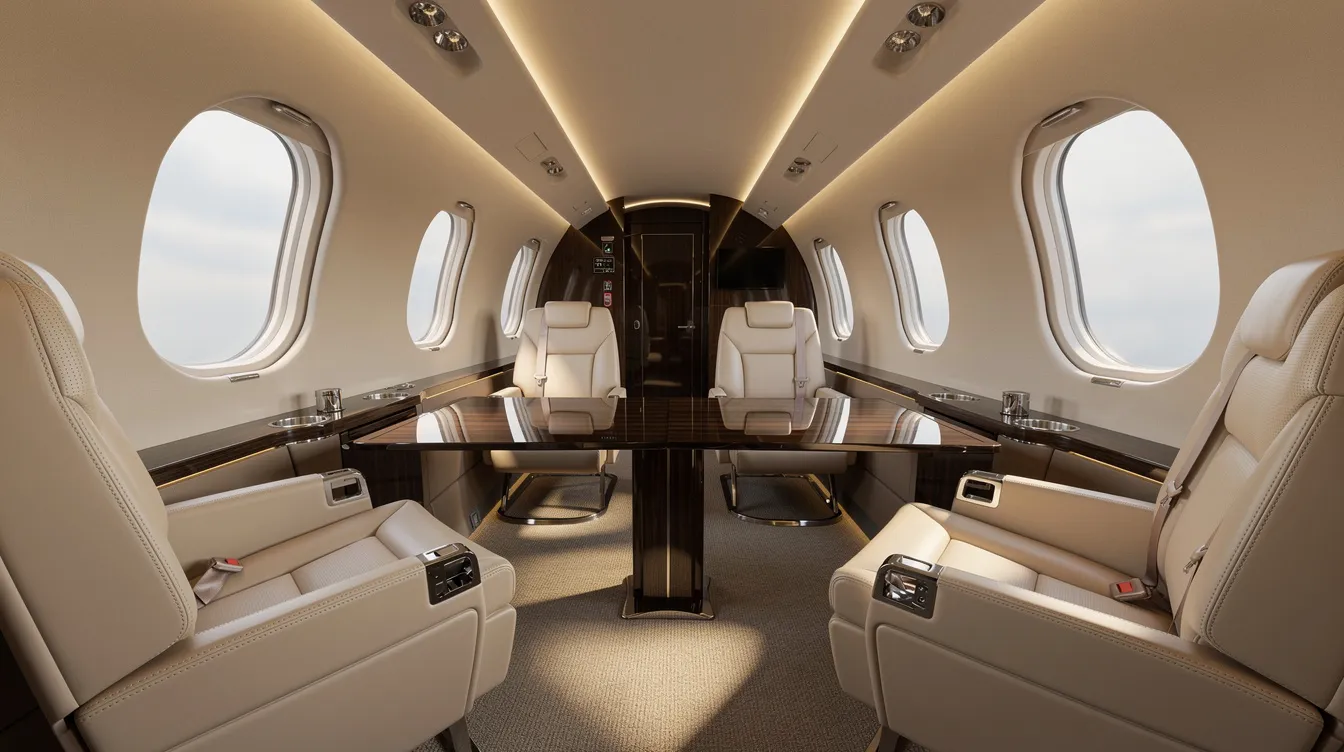
Choosing the Right Aircraft and Access Model
Optimal aircraft selection depends on mission length, passenger count, baggage, and route, and frequent travelers may eventually weigh whether a 100-hour Jet Card cost structure aligns with their annual flying profile. Very light jets and light jets handle short regional hops of one to two hours with four to six passengers. Midsize jets and super-midsize jets serve cross-country or transcontinental missions with greater range and cabin space. Large-cabin and ultra-long-range jets are built for intercontinental travel, London to Dubai nonstop, or New York to Tokyo with one fuel stop.
BlackJet advisors help clients match the right cabin class to each trip, balancing cost, comfort, and fuel efficiency rather than defaulting to "bigger is better." A Jet Card makes sense when annual usage is predictable, and the traveler wants fixed rates plus guaranteed availability. One-off charter flights may be more cost-effective for occasional travelers still evaluating private aviation.
A common path: a client starts with ad-hoc charter services, discovers consistent usage over six months, then upgrades to a 25-hour Jet Card for more predictable pricing and priority access across aircraft types.
Outlook for 2026–2030: What's Next for Private Jet Demand
The global private jet market is projected to reach $33.1 billion in 2026, and the private jet market is projected to grow to over $80 billion globally by 2034. Charter services are projected to reach $25.79 billion by 2031. The growing demand trajectory is underpinned by global wealth expansion, corporate business travel rebound, and continued commercial airline constraints.
Technology will reshape the experience further. More connected cabins, real-time route optimization, and gradual SAF adoption are converging. eVTOL jets are emerging as eco-friendly options in aviation, particularly for short urban transfers that complement longer private flights. Regionally, North America will maintain its strong baseline, the Asia Pacific region will post the highest growth rates, and Europe will see healthy charter activity on leisure and cross-border business corridors.
Access-based solutions-Jet Cards, memberships, and tech-enabled charter marketplaces-are likely to capture a larger share of new demand versus traditional aircraft ownership. BlackJet is positioned as a long-term partner prepared to adapt capacity, sustainability initiatives, and digital tools as the next era of business aviation unfolds.
FAQ: Private Jet Demand, Jet Cards, and BlackJet Membership
Is private jet travel still growing in 2026? Yes. Global private jet flight activity increased by 11.3% year-over-year in 2026, and departures remain more than 30% above 2019 levels. The private aviation industry is in a sustained growth phase driven by wealth expansion and commercial flight disruptions.
How does a Jet Card differ from on-demand charter? A Jet Card is a prepaid block of flight hours with fixed rates, guaranteed availability, and consistent service standards. On-demand charter is booked flight by flight, often at variable pricing. Jet Cards reward predictable usage with better economics and priority access.
How many private jets are there in the world? Approximately 24,900 business jets are active globally, with the U.S. holding about 62.5% of the fleet.
How does BlackJet vet aircraft and crews? BlackJet works exclusively with operators audited under ARGUS, Wyvern, and IS-BAO standards. Proprietary vetting covers aircraft age, maintenance records, and pilot experience beyond minimum regulatory requirements.
What does carbon-neutral flying with BlackJet actually mean? Every Jet Card flight is offset through verified carbon credits and, where available, sustainable aviation fuel. This is included at no additional cost to members-no opt-in required.
Who is a Jet Card best suited for based on annual travel and net worth? Jet Cards are ideal for individuals or companies flying 25–150 hours per year who want the flexibility of private aviation without the capital commitment of full ownership. They serve high net worth individuals and corporate travelers seeking predictable costs and guaranteed access.
Can BlackJet help with flights to the Middle East or Asia Pacific? Yes. BlackJet's core network covers North America and transatlantic routes, with expanding partner coverage into Europe, the Middle East, and Asia Pacific regions. Members can access large-cabin and ultra-long-range jets for these corridors.
Explore Private Jet Access with BlackJet
The demand for private aviation is not a passing phase-it is a permanent evolution in how the world's most accomplished people travel. Whether your priority is time savings across quarterly roadshows, privacy on sensitive business trips, or simply reclaiming hours lost to commercial travel, the right access model changes everything.
Explore BlackJet's Jet Card programs-including 25-hour and 50-hour options-and tailored charter solutions for both business and luxury travel missions. Every flight is carbon neutral as standard, backed by strict safety certification, multi-cabin access, and 24/7 digital booking with live human support.
Schedule a discreet consultation to review your typical travel patterns, explore the right aircraft categories, and determine whether Jet Card membership or on-demand charter best serves your needs. Discover how BlackJet can reshape your travel.


 Sign up with google
 Sign up with Apple