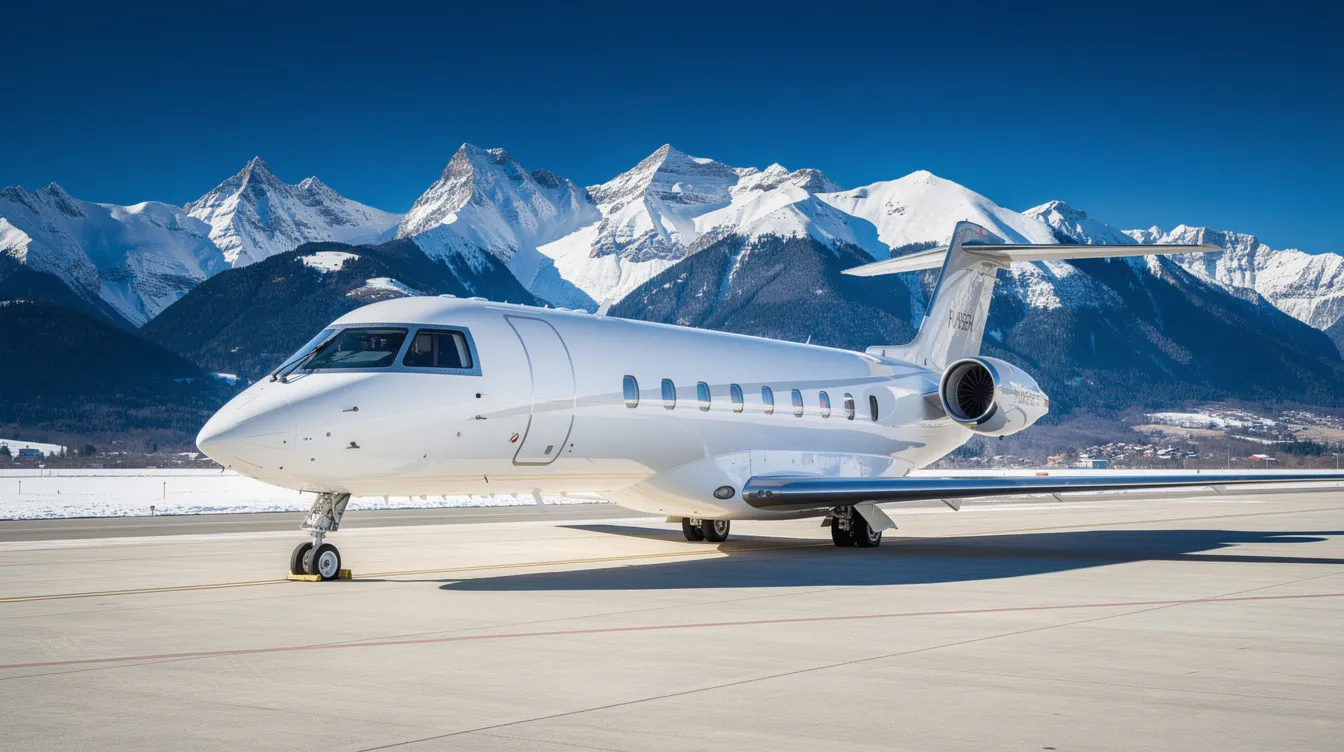
For executives, investors, and luxury travelers, Salt Lake City International Airport transforms Utah into a high-efficiency private aviation hub, offering direct access to the Wasatch ski resorts, downtown Salt Lake City boardrooms, and coast-to-coast connections without the friction of commercial terminals. This guide covers everything you need to know about private jet access, FBO services, airport facilities, and the unique advantages of flying private in Salt Lake City. It is designed for executives, investors, and luxury travelers seeking efficient, comfortable, and flexible travel options in Utah. Understanding these details is crucial for maximizing efficiency, convenience, and the business or leisure benefits that private aviation brings to both frequent and first-time flyers.
Why Private Jet Access at Salt Lake City Matters for Business and Luxury Travel
Private flights eliminate long security lines and terminal waits that can add hours to a commercial trip through Salt Lake City International. At SLC's east-side FBO terminals, members walk curbside to their aircraft and depart in minutes. Private jets can fly faster and often offer direct flights without connections, cutting travel time to Park City meetings or Deer Valley weekends dramatically. Private jet charters are popular for business and ski trips across the state of Utah, particularly when commercial seats sell out during peak convention and ski seasons.
BlackJet's Jet Card programs give members guaranteed access to private jets serving salt lake city ut even during the busiest periods, and its broader premium private jet card services emphasize comfort, safety, and flexible access options. Private charter flights offer flexible scheduling compared to commercial airlines, ensuring you're never stranded by a sold-out route. This guide focuses on using SLC as a "private airport" experience through its FBOs, general aviation facilities, and dedicated terminals, not the airline terminals most travelers find familiar.
Salt Lake City International Airport (SLC / KSLC): The Private Aviation Gateway
Salt Lake City International is a joint civil–military airport and the primary gateway for Utah, located approximately 4 miles from downtown Salt Lake City at 776 N Terminal Dr, Salt Lake City, UT 84116. The airfield sits at roughly 4,227 feet above sea level, with four asphalt runways, including a 12,002-foot primary runway capable of handling the largest long-range aircraft in any configuration.
The city's international airport, SLC, operates 24 hours a day with continuous ATC services, full instrument approaches, de-icing, and snow removal. Salt Lake City International Airport is open 24 hours a day, making it a true gateway for private aviation at any hour.
General aviation and private jet operations are concentrated on the east side of the airfield, completely separate from airline terminals. This gives private flyers a "private airport within an airport" feel. Larger jets-Gulfstream G650s, Bombardier Globals-prefer SLC over smaller regional fields due to runway length, robust de-icing, and deep aviation services. For complete details on private jet charters in Salt Lake City, BlackJet coordinates every element of your arrival and departure.
General Aviation & Fixed Base Operators at Salt Lake City
The east-side general aviation complex is managed under the Salt Lake City Department of Airports and serves as the operational heart for private flight activity at SLC. Salt Lake City has two fixed base operators-Atlantic Aviation and Signature Aviation (Signature Flight Support)-that handle most private jet traffic on site.
These FBOs support corporate flying and medical air evacuation services alongside private charters. FBOs sell Jet A and 100 low-lead aviation gasoline, and FBOs offer services like rental cars, go rentals coordination, gourmet catering, and crew rest facilities. Passenger amenities include a lounge and a flight planning kiosk. Private terminals offer a quieter environment with upscale amenities, where users can manage their trip logistics without errors or delays. You can even log into a Signature Vision account to track fuel purchases and visit history.
A BlackJet member's arrival flow is straightforward: arrive curbside at the fixed base operator, walk directly to the aircraft on the aircraft parking aprons, and board-often in under 15 minutes. Compare that to a commercial terminal where parking, security, and concourse navigation consume an hour or more. The east side also hosts flight training, corporate aviation, medical evacuation, law enforcement, and Utah Air National Guard operations, ensuring a high level of infrastructure readiness at this location.
Hangar Space, Aircraft Basing, and Long-Term Operations in Salt Lake City
Hangar space at Salt Lake City International is in extremely high demand. The Salt Lake City department no longer offers hangars to new tenants on the main field, and wait lists extend years at both SLC and regional airports. Facilities available include T-hangars, corporate hangars, shade hangars, and ramp tie-downs. A new Sky Harbour hangar campus on 8.4 acres at SLC underscores this demand.
Basing an aircraft in Salt Lake means absorbing fixed costs: hangar lease, maintenance, insurance, and crew salaries. BlackJet's Jet Card model eliminates asset risk-members access aircraft without owning or housing them, and resources explaining private jet membership pricing and jet card cost help clarify how predictable these expenses can be. BlackJet coordinates with local FBOs for overnight parking, de-icing, and hangar arrangements on a per-trip basis, ensuring convenience without the burden of ownership. This is the smarter approach for travelers who read the numbers and value flexibility over capital commitment.
South Valley Regional and Other Salt Lake–Area Airports: When a Smaller Field Makes Sense
South Valley Regional Airport (KSVR, formerly U42) in West Jordan is located about 7–14 miles south of downtown, serving as a major flight training hub. Access to smaller regional facilities can eliminate long drives to major commercial hubs, and private aviation allows the use of smaller, less congested airports for the right type of aircraft, with many travelers evaluating the cost to charter a small plane for these missions.
Key comparisons between SLC and KSVR:
Feature | Salt Lake City International (SLC) | South Valley Regional Airport (KSVR) |
|---|
Runway Length | ~9,596 feet (East GA runway 17/35) | 5,862 feet (Runway 16/34, 100 ft wide) |
Elevation | ~4,227 feet | 4,603 feet |
Aircraft Types | Large-cabin and heavy jets | Turboprops, light jets, some midsize jets (weather permitting) |
Ground Transportation | ~15–20 minutes downtown to east-side FBO | ~25–40 minutes to downtown |
Control Tower | Yes | No (Uses CTAF procedures) |
FBO Services | Two major FBOs (Atlantic Aviation, Signature) | Fixed base operator facilities, 100 tie-down spaces |
Military Presence | Utah Air National Guard on east side | Utah Army National Guard facility |
Operating Hours | 24/7 | Limited, non-towered operations |
South Valley Regional Airport hosts a Utah Army National Guard facility and features 100 tie-down spaces for aircraft. The airport has 24-hour security personnel on site. Platforms facilitate charter flights to South Valley Regional Airport for regional turboprop or light-jet itineraries. Tooele Valley Airport offers additional tie-down space for recreational flying and regional general aviation but lacks full FBO luxury services. Most BlackJet missions involving larger cabin aircraft and winter ski traffic still favor SLC for convenient access to its superior runway length, de-icing, and FBO depth.
Flight Training, Aviation Culture, and Operational Environment in Salt Lake
Salt Lake City general aviation supports flight training and air charters through a variety of operators at regional fields. Key flight schools include Randon Aviation, Upper Limit Aviation (FAA Part 141 certified), Utah Helicopter, and Aerotech Aviation. Flight schools at South Valley Regional offer various pilot certifications, making it one of the busiest training environments in the Lake City area.
High levels of flight training and helicopter operations mean private flights into Salt Lake share airspace with diverse traffic. BlackJet's vetted operators are familiar with local mountain weather, density altitude challenges, and busy training patterns. Click into any day during peak hours, and you'll find disciplined coordination between ATC and FBO teams keeping the experience seamless. Private aircraft often fly at higher altitudes to avoid turbulence common near the Wasatch Range, another detail BlackJet crews manage proactively.
Weather, Elevation, and Operating Hours: What Private Flyers Need to Know
SLC's elevation of roughly 4,227 ft above sea level, and SVR at ~4,603 ft, means summer density altitude can exceed 8,000–9,000 ft, affecting takeoff performance for midsize jets and light jets alike. Winter brings snow, de-icing needs, and occasional IFR conditions; shoulder seasons deliver variable canyon winds.
Salt Lake City International operates with 24/7 ATC, METAR/TAF weather reporting, and full runway lighting. Regional airports may have more limited operating hours and services. BlackJet's real-time flight support team monitors NOTAMs, runway conditions, and weather data to proactively adjust departure times, alternates, and de-icing plans-ensuring every member's flight operates within the highest safety standards.
A practical example: a winter morning departure from SLC to New York on a super-midsize jet requires de-icing coordination, higher fuel reserves, and alternate airport planning. BlackJet's flight support team handles every detail so members simply arrive at the FBO and board.
How BlackJet Jet Cards Transform Private Airport Access in Salt Lake City
BlackJet's Jet Card model, available in 25-hour and 50-hour programs, is the most efficient way for frequent travelers to access private jets in and out of Salt Lake City without owning an aircraft. Members book via BlackJet's 24/7 digital platform, choosing from multiple cabin classes: light jets, midsize jets, super-midsize, or large-cabin. Private jet charters can be booked with 4 hours' notice when schedules shift.
All partner operators meet or exceed FAA Part 135 standards. Private jet charter flights operate under FAA Part 135 regulations, with additional third-party safety audits, and broader data on private jet safety and risk underscores how rigorous these standards are. Private jet operators in the area provide high-end, discreet experiences with premium services, and BlackJet's proprietary certification adds another layer of information and accountability, particularly important in mountainous, high-elevation regions.
Beyond flexible hours-based access, some travelers also explore unlimited private jet membership models when their schedules demand even more flying. BlackJet ensures every member's flight is carbon neutral:
Carbon offsets are calculated based on fuel burn and flight distance (e.g., SLC to NYC at ~1,800–2,000 miles)
Offsets fund verified carbon reduction projects at no extra cost to members
Sample Itineraries: Using Salt Lake City as Your Private Hub
NYC Executive → Park City Board Meeting: Depart Teterboro on a midsize jet, arrive SLC east-side FBO in ~4.5 hours. Ground transfer to Park City in under an hour. Return same day, illustrating when chartering a private jet is worth it for time-sensitive executives.
Bay Area Family Ski Trip: Depart San Francisco Friday afternoon on a super-midsize jet. Arrive SLC, transfer to Deer Valley. Return Sunday. Jet Card hours cover the full block, while some families compare this to more economical private aircraft options for shorter or more frequent trips.
Denver ↔ SLC Same-Day Business Shuttle: Light jet, ~1.5 hours each way. Morning departure from Denver, meetings in Salt Lake, evening return. For very frequent shuttles like this, executives sometimes compare a 100-hour jet card cost guide to an on-demand charter. Air charters like this demonstrate the strategic advantage of SLC's private facilities for tight schedules.
Frequently Asked Questions About Private Airports and Jets in Salt Lake City
Can I use Salt Lake City International Airport like a private airport?
Yes. The east side of SLC includes separate GA and FBO terminals where private jet passengers bypass airline terminals entirely, entering via GA access roads and boarding directly from the ramp.
Which codes do I give my driver: SLC, KSLC, or an FBO address?
Use SLC or KSLC for general reference, but provide your driver with the specific FBO address on the east side (e.g., Signature Flight Support) to avoid commercial terminal traffic.
Can private jets operate 24/7 at SLC?
Yes. Salt Lake City International Airport is open 24 hours a day with continuous ATC and FBO availability.
What aircraft type is suitable for SLC's field and elevation?
Large-cabin, long-range jets are fully supported by SLC's 12,000+ ft runways. SVR limits operators to light jets, turboprops, or some midsize jets due to its 5,862-foot runway and higher elevation.
How does a BlackJet Jet Card work if I'm based in Salt Lake City?
Members pre-purchase hours across cabin categories. When flying, they request flights via BlackJet's platform; aircraft operate from SLC or SVR as appropriate. Guides outlining the best jet cards for frequent flyers and a broader private jet price list overview can help you compare this to other access models. No basing costs, no ownership burden.
Are private flights to and from Salt Lake City carbon neutral?
Yes. BlackJet calculates carbon offsets for every flight based on fuel burn and distance, retiring verified carbon credits automatically at no additional cost to members.
Choosing the Right Private Aviation Partner for Salt Lake City
Salt Lake City's combination of a world-class international airport, strong general aviation infrastructure, and intense seasonal demand requires a sophisticated private aviation partner. Ownership ties up capital. Fractional programs lock you into minimum commitments. Ad-hoc charter prices spike unpredictably during ski season, and even travelers just buying a seat on a private jet quickly see the value of predictable access. BlackJet's Jet Card model delivers predictable pricing, guaranteed access, and high safety standards tailored to SLC's challenging operating environment.
For frequent Salt Lake travelers, BlackJet offers seamless use of FBOs on the east side, 24/7 tech-enabled booking, carbon-neutral flights, and dedicated flight support that understands mountain operations, while resources on budget-friendly private aircraft options and the cheapest private jet choices help align aircraft selection with your budget. Explore how BlackJet can elevate your base of operations in Utah and reshape the way you travel through one of the West's most dynamic private aviation hubs.


 Sign up with google
 Sign up with Apple