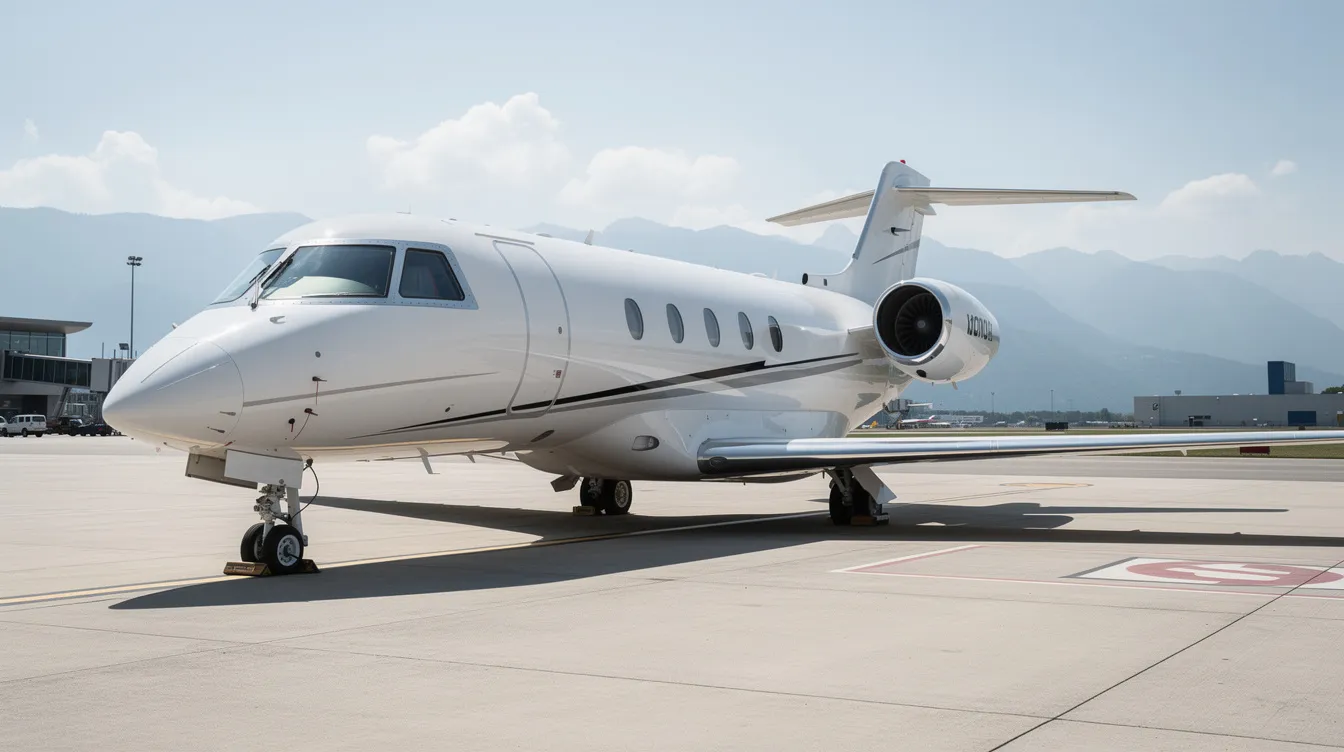
For high-net-worth travelers and corporate flight departments, the Embraer Phenom 300 remains one of the most requested light jets in private aviation. But the true NetJets cost of flying one is rarely as simple as the headline hourly rate suggests. Between federal excise tax, fuel surcharges, blackout calendars, and contract structure, the gap between "quoted price" and "actual cost" can be significant. This guide breaks down every dollar — and compares NetJets programs against more flexible jet card and on-demand charter alternatives from providers like BlackJet.
Key Takeaways: NetJets Phenom 300 Cost vs. Alternatives
If you're comparing private jet costs for the Phenom 300, here are the numbers that matter in 2025–2026. NetJets charges around $8,600 per hour for a Phenom 300 on its Card275 program (including the 7.5 federal excise tax), with a 25-hour block priced at approximately $215,000. The premium Card320 runs roughly $11,200 per flight hour. Prepaid jet card programs may start at approximately $215,000 for 25 hours on light jets, while a 25-hour light jet card costs $200,000 to $220,000 depending on the provider and contract terms.
These are substantial commitments. Whether they represent good value depends entirely on how you fly.
Key Points:
NetJets Phenom 300 jet card pricing: $8,600–$11,200/hr (including FET). On-demand charter rates for light jets range from $4,000 to $6,000 per hour. BlackJet's 25-hour light jet card starts around $5,484/hr all-in — no monthly management fee, no expiring hours.
Headline NetJets cost: Excludes fuel surcharges, international fees, and peak day surcharges during high-demand travel periods. Once layered in, real private jet cost can push above $9,500–$12,500 per flight hour.
Best use case for NetJets Phenom 300: Financially sensible for travelers logging 50–100+ hours per year on repeat regional routes with rigid schedules and a strong preference for guaranteed availability from one operator.
Best use case for jet cards or charter: For travelers flying 25–75 hours annually with variable routes, flexible jet card programs or demand charter offer lower capital exposure, broader aircraft type selection, and transparent pricing without long term commitment.
Strategic question: Not "cheapest flight hour" — it's how to optimize time, control, and capital deployment. Private jet travel is an investment in productivity, not merely a luxury line item.
Quick Answer: Current NetJets Phenom 300 Pricing (Card275, Card320, and Leases)
NetJets jet card programs for the Phenom 300 break into two tiers. The Card275 costs around $215,000 for 25 hours - approximately $8,600 per flight hour, including the 7.5% federal excise tax on domestic flights. The Card320 runs higher, trade-reported at roughly $11,200/hr including FET. Both are 2025–2026 indicative rates from published industry sources.
Card275: 275 service days per year, approximately 90 blackout days. Lower hourly rate makes it competitive among NetJets costs for a light jet, but the restricted calendar limits annual access during peak travel windows.
Card320: 320 service days per year, roughly 45 blackout days. Higher all-in hourly rate but significantly more calendar access. Jet card holders gain broader scheduling flexibility with fewer peak-day restrictions.
25-hour lease (Share355L): Aligned to jet card rates, but structured as a lease with about 355 access days, only ~10 blackout days, and roughly 80 peak days with plus/minus 3-hour departure flexibility. Callout windows extend to 120+ hours during peak periods.
Feature | Card275 | Card320 | 25-Hour Lease |
|---|
Buy-in (25 hrs) | ~$215,000 | ~$280,000 | ~$225,000 |
Annual access days | 275 | 320 | 355 |
Blackout days | ~90 | ~45 | ~10 |
Headline hourly rate (incl. FET) | ~$8,600 | ~$11,200 | Comparable to Card275 |
Monthly management fee | None | None | Minimal fixed charges |
Federal Excise Tax (FET) is not included in base prices on some older NetJets programs—always confirm whether your quoted rate is FET-inclusive.
The Embraer Phenom 300 as a Light Jet Workhorse
The Phenom 300 is one of the most in-demand aircraft in the private aviation industry, and a cornerstone of the NetJets fleet. Its combination of speed, range, and efficiency makes it the default choice for regional business missions.
Specs: Light jets accommodate up to six passengers in a club-seating configuration. The Phenom 300 cruises at 450–460 knots with a range of approximately 2,000 nautical miles (~3,200 km), fitting 1–3 hour missions like New York–Chicago, LA–Aspen, or London–Milan.
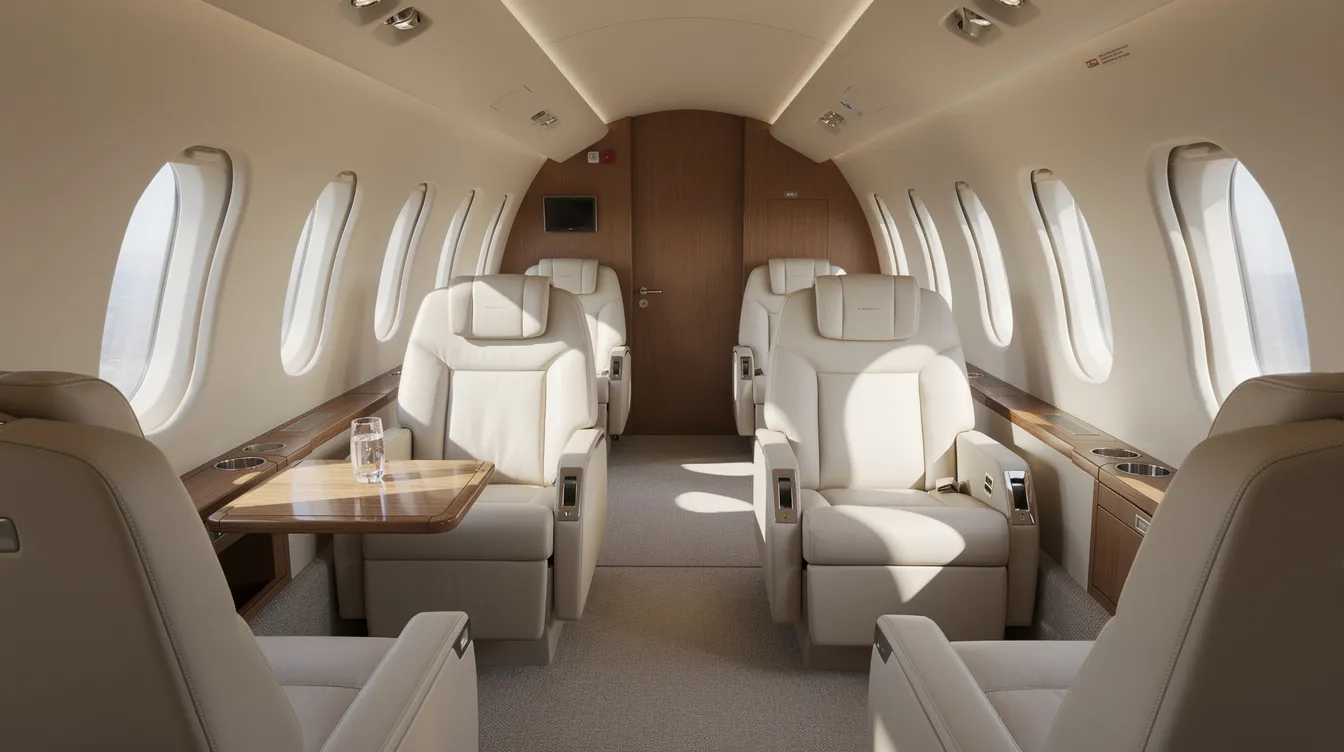
Cabin: NetJets-spec interiors include club seating, Wi-Fi, and a refreshment center. The experience is consistent across the global fleet—a key differentiator versus ad-hoc charter services where cabin condition varies.
Economics: Lower fuel burn, a two-pilot crew, and reduced maintenance costs versus midsize jets or heavy jets underpin a lower private jet cost per flight hour. This is why light jets dominate short-haul private flying.
BlackJet classification: BlackJet typically categorizes the Phenom 300 in its light-jet cabin class, using it or equivalents as the baseline for 1–3 hour regional itineraries on its jet card programs.
NetJets Phenom 300 Pricing by Product: Jet Card, Lease, and Fractional Share
The NetJets Phenom 300 cost depends heavily on whether you buy a jet card, a 25-hour lease, or a NetJets share - ev—even on the same aircraft type. NetJets jet card pricing varies by aircraft type and size, and the financial structure differs dramatically across products.
Jet Cards
Prepaid 25-hour blocks at a fixed hourly rate for 24 months.
No monthly management fee.
Jet cards typically require a minimum purchase of 25 flight hours.
Subject to peak day surcharges, federal excise tax, and fuel surcharges.
Jet card users avoid long-term depreciation risks associated with ownership; understanding overall jet card cost and membership pricing is critical before committing.
25-Hour Leases
Similar hourly economics but structured as a lease contract with longer access windows and different callout terms.
Lease programs make sense above a certain annual flight-hour threshold where broader calendar access pays for itself.
Fractional Ownership
A NetJets share means buying a defined fraction of the aircraft tied to annual flight-hour access, with a 1/16 share delivering ~50 flight hours/year and requiring an acquisition cost in the $500,000–$850,000 band.
A 1/16th share in a light jet costs approximately $500,000–$750,000.
Monthly management fees run $12,000–$15,000, covering crew, maintenance, hangar, insurance, and compliance.
The occupied hourly fee lands in the mid-$8,000s.
Total cost in year one often exceeds $1 million.
Fractional ownership requires a minimum commitment of 36 months.
Compared with cards and leases, the NetJets share structure adds fixed ownership costs and a significant initial capital investment, and buyers should also understand fractional jet ownership depreciation.
Factor | Jet Card | 25-Hour Lease | Fractional Ownership |
|---|
Minimum commitment | 25 hours / 24 months | 25 hours / annual | 50 hours / 36+ months |
Upfront cash outlay | $215K–$280K | ~$225K | $500K–$850K |
Monthly management fee | None | Minimal | $12K–$15K |
Per flight-hour cost | $8,600–$11,200 | ~$8,600+ | ~$8,000–$10,000 + fixed costs |
Flexibility | Moderate (blackout days) | Higher | Lower (asset ownership tied) |
Best for | 25–50 hrs/year | 25–75 hrs/year | 100+ hrs/year, predictable routes |
For a deeper comparison, see our guide on fractional ownership vs. jet card vs. charter.
Beyond the Sticker Price: Taxes, Surcharges, and Hidden Line Items
The real NetJets cost of a Phenom 300 hour is the base rate plus federal and operational add-ons. Frequent flyers and corporate travel managers should model these carefully before committing.
Federal Excise Tax
7.5% federal excise tax: NetJets charges a 7.5% federal excise tax on domestic flights. On an $8,600/hr base, FET alone pushes the effective rate toward ~$9,200+ before any other surcharges. Taxes can add a substantial amount to the final bill.
Fuel Surcharges
Fuel surcharges: Variable fuel rates can increase operating costs for private jet services. Fuel surcharges may apply based on market fluctuations, typically adding $300–$600 per flight hour on light jets. Fuel surcharges can significantly increase total jet card costs, so travelers should understand jet card cost per hour and add-ons. NetJets reportedly eliminated fuel surcharges for card customers in April 2026, but this policy may shift.
Other Variable Charges
Other variable charges: Additional charges can include landing fees and catering costs, de-icing, international handling, overnight crew expenses, and ramp fees. These can add several hundred to several thousand dollars per mission, depending on conditions. Repositioning fees may also apply outside the collective service area, though NetJets often waives repositioning fees within its service area.
BlackJet Contrast
BlackJet provides all-in trip estimates, including fuel surcharges and repositioning costs - u, upfront through its digital tools, so clients see their true private jet cost before committing. No unexpected expenses after booking.
Daily Minimums, Blackout Dates, and Peak-Day Rules on the Phenom 300
Policies like daily minimums, blackout dates, and peak-day rules matter just as much as the nominal hourly rate - especially for short-hop flights and holiday travel. Minimum flight charges can quietly inflate effective per-leg costs.
NetJets daily minimums waived: NetJets has waived daily minimums for the Phenom 300, which significantly improves economics for 30–60 minute hops (Westchester–Nantucket, London–Paris). This is a material advantage - without a waiver, a 45-minute flight billed at a 96-minute minimum effectively costs 2× the per-hour rate.
Industry context: Typical industry daily minimums for light jet charter run around 60–96 minutes. Paying a minimum flight hour on a brief hop inflates effective per-leg costs versus paying only actual flight time, which is why it’s important to understand the true cost to charter a small private plane.
Blackout and peak days: Card275 carries approximately 90 blackout days per year; Card320 reduces that to ~45. Peak days don't block access but require 120+ hours' notice and may limit departure flexibility. Travelers who need to avoid blackout dates should weigh Card320 or lease options carefully.
BlackJet approach: BlackJet jet card programs offer more flexible peak-day calendars with fewer or no blackout dates on core routes. High-demand days are dynamically priced rather than blocked outright, preserving guaranteed access for card members.
Phenom 300 vs. Midsize and Heavy Jets: Cost per Flight Hour and Use Cases
The Phenom 300 serves as the entry point for many NetJets and BlackJet clients. Understanding the cost ladder across aircraft size helps travelers choose the right tool for each mission.
Cost ladder: NetJets 25-hour light jet cards cost $200,000–$220,000 (~$8,600–$11,200/hr). Midsize jet cards typically cost around $250,000 to $300,000 for a 25-hour card (~$10,000–$14,000/hr). Heavy jet cards can exceed $400,000 for 25 hours (~$16,000–$20,000+/hr). Large cabin aircraft carry the highest per-hour direct operating costs, and broader jet card pricing structures explain how these tiers are built.
When to upgrade: Midsize jets are suitable for longer journeys and larger groups—when passenger count exceeds six or legs stretch beyond 3 hours, a midsize jet delivers better per-passenger economics. Heavy jets are designed for long-haul flights with maximum comfort, ideal for coast-to-coast or transoceanic missions.
Light jet sweet spot: For 2–6 passengers on 1–3 hour missions, light jets typically offer the lowest private jet cost per leg. The Phenom 300 dominates this category.
BlackJet flexibility: BlackJet jet card clients choose between light, midsize, and heavy jets per trip, rather than locking into a single aircraft type. This lets travelers optimize cost per mission - a —ight jet for the 90-minute hop, a midsize jet for the 4-hour leg, or larger aircraft through the BjetJet 25+ Hour Jet Card.
NetJets Phenom 300 vs. On-Demand Charter and Modern Jet Card Programs
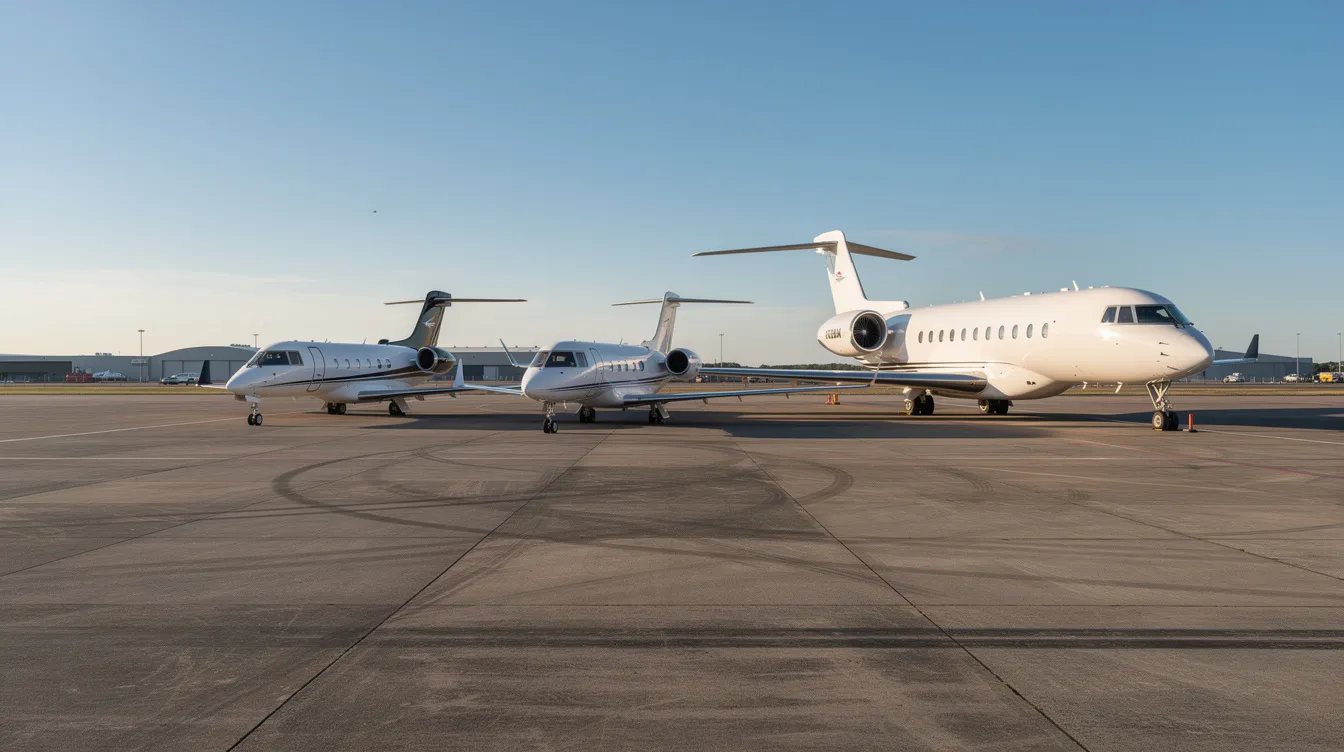
NetJets sets the benchmark for structured private jets access. But modern alternatives from other private jet companies - inc—including BlackJet—offer flexible jet card programs and charter-on-demand without asset risk or capital lockup.
Rate comparison: NetJets Phenom 300 jet card rates run $8,600–$11,200/hr including FET. Typical on demand charter pricing for a comparable light jet ranges from $4,000 to $6,000 per flight hour depending on route and market. The gap is real when you compare jet card hourly pricing to renting a private jet, but so are the differences in service guarantees and what’s included in the overall cost to rent a private jet.
Structural differences: A NetJets card provides guaranteed availability from a single global fleet with predictable pricing. Independent or broker-sourced jet cards (like Sentient Jet or Magellan Jets) source from multi-operator networks, with different blackout policies, repositioning rules, and aircraft management standards, so evaluating the best jet cards for frequent flyers becomes a key part of the decision.
BlackJet positioning: BlackJet offers prepaid 25- or 50-hour blocks across four cabin classes - li—light jets through large cabin aircraft. No monthly managem50-hour. Carbon-neutral flights as standard. Transparent pricing per flight hour with all taxes and fuel surcharges included, particularly on its 50 hour jet card solutions. NetJets jet card programs provide prepaid access to flight hours, but BlackJet's model eliminates the hidden add-ons that inflate NetJets pricing.
Sample scenario: Consider 20 regional round-trips per year between New York and Miami (~2.5 hours each way, 100 total flight hours). Under a NetJets Phenom 300 NetJets card, annual cost lands around $860,000–$1,120,000 depending on card tier. A BlackJet light-jet card at ~$5,484/hr brings that to roughly $548,400, and a 100 100-hour card cost analysis can sharpen this math further. Pure on-demand charter at $5,000/hr averages $500,000 - b, but without guaranteed access or predictable pricing, your costs split when chartering a private jet is worth it.
Fixed vs. Variable Costs: How NetJets Allocates Your Dollars
Understanding how private jet cost splits between fixed costs and variable components reveals where your money actually goes. NetJets and BlackJet allocate these differently.
NetJets fixed costs: For fractional owners, fixed costs include the initial share purchase and ongoing monthly management fees. Monthly management fees cover fixed operational expenses for jet services - cr—crew salaries, maintenance reserves, hangar, insurance, safety compliance, and aircraft management overhead, though some of these may be offset by tax benefits of fractional jet ownership.
NetJets variable costs: Per flight hour charges include the base occupied hourly fee, fuel, federal excise tax, navigation and landing fees, de-icing, and crew travel. Occupied hourly fees are charged only when the jet is actively in use. Flight-related expenses may vary depending on trip profiles and geographic locations, and a broader private jet price list overview helps put these numbers in context.
BlackJet model: No asset ownership. No monthly management fees. Minimal fixed obligations. Most costs are expressed as a predictable all-in hourly rate or trip price on a private jet card or on-demand basis - ma—making budgeting straightforward.
For every $10,000 spent on a NetJets Phenom 300 flight hour, roughly 35–40% covers aircraft and crew, 20–25% goes to fuel, 15–20% to overhead and margin, and the balance to taxes and surcharges. BlackJet's charter model compresses overhead by sourcing from audited operators rather than maintaining a proprietary fleet.
Safety, Technology, and Sustainability: Why Some Premium Is Justified
NetJets costs sit at the top end of the market, but that premium is underpinned by safety infrastructure, operations scale, and service consistency. BlackJet benchmarks to similar safety standards - at a different price point.
NetJets safety: In-house training centers, recurrent simulator training, and proprietary standards above regulatory minimums. NetJets guarantees operational consistency across its fleet. This can justify a higher private jet cost compared with ad-hoc charter.
BlackJet safety: Exclusive use of audited Part 135 / Part NCC operators, third-party safety ratings (ARG/US, Wyvern), and internal vetting. Lower cost does not mean lower safety - it means a different business model.
Technology: Compare NetJets' call center and app ecosystem to BlackJet's 24/7 digital booking platform with real-time flight support. BlackJet's tech reduces friction and additional costs—fewer repositioning legs, better slot management, instant cost estimates, and visibility into the cheapest private jet options that still meet your comfort and safety standards.
Sustainability: BlackJet makes every jet card and charter flight carbon-neutral at no extra cost. Offsets and SAF premiums are built into all-in pricing rather than billed as a surcharge, aligning with growing ESG expectations across the private aviation industry.
When a NetJets Phenom 300 Makes Economic Sense - and When to Choose BlackJet
The decision comes down to annual utilization and flexibility requirements, not just hourly rate. Think in terms of total cost of access, not sticker price.
NetJets jet card or lease: Best for 50–100+ flight hours per year on repeat regional routes. Limited date flexibility, strong preference for a seamless, single-brand experience. The NetJets program delivers predictable pricing and guaranteed availability at a premium.
Fractional jet ownership: Justified at 100–200+ hours/year with a long-term, predictable mission profile — effectively replacing a corporate flight department. Accept the monthly management fee, depreciation, and long term commitment in exchange for deep operational control over asset ownership.
BlackJet jet cards: Ideal for 25–75 hours/year with a mix of regional and longer international flights. Choose between light jets and larger aircraft per trip. No capital outlay, no long contracts. A costcost-effectiveh to consistent private jet travel.
On-demand charter via BlackJet: Under ~25 flight hours per year or highly irregular travel patterns. Pay-as-you-fly with transparent trip pricing and zero long-term commitments—ideal for travelers testing private jets or those whose schedules defy rigid programs. Depending on your profile, you might compare this with chartering a small private plane for ad-hoc trips or exploring private jet leasing as an alternative.

How to Estimate Your Own NetJets Phenom 300 Cost vs. BlackJet
Before signing any multi-year contract, high-net-worth individuals and corporate travel managers should build a simple 12-month flight-hour model. The math takes 30 minutes and could save six figures.
Map Your Trips
List every expected journey for the coming year—gin/destination pairs, estimated block time, passenger counts, and how many days of schedule flexibility exist around each mission.
Translate to Flight Hours
Total annual flight hours by aircraft category (light jets, midsize jets, heavy jets).
Apply representative all-in hourly rates — including federal excise tax and surcharges— for both NetJets offers and BlackJet alternatives.
Model Scenarios
Run at least three scenarios:
Compare total cost, access flexibility, and capital exposure across all three.
The right private aviation solution isn't the most expensive - it—it's the one calibrated to your actual flight patterns, schedule flexibility, and capital priorities.
Ready to see the difference? Speak with BlackJet about a confidential flight-pattern analysis and custom jet card or charter plan that benchmarks NetJets against more flexible, transparent alternatives. Discover how BlackJet can reshape your travel.


 Sign up with google
 Sign up with Apple