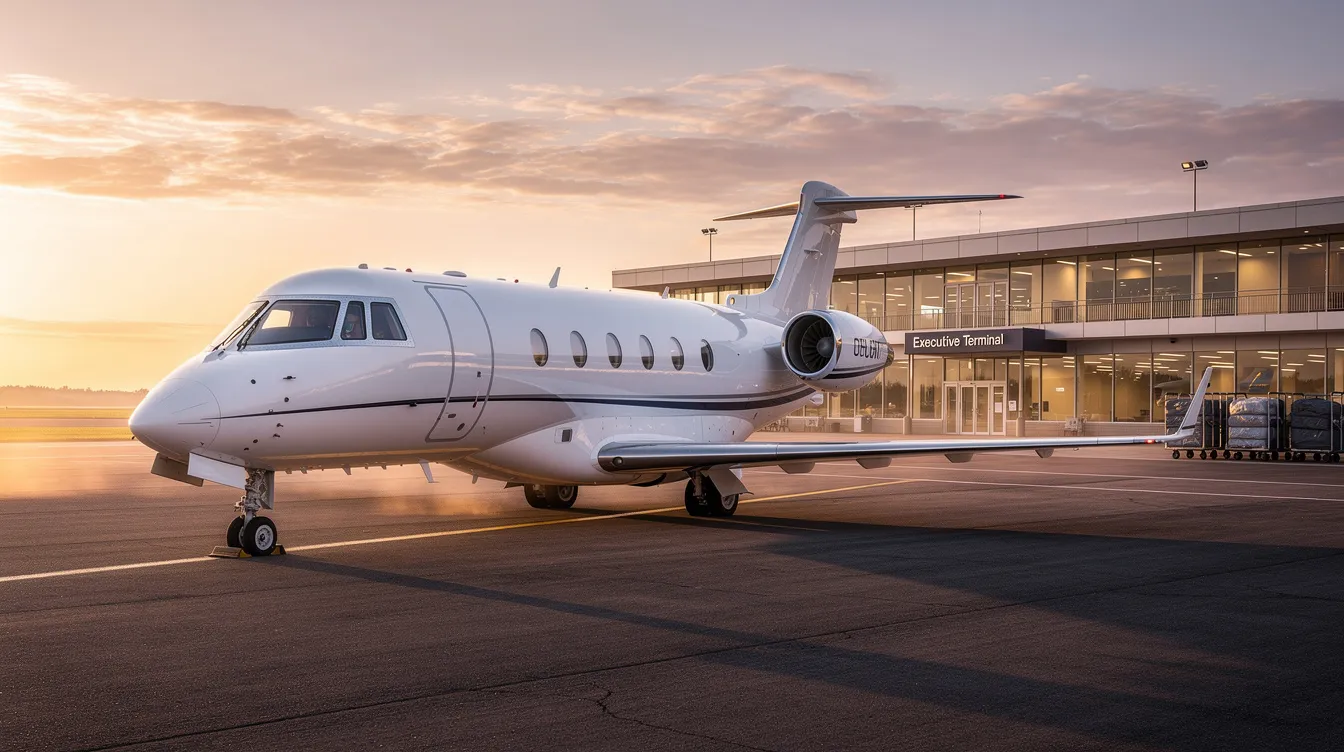
Private aviation is no longer only about luxury travel. For executives, owners, and discerning travelers, it is a strategic tool: fewer connections, tighter schedule control, private terminals, and access to airports that commercial airlines cannot practically serve. This guide is for executives, business owners, and discerning travelers considering private aviation solutions in 2026.
Although many people search for “NetJets airline,” NetJets is not a traditional airline. NetJets is the world’s largest private aviation company, known for pioneering fractional aircraft ownership, and it is not a traditional airline. It remains a benchmark for private jet access in 2026.
Why NetJets – And Private Aviation – Matter in 2026

Business aviation matters because time is often the highest-value asset on the trip. Major commercial airlines serve roughly 500 U.S. airports, while private aviation can access thousands more; NetJets markets access to 3,000+ airports worldwide, and the broader sector reaches far beyond scheduled airline networks.
NetJets operates 800+ private jets worldwide and completes 300,000+ flights per year, giving owners and customers global access without the hub-and-spoke limits of an airline. A CEO flying New York–London, then continuing to Zurich, Milan, and a secondary Mediterranean airport, may avoid overnight connections, crowded terminals, and lost working hours by flying point-to-point.
This guide covers the NetJets program, NetJets Europe, the fleet from Embraer Phenom jets to Citation Ascend, executive jet management, cost, safety, sustainability, and how BlackJet’s jet cards compare for clients who want access without ownership complexity.
NetJets Overview: History, Scale, and Business Model
NetJets began in 1964 as Executive Jet Aviation, later shaped by Richard Santulli and acquired by Berkshire Hathaway in 1998. NetJets Inc is associated with Columbus, Ohio, and its operating entities include NetJets Aviation.
The company provides the NetJets offer across fractional ownership, leasing, jet cards, private jet charter, and aircraft sales through related businesses, with broad aircraft access and flexible options for different trip needs. NetJets offers fractional jet ownership, allowing individuals to enjoy the benefits of private jet travel without the full financial burden of owning an entire aircraft. NetJets also handles all operational complexities, including pilot recruitment and safety checks.
NetJets separates its offerings into three main tiers based on the number of hours flown per year, which can be loosely compared to structured 50-hour jet card pricing models in the broader market.To qualify for NetJets membership, applicants must be at least 18 years old and provide a valid passport along with proof of income.Additionally, all members are required to sign an aircraft program and offer agreement that details the procedures they must follow during their travels.
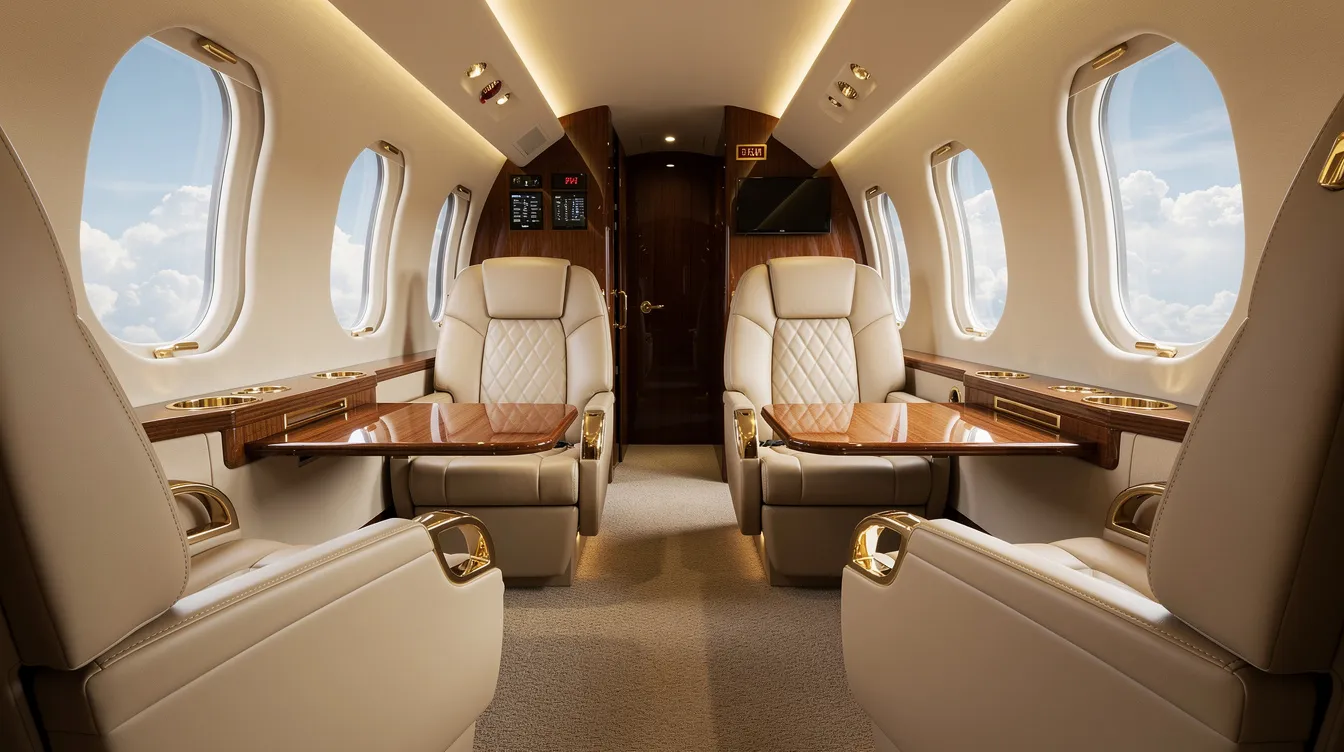
As a NetJets member, you will gain access to services designed to improve travel and fit more smoothly into your life, with private flight experiences, flexible air travel accommodations, customization options, and premium amenities. The company provides 24/7 customer service, ensuring that clients have access to assistance whenever they need it, enhancing the overall travel experience. NetJets assigns each customer a personal aviation counselor, who offers tailored advice and assistance, contributing to a more personalized travel experience.
NetJets allows interchangeability of jet classes, enabling upgrades or downgrades based on trip requirements, which makes an understanding of private jet sizes and categories helpful when planning trips. NetJets is contractually obligated to provide a jet with as little as 4 to 10 hours’ notice,e depending on the tier.
Safety is central to the brand. Pilots receive recurrent training, a first officer supports two-crew operations, and type-rating discipline matters for each plane. BlackJet takes the same principle into its own model by working through audited operators rather than asking clients to manage compliance themselves.
NetJets Fleet: From Light Jets to Citation Ascend and Long‑Range Flagships
A diverse fleet matters because every mission is different. A 70-minute regional flight with three passengers does not require the same aircraft as an overnight transatlantic flight with eight passengers and luggage.
NetJets offers access to more than 120 different aircraft types, providing flexibility in choosing planes based on size, passenger capacity, flight range, cabin layout, and altitude performance, echoing the broader landscape of private jet types for different travelers. NetJets’ fleet includes popular models such as the Embraer Phenom 300, Textron Aviation Citation XLS, and Bombardier Global series, which are designed for different travel requirements and distances. That helps members choose the right aircraft for how they fly, whether the mission is short regional travel or a longer international trip, and illustrates many of the same considerations covered in the best small private aircraft for every need.
Category | Representative models | Typical range | Typical passengers |
|---|
Light jets | Embraer Phenom 300, Citation XLS | 1,800–2,100 nm | 6–8 |
Midsize | Citation Latitude, citation sovereign | 2,700–3,200 nm | 7–9 |
Super-midsize | citation longitude, Challenger 350 | 3,400–4,000 nm | 8–10 |
Large/long-range | Challenger 650, Global 6000, Gulfstream G650 | 4,000–7,000+ nm | 10–14+ |
The types of aircraft available in the private aviation sector include ultra-long range jets like the Gulfstream G650 and mid-size jets such as the Citation XLS, catering to various travel needs from business to leisure, alongside some of the largest private jets available for sale and charter.
The citation latitude is especially important: it gives strong runway performance, a comfortable cabin, and transcontinental U.S. capability for 4–6 passengers. The Citation XLS, certified in late 2025 with early 2026 deliveries, is positioned to replace old Citation XL aircraft with improved avionics, comfort, and efficiency. NetJets has also emphasized Praetor 500s, Phenom 300s, and selective retirements of older Sovereign, Challenger, and Falcon aircraft to standardize operations.
NetJets Europe and Global Reach
NetJets Europe launched in the late 1990s and is headquartered in Lisbon, with operational presence around London, Paris, Geneva, and other business aviation centers. It supports owners and customers moving across North America, Europe, and intercontinental routes.
A London–Zurich meeting day, Paris–Milan investor tour, or Frankfurt–Barcelona board trip becomes more efficient when the aircraft can use Farnborough instead of Heathrow or Le Bourget instead of CDG. The point is not simply prestige; it is shorter ground transfer time, fewer schedule compromises, and less exposure to airport congestion.
European operations also involve EASA oversight, slot constraints, crew duty rules, and strict dispatch planning. NetJets Europe’s experience helps maintain reliability in a demanding world of regulation and demand spikes. BlackJet members can also access a curated European network of certified operators, with carbon-neutral flights included as standard.
Executive Jet Management and Related NetJets Offerings
NetJets is not only a fractional aircraft ownership brand. Executive Jet Management, often called EJM, is a management company connected to NetJets that supports whole aircraft owners with crewing, maintenance coordination, regulatory compliance, insurance, and charter placement to offset cost, and fits within the broader landscape of leasing a private jet, its costs, and providers outlined in understanding the private jet price list.
The ecosystem includes fractional aircraft shares, leases, jet cards, private jet charter, whole-aircraft sales, QSs partners, and historic relationships such as Marquis Jet Partners. Related service references in the broader company history include QS Security Services and specialized support functions.
Model | Capital commitment | Cost predictability | Scheduling priority | Typical use |
|---|
Fractional ownership | High | High after the contract | Strong | 100+ hours |
Whole ownership + executive jet management | Very high | Medium | Highest | Heavy, custom use |
On-demand charter | Low | Variable | Lower | Occasional trips |
Jet cards | Medium | High | Strong | 25–100 hours |
Jet cards are attractive because they reduce complexity, but understanding jet card cost per hour and value differences is essential before committing significant funds. BlackJet’s model is B2C, membership-based access across cabin classes, with digital booking, real-time support, and carbon-neutral flights.
Cost, Membership Models, and How They Compare to Jet Cards like BlackJet
Flying private via NetJets requires a significant financial commitment. Understanding NetJets jet card cost starts with recognizing that NetJets offers a variety of options when it comes to cost, starting at as little as $100,000 per year for membership, and members typically pay for access through a mix of upfront program costs and hourly flight charges. NetJets’ program operates on a 50-hour card system; annual members receive 50 hours of flight time in aircraft tailored to their membership tier and preferred aircraft category, and some heavy users will instead evaluate 100-hour jet card cost structures when their flight profile justifies larger commitments.
NetJets’ jet card program offers hourly rates starting from $8,600 per hour for the Embraer Phenom 300, including federal excise tax. Larger jets, such as a Gulfstream G650 or Global 600,0 can cost substantially more, especially when factoring in fuel, taxes, peak-day rules, repositioning, crew overnights, and night operations; these dynamics mirror many of the themes in understanding jet card cost.
For example, a client flying 60–80 hours annually might compare several of the best jet cards for frequent flyers while also noting broader billionaire private jet price trends in 2026:
NetJets fractional ownership: stronger availability, but upfront capital, monthly fees, depreciation exposure, and multi-year duty.
NetJets card: simpler than fractional ownership, but still premium-priced and limited by program terms, especially when compared with alternatives analyzed in Flexjet jet card pricing guides.
BlackJet jet card: prepaid flight hours, flexible cabin selection, no ownership risk, and carbon-neutral flights built in.
For potential customers who do not want to buy, sell, or maintain a fractional aircraft, the BlackJet 25+ Hour Jet Card can be a more practical account structure. NetJets is not the only choice for premium private jet access.
Safety, Technology, and Sustainability in Modern Private Aviation
Safety is the minimum expectation, not a selling point. Leading operators invest in pilot training, maintenance controls, dispatch oversight, and independent audits. NetJets has a strong safety reputation, including recurrent simulator work, type ratings, instrument time expectations, and procedures that support consistency across its private jet fleet, aligning with the broader realities described in " Are Private Jets Safe? "
Technology now shapes the passenger experience. Scheduling platforms, predictive maintenance, digital itinerary tools, and operational monitoring help protect punctuality and service quality. BlackJet adds 24/7 digital booking tools and real-time flight support for clients who want seamless access without managing aircraft operations, similar to many of the options explained in " How to Buy a seat on a private jet.
Sustainability is also moving from optional to expected. Fleet modernization, sustainable aviation fuel where available, and verified offsets all matter. BlackJet ensures every journey is carbon neutral at no extra cost through verified carbon offsets and transparent reporting, which aligns with global trends in a sector that now includes how many private jets in the world.
How Safe Are Private Jets Compared to Commercial Airlines?
Commercial airline safety is extremely strong, but well-run business aviation can also be highly controlled. Leading providers use ARGUS, Wyvern, or IS-BAO standards, dual-pilot crews, strict rest rules, and aircraft-specific training.
Accident rates are lowest among disciplined operators with strong maintenance and pilot specialization. A Phenom 300 crew or Citation Latitude crew should know the aircraft, route profile, weather limits, and alternate planning before passengers arrive.
What Does Carbon‑Neutral Private Flight Actually Mean?
Carbon-neutral flights measure CO₂ emissions for each flight sector, then retire verified offsets from standards such as VCS or Gold Standard. Sustainable aviation fuel may also reduce actual emissions where supply exists.
For a New York–Miami super-midsize trip, BlackJet calculates emissions, retires offsets, and provides reporting for members. Some large operators have sustainability programs, but BlackJet makes carbon-neutral operation a standard feature of its jet cards.
Choosing Between NetJets and Alternatives Like BlackJet
Choose by annual hours, regions, cabin needs, contract tolerance, and appetite for capital outlay. NetJets works well for corporations and owners flying 150+ hours per year who value a fully integrated fleet and ownership-style consistency.
BlackJet is designed for clients flying roughly 25–100 hours per year who want luxury air travel without fractional ownership obligations or the fixed burdens of ownership like maintenance, crew management, and wages. It is especially compelling when clients value predictable pricing, curated operators, carbon-neutral performance, and concierge-level service, benefits that are easier to compare once you understand jet card pricing and its cost structure.
Before choosing, match aircraft to the mission: light jets for regional business, midsize jets for cross-country work, super-midsize jets for longer nonstop routes, and large-cabin jets for international travel, while recognizing that small private jets can be ideal for shorter, flexible missions. Guides to the best small private aircraft for every need, the cheapest private aircraft, and what’s the cheapest private jet, alongside rankings of the top 10 private jets in the world, can all help frame those trade-offs. The best decision is rarely about the most famous plane; it is about the right aircraft, at the right cost, for the actual schedule.
Elevate your travel with ease. Become a member of BlackJet’s Jet Card program to enjoy premium private jet access featuring top-tier safety, sustainability, seamless digital booking, and unmatched flexibility.
Conclusion: Elevate Your Travel with Informed Private Jet Access
In 2026, private aviation is more than an indulgence—it is a strategic advantage for discerning travelers who value time, flexibility, and personalized service. NetJets remains the industry leader with its extensive fleet, fractional ownership model, and robust safety and certification standards. However, alternatives like BlackJet offer compelling options with prepaid jet cards, carbon-neutral flights, and seamless digital experiences tailored for those seeking premium private jet access without ownership complexities.
Choosing the right private aviation solution depends on your travel frequency, mission needs, and preferences for flexibility and sustainability. Whether opting for NetJets’ comprehensive fractional programs or BlackJet’s curated jet card offerings, safety, technology, and environmental responsibility remain pillars of modern private aviation.
Elevate your travel effortlessly by selecting a private jet access program that aligns with your lifestyle and values. Discover how BlackJet and NetJets can transform your journeys into seamless, secure, and sustainable experiences—where luxury meets strategic efficiency.


 Sign up with google
 Sign up with Apple