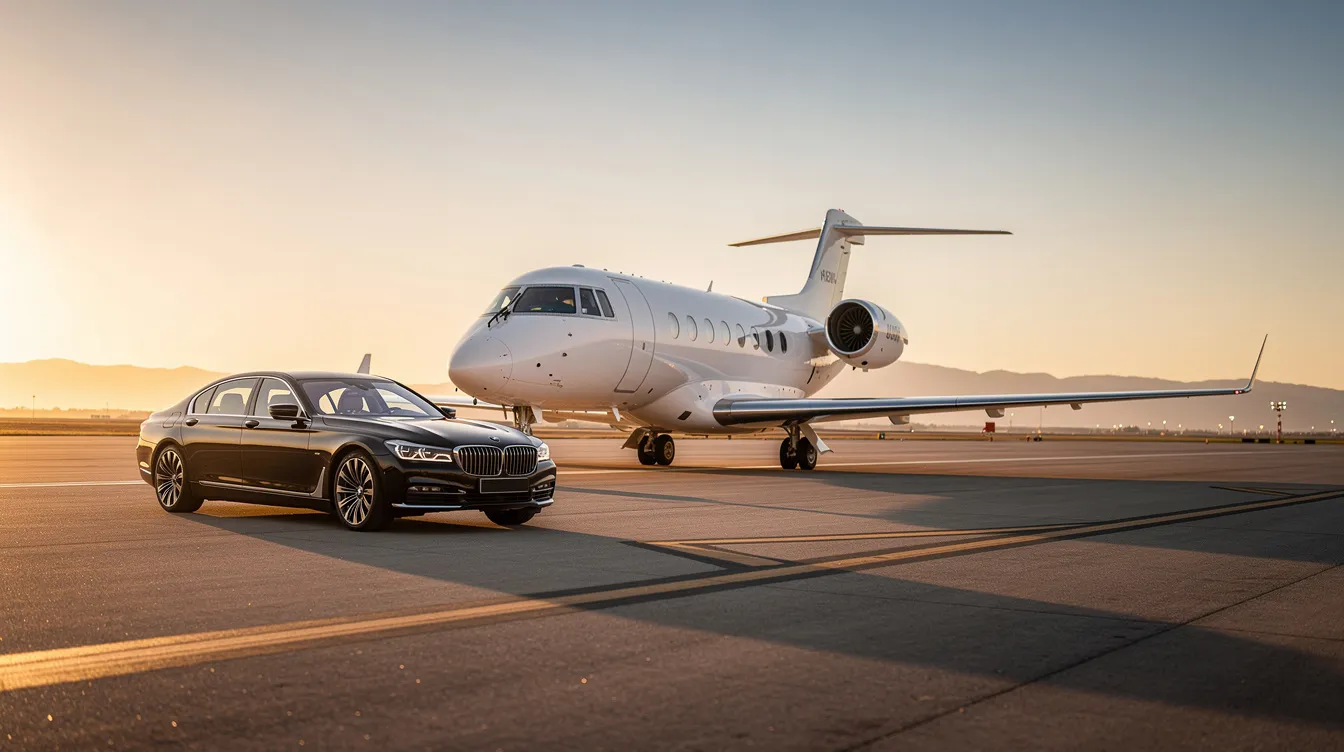
Welcome to our comprehensive guide on the names of fighter jets—a resource crafted for aviation enthusiasts, private jet clients, and general readers interested in the fascinating world of military and private aviation. Whether you are captivated by the power and mystique of combat aircraft or seeking insight into the prestige of private jet travel, this guide is designed for you.
In this article, we explore how fighter jets are named, the evolution of naming conventions across generations, and what these names reveal about the aircraft’s mission and legacy. We also draw connections between military naming traditions and the world of private aviation, offering a unique perspective for those who value both performance and luxury in the skies.
How Fighter Jets Get Their Names and Designations
Modern U.S. fighter jets usually have two identities: an official letter-number designation and a symbolic nickname. In the U.S. system, “F” means fighter, as in F-22 or F-35, while names like Raptor and Lightning II are chosen for tradition, morale, public recognition, and the aura they create around such aircraft.
The designation system also covers other specific roles. “A” can indicate attack, as in A-10 Thunderbolt II. “C” can indicate cargo, as in C-17 Globemaster III. “H” is used for helicopters, as in H-60 Black Hawk. The U.S. military aircraft designation system is meant to make role and sequence clear, even before a nickname adds personality.
Before the modern “F” label, the United States used “P” for pursuit aircraft. The P-51 Mustang, one of the great fighters of World War II, carried a name that suggested stamina, speed, and independence. After the U.S. Air Force became a separate service in 1947, “P” gradually gave way to “F,” and in 1962, the Navy and USAF designation systems were aligned.
There are exceptions. The F-117 Nighthawk was called a fighter, though its true mission was a stealth attack. The X-35 prototype became the F-35 Lightning II, connecting a new aircraft to the heritage of the P-38 Lightning. Other nations follow their own logic: Rafale is French for a gust or squall; Typhoon evokes a storm; China’s J-20 Mighty Dragon reflects cultural symbolism as much as military ambition.
Generations of Jet Fighters and How Names Reflect Their Era
The “generation fighter” concept is informal, but it is widely used to group jet fighters by technology, period, and battlefield role. Modern fighter jets are categorized by generation, with 5th-generation stealth aircraft leading global air power.
First-Generation Fighter Jets
The first generation emerged after World War II and operated in the subsonic regime. These early aircraft used jet engines but still relied heavily on gun fighting and short-range engagements. Names such as F-86 Sabre suggested sharpness and speed, while the MiG-15 leaned on bureau designation rather than poetic branding.
Second-Generation Fighter Jets
Second-generation fighter jets introduced air-to-air radar and guided missiles, marking a significant leap in aerial combat technology. These advances allowed fighters like the F-104 Starfighter and MiG-21 to engage enemies at greater distances with precision, reflecting the missile age’s arrival in air warfare.
Third-Generation Fighter Jets
Third-generation fighters included multi-role capabilities and advanced avionics, expanding their operational flexibility. Aircraft such as the F-4 Phantom II combined air-to-air combat, strike, reconnaissance, and ground attack roles. This generation also saw the integration of key features like supercruise—the ability to sustain supersonic speeds without afterburners—and thrust-vectoring engine nozzles, which enhanced maneuverability and combat effectiveness.
Fourth-Generation Fighter Jets
Fourth-generation fighters emphasized agility and multirole configurations, while 4.5-generation fighters incorporate advanced avionics and modest stealth. Fifth-generation fighters feature stealth and advanced sensor integration, including sensor fusion, AESA radar, and networked combat systems. Fifth-generation stealth fighters excel in advanced stealth and sensor fusion capabilities, and 5th-generation aircraft typically feature advanced technologies like Active Electronically Scanned Array radars.
As the technology changed, fighter names evolved alongside shifts in aircraft design, from earlier eras to modern types: Phantom, Eagle, Falcon, Hornet, Typhoon, Raptor, Lightning II. The Hornet family also appeared in various forms as the platform evolved into later carrier-capable variants. Some names suggest air dominance; others suggest flexibility. “Strike Eagle” makes a strike fighter role explicit, while Typhoon and Rafale imply storm-like agility and power. Fifth-generation systems remain in development, and sixth-generation concepts are still emerging.
Iconic First- to Third-Generation Fighter Jets and Their Names
First-Generation Fighter Jets
The evolution of fighter aircraft names begins before the jet age, with piston-engine legends of World War II. The Supermarine Spitfire sounded fierce and nimble. The Messerschmitt Bf 109 relied more on designation than nickname. The P-51 Mustang used animal imagery to suggest endurance, long-range escort capability, and freedom in the air.
First-generation jet fighters arrived in the late 1940s and early 1950s. The F-86 Sabre, MiG-15, and MiG-17 became central to the Korean War, where high-speed flying changed air combat forever. These aircraft were not yet stealthy or digitally integrated; they were production aircraft built around early jet propulsion, machine guns or cannon, and pilot skill.
Second-Generation Fighter Jets
Second-generation fighters pushed harder into the missile age. The F-104 Starfighter was so slender and fast that it earned the nickname “missile with a man in it.” The Mirage III suggested something elusive on the horizon. The MiG-19 and MiG-21 brought supersonic performance to large numbers of air forces, turning the interceptor into a defining Cold War machine. These jets introduced air-to-air radar and guided missiles, revolutionizing engagement tactics.
Third-Generation Fighter Jets
Third-generation jets expanded the mission set. The F-4 Phantom II was heavily armed, capable of carrying missiles, bombs, and a gun in later versions. The MiG-23 Flogger added variable-geometry wings and a more specialized airframe. This generation incorporated multi-role capabilities and advanced avionics, while key features such as supercruise and thrust-vectoring engine nozzles improved speed and maneuverability, enabling fighters to excel in diverse combat scenarios.
Fourth and 4.5-Generation Jet Fighters: Names Behind Modern Legends
Fourth-Generation Fighter Jets
Fourth-generation fighters, introduced from the 1970s into the late 1980s, still form the backbone of many air forces. They emphasized maneuverability, advanced radar, better weapons, and the ability to operate across air and ground missions.
F-15 Eagle: Created for air superiority, and the name fits: a dominant predator above the battlefield.
F-16 Fighting Falcon: With 2,102 units in operation globally, it became a benchmark for agile, affordable multirole performance.
F/A-18 Hornet: Suggested a compact but painful sting.
MiG-29 Fulcrum and Su-27 Flanker: Received NATO names that implied leverage and tactical positioning.
Mirage 2000: Continued France’s tradition of elegant, atmospheric naming.
4.5-Generation Fighter Jets
The 4.5-generation category bridges classic fourth-generation aircraft and stealth fighter design. These include:
Eurofighter Typhoon
Dassault Rafale
Saab JAS 39 Gripen
F/A-18E/F Super Hornet
Upgraded F-16 variants
These combine advanced avionics, improved radar, limited stealth shaping, and networked combat. Highly agile 4.5-generation multirole fighters are designed for air superiority and ground attack.
The Eurofighter Typhoon name speaks to weather, force, and speed. The Eurofighter Typhoon can supercruise at Mach 1.5 fully loaded, meaning it can sustain supersonic speeds in level flight without relying on afterburner in that configuration. Europe’s next-generation fighter work also includes France in the FCAS effort. The Eurofighter Typhoon features a PIRATE system, allowing silent tracking of enemy aircraft, reinforcing how modern capability is no longer just about top speed but also detection, tracking, and information advantage.
Fifth-Generation Fighter Jets by Name: F‑22, F‑35, J‑20, Su‑57 and More
A fifth-generation jet fighter is defined by stealth, sensor fusion, Active Electronically Scanned Array radar, internal weapon bays, and networked combat capability. Avionics and sensor systems define modern fighters using sensor fusion to enhance combat effectiveness. Sensor fusion allows the sharing of real-time data across all allied units.
Below is a table summarizing key fifth-generation fighters, their variants, and notable features:
Name & Designation | Variants / NATO Name | Notable Features | Units in Service (approx.) |
|---|
F-22 Raptor | - | Air superiority, stealth, supercruise at Mach 1.8, exclusive to the U.S.; production ended at 177 aircraft built, and unit cost exceeded $140 million | 177 |
F-35 Lightning II | F-35A, F-35B, F-35C | Stealth, sensor fusion, three variants for different missions, radar cross section of a golf ball | over 880 in active service |
Sukhoi Su-57 | Felon (NATO) | Stealth, advanced avionics, supermaneuverability | approximately 30 in active service as of 2026 |
Chengdu J-20 | Mighty Dragon | Stealth, large weapons payload (24,000 lbs), advanced sensors | 250 |
FC-31/J-31 | - | Export-oriented, stealth features | - |
KF-21 Boramae | - | South Korea’s indigenous stealth fighter | - |
TAI KAAN | - | Turkey’s next-generation stealth fighter | - |
As these emerging programs move toward future operational use, the FC-31/J-31, Korea’s KF-21 Boramae, and Turkey’s TAI KAAN show how fifth-generation development is expanding. These names support national branding, export ambition, and the global race to build operational history through testing and delivered aircraft for newer programs where relevant. Long-range capabilities are enhanced by hypersonic missiles and advanced Beyond Visual Range systems, pushing air combat farther from the pilot’s eye and deeper into data-driven decision-making.
Air Superiority vs Multirole: What Fighter Jet Names Hint About Their Mission
An air superiority fighter is designed primarily to defeat enemy aircraft and control the air. A multirole fighter is built to perform air-to-air, air-to-ground, strike, reconnaissance, and sometimes electronic missions from the same platform.
The F-15 Eagle and Eurofighter Typhoon are clear examples of names that emphasize dominance in the skies. The F-15EX can carry almost 30,000 lbs of weapons, showing how a modern version of an air superiority icon can also deliver remarkable payload capacity. The F-15EX can carry almost 30,000 lbs of weapons while maintaining the Eagle lineage’s reputation for power.
By contrast, the Dassault Rafale and F-35 Lightning II are marketed around versatility. Rafale is often described as “omnirole,” while the F-35 was designed from the beginning for allied multi-mission operations. Fighter jets are being designed for multi-mission versatility rather than strictly interceptor roles.
Names and descriptors also reveal specialized categories: all-weather fighter, night fighter, strategic escort fighter, Strike Eagle. Once you notice the pattern, weather, animals, mythology, speed, stealth, and force appear again and again.
Naming Practices in Different Air Forces Around the World
Not every air force follows the U.S. “F-number plus nickname” model. Naming is shaped by language, national identity, procurement politics, export marketing, and alliance systems.
Europe often uses evocative names with international appeal. Eurofighter Typhoon combines a joint program identity with a storm image. Saab Gripen means griffin, a mythological creature tied to Swedish heraldry. Dassault Rafale reflects the French language and France’s independent aerospace tradition.
Russian and Soviet aircraft typically use design bureau names and numbers, such as MiG-29, Su-35, and Su-57. NATO often assigns English reporting names to these combat aircraft, including Fulcrum, Flanker, and Felon. These names may be better known in the West than any official domestic nickname.
China uses the “J” prefix for fighter aircraft, as in J-10 and J-20. “Mighty Dragon” gives the J-20 a cultural and strategic identity beyond its designation. India offers another pattern: HAL Tejas uses a Sanskrit-derived name meaning radiance or brilliance, while aircraft such as the Su-30MKI retain imported designations with local configuration.
From Fighter Jets to Private Jets: What Military Naming Teaches Luxury Aviation
Fighter jets and private jets share more than most passengers realize. Both rely on aerodynamics, avionics, redundant systems, disciplined maintenance, and certified operators, whether you are comparing budget-friendly private aircraft options or evaluating the cheapest private jet choices for entry into private aviation. The difference is mission: combat versus comfort, weapons versus productivity, and tactical defense versus personal control of time.
Military names emphasize power, stealth, air superiority, and attack. Private aviation names often emphasize prestige, reliability, range, and ease. Gulfstream, Challenger, Global, and Falcon all carry a sense of capability without implying combat.
At BlackJet, we do not operate F-35s or bombers. We focus on certified business jets optimized for privacy, comfort, and flexible travel, anchored by our premium private jet card programs and flexible BlackJet 25+ Hour Jet Card options. But our understanding of aviation culture includes the same seriousness about safety, performance, and operational discipline that defines military flying.
Many BlackJet members recognize names like Falcon, a business jet family connected to Dassault’s broader aviation heritage, and explore their options using a detailed private jet price list and cost overview. For clients, the name matters less than the experience behind it: capable aircraft, professional crews, elegant cabins, and a system that works when the schedule changes.
BlackJet Jet Cards: Strategic Air Superiority for Your Time
Air forces pursue air superiority. BlackJet members pursue time superiority: the ability to move point-to-point, bypass commercial friction, and maintain control over a demanding calendar.
BlackJet’s Jet Card programs, including 25-hour and 50-hour options, provide prepaid access to private aircraft across multiple cabin classes. It is not ownership, and it is not a one-off private jet charter search each time you fly. It is structured private jet access with predictable planning, real-time support, and flexibility across aircraft categories.
Here is the practical difference:
Compared with commercial first class, a Jet Card can avoid hub connections, rigid schedules, and long airport dwell time, and understanding the jet card cost per hour helps clarify the value of that flexibility.
Compared with ownership, a Jet Card removes depreciation, maintenance responsibility, crew hiring, and asset risk, while jet card pricing structures keep costs more predictable.
Compared with an ad-hoc charter, a Jet Card gives members a more consistent framework for access, support, and service expectations, and the best jet cards for frequent flyers typically emphasize guaranteed availability and transparent terms.
For example, an executive might fly from London to Geneva for a board meeting, return the same evening, then fly from New York to Miami later in the week. A commercial itinerary may consume hours in security, boarding, transfers, and schedule gaps. BlackJet compresses the journey into a direct, private, working environment, and some travelers even compare this model to unlimited private jet flight memberships when planning frequent itineraries.
Safety, technology, and sustainability are built into the model. BlackJet works with certified operators, provides 24/7 digital booking and real-time flight support, and ensures every journey is carbon neutral through offsetting at no extra cost to the member.
Safety, Technology, and Sustainability: Where Fighter and Private Aviation Converge
Many aviation innovations mature first in military aircraft before becoming standard in business aviation. Fly-by-wire controls, advanced navigation, digital cockpits, improved materials, and system redundancy all reflect a wider aviation culture of precision.
Safety is the foundation. Fighter fleets require intense training, maintenance, and readiness standards because the margin for error is small. BlackJet applies the same mindset to private aviation safety by focusing on operator certification, pilot experience, maintenance discipline, and independent safety expectations.
Technology matters as much on a civilian itinerary as it does in military operations. Fifth-generation fighters use sensor fusion and network-centric systems to improve awareness. BlackJet uses digital booking, real-time flight coordination, and flight support to give members clarity before and during a journey.
Sustainability is where private aviation must lead with responsibility. Fighter aircraft are optimized for survivability, speed, and mission success, not fuel efficiency. BlackJet mitigates the environmental impact of private flying through carbon-neutral flights, carbon offset programs, and support for emerging sustainable aviation fuel options where available, while travelers can also buy a seat on a private jet via shared or semi-private services when a full aircraft is not required.
Imagine a BlackJet member flying from Dallas to Aspen, then onward to Los Angeles without connecting through a commercial hub, or a larger group selecting the best private jet for 20 passengers, or even a 50-passenger private jet charter for a board meeting or event. The route is more direct, the cabin is productive, and the itinerary is built around the traveler rather than the airline schedule.
FAQ: Common Questions About Fighter Jet Names and Private Jet Access
Why are fighter jets called F‑16, F‑35, etc.?
In the U.S. designation system, “F” means fighter, and the number indicates sequence. The nickname, such as Fighting Falcon or Lightning II, is separate and usually reflects symbolism, tradition, and public identity.
What does “generation” mean in fighter aircraft?
Generation is an informal way to group aircraft by technology and era. First-generation jets were subsonic and simple by modern standards; fifth-generation jets use stealth, radar integration, advanced weapons, and sensor fusion.
Which are the most famous fighter jets by name today?
Among the most famous are the F-22 Raptor, F-35 Lightning II, Eurofighter Typhoon, Dassault Rafale, Su-57, and Chengdu J-20 Mighty Dragon.
Can private clients fly in ex-military fighter jets?
In some countries, limited experience flights in demilitarized military jets may be available. BlackJet focuses on certified business jets built for comfort, privacy, range, and safety rather than armed combat.
How does BlackJet choose which aircraft to offer in its Jet Card programs?
BlackJet evaluates operator track record, safety certification, cabin class, mission range, aircraft performance, maintenance discipline, and carbon-neutral capability before aircraft are included in the member experience.
Is flying private more sustainable than flying a fighter jet?
A fighter is built for combat performance, not efficiency. Private aviation is still fuel-intensive, but BlackJet reduces impact through modern routing, efficient aircraft selection, and built-in carbon offsetting for carbon-neutral flights.
Conclusion: Mastering the Skies, from Combat Callsigns to Jet Cards
The name of fighter jets reflects history, ambition, and engineering: from first-generation Sabres and Korean War interceptors to fifth-generation F-35 Lightning II stealth aircraft and future concepts shaped by Boeing, allied defense programs, and new digital capabilities.
BlackJet does not operate fighter jets, but we bring a serious aviation mindset to private travel: rigorous safety, advanced technology, carbon-neutral flights, and refined service. For members, the goal is not combat air superiority; it is command of their own schedule.
Elevate your travel with BlackJet’s Jet Card programs and discover seamless private jet access on your terms, with safety, sustainability, and flexibility built into every journey.


 Sign up with google
 Sign up with Apple