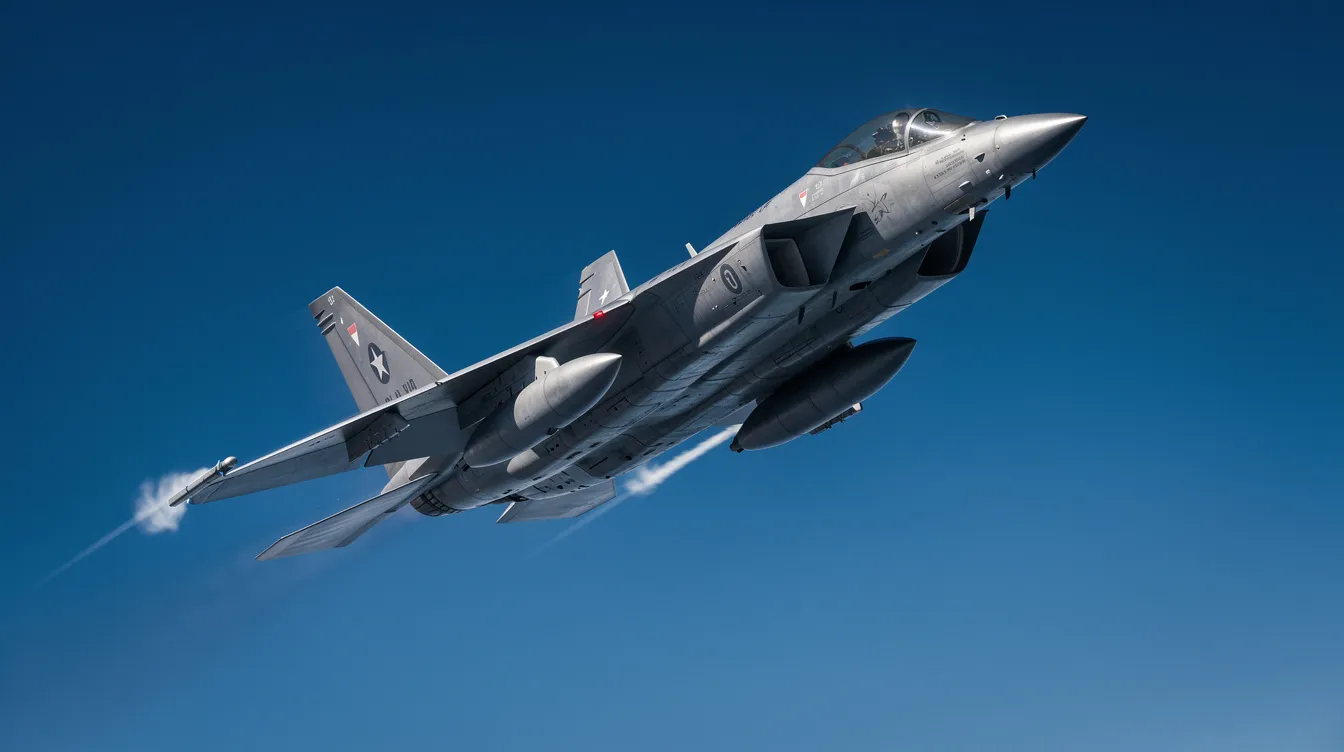
Introduction: Why Military Aircraft Matter to Every Flyer
Every time you step aboard a modern business jet, you are surrounded by technologies that were first proven in military aircraft. Jet turbine engines, fly-by-wire flight controls, composite airframe materials, GPS-guided navigation-each began as a defense innovation before reshaping civilian aviation. Consider the contrast: a 1950s propeller-driven airliner like the Lockheed Constellation cruised at roughly 300 knots with basic avionics and limited range. Today's long-range private jets achieve speeds above Mach 0.90 and cover more than 7,000 nautical miles nonstop, making transcontinental flight routine rather than remarkable.
A military plane manufacturer is any company that designs, tests, certifies, and builds combat, transport, surveillance, or training aircraft under government defense contracts. The global market for military aircraft involves major aerospace and defense corporations, and leading manufacturers include Lockheed Martin, Boeing, and Northrop Grumman, alongside European and Asian firms. At BlackJet, we track these developments closely because innovations in engines, safety systems, and materials eventually enhance the comfort, range, safety, and sustainability of the private jets in our network.
Major Military Aircraft Manufacturers and Their Signature Models
The military aviation sector is dominated by a small group of global prime contractors. These contractors design and manufacture advanced fighter jets and transport aircraft through programs that can span decades from concept to retirement. The military aircraft industry is concentrated in the United States and Europe, though there are prominent manufacturers in Asia and Russia, such as AVIC and UAC. Military aircraft manufacturers often specialize in specific categories of aircraft, from stealth fighters to heavy transports.
Lockheed Martin produces military aircraft like the F-16 and C-130 that define their respective categories. Over 4,500 F-16 Fighting Falcon aircraft have been built since 1976, making it the most widely exported multirole fighter in history, flown by more than 25 air force services worldwide. The F-22 Raptor brought stealth and supercruise capability to the United States Air Force upon entering service in 2005, while the F-35 Lightning II-A, a fifth-generation stealth fighter with first operational squadrons in 2015, serves the USA, UK, Italy, and other allied nations. The C-130 Hercules has the longest continuous production run in military history, with turboprop transport variants rolling off the line from the mid-1950s through today, and over 2,500 built in total.
Boeing, inheriting several McDonnell Douglas programs, fields equally consequential platforms. Airbus and Boeing are leading aircraft manufacturers by market cap, and Boeing's defense portfolio reflects that scale. The F-15 Eagle entered service in 1976 and has amassed over 100 aerial combat victories with no recorded dogfight losses. The F/A-18 Hornet and Super Hornet have served as the U.S. Navy's carrier-capable multirole fighters since the early 1980s, and the KC-46 Pegasus-first delivered to the USAF in 2019-represents the newest generation of aerial refueling tankers.
Airbus Defence and Space leads European production with the A400M Atlas, a tactical and strategic airlifter that completed its first flight in 2009 and now serves France, Germany, the UK, and other nations. The Eurofighter Typhoon, developed by a consortium including Airbus, BAE Systems, and Leonardo, has fielded operational squadrons since 2003 across multiple European air forces.
Other key players round out the landscape. Northrop Grumman operates the B-2 Spirit stealth bomber and is advancing the B-21 Raider, which completed its first flight in November 2023. Saab's JAS 39 Gripen has been operational since the late 1990s and exported to countries including Sweden, the Czech Republic, and Brazil. Hindustan Aeronautics Limited builds the Tejas light combat aircraft and the Dhruv helicopter for the Indian armed forces. Major global military aircraft manufacturers produce stealth fighters and heavy transport aircraft, and each of these companies supports fleets for decades through upgrades and life-extension programs-a model mirrored by business jet OEMs whose aircraft BlackJet sources for its Jet Card members through its 25+ Hour Jet Card program. The industry also produces advanced unmanned aerial vehicles for military use, expanding the scope of what a single manufacturer may deliver.
Iconic Military Aircraft Types and Their Roles
Military aircraft are often categorized into fighters, bombers, transport, and helicopters, though the taxonomy extends to tankers, trainers, and unmanned systems. Military aircraft can be specialized for stealth, combat, or transport roles, and each category pushes engineering in directions that ultimately benefit private aviation.
Fighter and attack aircraft are designed to gain air supremacy and perform ground attacks. Air-superiority and multirole platforms like the F-15 Eagle, F-16 Fighting Falcon, F-35 Lightning II, and Dassault Rafale combine supersonic speeds, advanced AESA radar, and beyond-visual-range missiles. These aircraft are capable of sustaining high-G maneuvers and carrying mixed weapon loads across combat radii exceeding 500 nautical miles.
Bombers and strike aircraft occupy the opposite end of the range spectrum. The B-52 Stratofortress completed its first flight in 1952 and continues to fly strategic missions more than seven decades later. The B-2 Spirit brought stealth to intercontinental strike when introduced in the 1990s. Tactical strike jets like the F-15E Strike Eagle and the retired F-4 Phantom II pushed performance boundaries-the F-4 Phantom II had 5,195 units built from 1958 to 1981, set 15 world records for performance, and was capable of speeds exceeding Mach 2 while carrying roughly 18,000 pounds of weapons on external hardpoints.
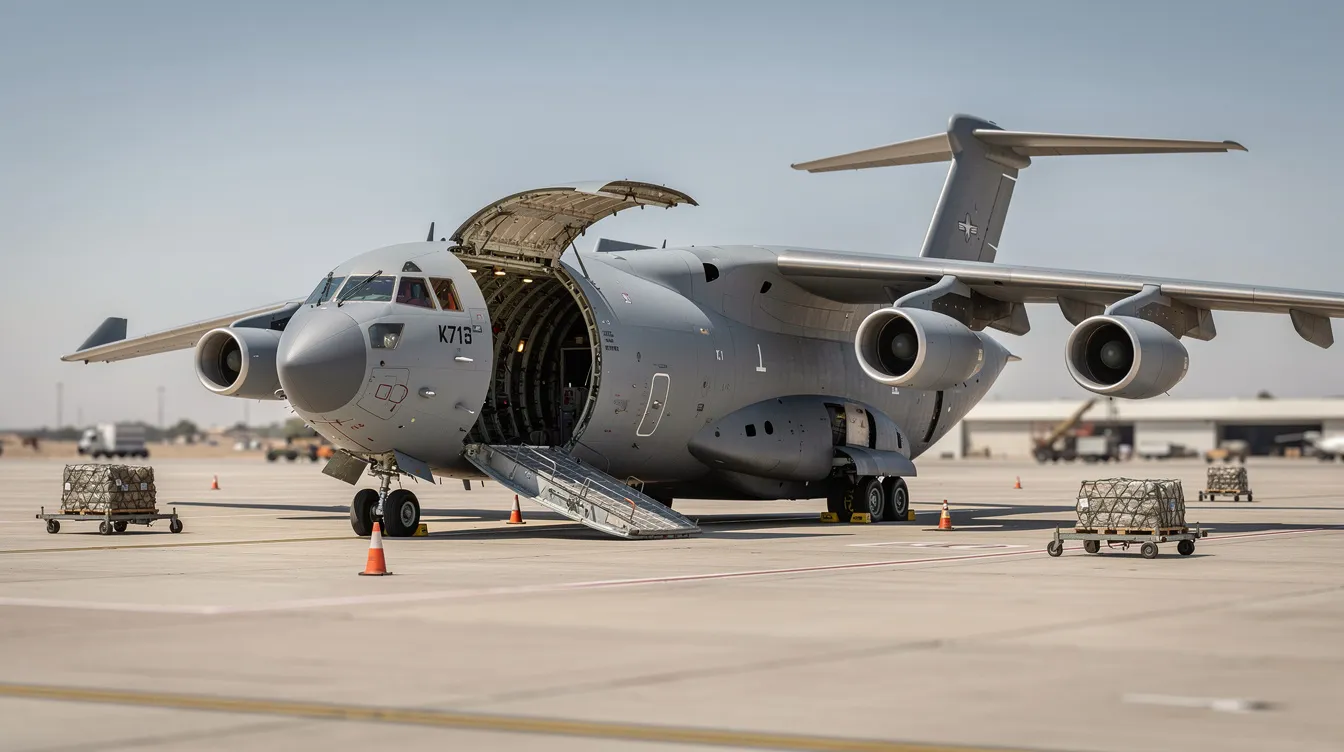
Transport and cargo aircraft deploy troops and supplies globally. The C-130 Hercules has been in continuous production for over 50 years, capable of operating from short, unprepared runways for troop transport, cargo, medevac, and as a gunship in AC-130 variants. The C-17 Globemaster III handles strategic heavy payloads across continents. Aerial refueling tankers like the KC-135 and KC-46 extend the operational range of military aircraft, making sustained global operations possible. Rotorcraft are used for troop transport and close air support missions, adding vertical-lift flexibility. Military aircraft also include unmanned systems for surveillance and combat, an increasingly important category for every major defense company.
Carrier-capable and training aircraft bridge the gap between mission readiness and pilot development. The A-4 Skyhawk-a lightweight carrier-capable attack aircraft with a maximum takeoff weight of 24,500 pounds-saw nearly 3,000 units built beginning in the 1950s. The T-38 Talon and the newer T-7A Red Hawk represent successive generations of jet trainers, with the T-7A designed digitally from the ground up.
Lessons in durability, high-cycle operations, and mission planning from these aircraft inform the reliability standards and dispatch consistency that business jets must achieve-standards that every aircraft in BlackJet's certified fleet is held to.
From Battlefield to Business Jet: How Military Innovation Shapes Private Aviation
Many features that high-net-worth travelers now consider standard on private jets were pioneered by a military plane manufacturer. The location of innovation has shifted from classified hangars to luxury cabins, but the engineering DNA remains unmistakable, especially in the newest generation of private jets.
Fly-by-wire controls, first widely adopted on military aircraft like the F-16, replaced heavy mechanical linkages with digital signals, reducing weight and enabling envelope protection. Modern business jets-including the Dassault Falcon 7X and Gulfstream G500-use full digital flight control systems descended from these programs. Advanced GPS and terrain-avoidance systems refined under combat conditions now deliver synthetic vision and head-up displays in civilian cockpits, making every flight safer. Composite materials developed for stealth shaping reduce drag and weight in private jets, lowering fuel burn and cabin noise without sacrificing structural integrity.
Military-grade testing drives redundancy in critical systems: pressurization, structural fatigue, bird-strike resistance. BlackJet prioritizes operators who meet rigorous third-party safety standards-such as ARGUS and IS-BAO-and maintain aircraft in line with procedures shaped by both civil regulators and military best practices. You can review how we vet every operator through BlackJet Certified Safety Standards.
Engine efficiency improvements pushed by defense requirements-longer range, lower fuel burn under threat-filter directly into civilian powerplants. BlackJet builds on this progress by offering carbon-neutral private flights through integrated carbon offsetting and, where available, sustainable aviation fuel. For travelers comparing aircraft types and access models, understanding the broader private jet price list and cost structures helps frame how these innovations translate into real-world budgets. Consider a Jet Card member flying from New York to London on a long-range business jet: the aircraft's avionics, composites, and engine efficiencies descend from decades of military research and development. That international journey is faster, quieter, and more fuel-efficient because of innovations first tested in combat, now with the comfort and privacy that define modern private aviation.
Frequently Asked Questions About Military Aircraft and Private Jet Travel
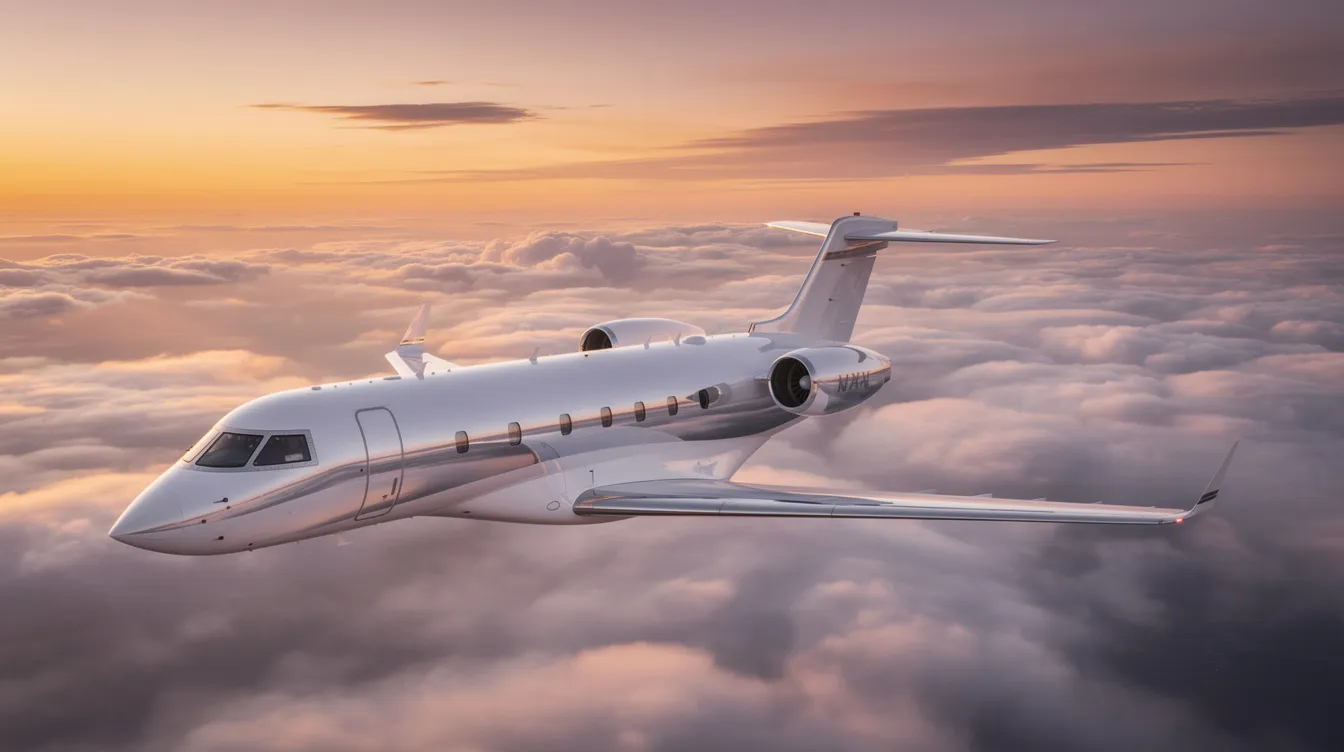
What is the difference between military aircraft and civilian or private jets? Military aircraft are designed for combat, surveillance, transport of troops and supplies, and other defense missions, operating under military procurement and airworthiness standards. Private jets are built for passenger comfort, speed, and privacy, certified under civil aviation authorities like the FAA and EASA, and can range from small cabins to large jets configured for 20 passengers. The core difference lies in mission: one prioritizes lethality and survivability, the other prioritizes the traveler's experience.
Are former military aircraft ever used in private aviation? In some cases, retired military transports or trainers are converted for civilian roles, and the U.S. Army's HADES program even plans to use Bombardier Global 6500 business jets for ISR missions. However, BlackJet's core fleet consists of certified business jets built specifically for private travel, including options that scale up to private jets suitable for 50 passengers, sourced from operators who meet our safety and comfort standards and aligned with many of the best private jets in the world.
How do military safety standards influence private jet travel? Strict maintenance, redundancy, and certification in both military and civilian sectors contribute to today's high overall safety record. BlackJet selects operators with strong safety credentials, ensuring every aircraft undergoes inspections and maintenance protocols influenced by the same engineering rigor that keeps military fleets mission-ready, similar to the standards upheld by the top private jet companies globally.
Does defense-sector innovation help with sustainability in private aviation? Efficiency improvements driven by military requirements-lighter materials, more fuel-efficient engines, aerodynamic refinements-directly reduce fuel burn in business jets. These advances also support more budget-friendly private aircraft options that balance efficiency, operating costs, and environmental impact. BlackJet complements these gains with carbon-neutral flights at no extra cost to members, turning decades of aerospace progress into measurable environmental results.
Conclusion: The Strategic Edge of Military Aviation Innovation in Private Jet Travel
Military plane manufacturers do more than build aircraft; they drive the technological advancements that elevate all facets of aviation. From pioneering stealth and fly-by-wire controls to advancing fuel efficiency and safety protocols, the defense sector’s innovations have a lasting impact on private aviation. For the discerning traveler, this means access to jets that embody decades of rigorous engineering, tested in the most demanding environments and refined for unparalleled comfort, safety, and sustainability.
At BlackJet, we leverage these military-derived advancements to offer Jet Card members not just private flight, but a strategic advantage—one defined by seamless access, carbon-neutral performance, and uncompromising safety. Our premium private jet card programs translate high-end engineering into predictable, flexible access across aircraft categories. Whether crossing continents or flying regionally, the influence of military aerospace innovation ensures your journey is efficient, secure, and effortlessly premium.
Discover how BlackJet turns decades of military-driven innovation into seamless, secure, and carbon-neutral private jet access on your terms. Explore our Jet Card programs and experience what refined, purposeful travel looks like.


 Sign up with google
 Sign up with Apple