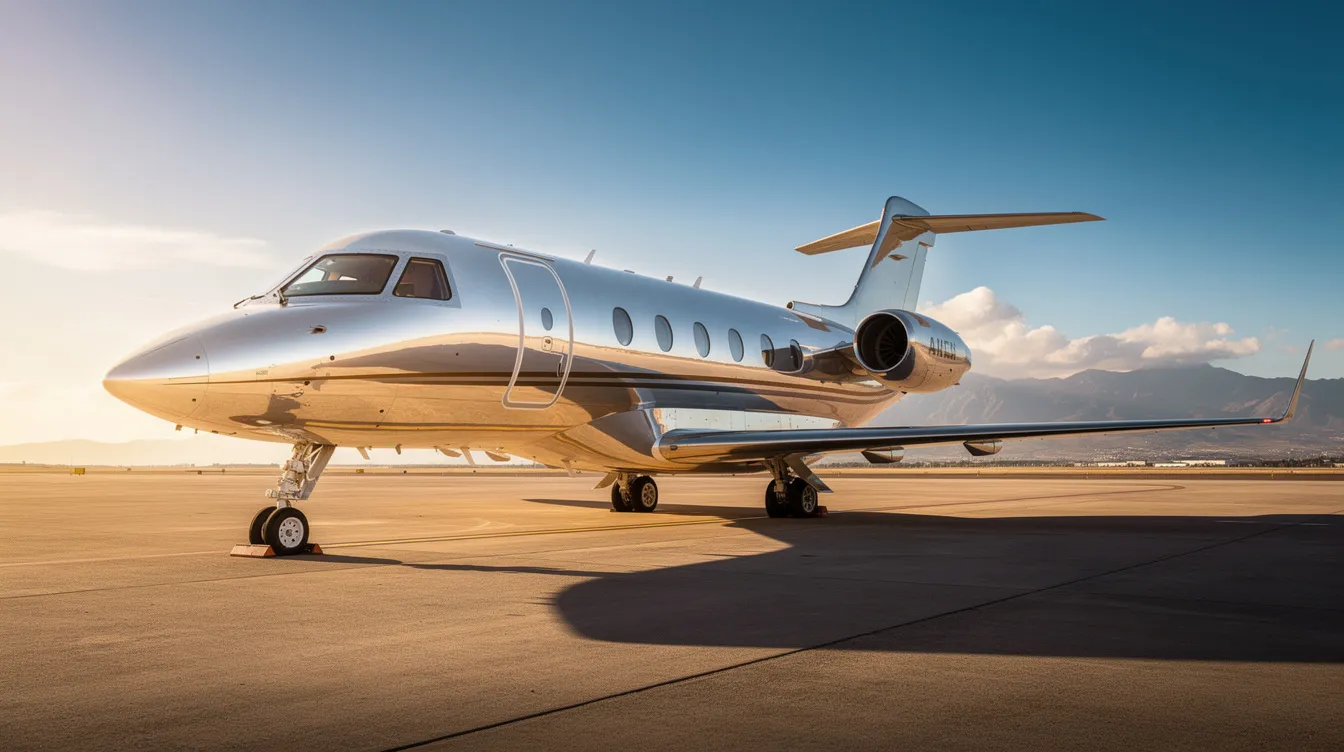
For travelers searching for the "JSX airport" experience, understanding the differences between JSX and traditional private jet travel is essential. This article is designed for travelers considering JSX or private jet options, and it matters because choosing the right service can save you significant time, maximize convenience, and provide the travel flexibility you need. Here, we’ll cover what to expect at a JSX airport, how JSX operates from private jet terminals (FBOs), the routes they serve, and how this compares to fully private jet solutions like BlackJet.
JSX operates from private jet terminals, not commercial airports. These terminals are known as fixed-base operators (FBOs), which are facilities designed for private aviation and offer a more streamlined, exclusive experience than standard airport terminals. JSX is a public charter operator, meaning it sells individual seats on scheduled flights from these private jet terminals, rather than operating as a traditional airline.
Key Takeaways: Understanding JSX Airport Experience vs. Private Jet Travel
JSX offers a unique semi-private travel experience by operating from private jet terminals (FBOs), allowing passengers to avoid crowded commercial airports and board quickly.
The service is ideal for frequent travelers on fixed routes such as Las Vegas to Southern California, offering business-class legroom, complimentary amenities, and streamlined security.
JSX flights operate under public charter regulations with a codeshare agreement with JetBlue, enabling loyalty points but lacking full private jet flexibility.
True private jet services like BlackJet provide fully private, on-demand access with a broader range of aircraft, bespoke ground handling, and worldwide reach.
BlackJet’s Jet Card programs ensure safety through rigorous certification, offer carbon-neutral flights, and deliver unmatched scheduling flexibility for discerning travelers.
Choosing between JSX and private jet travel depends on your priorities: predictable routes and semi-private convenience versus complete privacy, customization, and global access.
What is JSX? Understanding the Public Charter Operator Model
JSX is a public charter operator, not a traditional airline. This means JSX offers scheduled flights where you can purchase individual seats, but the flights depart from private jet terminals (FBOs) rather than commercial airport terminals. The company was created in 2016 to provide a faster, more convenient alternative to commercial airlines, focusing on time savings and ease of travel rather than full luxury.
JSX operates from private jet terminals, not commercial airports, which allows passengers to skip the crowded terminal, avoid long security lines, and board a jet in minutes. The experience is designed to bridge the gap between commercial aviation and fully private jet solutions, offering a semi-private experience that is more accessible than chartering an entire aircraft.
Now that you know what JSX is and how it operates, let’s explore the details of the JSX airport experience in our next section.

How JSX Flights Operate from Airport to Airport
JSX operates as a scheduled semi-private service, selling individual seats on public charter flights under DOT Part 380 rules and FAA Part 135 regulations. All JSX flights depart from private jet terminals, known as fixed-base operators (FBOs), rather than commercial airport concourses. This means no traditional ticket counters, no conveyor-belt baggage claim, and no sprawling gate areas, yet it still offers an accessible way to sample private aviation alongside other more affordable private jet options and a growing range of affordable private planes and entry-level jets.
Boarding Process
Boarding a JSX flight is designed to be quick and hassle-free. Passengers typically arrive curbside, check in at a comfortable lounge, and can board within 20 minutes of arrival at the terminal. Minimal queues and direct ramp access to the aircraft make the process efficient.
Aircraft and Onboard Experience
JSX uses Embraer ERJ regional jets, each configured with 30 seats. Every row features business-class-style legroom (about 35 to 36 inches of pitch) and no middle seats. Complimentary gourmet snacks, premium drinks (including spirits on most routes), free Starlink Wi-Fi, and in-seat power are standard, creating a premium but shared cabin environment.
Security Procedures
JSX employs less stringent TSA screening at private terminals. Passengers undergo TSA Secure Flight vetting, explosive trace detection, and weapons screening, but avoid standard commercial checkpoints. This streamlined process enhances both speed and comfort.
Now that we've covered how JSX operates, let's look at the key airports and routes in its network.
Key JSX Airports and Routes
JSX’s network is built around short-haul flights on high-demand corridors, connecting major cities and popular destinations across the Western U.S., Texas, Florida, and Mexico. The service is especially popular for travelers seeking to avoid the hassle of large commercial airports, though travelers needing bespoke routes in regions like South Asia may instead look to private jet charters in Karachi or evaluate whether chartering a private jet is worth it compared to semi-private options.
Major Year-Round Destinations
Las Vegas (Harry Reid International Airport private terminal)
Orange County (John Wayne Airport and nearby FBOs)
Hollywood Burbank Airport (BUR)
Oakland (OAK)
Carlsbad
Scottsdale, Arizona
Reno
Boulder
Salt Lake City (SLC), Utah
Dallas Love Field (DAL)
Houston Hobby (HOU)
Seasonal and Special Routes
Dallas Love Field to Destin, Florida (summer)
Boca Raton and Naples, Florida (seasonal)
Morristown Municipal Airport to Florida (for East Coast travelers)
Baja California Sur, Mexico (Cabo and other destinations)
JSX frequently adds seasonal routes to align with holiday and peak travel demand, with some routes launching as early as April.
With a clear understanding of where JSX flies, let’s compare the airport experience at JSX terminals to the full privacy of private jet FBOs.
JSX Airport Terminals vs. True Private Jet FBOs
JSX uses private jet terminals (FBOs), but the experience differs from a true private jet departure. Here’s a side-by-side comparison:
Feature | JSX Airport (FBO) Experience | True Private Jet FBO (e.g., BlackJet) |
|---|
Privacy | Shared cabin with up to 29 other passengers | Entire aircraft reserved for your group |
Scheduling | Fixed schedule, set departure times | Depart when you choose, fully flexible |
Ground Handling | Standardized, shared lounge and services | Bespoke, tailored ground handling |
Aircraft Choice | Single aircraft type (30-seat regional jet) | Choose from light, midsize, super-midsize, or large cabin jets |
Onboard Experience | Premium shared service | Fully private, customizable experience |
JSX offers solid services for its price point, but when privacy, schedule control, and bespoke ground handling matter, the semi-private model reaches its ceiling. | | |
Next, let’s examine how BlackJet’s 25+ Hour Jet Card programs and a detailed 25-hour jet card guide to features and costs compare to JSX’s seat-based model.
BlackJet Jet Cards vs. JSX Air: Choosing the Right Level of Access
JSX sells seats on fixed routes at set times, while BlackJet’s Jet Card programs—available in 25-hour and 50-hour blocks—offer guaranteed, on-demand access to private jets across multiple aircraft categories. With BlackJet, you get 24/7 digital booking tools, real-time support, and the ability to fly on your own schedule.
JSX is a strong option for predictable, high-traffic corridors. For example, an executive flying from Orange County to Las Vegas three times per month on a consistent schedule can save meaningfully over traditional commercial flights. However, if you need to change a departure, add a multi-leg day trip, or fly beyond JSX’s limited range, the flexibility and broader reach of a private jet program like BlackJet becomes the smarter choice.
BlackJet’s Jet Cards are based on occupied flight hours, not per-seat pricing, so many travelers compare jet card cost per hour across providers before deciding which model fits their flying pattern or whether a larger 100-hour jet card option or mid-sized 50-hour jet card program makes sense for their usage. You pay for flexibility, worldwide reach, cabin privacy, and the ability to operate on your own timeline, making it useful to understand overall jet card costs and membership pricing, review the best jet cards for frequent flyers, as well as broader jet card pricing structures and benefits. For California-based travelers with complex itineraries, BlackJet’s premium private jet service is the decisive upgrade.
Now, let’s look at how safety, certification, and sustainability compare between JSX and BlackJet, especially for travelers evaluating the broader private jet price list and access options.
Safety, Certification, and Sustainability
For discerning travelers, safety and sustainability are as important as convenience, and many compare JSX and BlackJet against top private jet companies for luxury travel while also digging into how much it costs to rent a private jet by the hour.
JSX Safety and Loyalty Programs
JSX operates under FAA Part 135 and DOT Part 380 public charter rules. The company has a codeshare agreement with JetBlue, allowing passengers to earn TrueBlue loyalty points, and also supports MileagePlus numbers for earning United miles. However, JSX does not participate in major global airline alliances, and these loyalty programs do not affect the underlying safety framework.
BlackJet Safety Standards
BlackJet requires every operator in its network to pass the proprietary BlackJet Certified® program, which includes top-tier ARGUS Platinum, Wyvern, or IS-BAO ratings, recurring third-party audits, high pilot-experience thresholds, and documented safety management systems. Fewer than 30 percent of U.S. charter operators qualify, putting their vetted network in the same conversation as established leaders with detailed NetJets jet card cost and program structures.
Sustainability Commitments
BlackJet ensures every flight is fully carbon and emissions neutral—including CO₂, water vapor, nitrous oxide, and aerosols—at no extra cost to the client. This commitment is built into every Jet Card, making it one of the most comprehensive green private jet programs in private aviation today and adding another layer of value when you consider potential jet card tax deduction strategies or exploring the cheapest private aircraft and budget-friendly ways to access them.
With safety and sustainability addressed, let’s discuss how to choose between JSX and BlackJet for your next trip, especially if you’re comparing JSX’s seat model with other ways to buy a seat on a private jet or understand private jet prices in rupees for travel to and from India.
FAQs About JSX Airport Experience and Private Jet Travel
Q1: What airports does JSX operate from?
JSX operates from private jet terminals (FBOs) at airports including Hollywood Burbank (BUR), Dallas Love Field (DAL), John Wayne/Orange County (SNA), Las Vegas Harry Reid International, and several others across the Western U.S., Texas, Florida, and Mexico.
Q2: How does JSX boarding differ from commercial flights?
JSX passengers board from private terminals, allowing them to skip long security lines and board within 20 minutes of arrival. The process is streamlined with less stringent TSA screening compared to commercial airports.
Q3: Can I earn frequent flyer miles on JSX flights?
Yes, JSX has a codeshare agreement with JetBlue, enabling passengers to earn TrueBlue loyalty points. Additionally, MileagePlus numbers can be used to earn United Airlines miles on JSX flights.
Q4: How much leg room does JSX offer compared to commercial airlines?
JSX seats provide business-class-style legroom, typically around 35 to 36 inches of pitch, which is significantly more spacious than standard commercial economy seating.
Q5: What are the main differences between JSX and a private jet service like BlackJet?
JSX offers scheduled semi-private flights on fixed routes with shared cabins, while BlackJet provides fully private, on-demand jet access with flexible scheduling, a range of aircraft options, and bespoke ground handling.
Q6: Are JSX flights carbon neutral?
JSX does not currently include carbon offsetting as part of its standard service. In contrast, BlackJet ensures every flight is fully carbon-neutral at no extra cost.
Q7: What safety certifications does JSX hold?
JSX operates under FAA Part 135 and DOT Part 380 public charter regulations, with TSA Secure Flight vetting and additional security measures at private terminals.
Q8: How can I book a flight with JSX or BlackJet?
JSX flights can be booked directly through their website or app for scheduled routes. BlackJet offers Jet Card memberships with 24/7 digital booking tools and real-time support for private jet charters.
Planning Your Next Trip: When to Use JSX Airports and When to Call BlackJet
The decision between JSX and private jet travel comes down to route availability, privacy needs, and schedule flexibility.
JSX is ideal for: Frequent leisure travelers commuting between Las Vegas and Southern California, or anyone seeking fast boarding, a comfortable lounge, and a semi-private experience for predictable, short-haul trips.
BlackJet is best for: Groups, last-minute changes, multi-leg day trips, or travel to destinations outside JSX’s network, at off-peak hours, or internationally. BlackJet’s Jet Card delivers flexibility, privacy, and guaranteed availability, and can easily scale to private jets suitable for around 20 passengers when your group size grows or even private jets that accommodate up to 50 passengers for larger movements, including those exploring 12 seater private jet costs and ownership considerations, private jets for sale under 10 million dollars, or region-specific options like premium UK private jets for sale.
Whether it’s your first flight on a private jet or your hundredth, choose the service that fits how you actually travel—not just where one carrier happens to operate.
Discover how BlackJet can reshape the way you fly. Explore Jet Card membership and sign up for a level of access that matches the way you move through the world.


 Sign up with google
 Sign up with Apple