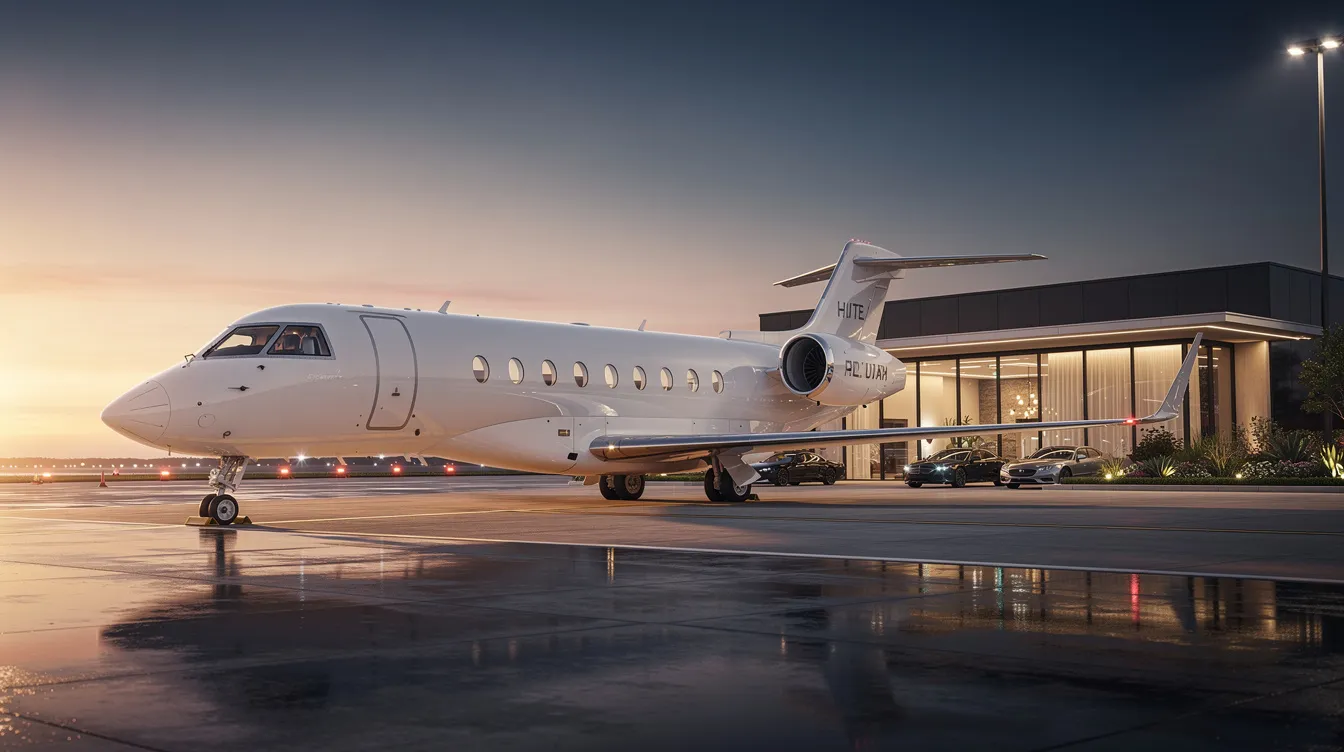
For high-net-worth travelers and corporate leaders, jets and airplanes are not only transportation. They are instruments of time control, privacy, and access. This guide explains the difference between a jet plane and other airplane types, how aviation reached the jet age, and why BlackJet’s Jet Card model turns private jets into a strategic advantage.
Why Jets and Airplanes Matter for High‑End Travelers Today
In 2026, commercial first class still means airline schedules, major terminals, security lines, and fixed boarding windows. Private jets offer more flexibility in scheduling than commercial flights, with private terminal arrival often 15–30 minutes before departure. A New York–Los Angeles trip can save hours door-to-door; London–Geneva may shift from a half-day commercial process to a focused private flight.
An airplane is a general term for any fixed-wing aircraft. A jet is a type of airplane powered by jet engines. Every jet aircraft is an airplane, but not every airplane is a jet: propeller planes use a propeller, while turboprops use jet engines to drive propellers in regional flights. Propeller airplanes are especially suitable for short-haul regional flights, offering efficient, cost-effective travel for shorter distances. Piston aircraft, often used for private aviation and pilot training, represent another important segment of propeller-driven planes.
Private jets can access over 20,000 airports worldwide, often closer to offices, estates, resorts, and secondary destinations. Turboprops, which combine jet turbine engines with propellers, require shorter runways than jets, allowing access to smaller or more remote airports that jets cannot serve. BlackJet’s 25-hour and 50-hour Jet Card programs give members access without ownership, crew payroll, depreciation, hangars, or maintenance administration.
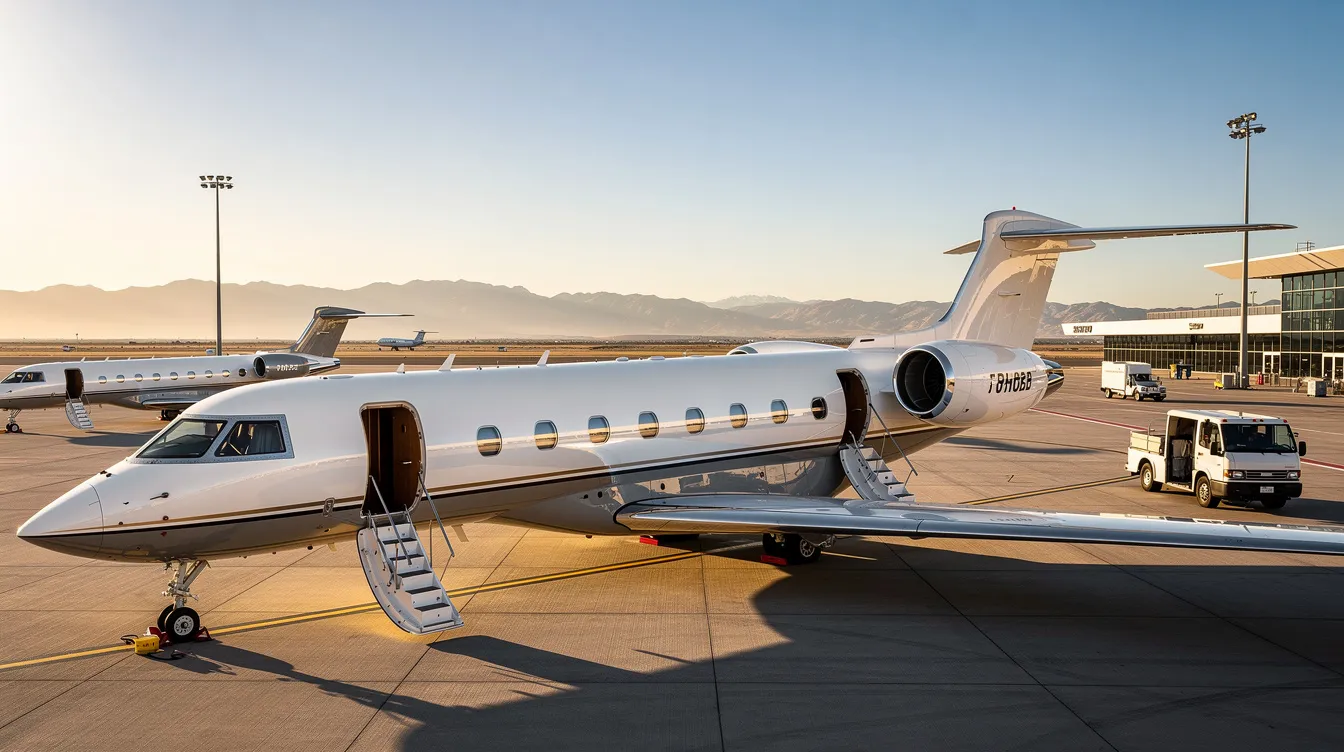
From Wright Brothers to Jet Age: A Brief History of Jets and Airplanes
The story begins with the Wright brothers’ first flight in 1903 at Kitty Hawk, the beginning of modern fixed-wing aircraft.
Early aircraft were piston aircraft, often used for private aviation and training today, with reciprocating engines and propeller propulsion.
Jet engine concepts matured in the 1930s and 1940s.
The first operational jet fighter was the Me 262, 1944; the Me 262 entered operational service in April 1944 and achieved its first combat victory, marking a new era for jet fighters.
The first commercial jet service began in 1952 as the de Havilland Comet began entering service on London–Johannesburg, and BOAC operated the early service.
Jet aircraft reshaped the world because jets fly faster, fly higher, and cover longer distances than most propeller aircraft, allowing them to transport passengers and cargo over longer distances.
Jet Engines vs Propeller Planes: How They Really Differ
Jet engines operate by compressing air, mixing it with fuel, igniting the mixture, and producing thrust through the forceful expulsion of high-speed jet exhaust gases, which means jets are propelled forward by that exhaust. A turbojet, turbofan, turboprop, ramjet, and other jet engine types represent different approaches, with a turbofan using a fan around the engine core. High-bypass turbofan engines are optimized for fuel efficiency in jets, and turbofan aircraft became predominant in the 1960s for efficiency.
Piston or turboprop engines power propeller airplanes, which are propelled by spinning blades. Piston planes use reciprocating engines while turboprops use jet turbine engines. Propeller planes usually cruise at speeds of 100–200 mph; propeller airplanes fly at altitudes typically below 20,000 feet, and propeller planes typically fly 15,000 feet below.
Jets typically cruise at speeds of 400–600+ mph. Jets fly at altitudes of 35,000–45,000 feet. Jets are designed for high-speed, high-altitude flight and often near the speed of sound. Propulsive efficiency explains the difference: efficient propulsion matches aircraft speed, air movement, and exhaust velocity.
For New York–London, jets are ideal for long-distance travel and international flights. For Los Angeles–Las Vegas, for example, turboprop planes may be suited to short flights. For New York–San Francisco, jets are optimized for speed and comfort over long distances.
Comparison Table: Jets vs Propeller Planes
Feature | Jets | Propeller Planes |
|---|
Engine Type | Turbojet, Turbofan, Turbojet | Piston, Turboprop |
Typical Cruise Speed | 400–600+ mph | 100–200 mph |
Typical Altitude | 35,000–45,000 feet | Below 20,000 feet |
Range | Over 5,000 miles | Up to 1,500 miles |
Runway Requirements | Longer runways | Shorter runways |
Flight Use | Long-haul, international, high-speed | Short-haul, regional, training |
Passenger Capacity | 4–16+ (private jets), 100+ (commercial jets) | Usually fewer passengers |
Fuel Efficiency | Optimized for high altitude | More efficient at low altitude |
Noise Level | Generally quieter at cruise | Louder propeller noise |
Types of Jet Aircraft in Modern Aviation
Aircraft are classified by their propulsion system and mission. The main types of jet aircraft include:
Military jets: speed, altitude, maneuverability, rapid response.
Commercial jets: mass transport for the airline industry.
Business and private jets: privacy, flexible routing, tailored cabins.
Commercial jets include Boeing and Airbus aircraft, while business jet manufacturers include Gulfstream, Bombardier, Dassault, Embraer, andCessnaa.
Military Jet Aircraft
The Me 262 and Gloster Meteor showed how jet fighters changed military aviation. Fighter jets reach speeds of Mach 2.0 to Mach 2.8, and many fighter jets feature thrust-vectoring nozzles for maneuverability.
The fastest military jet is the SR-71 Blackbird at Mach 3.35; the fastest military jet aircraft remains a benchmark for altitude, materials, and engine development. Military priorities improved navigation, safety systems, avionics, and engine capabilities that later influenced private jets. Read more about the Me 262 from the National Museum of the U.S. Air Force.
Commercial Jet Aircraft
The first commercial jet service began in 1952 with the de Havilland Comet, whose first commercial jet service opened the jet airliner era. The Boeing 707, entering service in 1958, helped standardize swept wings and underslung engines.
Commercial jets typically carried 100–200+ passengers per flight in service. Jets are essential for long-haul commercial flights because they are capable of speed, range, and high-altitude comfort. The Tu-144 was the fastest commercial jet at Mach 2.35 in 1975, and Concorde made supersonic flight famous from 1976 to 2003, though noise and efficiency limited the model.
Business Jets and Private Jets
Business jets and private jets are jet aircraft configured for smaller groups, flexible airports, and a smoother ride. Light jets may carry 4–8 passengers; larger cabin jets can carry 10–16+ passengers, with Wi-Fi, lie-flat seats, premium catering, and quiet cabins.
Examples include light jets such as the Cessna Citation CJ4, midsize jets for regional business, and large-cabin aircraft capable of nonstop transatlantic travel. BlackJet gives members curated access across cabin class options and different types of private jets without forcing ownership or ad-hoc charter negotiation.
Propulsive Efficiency and Performance in Real Travel
Propulsive efficiency is how well an engine turns fuel into forward motion. High-bypass turbofan jet engines are efficient at cruise, while turboprops can be more efficient on low-altitude, short-haul regional flights.
The Breguet range idea is simple: speed, fuel burn, aerodynamics, and weight determine range. Private jets can fly over 5,000 miles nonstop. These capabilities sit within a broader private jet price and aircraft options landscape where jets can fly over 5,000 miles, while turboprops fly up to 1,500 miles. Propeller planes are limited to about 1,500 miles.
That is why a large jet can link New York and London nonstop, while a turboprop may shine on a short regional hop to a runway closer to the final destination.
Jets vs Propeller Planes: Choosing the Right Aircraft Type
The key differences are mission requirements: speed, range, runway, comfort, and cost. Jets use jet engines; propeller aircraft use piston or turboprop power. For some missions, more economical private aircraft and turboprops require shorter runways than jets and can serve remote islands, Alpine airfields, or rural business destinations.
Jets typically cruise at 400–600+ mph, while propeller airplanes are suitable for short-haul regional flights. Propeller airplanes cruise at 100–200 mph. Jets can fly over 5,000 miles, making them the right aircraft for international schedules.
BlackJet helps match trip profiles to aircraft type through expert support and digital tools, so members choose by outcome, not guesswork.
Inside a Private Jet: Experience vs Commercial Airliners
Commercial aircraft, such as an Airbus A320 or Boeing 737, are built for scale. A private plane is built for control. The journey usually begins at an FB with drive-up access, streamlined security, rapid boarding, and flexible landing choices.
A CEO flying from New York to London can work privately overnight, sometimes in a high-performance $15 million private jet. A family flying from Los Angeles to Jackson Hole can bypass crowded hubs and move directly toward the mountains. BlackJet members receive consistent service, curated catering, and 24/7 support across destinations.

BlackJet Jet Cards: Smarter Access to Private Jets
A Jet Card is prepaid access to private jets, commonly through 25-hour or 50-hour blocks. It sits between charter and ownership: more predictable than one-off charter, far less complex than owning an aircraft, with jet card costs and structures designed for predictability.
With BlackJet, members select cabin class, book through mobile or desktop, and flight hours are debited transparently. Use cases include executives flying monthly from New York to Chicago or families traveling seasonally from London to the Mediterranean. The result is flexibility, consistency, and no need to renegotiate every flight, particularly with the BlackJet 25+ Hour Jet Card.
Safety, Certification, and Reliability in Private Jet Travel
Private aviation safety depends on operator quality, training, maintenance, and oversight. In the U.S., paid charter operations follow FAA Part 135 standards. Private jets maintain a strong safety record overall, and BlackJet prioritizes vetted operators, ARG/US, Wyvern, or equivalent certification programs, dual-pilot jet operations, recurrent training, and simulator checks.
Operational support monitors weather, alternates, routing, and ground coordination. Redundant avionics and jet engines help manage risk, while private jets can often divert more flexibly than large airliners.
Sustainability and the Future of Jet Aircraft
Jet fuel creates CO₂, especially on long-haul jet aircraft flights. Modern jets improve efficiency through high-bypass turbofan, turbojet, aerodynamic refinement, and structures often made of carbon composites.
Sustainable aviation fuel can reduce lifecycle CO₂ emissions by up to about 80% compared with conventional Jet-A, according to IATA. BlackJet ensures carbon-neutral flights through offset programs and sustainability integration built into Jet Card travel at no extra effort to members.
Hybrid-electric and electric development will likely begin with smaller propeller planes and regional jets before scaling.
How BlackJet’s Technology Simplifies Private Jet Travel
BlackJet’s platform lets members search by route and date, view aircraft categories, confirm trips, and store preferences for catering, ground transport, frequent airports, and cabin class. Real-time support handles schedule changes, re-routing, and proactive updates.
Unlike a purely manual charter process, technology gives visibility within seconds and complements the best jet card options for frequent flyers. The interface works like a refined modal window: members can review options, use the close button, press the escape key, or close the modal dialog; closing the modal dialog is simply accessibility language behind an effortless travel experience.
FAQ: Jets, Airplanes, and Private Jet Access with BlackJet
Is every jet an airplane, and every airplane a jet?
For heavy users flying frequently, a 100-hour jet card cost analysis can clarify whether larger hour blocks make sense. No. A jet is an airplane powered by jet engines; propeller planes and turboprops are airplanes with different propulsion.
How far in advance should I book with BlackJet?
Understanding jet card cost per hour also helps align booking patterns with budget and availability. Many trips can be arranged same-day, but 7–14 days is better. Peak periods require earlier planning.
Are private jets safer than small propeller planes?
Owners and users should also consider jet card tax deduction strategies when structuring private flying for business. Safety depends less on engine type and more on certification, maintenance, crew training, and operator standards.
Can private jets land closer to my home or office?
For occasional travelers, a 25-hour jet card structure can balance access to convenient airports with predictable costs. Often, yes. BlackJet evaluates airports, runway length, fuel, customs, landing rules, and aircraft performance.
How does BlackJet keep flights carbon neutral?
Transparency around jet card pricing components makes it easier to see how sustainability, offsets, and fuel choices fit into the total program cost. BlackJet integrates carbon offsets and, where available, SAF options into member travel.
Conclusion: Elevating How You Use Jets and Airplanes
Jets and airplanes differ by engine, speed, range, altitude, and purpose. For frequent travelers, private jets accessed through a Jet Card become a strategic asset: faster movement, greater privacy, refined service, and better control.
Explore BlackJet’s Jet Card programs to experience premium private jet access with safety certification, carbon-neutral performance, and technology-enabled convenience built in.


 Sign up with google
 Sign up with Apple