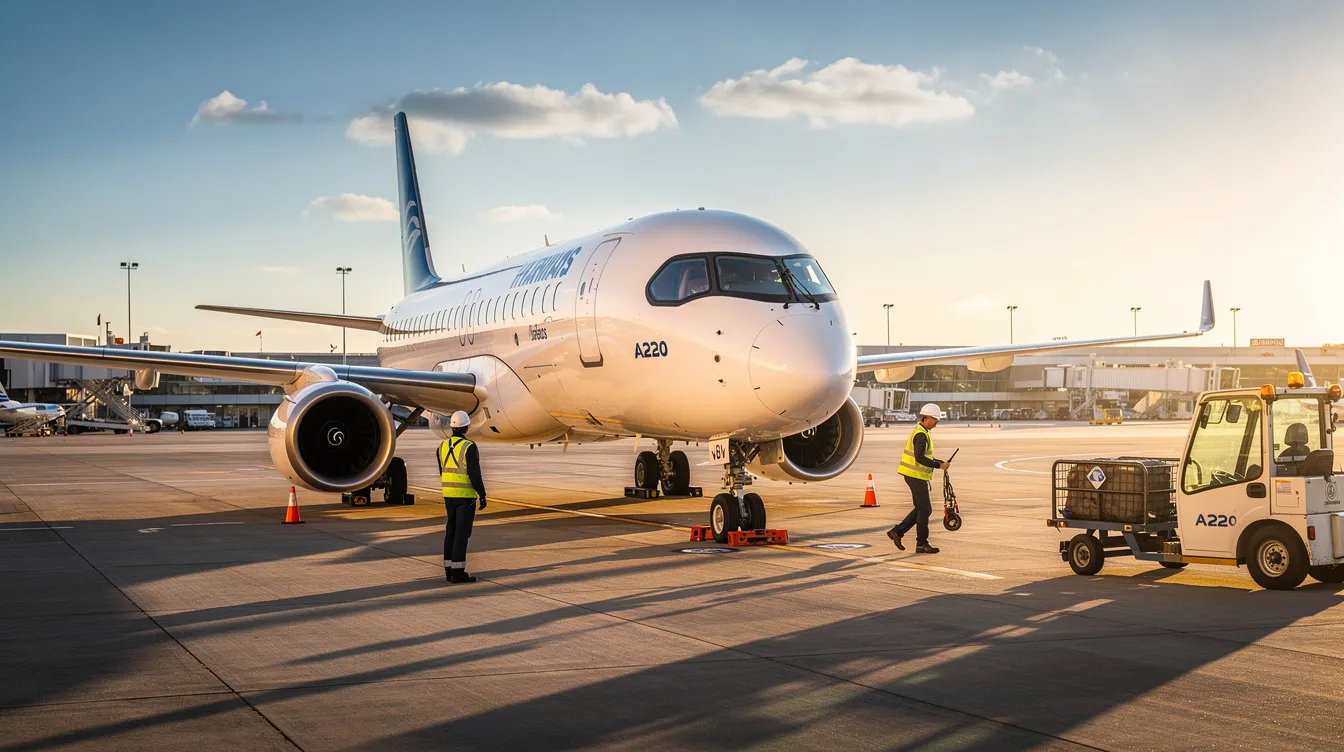
JetBlue pilots are in strong demand through 2026, and getting hired typically means bringing far more than the minimum 1,500 flight hours, along with an FAA airline transport pilot certificate and a first-class medical certificate. JetBlue remains one of the most sought-after airlines for pilots in the United States, and with fleet modernization accelerating and retirement-driven attrition climbing, the airline is actively building its pilot ranks through 2026 and beyond.
For aspiring aviators trying to gauge their odds and plan the right path, and for frequent travelers comparing commercial airline service with private jet access, this guide breaks down what it takes to land a JetBlue first officer seat, how the hiring and training process works, what the job actually looks like day to day, how pay and union negotiations shape the role, and how commercial airline flying compares to the world of private aviation.
Key Takeaways for Aspiring JetBlue Pilots
JetBlue pilots remain in strong demand heading into late 2026, driven by fleet deliveries, network expansion, and a wave of mandatory retirements. For travelers weighing the commercial experience against private aviation options like BlackJet Jet Cards, understanding how these pilot careers work offers valuable context.
JetBlue plans to continue hiring pilots through 2026 and beyond, fueled by fleet modernization with A220-300 and A321neo deliveries and growing route diversity across the U.S., Caribbean, Latin America, and Europe.
Minimum qualifications for most pilot positions include 1,500 total flight hours, an FAA airline transport pilot certificate, and a current first-class medical certificate, but successful candidates typically exceed these minimums significantly.
JetBlue pilots are represented by ALPA and have been engaged in ongoing contract negotiations with JetBlue Airways leadership since April 2024, with key issues including pay raises and improved retirement benefits.
Commercial airline life offers structured career progression, seniority-driven schedules, and competitive compensation, while private jet flying provides on-demand flexibility, smaller cabins, and direct interaction with premium clients across different types of private jets.
The airline maintains a fleet of roughly 291 aircraft and employs approximately 4,700 active pilots, making it one of the larger non-legacy carriers in the aviation industry, though it still operates far fewer seats per flight than large-cabin options designed as the best private jet for 20 passengers.
JetBlue Airways Overview & Pilot Bases
JetBlue Airways is a U.S. low-cost carrier headquartered in Long Island City, New York, operating roughly 1,000 daily flights in 2026. The airline's brand mission to inspire humanity through air travel shapes a culture built on core values of safety, caring, integrity, passion, and fun, and JetBlue has a strong emphasis on teamwork and communication among its pilots.
Pilots are assigned to specific bases, including major cities like New York (JFK), Boston (BOS), Fort Lauderdale (FLL), Los Angeles (LAX), Orlando (MCO), and San Juan (SJU). Base selection directly impacts commuting, quality of life, and roster patterns.
The current fleet consists of approximately 291 aircraft: 129 A320-200s, 101 A321s (including neo and LR variants), and 61 A220-300s.
JetBlue's network includes high-density domestic routes plus transatlantic routes from New York and Boston to London and select European cities, creating both short-haul and international operations opportunities for pilots.
The airline's seatback entertainment, customer service culture, and relaxed but safety-driven environment set pilot expectations: technical qualifications matter, but so does your ability to connect with passengers and crew.

JetBlue Pilot Hiring Volume and Outlook Through 2026
JetBlue is processing hundreds of pilot applications per quarter as it replaces retiring aviators and adjusts staffing to match fleet changes. This is among the largest sustained hiring cycles in JetBlue's history, though it has been less smooth than the predictable pipelines at legacy carriers.
Retirement projections suggest roughly 44 pilots will reach mandatory retirement age in 2026, rising to 85 in 2027, 109 in 2028, and 142 in 2029, according to pilot seniority data. These numbers drive a significant portion of hiring demand.
Fleet growth from A220 and A321neo deliveries, offset by Pratt & Whitney engine constraints that have temporarily grounded some aircraft, has created a choppy hiring pattern: strong periods followed by reduced class dates.
Geographic trends show more new hires heading to Fort Lauderdale and Orlando bases compared to traditional JFK and BOS assignments, particularly those entering on A220 fleets.
Hiring forecasts remain subject to change based on fuel costs, macroeconomic trends, and the outcome of contract negotiations. Prospective candidates should track updates via JetBlue careers announcements and ALPA communications.
Updated JetBlue Pilot Requirements and Minimum Qualifications
There is a meaningful gap between official minimums and what competitive candidates actually bring to the table in 2026. Understanding both gives you a realistic picture of where you stand.
A first officer position at JetBlue requires an FAA airline transport pilot certificate with 1,500 total flight hours minimum, excluding simulator time, plus a current first-class medical certificate and eligibility for international air travel with a valid U.S. passport.
Competitive profiles typically show over 2,200 to 2,400 total flight time, significant turbine and PIC time, and a high proportion with prior Part 121 or Part 135 flight experience. Candidates with turbine helicopter backgrounds or flight engineer experience can also transition, though fixed-wing time is strongly preferred.
While a four-year degree is not formally required - a general education development credential or high school diploma is sufficient - 89% of 2024 hires held bachelor's degrees or higher, often from aviation programs like Embry-Riddle, UND, Auburn, or Purdue. Additionally, 67% of hired pilots had previous Part 121 experience, and some eventually explore cabin-side careers such as roles with a private jet stewardess salary that reflects ultra-premium service expectations.
Background screening is rigorous: a clean FAA record with no significant enforcement actions, thorough criminal and employment checks, and PRIA reviews are all part of JetBlue's safety-first hiring approach.
Applicants should prepare three reference letters and ensure logbooks are current, organized, and accurately reflect the candidate's flying skills and flight hours.
Fleet, Type Ratings, and Aircraft Assignments
Type ratings and prior aircraft experience influence both the selection process and how quickly a new hire moves through training. Here is what matters.
JetBlue prefers pilots with Airbus A320 family type ratings, though a type rating is not required at the time of application. The airline provides type rating training for all new hires during an approximately six-week program, while many private aviators instead build time with leading private jet companies for luxury travel that operate diverse fleets under different access models.
An experienced pilot with A320, ERJ, or CRJ backgrounds may find a smoother transition and potentially stronger interview odds due to reduced training overhead.
Fleet assignment for new first officers typically starts on the A320 or A220, depending on base demand and company needs. A "seat lock" period of roughly two years applies before pilots can bid for another fleet.
Pilots transitioning from rotary-wing, turboprop, or regional jet backgrounds face steeper initial training but are actively recruited through standard and Gateway pathways.
Pilots participate in recurrent training and simulator work to maintain proficiency, and all new hires receive extensive training in crew resource management in addition to technical skills.
JetBlue Gateway Programs and Pathways to the First Officer Seat
JetBlue offers alternative pilot entry programs such as Gateway Select and Gateway University, forming one of the most structured ab initio pipelines among U.S. airlines. These programs create a defined path from zero experience to a JetBlue first officer seat.
Gateway Select is designed for candidates with little or no flight training and takes approximately 3.5 years. It covers private pilot through ATP certification with mentorship and ends with a conditional job offer as a JetBlue first officer, a very different path from entering private aviation as a traveler through premium private Jet Card programs.
Gateway University partners with AABI-accredited schools through the JetBlue University orientation pathway, where students earn aviation degrees, build time as CFIs, gain regional airline experience, and transition into JetBlue pilot positions via defined milestones.
Gateway Flex and the Gateway Family program serve JetBlue crewmembers and their family members, allowing them to pursue pilot careers on flexible timelines with up to five years to complete requirements, mirroring the flexibility frequent flyers seek in unlimited private jet flight memberships.
Gateway RTP supports U.S. military rotary-wing aviators transitioning to fixed-wing Part 121 operations, helping them build time and convert to airline flying.
New pilots must complete training at JetBlue University in Orlando, Florida, regardless of pathway. All programs aim for at least 1,500 hours of flight time and an ATP, offering conditional job offers that reduce career uncertainty compared to independent flight training.
Selection Process, Interviews, and Application Timing
The hiring process for JetBlue pilots includes a rigorous multi-part interview and training sequence. Understanding the flow helps you prepare effectively and avoid common delays.
The typical selection process runs: online application, initial HR and technical screening, Assessment and Interview Day (AID), background checks, and assignment to a new-hire class date.
AID takes place in Long Island City and includes cognitive assessments, technical questions about systems and procedures, HR behavioral questions focused on safety, integrity, and teamwork, and group scenario exercises simulating irregular operations.
JetBlue evaluates how you collaborate under pressure. They look for leadership without dominance, clear communication, and practical solutions - specific examples from your flight experience carry weight here.
The application process averages 8 to 12 weeks from submission to class date, though busy seasons and simulator availability can extend timelines. Historically, Q1 and Q4 intakes show faster processing.
Keep logbooks, reference letters, and your medical certificate current. Track official openings through the JetBlue careers portal and monitor ALPA updates to stay ahead of the process, just as savvy travelers track affordable private plane rideshare options that can complement or replace certain commercial trips.
Pilot Pay, Contract Negotiations, and Quality of Life
JetBlue pilot pay is governed by an ALPA-negotiated collective bargaining agreement, with hourly rates determined by seat, aircraft type, and years of service. The average pilot salary at JetBlue is approximately $235,000 annually across all ranks.
First-year JetBlue pilots earn $89 per hour. Second-year pay increases to $99 per hour. Captains can earn up to $234 per hour by year 12. JetBlue pilots typically work 70 to 80 guaranteed block hours monthly.
Benefits include free standby travel for pilots and their families, unlimited positive-space travel for family members, comprehensive medical, dental, and vision coverage, and Loss of License insurance. Pilots accrue approximately six hours of paid time off monthly and receive per diem rates of $2.00 to $5.00 per hour while on duty, perks that many high-earning travelers instead trade for the predictability of a jet card private membership.
Quality-of-life protections under FAR Part 117 ensure minimum rest, with around 12 days off per month as a baseline. Seniority drives bidding for preferred schedules, vacation, and routes.
JetBlue does not hire direct-entry captains; all are promoted internally. A new captain earns the rank through seniority and internal upgrade, reinforcing long-term career progression within the airline.
While candidates often make this choice through a comparative analysis of pay, benefits, schedules, and long-term career stability, JetBlue offers stable income and predictable structures; some high-net-worth travelers and corporate flyers choose private jet access via Jet Card programs for flexibility and time savings rather than scheduled airline service.
Life as a JetBlue First Officer: Bases, Routes, and Layovers
A typical day for a JetBlue first officer blends technical precision with customer-facing service across a varied route network. JetBlue pilots may experience varied schedules and travel to domestic and international locations.
Junior first officers commonly fly high-frequency domestic pairings from JFK and BOS, Caribbean and Latin America service from Fort Lauderdale and Orlando, and occasional transatlantic routes from East Coast hubs. A sample three-day pairing might look like BOS–MCO–San Juan–BOS.
Popular layover destinations include San Juan, Cancún, Punta Cana, and London. Per diem and contracted crew hotels factor into both lifestyle and total earnings.
Seniority impacts everything: more senior pilots bid for preferred trips, longer layovers at leisure destinations, and commutable lines. New hires may initially face more reserve assignments or less desirable pairings.
JetBlue's values-based culture expects pilots to blend technical excellence with a customer-friendly demeanor, particularly those who can personally attest to the airline's service standards through flight deck PA announcements and during irregular operations.
JetBlue Pilots, ALPA, and Industrial Relations
ALPA serves as the collective bargaining representative for JetBlue's pilot group, handling contract negotiations, safety advocacy, and grievance processes on behalf of approximately 4,700 aviators.
The JetBlue Master Executive Council (MEC) manages airline-specific issues including pay proposals, scheduling protections, and direct communication with the pilot group during contract talks through the PilotForward initiative.
JetBlue pilots have been negotiating a new contract since April 2024. No new contract has been finalized as of early 2026. The current contract was last updated in 2022, and key issues remain pay raises and improved retirement benefits. ALPA leadership was re-elected in September 2025 to continue negotiations.
Recent industrial context includes engine groundings, captain downgrades on certain fleets, and voluntary early retirement programs that have influenced career progression and base stability for the pilot group.
While unionization helps secure better competitive compensation and protections, extended negotiation periods create uncertainty about future pay scales and work rules - a reality every prospective pilot at JetBlue should weigh.
Commercial Airline Pilot vs Private Jet Pilot: Strategic Travel Perspective
The difference between flying as a JetBlue pilot on scheduled routes and flying private jets reveals two distinct career philosophies - and two very different travel experiences for passengers. Understanding both sides helps frame what private aviation optimizes against.
JetBlue pilots operate larger aircraft on fixed schedules with standardized rosters, union contracts, and a seniority number that governs nearly every aspect of their professional life. It is a structured dream job for many, offering clear career progression from first officer to captain, and it contrasts with the à la carte economics outlined in a typical private jet price list.
Private jet pilots (Part 135 or corporate) fly smaller cabins across light, midsize, and large jet categories, with on-demand itineraries, more varied destinations, including secondary airports, and closer client interaction. The trade-off is less seniority structure and fewer contractual protections.
From the traveler's perspective, high-net-worth individuals who might otherwise fly Mint or premium cabins on JetBlue often choose private jet access via Jet Card programs for time savings, privacy, and direct routing to airports closer to their homes or offices, comparing the best jet cards for frequent flyers much the way pilots compare airlines.
Both commercial and reputable private operators maintain strict safety and certification standards. BlackJet ensures every journey is carbon-neutral, aligning with corporate ESG policies - a standard that complements, rather than replaces, the airline industry's own sustainability efforts, especially when clients evaluate jet card pricing structures alongside environmental commitments.
Frequently Asked Questions About JetBlue Pilots
What are the minimum flight time requirements for JetBlue pilots? JetBlue mandates a minimum of 1,500 total flight hours, possession of an FAA ATP certificate, and a valid first-class medical certificate. However, competitive candidates typically have over 2,300 hours, including substantial turbine and pilot-in-command experience, excluding simulator time. Competitive applicants often exceed 2,300 hours with significant turbine and PIC time, excluding simulator hours from the total.
How long does the JetBlue pilot application process take? The typical timeline runs 8 to 12 weeks from application submission to class date, covering screening, interview day, background checks, and training assignment. Seasonal volume and simulator availability can shift this window.
Does JetBlue require a college degree for pilot positions? No degree is formally required. However, 89% of 2024 hires held bachelor's degrees or higher, and aviation degrees from partner institutions offer a competitive edge through the Gateway University pathway.
How quickly can I upgrade from first officer to captain at JetBlue? Historically, JetBlue pilots could expect captain upgrades within 3 to 5 years during high-growth periods, with current captain upgrade timelines averaging 42 months for E190 fleets. However, upgrade timelines for new hires are now estimated at 8 to 12 years depending on fleet and attrition. The most junior captain at JetBlue currently holds approximately 72% seniority.
Where can I find official JetBlue pilot career information? Visit the official JetBlue careers portal and Gateway websites for current job opportunities and program details. For contract and industrial updates, monitor ALPA's JetBlue MEC communications.
Conclusion: Navigating the JetBlue Pilot Path and Private Aviation Alternatives
JetBlue pilot careers in 2026 represent a compelling opportunity within a dynamic and evolving commercial airline environment. With strong hiring demand driven by fleet modernization, retirements, and network growth, aspiring pilots face a competitive landscape that rewards higher experience levels, cultural alignment, and technical proficiency. While the path to captaincy may extend to 8 to 12 years for new hires, the structured progression, comprehensive benefits, and international flying opportunities make JetBlue a desirable destination for many aviators.
For travelers and pilots alike, understanding the contrasts between commercial airline flying and private jet operations highlights the strategic advantages of each. JetBlue offers reliable, scheduled service with a values-driven culture and broad route network, while private jet access through programs like BlackJet’s Jet Cards provides unparalleled flexibility, privacy, and direct routing tailored to the discerning traveler.
As the aviation industry continues to evolve with advances in safety, sustainability, and technology, pilots and passengers benefit from these innovations, whether flying scheduled or private. For those evaluating career options or premium travel solutions, exploring both worlds with informed insight ensures the best fit for lifestyle, goals, and expectations.
Discover how BlackJet can elevate your travel experience with premier private jet access, carbon-neutral flights, and seamless digital booking—offering a distinct complement or alternative to commercial airline journeys.
For travelers interested in experiencing something beyond scheduled flights - whether you are a pilot exploring the industry or a frequent flyer seeking flexibility - consider exploring how private jet travel works and the benefits of private jet access through BlackJet's Jet Card programs. As you compare options, look at how jet card cost per hour is structured, what it takes to buy a seat on a private jet, and how a 100-hour jet card cost compares with a 50-hour jet card cost. Luxury owners weighing JetBlue against full ownership can review the best 10 million dollar private jet options or the top features of a 15 million dollar private jet, and travelers loyal to specific providers may focus on Flexjet jet card cost or NetJets jet card pricing. Even budget-conscious flyers can explore the cheapest private jet options as part of this decision set.


 Sign up with google
 Sign up with Apple