Note: This page covers both private jet travel options in South Africa and provides information about Jet, the discount clothing and footwear retailer with locations in major cities such as Johannesburg, Pretoria, and Cape Town.
Whether you are searching for premium private jet travel options or information about Jet, the popular South African clothing retailer, this guide provides clear answers for both.
Private jet access in South Africa is not simply a luxury; it is a strategic advantage for executives, investors, families, and discerning travelers who value time, privacy, and control. This page also clarifies the difference between private jet services and Jet, the well-known South African clothing retailer. A Johannesburg–Cape Town journey can take 6+ hours door to door on commercial flights once check-in, security, boarding, baggage, and transfers are included, while private jet travel can reduce the same mission to roughly 3–3.5 hours.
Why Private Jet Access in South Africa Is a Strategic Advantage
South Africa’s premium travel market is shaped by high-frequency business routes, remote resource sites, and world-class leisure destinations. Executives shuttle between Johannesburg, Cape Town, and Durban; mining and energy teams need direct access to remote airfields; families fly to the Winelands, Kruger, and the Garden Route without building an entire day around airport queues.
BlackJet provides Jet Card and private charter access around key hubs, including Johannesburg, Cape Town, Lanseria, Durban, and regional gateways into Namibia, Botswana, Mozambique, and beyond. This guide explains how Jet Cards work, when charter makes sense, which aircraft fit South African routes, and why safety, sustainability, and technology should define every premium flight, reflecting the broader BlackJet premium private jet services and Jet Card programs.
How Jet Cards Work in South Africa
A Jet Card is a prepaid block of occupied flight time, often 25 or 50 hours, giving members guaranteed access to private aircraft at fixed or capped hourly rates. BlackJet’s Jet Card programs are created for frequent travelers who fly several times per year between South African cities and regional African destinations.
Typical options include:
The South African advantage is predictability: locked-in hourly pricing in ZAR or USD that aligns with Jet Card cost per hour considerations, transparent billing, fewer surprises around repositioning between Johannesburg and Cape Town, and priority access during December, Easter, and major-event peaks. BlackJet members also receive 24/7 concierge support, digital booking tools, real-time flight status, and a clear log of hours flown and remaining.
Compared with an ad-hoc charter, a Jet Card offers greater cost certainty and preferred availability, especially for travelers who want a clear view of overall Jet Card membership pricing. Compared with ownership, it avoids aircraft financing, hangarage, crew costs, depreciation, and maintenance exposure. For travelers flying 25–100 hours annually, the balance is compelling: many ownership-style benefits without asset risk.
Jet Card Options Overview
Jet Card Tier | Flight Hours | Aircraft Access | Ideal For | Pricing Currency |
|---|
25-Hour Regional | 25 | Light and Midsize Jets | Frequent regional travel, short hops | ZAR / USD |
50-Hour Multi-Cabin | 50 | Light, Midsize, and Large Jets | Business teams, families, varied missions | ZAR / USD |
100-Hour Long-Range | 100 | Multi-cabin, including long-range jets | Very frequent flyers, international travel | ZAR / USD |
Private Jet Charter in South Africa: From Johannesburg to Cape Town and Beyond
On-demand charter works well for travelers who want premium access but are not yet ready for a Jet Card. Private jet travel is highly accessible for travelers prioritizing schedule flexibility, privacy, or direct routing to safari destinations.
BlackJet arranges charter from O.R. Tambo International Airport, Lanseria International Airport, Cape Town International Airport, King Shaka International Airport, Port Elizabeth/Gqeberha, Skukuza, and Kruger Mpumalanga, with pricing based on the same core factors explained in guides to private jet charter pricing and cost drivers. Charters typically operate out of major airports with dedicated VIP and FBO services, such as Lanseria International Airport, Cape Town International Airport, and King Shaka International Airport. Private operators primarily bypass main terminals by utilizing Fixed-Base Operators (FBOs) at major airports or dedicated business airfields.
Popular missions include:
Johannesburg–Cape Town for board meetings.
Johannesburg–Durban for corporate and coastal travel.
Cape Town–Kruger for safari access.
Johannesburg–Gaborone, Windhoek, Maputo, or Lusaka for regional business.
A CEO might leave Johannesburg early, land near Cape Town, meet the board, review documents in a private cabin, and return the same evening. A family might depart Cape Town with photographic gear, land closer to the Sabi Sand, and avoid a long drive after arrival.
The process is straightforward: request a quote, select aircraft size, confirm schedule, and add ground transfers to Sandton, the V&A Waterfront, Constantia, or the Cape Winelands. Once a traveler begins flying repeatedly, for example, three Johannesburg–Cape Town returns per month, a Jet Card often becomes the better structure.
Aircraft Categories and Cabin Classes for South African Routes
Turboprops such as the Pilatus PC-12 and Beechcraft King Air 200 are ideal for shorter runways near safari lodges and regional sites. A King Air 200 can cover roughly 1,900–2,500 km depending on conditions, while a PC-12 offers strong short-field performance and practical cabin access.
Light jets such as the Cessna Citation CJ2 or Bombardier Learjet 45 suit fast domestic and regional flights. The Learjet 45 has a published range of about 3,795 km with a light passenger load, enough for many Southern African city pairs.
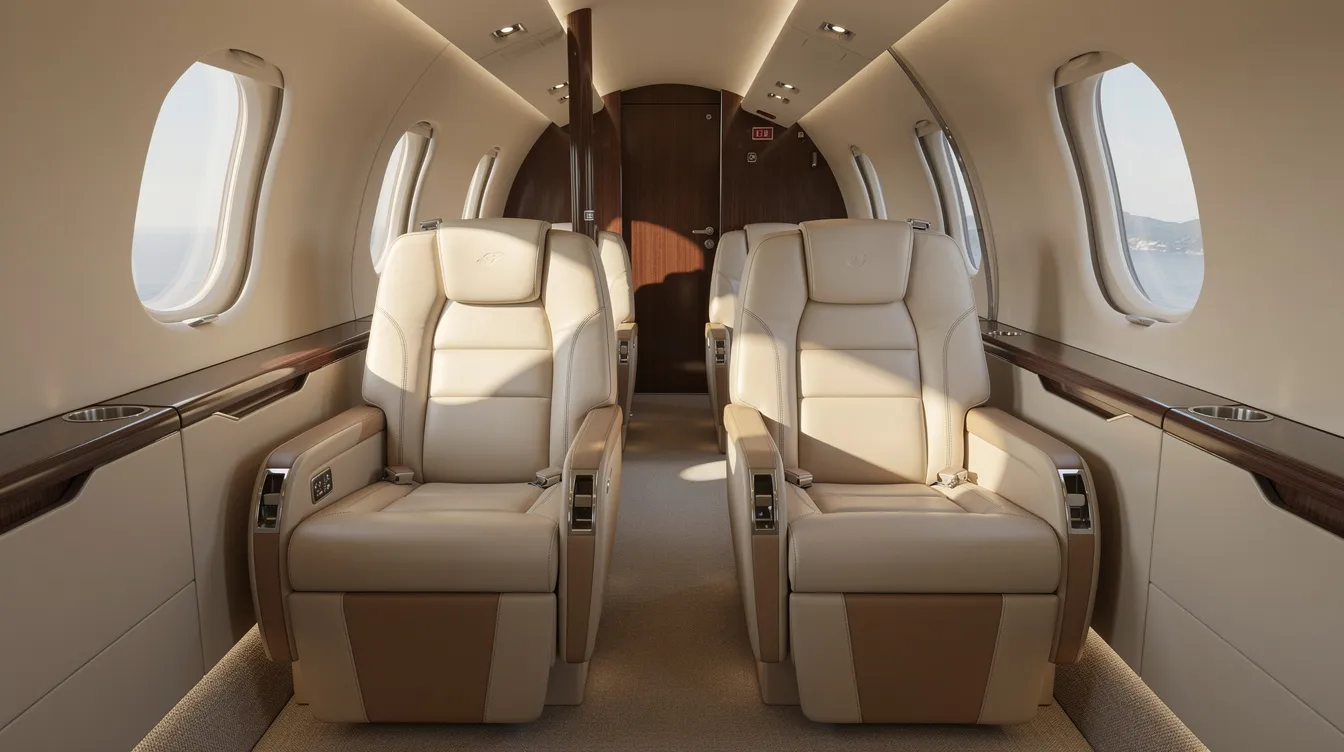
Midsize jets such as the Hawker 800XP offer more cabin comfort for Johannesburg–Cape Town with 6–8 passengers, often including better luggage space, Wi‑Fi, and a stand-up or near-stand-up cabin feel, while larger aircraft can support private jet travel for groups of around 20 passengers on corporate or leisure missions. Large and long-range jets such as a Gulfstream G450 serve international missions, including Europe, the Middle East, and multi-stop Africa itineraries.
At each Jet Card level, aircraft access matters. A light-jet-only card may be efficient for routine hops, while a multi-cabin card lets members right-size the aircraft for business teams, families, special baggage, or long-range travel, similar to how the best Jet Cards for frequent flyers emphasize matching aircraft type to mission profile.
Safety and Certification Standards in South African Private Aviation
Safety is the non-negotiable foundation of every BlackJet flight in South Africa and across the region. Operators must comply with the South African Civil Aviation Authority, while international safety benchmarks such as ARGUS, Wyvern, and IS-BAO may also inform operator vetting.
BlackJet uses carefully screened operators and crews, with attention to pilot hours, type ratings, recurrent training, maintenance schedules, and aircraft documentation. Before a Johannesburg–Cape Town mission, flight teams assess weather, aircraft performance, fuel planning, weight and balance, alternates, and passenger requirements.
This disciplined screening separates BlackJet from informal broker models. If Cape Town winter fog or strong coastal winds affect arrival planning, BlackJet can proactively advise the passenger, adjust departure time, consider George or Gqeberha as alternates, rebook ground transport, and provide updates before the traveler reaches the entrance of the FBO.
Sustainable and Carbon‑Neutral Private Flights in South Africa
Sustainability is now central to private aviation. BlackJet commits to making every Jet Card flight carbon neutral at no additional cost to the cardholder through verified carbon offset projects.
Offsets are calculated by sector and flight time, then applied to projects such as Southern African reforestation, clean cooking initiatives, or renewable energy programs. Private jets can emit more CO₂ per passenger than commercial business class, but responsible operators reduce impact through direct routings, right-sized aircraft, efficient planning, and offsets.
Sustainable aviation fuel remains limited in South Africa, but Johannesburg and Cape Town are important future nodes as the SAF supply chain develops. BlackJet will prioritize SAF wherever practical, helping executives and families align premium travel with ESG expectations.
Technology, Booking Experience, and Jet Card Management
BlackJet’s digital platform gives members 24/7 access to route planning, availability checks, secure payment, itinerary management, and account visibility. Members can review Johannesburg–Cape Town, Cape Town–Windhoek, or Durban–Lanseria options, then monitor hours flown, hours remaining, statements, invoices, and flight histories.
For example, a meeting in Cape Town runs late, and the traveler needs a same-day return to Johannesburg. Through BlackJet support, the member can request a schedule change, arrange catering, confirm golf bags or safari photos equipment, and coordinate a car from Sandton, Constantia, or the Winelands. Passenger manifests, payment details, and travel data are handled discreetly for high-profile clients.

BlackJet vs Traditional Jet Stores and “Jet Shop” Models in South Africa
Jet is a discount clothing and footwear retailer that caters to families in Southern Africa, focusing on providing good quality, affordable fashion. Jet has multiple store locations across South Africa, including major cities like Johannesburg, Pretoria, and Cape Town. The Jet store in Johannesburg is located at Carlton Center, which is a prominent shopping destination in the city. Jet stores operate in various shopping centers throughout South Africa, providing accessibility to a wide range of customers. Jet offers stylish and fashionable clothes within a family-friendly budget, making it accessible for a wide range of consumers. The brand aims to serve a significant market of people in Africa who desire a choice of good quality, affordable fashion.
Jet has multiple store locations across South Africa, including major cities like Johannesburg, Pretoria, and Cape Town. The Jet store in Johannesburg is located at Carlton Center, which is a prominent shopping destination in the city. Jet stores operate in various shopping centers throughout South Africa, providing accessibility to a wide range of customers. Some Jet stores are conveniently located near the president section or entrance of certain malls or shopping centers, making them easy to find for shoppers. Customers are encouraged to sign up for Jet's newsletter or promotional offers to stay updated on the latest fashion deals and store events.
BlackJet is different. It is not a retail jet shop, clothing chain, or mall-based travel counter. Instead of hunting through jet stores or one-off brokers, members access a curated, audited private aviation platform with fixed Jet Card rates, concierge service, and long-term relationship management.
Key South African Routes and Use Cases
South Africa’s geography makes private flying especially efficient on certain routes. All five major domestic airlines compete intensely on the core domestic routes connecting O.R. Tambo International Airport (Johannesburg), Cape Town International Airport, and King Shaka International Airport (Durban). Major jet airlines in South Africa operate on high-frequency trunk routes and regional networks across Southern Africa.
The South African aviation market features five major domestic commercial airlines operating jet fleets: FlySafair, South African Airways (SAA), Airlink, LIFT, and CemAir. The domestic commercial market in South Africa relies heavily on jet aircraft such as Boeing 737s and Airbus A320S. FlySafair is a highly popular low-cost carrier known for its punctuality and domestic market dominance, operating a fleet of Boeing 737 jets. The state-owned flag carrier of South Africa, South African Airways (SAA), is a member of the Star Alliance and provides both domestic and international connections. Airlink is the largest independent airline in the region, operating a mixed fleet that includes numerous Embraer regional jets. LIFT Airline is a premium low-cost carrier known for its flexibility and customer-centric approach, primarily connecting Johannesburg, Cape Town, and Durban. CemAir is a privately owned regional airline that focuses on connecting major hubs to popular and underserved tourist destinations.
Private aviation does not replace these airlines for every traveler, but it does open alternatives such as buying a single seat on a private jet via shared or semi-private models. It serves those who cannot miss meetings, need privacy, or need secondary airport access, similar to how the top global private jet companies for luxury travel position their services for high-stakes itineraries. Common private missions include Johannesburg–Cape Town in about 2+ hours airborne, Johannesburg–Durban, Cape Town–George, Cape Town–Skukuza, and Johannesburg–Gaborone or Windhoek. Investors can visit multiple mining sites over two days using a turboprop; families can fly Cape Town to a private lodge, then onward to Victoria Falls.
Pricing, Value, and When a Jet Card Makes Sense
Private aviation pricing depends on aircraft category, flight time, landing fees, handling, crew duty, and positioning, mirroring the broader patterns outlined in a comprehensive private jet price list and cost overview. Jet Cards simplify these variables into a clearer hourly structure, and a detailed look at Jet Card pricing structures and fees helps put those hourly rates into context.
A traveler flying three Johannesburg–Cape Town round-trip flights per month may quickly exceed the point where ad-hoc charter feels inefficient. Six sectors of roughly two hours each can become more than 100 annual hours, at which point structured products like the BlackJet 25+ Hour Jet Card can concentrate spend into predictable, fixed-rate access. At the end of usage, a 25-hour or 50-hour Jet Card may not cover every flight, but it can improve access, planning, budgeting, and service consistency.
The value is not only financial, especially when compared with more affordable private jet options like VLJs and turboprops that still deliver time savings and privacy. It includes productive cabin time, confidential conversations, fewer overnight stays, direct routing, and the ability to upgrade or downgrade aircraft for peak events, conferences, sports weekends, or routine city hops.
Frequently Asked Questions about Jet Cards and Private Jets in South Africa
How much notice do I need to book a private jet from Johannesburg to Cape Town?
Charter often requires 24–48 hours, while Jet Card members may receive guaranteed availability inside defined booking windows. Same-day travel can sometimes be arranged, depending on aircraft and crew positioning.
Which airports can I use around Cape Town and Johannesburg?
Travelers commonly use O.R. Tambo, Lanseria, and Cape Town International, plus dedicated FBO or general aviation facilities. Lanseria is especially useful for northern Johannesburg and Sandton access.
How are weather delays handled?
Safety comes first. BlackJet monitors weather, alternates, crew duty, and ground logistics, then communicates changes in real time.
Do Jet Cards expire?
Many Jet Cards have a 12- or 24-month validity period. BlackJet reviews travel patterns upfront so members choose the right tier.
Can pets fly on board?
Pets are often possible with advance notice. Aircraft size, safety rules, documentation, and cleaning requirements must be confirmed before departure.
How does carbon-neutral flying work?
BlackJet calculates emissions by route and flight time, then applies verified offsets. For Jet Card members, carbon neutrality is built in rather than treated as an afterthought.
How to Get Started with BlackJet in South Africa
Getting started begins with a private consultation by phone or video, followed by a review of your travel pattern: monthly Johannesburg–Cape Town trips, seasonal Cape holiday flights, safari access, regional business, or long-range missions. BlackJet then recommends the right Jet Card tier or charter structure and onboards you to the digital platform.
Elevate your travel - effortlessly. Discover how BlackJet can reshape the way you move between Johannesburg, Cape Town, and beyond with safety, carbon-neutral flights, flexible aircraft access, and always-on support built in from the first flight to the end of every journey.
Conclusion: Unlocking the True Value of Jet South Africa with BlackJet
Private jet access in South Africa transcends luxury; it is a strategic asset for women and men seeking efficiency, privacy, and unparalleled convenience. Whether flying business executives between Johannesburg and Cape Town or families heading to safari lodges, BlackJet’s Jet Card programs and charter services offer a seamless blend of safety, sustainability, and technology. With fixed pricing, rigorous certification, and carbon-neutral commitments, BlackJet redefines premium travel by making it accessible, predictable, and responsible, whether through optimized charter pricing or even private jet ownership opportunities in markets like the UK.
As the South African market evolves, discerning travelers benefit from the flexibility to choose aircraft that fit their mission, backed by 24/7 concierge support and a digital platform designed for ease. Unlike retail jet stores or one-off brokers, BlackJet provides a curated private aviation experience that aligns with your lifestyle and values.
Elevate your travel with BlackJet — where every journey is an opportunity to gain time, privacy, and peace of mind. Discover how private jet access in South Africa can become your new standard of excellence.


 Sign up with google
 Sign up with Apple


