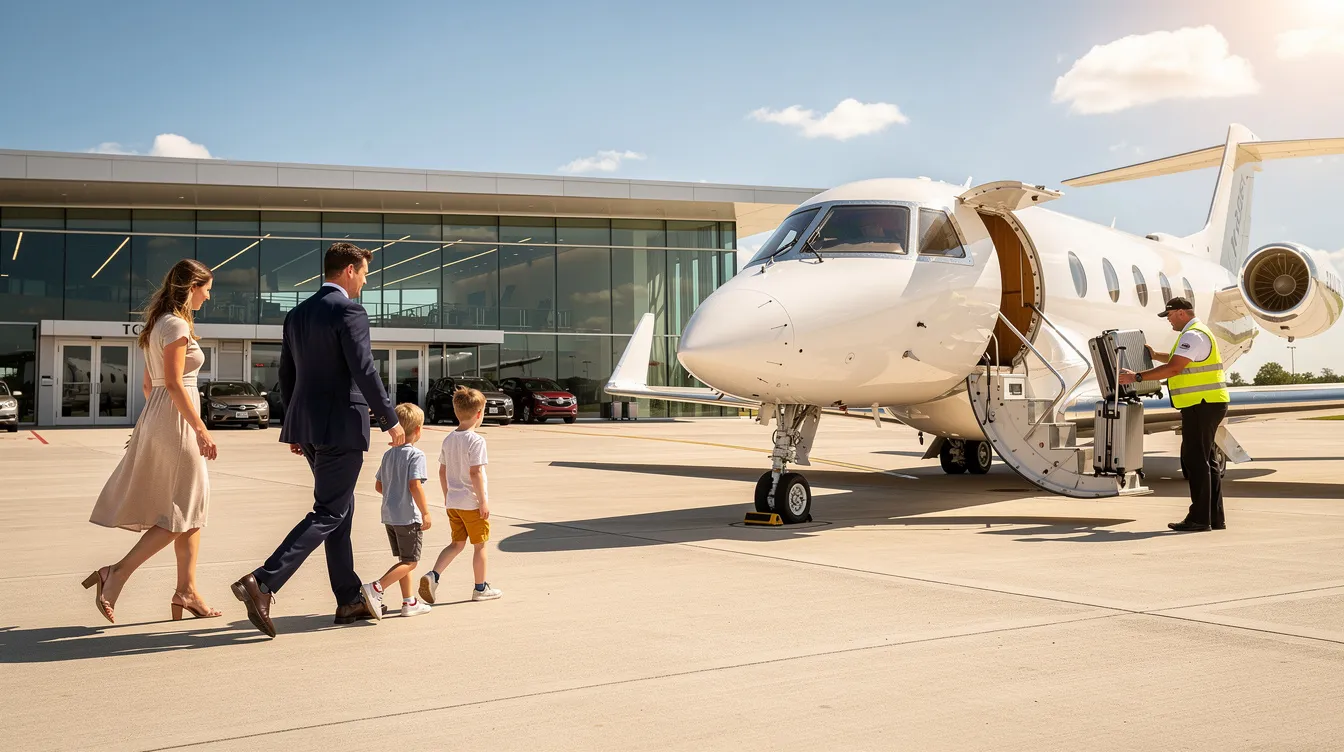
Private jet ownership has long been a hallmark of extraordinary wealth and influence. But in 2026, the landscape of private aviation looks very different from even a decade ago. The typical jet owner is no longer simply a billionaire with a plane parked in a hangar. Today's owners range from corporate entities and family offices to tech founders and real estate moguls, and a growing number of wealthy individuals who could easily afford to buy an aircraft are choosing not to. Instead, they're opting for smarter access models that deliver the same time savings, privacy, and control without the capital drag.
This article breaks down who private jet owners really are, what it costs to join their ranks, and why many discerning travelers are finding that membership and Jet Card programs offer a better equation.
Key Takeaways About Today's Private Jet Owners
The typical owner of a private jet in 2026 is older, wealthier, and more male-dominated than most people assume. Understanding this profile matters whether you're considering full ownership, evaluating fractional programs, or exploring Jet Cards as a path into private travel.
The median net worth of private jet owners is around $190 million. Owners of light jets typically have a net worth of $60–70 million, while large jets like the Bombardier Global 7500 or Gulfstream G700 require a median net worth of $270 million.
The global average age of private jet owners is 63.6 years, 97% of private jet owners are men, and 93% of private jet owners are over 50 years old.
North America hosts roughly 70% of registered private jets, with the United States leading by a wide margin.
Many high-net-worth individuals who match the traditional owner profile now skip full ownership in favor of BlackJet Jet Cards and on-demand charter, preserving liquidity while retaining schedule control.
Private jet owners increase in number each year, yet the fastest-growing segment is not buyers—it's members and cardholders.
What Defines a Private Jet Owner in 2026?
Being a private jet owner means holding legal title to a specific aircraft used primarily for business or personal transportation. In practice, most private jets are registered through LLCs, trusts, or corporate entities rather than under an individual's personal name. This structure provides the registered owner with liability protection, tax flexibility, and privacy—a critical concern for uUHNWindividuals who prefer to keep their travel patterns out of public search results.
Ownership models include:
Whole ownership: Full title to a specific aircraft, giving the owner complete control over scheduling, crew, interiors, and maintenance.
Fractional ownership: Shares in an aircraft—typically a 1/16th to 1/2 stake—with proportional flight hours, often structured as five-year contracts.
Charter options: On-demand access to private jets without ownership, ideal for those flying under 50 hours per year.
The spectrum of business aircraft spans several categories:
Very light jets: Handle short hops.
Light jets: (e.g., Cessna Citation CJ4, Embraer Phenom 300) cover regional routes up to about 2,000 nautical miles.
Midsize and super-midsize jets (e.g., Embraer Praetor 600, Bombardier Challenger 3500) extend to cross-country and some intercontinental missions.
Large-cabin and ultra-long-range aircraft (e.g., Bombardier Global 7500, Gulfstream G700) fly nonstop between continents.
Many "owners" are actually corporations, family offices, and private investment vehicles. For example, a co-founder of a tech company might fly on a jet owned by the company rather than personally. Management companies handle crew, maintenance, and regulatory compliance for most private jet owners, while members of programs like BlackJet avoid these operational responsibilities entirely.
Typical Profile of Private Jet Owners
Picture the typical owner: a male executive in his early sixties, headquartered in the United States, running a financial services firm or a diversified holding company. He flies 200–400 hours per year across North America and Europe, splitting time between board meetings, portfolio company visits, and family residences. His office manages the aircraft through a management company, and his pilots are full-time employees of the entity that holds the plane.
Key demographic data from Wealth-X research paints a clear picture:
Average age: 63.6 years. About 43% of owners are over 70.
Generational shift: 29% of new private jet buyers will be under 45 by 2026.
Gender: Approximately 97% male, compared with roughly 90% in the broader UHNW population w, where women are slowly increasing in representation.
Industries Producing the Majority of Private Jet Owners
Banking and finance: Over 20% of private jet owners
Business and consumer services: Nearly 13% of owners
Real estate and construction: About 8.6% of private jet owners
Hospitality and entertainment: Approximately 5.3% of owners
Manufacturing and industrials: Around 5.2% of owners
Beyond business, more than half of owners list philanthropy as a primary interest, with sports at about 35% and outdoor activities at 33%. These are jets that serve lifestyle missions as much as commercial ones.
Many high-net-worth individuals who match this profile now choose Jet Cards or memberships with companies like BlackJet instead of taking on full ownership, especially as consumer services in aviation have matured.
Where Private Jet Owners Live and Base Their Aircraft
Geography, regulations, and infrastructure determine where private jets are based—not simply where owners maintain their primary residence. Tax treatment, hangar availability, and airport density all influence basing decisions.
Regional Fleet Distribution
Region | Share of Global Fleet | Notable Countries |
|---|
North America | ~70% | United States (15,492 aircraft), Canada, Mexico |
Europe | ~13% | UK, Germany, France, Switzerland |
Latin America | ~12% | Brazil (the second-highest number globally), Mexico |
Middle East & Asia-Pacific | ~5% | UAE, Saudi Arabia, China, India |
The United States has the most private jet owners globally. Brazil, Canada, Mexico, and Germany follow the U.S. in ownership. Asia's private jet fleet is small compared to its wealthy population, though it is the fastest-growing region with departure growth exceeding 26% year-over-year.
Key city hubs include:
North America: New York (Teterboro handled roughly 135,875 departures in 2025), Los Angeles, Dallas, Miami
Europe: Paris Le Bourget, Geneva, London, Nice
Middle East: Dubai, Doha, Riyadh
BlackJet members leverage this global distribution through network access—no need to base a jet in every location they frequent. A single Jet Card provides coverage across all major hubs.
Net Worth and Financial Realities of Being a Private Jet Owner
Net worth correlates directly with aircraft size and usage. The relationship is not arbitrary—larger aircraft cost more to acquire, operate, and maintain, which naturally filters the ownership pool.
Concrete Thresholds by Aircraft Category
Aircraft Class | Typical Owner Net Worth | Purchase Price Range |
|---|
Very Light / Light Jets | $60–70 million | $3–10 million |
Midsize / Super-Midsize | $120–150 million | $12–30 million |
Large-Cabin / Ultra-Long-Range | $270 million+ | $50–75 million+ |
Light jets require a net worth of $60–70 million to own comfortably.
Large jets typically require a median net worth of $270 million.
Purchase prices for light jets range from $3–10 million, while purchasing a new light jet can cost millions even at the entry level.
Annual operating costs for large-cabin jets exceed $1–3 million, encompassing fuel, crew salaries, insurance, maintenance reserves, hangar fees, navigation charges, and periodic cabin refurbishments. Annual costs for maintaining a private jet can exceed $1 million, even for midsize aircraft. For light jets, expect $500,000–$900,000 per year.
Many private jet owners can leverage tax advantages like depreciation deductions, but these benefits rarely offset the total cost of ownership for low-utilization aircraft.
Depreciation and capital lock-up are major factors. Many owners eventually migrate to or supplement with Jet Card memberships to rebalance their personal balance sheet and cash flow.
Inside the Hangar: Popular Private Jets Among Owners
Private jet owners select aircraft based on mission profile—typical distance, passenger count, and airport access requirements—not just brand prestige. A business jet flying from New York to Miami has fundamentally different requirements than one connecting New York to London.
Dominant Manufacturers and Flagship Models
Very Light / Light: Cessna Citation CJ4, Embraer Phenom 300 (range ~1,200–2,000 nm)
Midsize / Super-Midsize: Bombardier Challenger 3500, Cessna Citation Longitude, Embraer Praetor 600 (range ~3,000–4,500 nm)
Large-Cabin / Ultra-Long-Range: Bombardier Global 6500/7500, Gulfstream G650ER/G700, Dassault Falcon 8X/10X (range ~7,000+ nm)
Private jets fly at higher altitudes, resulting in a smoother ride and fewer weather-related disruptions than commercial airlines. Jets consume more fuel and require specialized maintenance compared to propeller aircraft, but the speed and range advantages make them the standard for serious private travel. Private jets require more specialized maintenance and professional crew, including type-rated pilots who are certified on a specific aircraft.
Through a Jet Card or membership with BlackJet, travelers can match aircraft type to each trip—a light jet for a quick hop to the Hamptons, a super-midsize for cross-country, a large-cabin aircraft for transatlantic routes—rather than owning a single plane that's overkill for short flights or underpowered for intercontinental missions.
Why High-Net-Worth Individuals Become Private Jet Owners
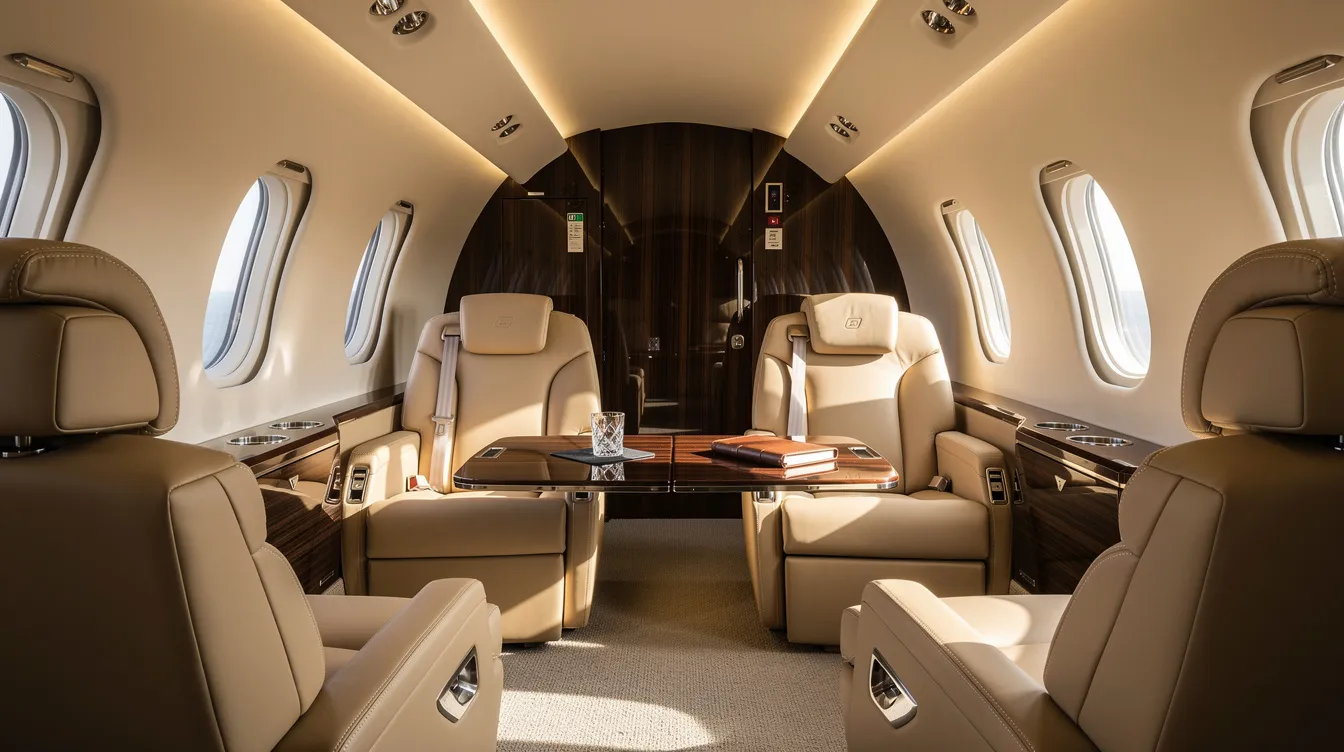
Private jet ownership is fundamentally a time and control decision, not a pure luxury purchase. For aviation enthusiasts with the means, it's also deeply satisfying. But the primary driver is strategic: wealthy individuals and corporate investors buy jets because the overall experience of air travel radically improves when you control the aircraft.
Time, Productivity, and Schedule Control
Greater availability and customization: Owning offers greater availability and customization compared to chartering. When your name is on the registration document, the plane departs when you say it does. You choose the crew, the catering, the route, and the ground transportation at each location.
Convenience: Compared with commercial first class—which still requires airline schedules, TSA security lines, and crowded terminals—the gap in convenience is enormous.
Flexibility: Owning a jet provides flexibility in scheduling and access to more airports. In the U.S. alone, there are over 5,000 airports accessible to business aviation versus roughly 500 served by commercial airlines. That's the difference between landing 20 minutes from your final destination versus an hour-plus.
Real-World Example
A managing partner at a private equity firm needs a morning meeting in Chicago, an afternoon session in Toronto, and wants to be home in New York by dinner. On commercial airlines, this is a two-day trip with overnight hotel stays. On a super-midsize jet, it's a single day.
Onboard productivity: Secure Wi-Fi, quiet cabins, and meeting-style seating turn flight time into working time.
BlackJet's support: BlackJet's real-time flight support and digital scheduling tools help replicate owner-level schedule control without needing to manage an aircraft or crew, making the service ideal for executives who want results without the operations burden.
Privacy, Image, and Lifestyle
Privacy: Privacy drives ownership for celebrity private jet owners, CEOs of public companies, and family offices.
Security and productivity: Figures like Berkshire Hathaway's Warren Buffett (who famously named his first jet "The Indefensible" before calling the next one "The Indispensable") demonstrate how even the most frugal investors eventually recognize the security and productivity value.
Family and lifestyle: Private jets and curated charter flights allow families to fly with children, staff, and security discreetly, with personalized catering and tailored cabin configurations.
Specialized use: For operators of sports teams or touring artists, a large-cabin jet functions as a mobile office and residence, enabling performance schedules and family balance that commercial air travel cannot support.
Environmental and social scrutiny has intensified as flight-tracking data becomes public. This motivates some owners to fly less, offset emissions, or shift to membership models where usage is optimized rather than conspicuous. The reality is that being a visible private jet owner carries reputational considerations that many wealthy individuals prefer to manage carefully.
The True Cost of Owning a Private Jet vs. Smarter Access Models
Acquisition cost is only the beginning. Owning a jet involves significant operational and financial responsibilities that extend far beyond the purchase price.
Cost Breakdown
Category | Annual Operating Cost |
|---|
Light Jets | $500,000–$900,000 |
Midsize / Super-Midsize | $800,000–$1.5 million |
Large-Cabin | $1.5–$3 million+ |
Fixed and variable costs: Total cost of ownership includes fixed and variable costs. Operational costs include fuel, crew salaries, insurance, and maintenance.
Management: Owners must manage the aircraft and secure hangar space.
Regulatory compliance: Owners must ensure the aircraft adheres to aviation regulations, complying with FAA or equivalent civil aviation authority laws.
Other factors: The site where you base your aircraft, the frequency of inspections, and the age of the fleet all affect annual expenses.
Utilization Math
At 400 hours per year, a large-cabin jet's effective cost per hour might approach $5,000–$7,000.
At 100 hours, that number doubles or triples.
Under-utilization is the silent killer of jet ownership economics.
Jet Card Comparison
BlackJet Jet Card: A prepaid 25-hour or 50-hour program that includes the aircraft, crew, and most operating costs in a fixed hourly rate.
Advantages: No surprise maintenance bills. No residual value risk. No crew management.
Example Comparison
An entrepreneur flying 100 hours per year who owns a $12 million midsize jet faces roughly $1 million in annual operating costs plus depreciation.
A BlackJet Jet Card covering the same hours eliminates the capital commitment and converts the cost structure from fixed to variable.
Financial & Environmental Scrutiny
Increased transparency through flight-tracking sites and social media has intensified scrutiny of billionaire and celebrity private jet owners. Short-haul flights generating outsized emissions per passenger draw particular criticism.
Sustainability initiatives: This pressure drives many owners to invest in carbon offsets, sustainable aviation fuel (SAF), or to diversify into charter and memberships. Around 80% of private aviation firms now reference sustainability initiatives in their operations.
BlackJet's approach: BlackJet provides carbon-neutral flights as a default—offsets are calculated per flight based on fuel burn, aircraft type, and distance, funding verified environmental projects at no additional cost to the member.
Many executives and philanthropists want to align private aviation use with their environmental commitment. For these individuals, choosing operators and programs with strong sustainability practices is not optional—it's a requirement that shapes how they operate in the world.
Beyond Ownership: Jet Cards, Charter, and Flexible Private Aviation with BlackJet
Private aviation access has evolved. Instead of defaulting to ownership, many UHNW individuals now blend charter services, Jet Cards, and occasional first class to optimize both time and capital. The market data supports this: fractional ownership and Jet Card segments are growing at 6–7% annually, outpacing whole-aircraft sales.
Jet Card Model
Definition: A Jet Card is a prepaid block of hours—for example, a 25-hour or 50-hour BlackJet Jet Card—locking in hourly rates across specific cabin classes with guaranteed availability and service standards.
No asset on your balance sheet: No crew to manage, no hangar to secure.
BlackJet Advantages
A New York–London executive trip can be arranged on a large-cabin jet; a family flying Miami–Aspen on a super-midsize with ski gear can book via app instead of maintaining an entire flight department.
Many who could qualify as private jet owners by net worth now prefer accessing private jets on demand, preserving liquidity while enjoying the same schedule control, privacy, and luxury travel features.
When Does Owning a Private Jet Actually Make Sense?
Ownership is rational in specific circumstances. Here's a framework:
Utilization: Flying 300–400+ hours per year consistently
Net worth: Comfortably above $60 million for light jets, $150 million+ for larger aircraft
Operational need: Frequent travel to remote locations without a strong charter supply
Corporate justification: Shuttle routes between manufacturing plants, headquarters, or portfolio companies
Some UHNW individuals operate hybrid models: owning one aircraft for long-range missions but using BlackJet or charter for short-haul or overflow flights when the owned jet is unavailable.
For the majority of high-net-worth individuals flying 30–200 hours per year, Jet Cards and on-demand charter deliver almost all of the benefits of being a private jet owner with a fraction of the fixed cost, complexity, and commitment. Many private jet owners prefer fractional ownership to manage costs, but even fractional ownership comes with five-year contracts and monthly management fees that Jet Cards avoid.
If your annual flight hours fall below 200, explore Jet Card and membership options before committing capital to an aircraft.
FAQs About Private Jet Owners, Net Worth, and Private Aviation Options
These questions reflect what people most commonly search when researching private jet owners, minimum net worth requirements, and how to fly private without buying an aircraft.
What is the typical net worth of a private jet owner in 2026, and how does it vary by jet size?
The median net worth of private jet owners is around $190 million overall. For light jet owners, the threshold is about $60–70 million. Midsize and super-midsize owners typically have $120–150 million. Owners of larger aircraft like the Gulfstream G700 or Bombardier Global 7500 average $270 million or more.
At what point does buying a private jet make more sense than using a Jet Card or charter?
Full ownership generally becomes cost-effective above 250–300 flight hours per year. Below that, the fixed costs—crew, hangar, insurance, maintenance—make per-hour economics unfavorable compared with a Jet Card program.
Do all billionaires own private jets, or do some rely exclusively on memberships and charter?
Not all billionaires own jets. Some, including prominent investors and tech executives, use charter and membership programs exclusively. The data shows that ownership correlates more with flight frequency than with net worth alone.
Which private jet brands and models are most popular among owners today?
Gulfstream, Bombardier, Dassault, Cessna, and Embraer dominate. Popular models include the Phenom 300 (light), Challenger 3500 (super-midsize), and Global 7500 (ultra-long-range). NetJets, one of the largest fleet operators in the world, flies Bombardier and Cessna aircraft primarily in its fractional program.
How safe is private aviation compared with commercial, and what safety certifications should travelers look for?
Private aviation maintains strong safety records, particularly among operators certified by ARGUS or Wyvern. These certifications evaluate pilot training, maintenance standards, and operational history. BlackJet works exclusively with safety-vetted operators meeting these standards.
How does BlackJet ensure carbon-neutral flights?
BlackJet calculates carbon emissions for every flight based on fuel burn and distance, then funds verified offset projects to neutralize the impact. This happens automatically—members don't pay extra or need to opt in.
How can someone start flying on private jets through BlackJet without being a traditional private jet owner?
You don't need to own a plane or hold a fractional share. BlackJet's Jet Card programs start at 25 hours, providing access to multiple cabin classes with transparent pricing, 24/7 booking, and guaranteed availability. It's the future of how people access private aviation—without the ownership burden.
The definition of who qualifies as a jet owner is broadening. The smartest players in business, finance, and industries across the world are no longer asking "which jet should I buy?" but rather "what's the most intelligent way to fly privately?" For many, the answer is a membership that delivers the control, security, and prestige of ownership without the capital lock-up.
Explore how a BlackJet Jet Card can reshape your travel. Discover premium jet access tailored to your schedule, your routes, and your standards—without the complexity of maintaining a fleet.
Conclusion: The Evolving Landscape of Private Jet Ownership
Private jet ownership in 2026 represents more than just luxury—it is a strategic asset for those who value time, privacy, and operational control. However, the traditional model of full ownership is increasingly complemented or replaced by smarter access options like BlackJet’s Jet Card programs and on-demand charter services. These alternatives offer the prestige and convenience of private aviation without the financial and operational burdens of owning an aircraft.
As the profile of the typical jet owner broadens to include younger entrepreneurs and corporate entities, flexibility and sustainability have become paramount. With rigorous safety certifications, carbon-neutral flight options, and seamless digital booking, BlackJet exemplifies how modern private aviation meets the demands of today’s discerning travelers.
Whether you are a high-net-worth individual considering ownership or a frequent flyer seeking effortless access, exploring flexible private aviation programs can unlock unparalleled convenience and exclusivity. Discover how BlackJet can elevate your travel experience—providing premier private jet access tailored to your lifestyle, on your terms.


 Sign up with google
 Sign up with Apple