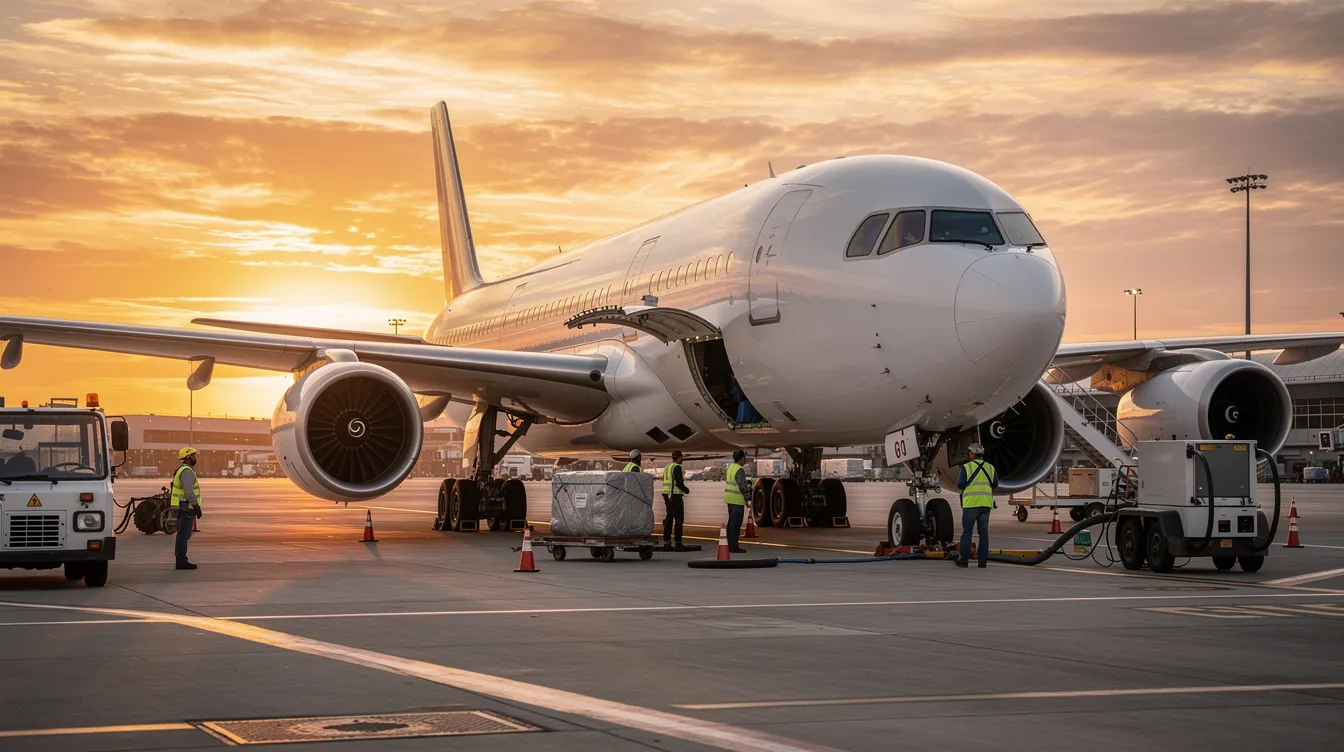
The Boeing 747-8 Intercontinental remains one of the most architecturally distinctive commercial aircraft ever built. For discerning travelers who regularly weigh the merits of commercial First Class against private aviation, understanding what lies inside the Boeing 747- 8 is more than a curiosity-it is a framework for deciding how you want to travel at scale. This deep dive covers every level of the aircraft, from the flight deck to the main deck floor, and places the experience in context for those who value precision, privacy, and time.
Strategic Value Of The Boeing 747-8 Experience For Premium Travelers
The 747-8 Intercontinental entered service in 2012 and has since anchored some of the world's most prestigious long-haul routes: Frankfurt to Los Angeles, Seoul-Incheon to Atlanta, Beijing to San Francisco, and several other intercontinental corridors. Lufthansa, the largest operator of the passenger version, operates around 11,000 annual flights with the 747-8I, and its 364-seat layout highlights how airline configuration differs from the jet's broader passenger capacity. The resulting aircraft carries a maximum takeoff weight of 975,000 lb, stretches 250 ft 2 in in length, and can carry up to 467 passengers in a three-class configuration across a range of approximately 8,000 nautical miles-with a maximum range of 7,730 nautical miles under standard airline loading.
For travelers accustomed to the finest cabin products, however, the 747-8 commercial experience has inherent constraints, especially when compared against the broader private jet price landscape. Here is how it compares to private jet travel:
Boarding time: Commercial premium passengers still navigate customs, security lines, and large terminals. Private aviation clients using Jet Card programs typically access FBOs (fixed-base operators), saving 60 to 90 minutes per trip.
Schedule flexibility: The 747-8I flies fixed, published routes between major hubs. A private jet adjusts departure time and destination to your itinerary-including secondary airports closer to your final stop-and offers multiple ways to buy a seat on a private jet without committing to full aircraft ownership.
Privacy: Lufthansa's 747-8 seats 364 passengers across four classes (8 First, 80 Business, 32 Premium Economy, 244 Economy). Even in First Class, you share the cabin, galleys, and lavatories. A large-cabin private jet serves 10 to 20 passengers at most.
Door-to-door time: On a Frankfurt–Los Angeles sector, ground processes at both ends can add three or more hours to commercial travel. Private terminals, combined with BlackJet private jet card programs, compress that sharply.
747-8 Intercontinental: International Debut & First Impressions
In June 2011, Boeing flew the first 747-8 Intercontinental to the Paris Air Show at Le Bourget, marking its international debut before media, airline executives, and aviation enthusiasts. The 747-8 program was officially launched in November 2005, and major assembly of the first 747-8I began on May 8, 2010. By the time the airplane reached Paris, it was still deep in its flight test program after its first flight departed from Paine Field, wearing Boeing's "Sunrise" livery and carrying test equipment rather than finished seats.
The scene inside gave visitors a raw, unpolished look at the future of jumbo-jet travel:
The stretched fuselage-5.6 meters longer than the 747-400-was immediately visible from the main deck aisle. Water ballast tanks were bolted to the floor in place of passenger seats to simulate various load conditions during the test flight phases.
Exposed wiring, structural frames, and temporary sensor panels lined the ceiling crown areas, giving a glimpse of the airframe's bones before final interior panels covered them.
Outside, the redesigned wing with its raked wingtips and the four GEnx engine nacelles signaled a significant departure from earlier Boeing 747 generations, with fuel efficiency among the visible goals of those changes. Media noted the improved aerodynamics and more graceful silhouette compared to the -400.
The first 747-8F (the freighter variant) was delivered on October 12, 2011. The 747-8I received Federal Aviation Administration (FAA) certification on December 14, 2011, clearing the path for the passenger variant to enter commercial service the following year with Lufthansa as the launch customer.
That Paris Air Show moment-walking through a half-finished jumbo-set the stage for everything that followed: a fully realized interior that would draw on innovative new technologies and lessons from the 787 Dreamliner program.
Flight Deck: Inside The Boeing 747-8 Cockpit
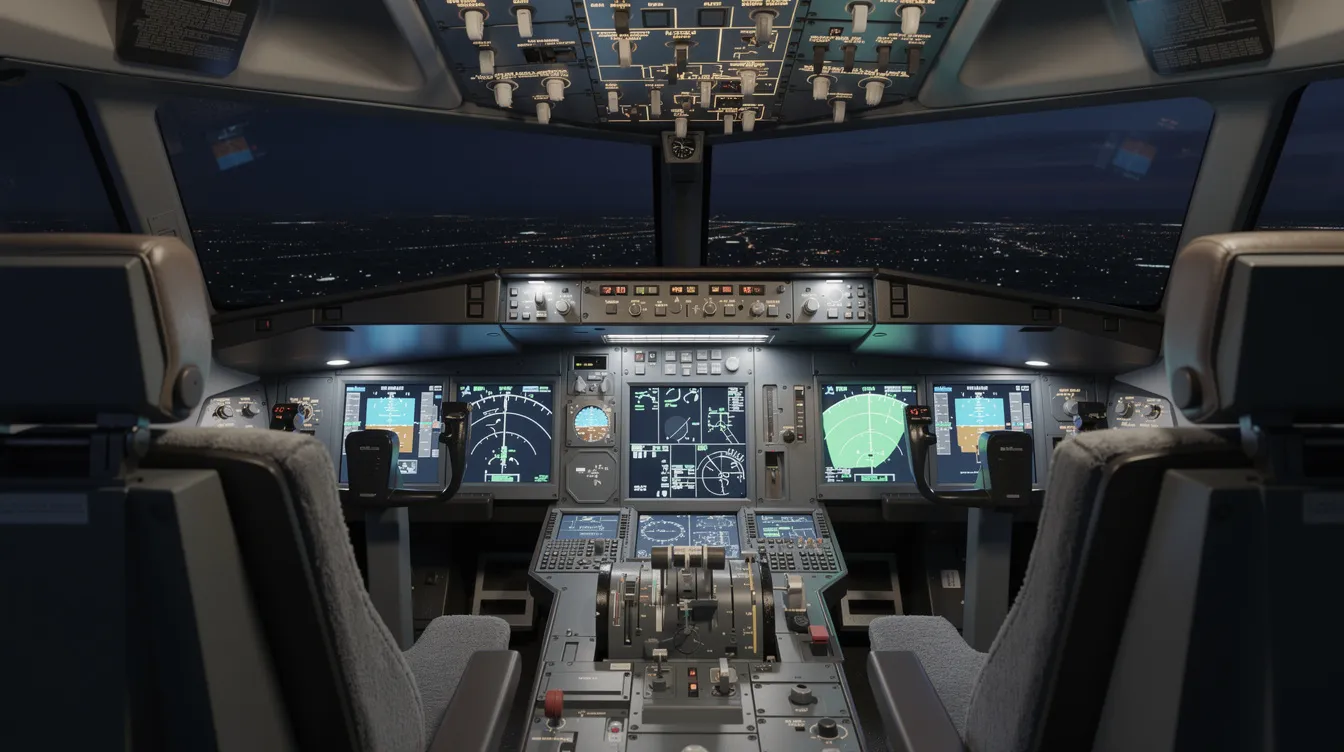
The flight deck of the 747-8 is an evolution, not a revolution. Boeing deliberately preserved the cockpit layout of the 747-400 to minimize airline pilot retraining costs, much as leading private jet companies for luxury travel prioritize fleet commonality to streamline training and safety. Pilots already type-rated on the 747-400 need only about three days of differences training-covering simulator work, new system introductions, and procedure updates-to qualify for the 747-8 Intercontinental.
What changed are the instruments and the technology behind them. Large LCD glass-panel displays replace the older CRT screens, providing sharper readouts for the Primary Flight Display, Navigation Displays, and EICAS (Engine-Indication and Crew-Alerting System). The updated Flight Management System carries more memory, supports modern navigation modes like RNP and GNSS approaches, and feeds a Vertical Situation Display. The Mode Control Panel, CDU interfaces, and autopilot architecture remain familiar enough that pilots feel at home on the first flight in the new type.
From their elevated position above the nose, pilots enjoy commanding visibility during taxi, takeoff, and landing-a vantage point that lets them scan the ramp and spot everything from regional jets to an Airbus A380 on adjacent taxiways.
Digital Systems: Electronic Checklist & Moving Map
Modern flight operations inside the 747-8 replace paper artifacts with fully integrated digital tools, increasing efficiency while reducing the risk of oversight.
The electronic checklist (ECL) system logs completed items, uses color-coded cues, and ties into the aircraft's alert architecture-ensuring nothing is skipped during critical phases.
An integrated moving map display, typically on the right side of the panel, shows airport diagrams (at Le Bourget during the debut, crews could see every taxiway in real time), en route navigation data, and weather overlays.
The updated FMS supports waypoint handling, GLS approach functions, and cross-checked navigation accuracy tools that parallel the advanced avionics found on modern business jets.
Redundancy is built in at every layer: backup power sources, standby attitude and altitude instruments, and cross-checked engine parameter displays for N1, EGT, fuel flow, and vibration data.
Crew Comfort And Security: Captain Rest Area Behind The Flight Deck
Immediately behind the reinforced cockpit door, the 747-8I includes a dedicated captain rest cabin designed to support ultra-long-haul operations without compromising flight deck security.
A bunk or private rest seat, dimmable lighting, sound-insulating walls, and separate ventilation allow pilots to recover during augmented crew rotations.
The rest area is accessible only from the cockpit side of the reinforced door, meaning crew can rest or refresh without opening the door to the main cabin-a critical security feature on flights that can exceed 12 hours.
This arrangement supports compliance with ICAO, FAA, and EASA fatigue management regulations, ensuring pilots return to the controls rested and alert.
Upper Deck: The Signature Boeing 747-8 Space
The upper deck of the 747-8 Intercontinental is the defining architectural feature of any Boeing 747. On the -8 variant, this space is stretched to roughly the length of a Boeing 737-700 fuselage-approximately 13 to 15 meters-making it one of two distinct passenger environments inside the airplane. Unlike many conventional commercial aircraft, the 747-8 gives airlines a second floor to configure independently.
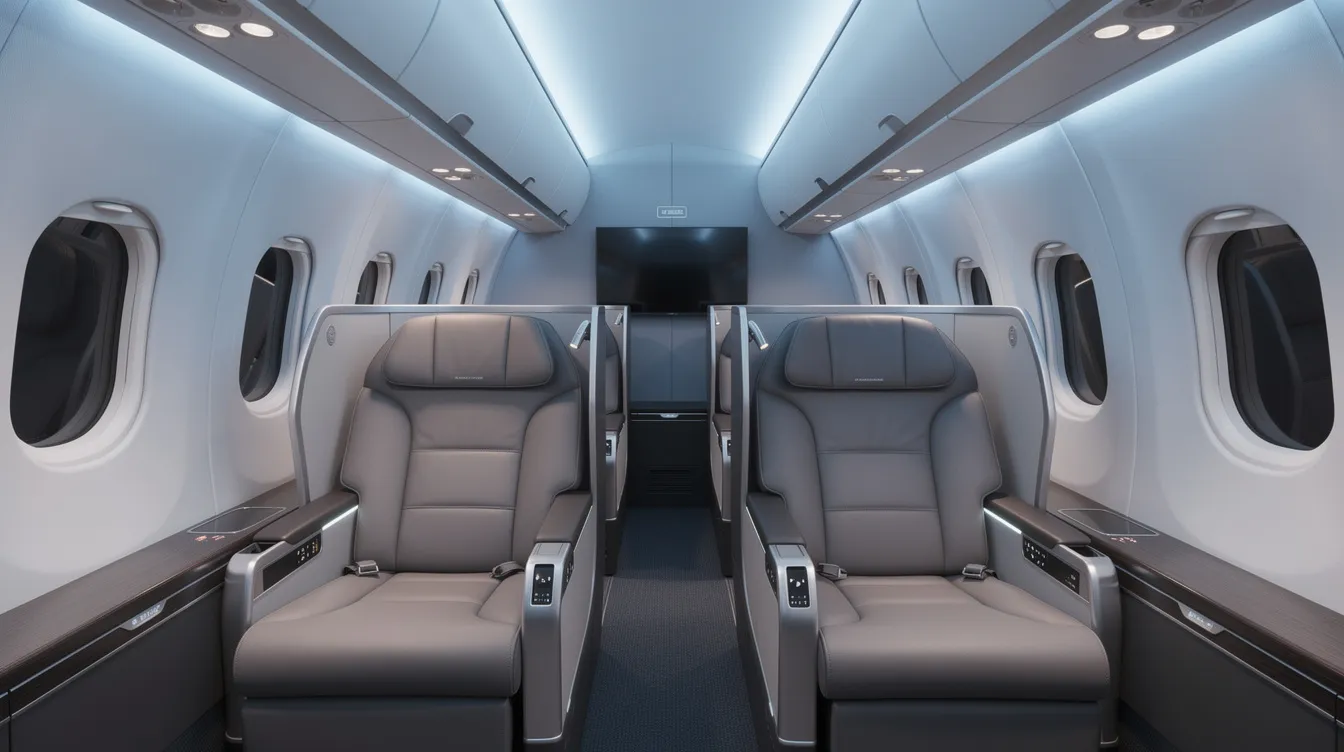
Lufthansa uses the upper deck almost entirely for Business Class in a 2-2 layout, with no middle seats. Korean Air and Air China configure the space similarly, often reserving it for premium travelers or groups that, in private aviation, might instead choose the best private jet for 20 passengers. The 747-8 upper deck is often configured for business class to create a more intimate atmosphere-fewer rows, a narrower cabin width, quieter surroundings away from main deck foot traffic, and dedicated galleys and lavatories.
Overhead bins are sculpted into the curved ceiling, with center bins visually woven into arched panels.
Windows sit higher relative to the seat due to fuselage curvature, offering slightly different lateral and forward views.
LED accent lighting follows the ceiling line, reinforcing the sense of a private club rather than a commercial cabin.
Upper Deck vs Airbus A380: Partial vs Full-Length Upper Deck
The Airbus A380 features a full-length second deck running from nose to tail, while the 747-8 retains only a forward partial upper deck-a legacy of the original 747's cargo-door design- and a very different solution from private jets for 50 passengers that dedicate the entire cabin to a single group. The trade-off is nuanced.
The A380 provides more total floor space and can house full-service bars or shower suites upstairs. But its upper deck, spanning the entire fuselage, can feel like a conventional wide cabin rather than a boutique space.
Lufthansa's 747-8 upper deck, with roughly 80 Business Class seats in a 2-2 configuration, has markedly lower footfall and passenger density than the equivalent A380 upper deck cabin.
On routes like Frankfurt to Los Angeles or Frankfurt to San Francisco, the 747-8I's upper deck offers a quieter, more contained environment than what many airlines achieve on the A380.
For travelers who prioritize half the crowd and half the noise over sheer square footage, the 747-8's partial deck delivers a meaningfully different atmosphere.
Stairs And Multi-Level Flow Between Upper Deck And Main Deck
The 747-8 replaced the compact spiral staircase of classic 747s with a sweeping, curved stairway near Door 2, connecting the main deck to the upper deck.
Passengers ascending the stairs experience a clear transition: from the broader, busier main deck to the narrower, softer-lit premium zone above.
Crew service patterns change at the staircase boundary-upper deck attendants are often dedicated exclusively to that zone, resulting in higher service ratios.
For emergency evacuation, upper deck doors are tall, with large deployable slides stored in wall cavities. Floor-path lighting and signage guide passengers toward exits, and the stairway is designed for rapid ground-level egress.
The visual effect of ascending-rising from economy or premium economy into a business class bubble-remains one of the most distinctive passenger experiences in commercial aviation.
Main Deck Cabin: Core Passenger Experience Inside The 747-8
The main deck is where the majority of passengers fly. It is the widest section of the fuselage, with an internal width of approximately 6.1 meters. Airlines may use varied seating arrangements on the 747-8's main and upper decks: typical economy runs 3-4-3 across, while premium cabins forward shift to 2-2-2 or 1-2-1. For travelers comparing this scale to the cheapest private jet options, the aircraft has a typical capacity of 410 to 467 passengers depending on configuration-Lufthansa opts for 364 seats across four classes, while Boeing's reference layout seats 467.
The main cabin uses an interior similar to the 787 Dreamliner. That means sculpted sidewalls, redesigned overhead bins providing approximately 15 percent more stowage capacity compared to previous models, and LED mood lighting that can shift through sunrise, dine, and sleep scenes-features increasingly mirrored inside the best private jets in the world. The fuselage stretch of 18 ft 3 in over the 747-400 added approximately 51 seats in some three-class layouts while maintaining cabin comfort.
Lufthansa places its eight First Class seats at the nose of the main deck in a 1-2-1 configuration-open suites with privacy screens, lie-flat beds, and direct aisle access. Further rear, Business and Premium Economy occupy the forward-to-mid main deck before Economy fills the aft half of the airplane. Early test aircraft had water tanks bolted to this floor to simulate passenger loads, a stark contrast to the polished product that passengers see today.
Crew Rest Cabins & Long-Haul Operations
On flights exceeding 10 to 12 hours, augmented crews rotate through dedicated rest compartments built into the 747-8's structure. These are not afterthoughts-they are engineered spaces critical to safe long-haul operations.
The multi-bunk crew rest area near the rear of the aircraft can house up to eight bunks, separated by curtains or doors from the cabin.
Acoustic insulation, adjustable lighting, dedicated air vents, and independent climate control ensure that resting crew members are shielded from galley noise and cabin activity.
Access is typically via a small staircase or ladder, positioned near aft galleys for convenience during service rotations.
Regulatory bodies (FAA, EASA, ICAO) mandate structured rest periods on ultra-long sectors. The 747-8's layout supports these requirements structurally, with enough bunk capacity for both flight crew and cabin crew on the longest routes in the fleet.
Ceilings, Bins, And Lighting: Cabin Architecture Inspired By The 787
During the Paris Air Show debut, visitors walking through the test aircraft saw raw ceiling crown areas-wiring runs, structural ducting, and frame ribs fully exposed. In the finished product, these bones are concealed by sculpted, curved ceilings inspired by the Boeing 787 Dreamliner, creating a sense of height and openness that earlier 747 variants never achieved.
The 747-8I has a new LED lighting system for mood lighting that spans the entire cabin length. Boeing reported the cabin and aerodynamic updates contributed to improved operating performance. Airlines program light scenes-pre-dawn blues, warm dining tones, deep sleep hues-to manage circadian rhythms and reduce passenger fatigue on long-haul routes. Overhead bins pivot smoothly and align with the ceiling's curves, with center-aisle bins appearing to float as part of the arch rather than hanging from it.
Light color transitions are gradual, shifting over several minutes to avoid jarring changes.
Perceived ceiling height is measurably improved over the 747-400 due to panel geometry and upwash lighting.
Noise levels at seat level benefit from improved cabin insulation and the lower fuel burn characteristics of the GEnx engines, which produce less vibration at cruise.
Wing Views, Windows, And The Sense Of Scale
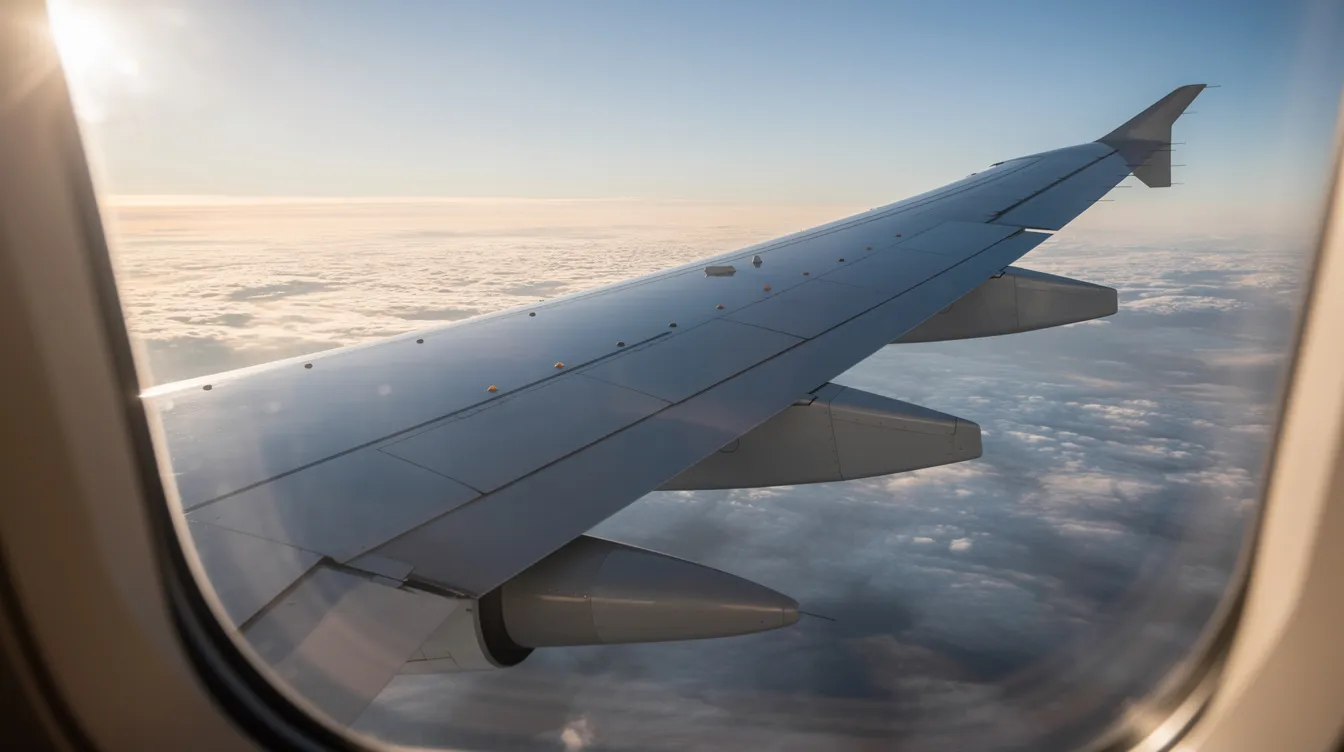
From a seat over the wing root, the 747-8's redesigned wing stretches outward with raked wingtips spanning approximately 68.4 meters. The four engines hang beneath in massive nacelles, each housing a General Electric GEnx-2B67 powerplant. Its wing also carries enormous fuel capacity, a big part of the span's visual scale and the jet's long-range reach. It is a view that conveys the sheer scale of this airplane in a way no specification sheet can.
The 747-8I features 8 percent larger windows than the 747-400, letting more natural light flood the cabin and giving passengers better sightlines to the world below.
From the nose section (First Class on Lufthansa), windows offer forward and lateral views with minimal wing obstruction.
Overwing seats on the main deck frame the wing's leading edge and engine pylons-dramatic during takeoff and in turbulence.
Upper deck windows, positioned higher due to fuselage curvature, provide a slightly different perspective: more sky, more horizon, and a subtly different sense of motion during turns.
Rear seats on the main deck look back at the trailing edge of the wing and the horizontal stabilizer, offering a sense of the aircraft's full length.
Nose Section Interior: From Structure To VIP Concepts
Inside the nose of the 747-8, forward of the first passenger row, lies a zone of structural frames, longerons, and avionics bays. On test aircraft displayed at the Paris Air Show, some of these areas were left partly open, revealing the skeletal architecture-ribs and instrumentation racks visible where seats would eventually sit- long before concepts like private jet charters in Karachi began using VIP airliner cabins for bespoke regional travel.
In airline service, this space becomes the most exclusive real estate on the airplane. Lufthansa installs its First Class suites here, taking advantage of the nose's relative quiet and forward position. But in VIP and Boeing Business Jet (BBJ) configurations, the nose transforms entirely: master bedrooms, private offices, and reception lounges replace rows of seats-the same design vocabulary seen on private jets for 50 passengers chartered for heads of state and corporate entourages. The Brunei "Flying Palace" BBJ 747-8 reportedly cost approximately $100 million for the aircraft and $120 million for its bespoke interior, featuring hand-tufted carpets, precious wood veneers, and custom artwork.
From Test Equipment To VIP Palaces: Configuring The 747-8 Interior
The journey from a test interior to a finished cabin is one of the most dramatic transformations in aviation. Early 747-8 Intercontinental airframes carried racks of flight test instrumentation, temporary sensor panels, cabling, and water ballast systems, and parts of the Flight Test Program also operated through Boeing Field during testing—one aircraft in test configuration looked nothing like the polished product airlines would receive.
Government and royal operators have pushed the 747-8's interior to its most ambitious extremes, often mirroring the layouts of large private jets for 20 passengers:
Qatar Amiri Flight, the State of Kuwait, Oman, and Brunei have all commissioned bespoke VIP 747-8 interiors with lounges, private suites, conference rooms, and staff quarters, and the platform was also selected for a U.S. air force presidential transport replacement role, even as more cost-conscious travelers explore budget-friendly private aircraft options for smaller missions.
Boeing launched a "747-8 VIP turnkey" offering in October 2025, providing nearly 5,000 square feet of customizable interior space for up to 75 passengers with a range of approximately 8,500 nautical miles-a scale far beyond most unlimited private jet flight memberships, but driven by the same desire for predictable, on-demand access.
Typical VIP zoning places private residence spaces forward on the main deck, meeting and dining areas mid-cabin, and staff seating and support areas aft. The upper deck may serve as additional private quarters or a separate reception area.
Materials in these completions include hand-tufted carpets, soundproofing layers exceeding airline standards, veneer paneling from rare hardwoods, and bespoke cabinetry-far removed from generic luxury clichés, and grounded in hundreds of hours of design and engineering work by completion centers like Greenpoint Aerospace and the studios behind many of the top 10 private jets worldwide.
Comparing Inside Boeing 747-8 To Private Jet Cabins
The scale difference is stark. A 747-8 Intercontinental configured for 467 passengers occupies a different universe from a large-cabin private jet like the Gulfstream G650 or Bombardier Global 7500, which typically seats 10 to 19 passengers, or even from dedicated private jets for 20 passengers that bridge the gap between business jets and VIP airliners. Both deliver premium travel, but the experience diverges sharply once you move past the seat itself.
Boarding: Commercial 747-8 passengers, even in First Class, navigate terminal queues, security screening, and immigration. Private jet travelers using a BlackJet Jet Card access private terminals and can be airborne within minutes of arriving at the airport, with costs and benefits outlined in BlackJet's comprehensive jet card cost guide.
Privacy: The 747-8's First Class is separated from other cabins but remains a shared environment. A private jet cabin is exclusively yours.
Secondary airports: The 747-8 requires major international airports with runways long enough for its maximum takeoff weight. Private jets fly into thousands of additional airfields, often closer to your final destination, and their economics are typically evaluated using jet card cost per hour rather than per-seat airline fares.
Itinerary control: The 747-8 operates on airline schedules. A Jet Card flight departs when you are ready, with Jet Card pricing structures designed to keep that flexibility predictable.
Private jet interiors now mirror or exceed commercial First Class functionality-lie-flat seating, enclosed suites, dedicated workspaces-but scaled for smaller groups and tailored to individual itineraries, especially in the best jet card programs for frequent flyers.
Safety, Systems Redundancy, And Passenger Confidence Inside The 747-8
The Boeing 747-8 has zero fatal accidents since entering service in 2012 and has recorded zero hull losses in its operational history, placing it among the safest widebody aircraft ever produced, much like leading NetJets jet card programs emphasize safety metrics to reassure private flyers. For passengers, these numbers translate into tangible confidence every time they board.
Inside the cabin and flight deck, multiple layers of redundancy underpin that record:
Four independent hydraulic systems ensure control authority even if multiple systems fail.
The aircraft features fly-by-wire spoilers for improved safety and more precise aerodynamic control.
Fire detection and suppression systems protect cargo holds, engine nacelles, and auxiliary power areas.
Backup power sources and cross-checked flight displays provide failover paths for critical avionics.
The GE GEnx-2B67 engines meet the latest reliability standards, contributing to the airplane's dispatch reliability across airlines worldwide.
Reinforced cockpit doors, clearly marked exits on both the main deck and upper deck, and crew rest areas designed to maintain crew alertness all contribute to the safety environment passengers can observe directly.
These principles align closely with what BlackJet demands of its private fleet. Every operator in the BlackJet Certified network undergoes third-party safety audits, crew experience verification, and maintenance transparency reviews-a standard of private jet safety that parallels the institutional rigor built into the 747-8 program.
The 747-8 In A Modern Fleet: Why It Still Matters To Discerning Travelers
The final 747-8F (freighter variant) was delivered on January 31, 2023, closing the production line of the world's most recognizable airplane. Boeing expected stronger long-term demand for the program, especially on the cargo side, than ultimately materialized. No new passenger 747-8I aircraft will be built. Yet the type remains in active service with Lufthansa (19 aircraft), Korean Air (10), and Air China (7), and it still matters.
Twin-engine long-haul jets-the Boeing 777-300ER, 787-10, and Airbus A350-are more fuel-efficient per seat on many routes, reflecting lower fuel burn and modern airframe economics. But none replicate the 747-8's dual-deck presence, its spatial differentiation, or the brand prestige it carries for airlines that fly it. The demand for this kind of flagship experience persists among travelers who notice the difference.
For high-net-worth travelers, the 747-8 can be part of a strategic travel architecture alongside more economical entry-level private aircraft solutions:
Fly Lufthansa 747-8 First Class from Frankfurt to Los Angeles, then connect via a BlackJet international flight to a resort destination in Cabo or a meeting in a secondary city, using a 25-hour jet card program to lock in predictable access.
Take Korean Air's 747-8 Business Class from Seoul to Atlanta, then use a Jet Card for a private leg to a financial center like Charlotte or Nashville, potentially structured around a 50-hour jet card solution.
Use the 747-8 on trunk routes where it excels-long-haul, high-demand corridors-and supplement with private aviation for legs where schedule control and airport choice matter most, a pattern where a 100-hour jet card cost framework can make strategic sense for frequent flyers.
Frequently Asked Questions About the Boeing 747-8
What is the passenger capacity of the Boeing 747-8 Intercontinental?
The Boeing 747-8 Intercontinental can carry up to 467 passengers in a typical three-class configuration, though actual seating varies by airline.
How does the 747-8 upper deck compare to the Airbus A380?
The 747-8 features a partial upper deck about the length of a Boeing 737-700, often configured for business class, while the A380 has a full-length upper deck offering more total floor space but a busier atmosphere.
What engines power the Boeing 747-8?
It is powered by four General Electric GEnx-2B67 engines, which are more fuel-efficient and quieter than previous models.
How safe is the Boeing 747-8?
The 747-8 has an excellent safety record with zero fatal accidents and zero hull losses since entering service in 2012, making it one of the safest widebody aircraft ever produced.
What are the advantages of flying private jets compared to the 747-8?
Private jets offer greater schedule flexibility, privacy, faster boarding through private terminals, and access to secondary airports closer to your final destination, unlike the fixed routes and larger passenger loads of the 747-8.
How does BlackJet enhance the travel experience beyond what the 747-8 offers?
BlackJet provides prepaid access to a range of private jets with 24/7 digital booking, real-time support, proprietary safety certification, and carbon-neutral flights, delivering personalized, flexible travel beyond commercial aviation.
What is the typical range of the Boeing 747-8?
The 747-8 Intercontinental has a maximum range of approximately 7,730 nautical miles, enabling ultra-long-haul international flights.
Are there VIP or private configurations of the 747-8?
Yes, several governments and private customers have customized 747-8s with bespoke interiors including lounges, private suites, and offices, significantly enhancing privacy and luxury beyond commercial layouts.
How BlackJet Helps You Go Beyond The 747-8 Cabin
BlackJet does not operate Boeing 747s. What it does is provide the level of control, privacy, and efficiency that even the finest commercial cabin cannot deliver. For travelers who have experienced the inside of a Boeing 747-8 and want to take the next step, BlackJet's Jet Card programs offer a structured path.
The 25-hour Jet Card and 50-hour Jet Card provide prepaid access to light, midsize, and large-cabin aircraft with carbon-neutral flights as standard-no offsets purchased after the fact.
24/7 digital booking and real-time flight support mean your travel adjusts to your schedule, not the other way around.
Every flight operates under BlackJet's proprietary safety certification, with audited operators, verified crew experience, and maintenance oversight that meet or exceed the institutional standards built into programs like the 747-8.
Sustainability is embedded, not optional: every BlackJet flight is carbon neutral, aligning with the expectations of travelers who care about the skies they fly through.
The Boeing 747-8 Intercontinental set a benchmark for what a commercial aircraft interior could achieve-two decks, mood lighting, sculpted architecture, and a design that made passengers feel the scale and precision of modern aviation. BlackJet takes those same principles-safety, technology, and an uncompromising standard of travel-and makes them personal.
Elevate your travel, effortlessly. Explore BlackJet's Jet Card programs and discover how refined, flexible private flight becomes your new standard.


 Sign up with google
 Sign up with Apple