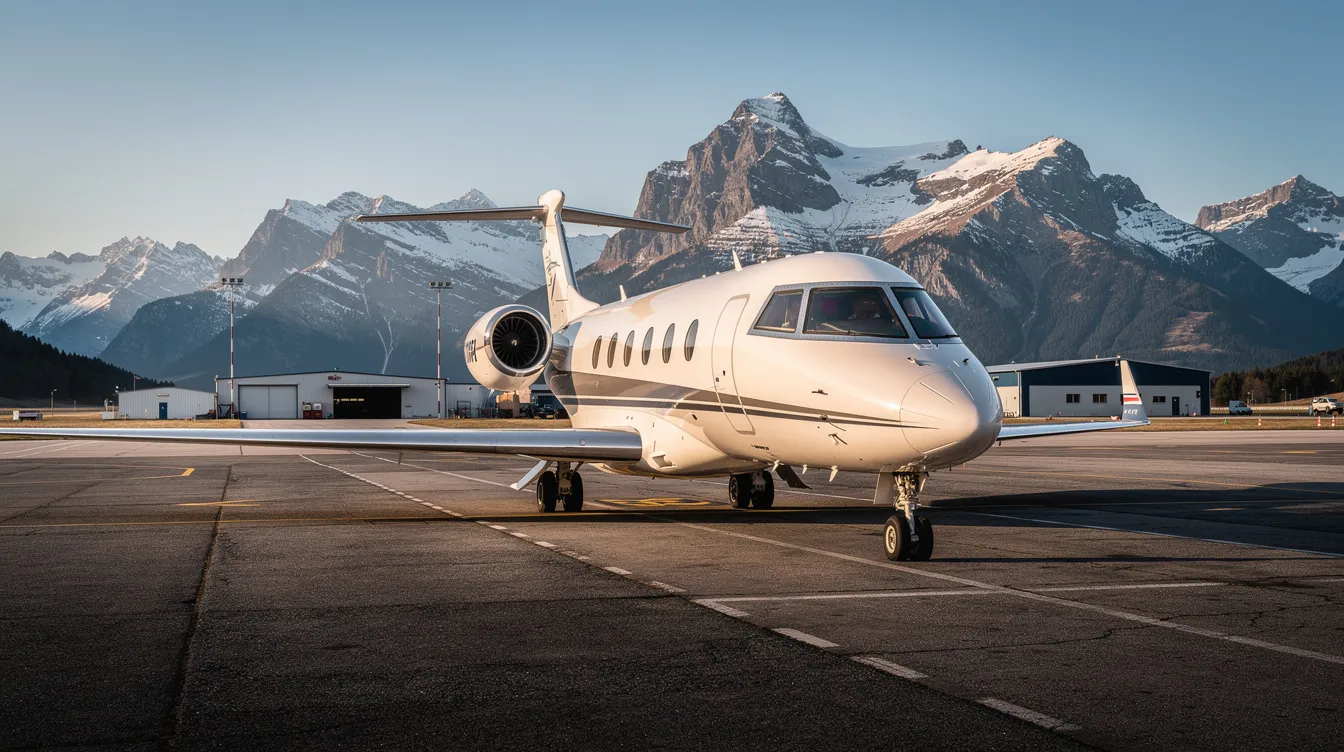
Private aviation turns dead transit time into hours you control. This guide is for business travelers, high-net-worth individuals, and anyone considering private aviation for the first time. Understanding the charter process helps you save time, maximize flexibility, and ensure a safe, seamless travel experience. This guide breaks down every step of the charter process, from defining your trip to boarding the plane, so you can fly with precision and confidence.
A private jet charter is the process of renting an entire aircraft for a specific trip, with requirements including departure and arrival airports and preferred travel dates. Jet cards offer prepaid access to private jets. Aircraft categories range from light jets for short hops to heavy jets for international travel.
Why Private Jet Charters Are a Strategic Advantage
A private jet departing Teterboro for Opa-locka (Miami) saves over three hours door-to-door compared with a commercial flight from JFK to MIA, once you account for check-in queues, security lines, baggage claim, and ground traffic on both ends. That time difference compounds across a year of travel.
Private jet charters provide access to more airports than commercial flights. While airlines serve roughly 500 US airports, private jets can access thousands of smaller regional or executive airports, putting travelers closer to their final destination. Executives and high-net-worth individuals choose this way of flying for three reasons, and for many travelers, one key reason is avoiding the delays and crowds of commercial flights: privacy (no crowded terminals), flexibility (departure times that fit your schedule, not an airline's), and control over who boards the airplane.
BlackJet delivers this advantage through Jet Card membership, prepaid flight hours, and on-demand private charter access across multiple cabin classes, making the process more tailored and seamless for travelers. The rest of this article is a practical, step-by-step guide showing exactly how to charter a private jet for your next trip.
Step 1: Define Your Private Charter Trip Requirements Precisely
Accurate trip details are the foundation of any charter quote. Unclear estimates lead to surcharges, unsuitable aircraft, or last-minute repositioning fees that hit your pocket.
Before you contact a provider, lock down these points:
Dates and times. Defining trip requirements involves departure and arrival airports and preferred travel dates. Be specific: "15 December 2026, 2:00 PM departure from Teterboro, returning same day by 10:00 PM."
Passengers. Private jet booking can accommodate 4 to 18 passengers on average. A light jet suits 4 to 6 people; midsize handles 6 to 8; super-midsize or large cabin is the choice for 9 or more, or overnight flights, and understanding the different private jet sizes helps align comfort and budget with your headcount.
Luggage. Ski bags to Aspen, golf clubs to Scottsdale, or multiple checked cases for a family Europe trip can require a larger aircraft even if the number of passengers is small. Booking tools help manage luggage requirements efficiently, and larger jets are needed for more luggage capacity.
Flight profile. One-way, same-day return, or multi-city itinerary (London to Zurich to Milan over three days) each carry different positioning and cost implications.
Timing constraints. Board meeting start times, school holidays, weekend getaways. Scheduling flexibility and managing potential delays are important aspects of charter planning; private jets adapt departure to your schedule, not the other way around.
Confirmation details. Itinerary confirmation includes passenger names and preferences for catering, so have those ready when you reach out.
Step 2: Choose the Right Private Jet or Aircraft Category
Matching aircraft type to trip length and passenger needs is crucial. There are 130 different aircraft types available for charter, and each balances comfort, range, runway limits, and cost differently.
Aircraft categories refer to the classification of jets based on size, range, and capacity. These range from light jets for short hops to heavy jets for international travel.
Light jets (e.g., Phenom 300): carry 4 to 7 passengers on regional trips such as Los Angeles to Las Vegas or Paris to Geneva. Good for shorter hops where a town is a quick drive from a smaller airport.
Midsize jets (e.g., Citation XLS+): seat 6 to 8 passengers, ideal for routes like Chicago to Miami. Different jets have varying fuel autonomy levels; midsize models cover roughly 2,000 to 3,000 nautical miles.
Super-midsize jets (e.g., Challenger 350): stand-up cabins, club seating for work, comfortable for coast-to-coast US flights like New York to Los Angeles.
Large-cabin, long-range jets (e.g., Gulfstream G500, Global 6000): 10 to 14 passengers for transatlantic or transcontinental flights. Long-range jets often have convertible sofa beds for overnight travel and dedicated galley facilities.
Airport restrictions affect jet selection based on runway length. High-altitude airports like Aspen or Innsbruck limit which aircraft can operate safely due to shorter runways and thinner air. Private jets can vary based on airport runway lengths, so your provider must verify the airplane can reach your chosen airports.
BlackJet's Jet Card members select cabin class (light, midsize, super-midsize, large) per trip rather than a single fixed aircraft, giving flexibility across changing mission profiles.
Step 3: Compare Ways to Access a Private Jet (On-Demand vs Jet Card vs Ownership)
Booking a private jet can involve working with either a broker or a direct operator. The access model you choose determines your cost structure and commitment level.
A jet card is a program that offers prepaid access to private jets, typically in increments of flight hours (such as 25 or 50 hours), providing locked-in rates and priority booking.
On-demand charter. Best for occasional trips (1 to 5 flights a year). Pricing varies by route, date, and aircraft availability, and understanding how much it costs to charter a small plane clarifies what drives those numbers. Private jet brokers help select the best aircraft for your needs, and access to 50,000 aircraft ensures suitable options. A good choice for ad-hoc pleasure travel like a family ski trip to Vail.
Jet Cards. Jet cards offer prepaid access to private jets, with common options including 25-hour and 50-hour programs. They provide flexibility for frequent travelers through locked-in hourly rates and priority access during peak periods (Christmas, Art Basel, Davos). A solid grasp of jet card pricing structures and benefits helps you decide whether this predictability is worth the commitment. Jet card programs include 24/7 digital booking tools and safety certification as standard. Mobile booking platforms enable 24/7 access; users can book from over 50,000 aircraft, and mobile platforms allow booking closer to departure times.
Full or fractional ownership. Requires capital outlay, ongoing maintenance, crew salaries, hangar expenses, and depreciation. Best for utilization above 200 to 300 flight hours per year. The commitment is long, and the cost is high compared with the flexibility of private jet charters, so understanding when chartering a private jet is worth it is key before buying.
Scenario. Consider a business executive flying New York to Houston twice a month and London to Paris quarterly; that is roughly 60 to 70 hours per year. A BlackJet Jet Card, such as the BlackJet 25+ Hour Jet Card program, provides fixed rates, schedule control, and no aircraft depreciation risk. Repeated one-off charters at variable market rates would be more expensive, and buying a jet for 70 hours of annual use makes no financial sense.
Carbon-neutral flights are increasingly offered in private aviation. Travelers who prioritize value can still look at the cheapest private aircraft and budget-friendly options while choosing operators with strong sustainability commitments. BlackJet ensures every Jet Card and on-demand flight is carbon neutral through integrated carbon offset programs with verified partners, at no extra cost to you.
Step 4: Requesting Quotes and Understanding Pricing
Transparent pricing separates a good provider from an expensive surprise. A well-structured quote should spell out every dollar before you confirm.
What to provide. Route (e.g., Teterboro to Opa-locka), dates, time, passenger count, luggage specs, and any pet, catering, or medical needs.
How pricing works. The base figure is an hourly rate by aircraft category. As of August 2026, the Jettly Private Jet Pricing Index reported an average charter rate of $12,730 per hour, up 10.2% year over year. For a deeper breakdown of private jet charter pricing factors, note that light jets run $2,500 to $5,500 per hour; midsize $3,800 to $5,500; heavy jets $8,000 to $14,000+.
Additional costs. Charters often include landing fees, handling fees, de-icing in winter, overnight crew costs, international overflight permits, and catering. These line items change the total, so ask for an all-in estimate and compare it with a broader private jet price list overview to understand whether your quote is competitive.
Payment. Booking typically requires payment through wire transfer or credit card to confirm.
One-way vs. round trip. A same-day roundtrip on a single aircraft can eliminate repositioning fees. Empty-leg flights can reduce cost, but availability is unpredictable.
Compare quotes. Request at least two or three, and mind differences in aircraft year, interior condition, Wi-Fi, and safety ratings; the cheapest quote is not always the best choice. If you expect to fly frequently, comparing quote totals with the cost of a 100-hour jet card can clarify whether membership beats trip-by-trip booking. Real-time support is available 24/7 for charter clients, and dedicated charter experts assist with last-minute changes.
With BlackJet, members see transparent, all-in estimates in the booking platform, with taxes and fees broken out before confirming.
Step 5: Safety, Certification, and Sustainability Checks
Safety credentials matter more than any other factor when you hire a private jet provider. No amount of savings is worth flying with an operator that cuts corners.
Regulatory certification. The operator must hold a valid Air Operator Certificate: FAA Part 135 in the US for commercial charter operations, or an EASA equivalent in Europe. Part 135 imposes stricter pilot training, maintenance, and duty-time rules than Part 91 (private, non-commercial license operations).
Independent ratings. Operators must meet ARGUS industry safety standards. Look also for IS-BAO or Wyvern ratings. Safety ratings of jets and crew should be checked before booking, especially when arranging charter flights for 100 passengers or other large groups.
Crew verification. Safety credentials should include verification of crew experience and aircraft maintenance. A private pilot serving as captain should hold several thousand flight hours, a type rating for the specific aircraft, and current recurrent training, which is particularly important on large private jets for around 20 passengers.
Cabin safety. Expect a pre-departure safety briefing, emergency equipment checks, weather and route planning documentation, and contingency plans for diversions, all of which scale in importance on private jets configured for up to 50 passengers.
BlackJet's approach. BlackJet vets its charter network with proprietary certification criteria that exceed base regulatory requirements, including scheduled audits and ongoing performance reviews. This focus on quality underpins its position among the best jet card providers for frequent flyers.
Sustainability. Carbon offset options are available for private jet travelers; offsets are purchased per ton of CO₂ (for example, a New York to Palm Beach flight). Sustainable aviation practices aim to reduce carbon emissions, and private jet companies are exploring alternative fuels like sustainable aviation fuel (SAF) at select airports where supply exists, even on the most affordable private jet options.
Ask providers directly about safety records, insurance coverage, and sustainability policies before confirming any flight.
Step 6: Booking, Boarding, and What to Expect on the Day of Flight
The final booking and flight day are designed to be low-friction. Private terminal access minimizes boarding delays before take-off, and arriving at a private terminal shortly before departure is standard.
Booking confirmation. Sign a charter agreement or confirm via the Jet Card platform. Payment or hour deduction follows. You receive a detailed itinerary with the FBO (private terminal) address and show-time, typically 20 to 30 minutes before departure.
Day-of logistics. Drive directly to the FBO at airports like Teterboro, Van Nuys, or Farnborough. Security formalities are minimal: a quick ID check, luggage loaded by the ground team, and your aircraft parked a short walk from the lounge. No long road to the gate, no traffic through commercial terminals. If you're arriving from out of town or staying overnight in a city like Karachi, where private jet charters offer tailored ground support, the provider or concierge may also help coordinate nearby hotels as part of the overall plan.
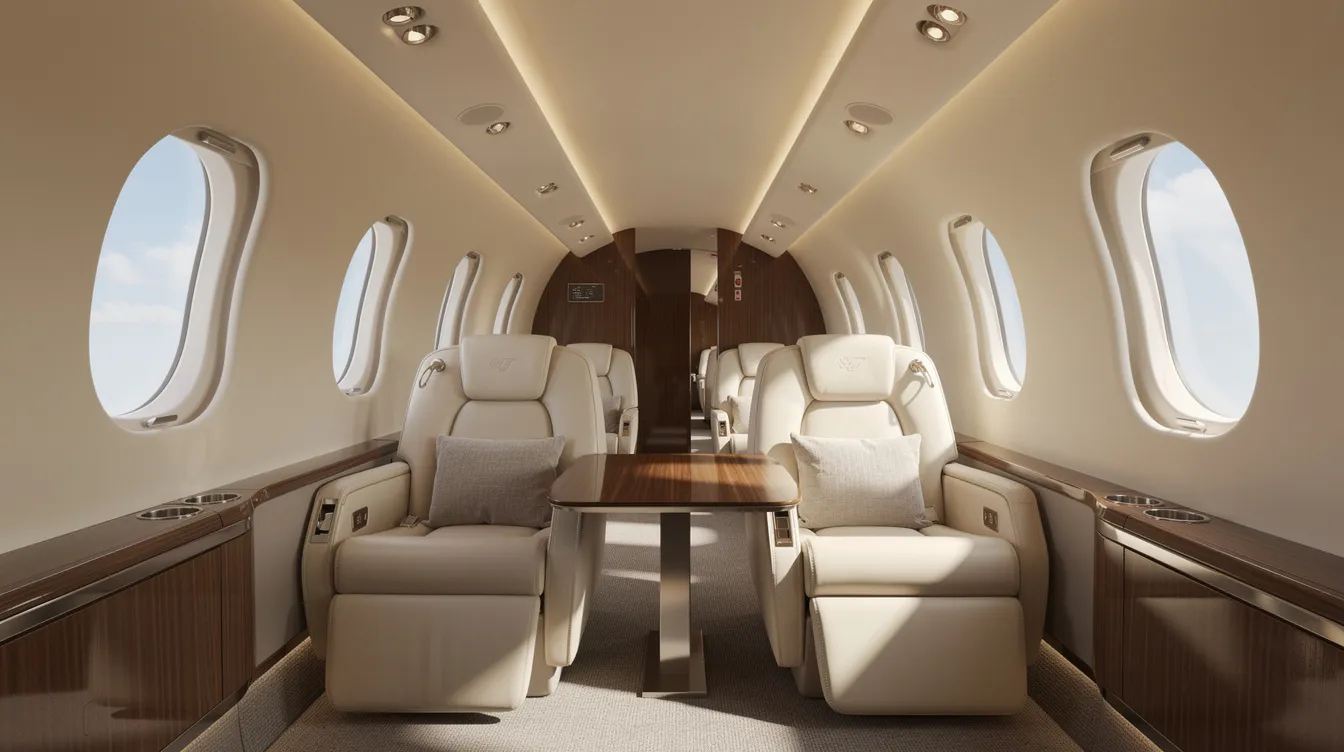
Onboard experience. Customized catering (specific champagne brands, kid-friendly menus, vegan meals). Wi-Fi for work, privacy for calls, adjustable climate and lighting. Pets fly in cabin when requested in advance; special arrangements for families or medical equipment are handled ahead of time.
Example. A BlackJet member with a 25-hour Jet Card books a Friday afternoon flight from London Farnborough to Nice using the mobile app; confirmation takes under 10 minutes. Travelers who only need a single seat might instead explore how to buy a seat on a private jet via shared or semi-private options. She arrives at the FBO 20 minutes before departure, boards without delay, and lands on the Côte d'Azur in time for dinner. No security line, no change of schedule, no guesswork.

Chartering a private jet is less complicated than most people guess. The process comes down to defining your trip, picking the right aircraft, choosing an access model that fits your travel frequency, and verifying that your operator meets the safety and sustainability standards your travel deserves. If you find yourself flying privately more than a few times a year, explore BlackJet's Jet Card membership to turn each trip into a straightforward, carbon-neutral experience.
Frequently Asked Questions About How to Charter a Private Jet
What advice do you have for first-time private jet charter clients?
Start by clearly defining your trip requirements, including dates, passenger count, luggage, and destination airports. Use a trusted broker or Jet Card provider like BlackJet to guide you through aircraft selection and pricing. Always verify safety certifications and ask about sustainability options.
How much does it cost to charter a private jet?
Costs vary by aircraft type, flight duration, and additional services. Light jets typically range from $2,500 to $5,500 per hour, midsize jets $3,800 to $5,500, and heavy jets $8,000 to $14,000 or more. Additional fees like landing, handling, and catering can add a bit to the total.
What is the difference between on-demand charter and a jet card?
On-demand charter is pay-per-flight and ideal for occasional trips, while jet cards offer prepaid flight hours with locked-in rates and priority access, best for frequent travelers. Jet cards also include 24/7 digital booking and real-time support.
How far in advance should I book a private jet?
Booking timelines vary; you can book as close as a few hours before departure with many providers, especially with a Jet Card. For peak travel times or special requests, booking earlier ensures availability and better pricing.
Are private jet flights safe?
Yes. Private jet operators must meet stringent safety certifications such as FAA Part 135 and ARGUS standards. BlackJet goes further with proprietary certification and ongoing audits to ensure the highest safety levels.
Can I request special catering or amenities?
Absolutely. When booking, you can specify catering preferences, pet accommodations, Wi-Fi needs, and other amenities. Providers tailor the onboard experience to your exact requirements.
How does sustainability factor into private jet charter?
Many providers, including BlackJet, offer carbon-neutral flights through verified offset programs. Sustainable aviation fuels and other eco-friendly practices are increasingly integrated to reduce environmental impact.
What if I have a last-minute change or delay?
Real-time flight support is available 24/7 to assist with schedule changes, cancellations, or rerouting. Dedicated charter experts help manage any unexpected situations seamlessly.
Conclusion: Elevate Your Travel with Expert Private Jet Chartering
Chartering a private jet is more than a luxury—it's a strategic tool that transforms how you manage your time and travel. By clearly defining your trip requirements, selecting the right aircraft category, and choosing the access model that fits your lifestyle, you gain unparalleled flexibility, privacy, and efficiency. BlackJet’s Jet Card programs and on-demand charters combine premium service, rigorous safety standards, and sustainability commitments to deliver a seamless, carbon-neutral experience.
Whether you are a frequent business traveler or planning a special leisure trip, understanding the process empowers you to make informed decisions that optimize your travel. From transparent pricing and real-time support to private terminal access and bespoke onboard amenities, every detail is designed to elevate your journey.
Discover how BlackJet can reshape your travel—join our Jet Card program or explore premium private jet access today, and turn every flight into an effortless, premier experience tailored exclusively to you.


 Sign up with google
 Sign up with Apple