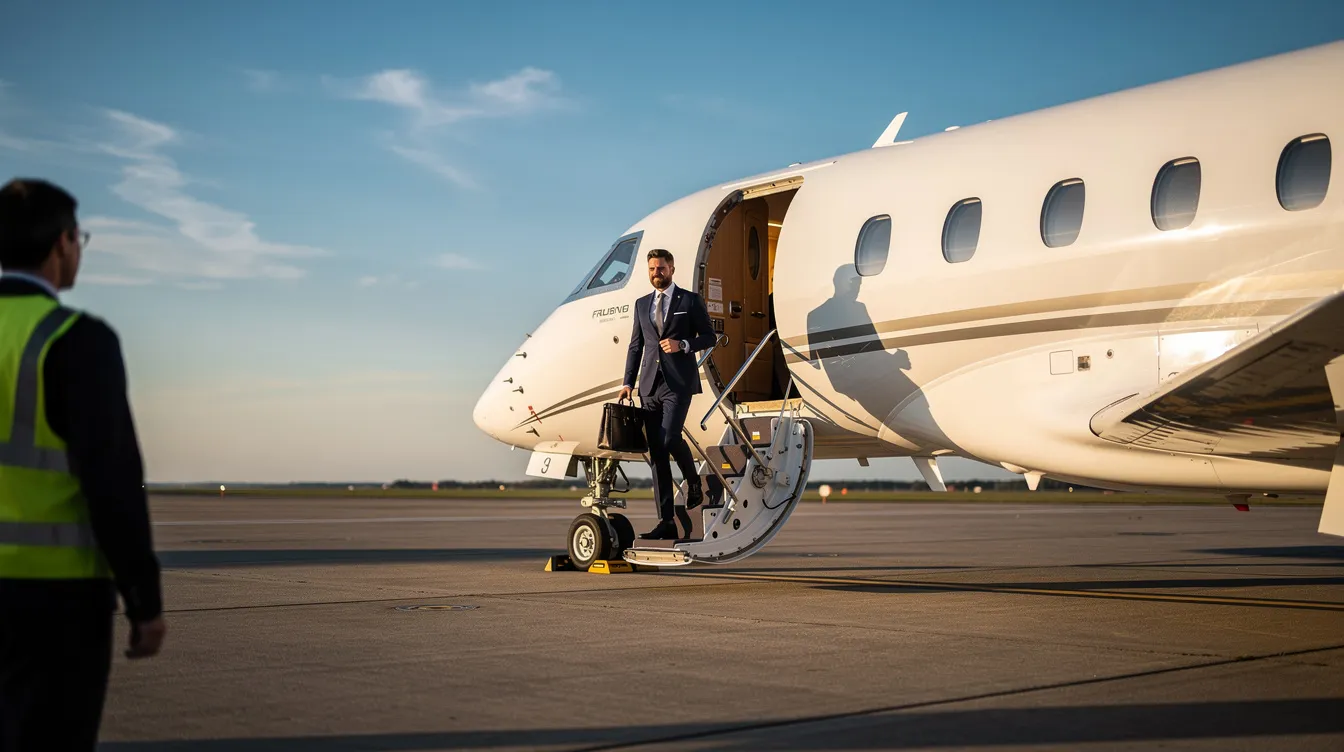
Private aircraft access is no longer just a luxury signal; for executives, founders, family offices, and frequent leisure travelers, it is a strategic advantage. Private flying can compress security, boarding, routing, and connection time into a far more controlled travel day.
This guide is for private pilots, business travelers, and anyone considering renting an aircraft. Knowing what drives rental costs helps you budget and choose the best rental option for your needs.
So, how much does renting a plane cost? The answer depends on whether you mean a Cessna for flight training or a professionally crewed private jet for business travel. Below is a practical 2026 guide to aircraft rental costs, rental options, and the details that determine the final cost.
Quick Answer: Typical Airplane Rental Costs in 2026
Airplane rental costs vary widely depending on aircraft type, rental duration, route, location, and additional services required. Piston rentals usually assume the renter is the pilot; jet pricing typically includes professional crew, aircraft maintenance, dispatch, and sometimes catering.
Aircraft category | Typical 2026 rental rates |
|---|
Small single-engine Cessna 172 | $130–$220 per hour wet |
Multi-engine piston, Beechcraft Baron | $280–$550 per hour wet |
Turboprops, Pilatus PC-12, King Air | $1,000–$2,500 per hour |
Light jets, Phenom 300, Citation CJ3 | $3,000–$6,000 per hour |
Mid/large cabin jets, Challenger, Gulfstream | $6,000–$14,000+ per hour |
Hourly rental rates for small single-engine aircraft, such as the Cessna 172, typically range from $150 to $200, while larger aircraft can cost significantly more, with jets ranging from $2,000 to $6,000 per hour. Another broad market view puts hourly rental rates for small single-engine aircraft typically range from $100 to $200, while larger aircraft can cost significantly more, with jets ranging from $1,000 to over $10,000 per hour.
For frequent high-net-worth or corporate travelers, BlackJet’s Jet Card programs turn private jet access into predictable, effective hourly rates, closer to a premium block rate than a one-off “rent a plane” transaction.
What Drives Aircraft Rental Costs? Key Factors to Know
Several key factors shape rental costs:
Aircraft Type and Size
Moving from a single-engine piston aircraft to a Phenom 300 or Gulfstream changes speed, range, crew needs, and cabin experience.
Rental Structure
Wet rental: Wet Rate is an all-inclusive hourly rate that covers the cost of the aircraft rental, oil, and aviation gasoline, common in flight schools and flying clubs. Wet rentals typically include fuel and sometimes insurance, making budgeting easier.
Dry rental: Dry rental means you rent the plane without fuel, allowing flexibility if you have access to discounted fuel options, while wet rental includes fuel, simplifying the process for those who prefer not to worry about fuel costs. Dry rentals require the renter to pay for fuel separately, which can affect total rental expenses.
Hourly rental is flexible, while block rates reward commitment.
Minimums
Location and Regional Cost
Rental prices can be influenced by location, as areas with higher demand or fewer available planes may see increased rates, while regions with more competition might offer lower prices.
Rental rates can fluctuate based on regional cost-of-living differences, with rural areas generally being more affordable than major metropolitan hubs, and savvy travelers often combine smart airport choices with fly private cheap strategies for affordable luxury travel.
Demand and Seasonality
Aircraft Age and Equipment
For business aviation users, well-maintained aircraft, safety certification, and on-time performance are worth more than the lowest quote.
Cost Ranges by Aircraft Type
Small single-engine aircraft such as a Cessna 152, Cessna 172, Piper Warrior, or Piper Archer usually rent for $130–$220 per Hobbs hour wet. Aircraft rental rates are typically calculated based on engine runtime, measured using a Hobbs meter. These smaller aircraft suit initial flight training, a weekend flight, hour-building, and recreational pilots.
Multi-engine piston aircraft such as a Piper Seneca, Beechcraft Baron, or Diamond DA-42 often run $280–$550 per hour wet. Hourly rental rates for single- or multiengine piston aircraft typically range between $120 and $500, depending on the size of the aircraft and its engine capacity. For medium-sized planes, rental costs generally fall between $300 to $500 per hour, depending on the aircraft type and rental conditions, and many pilots ultimately graduate into the best small private aircraft for their specific missions.
Turboprops such as the Pilatus PC-12 and King Air 250/350 are fuel-efficient for 300–800 nautical mile cross-country flights. They often charter around $1,000–$2,500 per hour with crew, falling squarely within the broader private jet charter pricing you’ll see across aircraft categories and similar to the ranges outlined in our guide to chartering a small private plane.
Light and midsize jets such as the Citation CJ3+, Phenom 300, Learjet 75, and Citation XLS+ often range from $3,000–$7,000 per hour, aligning with typical ranges when you rent a private jet. A team of up to four passengers may compare this against last-minute business class, hotels, and lost productivity.
Super-midsize and large-cabin jets such as the Challenger 350/650, Gulfstream G450/G550, and Falcon 2000 can run $7,000–$14,000+ per hour, especially for New York–London or LA–Honolulu missions with stand-up cabins and full-service catering, aligning closely with the cabin experience and economics of top 16-seat private jet options for larger groups and fitting within broader private jet price list ranges for heavy jets and long-haul missions.
Listed figures are aircraft rental rates only; taxes, airport fees, de-icing, catering, landing fees, and other additional costs may apply.
Wet vs Dry Rental, Block Rates, and Memberships
Wet Rate: Wet Rate is an all-inclusive hourly rate that covers the cost of the aircraft rental, oil, and aviation gasoline, common in flight schools and flying clubs. Wet rentals typically include fuel and sometimes insurance, making budgeting easier.
Dry Rental: Dry rental means you rent the plane without fuel, allowing flexibility if you have access to discounted fuel options, while wet rental includes fuel, simplifying the process for those who prefer not to worry about fuel costs. Dry rentals require the renter to pay for fuel separately, which can affect total rental expenses.
Hourly rentals: Charge based on the number of hours the airplane is in operation, providing flexibility for short trips.
Block time rentals: Allow booking several hours at a discounted rate, which can save money for frequent flyers. Purchasing block time allows renters to buy a set number of flight hours at a reduced rate compared to standard rentals, which can be especially beneficial for frequent flyers.
Flying clubs: Joining a flying club can significantly reduce rental costs, as members often benefit from lower hourly rates due to shared ownership and maintenance costs. Members share the cost of aircraft ownership and maintenance, leading to lower hourly rates compared to traditional rentals.
Flight club perks: A flight club may also offer free simulator use, social flying, and access to local flight schools or fixed base operators. BlackJet’s Jet Card is the premium equivalent for private jet access: clients prepay 25+ or 50+ hours across cabin classes with transparent rental rates, digital booking, and real-time support.
Beyond the Hourly Rate: Additional Costs to Budget For
Published airplane rentals rarely include every line item. Additional costs such as fuel surcharges, insurance, and airport fees can significantly impact the overall expense of renting an aircraft, so it's important to clarify what is included in the rental agreement.
Additional Fees
Fuel costs: Differ by structure. In dry rentals, the renter pays directly; in wet rentals, fuel is included. Jet A often ranges around $4–$8 per gallon in the U.S., and fuel prices can be higher in remote regions. When aviation fuel prices increase, flight schools may impose a variable fuel surcharge of $4 to $15 per hour.
Airport fees: Include landing, ramp, handling, passenger facility, overnight parking, and hangar fees. Small airports may charge $0–$50 per landing; busy airports can exceed $250 in jet handling. Tie-down or hangar fees for overnight parking can vary from $15 to $50 or more, depending on the storage method.
Crew, catering, and ground services: Light-jet catering may add $200–$500; chauffeur transfers can start at $150–$300 per leg. U.S. domestic charter often carries 7.5% federal excise tax, plus segment fees. De-icing can be material in winter.
Insurance Requirements
Most rental companies require renters to have a valid pilot's license, a current medical certificate, and proof of insurance before renting an aircraft. Rental companies may require renters to have non-owned aircraft insurance, which can range from $100 to $500 per year, depending on coverage. Some pilots also call their insurance coverage.
Safety, Maintenance, and Compliance: Why They Influence Price
In aviation, the fine print is not a formality. Before renting an aircraft, it’s essential to check the maintenance records to ensure the aircraft is safe and compliant with FAA standards.
Piston aircraft often require annual and 100-hour inspections; jets follow strict manufacturer programs and regulatory oversight. Documented aircraft maintenance raises costs but protects safety, reliability, and dispatch performance.
Many rental companies require a checkout flight or proof of recent flying experience to ensure the renter is familiar with the specific aircraft being rented, and even experienced pilots may be expected to complete a checkout in that specific aircraft. Private pilots may also need a valid pilot certificata e, medical certificate, a medical certificate, a current flight review, and demonstrated flying skills. Advanced training is often required for complex or high-performance aircraft.
For jets, BlackJet works with rigorously vetted operators, prioritizing safety certifications, crew experience, maintenance records, and compliance. Ultra-low rent-a-jet quotes may not meet the same standard of risk management, so it’s worth understanding how safe private jets are in practice before simply chasing the lowest bid.
Flight Training vs Business Travel: Two Very Different “Rental” Worlds
Flight training usually begins with reserving a small aircraft at flight schools, local flight schools, or fixed base operators. Students pay hourly rental rates plus instructor fees. A certified flight instructor may cost $60–$120 per hour, and a private pilot certificate can require 50–70 hours of flight time.
Business travelers think differently. A four-person executive team flying New York–Chicago–New York in a light jet may log 4–6 hours and see a mid-five-figure invoice after aircraft, crew, airport fees, and catering, reflecting the reality that private jet charter pricing is based on the whole aircraft, not per seat, so understanding jet card cost per hour becomes critical for frequent users. The value is privacy, schedule control, and work time onboard.
On average, recreational pilots fly about 50 hours per year, spending anywhere between $6,000 and $25,000 in rental fees, which can make ownership more appealing for those flying more frequently or for those exploring the cheapest private aircraft options or other top affordable private planes aimed at budding aviators. If you fly more than 50 hours a year, it may be more economical to buy a plane than rent one or consider a 50-hour jet card program, considering the initial and ongoing expenses of ownership and the caliber of 10-million-dollar private jet options available to serious buyers.
Renting an aircraft is often more cost-effective for occasional flyers, while purchasing involves higher upfront costs and ongoing expenses like maintenance and storage, which is why some travelers opt for a 25-hour jet card instead of full ownership, or explore leasing a private jet through structured programs as a middle-ground solution. BlackJet serves travelers who want premium jet access, not the workload of managing pilots, fuel, and airport logistics, and for ultra-frequent flyers, this can extend to evaluating a 100-hour jet card cost structure.
How Jet Cards and Memberships Change the Cost Equation
A Jet Card sits between one-off charter and aircraft ownership. Members prepay 25 or 50 hours, locking in aircraft category access and predictable hourly rates, which are governed by the underlying jet card pricing structure and, for business users, can also interact with jet card tax deduction strategies that improve after-tax cost.
Compared with an ad-hoc charter, a Jet Card can reduce surprises: guaranteed availability, clearer terms, fewer repositioning shocks, and standardized service, especially when you understand overall jet card membership pricing and how major providers structure offers, such as NetJets jet card cost and inclusions. The length of time you plan to rent the airplane affects the total cost, with short-term rentals often being more expensive on a per-hour basis compared to longer commitments like weekly or monthly rentals.
Rental agreements often specify minimum rental times, which can affect overall costs, as short-term rentals may be more expensive on a per-hour basis compared to longer commitments. BlackJet adds carbon-neutral flights, 24/7 digital booking, real-time support, and routing guidance as built-in value pillars through products like the BlackJet 25+ Hour Jet Card.
Sample Cost Scenarios: From Weekend Getaways to Transatlantic Trips
Flight training weekend: Two days in June 2026, Cessna 172 at $170 per hour wet for 6 hours, plus instructor at $90 per hour for 4 hours, and a small landing fee. Approximate total: $1,400–$1,500.
Regional business turboprop: Dallas to Nashville round-trip in September 2026, King Air 250, 4.5–5.0 hours at $1,800 per hour, plus airport fees, light catering, and taxes. Approximate total: $10,000–$13,000+.
Light jet roadshow: Los Angeles–San Francisco–Las Vegas–Los Angeles in March 2026, Citation CJ3+, 5–6 block hours at $4,000 per hour. Approximate total: $25,000–$35,000+.
Transatlantic large cabin: Teterboro to London Luton in November 2026, Gulfstream G450, 6.5–7.0 hours each way at $11,000 per hour, plus catering, crew, and de-icing potential. Approximate return: $160,000–$200,000+, similar to other large private jets for around 20 passengers and representative of the economics you’ll see when evaluating private jet options for 30 passengers and larger groups.
BlackJet advisors can model similar missions to determine whether a Jet Card, charter, or another structure best matches your flight distance and travel pattern, including bespoke solutions for private jets carrying up to 50 passengers or even larger charter setups where you need to understand the charter plane 100-passenger cost and logistics.
How to Get the Best Value on Aircraft Rental Costs
Plan: Use planning ahead for peak holidays and major events.
Fly off-peak: Renting an airplane during off-peak times, such as weekdays or colder months, can lead to significant savings due to lower demand and pricing.
Choose secondary airports: When practical, use secondary airports to reduce airport fees.
Compare total mission cost: Not only hourly rates, but also ideally benchmarking against a clear cost comparison of whether chartering a private jet is worth it.
Consider block rates: After 25–50 annual jet hours or 50+ piston hours, especially if you are comparing the best jet cards for frequent flyers.
Check safety credentials: Insurance costs, and maintenance standards.
Review the rental process: Cancellation rules, and rental agreement before paying.
Consult experts: Ask BlackJet to analyze 12–24 months of travel and recommend the optimal structure, including whether an unlimited private jet membership model makes sense for your pattern, or if partnering with one of the top private jet companies for long-term service is a better fit.
Frequently Asked Questions About Airplane Rental Costs
How much does it cost to rent a small plane like a Cessna 172?
Most Cessna 172 rental rates run $130–$220 per hour wet in 2026, with $150–$200 common. Rates vary by airport, aircraft age, avionics, and whether the aircraft has a glass cockpit.
What are typical private jet rental costs per hour?
Light jets often run $3,000–$6,000 per hour, midsize jets $5,000–$8,500, and large cabins $9,000–$14,000+. These ranges mirror what you might see when you charter a small plane, light jet, or rent a private jet for a specific mission. Some BlackJet Jet Card pricing is higher on the surface because it is designed around all-in, premium access, including professional crew and operations that would otherwise sit on your own books if you shouldered the full cost of a private jet pilot and ongoing operation.
Is it cheaper to rent a plane or fly commercial business class?
For one traveler, commercial first class is usually cheaper. For 3–6 executives on the same route, private aviation can become competitive when time saved, privacy, and schedule control are considered, especially if you’re comfortable simply buying a seat on a private jet through affordable private plane rideshare options instead of chartering the whole aircraft.
What additional costs should I expect beyond hourly aircraft rental rates?
Expect fuel costs if dry, airport fees, landing fees, de-icing, catering, ground transport, taxes, insurance, and sometimes hangar fees, all of which factor into the true cost of even the cheapest private jet options or seemingly simple 12-seater private jet arrangements.
Additional charges such as fuel surcharges, insurance, and airport fees can significantly impact the overall expense of renting an aircraft, so it’s crucial to clarify what is included in your rental agreement before booking.
Fuel Costs: In dry rentals, you pay for fuel separately, which can vary widely depending on the aircraft type, flight duration, and current fuel prices. Jet fuel (Jet A) prices in the U.S. typically range from $4 to $8 per gallon, with surcharges sometimes applied during price spikes. Wet rentals include fuel in the hourly rate, simplifying budgeting.
Airport Fees: These may include landing fees, ramp or handling charges, passenger facility fees, and overnight parking or hangar fees. Smaller airports might charge minimal fees ($15 to $50), while major airports can impose fees exceeding $250, especially for jets.
Insurance Requirements: Most rental companies require renters to hold a valid pilot certificate, a current medical certificate, and renters' insurance coverage before renting an aircraft. Non-owned aircraft insurance typically costs between $100 and $500 annually, depending on coverage limits. Some providers include insurance in wet rental rates, while others require renters to secure their own policies.
Other Fees: Additional costs may include crew expenses, catering, ground transportation, de-icing in winter, and security deposits or membership fees. Understanding these potential fees upfront helps avoid surprises and ensures a seamless rental experience.
By thoroughly reviewing all these factors and discussing them with your rental provider, you can better anticipate the total cost of your rental and choose the option that best fits your travel needs and budget.
Conclusion: Navigating Aircraft Rental Costs with Confidence
Renting an aircraft offers unparalleled flexibility and access to private aviation without the commitments of ownership. Whether you’re a pilot building hours in a Cessna or a business executive chartering a midsize jet, understanding the factors that drive rental costs—from aircraft type and rental structure to additional fees and safety requirements—empowers you to make informed decisions.
For frequent travelers, programs like BlackJet’s Jet Card transform private jet access into a predictable, premium experience that balances safety, sustainability, and convenience. By planning, considering block rates or memberships, and selecting the right aircraft for your mission, you can optimize value while enjoying the seamless luxury and efficiency that private aviation provides.
Elevate your travel — effortlessly. Explore how BlackJet’s tailored solutions can reshape your journey, offering carbon-neutral flights, rigorous safety standards, and flexible access to the world’s finest aircraft. Your next flight awaits with confidence and style.


 Sign up with google
 Sign up with Apple