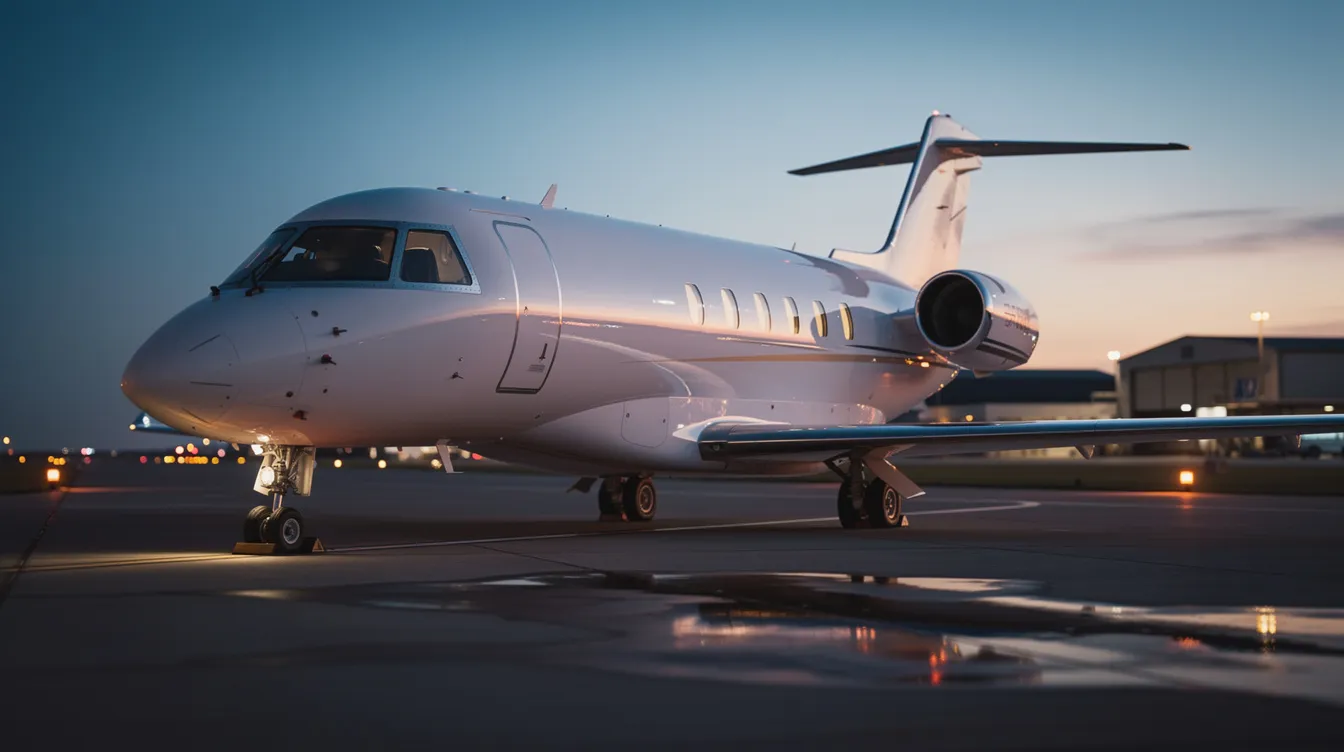
The search for a HondaJet Elite II for sale is rarely impulsive. This guide is designed for executives, business travelers, and private aviation buyers considering a HondaJet Elite II purchase or exploring smarter alternatives. Understanding the costs, benefits, and access models is crucial before making a significant investment in private aviation. It signals a buyer who values time, reach, and strategic mobility. Here is what you need to know before committing capital - and why access may outperform ownership.
HondaJet Elite II For Sale: Quick Answer For 2025–2026 Buyers
When executives and business travelers search for a HondaJet Elite II for sale, they are typically solving a specific problem: reclaiming hours lost to commercial aviation, reaching regional airports that major carriers ignore, and projecting the image of a sophisticated operation. This is less about luxury for its own sake and more about competitive advantage - the ability to fly four cities in a single day and still be home for dinner.
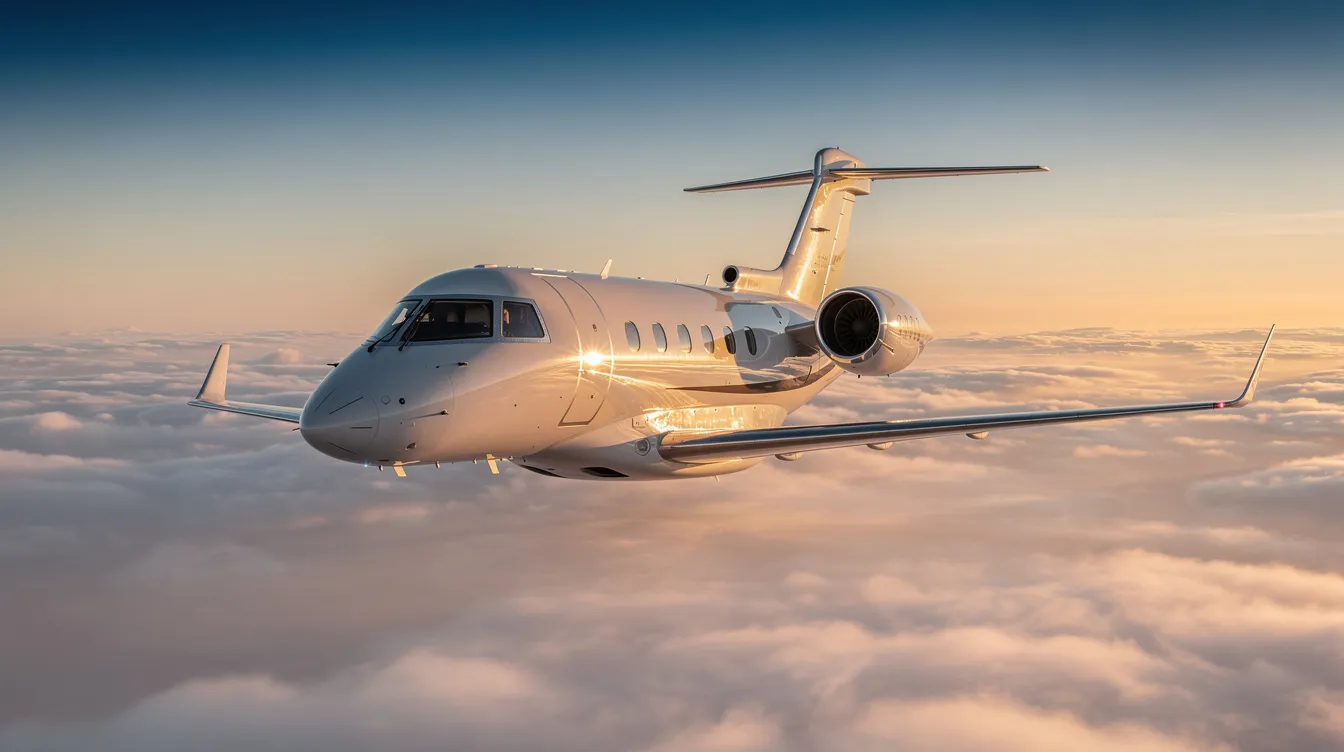
Here are the numbers that matter in the 2025–2026 market:
New Elite II price: Approximately $6.3 million to $7 million or more before options, with equipped examples often reaching around $7.17 million
Pre-owned Elite II price: Roughly $5.5 million to $7.4 million depending on hours, configuration, and maintenance status
Annual ownership budget: Between $850,000 and $1.3 million at 300–400 hours per year
The performance profile explains the appeal. The Elite II delivers a maximum range of 1,547 nautical miles, a maximum cruise speed of 422 KTAS (about 486 mph), competitive takeoff distance and landing distance for short-field operation, and refined baggage space for four to five passengers. It is aimed squarely at business aviation, covering routes like New York–Miami or Dallas–Denver nonstop.
For those seeking this level of performance without the $6 million-plus purchase and ongoing expenses, BlackJet’s premium private jet card and charter solutions offer an alternative. Through Jet Card programs and on-demand charter, BlackJet lets clients fly on HondaJet Elite II–class aircraft, capturing the benefits of speed, range, and cabin quality while eliminating fixed costs, depreciation, and the full details of asset management.
Inside The HondaJet Elite II: Design, Range, And Performance
The HondaJet Elite II is Honda Aircraft Company's current flagship within the HA-420 family, a very light jet featuring advanced safety technology, optimized for owner-operators and corporate shuttle missions. Powered by twin GE Honda HF120 engines, the aircraft is designed for single-pilot operations, making it accessible to qualified pilot-owners while still delivering jet-level performance.
Key performance metrics define the model's appeal. The Elite II achieves a maximum range of 1,547 NM under NBAA IFR reserves with four occupants, cruises at 422 knots at FL 300, and reaches a service ceiling of 43,000 feet - above most weather and commercial traffic. Its increased fuel capacity over earlier variants extends mission flexibility without sacrificing fuel efficiency.
The signature over-the-wing engine mount design, inherited from every HondaJet variant, reduces aerodynamic drag, improves cabin quietness, and frees fuselage space for a larger interior and baggage compartment. The cabin of the HondaJet Elite II features acoustic treatments for a quieter environment, and baggage capacity ranges from 62 to 66 cubic feet across nose and aft compartments.
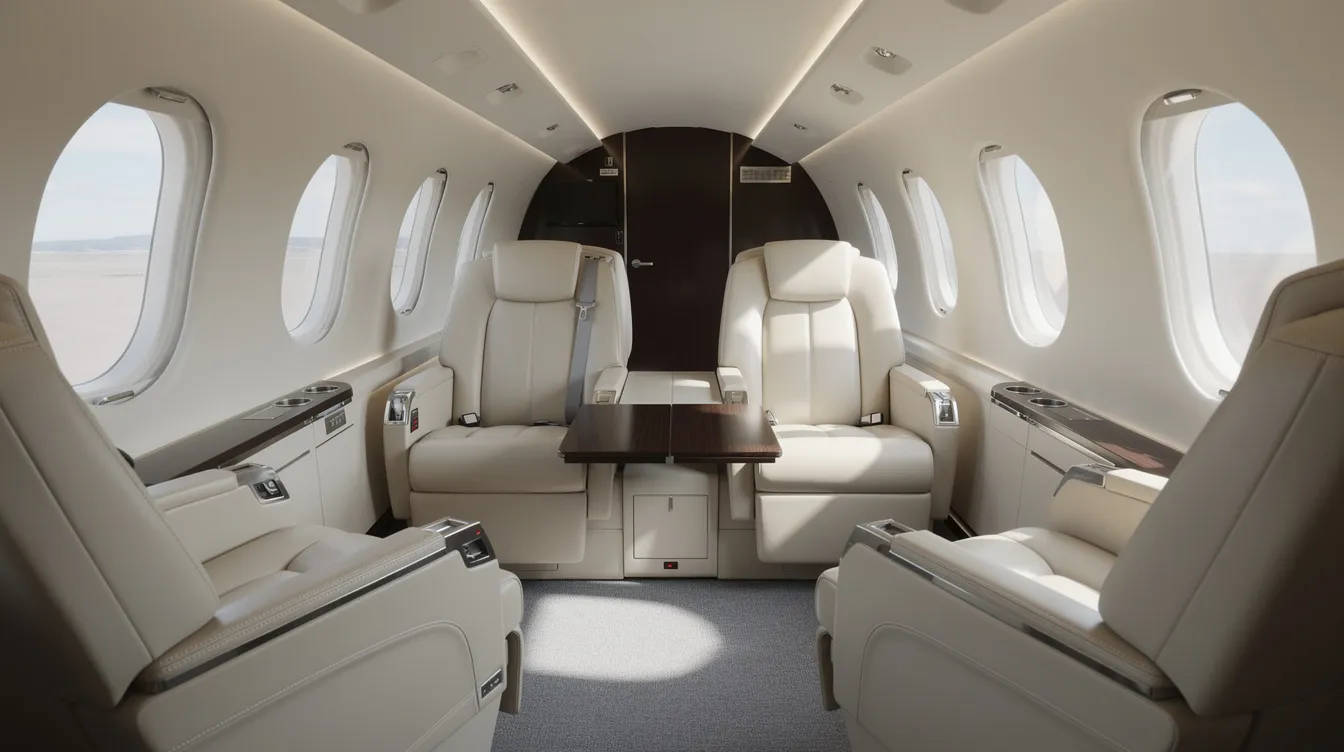
The cabin seats four executives in a club configuration with a typical seating capacity of six to seven passengers in alternative layouts. The HondaJet Elite II has an optional fully enclosed lavatory equipped with skylights. Interior finishes include two-tone contoured executive leather, an enhanced cabin management system for environmental and lighting controls, and optimized sound insulation - a cabin management system that makes even three-hour flights comfortable.
Honda Aircraft Company, The HA-420 Line, And Variants
Honda Aircraft Company operates from Greensboro, North Carolina, where it achieved FAA certification for the HA-420 in the mid-2010s and has since built an extensive network of global service centers supporting HondaJet owners.
The HA-420 family has evolved through several distinct variants. HondaJet models include Classic, APMG, Elite, and Elite II:
HondaJet Classic: The original production model with foundational over-the-wing engine mounts and HF120 engines
HondaJet APMG: The Advanced Performance Modification Group delivered drag reduction, climb improvements, and avionics upgrades to early airframes - a meaningful step toward the later Elite capabilities
HondaJet Elite and Elite S: Refined interiors, incremental performance gains, and updated avionics
Elite II: The top-of-the-line model with autothrottle, optional Emergency Autoland, greater range and payload, and a refined Garmin-based avionics suite
For buyers comparing across the lineage, pricing context helps. Pre-owned HondaJet HA-420 Classic models cost about $2.3 million to $3.2 million. HondaJet Elite aircraft typically range from $3 million to $4.8 million. Average pricing across all HondaJet aircraft is approximately $3,723,333. Pre-owned listings commonly reference maintenance programs like GE Honda EMC2 and Honda FlightReady - programs that protect value, improve dispatch reliability, and make operating costs more predictable. A clean maintenance history and complete serial number documentation consistently command stronger pricing.
Technology, Safety, And Human-Machine Interface On The Elite II
The Elite II is engineered to reduce pilot workload and elevate safety margins, particularly for owner-operators stepping up from turboprops or piston twins.
At the heart of the flight deck sits the Garmin G3000 avionics system, featuring large-format displays, synthetic vision, and touch-screen controls for flight plan management and environmental settings. This intuitive human-machine interface translates complex data into clear, actionable information.
Specific automation features reduce manual demands:
Automated anti-ice, pressurization, and lighting systems
Automated ground spoilers that deploy on landing to improve stopping consistency
Advanced Steering and Augmentation System (ASAS) for stabilized nose-wheel steering during ground operation
Stabilized approach guidance that alerts pilots to unstable conditions based on flight path and speed
The Elite II also introduces autothrottles and emergency autoland capabilities. The autothrottle manages power settings through climb, cruise, and descent for enhanced fuel efficiency and safety. The Garmin Emergency Autoland technology can autonomously control and land the aircraft if the pilot becomes incapacitated - a feature that moves private jet safety expectations forward for the entire light jet category.
HondaJet Elite II Pricing, Operating Costs, And Fixed Costs
The true cost of HondaJet ownership extends well beyond the purchase price. Fixed costs accumulate whether the aircraft flies or sits in a hangar.
Acquisition price guidance for 2025–2026:
New HondaJet Elite II prices range from $6 million to $7 million before custom paint job, interior options, and delivery fees. Low-time pre-owned Elite II examples generally appear between $5.5 million and $7.4 million depending on configuration, hours, and whether maintenance programs are active.
Primary fixed costs include:
Hangar fees: $30,000–$80,000+ per year, higher at major-hub locations
Crew salaries for a professional captain: $120,000–$200,000+
Insurance (hull and liability)
Subscriptions: navigation databases, connectivity, maintenance tracking
Scheduled maintenance program fees (FlightReady, EMC2)
Fixed costs for HondaJet ownership can reach $900,000 annually depending on location, crew structure, and management scope. Annual operating costs for a HondaJet range from $500,000 to $1.2 million, and in high-utilization scenarios, annual operating costs can exceed $1.2 million.
Financing a $6 million-plus aircraft adds substantial capital cost. Depreciation - often modeled around 7% per year - means an owner may absorb $390,000 or more annually in asset value decline alone. For any investment of this scale, understanding airframe depreciation and financing terms is essential before signing a purchase agreement.
Fuel Burn, Variable Operating Costs, And Hourly Economics
Variable costs scale directly with flight hours and form the basis of Jet Card cost-per-hour calculations for any private jet operation.
Fuel consumption for a HondaJet is about 96 gallons per hour in typical cruise profiles. At current Jet-A prices of $6–$9 per gallon, hourly fuel cost runs approximately $576–$864. Variable costs for operating a HondaJet average $1,200 to $1,600 per flight hour when engine maintenance reserves (under EMC2 for HF120 engines), airframe reserves, consumables, landing fees, crew trip expenses, and handling charges are included.
The utilization equation matters enormously, especially when comparing overall Jet Card cost structures to full ownership:
Annual Hours | Approximate Total Cost | Cost Per Hour (All-In) |
|---|
150 hours | ~$650,000–$850,000 | $4,300–$5,700 |
200 hours | ~$650,000–$1,000,000 | $3,250–$5,000 |
300–400 hours | ~$850,000–$1,300,000 | $2,800–$4,300 |
At 200 hours per year, total costs can equal $650,000 under lean management - but climb rapidly with full crew, hangar, and depreciation loaded in. Higher annual utilization drives down cost per hour but increases absolute annual spend. Low utilization under 150 hours causes per-hour costs to spike because unchanged fixed costs are spread across fewer flights. This dynamic is precisely what makes ownership uneconomical for many would-be buyers.
Ownership vs Access: When Does Buying An Elite II Make Sense?
The decision between full HondaJet ownership and on-demand access through a Jet Card or charter depends on three factors: total annual hours, mission predictability, and appetite for managing a complex asset.
Ownership is most rational when a corporation or one owner flies over 300 hours per year on predictable routes and wants complete scheduling control - typically organizations with internal flight departments serving multiple offices.
Ownership is usually not optimal for private individuals or family offices flying 50–150 hours per year, executives with variable itineraries, or travelers who sometimes need more cabin volume or passenger capacity than a light jet provides, especially when budget-friendly private aircraft and access models can deliver similar utility without balance-sheet exposure. Jet cards eliminate the need for aircraft ownership costs in these scenarios, preserving capital and flexibility.
Consider a business traveler flying 20–30 regional trips annually - New York to Chicago, Dallas to Nashville, Los Angeles to Aspen. At roughly 150–200 hours per year, the ownership costs (acquisition, depreciation, hangar fees, crew, insurance) far exceed the cost of booking equivalent flights through BlackJet when you factor in comprehensive Jet Card pricing structures. That same capital - over $6 million - can remain deployed in the owner's core business while Jet Card programs deliver the same aircraft performance on demand.
How BlackJet Delivers HondaJet-Class Travel Without Buying A Jet

BlackJet is a premium private aviation provider offering Jet Cards and on-demand charter that match the experience of flying a HondaJet Elite II - without the obligations of selling, maintaining, or depreciating a multimillion-dollar asset, whether your trips are domestic or to international gateways such as Karachi private jet charters.
The Jet Card model is straightforward, and understanding Jet Card cost and membership pricing alongside the landscape of top Jet Card programs for frequent flyers helps buyers choose the right structure for their flying profile. Jet cards provide prepaid access to private jets through blocks of hours. Jet card programs typically offer 25-hour Jet Card options or 50-hour Jet Card blocks with fixed or capped hourly rates and transparent terms covering fuel, standard catering, and key fees. Members can book flights 24/7 using digital tools, with real-time support throughout every trip.
BlackJet sources HondaJet, HondaJet Elite, Elite S, Elite II, and comparable very light jets through vetted operators, giving clients access to similar range, speed, and landing distance capability while still being able to select from some of the best private jets in the world when missions demand more range or cabin space. Jet cards allow access to multiple aircraft types - so on days requiring more baggage space or a longer-range mission, clients can upsize to large-cabin private jets or ultra-long-range aircraft seamlessly.
Every flight operates under rigorous safety certification, professional crews with appropriate type ratings, and carbon-neutral performance via verified offsets and sustainable aviation fuel initiatives, making it a compelling alternative to options like NetJets Jet Card programs.
Safety, Certification, And Sustainability vs Owning Your Own HondaJet
Both Honda Aircraft and BlackJet prioritize safety, but the operational burden differs dramatically. An individual Elite II owner must directly manage pilot hiring, recurrent training, maintenance oversight, and regulatory compliance - or pay a management company to handle every detail of the process.
BlackJet clients benefit from curated operators that already meet stringent standards, including third-party safety audits, minimum pilot experience thresholds, and adherence to robust maintenance programs. The expectations for safety are non-negotiable across BlackJet's network.
On sustainability: the Elite II is fuel-efficient for its class, but flying any private jet carries a carbon footprint; evaluating more affordable, fuel-efficient private jet options alongside carbon strategies is increasingly part of the decision. BlackJet addresses this by making every client flight carbon neutral through verified offsets and support for green aviation initiatives where available, a contrast to traditional competitors such as Flexjet’s Jet Card offerings. For environmentally conscious travelers, leveraging BlackJet's network offers a more flexible path to sustainability than managing offsets independently as a single-aircraft owner, particularly when paired with cost-effective, lower-impact aircraft choices.
Frequently Asked Questions About The HondaJet Elite II And BlackJet Access
What is the typical price for a new HondaJet Elite II in 2025–2026?
New Elite II jets before options cost approximately $6.3 million to $7 million, with fully equipped examples often reaching $7.17 million, putting them at the upper end of private jets for sale under $10 million. Delivery slots, custom paint job options, avionics packages, and interior configurations all influence the final price, especially if you are cross-shopping with long-range private jets designed for intercontinental travel. Buyers should confirm current delivery timelines directly with Honda Aircraft, as production schedules and lead times can shift.
How does the Elite II compare to the HondaJet Elite and HondaJet APMG?
The Elite II preserves the 422-knot maximum cruise speed and 43,000-foot ceiling but adds autothrottle, optional Emergency Autoland, increased fuel capacity for greater range, and updated Garmin G3000 avionics with enhanced technology integration. Earlier models - including the HondaJet APMG and HondaJet Elite - offer slightly shorter range, fewer automation features, and less refined interior options, though they remain capable aircraft at lower price points on the pre-owned market and compare favorably with other entry-level private jet options.
What annual budget should I plan for 150, 200, or 300+ hours of ownership, and how does that compare to Jet Card membership costs?
At 150 hours per year, expect total ownership costs of roughly $650,000–$850,000. At 200 hours, costs typically fall between $650,000 and $1 million. At 300 or more hours, annual expenses run $850,000 to $1.3 million. These ranges encompass fixed costs, variable costs, depreciation, and capital charges - the full details of what it takes to keep an Elite II flying.
Is a Jet Card more cost-effective than owning at under 200 hours per year, and how do the best Jet Card programs for frequent flyers structure their value?
Yes. Below roughly 200 annual flight hours, fixed costs and depreciation dominate per-hour economics, making ownership expensive relative to the value received when compared with Jet Card cost-per-hour benchmarks. A Jet Card program eliminates capital exposure, hangar fees, crew salaries, insurance, and maintenance reserves - delivering comparable performance and cabin quality at meaningfully lower total cost, even when scaled to a 100-hour Jet Card commitment.
What if I need more range or cabin volume than the Elite II offers?
The Elite II excels on regional routes up to 1,547 NM, but longer missions or larger groups may exceed its cabin and payload limits. BlackJet solves this by letting clients select larger aircraft, including private jets that can seat up to 50 passengers, for specific trips while using HondaJet-class jets for shorter flights - no need to own multiple aircraft or compromise on any single mission.
Conclusion: Choosing The Smart Path To HondaJet Elite II–Level Travel
The HondaJet Elite II defines what a modern light jet can achieve: class-leading fuel efficiency, 1,547 NM range, advanced safety automation including autothrottle and Emergency Autoland, and a refined executive cabin, even if your long-haul missions sometimes call for the largest private jets with intercontinental range. Its performance justifies every dollar of its $6 million-plus price - for the right buyer.
Outright ownership makes sense for flyers with very high, predictable utilization and a willingness to manage a complex aviation asset. For everyone else - executives flying 50–200 hours per year, family offices with variable schedules, or business owners who want capital working in their core operation - BlackJet's Jet Card and charter access deliver HondaJet Elite II–class capability with rigorous safety oversight, carbon-neutral flights, and seamless digital booking, whether you’re booking whole-aircraft missions or simply buying a seat on a private jet.
Elevate your travel - effortlessly. Explore BlackJet's Jet Card options or speak with an advisor about tailoring HondaJet-class access to your specific routes, hours, and goals. Premium private aviation, without the weight of ownership.


 Sign up with google
 Sign up with Apple