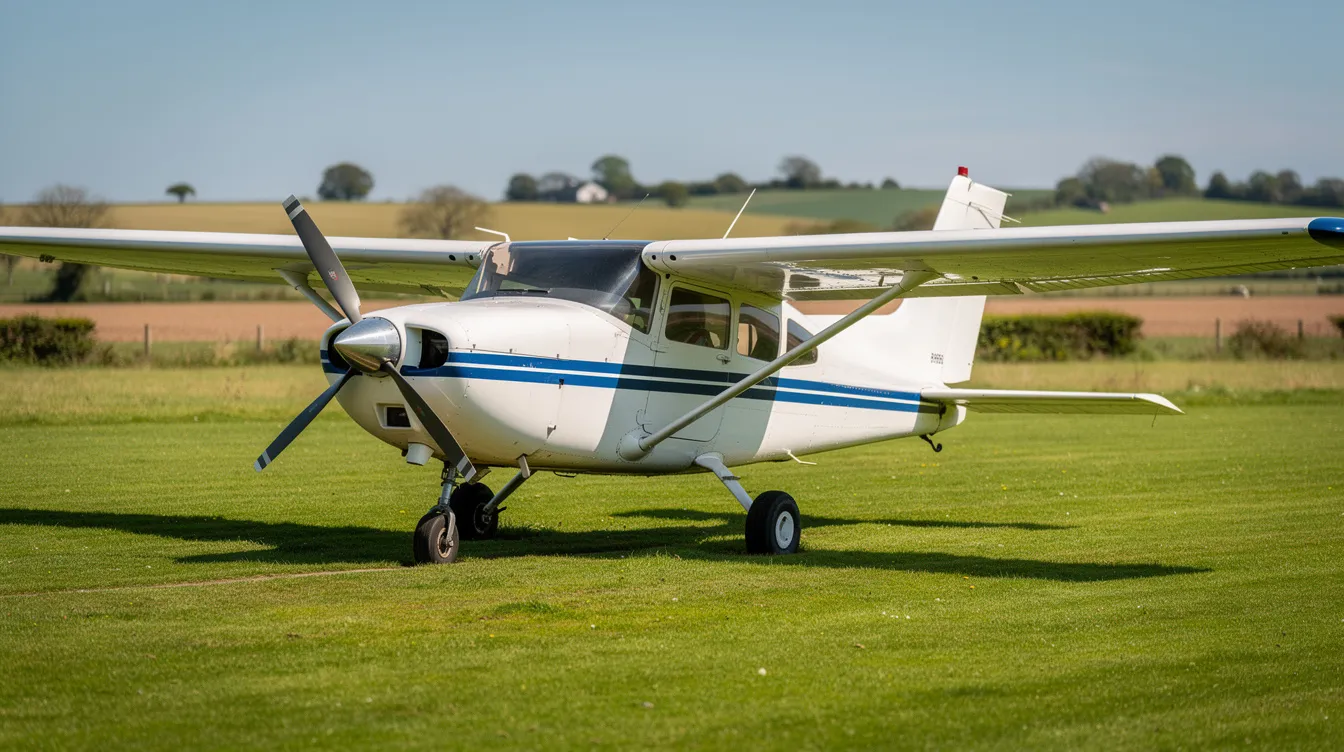
Choosing your first airplane is one of the most consequential decisions you will make as a pilot. This guide is for aspiring pilots, student pilots, and first-time aircraft buyers looking for the best beginner airplane. Choosing the right first airplane is crucial for building confidence, safety, and long-term flying enjoyment. The right aircraft shapes your flying habits, builds confidence through positive reinforcement, and sets a foundation for safety that lasts a career. The wrong one can reinforce fear, inflate costs, and slow your progression toward the pilot you want to become.
Why Your First Airplane Decision Matters More Than You Think
A good beginner airplane does more than get you off the ground. It teaches you how to think, react, and manage workload in the cockpit. Aspiring pilots who start in a stable, forgiving aircraft with fixed gear and straightforward controls internalize fundamentals more quickly: energy management, rudder coordination, precise speed control on approach. Those who jump into a complex, high-performance machine often struggle to keep up with retractable gear sequencing, manifold pressure management, and glass cockpit information overload while simultaneously learning to fly.
The contrast is stark. A novice pilot in a Cessna 172 Skyhawk faces moderate insurance premiums, a well-known training syllabus, and an airplane that practically wants to fly straight and level. That same pilot in a turbocharged, retractable-gear single with advanced avionics will face dramatically higher insurance costs, mandatory transition training, and a cockpit workload that leaves little mental bandwidth for building core airmanship. Insurance underwriters price this risk explicitly: premiums rise sharply when low-time pilots fly complex aircraft.
There is also a practical dimension that aviation enthusiasts often overlook. Owning a beginner aircraft makes sense for local flying, time building, and weekend adventures. But for serious business or family travel beyond small-piston range, structured private jet access through a program like BlackJet often delivers better value, safety, and time efficiency than trying to stretch a first plane into a role it was never designed for.
This article will walk you through what makes a good beginner airplane, which concrete models to consider, what a realistic first aircraft purchase looks like, and when a jet card is smarter than ownership.
Start With Your Mission: What Do You Actually Want to Do in the Air?
Define your mission before selecting a first aircraft. "Mission first, airplane second" is the central filter that should precede every conversation about make, model, or price. Without a defined mission, pilots seeking the best airplane risk buying too much airplane for their skill level or, conversely, outgrowing a trainer within months.
Common beginner missions include:
Solo local flying and pattern work within 75–100 nautical miles of home
Weekend trips with one to three passengers to airports within 150–300 nm
Building hours toward an instrument rating through primary and instrument training
Occasional business hops between regional cities
A Cessna 150 or 152 suits solo flight training and time building perfectly. Its limited payload forces discipline and rewards fundamentals. If your primary mission includes small family trips, carrying adult children, or light baggage, a four-seat aircraft like the Cessna 172 Skyhawk or Piper Cherokee gives room to grow without stepping into complexity.
For multi-city, same-day business travel—think New York to Chicago to Dallas—a private jet via a jet card like BlackJet is often far more practical than buying a fast piston single as a first plane. Speed, weather independence, and fatigue management favor jet access for those missions.
What Makes a Plane a "Good Beginner Airplane"?
A good beginner airplane should be stable and forgiving, affordable to operate, and simple enough to manage under the workload of learning. Simplicity in design is important for reducing cognitive overload during training, especially during the critical first 50–100 hours.
Key traits of great airplanes for beginners include:
Fixed gear: fixed landing gear simplifies operations by eliminating the need for gear retraction, reducing failure points, and lowering insurance costs
Tricycle landing gear: tricycle landing gear improves ground handling and landing stability compared to tailwheel configurations
Non-turbocharged, normally aspirated engine: avoids manifold pressure management and turbo failure complexity
Stall speed under approximately 55 knots clean: docile stall characteristics give pilots warning before stalling occurs, with buffeting and gradual break rather than abrupt departure
Straightforward systems: fixed-pitch propeller, simple fuel selector, minimal electrical complexity
Beginner-friendly airplanes are typically lightweight, stable, and easy to control. Generous stability helps aircraft return to level flight when controls are released, giving new pilots a margin of safety during distraction or momentary disorientation. Stable flight characteristics help beginners learn basic maneuvers without fighting the airplane.
Practical cockpit traits matter too: good visibility for traffic scanning and landing proficiency, ergonomic throttle and mixture placement, and a layout that supports easy checklist flow. Both analog gauges and optional simple GPS or glass backup are ideal for learning. Popular beginner airplanes like the Cessna 172 Skyhawk benefit from abundant parts, instructor familiarity, and strong resale value-factors that are easy to underestimate until you need a part on a Friday afternoon.
Cessna 172 Skyhawk: The Benchmark First Plane
The Cessna 172 Skyhawk is the most popular training aircraft worldwide, and for good reason. It has trained generations of pilots across every continent, serving as a flight school workhorse, personal aircraft, and instrument training platform simultaneously.
Over 44,000 Cessna 172s have been built since 1956, making it the most produced aircraft in history. The modern 172S features a 180-horsepower Lycoming IO-360 engine, approximately 53 usable gallons of fuel, and a typical cruise speed around 124 knots at 75% power. Useful load runs roughly 870–1,000 pounds depending on model and equipment, with range around 600–730 nautical miles.
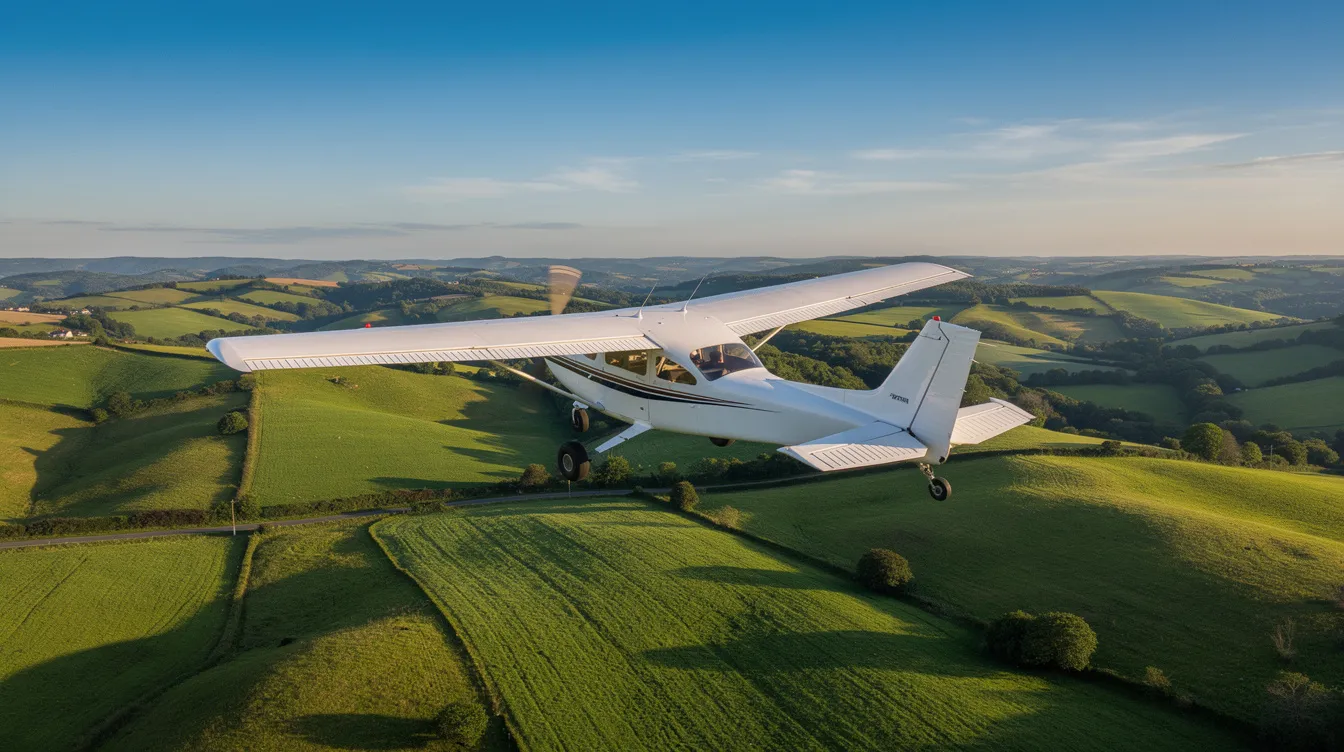
What makes the Cessna 172 the best plane for most new pilots is its combination of forgiving flight characteristics, predictable handling, and a high-wing layout that provides excellent visibility during ground reference maneuvers and pattern work. Its stall behavior is gentle and well-announced, giving pilots time to recognize and recover. The high-wing design also offers natural shade on the ramp and easier cabin access.
The 172 is a versatile aircraft that serves as an excellent platform for primary training, instrument training, and light cross-country travel. It grows with you rather than becoming obsolete after the private certificate. This "grow with you" quality means your first aircraft purchase in a 172 is not a throwaway—it is an investment in capability.
When comparing renting versus buying, flight school rental rates for a 172 typically run $150–$250 per hour, depending on the region. Ownership involves higher fixed annual costs but gives you schedule control, a consistent cockpit, and the ability to customize avionics. The broad mechanic familiarity with 172s means maintenance is straightforward, and the resale market is relatively liquid. If you decide to sell after a few hundred hours, you will find buyers.
Budget-Friendly Classics: Cessna 150 and 152
The Cessna 150 and 152 are ideal for cost-conscious students who want a classic trainer focused purely on fundamentals. These two-seat trainers, built between 1959 and 1985, remain among the most accessible beginner airplanes in terms of both purchase price and operating costs.
The Cessna 150 uses a 100-horsepower Continental O-200 engine, while the 152 is upgraded to a 110-horsepower Lycoming O-235. Typical cruise speeds run 100–107 knots at 75% power. Cessna 150 fuel burn is around 6 to 7 gallons per hour of 100LL, keeping hourly fuel costs manageable. Range sits around 350–415 nautical miles depending on configuration and reserves, and Cessna 150 purchase prices range from $25,000 to $60,000 depending on year, engine hours, and avionics condition.
The Cessna 150 and 152 are ideal for primary training because their lighter weight and slower cruising speeds allow pilots more time to make decisions during flight. Students in these aircraft must think ahead of the airplane constantly, reinforcing stick-and-rudder skills and precise speed control that carry forward into every future aircraft.
Limitations are real: the cockpit is cramped, especially for taller pilots or any passenger over average size. Baggage capacity is minimal. Aging airframes demand careful pre-buy inspections for corrosion, particularly in coastal or humid environments. These are not cross-country machines for families.
A Cessna 150 or 152 can be a smart first airplane for pilots focused on local flying, training flights, and hour-building. For serious cross-country travel, many owners pair their budget trainer with private jet services, keeping the best of both worlds: hands-on skill development at home and efficient, comfortable travel when distance or time pressure demands it.
Piper PA-28 Cherokee/Archer: The Low-Wing Alternative
The Piper PA-28 family-Cherokee, Warrior, Archer—is the primary low-wing counterpart to the Cessna 172 for beginner pilots. The Piper PA-28 family has produced over 32,000 aircraft since 1960, and the Piper Cherokee and its variants remain a staple of flight schools and private owners globally.
Key characteristics include a low wing design, four seats, fixed gear, cruise speeds around 120–125 knots, fuel burn of 8–10 gallons per hour, and a seating position that many pilots describe as "car-like." The lower sight picture gives a planted, grounded feeling during taxi, takeoff, and landing that some students find immediately intuitive.
Many experienced pilots recall that their early exposure to a low-wing aircraft built confidence during crosswind practice and pattern work. The PA-28's roll response is often described as crisper than a high-wing Cessna, giving pilots a more direct sense of control input. The Piper PA-28 family has trained generations of pilots, and experienced instructors in PA-28s are common at most regional airports.
Trade-offs exist. Most Cherokee variants have a single cabin door on the right side, making boarding less convenient than the dual-door Cessna. Downward visibility during taxi and in the pattern is reduced because the wing sits below the cabin. Fuel management requires more attention in some older models with multiple tank configurations. Aircraft condition on older airframes—particularly wing spar integrity—demands a thorough pre-buy inspection.
Training in a Cherokee or Archer versus a Skyhawk is largely a matter of preference and local instructor ecosystem. Either can be an excellent first airplane if it supports the pilot's mission.
Modern Glass Options: Diamond DA40 and Cirrus SR20 as First Aircraft
Some pilots seeking modern composite aircraft are drawn to glass-cockpit beginner airplanes like the Diamond DA40 and Cirrus SR20. These represent a different philosophy: early exposure to advanced avionics and composite construction from day one.
The Diamond DA40 features a composite airframe for efficiency, a bubble canopy offering exceptional visibility, and fuel efficiency that beats most legacy trainers. Typically equipped with Garmin G1000 integrated avionics, the DA40 is known for its modern design and fuel efficiency, making it attractive for early instrument and cross-country training. New prices start around $260,000–$335,000 depending on configuration.
The Cirrus SR20 includes an integrated parachute system for safety-the Cirrus Airframe Parachute System (CAPS)-which has saved dozens of lives since its introduction. With a spacious cabin, advanced avionics suite, five-seat capacity, and cruise speeds around 155 knots, the SR20 offers a higher performance profile compared to legacy trainers. New SR20 G7 pricing starts around $634,900; used models range from $200,000–$450,000.
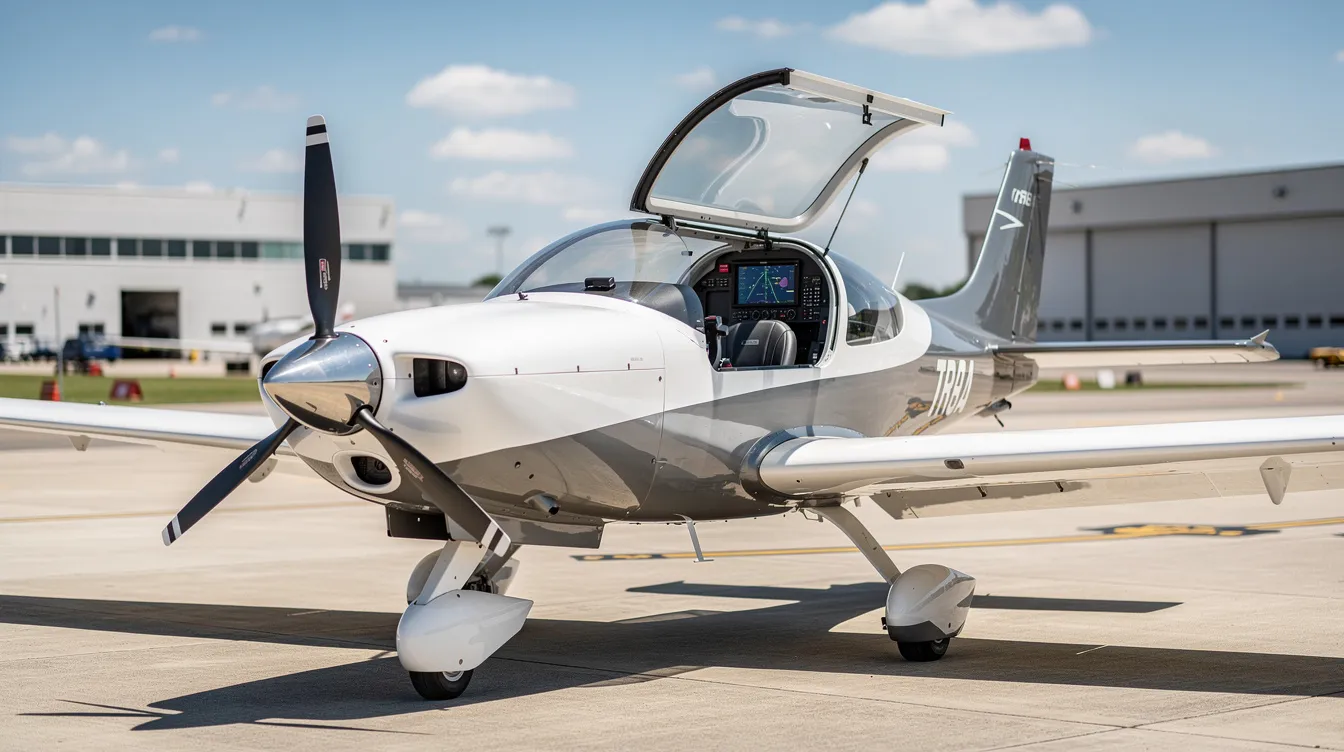
Modern avionics enhance safety and ease of flying for student pilots, and pilots planning long-term glass cockpit flying benefit from early familiarity. However, both aircraft carry cautions: higher acquisition and ownership costs, more complex insurance and transition training requirements, and the risk of focusing on screens instead of developing pure airmanship. A good trainer in a glass cockpit still requires disciplined instruction to ensure fundamental skills are not bypassed.
High-Wing vs Low-Wing, Fixed Gear vs Complexity for Beginners
The high wing versus low wing debate is one of aviation's oldest friendly arguments. For a beginner pilot, the differences are practical, not just aesthetic.
High-wing airplanes like the Cessna 172 and Cessna 152 provide inherent stability and improved visibility. High-wing aircraft offer better ground visibility during turns in the traffic pattern, easier ground reference maneuvers, and simpler gravity-fed fuel systems. The high-wing layout also provides natural shade on hot ramp days and more comfortable cabin entry.
Low-wing aircraft like the Piper Cherokee, Archer, and Diamond DA40 offer a sports car feel with a lower seating position and planted landing attitude. Roll response is typically more responsive, and many pilots enjoy the direct feel of a low wing on approach. Excellent visibility forward and to the sides is good, though downward visibility requires more deliberate clearing turns.
Fixed gear is strongly preferred in beginner airplanes. Retractable gear, turbocharging, and constant-speed propellers add mechanical complexity, maintenance costs, insurance expenses, and cockpit workload that should generally wait until the pilot has 200–300 or more hours. The difference in stable performance and operational simplicity between a fixed-gear trainer and a complex single is substantial for pilots still building foundational skills.
In summary: high wing offers better ground visibility and simplicity; low wing offers better roll feel and a planted landing perspective. Both are proven paths. Fixed gear is non-negotiable for most beginners.
How Many Seats and How Much Performance Do You Really Need?
The temptation to overbuy on speed and seats in a first aircraft purchase is real. A pilot imagining cross-country trips with the family naturally gravitates toward the biggest, fastest airplane within budget. But more performance means more complexity, higher insurance, and steeper learning curves.
Two-seat trainers such as the Cessna 150/152 excel for solo training, local flights, and building proficiency without distraction. A new pilot flying mostly solo within 75 nautical miles has no need for four seats and 180 horsepower.
A pilot planning regular trips with a spouse and two children, carrying weekend bags, and flying 200–400 nm legs genuinely needs a four seat aircraft like the Cessna 172 or Piper Archer. The right aircraft matches the actual mission, not the aspirational one.
More performance—faster cruise, higher useful load, constant-speed propeller-increases insurance costs, transition training, and cockpit workload, which can slow learning. For experienced pilots, these additions make sense. For someone building their first 200 hours, simplicity wins.
For missions beyond piston-single performance, coast-to-coast in a day, international trips, and multi-city business itineraries, BlackJet's Jet Card programs provide private jet access that no first plane can match. The right tool for each mission matters.
Renting First vs Buying Your First Plane
Most instructors recommend 40–80 flight hours before buying. Ideally, a pilot should complete at least the private certificate before committing to a first aircraft purchase. Most beginners should log 40–80 hours renting first to understand what they actually want.
Renting advantages are significant for early-stage pilots:
Access to multiple beginner airplanes at a flight school to sample different types
No maintenance or hangar obligations
Renting avoids surprise maintenance bills and fixed costs
Renting is cheaper below 50 hours of flying per year
Ability to refine your defined mission and preferences before spending capital
Ownership advantages emerge as flying experience grows:
Schedule control: owning an aircraft offers always-available scheduling without conflicts
A consistent cockpit environment builds proficiency faster
Ability to customize avionics and interior to your preferences
The satisfaction of having your own plane, ready when you are
Ownership generally becomes more cost-effective above roughly 75–150 hours per year, depending on local hangar and maintenance costs. Below that threshold, renting or club membership usually wins on economics.
A hybrid strategy works well for many pilots: own or co-own a simple trainer locally for weekend flying and skill-building, and use BlackJet for longer business or family trips where time and comfort matter most.
Understanding the Real Costs of a Beginner Aircraft
The purchase price is only the tip of the iceberg. A realistic view of ownership costs separates informed buyers from surprised ones. If you are wondering how much a plane costs to buy, here is what to expect beyond the sticker.
Fixed annual costs for a typical Cessna 172 include:
Hangar or tie-down: $1,500–$8,400 per year depending on location
Annual insurance for a Cessna 172 can exceed $10,000, particularly for low-time pilots with higher hull values
Annual inspection: $1,500–$3,500 depending on aircraft condition and squawks
Chart subscriptions, databases, registration, and sales tax: $200–$1,100
Fixed costs for a Cessna 172 range from $8,000 to $14,000 annually before you fly a single hour
Variable costs per flight hour add up quickly:
Fuel at 7–9 gallons per hour, priced at $6–$8 per gallon: $42–$72 per hour
Oil, filters, and minor consumables: $3–$5 per hour
Engine and propeller overhaul reserves: $15–$25 per hour
Maintenance reserves for airframe, tires, brakes: variable
Variable costs for operating a Cessna 172 are about $87 to $97 per hour
At 100 hours per year, ownership costs can exceed $18,000 annually for a Cessna 172, and often reach $25,000–$30,000 when financing costs and depreciation are included. Low operating costs are a relative term in aviation.
For comparison, a BlackJet Jet Card offers predictable hourly or trip-based costs with no fixed overhead, no maintenance surprises, and no asset depreciation risk. For pilots whose travel needs extend beyond local flying, the cost comparison becomes instructive.
Safety, Training Ecosystems, and Support Networks
A good beginner airplane is not just about the machine. It is about the training and support ecosystem around it. A rare or exotic aircraft type with limited instructor familiarity, scarce parts, and few qualified mechanics is a poor choice for a first aircraft, regardless of its specifications.
Popular trainers benefit from abundant parts and instructor familiarity. The Cessna 150/152, Cessna 172, and Piper PA-28 families have standardized training syllabi, thousands of experienced instructors, active online communities, and deep part supply chains. A discovery flight in one of these types is easy to arrange at nearly any airport in the country.
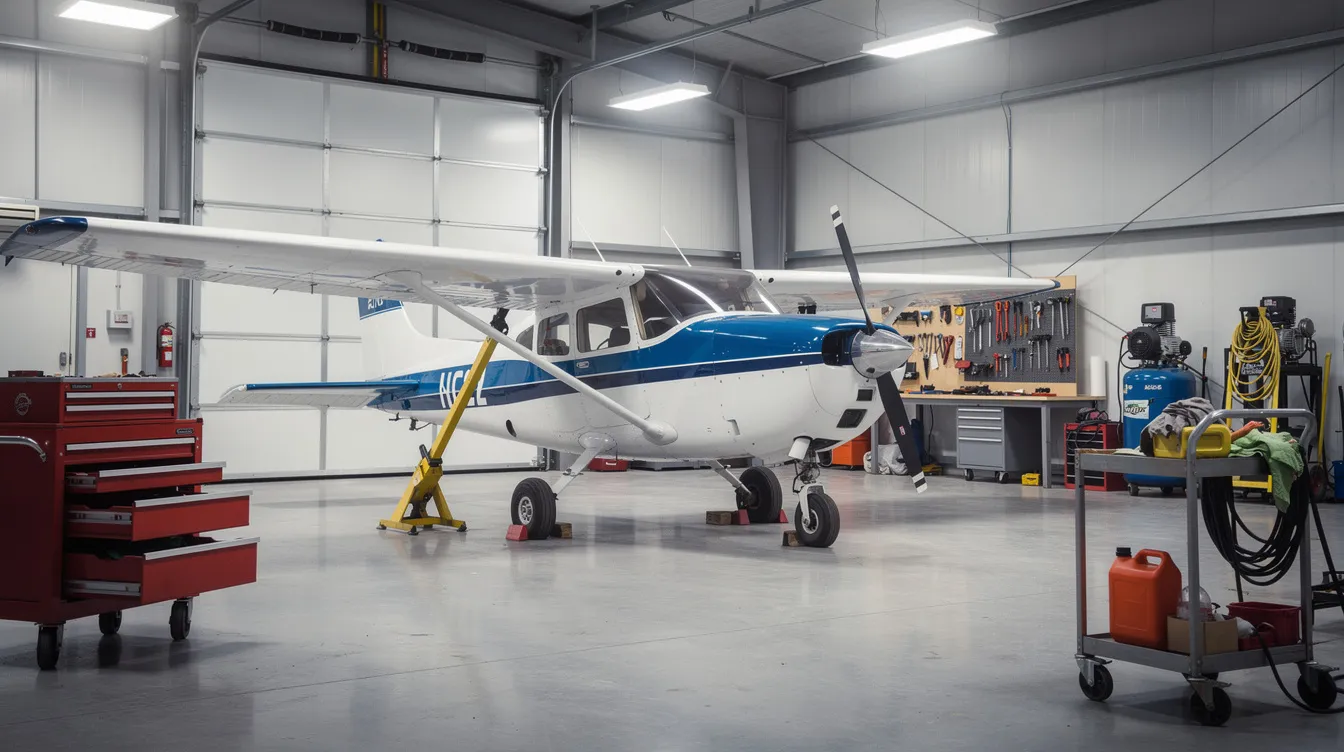
Easy access to qualified mechanics, parts, and local training expertise is critical when choosing a rental aircraft or making your first aircraft purchase. Composite aircraft like the DA40 and SR20 require specialized repair facilities, which may not exist at your home airport.
BlackJet applies an analogous philosophy to private jet access: proprietary safety standards, vetted operators, and audited crews ensure every flight meets rigorous benchmarks. Whether you are renting, owning, or chartering, safety culture and support networks should be non-negotiable selection criteria throughout your aviation journey.
When Private Jet Access Is the Smarter "First Plane"
For many high-net-worth individuals, the best first plane for actual travel is not a small piston aircraft but structured private jet access. The passion of flying and the practicality of travel are two different problems with two different solutions.
A common and strategic use case: an entrepreneur earns a private certificate in a Cessna 172 for personal enjoyment and local flying, then uses a BlackJet Jet Card for serious business travel between major cities or internationally. The piston single handles the aviation journey-the joy of stick-and-rudder flying, the satisfaction of mastering weather, navigation, and decision-making. The jet card handles the travel mission-speed, reliability, multiple cabin classes, and carbon-neutral operations.
Owning a beginner aircraft involves fixed costs, maintenance oversight, and proficiency requirements. A jet card model offers prepaid flight hours across multiple aircraft categories, 24/7 digital booking, real-time support, and no asset risk. BlackJet's technology platform and commitment to carbon-neutral flights align with the expectations of discerning travelers who also enjoy personal flying.
A hybrid approach—simple, fixed gear beginner airplane for fun and skill-building plus BlackJet for time-critical trips-is often the most strategic path.
Structuring Your First Aircraft Purchase Safely and Strategically
Treat a first aircraft purchase like acquiring a significant asset, not an impulse buy. The process mirrors due diligence in any major investment.
Key steps include:
Define your primary mission and budget with realistic margins for surprises
Get financing pre-approval from aviation lenders if needed
Engage a trusted A&P/IA mechanic with type-specific experience for the pre-buy inspection
Hire an aircraft broker if navigating the market feels overwhelming
Review logbooks thoroughly for engine hours, maintenance history, corrosion records, AD compliance, and any damage history
Ownership structures matter. Many owner-pilots use an LLC for liability separation. Shared aircraft ownership through partnerships or flying clubs can spread fixed costs and risk, making ownership viable at lower annual flying hours. Ensure your insurance coverage matches your ownership structure and your skill level.
Address insurance early. Low-time pilots face higher premiums or coverage requirements depending on aircraft type. Insuring a glass-cockpit composite single costs significantly more than insuring a standard Cessna 172. Just as BlackJet pre-vets its operators and aircraft, a first-time buyer should similarly vet their prospective beginner airplane with logbook reviews, title searches, and an independent mechanical assessment.
Planning Your Long-Term Aviation Journey
Your first airplane choice sets the tone for the next five to ten years of flying and travel decisions. Think in phases rather than trying to solve every need with a single aircraft.
Phase one: primary training and local flying in beginner airplanes. Build solid fundamentals, earn the private certificate, and accumulate enough flying experience to know what you want next.
Phase two: instrument rating and modest cross-country missions. A Cessna 172, Piper Archer, or Diamond DA40 serves well here. Your key factors are reliability, avionics capability, and comfort for longer flights.
Phase three: for high-stakes or long-range trips, leverage private jet access. A pilot who starts in a Cessna 152, moves to a Cessna 172 or Diamond DA40, and parallelly uses BlackJet jets for transcontinental business travel has built an aviation life that is both personally fulfilling and practically efficient.
The best airplane evolves with experience, but the safest path is to start simple and add complexity only when skills, mission, and budget justify it. BlackJet can serve as a long-term partner on the travel side, while local experienced instructors, schools, and A&Ps guide the owner-pilot side.
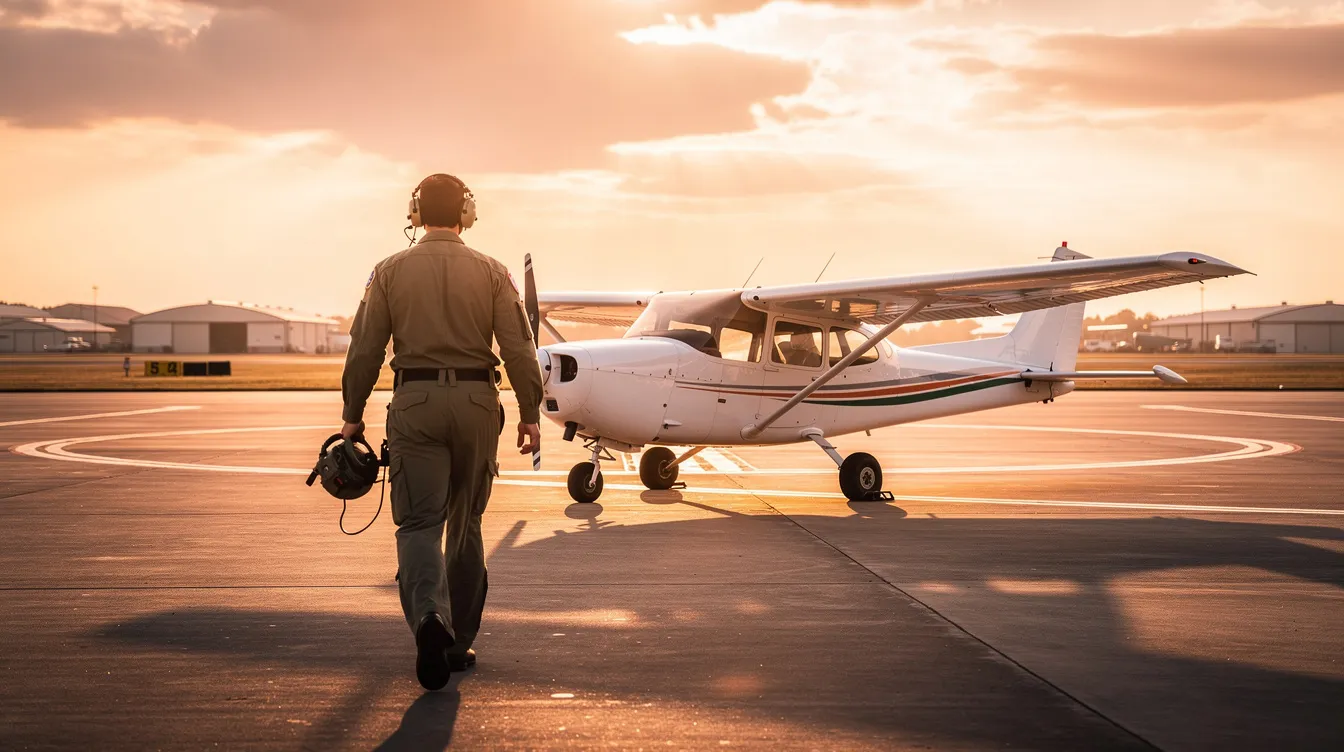
Putting It All Together: Choosing the Best Beginner Airplane for You
The right aircraft for your first airplane comes down to a few clear decision levers: mission, budget, comfort with complexity, local support, and realistic annual flying hours.
Here is a quick recap of the main beginner airplane options:
Cessna 150/152: Budget-friendly, fundamentals-focused, ideal for solo local flying and hour-building. Purchase prices from $25,000–$60,000. Low operating costs and low fuel burn. Best for pilots who want a pure, no-frills good trainer.
Cessna 172 Skyhawk: The versatile default first plane. Four seat aircraft with stable performance, forgiving flight characteristics, and the deepest support ecosystem in general aviation. A true "grow with you" airplane.
Piper PA-28 Cherokee/Archer: The low-wing alternative for pilots who prefer a planted landing attitude, crisper roll, and a car-like cockpit feel. A proven, capable first airplane.
Diamond DA40 / Cirrus SR20: Modern composite aircraft for tech-forward learners with higher budgets who want early exposure to glass cockpits, fuel efficiency, and advanced safety systems.
Renting widely before your first aircraft purchase is often the best way to de-risk the decision and clarify preferences. Sample multiple types at your local flight school. Fly with different experienced instructors. Let the airplane tell you what fits.
For travel beyond what any beginner aircraft can deliver—speed, range, weather independence, cabin comfort—explore how BlackJet's Jet Card programs can complement your personal flying, handling long-range and business travel with safety, advanced technology, and carbon-neutral operations.


 Sign up with google
 Sign up with Apple