For discerning travelers, the decision between commercial first class and private jet access is less about luxury and more about strategy. Time recovered, meetings secured, and control over your own schedule compound into measurable advantages. Here is a practical, section-by-section class review of what flying first class American Airlines actually delivers in 2025–2026, and where a BlackJet Jet Card picks up where the airline leaves off.
Overview: Is American Airlines First Class Worth It in 2024–2026?
American Airlines first class can be worth it, but the answer depends entirely on which aircraft you board and which route you fly. On international flights like London–Miami aboard the Boeing 777-300ER, you get Flagship First, a genuinely exclusive cabin. On domestic flights such as New York–Los Angeles or Dallas–Miami, you get wider seats and priority service, but nothing close to a suite.
The complication: American Airlines is phasing out its international first-class product on many routes, replacing it with enhanced business-class Flagship Suites. The A321XLR, for example, launches with 20 Flagship Suite seats and zero first class seats. By 2026, true Flagship First will exist only on the 777-300ER fleet.
This article walks through the cabin, seat, food, wi fi, lounge access, and overall class experience on American Airlines, then contrasts each element with the private jet alternative through BlackJet. Whether you fly domestically twice a month or cross the Atlantic quarterly, the comparison matters.
Booking American Airlines First Class (Domestic & International)
How you book dramatically affects value. Cash fares for international Flagship First between the U.S. and Europe typically run $5,000–$8,000+ one-way. Award booking through AAdvantage miles is possible, but saver-level availability is scarce; most Flagship First awards land at anytime pricing, requiring significantly more miles than business class.
For American Airlines' domestic first class, the math is simpler. One-way fares on routes like Austin–Orlando, Dallas–Los Angeles, or New York–Miami range from $300 to $1,20,0 depending on timing. Upgrade offers from main cabin or Premium Economy often appear at $150–$300 one-way, either at booking or at the gate.
Key booking considerations:
Codeshare flights booked via British Airways or Iberia can be managed through the AA app, though seat selection may be restricted by the original booking class.
Elite status (Platinum, Platinum Pro, Executive Platinum, ConciergeKey) improves upgrade priority, unlocks free same-day flight changes, and enhances mileage earning on every ticket.
When AA first falls short: Multi-city trips in a single day, last-minute schedule changes, or confidential discussions onboard all point toward a private jet Jet Card rather than a commercial first class ticket.
Cabin Classes on American Airlines vs Private Jet Options
American Airlines offers a layered cabin hierarchy:
Cabin | Key Features | Best For |
|---|
Basic economy | No seat selection, last boarding group, no changes | Budget-only travel |
Main cabin | Standard economy seat, some flexibility | Routine short trips |
Main cabin extra | More space and legroom, earlier boarding | Comfort-conscious flyers |
Premium Economy | Wider seat, upgraded meal on international flights | Long-haul value |
Business class (Flagship) | Lie-flat on widebodies, direct aisle access | International productivity |
First class (domestic) | Recliner seats, 2-2 layout, priority service | Domestic comfort |
Flagship First (international) | Suite, lie-flat, exclusive ground services | Top-tier commercial |
American Airlines' first-class seats are wider than economy seats across every aircraft type, but the gap between domestic first and Flagship First is enormous.
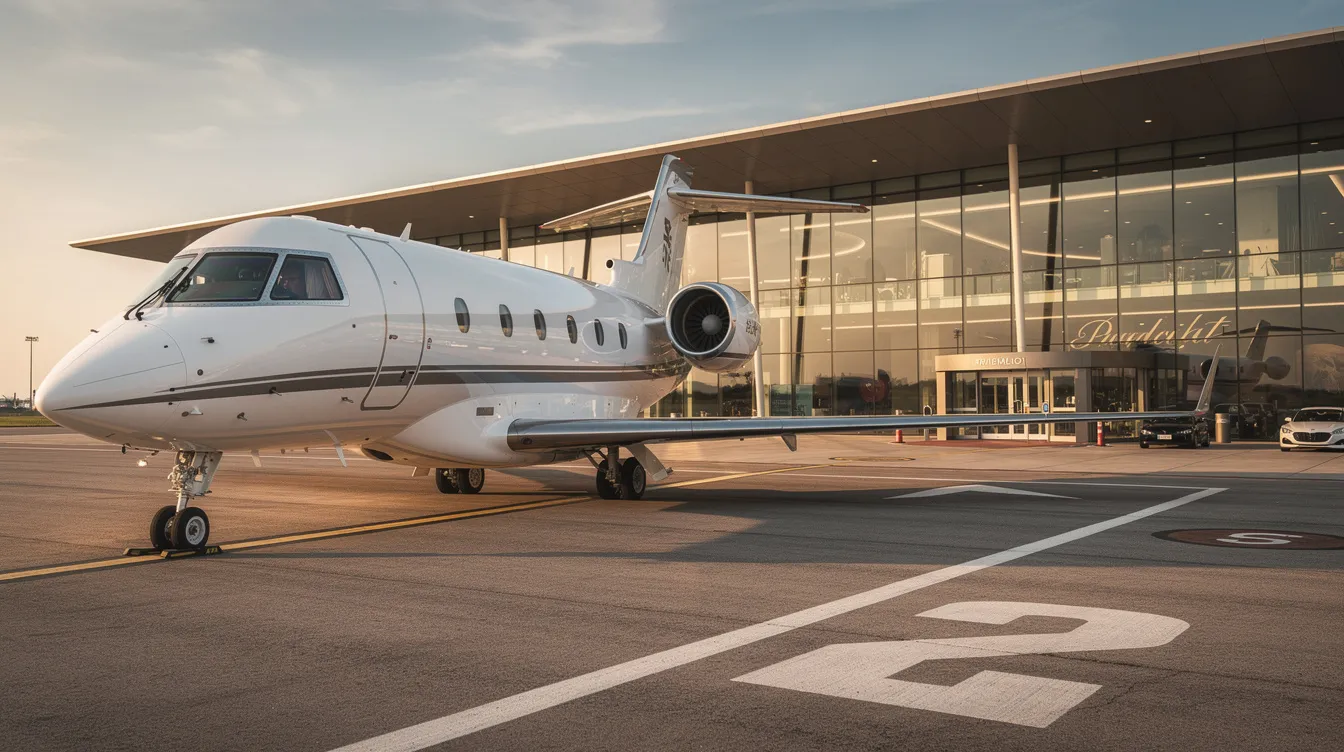
Contrast all of the above with BlackJet's private jet cabins: light, midsize, super-midsize, and large-cabin jets configured for 4–14 passengers. Every seat is yours. No strangers, no class cabins to navigate, no compromise on privacy or cabin customization.
International First Class: American Airlines Flagship First Experience
Flagship First on the Boeing 777-300ER remains the most exclusive American Airlines flight experience. It operates on select routes between the U.S. and Europe, South America, and occasionally Asia.
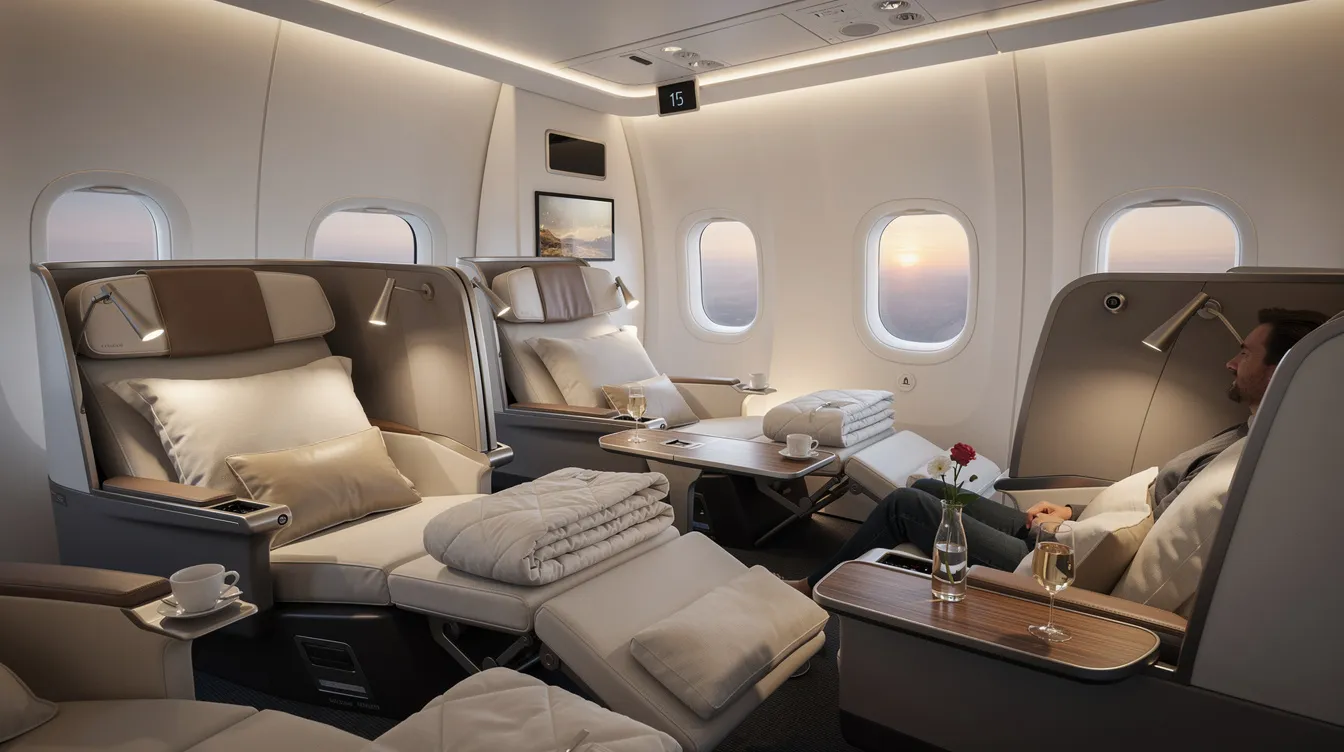
Cabin layout: The first-class cabin typically has just two rows in a 1-2-1 seating configuration, usually eight seats total, physically separated from business class. First class on the Boeing 777-300ER features a 1-2-1 seating configuration that ensures every passenger has direct aisle access.
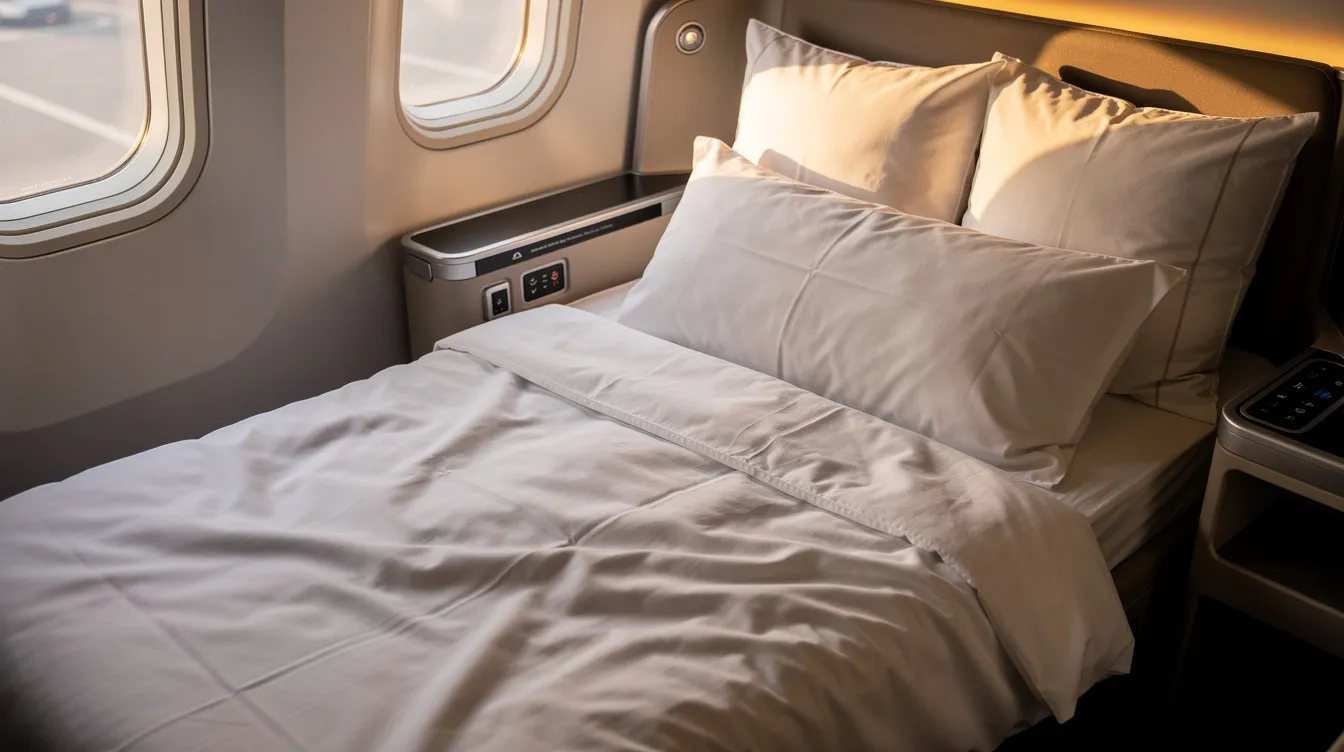
The seat: Seats can convert into fully flat beds for comfort on overnight crossings. Each seat includes a mattress topper for added comfort, a duvet, and plush pillows through partnerships with Casper bedding, which offers specialty pillows for Flagship First. A large IFE screen, multiple power outlets, and personal storage complete the suite.
Ground services: Flagship First passengers receive a private check-in experience at hubs like JFK, MIA, and LHR, fast-track security, and priority boarding-Group 1, ahead of every other class. Priority baggage tags ensure early arrival at the carousel.
Lounge access: Entry to Flagship Lounges, International First Lounges, and first-class passengers can access oneworld partner lounges such as the Cathay Pacific First Class Lounge in London Terminal 3. Flagship First Dining at key hubs offers a sit-down pre-flight meal.
Onboard service: Flagship First has a higher ratio of flight attendants to passengers than business class. Expect a personalized welcome by name, pre-departure beverages including champagne, chef-inspired multi-course meals, a premium white wine and spirits list, and turn-down service on overnight flights.
Entertainment: Large seatback screens, Bang & Olufsen headphones, and on-demand content. Wi fi reliability on long-haul routes remains inconsistent, with some passengers reporting dropouts over oceanic segments.
Versus private jet: On a transatlantic route like York to London, a BlackJet flight departs from a private terminal (FBO) with just 15–20 minutes of pre-departure time. Door-to-door, private jet travel can save 4–8 hours round-trip compared to commercial first, while offering full privacy for C-suite discussions.
Domestic First Class: American Airlines Within the 50 U.S. States
Domestic first class on American Airlines is a meaningful upgrade from economy, but it sits in a different category from Flagship First. Think of it as more space plus service rather than true luxury.
Cabin and seat: On aircraft like the Airbus A319 and Boeing 737-800, expect 2–3 rows in a 2-2 layout with wider seats, leather upholstery, and seat pitch around 37–40 inches. American Airlines' first class offers decent legroom for passengers, but no lie-flat capability. No doors, no suites.
First row considerations: Sitting in the first row (bulkhead) provides extra privacy and the quickest service, but there is no under-seat storage. Everything goes in the overhead bins during takeoff and landing.
Boarding: First-class passengers board before all other groups. Priority boarding allows first-class passengers to access overhead bins first, and boarding announcements for first class occur after pre-boarding for those needing assistance. That said, some flights do not prioritize first-class boarding as expected, especially at congested airports where group sequencing gets compressed.
Service on a short flight: On a typical 2–3-hour domestic flight, expect hot towels on some morning flights, complimentary alcoholic drinks, and a simple snack or light meal. American Airlines' first class includes complimentary beverages during the flight, including orange juice, coffee, and cocktails.
Food variability: American Airlines serves snacks like Hippeas and popcorn on shorter flights. Longer routes may provide plated breakfast items-enchiladas with eggs, fruit, and yogurt-while afternoon flights possibly offer only bagged snacks. Post-pandemic menus have improved, but consistency remains an issue.
Entertainment: Many domestic aircraft lack seatback screens in first class. Plan to stream content to personal devices via the AA app.
Versus private jet: On the sameroute, sayy Austin–Orlando or New York–Miami, a BlackJet trip means skipping TSA, driving directly to the FBO, and designing your own schedule for same-day returns. No waiting in terminal corridors.
Onboard Seat, Comfort & Amenities: Class Review
Seat design and amenities are where the gap between domestic first, international first, and private jets becomes impossible to ignore.
Domestic first: Wide recliner seats, generous pitch, blankets, and pillows on longer flights. No amenity kits, no sleepwear.
International business: Lie-flat pods with direct aisle access, improved bedding, and amenity kits.
Flagship First: Spacious suites with swivel seats, preset positions (takeoff, lounge, bed), fold-out tables large enough for laptop work, side consoles, and adjustable reading lights.
Amenity kits in Flagship First include premium skincare brands such as Joanna Vargas. Select long-haul flights offer slippers and limited-availability sleepwear.
On a BlackJet flight, the contrast sharpens further: bespoke catering, a guaranteed quiet cabin with no strangers, the ability to bring pets without cabin-wide restrictions, and tailored cabin layouts depending on whether you select a light jet or large-cabin aircraft for your trip.
Food, Drink & Inflight Service on American Airlines First Class
Many a first-class review lives or dies on the dining. Here is what to expect.
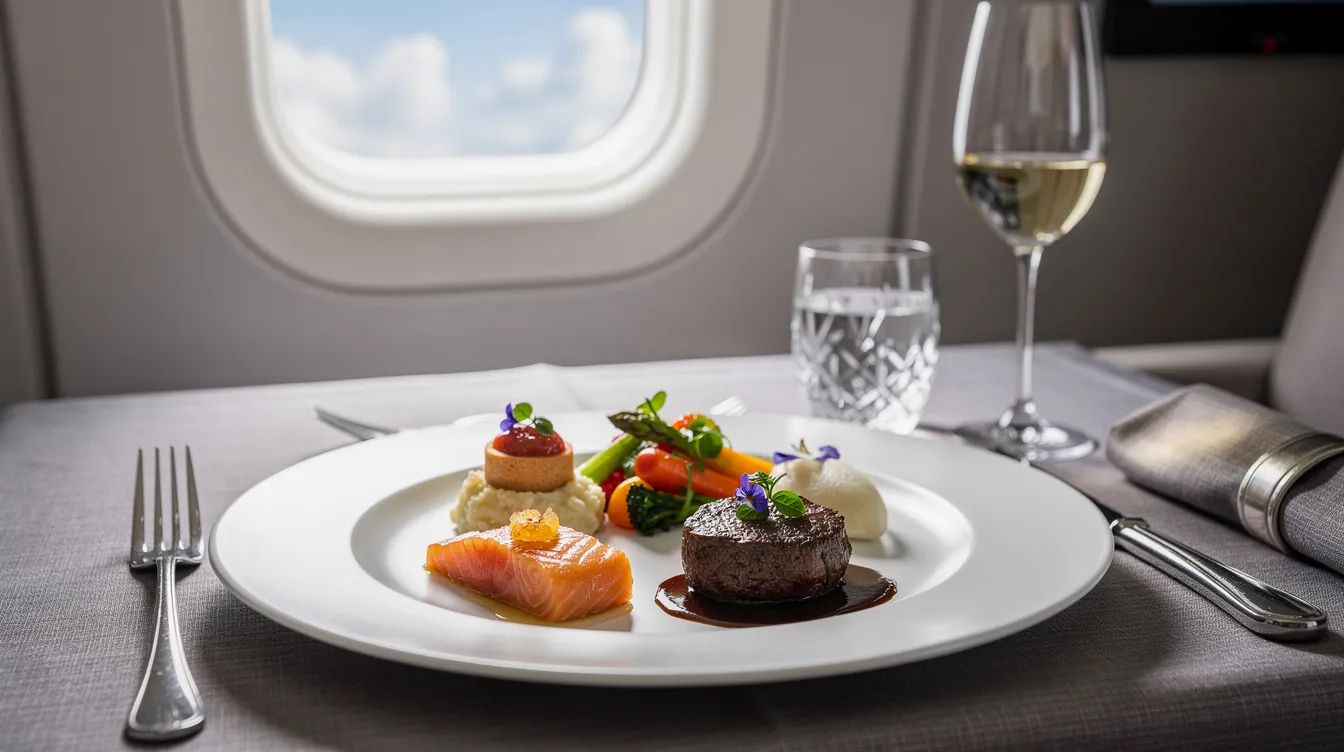
International Flagship First: Pre-departure champagne, printed menus, and first-class meals include multiple courses and drink options-starter (burrata, seasonal soup), main course (truffle pasta, short rib), and dessert. Ice cream sundaes are offered as dessert in first class on select routes. Vegetarian options are available on American Airlines' first-class menus. Mid-flight snacks and pre-arrival meals round out the service. The curated wine list includes fine selections, premium spirits, and freshly brewed coffee.
Domestic first: Food depends on flight distance and schedule. Sub-900-mile flights offer snack baskets. Longer routes may include a plated breakfast or lunch. An afternoon short flight might deliver nothing beyond packaged snacks and drinks, a disappointment for travelers who pay near-business-class prices and hope for more.
Service style: Typically, 1–2 dedicated flight attendants serve a small domestic cabin. International overnight flights offer more individualized attention.
BlackJet catering: Pre-select exact menus, coordinate with specific restaurantsand , eat on your schedule rather than the airline's. A plant-based tasting menu for a New York–Aspen landing? Done.
Entertainment, Connectivity & Wi-Fi: What to Expect
Connectivity can make or break a flight for anyone who needs to work.
Widebody IFE: Large personal screens on the 777-300ER with a broad library of films, TV, and music. Interfaces can feel dated.
Narrowbody domestic: Many aircraft lack seatback screens entirely. Passengers stream to personal devices via AA's online library.
Wi fi pricing: Day or flight passes run $29–$35 on long-haul sectors. AAdvantage members are gaining free access on many U.S. domestic routes through 2025–2026.
Reliability: Some first-class travelers report a complete inability to connect despite purch
asing passes. Cabin crews cannot troubleshoot beyond basic resets.
On a BlackJet flight, you can select aircraft equipped with high-speed satellite wi fi for continuous VPN access, video calls, and live document collaboration, turning the cabin into a secure airborne boardroom.
Airport Experience, Lounges & Priority Services
For premium travelers, the ground experience-check-in, security, and lounges-often matters as much as the seat itself.
Flagship First ground services: Private counters at hubs like LHR Terminal 3, JFK, MIA, and LAX. Expedited security where available. Priority baggage.
International lounge access: Flagship First offers access to premium Flagship Lounges, International First lounges, and oneworld partner lounges. Flagship First Dining at select hubs provides a sit-down meal before departure. Arrivals lounges with showers exist at London Heathrow.
Domestic lounge rules: First-class passengers can access Admirals Club lounges on select flights, but lounge access is limited on some domestic flights. A standard Austin–Orlando or Dallas–Denver domestic first-class ticket does not include Admirals Club entry. Lounge access may require a cross-country flight for eligibility routes like JFK–LAX or qualifying elite status. Some first-time first-class flyers are genuinely surprised when turned away at the lounge door on a domestic route.
BlackJet's FBO experience: Private terminals, minimal or no security lines, direct curb-to-aircraft transfers, and arrival just 15–20 minutes before departure. No group boarding, no access restrictions, no comments from gate agents about eligibility.
Price, Value & When to Choose Private Jet Travel Instead
For high-earning professionals, the real question is not ticket cost but return on time, privacy, and flexibility.
Domestic first: Round-trip fares around $800–$1,200 for a 2–3-hour flight, without guaranteed meal service.
International first: One-way fares easily surpass $5,000–$8,000+ between the U.S. and Europe on Flagship First.
Upgrade economics: A $150 upgrade from main cabin to domestic first on a short flight can be an excellent value. On a longer route, buying business class outright may make more sense.
The opportunity cost of commercial travel time spent at the airport, risk of delays, inability to change your schedule, and limited privacy add up. For executives who fly multiple times per year, a BlackJet Jet Card (available in 25-hour and 50-hour programs) offers predictable hourly rates across different aircraft categories. One or two long-haul first-class tickets per year can equate to a meaningful portion of a light-jet program, especially when several executives share the plane and split the cost per person.
Safety, Sustainability & Technology: Commercial First vs BlackJet
For serious travelers, safety and sustainability matter far more than amenity kits.
American Airlines operates under rigorous FAA oversight with standardized crew training and fleet maintenance. Its sustainability commitments include fleet renewal with more efficient aircraft like the Boeing 787 and early adoption of sustainable aviation fuel on select routes.
BlackJet partners exclusively with operators holding top-tier safety certifications (ARG/US Platinum, Wyvern Wingman, or equivalent) and maintains its proprietary BlackJet Certified program, built on more than 300 million data points covering aircraft, operators, and safety history. Every flight is carbon-neutral by default, offsetting CO₂ plus water vapor, nitrous oxide, and aerosols at up to 300% of the carbon footprint, at no extra cost to members.
Technology is a differentiator: AA offers consumer-grade apps for seat selection and check-in. BlackJet provides 24/7 digital booking, real-time flight support, and direct communication with mission control for last-minute itinerary changes.
FAQs: Flying First Class American Airlines vs Private Jet Access
Does American Airlines still have First Class on international flights?
Only on the 777-300ER. American is gradually replacing Flagship First with larger business-class Flagship Suites as new aircraft like the A321XLR enter the fleet.
Is American Airlines domestic first class worth it?
On a short flight under two hours, the benefits are modest: free drinks and slightly more space. On routes of three hours or more, the extra legroom, complimentary beverages, and priority service justify a modest upgrade fee.
Do you get lounge access with American Airlines first class?
On international Flagship First, yes—Flagship Lounges, partner lounges, and Flagship Dining. On most domestic first-class tickets, no. Exceptions exist for certain transcontinental routes and qualifying elite members.
How does AA First compare to business class?
AA's new Flagship Suite business class will often feel more modern and possibly more private than older Flagship First seats, narrowing the gap considerably.
When does a private jet make more sense than AA first class?
Multi-city deal roadshows, confidential board meetings in the air, same-day turnarounds between cities like New York, Chicago, and Dallas, any scenario where schedule control and privacy outweigh the airline's fixed timetable.
How can BlackJet complement my American Airlines flying?
Many BlackJet members still fly AA for routine, well-timed commercial routes. They rely on their Jet Card for mission-critical or privacy-sensitive legs where commercial options are inconvenient or unavailable.
Final Thoughts & How BlackJet Fits Into Your Premium Travel Strategy
American Airlines first class-both domestic and international-delivers genuine comfort and efficiency on the right route and the right aircraft. But it is constrained by fixed schedules, shared cabins, variable wi fi and catering, and an airline that is actively reducing its most exclusive product.
For frequent travelers, executives, and high-net-worth families, first class on AA is a clear step up from economy and main cabin, but not the final word on premium travel. The structural limitations of commercial aviation-waiting in terminals, navigating boarding groups, accepting whatever food and connectivity the airline delivers that day-remain.
BlackJet represents the logical progression: guaranteed privacy, aircraft choice, carbon-neutral flights, and scheduling built entirely around your calendar. If you are ready to move beyond what any airline can offer, explore BlackJet Jet Card membership and discover how on-demand private jet access can reshape your journey from an obligation into an advantage.


 Sign up with google
 Sign up with Apple