Why the Boeing 737 Still Matters in 2026
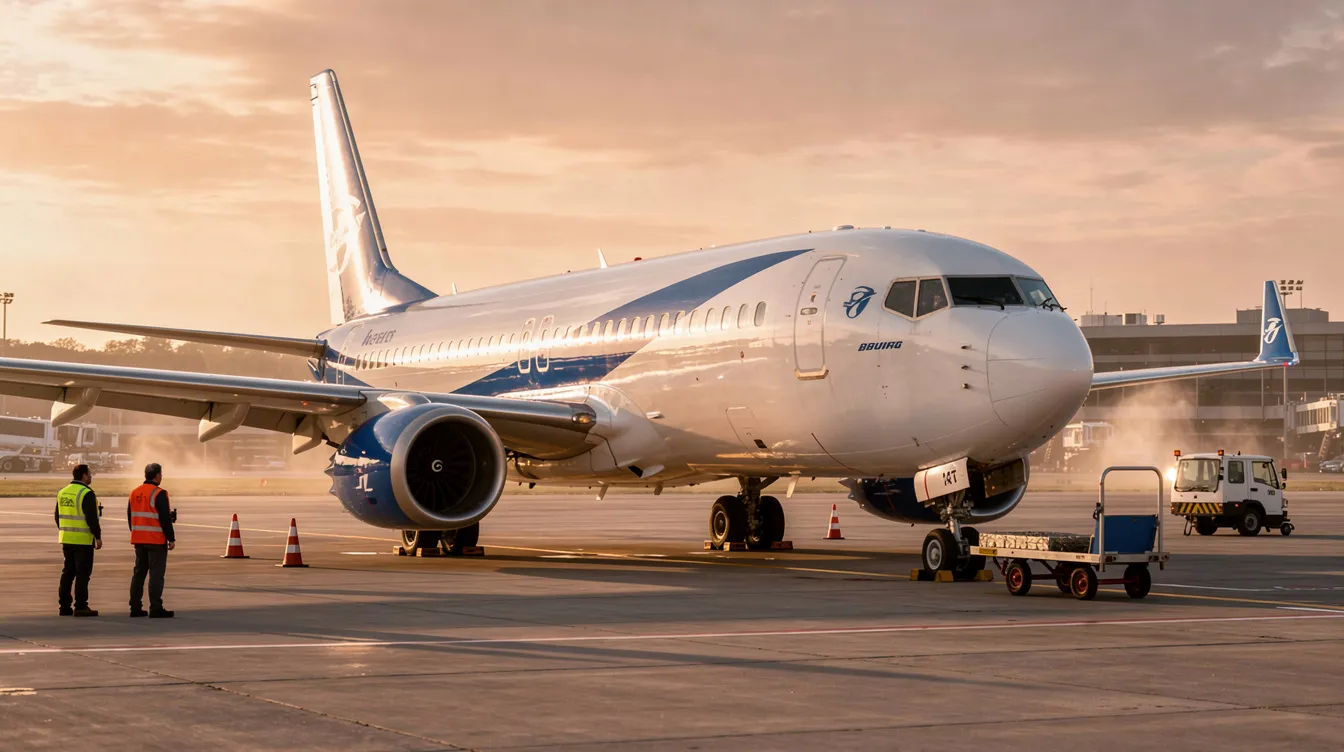
Chances are, your first flight was on a Boeing 737—and if you want to understand what it means to fly 737 today, it means flying on the world's most widely used airliner or, for private travelers, accessing the same platform in a Boeing Business Jet configured for long-range comfort, privacy, and flexibility. More travelers worldwide have boarded this aircraft than any other jet in history, and for good reason: the Boeing 737 family remains the highest-selling commercial aircraft ever built, with 12,615 total deliveries by June 2026.
Now consider the contrast for executives, frequent business flyers, and high-net-worth leisure travelers weighing commercial trips against private aviation. A typical flight on Southwest Airlines or United Airlines from New York to Chicago means arriving two hours early, navigating security, boarding a packed cabin, and losing nearly five hours door-to-door. A BlackJet private charter covers the same distance in under three hours total, with departure from a private terminal, no queues, and complete schedule control.
The 737 was the most commonly flown aircraft from 2008 to 2010, and its dominance hasn't faded. Over 7,500 Boeing 737s were in service by 2018, and in 2025 alone, Boeing delivered around 440 narrowbody jets - all of them 737 MAX variants. This guide explains why that matters to travelers comparing commercial and private options: it covers the 737's evolution, safety record, fuel-efficiency and sustainability advances, how 737 MAX technology changed performance and range, how Boeing Business Jets differ from airline cabins, and how services such as BlackJet charters and Jet Card programs turn 737-based private travel into a practical option for regional and international flying.
From First Flight to Fourth Generation: A Short History of the Boeing 737
Preliminary design work on the 737 began on May 11, 1964, when Boeing set out to create a short-haul complement to the larger 727. The Boeing 737-100 was launched in February 1965, and Lufthansa became the launch customer on February 19, 1965, with the 737-100's first delivery to Lufthansa marking the start of operational service - making it the first aircraft in a lineage that would span more than half a century. The first 737-100 took its maiden flight on April 9, 1967, originally designed as a compact airliner for routes too short for its larger siblings.
Only 30 units of the 737-100 were produced before Boeing pivoted to the stretched 737-200, which was rolled out on June 29, 1967, and entered service in April 1968. That early prototype established the fundamental cross-section and low-slung landing gear geometry that every subsequent generation would retain. The 737 has been in production for over 50 years - an extraordinary run that saw it evolve through four generations while keeping cockpit commonality and parts interchangeability at its core.
Historic customers such as Lufthansa, United Airlines, American Airlines, and Pan Am shaped each model's growth by demanding more range, more capacity, and better airport compatibility. By 2019, the 737 became the highest-selling commercial aircraft, surpassing all competitors, including the Airbus A320 family. Understanding this evolution matters if you're comparing airline cabins to the private Boeing Business Jet cabins that derive from the same platform - because every generation brought improvements in cabin comfort, noise, and fuel burn that bled directly into BBJ conversions.
The Four Generations of 737 Explained (Original to 737 MAX)
Four main generations of the 737 mark major jumps in engine technology, avionics, and the passenger experience. Each one built on its predecessor to increase capacity, extend range, and lower operating costs.
Original (737-100 / -200, late 1960s–1970s). The small-capacity workhorse that started it all, seating roughly 85–110 passengers with Pratt & Whitney JT8D engines. Range was limited to about 2,500–3,000 km, ideal for short domestic segments. The 737-200 Advanced model increased payload and range by 15%, opening the door to more economical regional operations.
Classic (-300 / -400 / -500, 1980s–1990s). The 737 Classic series includes the 737-300, -400, and -500 models, which introduced the CFM56 engine. The 737-300's CFM56-3 engine improved fuel efficiency by 25% compared to the JT8D - a generational leap that cut noise and emissions simultaneously. Range stretched to roughly 3,000–3,700 km, and seating grew to approximately 110–150 passengers.
Next Generation / NG (-600 / -700 / -800 / -900, from 1997). The next-generation NG series brought a redesigned wing with greater fuel capacity, glass cockpits, and range figures reaching 3,500–3,800 nautical miles on the -900ER. The 737 Next Generation series improved fuel efficiency by 7% over the Classics, and winglets were introduced as an upgrade to further reduce drag.
737 MAX (MAX 7 / 8 / 9 / 10, fourth generation). The 737 MAX series includes the MAX 7, MAX 8, MAX 9, and MAX 10 - the current production standard. The 737 MAX offers 138 to 230 seats depending on variant and configuration, with a range of 3,215 to 3,825 nautical miles. LEAP-1B engines and advanced technology winglets deliver the lowest fuel burn per seat in the family's history.
Each generation spawned long-range Boeing business jet variants favored in private aviation: the BBJ1, BBJ2, and BBJ3 from the NG, and now the BBJ MAX family offering increased range of over 6,000 nautical miles with VIP interiors.
Inside the 737 MAX: Advanced Technology and Performance
The 737 Max is the fourth generation of Boeing's most produced airliner, and it sits at the center of most new single-aisle airline orders in 2026. The 737 MAX first flew on January 29, 2016, and has since become the platform airlines worldwide rely on to modernize their fleets.
Key advanced technology features make the MAX a significant departure from the NG:
CFM LEAP-1B engines. These high-bypass-ratio turbofans are the heart of the efficiency story. The 737 MAX engines are 10–12% more efficient than the CFM56-7 they replaced, translating to roughly 15–20% lower fuel burn and CO₂ emissions per seat compared to early NG models.
Advanced Technology Winglet. A hybrid of blended and split-scimitar designs, these winglets contribute additional fuel savings of around 1.5% on top of the engine gains - a meaningful number over thousands of annual flight hours.
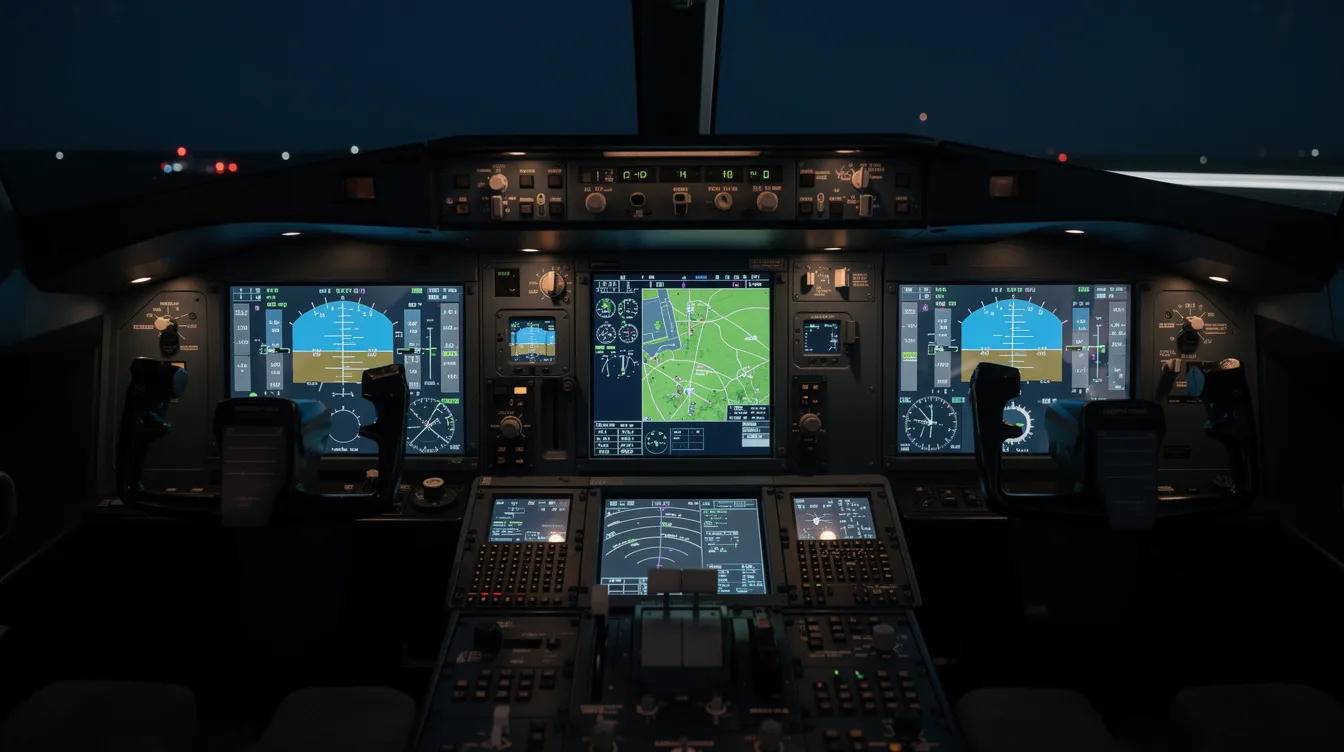
Modernized flight deck. Larger, high-resolution LCD displays and improved flight-management systems give crews better situational awareness, while maintaining the conventional control yoke layout that Boeing pilots know.
The 737 MAX features larger engines positioned higher on the wing, requiring the Maneuvering Characteristics Augmentation System (MCAS) for pitch stability. The MCAS improves pitch characteristics at high angles of attack in the 737 MAX, a system that underwent extensive redesign during the recertification process.
In a typical two-class airline layout, the 737 MAX 8 has a range of about 3,550 nautical miles and seats 175–190 passengers. The 737 MAX 9 can accommodate up to 220 passengers in higher-density configurations. The 737 MAX 7 can fly 1,000 nautical miles farther than the MAX 8, making it particularly attractive for extended-range BBJ missions - some BBJ MAX variants reach over 6,600 nautical miles with a small passenger count.
These aerodynamic improvements allow airlines to plan longer point-to-point routes, while the same technologies feed into BBJ MAX configurations used in private aviation.
Major Airlines That Fly the 737 Today
The 737 remains the backbone of fleets for several of the world's largest carriers. When you fly a 737, you're most likely on one of these operators' aircraft.
Southwest Airlines is the single largest 737 operator globally, with an all-737 fleet exceeding 800 aircraft that includes -700s, -800s, and MAX 8s. Their point-to-point network across North America runs almost entirely on this platform.
Ryanair dominates Europe with a fleet of 647 aircraft as of mid-2026, operating 737-800 NGs alongside the newer "Gamechanger" 737-8200 variant, which promises 20% less fuel burn and 50% less noise compared to its NG fleet. Massive orders for the 737 MAX 10 are planned to further increase capacity.
United Airlines and American Airlines blend 737s with other narrowbodies on domestic and near-international routes, while Delta Air Lines also fields a growing share of MAX variants. Outside the US, carriers across Asia and Europe deploy large 737 fleets on high-frequency city pairs.
On routes like Dallas–Denver, Chicago–LaGuardia, and London–Dublin, most passengers fly 737 without realizing it. These high-density airline layouts - often 180+ seats in a single class - stand in stark contrast to the low-density, highly customized layouts aboard private BBJ aircraft accessible through providers like BlackJet, where the same fuselage holds 16–30 passengers in bespoke comfort.
Cabin Experience: Airline 737 vs. Private Boeing Business Jet
Picture boarding a typical 737-800 on a crowded Monday morning: six-abreast seating in a 3-3 configuration, overhead bins competing for space, and a seat pitch that keeps your knees acquainted with the seatback in front of you. Newer NG and 737 MAX aircraft have improved things with LED "Sky Interior" lighting, slimline seats, and better environmental control - but privacy and personal space remain limited.
Now picture stepping into a 737-based Boeing business jet. The same fuselage is transformed into separate zones: a forward lounge, a private office with satellite connectivity, a dining area with bespoke catering, and an aft bedroom with a lie-flat bed and en-suite lavatory. Premium finishes, noise-dampened interiors, and cabin altitude optimized for passenger comfort replace the high-density airline formula entirely.
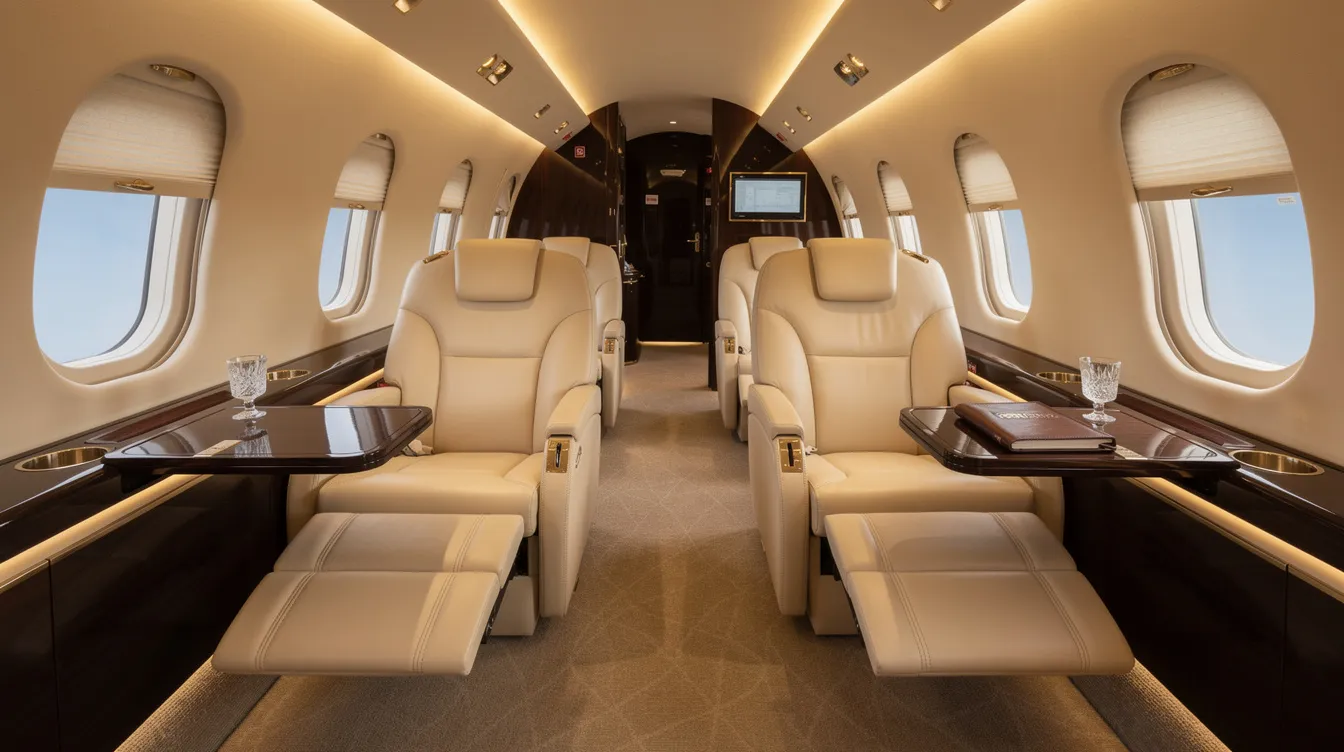
BlackJet clients can access BBJ-class cabins without owning the jet, through tailored charter and Jet Card solutions that build on premium private jet card programs designed for missions where an ultra-long-range narrowbody makes sense. Consider an executive team of twelve flying nonstop from New York to Lisbon on a BBJ derived from the 737-700 platform: roughly nine hours of productive, private flight time with no layovers, no security lines, and no compromise. The extended range of these BBJ variants - over 6,000 nautical miles - makes routes that would require connections on commercial airlines into seamless single-leg journeys.
The 737 Flight Deck: From Analogue Gauges to Modern Glass Cockpits
The 737's cockpit tells the story of commercial aviation's transition from analogue instruments to integrated digital systems - while retaining the tactile, hands-on flying character that pilots value.
Original and Classic eras. Early 737 flight decks featured rows of round analogue gauges, eyebrow windows above the glareshield, and basic flight management systems. The 737 follows Boeing's design philosophy of conventional control yokes with direct control feel, using mechanical linkages with hydraulic assistance rather than full fly-by-wire. This gives pilots tactile feedback and redundancy that persists across every generation.
NG era. The next generation introduced six-screen LCD glass cockpits, dramatically improving navigation and situational awareness. Commercial pilots must complete extensive pre-flight preparation and programming for the Flight Management Computer (FMC), which calculates optimal routes, fuel requirements, and approach profiles.
737 MAX. Larger, high-resolution displays and advanced flight-management systems define the current flight deck. Partial fly-by-wire elements - such as the spoiler system - complement the traditional mechanical controls.
Flying a Boeing 737 involves highly automated systems designed for efficiency and safety, but pilots remain central to every phase of operation. The 737 has robust autopilot systems that reduce pilot workload but require continuous monitoring. Pilots often hand-fly during departures, initial climbs, and visual approaches or landings. Pilots disengage autopilot to manually fly the aircraft down the glideslope during landing, and they must remain proficient in manual handling during takeoff and landing.
Weight adjustments in the Boeing 737 affect power and flap settings during flight. The 737's low-slung design increases the risk of tailstrikes during takeoff and landing, and pilots are trained on handling tail-strike avoidance and wind shear recovery. During descent, pilots typically calculate idle descents using a rule of thumb like 3 nautical miles for every 1,000 feet of descent. Pilots of the 737 use a variety of techniques for crosswinds during landing, balancing multiple factors like weather, turbulence, and aircraft performance during flights. Effective energy management is emphasized during training for the Boeing 737, and pilots must manage several key factors throughout the flight, including weight and balance, weather, and airspace regulations.
Whether on a commercial flight or a private BBJ mission, the cockpit and its safety systems are identical - what differs is the cabin behind the flight deck door and the mission profile, not the engineering rigor.
Safety Record, Lessons Learned, and Why 737 Remains Trusted
The 737 family's multi-decade service life includes incidents and accidents that have shaped both the aircraft's design and the industry's approach to safety. The most consequential were the two fatal 737 MAX crashes - Lion Air Flight 610 in 2018 and Ethiopian Airlines Flight 302 in 2019 - which led to a global grounding of the entire MAX fleet.
The subsequent regulatory response was unprecedented in scope. The FAA, EASA, and other authorities demanded redesign of the MCAS software, additional pilot training requirements, wiring changes, and enhanced oversight before allowing the MAX to return to service in late 2020. In July 2026, the FAA allowed Boeing to resume issuing airworthiness certificates for the 737 MAX and 787 after months of additional safety review.
In terms of accidents per million flights, later 737 generations - the NG and the post-recertification MAX - rank among the safer jetliners in operation. This is the result of accumulated design improvements, rigorous certification, and a culture of transparent data sharing between manufacturers, regulators, and operators.
The lessons learned are directly relevant to private aviation. Redundancy in critical systems, continuous pilot training, transparent incident reporting, and ongoing design review are principles that extend beyond airlines. BlackJet only partners with operators that meet stringent safety certifications, including ARGUS and Wyvern standards. Many of the safety practices that evolved from the 737 program now inform best practice across the entire private aviation industry.
Sustainability and the 737: Fuel Burn, Winglets, and SAF
The 737 has served as both a testbed and a workhorse for incremental sustainability improvements in commercial aviation, with each generation delivering measurable reductions in fuel burn and emissions.
Improved aerodynamics have driven much of this progress. The NG introduced blended winglets, later upgraded to Split Scimitar winglets, reducing drag and improving fuel efficiency by approximately 5–5.5% per flight. The 737 MAX carries this further with its Advanced Technology Winglet - a hybrid design that, combined with a re-contoured tail cone, yields additional drag reduction beyond what winglets alone achieve.
Modern 737s can operate on blends of Sustainable Aviation Fuel (SAF). Boeing's ecoDemonstrator program has used 737 platforms to trial SAF blends, advanced coatings, and noise-reduction technologies. When compared to 737 Classic models, the cumulative CO₂ reduction per seat-kilometer on a MAX variant can exceed 40% - a figure driven by engine efficiency, improved aerodynamics, and higher passenger density.
Ryanair's Gamechanger 737-8200, for example, advertises 16% less fuel burn and 40% fewer noise emissions compared to the NG models it replaces - concrete gains that compound across thousands of annual departures.
For private aviation, BlackJet's sustainability commitment ensures every flight is carbon-neutral through verified offset programs. Where possible, BlackJet sources operators that are SAF-ready, aligning private travel with the broader green advances pioneered on the 737 platform. The result: clients can fly privately without compromising on environmental responsibility.
737 in Government, Military, and Special Missions
The versatility of the 737 airframe extends far beyond standard passenger service. Governments and militaries around the world have deployed the platform in roles that demand reliability, endurance, and global support infrastructure.
E-7A Wedgetail (AEW&C). Based on the 737-700, the E-7 serves as an airborne early warning and control aircraft. The Royal Australian Air Force operates six Wedgetails, equipped with the MESA radar system, capable of high-speed cruise at 760–955 km/h, a range of roughly 7,040 km, and a service ceiling around 41,000 feet of altitude. The platform is also being adopted by the RAF and other allied air force organizations.
P-8 Poseidon. Derived from the 737-800, this maritime patrol and anti-submarine warfare aircraft has been deployed by the U.S. Navy, India, Australia, and the UK. Its global parts network and runway compatibility with standard airports give it logistical advantages over purpose-built military platforms.
C-40 Clipper. Used for government and military VIP transport, the C-40 combines the 737's proven reliability with mission-specific modifications - a complete solution for secure, long-range movement of personnel.
These demanding military applications underscore the same core strengths that make the 737 attractive in private aviation: reliability, a global support network, and efficient single-aisle performance. The robust platform that serves frontline military missions also underpins many long-range private BBJ configurations used by heads of state and ultra-high-net-worth individuals - operators who require nothing less than absolute dependability.
Flying 737 on Commercial vs. Flying Private with BlackJet
For many routes across North America and europe, you can either fly 737 with a major airline or choose a private solution through BlackJet. The right choice depends entirely on your priorities.
The commercial 737 experience means fixed schedules, fixed routes, security queues, boarding groups, and limited flexibility if plans change. Even in premium configurations, you're sharing the cabin with 150+ passengers. Delays cascade. Connections add hours.
The private experience through BlackJet inverts every one of those constraints:
Depart from private terminals (FBOs) with 15 minutes of pre-departure arrival time.
Total schedule control, including last-minute changes and multi-city itineraries.
Tailored catering, privacy, and the ability to hold meetings or rest undisturbed.
Consider a three-city business roadshow across Texas - Houston, Dallas, and Austin. On commercial 737 segments, that itinerary requires two separate bookings, potential overnight stays, and at least six hours of non-productive travel time. With a BlackJet Jet Card, the same roadshow becomes a same-day circuit with transparent jet card cost per hour: depart Houston at 7:00 AM, complete meetings in Dallas by noon, land in Austin by 1:30 PM, and return home by evening. Hours saved. Hotels avoided. Productivity preserved.
While most BlackJet flights use smaller cabin categories - super-midsize or large-cabin jets ideal for 2–12 passengers - clients who require a 737-class BBJ for larger groups can arrange it through bespoke charter solutions, seamlessly integrated with BlackJet's platform.
Jet Cards, Charter, and When a 737-Class Jet Makes Sense
A Jet Card is prepaid access to private aviation without the commitment of aircraft ownership, and understanding overall jet card membership pricing is key to choosing the right program. BlackJet's 25-hour and 50-hour Jet Card programs let frequent flyers lock in predictable hourly pricing, book via a 24/7 digital platform, and fly across multiple cabin categories with real-time support, whether they prefer a 25-hour jet card structure or a 50-hour jet card option.
For most private missions - 2 to 12 passengers on regional or transcontinental routes - super-midsize or large-cabin business jets are the most efficient and economical choice, especially once you understand the broader private jet price list and options. Chartering a full 737-sized aircraft only makes sense when the mission profile demands it.
Scenarios where a 737-based BBJ is the right tool:
Large delegations or corporate roadshows where 16–30 executives need to travel together with meeting space onboard.
Sports teams and entertainment tours require high-speed transit between cities with equipment and entourage.
High-security government or corporate movements needing multiple compartments and secure communications.
BBJ MAX variants carry direct operating costs of approximately $5,200–$5,600 per flight hour, which becomes highly competitive on a per-seat basis when the cabin is full, particularly when viewed through the lens of jet card cost per hour. For growing demand in group travel, this can be more cost-effective than booking multiple smaller jets or chartering widebody aircraft.
BlackJet orchestrates these larger aircraft on demand as part of a broader access strategy, integrating them seamlessly with smaller jets, whether you need the best private jet for 20 passengers or are planning travel on a private jet for 50 passengers. The booking experience remains identical: digital platform, known pricing informed by transparent jet card pricing structures, and the same safety and service standards that apply to every BlackJet flight.
How 737 Technology Influences Private Aviation Standards
The commercial 737 world often sets the benchmark for safety, maintenance, and operational standards that private operators emulate. When an airline runs a fleet of 800 aircraft on rigorous A/B/C check intervals, the maintenance culture and reliability metrics established in that program ripple outward across the entire aviation ecosystem.
Avionics proven on 737 fleets - terrain awareness systems, traffic collision avoidance, and advanced weather radar - trickle down to smaller private jets through shared suppliers and certification norms. Performance modeling, engine monitoring, and digital flight data analysis developed at 737 scale become standard practice on aircraft of every size.
BlackJet's vetting process reflects this principle and mirrors the rigor found in many of the best jet cards for frequent flyers. We only partner with operators whose maintenance programs, crew-training protocols, and safety cultures align with or exceed those used in top-tier airline operations. Every operator in our network undergoes continuous review against these benchmarks.
For the discerning traveler, the question is not simply "what aircraft am I flying?" but "what standards - refined across millions of 737 flights - are embedded in my private flight experience?" When you fly privately through BlackJet, the answer is: all of them, whether you're comparing our programs against options like NetJets jet card costs or other providers.
Planning Your Next Trip: When to Fly 737 Airline and When to Go Private
Even high-net-worth and executive travelers sometimes mix commercial and private flying, weighing whether chartering a private jet is worth it for a given trip. The smart approach is matching the mode of travel to the mission.
Choose a commercial 737 airline flight when:
You're traveling solo or in a small group on a well-served city pair.
Schedule convenience and cost align (e.g., a direct Southwest Airlines flight from Phoenix to Las Vegas).
You have flexibility in timing and don't need to land at a secondary airport.
Choose BlackJet private charter or Jet Card when you understand how charter flights work and what they mean:
Your itinerary involves multiple stops, tight timelines, or remote destinations.
Privacy, productivity, or rest during the flight is paramount.
Plans may change on short notice, and you need complete schedule control.
Here's a concrete comparison. A business traveler needs to attend meetings in San Francisco, Los Angeles, and San Diego on a single day. The commercial option: two 737 segments with a minimum four-hour layover in LAX, arriving in San Diego after 8:00 PM. The BlackJet option: a midsize jet departs San Francisco at 7:00 AM, lands at a private FBO in Santa Monica by 8:15 AM, departs for San Diego at 1:00 PM, and the traveler is home by dinner. Six productive hours reclaimed.
BlackJet's digital booking tools let you compare options rapidly before deciding, including scenarios that highlight the cheapest private jet options for shorter missions. Private access isn't an extravagance - it's a strategic asset for time-sensitive individuals and families who measure travel in hours reclaimed, not miles flown.

Frequently Asked Questions About Flying on the 737 and Privately
What is the range of a typical Boeing 737? It depends on the generation. NG variants like the -900ER reach approximately 3,500–3,800 nautical miles. The 737 MAX 8 has a range of approximately 3,550 nautical miles, while the full MAX family spans 3,215 to 3,825 nautical miles depending on variant and payload. BBJ MAX configurations with auxiliary fuel tanks push beyond 6,000 nautical miles.
Is the 737 MAX safe now? Yes. Following the global grounding after the 2018–2019 accidents, the MAX underwent extensive recertification involving software redesign, additional training requirements, and regulatory oversight by the FAA, EASA, and other bodies. It returned to service in late 2020. No fatal accidents have occurred on recertified MAX operations, and in July 2026, the FAA confirmed Boeing's authority to issue airworthiness certificates after further review.
Which airlines operate the most 737s? Southwest Airlines leads with over 800 aircraft in an all-737 fleet. Ryanair in Europe operates 647 aircraft, predominantly 737 NGs and MAX variants. United Airlines, American Airlines, and Delta Air Lines also field large 737 fleets on domestic and near-international routes.
Can I charter a Boeing Business Jet based on the 737? Absolutely. BBJ variants derived from the 737 NG and MAX are available for charter through providers like BlackJet. They're ideal for large delegations, long-range nonstop missions, and VIP transport requiring multiple cabin zones. Learn more about chartering a BBJ here.
How does a Jet Card compare to owning a jet? A Jet Card gives you prepaid access to private aviation - predictable pricing, no asset risk, no maintenance burden, and flexibility across cabin categories, whether you opt for a traditional 25–50-hour program or explore a 100-hour jet card cost structure. Ownership ties capital to a single aircraft. For most frequent travelers, a Jet Card through BlackJet offers the benefits of private flying with none of the overhead, especially flexible options like the BlackJet 25+ Hour Jet Card.
Are private flights with BlackJet carbon-neutral? Yes. BlackJet ensures every flight is carbon-neutral through verified offset programs at no extra cost to you, while newer aircraft highlighted in guides to the newest private jets and their innovations continue to raise efficiency standards. Where possible, we source operators that are SAF-ready, aligning your travel with the latest in sustainable aviation practices and helping owners of jet cards plan around potential jet card tax deductions.
Is flying private more cost-effective than business class for groups? Often, yes, especially on routes served by focused offerings like private jet charters in Karachi. When splitting a private charter among 6–10 passengers on a busy route, the per-person cost can approach or undercut commercial business-class fares - while offering incomparably greater flexibility, privacy, and time savings.
Conclusion: The Future of Flying 737 and the Role of BlackJet
From its 1967 first flight to the latest 737 MAX rolling off the production line at 42 aircraft per month, the Boeing 737 remains the defining single-aisle airliner of our era. Its design, safety standards, and operating economics shape what commercial travel looks like for millions of passengers every day - and its technology underpins some of the most capable private aircraft in the world.
BlackJet exists for those who value time, privacy, and control. Our Jet Card programs and charter solutions provide an alternative that often complements, rather than replaces, traditional 737 airline travel. Whether you need a midsize jet for a same-day multi-city roadshow or a full BBJ for a transatlantic crossing, the same commitment to safety, sustainability, and seamless service applies.
Looking ahead, more SAF adoption, quieter cabins, and potentially new narrowbody platforms will continue to raise the bar. BlackJet will evolve alongside those advances, ensuring that every flight meets the highest benchmarks in the industry.
Explore BlackJet's Jet Card programs and discover how private access can reshape every journey you take - whether you choose to fly 737 commercially or step aboard a private cabin next time.


 Sign up with google
 Sign up with Apple