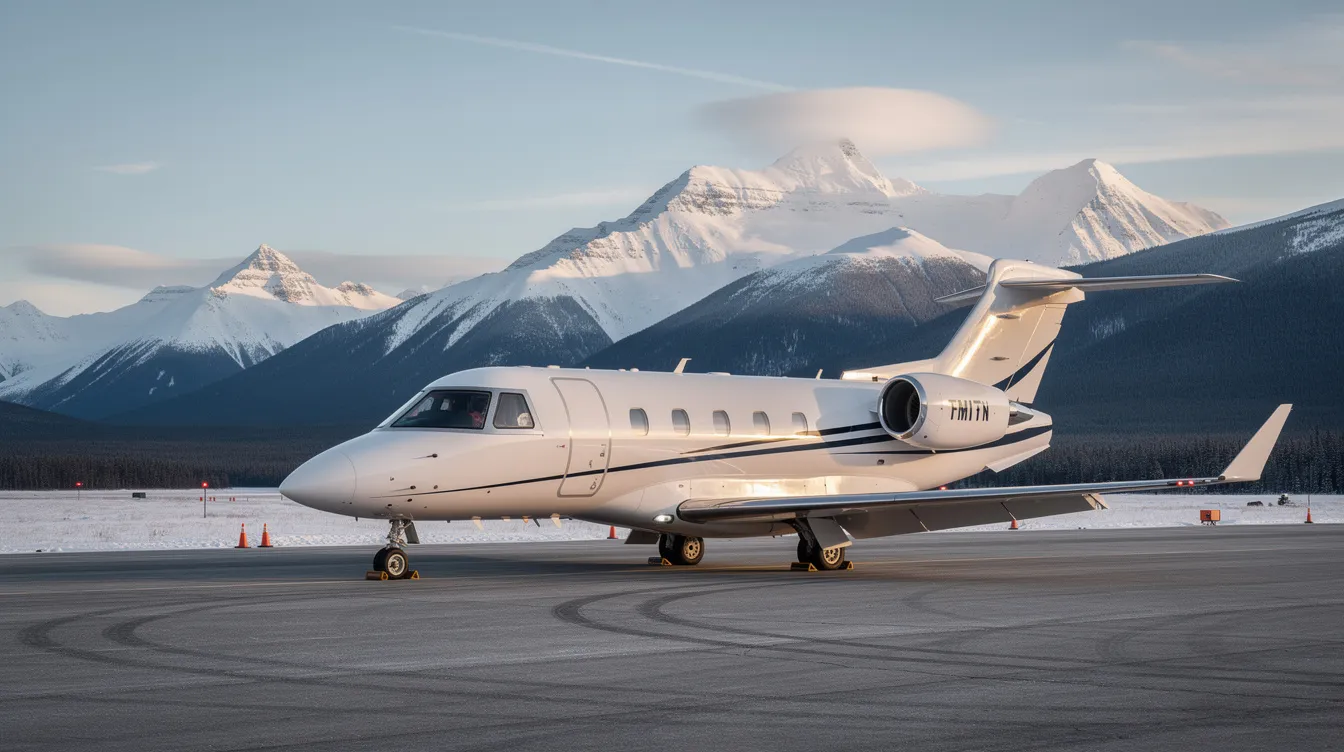
Alaska Airlines First Class offers a premium travel experience for those flying to and from Alaska. This article provides a comprehensive comparison between Alaska Airlines First Class and private jet options, focusing on what matters most to executives, high-net-worth travelers, and frequent flyers. Understanding the differences between these premium travel choices is essential for making informed decisions about comfort, privacy, flexibility, and value when traveling to Alaska. Whether you are seeking the best way to maximize productivity, ensure privacy, or simply enjoy a superior journey, this guide will help you navigate the options and choose the right fit for your needs.
Overview of Alaska Airlines and Its Premium Cabins
Alaska Airlines is a major West Coast domestic airline headquartered in Seattle, with hubs at Seattle-Tacoma International Airport, Portland, Los Angeles, and San Francisco. Its network reaches deep into Alaska, serving Anchorage, Fairbanks, Juneau, and smaller communities, partly through its regional subsidiary Horizon Air operating Embraer E175s.
The cabin hierarchy on Alaska Airlines 737 aircraft includes:
First Class: The top product on most flights, including routes into Alaska. Alaska Airlines offers 41 inches of seat pitch in First Class (seat pitch is the distance between a point on one seat and the same point on the seat in front of it); seats are 21.3 inches wide with a five-inch recline, and each seat has a footrest and calf rest. (Facts 1, 2, 3)
Premium Class: Extra-legroom economy seats with roughly 34 inches of pitch. No dedicated meal service or lounge access.
Main Cabin: Standard economy seating.
Alaska Airlines is introducing international business class cabin concepts on the Boeing 787-9 for future long-haul flights, but on most domestic routes and Alaska flights today, the top commercial product remains First Class on the 737.
Cabin class options vary across private jet aviation, affecting comfort and configuration. BlackJet positions its light, midsize, super-midsize, and large cabin aircraft above any commercial First Class cabin by offering the entire aircraft as a private space, with confirmed specs before booking. For a deeper comparison of the two products, the differences become clear quickly, and BlackJet’s premium private jet cards and charter services frame how private cabins compete with commercial First Class.
Transitioning from understanding Alaska Airlines’ premium cabin structure, let’s explore why choosing First Class Alaska matters for high-end travelers.
Why "First Class Alaska" Matters for High-End Travelers
Premium travel to Alaska is a strategic calculation. Direct flights from Seattle, Portland, or Los Angeles to Anchorage, Fairbanks, and Juneau eliminate the layovers that cost two to four extra hours each way through competing hubs. For executives, photographers, and high-net-worth leisure travelers who prefer privacy during flights, the question is which premium tier fits the mission.
Alaska Airlines First Class on a Boeing 737 MAX 9 offers a domestic First Class recliner with 41 inches of pitch, hot meals, and priority boarding. A Seattle to Anchorage round trip in First Class runs roughly $1,000 to $1,800 depending on season and booking window.
BlackJet Jet Card: A Jet Card is a prepaid program that allows travelers to purchase a set number of flight hours on private jets, locking in hourly rates and guaranteeing availability with predictable hourly pricing. Covering the same round trip on a light jet requires about six flight hours total (three each way across 1,440 nautical miles). At published light jet rates of $7,000 to $8,000 per hour on a 25-hour card, the cost lands around $42,000 to $48,000, but delivers a fully private cabin, departure from a Fixed Base Operator (FBO—a private terminal for business aviation), schedule flexibility down to the hour, and direct routing to smaller airfields.
International business class on oneworld partners like British Airways connects travelers to Seattle, where they can continue to Alaska. But Alaska Airlines itself does not operate lie-flat seats on its 737 fleet.
The rest of this article walks through Alaska Airlines First Class in detail, covering seats, service, the check-in process, lounges, and the class experience on Boeing 737 aircraft, then explains when a private jet via BlackJet becomes the logical next step.
Booking an Alaska First Class Ticket: Cash, Miles, and Strategy
Securing an Alaska First Class ticket involves three main paths, each with trade-offs in price and flexibility.
Cash fares: For Alaska First Class on routes like Seattle to Anchorage, fares recently ranged from $384 to $827 one way, depending on season and how far ahead you book. Longer domestic flights like Seattle to Miami can push higher. Kayak shows real-time pricing for comparison.
Alaska Mileage Plan miles: First Class award seats can be booked with dynamic pricing that fluctuates between roughly 15,000 and 60,000 miles one way on routes like SEA to ANC. A First Class award ticket on a qualifying long segment also opens lounge access. American AAdvantage miles work on Alaska-operated flights too, though award availability in First can be limited.
Aircraft swaps: There is a risk that you might book a Boeing 737 MAX 9 expecting the newest Recaro seats and refreshed cabin, only to find the aircraft swapped to a 737-900ER or 737-800 with older finishes hours before departure. The class seats you researched on the seat map may not match what you sit in.
A BlackJet Jet Card eliminates these variables. With prepaid private jet membership pricing in a chosen cabin class, there is no last-minute downgrade from a promised private cabin. You confirm the aircraft type, cabin layout, and amenities before you book.
Once your ticket is secured, the airport experience sets the tone for your journey.
Check-In and Airport Experience
The airport experience for First Class passengers on Alaska Airlines starts with a few tangible advantages over economy.
Priority check-in: Available for First Class passengers at dedicated counters (Fact 6). Seattle-Tacoma International Airport's C concourse has Alaska's premium desks, and Anchorage has separate First Class and elite counters. Miami's Terminal N handles Alaska's East Coast departures.
Complimentary checked bags: First Class passengers can check two complimentary bags (Fact 5). Checked bags cannot exceed 50 pounds each. Priority bag drop lanes shorten the wait.
Express check-in: Alaska Airlines offers express check-in via their mobile app (Fact 7), letting passengers with only carry-on bypass counters entirely. One known issue: airport kiosks sometimes misread baggage allowances on First Class tickets and display incorrect charges. Using the app or an agent avoids this.
Expedited security lanes: At airports with expedited security lanes (Seattle being the most notable), a paid First Class ticket or elite status may grant fast-track access.
Priority boarding: First Class passengers receive priority boarding at the gate (Fact 8), securing overhead bin space in the smaller forward cabin.
The contrast with BlackJet's private jet experience is structural, not incremental. Departure happens from a private terminal (FBO), not a commercial concourse. Curb-to-aircraft time runs 15 to 20 minutes. There are no standard TSA queues for most domestic private flights. Ground handling is personalized. No shared departure board, no crowded gate area, no boarding process competed with 160 other passengers.
After navigating the airport, lounge access becomes the next premium touchpoint for First Class travelers.
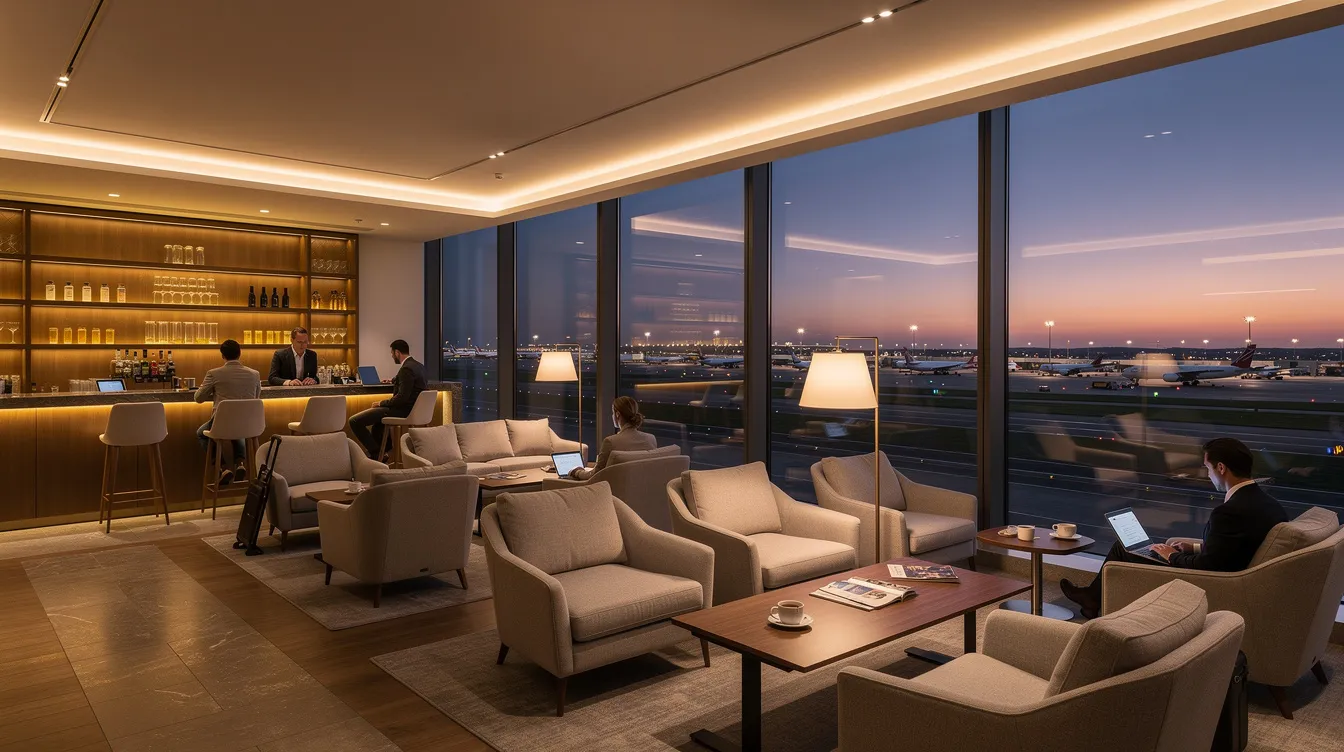
Alaska Airlines Lounges and First Class Lounge Access Rules
Alaska lounges are concentrated at SeaTac, with locations at Concourse C, D, and the North Satellite (N). Smaller Alaska lounges operate at Portland, Los Angeles, San Francisco, and Anchorage. The N Concourse lounge at Seattle airport offers panoramic runway and mountain views and is the newest of the bunch.
Complimentary access: Requires a paid First Class or First Class award ticket on Alaska Airlines or Hawaiian Airlines, with at least one segment on that day's itinerary covering approximately 2,000 miles or more. Routes like Seattle to Miami or Hawaii flights qualify. Shorter segments like Seattle to Portland do not.
Day passes: Class guests on shorter flights, or those who received a fare-class "U" upgrade, can purchase a Single-Entry Alaska Lounge Day Pass for about $35.
Oneworld status: Oneworld Emerald or Sapphire members traveling on international itineraries may access partner class lounges, including Alaska's own, under alliance reciprocity rules.
Lounge amenities: Inside, the lounges offer Starbucks-style barista coffee, Pacific Northwest wines and craft beers, light snacks, workspaces with Wi-Fi, and showers at some hubs. The atmosphere leans toward Pacific Northwest hospitality: local design touches, quiet work areas, informal bar service.
Private jet travelers departing from an FBO skip public lounges entirely. FBO waiting areas seat fewer people, offer fully private seating, and in many cases allow direct boarding from the lounge into the aircraft. BlackJet coordinates tailored catering to be loaded during the pre-flight window, so the departure experience itself becomes part of the service.
With lounge access complete, it’s time to step onboard and explore the First Class cabin itself.
Inside Alaska's First Class Cabin on the Boeing 737 Fleet
Cabin Layout
Step through the forward cabin door on an Alaska Airlines 737, and the First Class cabin begins immediately. On the Boeing 737-900ER and 737 MAX 9, 16 First Class seats occupy the first four rows in a 2-2 configuration, with a single aisle running between them.
Seat Features
Seat pitch: Alaska Airlines offers 41 inches of seat pitch in First Class (Fact 1).
Seat width and recline: First Class seats are 21.3 inches wide with a five-inch recline (Fact 2).
Footrest and calf rest: Each First Class seat has a footrest and calf rest (Fact 3).
Adjustable headrest: 6-way adjustable headrest with integrated neck support.
Device holder: Seatback device holder for tablets.
Storage: Center console storage and a large fold-out tray table.
Power and USB: First Class passengers can access power outlets and USB ports at their seats (Fact 4).
Entertainment: No built-in seatback screens exist in Alaska's First Class cabin. Entertainment runs through the alaskawifi.com streaming portal to personal devices.
Overhead bins: Overhead bins on the 737-900ER are Boeing's "Space Bins," offering roughly 48% more volume than older bins.
Lighting and finishes: Lighting and lavatory finishes vary between refreshed and older aircraft. The newest cabins feel notably more polished.
For the full breakdown of Alaska Airlines First Class details, seat maps and aircraft-specific notes fill in the gaps. By comparison, BlackJet's private jet cabins, from light jets seating six to large cabin aircraft seating 14, treat the entire aircraft as your First Class seat. Club-style seating, conference layouts, and fully flat beds are standard depending on aircraft category, with no neighbors and no shared cabin, similar to the mission-focused approach used when choosing the best small private aircraft for each need for the trip.
Understanding the seat and cabin features, let’s compare comfort and workability between Alaska First Class and private jet cabins.
Seat Comfort and Workability: Alaska First vs Private Cabin
Comfort and Productivity
Comfort and productivity overlap on longer flights. Here is how the two products compare seat by seat:
Alaska First Class:
41 inches of seat pitch and deep recline of about five inches.
Each First Class seat has a footrest and calf rest, making four-to-six-hour sectors like Seattle to Miami or Seattle to Boston more manageable than standard economy.
Recaro headrests lock in multiple positions to support sleep.
Power outlets and USB ports at each seat (Fact 4).
Large tray tables suitable for a 15-inch laptop.
Reading lights and individual air nozzles for personal comfort.
Drawbacks:
The 2-2 layout places a neighbor within arm's reach.
Conversations in a 16-seat cabin carry.
Confidential calls or document review in view of adjacent passengers is a risk.
No fully llie-flatseats on any Alaska 737.
Private Jet Cabin:
Club seating allows face-to-face meetings.
Tables accommodate laptops, files, and coffee simultaneously.
The cabin is sealed to your party.
Individual air vents, temperature, and lighting are controlled by one client.
For executives who need to run a call during the entire flight or review materials that cannot be seen by strangers, the private cabin is not a luxury; it is infrastructure.
With comfort and productivity in mind, let’s move to the culinary experience in Alaska Airlines First Class.
Cuisine and Beverage Service in Alaska Airlines First Class
Meal Options
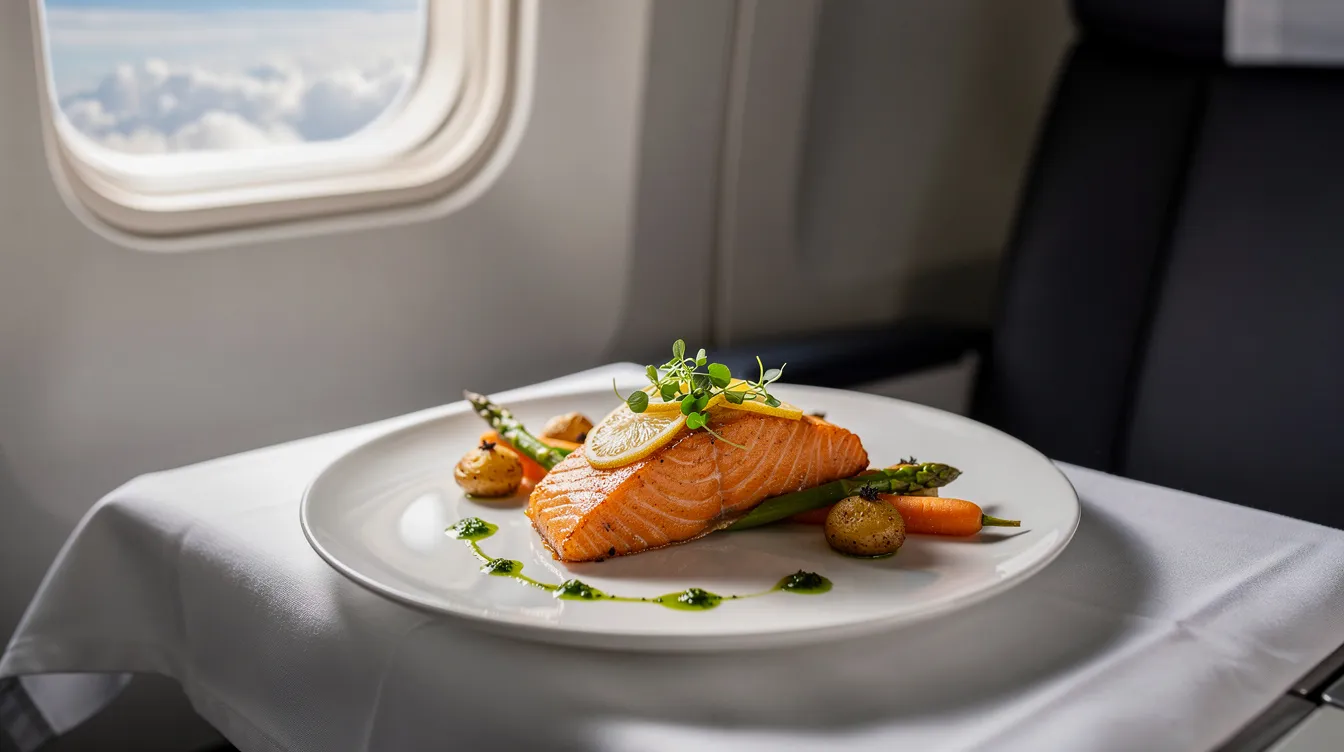
Alaska Airlines meal service in First Class splits by flight distance. Flights over roughly 670 miles receive hot entrees or substantial cold plates. Shorter hops get a snack basket with packaged items.
Alaska Airlines offers up to five meal options on select flights (Fact 14).
First Class meals include locally sourced ingredients from West Coast purveyors (Fact 16).
Dishes like the Tillamook cheeseburger with Angus beef, seared cod, Moroccan beef, sweet potato and feta omelet, and apple cobbler oatmeal rotate by season and route.
Alaska Airlines serves a signature fruit and cheese plate in First Class (Fact 17).
Desserts include Salt & Straw ice cream on longer flights (Fact 18).
Pre-Order Process
Passengers can pre-order meals up to 20 hours before flights (Fact 15) through the Alaska Airlines app.
Limited quantities on popular items (especially hot entrees) make early selection important. If you don't pre-order meals, options narrow closer to departure.
How to Pre-Order Meals:
Log in to the Alaska Airlines app or website.
Select your upcoming First Class flight.
Choose from available meal options up to 20 hours before departure.
Confirm your selection to ensure your preferred meal is reserved.
Beverage Program
The beverage program features Pacific Northwest wines, craft beers, premium spirits, signature canned cocktails, Starbucks coffee, and Teavana teas.
Passengers are encouraged to bring refillable water bottles onboard, and Alaska provides boxed or reusable Path Water as part of its sustainability push.
A drink service begins shortly after takeoff on most flights.
What airplane food looks like on a private jet is a different category. BlackJet coordinates fully customizable menus: specific restaurant catering, private chef preparation, dietary accommodations (kosher, vegan, gluten-free) built into trip planning, and timed service paced to your preference.
With dining complete, let’s look at how Alaska Airlines keeps you entertained and connected in the air.
In-Flight Entertainment and Wi-Fi on Alaska's First Class Cabin
Streaming Entertainment
Alaska Airlines takes a personal-device approach to in-flight entertainment across its 737 fleet.
Alaska Airlines offers complimentary streaming in-flight entertainment (Fact 9) through its alaskawifi.com portal.
Passengers can stream over 800 movies and TV shows to their own phones, tablets, or laptops at no charge (Fact 10).
No seatback screens are installed.
Wi-Fi Details
Wi-Fi costs $8 for unlimited use during the flight (Fact 11).
Free messaging is available via the onboard Wi-Fi network, including iMessage, WhatsApp, and Facebook Messenger (Fact 13).
Current Wi-Fi tech on the 737 MAX 9 uses Intelsat 2Ku satellite broadband, while older aircraft may still run legacy Gogo systems with lower bandwidth.
Alaska Airlines plans to roll out Starlink Wi-Fi across its fleet (Fact 12), which should address the speed gaps that make live video calls unreliable on older aircraft today.
BlackJet addresses connectivity differently as part of its premium private jet card and charter services. At booking, travelers can specify onboard Wi-Fi requirements, including VPN capability, live streaming, and corporate communications, then select aircraft equipped to meet those needs.
With entertainment and connectivity covered, let’s examine the service standards and style in Alaska First Class.
Alaska First Class Service Standards and Cabin Crew Style
Alaska Airlines' service reputation leans into West Coast warmth. Flight attendants in First Class often introduce themselves, learn passenger names, and maintain an informal but attentive tone that reviewers consistently describe as authentic rather than scripted.
Alaska Airlines provides a dedicated First Class flight attendant for the 12 to 16 seats in the forward cabin. This ratio enables direct, personal service throughout the entire flight.
On sectors of five hours or more, service pacing typically includes pre-departure beverages (where gate timing allows), a full meal service with proactive refills, and a dessert or snack service near arrival.
The class flight attendant manages drink service, meals, and cabin comfort as a single point of contact.
Variability exists. Some crews are more polished than others, and popular menu items occasionally run out. Compared to larger legacy carriers, Alaska's smaller cabin scale gives its best crews room to deliver something that feels personal, but consistency is not guaranteed flight to flight.
BlackJet's service model operates from a different baseline. Crew members are pre-briefed on client preferences via a BlackJet profile: favorite drinks, cabin temperature, seating layout, and dietary needs. The flight crew focuses on one party, and service protocols follow business aviation standards layered with BlackJet's own requirements.
After service, small details and amenities can make a difference in comfort.
Lavatories, Amenities, and Small-Detail Comforts
The First Class lavatory on Alaska's 737 fleet sits at the front left of the cabin, one compact unit shared among 16 elite passengers and First Class guests. The sink basin is small and can splash during turbulence. Finishes on newer or retrofitted aircraft are modern Boeing design; older 737-800s feel more utilitarian.
Onboard amenities: Salt & Stone soap (the same brand stocked in Alaska lounges), basic tissues, and paper towels. No hand lotion or premium amenity kits are provided on domestic First Class routes.
In-seat amenities: Boxed or reusable water, quilted blankets on most flights, and Filson-branded blankets on select longer transcon sectors. Pillows are typically absent on domestic First Class legs.
These touches exceed economy but fall short of international business class amenity standards, an important gap for travelers accustomed to long-haul flights on carriers like British Airways or Cathay Pacific.
Private jet cabins provide a fully private lavatory, custom amenity kits on request, premium skincare brands, and the ability to stock the cabin with specific products coordinated through BlackJet's concierge.
With amenities reviewed, let’s look at the key routes and use cases for Alaska First Class, and where more economical entry-level private jet options might complement those routes.
Key Routes and Use Cases for Alaska First Class
Alaska Airlines First Class delivers its strongest value on routes where flight distance, meal service, and lounge access combine to create a meaningful gap over economy.
Seattle to Anchorage (about 4 hours): The flagship Alaska route. First Class service includes a full meal, and the flight distance qualifies for complimentary lounge access. Nonstop service runs multiple times daily.
Seattle to Fairbanks and Seattle to Juneau: Similar demand, with First Class often selling out during summer fishing and tourism seasons.
East Coast transcon routes like Seattle to Miami and Seattle to Boston: Five-to-six-hour sectors where seat comfort and meal service add up. These class domestic routes also generate strong Mileage Plan earnings.
Pricing: A Seattle to Anchorage return flight in First Class costs roughly $700 to $1,200, versus about $350 to $600 in main cabin. Business travelers, photographers hauling oversized gear, and families needing checked bags benefit most from the upgrade.
The hybrid use case is where Alaska First Class and BlackJet intersect. Fly Alaska Airlines First Class into Anchorage on a scheduled departure board slot, then transfer to a BlackJet private charter for a remote lodge, mine site, or community airstrip where no scheduled carrier operates, or even to consolidate a larger group on the best private jet for 20 passengers.
With route options in mind, let’s examine the latest cabin upgrades and what they mean for your experience.
Alaska Airlines 737-9 MAX and Refreshed 737-800/900ER Cabins
Alaska Airlines operates about 80 Boeing 737 MAX 9 aircraft, now the dominant type in its mainline fleet. The First Class cabin on the MAX 9 carries 16 Recaro CL4710 seats at 41-inch pitch and 21.3-inch width, with five-inch recline, enhanced padding, and improved leg and footrests.
The fleet-wide retrofit is converting 59 Boeing 737-800 and 79 737-900ER aircraft to match the MAX 9's First Class and Premium Class configurations, including new device holders, USB-C ports, and 6-way adjustable headrests. Alaska Airlines expects these conversions to finish by summer 2026.
The refresh expanded Premium Class from 24 to 30 seats on the MAX 9, and some aircraft added First Class seats (from 12 to 16), improving upgrade availability for elite passengers while preserving the front-cabin seat pitch.
Passenger experience still varies. An older 737-800 not yet retrofitted may have legacy overhead bins, slower Gogo Wi-Fi, and worn cabin finishes. A MAX 9 or freshly retrofitted 900ER feels like a different product.
When you book a BlackJet private jet, aircraft specs are confirmed in advance. There is no "old versus new" layout lottery. You select the cabin class, confirm the aircraft type, and know exactly what you are boarding, aligning your mission with the best small private aircraft category for the trip.
With cabin upgrades explained, let’s consider the environmental impact of your travel choices.
Sustainability: Alaska Airlines vs Carbon-Neutral Private Jets
Alaska Airlines aims for net-zero carbon emissions by 2040. The airline invests in sustainable aviation fuels and a modern fleet, with the fuel-efficient 737 MAX 9 consuming roughly 14% less fuel per seat than the aircraft it replaces. Electric ground vehicles are used at several Alaska hubs, and Alaska Airlines eliminated five major sources of plastic waste from its operations, including stir sticks, straws, and certain packaging.
First Class carbon footprint: Commercial First Class carries a higher per-passenger carbon footprint than economy because each seat claims more cabin space. High load factors and modern aircraft moderate this gap, but it exists.
Private jet sustainability: BlackJet includes 300% carbon and emissions offset coverage in every Jet Card flight at no additional cost, backed by verified offset and inset programs, which can be evaluated alongside a broader private jet price list and access models.
Passenger initiatives: Alaska Airlines encourages passengers to bring refillable water bottles onboard and provides boxed water instead of single-use plastic bottles on many routes.
For companies with formal climate targets, the ability to receive per-flight emissions data from BlackJet, combined with its carbon-neutral guarantee, creates a reporting advantage that commercial First Class tickets do not offer at the individual flight level.
With sustainability in mind, let’s review safety and reliability standards for both travel options, which also influence how different providers structure Flexjet-style jet card costs and options.
Safety and Reliability: Commercial First Class vs Private Aviation Standards
Alaska Airlines operates under FAA Part 121 with rigorous maintenance oversight for its Boeing 737 fleet, including the 737-800, 737-900ER, and 737-9 MAX. The MAX 9 faced global regulatory scrutiny; all required safety directives, inspections, and fixes have been completed and certified. Multiple daily frequencies on routes like Seattle to Anchorage and Seattle to Portland give Alaska a backup-rich schedule, with rebooking options through oneworld partners when disruptions occur.
Safety certification is an important requirement in business aviation, and BlackJet layers its own standards on top of FAA Part 135 operator requirements. Fewer than 30% of U.S. charter operators meet BlackJet's certification threshold, which vets the operator, aircraft, pilot, and specific flight. An independent Safety Advisory Board staffed by former FAA and NTSB leaders reviews standards continuously, reflecting the broader realities of how safe private jets are. Each trip generates a pre-flight safety report accessible in the BlackJet app.
Private jets can also reduce operational risk for time-sensitive travelers by routing directly to smaller airports, avoiding hub congestion, and scheduling around weather windows, whether through BlackJet or competitors outlined in NetJets jet card cost comparisons.
With safety and reliability covered, let’s clarify when each travel option is the best fit.
When Alaska Airlines First Class Is Enough; and When to Choose BlackJet
Choosing between Alaska First Class and a private jet is not about one being universally better. It is about matching the product to the mission.
Alaska First Class suffices when:
A solo executive flies a well-served route like Seattle to Los Angeles or Seattle to San Francisco, where flight times are short, and Alaska Airlines offers nonstop service several times daily.
A leisure couple heads to Alaska with a flexible schedule and a multi-day stay, where the comfort improvement over economy justifies the fare but the cost of a private jet does not.
A frequent flyer prioritizes accumulating Mileage Plan status or oneworld tier points, where every paid First Class ticket counts toward elite qualification.
BlackJet becomes the stronger choice when:
An executive needs to visit multiple remote Alaska locations in one day where scheduled flights do not connect. Frequent business travelers value flexibility in private aviation precisely for these multi-stop itineraries, whether via full charter or simply buying a seat on a private jet on select legs.
Confidential board sessions, investor discussions, or legal reviews need to happen in flight without risk of an adjacent passenger overhearing.
Oversized cargo (camera equipment, skis, drill-core samples) exceeds commercial baggage limits or needs accessible loading, where even budget-friendly private aircraft options can offer more practical loading and routing.
A CEO lands in Seattle from London on a oneworld international business class flight and needs to reach Juneau, Ketchikan, and a remote Denali-region airstrip within 24 hours. No scheduled carrier connects all three. A BlackJet charter does, and fits cleanly into a broader private jet pricing and access strategy.
With the decision points clear, let’s see how BlackJet’s Jet Card can complement your Alaska Airlines First Class travel.
How BlackJet's Jet Card Complements Alaska Airlines First Class
Private aviation companies offer Jet Card programs for prepaid jet access, and BlackJet structures its programs to complement rather than replace commercial premium travel.
Jet Card definition: A Jet Card is a prepaid program that allows travelers to purchase a set number of flight hours on private jets, locking in hourly rates and guaranteeing availability under a defined jet card pricing structure.
BlackJet offers 25-hour Jet Card programs and 50-hour Jet Card programs across light, midsize, super-midsize, and large cabin categories. Fixed hourly rates lock in pricing; hours never expire.
Jet Card programs allow users to book flights without owning a jet while maintaining guaranteed availability with defined notice periods, and a 50-hour Jet Card pricing guide helps frame the value for frequent travelers.
A traveler might fly Alaska Airlines First Class from a lower-48 city to Anchorage, accruing Mileage Plan miles and using Alaska lounges, then use a BlackJet 25+ Hour Jet Card charter from Anchorage to a remote destination unreachable by Alaska Air or Horizon Air.
Private aviation offers 24/7 digital booking tools for convenience, and BlackJet's app lets cardholders request flights, review aircraft options, and access pre-flight safety reports from a phone.
For executives and high-net-worth travelers who already fly Alaska Airlines First Class multiple times per year, a Jet Card adds control over the segments where commercial aviation cannot deliver: point-to-point routing, remote airfields, and schedule precision, especially when paired with guidance on the best jet cards for frequent flyers.
With the complementary nature of Jet Cards and First Class established, let’s address some frequently asked questions.
Frequently Asked Questions About Alaska First Class and Private Jets
Is Alaska Airlines First Class the same as business class? No. Alaska Airlines First Class on the 737 fleet is a domestic premium recliner in a 2-2 layout, not a lie-flat bed. International business class, as found on carriers like British Airways or on Alaska's future 787-9 operations, offers flat beds, dedicated class lounges, and a different service tier. Alaska Airlines offers First Class as its top domestic product.
How much legroom does Alaska Airlines First Class have compared to other US airlines? Alaska Airlines offers 41 inches of seat pitch in First Class (Fact 1), with seats 21.3 inches wide and a five-inch recline (Fact 2). This matches or exceeds most US domestic airline First Class products on narrowbody aircraft. Each First Class seat has a footrest and calf rest (Fact 3), which many competitors omit.
Do Alaska First Class passengers always get lounge access? Only when traveling on a paid First Class or First Class award ticket with at least one segment of approximately 2,000 miles. Shorter itineraries and upgrade-class fares do not qualify for complimentary access. A day pass costs about $35. Hawaii flights and cross-country sectors typically meet the distance threshold.
Can I work securely in Alaska First Class? Laptop work is well supported: power outlets and USB ports at their seats (Fact 4), tray tables, and individual air vents make transcon flights productive. But the 2-2 layout and open cabin mean conversations carry and screens are visible to neighbors. For confidential calls or sensitive document review, a private cabin is the better workspace.
What is the environmental impact of flying First Class vs. a private jet? Commercial First Class has a higher per-seat footprint than economy but benefits from high load factors and efficient aircraft. Private jets produce more emissions per flight hour, but BlackJet offsets 300% of carbon emissions on every flight at no extra cost. Alaska Airlines aims for net-zero by 2040; BlackJet delivers carbon-neutral flights today through verified programs.
How does a BlackJet Jet Card work with my existing Alaska Airlines travel habits? A Jet Card covers the legs where scheduled service falls short: remote airfields, multi-stop days, last-minute schedule changes. For trunk routes well served by Alaska Airlines, First Class remains practical and cost-effective. The two products layer together. Jet Card hours never expire, so you use them when the mission demands private access, and heavy users may even explore a 100-hour Jet Card cost structure for maximum flexibility.
How do costs compare between Alaska First Class and a private jet? A Seattle to Anchorage return flight in Alaska First Class costs roughly $1,000 to $1,800. The same trip on a BlackJet light jet runs approximately $42,000 to $48,000. The comparison is not about price parity; it is about what each dollar buys in time, privacy, and routing flexibility, which is easiest to evaluate by looking at jet card cost per hour benchmarks.
Conclusion: Designing Your Ideal First Class Alaska Travel Strategy
Alaska Airlines First Class delivers genuine value on scheduled routes. Boeing 737 cabins with 41-inch pitch, Recaro recliners, locally sourced meals, complimentary streaming entertainment, and warm crew service make it one of the stronger domestic First Class products in the US. For routes like Seattle to Anchorage, Seattle to Miami, or any sector where Alaska Airlines offers nonstop service, it is a solid product at a reasonable fare.
For travelers who need more, whether that means reaching a remote Alaska airstrip, conducting confidential work during the entire flight, or compressing a three-city itinerary into a single day, private jets through BlackJet create a different category of travel. This is not a theoretical upgrade. It is a functional one: confirmed aircraft specs, private cabins, carbon-neutral operations, and safety protocols that exceed FAA minimums, with scalability up to private jets for 30 passengers when group size demands it.
The strongest travel strategy is layered. Use Alaska Airlines First Class where the route, schedule, and service fit. Activate a BlackJet Jet Card where access, time, or discretion demand more, even scaling up to private jets for 50 passengers for large-team movements. The two products are not competitors; they are complements.
Explore BlackJet's Jet Card programs and discover how private jet access, built on safety, sustainability, and flexibility, can reshape the way you travel Alaska and the West Coast. Join BlackJet's Jet Card program for private travel on your terms.
Comparison Table: Alaska Airlines First Class vs BlackJet Private Jet
Feature | Alaska Airlines First Class | BlackJet Private Jet |
|---|
Seat Type | Reclining leather seats, 2-2 layout | Fully private cabin, club or conference seating, some fully lie-flat seats |
Seat Pitch | 41 inches | Varies by aircraft, generally more spacious |
Seat Width | 21.3 inches | Varies by aircraft, generally wider |
Recline | 5 inches | Fully lie-flat options available |
Privacy | Shared cabin, 16 seats | Entire aircraft is private |
Meal Service | Up to 5 meal options, pre-order available | Fully customizable catering, private chef options |
Beverage Service | Premium wines, craft beers, cocktails, Starbucks coffee | Personalized bar, premium spirits, cocktails, custom requests |
Lounge Access | Complimentary Alaska Lounges on qualifying flights | Private terminal (FBO) with exclusive lounges or waiting areas |
Check-in Process | Priority check-in, express check-in via app | Private terminal, no TSA lines, personalized service |
Boarding | Priority boarding, group boarding | Direct boarding from lounge to aircraft |
In-flight Entertainment | Complimentary streaming to personal devices | Customized entertainment systems, Wi-Fi options |
Wi-Fi | $8 for unlimited use, free messaging on T-Mobile network | Wi-Fi options available, including VPN and high-speed connectivity |
Baggage Allowance | 2 complimentary checked bags, 50 lbs limit each | Custom baggage handling, oversized cargo possible |
Flight Flexibility | Scheduled flights, limited changes | Fully flexible scheduling, on-demand charter |
Carbon Offset/Sustainability | Net-zero goal by 2040, sustainable aviation fuels | 300% carbon offset included at no extra cost |
Safety Certification | FAA Part 121 certified, rigorous maintenance | FAA Part 135 certified, additional BlackJet standards |
Typical Cost (Seattle-Anchorage Round Trip) | $1,000 to $1,800 | $42,000 to $48,000 |
This table highlights the key distinctions that influence the choice between Alaska Airlines First Class and BlackJet private jet travel, emphasizing the balance between cost, convenience, privacy, and luxury.


 Sign up with google
 Sign up with Apple