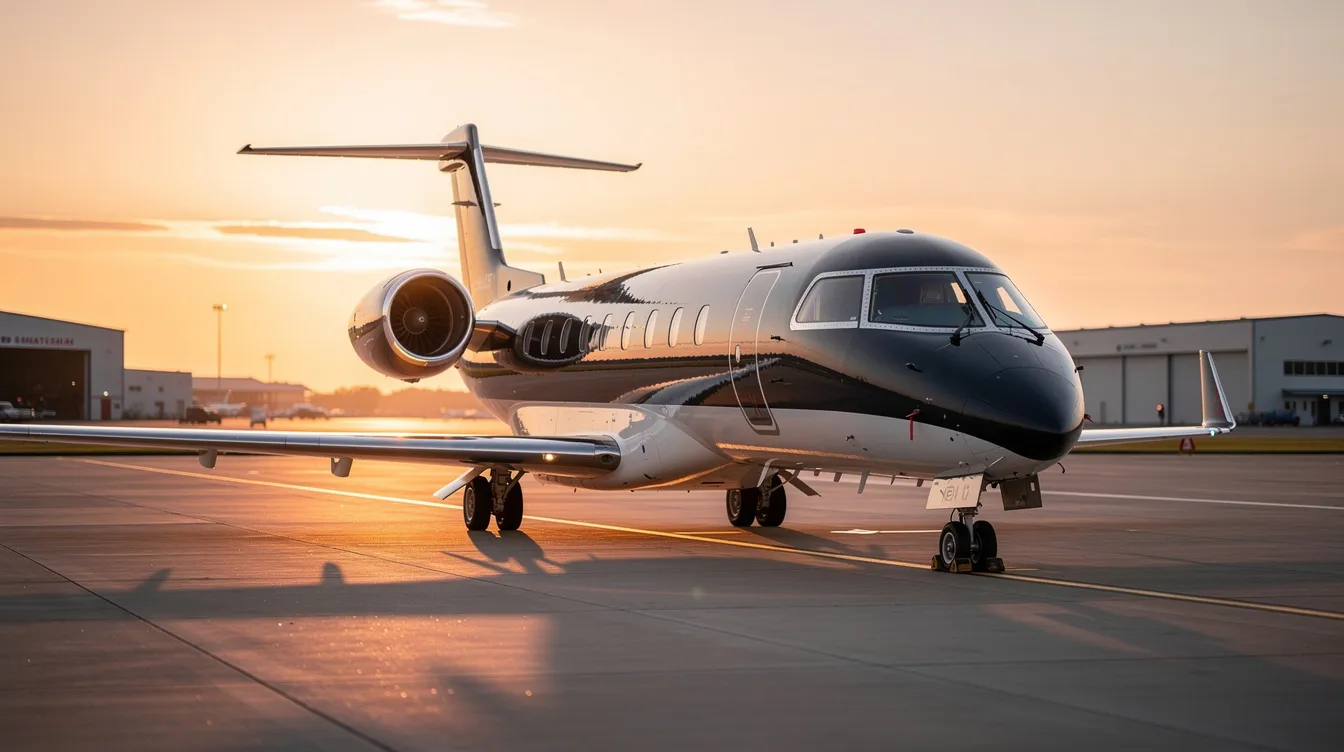
Overview: Why E135 JSX Semi-Private Flights Matter for Discerning Travelers
JSX sells individual seats on Embraer regional jets capped at 30 passengers per flight. Passengers arrive 20 to 30 minutes before departure, skip TSA lines, and board from private terminals via ramp stairs. The result: a trip that feels closer to a private jet experience than anything a commercial airline offers, at a fraction of full-charter pricing. But semi-private flights still share cabin space with strangers, lock you into fixed schedules, and cover only the routes JSX publishes.
This article breaks down the Embraer 135 (E135) as flown by JSX on routes like Las Vegas to San Diego, then measures that experience against what a BlackJet private jet service and Jet Card deliver for travelers ready for full control over who, when, and where they fly.
Quick comparison: JSX E135 vs. BlackJet Jet Card
Feature | JSX E135 | BlackJet Jet Card |
|---|
Seats per aircraft | 30 maximum | 4 to 16 (your group only) |
Schedule | Fixed, published routes | Any route, any time (on request) |
Privacy | Shared cabin | Full cabin exclusivity |
Check-in | 20 to 30 min before departure | Comparable FBO process |
Booking | Per-seat tickets on app/web | 24/7 via app, web, phone, or text |
Carbon offset | Not included | Every flight carbon-neutral at no extra cost |
What Is the JSX E135? Aircraft Basics and Cabin Layout
The Embraer ERJ-135 is a twin-engine regional jet manufactured by Embraer. Its standard capacity is typically around 37 passengers when configured for traditional airline service, and it is also a popular option when evaluating private jets for 30 passengers. JSX limits its aircraft to 30 seats for more space, creating a cabin that feels more open than typical regional operations.
JSX operates Embraer ERJ-135 and ERJ-145 jets. Both aircraft models have a maximum seating capacity of 30 on JSX. The ERJ-145 typically operates with 50 seats in other airlines; JSX reduces the ERJ-145's capacity from 50 to 30 seats. For larger groups, travelers may compare this to private jets for around 20 passengers when deciding between semi-private and full charter options. Both JSX aircraft provide a consistent cabin layout regardless of which airframe you board.
The key difference between the two models sits in seating arrangement:
The Embraer 135 has a 2x1 seating configuration: two seats on the right, one on the left. No middle seats exist in this layout.
The Embraer 145 features a 1x1 seating configuration, placing one seat on each side of the aisle.
JSX aircraft feature rear-mounted engines and a T-tail design, which pushes engine noise behind the cabin. The E135 can fly at a cruising speed of Mach 0.78 (about 518 mph) with a full-payload range near 1,300 nautical miles. JSX limits seating to enhance passenger comfort and space, removing overhead bins to reduce weight and open up the cabin's visual footprint.
JSX E135 Routes and the Las Vegas Semi-Private Experience
Las Vegas functions as one of JSX's busiest hubs. JSX uses the Embraer ERJ-135 for regional routes connecting cities across the United States, and JSX operates the E135 primarily for short-haul, regional point-to-point flights out of LAS to destinations including San Diego, Burbank, and Oakland. Travelers weighing this model against other ways to buy a seat on a private jet often focus on how routes and pricing compare.
A sample trip from Las Vegas to San Diego illustrates the model:
Departure facility: JSX operates from private fixed-base operator terminals at Harry Reid International, not the main commercial terminals. You park near a hangar or small building, walk inside, and check in at a counter.
Boarding: Passengers typically arrive 20 to 30 minutes before departure. After a brief sign-in, you walk across the ramp and climb stairs directly to the aircraft.
Flight time: Block time on a LAS to SAN leg runs roughly 45 to 60 minutes.
Arrival: Deplaning works the same way in reverse: forward stairs, short walk to ground transport.
Compared to taking a commercial carrier from the main LAS terminals, where TSA lines, gate walks, and boarding delays can consume 90 minutes or more, JSX charters cut door-to-gate time to a fraction. Other flights from Las Vegas on JSX reach California cities, Dallas, and Scottsdale, among other destinations.
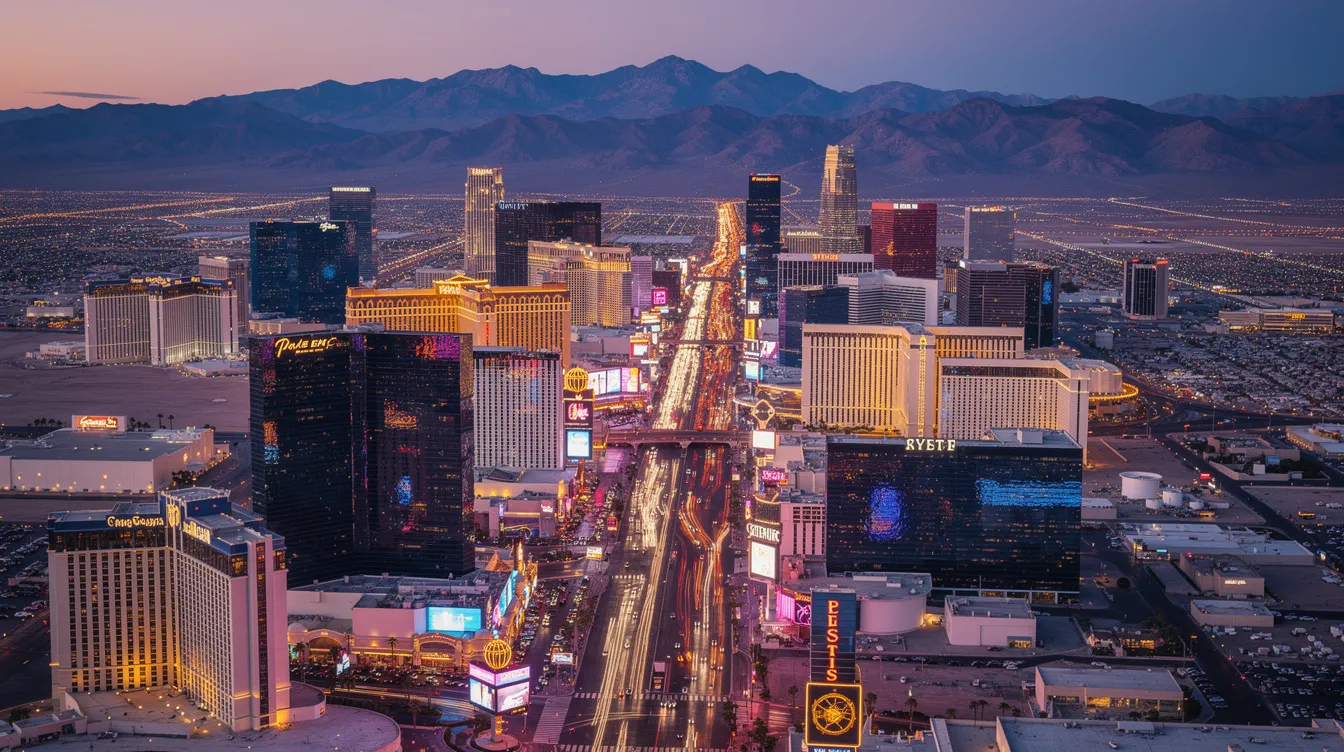
The typical traveler on these routes is a solo business flyer, a couple taking a weekend trip to California or Mexico, or a founding executive shuttling between offices in Texas and the West Coast.
Inside the JSX Flight: E135 Cabin Comfort and Onboard Service
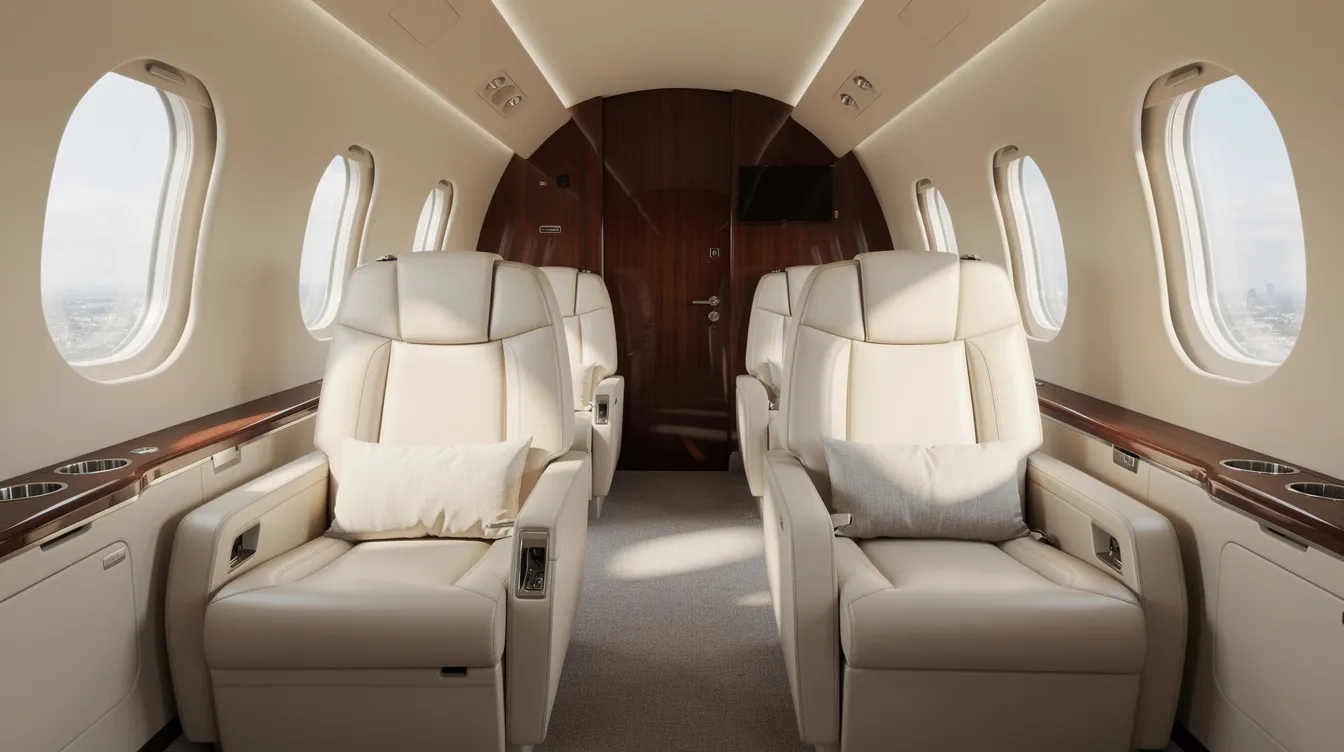
Walking up the ramp stairs and ducking into the E135, the first thing you notice is how much more space the 30-seat layout creates compared to a standard regional jet row. Seat pitch sits around 36 inches, and every seat is leather.
What you get onboard:
No overhead bins. Bags go under seats or in a small closet area; checked luggage is handled curbside.
Starlink Wi-Fi. JSX offers Starlink Wi-Fi on every flight, rolled out fleet-wide by mid-2023.
Beverages and snacks. Complimentary drinks and light food are served on every flight.
Quiet cabin. Rear-mounted engines and only 30 passengers make for a noticeably lower noise floor than a 150-seat narrow-body.
More privacy than commercial. Fewer customers in the cabin, no boarding announcements from a gate agent, and no crowd in the aisle.
The cabin does not offer bespoke catering, custom arrangements, or the ability to adjust departure times. It is a fixed-service product: polished, consistent, but not tailored. You share the aircraft with up to 29 other passengers, and flight games, entertainment, or surprises beyond snacks are not part of the arrangement.
Semi-Private vs. Private: How JSX E135 Differs from True Private Jet Access
JSX flights operate from private terminals, not public ones. Passengers skip TSA checkpoint lines (though JSX utilizes TSA Secure Flight and additional security measures). The airline does not participate in major global airline alliances. But calling it "private" requires a qualifier: you still share the plane with strangers.
Private jet charters provide flexibility and convenience that semi-private flights cannot replicate. For frequent flyers, a structured option like the BlackJet 25+ Hour Jet Card adds predictable pricing on top of that flexibility. Here is where the difference becomes concrete:
Privacy: JSX seats 30 customers per flight. A BlackJet Light Jet seats 4 to 7 people you choose.
Routing: JSX covers published city pairs. BlackJet flies any feasible airport, including destinations like Taos, SNA (Orange County), or country airstrips JSX does not serve.
Schedule: JSX publishes fixed departure times. A Jet Card lets you set the departure.
Customization: JSX fares buy a seat on a shared jet. You can charter a 30-seat jet for your group through JSX, but bespoke catering, custom interiors, and itinerary changes mid-trip are not available.
Scenario: A CEO based in Las Vegas needs to reach Oakland by 8 a.m. for a board meeting, then fly to Dallas that afternoon. JSX may offer a morning LAS to OAK route, but the afternoon connection to Dallas requires booking separately, taking a commercial flight, or waiting for the next published JSX schedule. With BlackJet, one call books both legs on the same day, with aircraft types matched to distance and passenger count.
When a Jet Card Beats Semi-Private: BlackJet vs. JSX on the E135 Use Case
A Jet Card is prepaid flight time: BlackJet offers 25-hour and 50-hour cards that lock in hourly rates across Light, Midsize, Super-Midsize, and Large Cabin jets. On the 50-hour card, the rate holds for 12 months and hours never expire. If you are considering the 25-hour option specifically, a complete guide to 25 hour Jet Cards helps clarify features and value.
JSX works well for predictable, short-haul flights between its published airports. But the model breaks down when your travel pattern includes any of the following:
Destinations JSX does not serve. A LAS to Aspen ski trip in December, or a business hop from San Diego to Napa, requires a different solution. BlackJet enables direct flights on a light jet charter to airports with no JSX presence.
Group travel. When 4 to 8 executives or family members fly together, buying individual semi-private tickets adds up. A Midsize Jet via Jet Card can carry the group at a per-person cost that approaches or beats multiple JSX fares on certain routes, and a detailed look at 50 hour Jet Card pricing and value can show when this structure makes sense.
Multi-leg itineraries. Beginning a trip in Las Vegas, stopping in Scottsdale, then continuing to Dallas in a single day is routine for Jet Card holders. JSX requires separate bookings on separate planes with separate schedules.
Time-sensitive travel. A meeting in August moves up by a day. JSX flights operate on fixed schedules; if the published route does not align, you are left taking other flights on commercial carriers. BlackJet responds to short-notice requests around the clock.
Safety, Certification, and Reliability: JSX E135 Operations vs. BlackJet Standards
JSX flights operate under FAA Part 135 regulations instead of Part 121 (the standard for large scheduled airlines). Part 135 governs crew duty limits, maintenance intervals, pilot training, and weather minimums. JSX flights have predictable on-time departures and experienced crews. The fleet is maintained to Embraer's standards, and the company's history of safe operations reflects disciplined execution under that regulatory framework. For private travelers, understanding Jet Card cost per hour alongside these safety standards is key to evaluating overall value.
BlackJet adds layers beyond regulatory compliance:
Operators in the BlackJet network carry ARGUS Platinum or equivalent ratings where applicable.
Pre-flight safety reports are available to cardholders before every mission.
Pilot experience minimums and aircraft maintenance records are vetted through BlackJet Certified, a proprietary review process.
Access to a broader fleet of planes and operators means that if one aircraft has a maintenance error or scheduling conflict, a replacement can be sourced from the wider network rather than a single-carrier fleet.
Sustainable Travel: Comparing E135 JSX Flights with BlackJet's Carbon-Neutral Approach
Regional jets like the E135 are efficient per seat when mostly full. A 30-seat aircraft carrying 25 passengers on a 45-minute hop burns less fuel per person than many private aviation alternatives. But when load factors drop, and seats go empty, per-passenger emissions climb. Some flyers respond by choosing more economical private aircraft options that balance cost with efficiency.
BlackJet addresses this from a different point, aligning sustainable offsets with access to the most affordable private jet options for travelers looking to manage both budget and environmental impact:
Every Jet Card flight has been carbon- and emissions-neutral since 2021, covering CO₂ plus non-CO₂ effects (water vapor, aerosols, nitrous oxide).
Offsets are applied automatically at no additional cost to the member.
This commitment is written into the Jet Card program, not offered as an optional add-on.
For travelers who value sustainability alongside flexibility, a green private jet approach through BlackJet pairs the convenience of on-demand aviation with verified environmental responsibility.
Technology, Booking Experience, and Support: How You Actually Book and Fly
Booking a JSX flight works like booking with any airline: select a route, pick a date and time from published options, buy per-seat tickets on the app or website, and show up at the private terminal.
BlackJet's booking model differs in structure:
Route flexibility. Request any origin-destination pair within operational range. No fixed route map limits your options, and you can compare that freedom against the structures outlined in a complete guide to Jet Card pricing.
Aircraft selection. Choose from Light, Midsize, Super-Midsize, or Large Cabin categories to match passenger count and distance; for example, executives might evaluate whether a12-seaterr private jet covers their typical missions.
24/7 support. A dedicated team handles irregular operations, last-minute changes, or multi-leg coordination. Booking a private jet through BlackJet can start with a text message, and frequent flyers often pair this with the best Jet Card programs for regular travelers.
Transparent pricing. Quotes arrive before you commit, with fuel surcharges and Federal Excise Tax included in Jet Card rates, making it easier to compare against a broader private jet price list and options.
Semi-private services like JSX operate well when your travel fits their schedule. When it does not, the gap between "airline-style booking" and "on-demand aviation" becomes the difference that drives frequent travelers toward Jet Card programs or even leasing a private jet for maximum control.
Is JSX on the E135 Enough for You, or Is It Time for BlackJet?
JSX on the E135 solves a real problem. It removes the worst parts of commercial aviation: long security lines, crowded terminals, middle seats, and two-hour pre-boarding windows. For solo travelers or couples flying predictable city pairs in the country, especially California to Las Vegas corridors, it is a strong product at accessible fares.
BlackJet serves a different need:
Frequent business travel across airports JSX does not cover
Multi-city itineraries completed in a single day
Group travel where chartering a full cabin costs less per person than multiple semi-private seats
Routes to Mexico, mountain destinations, or smaller fields where no semi-private carrier operates
Common questions, answered directly:
Are JSX planes private jets? No. They are Embraer regional jets configured for 30 passengers, sold per seat on public charters.
How private is semi-private? You share the cabin with up to 29 strangers. You get more privacy than commercial, but not exclusivity.
When do Jet Cards make more sense financially? When you fly four or more people together, need non-standard routes, or travel frequently enough to use 25 or more hours per year.
If your travel has outgrown published schedules and shared cabins, explore BlackJet's Jet Card programs to see how prepaid private jet access fits your pattern. The idea is simple: fly on your terms, to any destination, with the people you choose.
Frequently Asked Questions About the E135 JSX
Is the JSX E135 a private jet?
No. The Embraer ERJ-135 is a regional jet, and JSX sells individual seats on public-charter flights. Its 30-seat limit and private-terminal boarding create a semi-private experience, but passengers share the cabin with other travelers. A full JSX charter or a BlackJet Jet Card offers exclusive aircraft access for your group.
How many passengers can the JSX E135 carry?
JSX configures its E135 aircraft for a maximum of 30 passengers, compared with a typical standard capacity of around 37 seats. The reduced seating creates more cabin space. JSX also operates the ERJ-145, which is commonly configured for 50 passengers by other airlines but limited to 30 seats in JSX service.
How early should I arrive for a JSX E135 flight?
Passengers typically arrive at the private terminal 20 to 30 minutes before departure. The shorter arrival window avoids the usual public-terminal check-in process, though travelers must still follow JSX’s security and identification requirements, including TSA Secure Flight procedures.
What is the difference between JSX and a BlackJet Jet Card?
JSX sells seats on fixed, published routes and schedules. A BlackJet Jet Card provides access to private aircraft for your own group, with requested routes, departure times, and aircraft categories arranged around the trip. JSX can suit a short regional journey when its schedule works; a Jet Card is designed for travelers who need more control, privacy, or multi-leg flexibility.
Does the JSX E135 offer Wi-Fi?
Yes. JSX offers Starlink Wi-Fi on every flight, along with complimentary beverages and light snacks. Availability and performance can vary with operating conditions, as with any onboard connectivity service.
What safety rules apply to JSX E135 flights?
JSX flights operate under FAA Part 135 regulations, which cover areas such as crew qualifications, training, maintenance, and operating procedures. JSX also uses TSA Secure Flight and additional security measures. Travelers comparing private aviation providers should review the applicable operating rules, operator certifications, and safety oversight—not rely on the word “private” alone.
Conclusion: Choose the Flight Model That Fits the Mission
The JSX E135 offers a convenient semi-private alternative for travelers flying short, published routes: private-terminal access, a 20- to 30-minute arrival window, Starlink Wi-Fi, and a 30-seat cabin make regional trips simpler than conventional commercial travel. It remains a shared, scheduled service, however, so the route, departure time, and fellow passengers are not yours to choose.
For occasional trips on JSX’s network, buying a seat can be a practical choice. When business or leisure travel calls for a private cabin, flexible routing, multiple stops, or responsive scheduling, a BlackJet Jet Card offers a different level of access without the responsibilities of aircraft ownership. Safety review, carbon-neutral flights, and 24/7 flight support add structure to that flexibility.
The right option depends on how you travel: use semi-private service when its schedule fits, and consider a Jet Card when your itinerary demands more control. Explore BlackJet’s Jet Card programs to discover a more tailored approach to private jet access.


 Sign up with google
 Sign up with Apple