For the discerning traveler who values precision in every detail - from cabin selection to carbon footprint - understanding what actually powers your aircraft is more than trivia. It's a matter of safety, performance, and trust. This guide is for private jet travelers, aviation enthusiasts, and anyone curious about what fuels power modern aircraft. Here's the definitive answer to one of aviation's most common questions: do planes use diesel?
Quick Answer: Do Airplanes Actually Use Diesel Fuel?
Most commercial jets and private jets do not use road diesel fuel. However, a growing number of smaller aircraft use diesel-style compression-ignition engines that typically burn Jet A jet fuel rather than the automotive diesel you'd pump at a highway station. The confusion is understandable - jet fuel is chemically similar to diesel, but it is designed specifically for high-altitude use with tighter specifications for purity, temperature performance, and combustion stability.
Here's how the fuel landscape breaks down across aviation in 2027:
Commercial airliners predominantly use turbine engines running on kerosene-based jet fuel (Jet A or Jet A-1). Commercial airplanes use this specialized aviation fuel exclusively.
Traditional small piston-engine aircraft primarily use avgas (aviation gasoline), specifically the 100LL grade with high octane for spark-ignition engines.
Modern aviation diesel engines - found mainly in general aviation trainers and touring aircraft - usually run on Jet A, though some are certified for both Jet A and automotive diesel fuel under strict conditions.
Although Jet A smells and behaves similarly to diesel, the two are not interchangeable in turbine jet engines.
BlackJet's private jet network runs on certified jet fuel (Jet A / Jet A-1), never road diesel, to meet the strict safety and performance standards our clients expect.
Airplane Fuel 101: Jet Fuel vs Diesel vs Avgas
Airplane fuel is not a single product. It spans several distinct categories, each engineered for a specific engine type and operating environment, and understanding the different types of jet fuel used in aviation helps clarify why most aircraft cannot simply switch to road diesel.
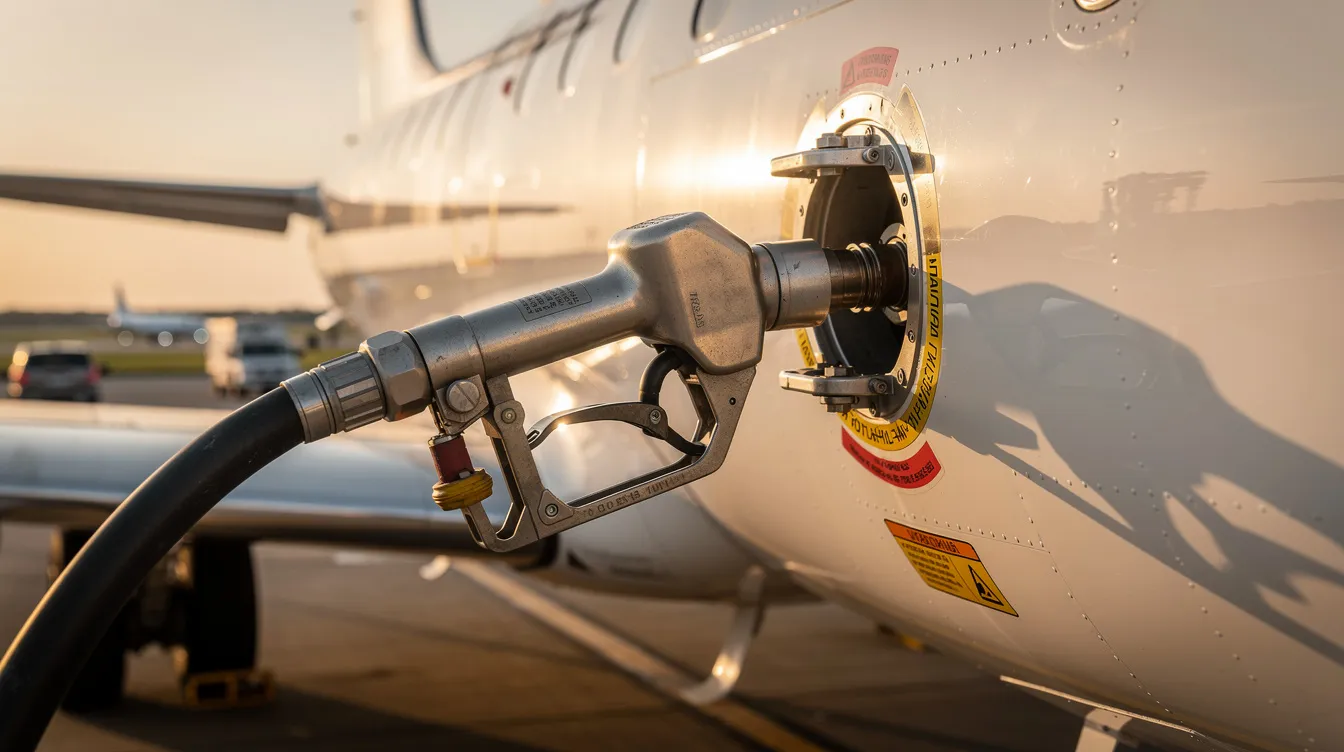
Kerosene-based jet fuel (Jet A, Jet A-1, Jet B): Used by jet engines and turboprops powering everything from Boeing airliners to Gulfstream private jets. Jet fuel is primarily kerosene-based with additives that ensure stable combustion, anti-icing protection against ice crystals, and reliable performance at extreme altitudes and temperatures.
Avgas (aviation gasoline): A high-octane, leaded fuel - typically 100LL - formulated for piston-engine aircraft. Avgas is more expensive than jet fuel and is produced in smaller volumes. It powers legacy trainers and owner-flown planes like the Cessna 152 and Piper Cherokee.
Road diesel fuel: Formulated for ground diesel engines in cars, trucks, and heavy equipment. It carries different lubricity and additive packages from Jet A and is only approved for direct use in a small subset of certified aviation diesel piston engines.
The core differences come down to volatility, freezing point, and the aircraft categories each fuel serves. Jet fuel is lighter and performs reliably at high-altitude temperatures where gasoline would vaporize, and standard diesel would gel. Avgas delivers the high octane that spark-ignition engines demand but cannot be used in turbines. Road diesel lacks the cold-weather resilience and purity required at 35,000 feet.
For private jet travelers with BlackJet, flights will always use certified jet fuel - not avgas or automotive diesel.
What Is Jet Fuel? (Jet A, Jet A-1, and Jet B Explained)
When people say "airplane fuel" for jets, they almost always mean one of three kerosene-based variants. Each is a product of the distillation process applied to crude oil, refined to meet exacting specifications.
Jet A: The common jet fuel type standard in the United States since the 1950s. It has a maximum freezing point around −40 °C (−40 °F) and is used by virtually all U.S.-based airline and private jet fleets, including aircraft in BlackJet's Jet Card programs.
Jet A-1: The global standard. Jet A-1 freezes at a lower temperature than Jet A - around −47 °C (−53 °F) - making it preferred for long-haul and high-latitude flights between regions like New York–London or Dubai–Zurich.
Jet B: A wide-cut fuel with even better cold-weather performance, with a freezing point near −60 °C. It is rare in civil use, deployed mainly in very cold regions such as northern Canada and by certain air forces in extreme climates.
All three are clear to straw-colored liquids with an odor similar to diesel fuel, but far more tightly specified for aviation safety. Jet fuel has a higher flashpoint than regular gasoline, reducing ignition risk during ramp handling - a critical consideration around passengers and high-value aircraft. That high flash point is one reason kerosene displaced petrol-based fuels in turbine aviation decades ago.
How Diesel Engines Work in Aviation
In aviation, "diesel" usually refers to the engine type - compression-ignition - rather than to road diesel fuel itself. Some general aviation planes use compression-ignition engines that share the same fundamental operating principle as the diesel engine in a truck, but burn aviation-grade fuel.
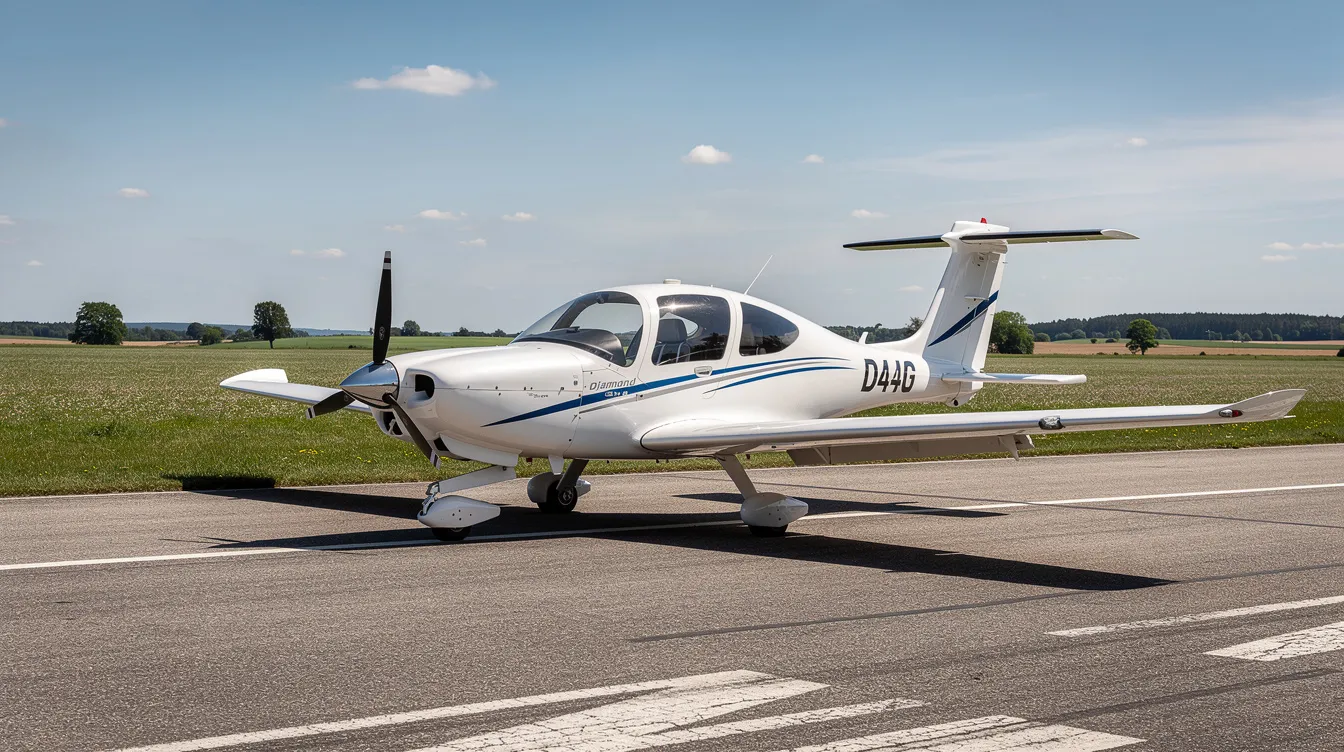
Some general aviation planes use compression-ignition engines. Certain small piston-engine airplanes can operate on aviation diesel. The Diamond DA-42 can operate on both diesel and Jet A. Aircraft with piston engines primarily use avgas.
Compression-ignition principle: Air is highly compressed inside the cylinder, raising its autoignition temperature significantly. Fuel - typically Jet A - is then injected into this superheated air and ignites without a spark plug. The power stroke drives the piston down.
Contrast with avgas gasoline engines: Traditional avgas piston engines rely on spark plugs and magnetos. Combustion begins from an electric spark rather than compression alone, requiring high-octane gasoline to prevent pre-ignition.
Why aviation diesel engines became attractive: In Europe during the 1990s and 2000s, avgas costs rose, and fuel availability shrank at many airports. Fuel availability is a significant factor for aviation diesel engines - and Jet A is far more ubiquitous worldwide than avgas. Certain small piston-engine airplanes can now operate on aviation diesel, delivering 30–40% lower fuel burn and better fuel economy for training and touring missions.
Concrete examples: Airplane manufacturers like Diamond Aircraft produce the DA40 NG, DA42, and DA62, all powered by Austro AE300 diesel engines certified primarily on Jet A. Diesel engines can run on Jet A fuel, and these aircraft have been installed across European flight schools to cut costs significantly.
These aviation diesel engines remain a niche in general aviation. They are not used in large commercial airliners or typical midsize and large-cabin private jets available through BlackJet, which instead focus on turbine aircraft and more affordable private aircraft options that balance cost, range, and comfort.
Can a Plane Run on Diesel Fuel Instead of Jet Fuel?
The answer depends entirely on the engine's certification and design - not on chemistry alone. In theory, jet planes could run on diesel fuel, since the two are related hydrocarbons from the same oil refinery distillation process. In practice, regulations and engineering tolerances make the picture far more nuanced.
When diesel fuel can be used: Some certified aviation diesel piston engines allow either Jet A or automotive diesel within strict specifications. Aircraft diesel engines are certified to run on standard automotive diesel when Jet A is unavailable, but only when the engine's type certificate explicitly permits it. Pilots and operators may not substitute fuels on their own.
When diesel fuel cannot be used: Turbine jet engines on airliners and private jets are not designed for automotive diesel. Using diesel could damage engine components - injectors, pumps, combustion liners - or cause unsafe combustion. Standard avgas piston engines also cannot use diesel fuel or Jet A, because their ignition systems are built for gasoline's volatility.
Concrete examples: A Cessna 172 with a traditional Lycoming avgas engine must only be refueled with avgas. A Cessna 172 retrofitted with a Continental CD-155 diesel engine, however, is approved to run on Jet A across Europe and North America, with certain road diesel grades listed as alternatives under specific limitations.
Regulatory framework: Aviation fuels and approved substitutions are governed by type certificates, Supplemental Type Certificates (STCs), and regulatory bodies like the FAA and EASA. BlackJet follows the manufacturer's and regulator's fuel specifications for every aircraft in its network - no exceptions, no shortcuts.
Jet Fuel vs Diesel Fuel: Key Technical Differences
Both jet fuel and diesel are middle-distillate hydrocarbons produced from crude oil, but their specifications diverge in ways that matter enormously at altitude.
Composition and boiling range: Jet fuel is optimized around kerosene fractions with carbon chains of roughly 8–16 atoms. Road diesel includes a broader cut with heavier hydrocarbons and different additive packages designed for ground-level engine performance.
Freezing point and cold performance: Cold temperatures cause standard diesel to gel, impacting performance - sometimes at temperatures as warm as −15 °C. Jet A must remain pumpable at −40 °C, and Jet A-1 down to −47 °C. This is non-negotiable at cruising altitudes where fuel tanks can drop to −50 °C or colder.
Lubricity and additives: Road diesel is formulated with higher lubricity to protect high-pressure fuel pumps and injectors in trucks and ground equipment. Jet A lacks the lubrication needed for standard diesel engines, meaning running pure Jet A long-term in a road diesel truck can accelerate pump wear. Conversely, Jet A has a higher sulfur content than modern ultra-low-sulfur diesel fuel, which can affect emissions and engine deposits differently.
Energy content: Jet A delivers approximately 43 MJ/kg. Road diesel offers slightly higher energy per volume due to greater density, but the per-kilogram difference is marginal. For aircraft range and displacement planning, the certified fuel's known performance curves matter more than raw energy numbers.
Safety characteristics: Jet fuel's higher flashpoint compared to gasoline - and its relatively high flashpoint even versus some diesel blends - reduces ignition risk during ramp handling. Both fuels are far less volatile than automotive gasoline or petrol, which matters for operations around passengers and high-value jets.
Real-World Examples: Aircraft That Use Jet A, Avgas, or Diesel
Concrete aircraft models clarify where each fuel type fits in the aviation world as of 2027.
Jet A / Jet A-1 turbine aircraft: Boeing 737 MAX, Airbus A320neo, Gulfstream G650, Bombardier Global 7500, Embraer Praetor 600 - all classic turbine-powered aircraft burning Jet A or Jet A-1, including several models featured among the top private jets in the world. These are similar to the aircraft categories available through BlackJet's private jet network.
Avgas 100LL piston aircraft: Cessna 152 and 172 with Lycoming engines, Piper PA-28 series, Beechcraft Bonanza - legacy piston planes powering training and owner-flown fleets worldwide.
Aviation diesel engine aircraft: Diamond DA40 NG, DA42-VI, and DA62 with Austro AE300 engines. The Diamond DA-42 can operate on both diesel and Jet A. Some Cessna 172 conversions with Continental CD-155 engines have been developed for European training fleets that shifted from avgas to Jet A-burning diesels to cut fuel costs and increase range.
Military and special-mission aircraft: Most modern Western military aircraft - including those operated by the US military - burn jet propellants like JP-8 or JP-5, which are akin to Jet A-1 with military-specific additives. Only a few UAVs and light military planes use diesel-style piston engines, while large-group missions in civil aviation tend to rely on private jets for roughly 30 passengers when commercial schedules are too restrictive.
BlackJet clients will almost always fly on Jet A / Jet A-1 powered turbine aircraft in light, midsize, super-midsize, and large-cabin categories - including large private jets suitable for around 20 passengers - not on small avgas or diesel-piston platforms.
Airport Ground Vehicles: Jet Fuel or Regular Diesel?
While the core question is about planes, many travelers notice fuel trucks and tugs on the ramp and wonder if those vehicles also use jet fuel, especially when flying through major hubs or regional bases for private jet charters in Karachi.
Standard practice: Most airport ground support equipment - pushback tugs, belt loaders, GPUs, air conditioning carts - runs on regular diesel fuel or, increasingly, electric power. They are not refueled with Jet A.
Why diesel is preferred for ground vehicles: Ground diesel engines are optimized for road diesel's lubricity and emissions profile. Jet A's lower lubricity can cause long-term wear on standard diesel pumps and injectors not designed for it.
Exceptions: Some airports and military bases have historically used surplus jet fuel in older diesel vehicles, sometimes with added lubricity agents, but this is not mainstream or recommended by airplane manufacturers or airport authorities. There are also legal and tax considerations - jet fuel, diesel, and gasoline are taxed differently, and misusing aviation fuel in road vehicles can violate transport and environmental regulations, whether you are operating in North America, Europe, or key markets for private jet charters in Lahore.
BlackJet's approach: BlackJet works only with FBOs and operators that follow proper fuel handling and separation, ensuring that jet fuel for aircraft and diesel for ground equipment are stored, taxed, and used according to regulation. This is part of our safety commitment.
Safety, Certification, and Why Fuel Choice Matters for Private Jet Travelers
Fuel choice is a core safety and reliability factor - especially for high-net-worth and corporate travelers who depend on on-time, incident-free operations. It is not an area where cost savings should ever drive substitution.
Certification requirements: Aircraft type certificates and engine manuals specify exactly which fuel grades are permitted. Operators cannot legally deviate - filling a plane with cheap road diesel to save on costs would void airworthiness, insurance, and potentially lead to catastrophic engine failure, regardless of whether the flight is a full-aircraft charter or a single-seat purchase on a private jet.
Quality control: Jet fuel undergoes strict filtration and quality control at every stage - from production to airport storage to the moment it fills the aircraft's fuel tanks. Typical FBO procedures include daily fuel sampling, water detection, filtration, and proper labeling of Jet A, Jet B, avgas, and diesel storage to avoid cross-contamination and reduce risk.
BlackJet's standards: BlackJet partners only with operators holding ARG/US, Wyvern, or equivalent safety certifications, and part of those audits includes strict fuel procurement and quality-control procedures.
Passenger assurance: Discerning travelers can ask their operator or broker - including BlackJet - which jet fuel grade is used on a specific aircraft type and how often fuel quality checks are performed. This is a reasonable and welcome part of due diligence.
Sustainability: Jet Fuel, Diesel, and the Rise of Sustainable Aviation Fuel (SAF)
In 2027, aviation's carbon dioxide emissions remain under intense scrutiny. The fuel your plane burns is the single largest determinant of its environmental footprint - which makes the rising production of Sustainable Aviation Fuel one of the most important developments in the industry.
What is SAF? Sustainable Aviation Fuels are produced from organic sources - biomass, waste oils, agricultural residues - or via synthetic pathways. Synthetic fuels can be produced using water and carbon dioxide captured from the air, creating a near-closed carbon loop.
Compatibility: SAFs require little to no modifications for existing aircraft. Blends of up to 50% SAF with conventional Jet A meet all ASTM D7566 and D1655 specifications and can be used by commercial airlines and private jets alike. Research into 100% SAF operations continues at Boeing and other airplane manufacturers.
Emissions impact: Biofuels can cut greenhouse gas emissions by up to 80% on a lifecycle basis compared with fossil Jet A. Biofuels emit the same amount of carbon dioxide they absorb during growth, making them substantially carbon-neutral. Jet fuel burns cleanly, producing only water and carbon dioxide - but fossil-sourced CO₂ adds to the atmosphere, while biofuel-sourced CO₂ is part of a natural cycle.
BlackJet's sustainability approach: BlackJet offers carbon-neutral private flights through verified offset programs and increasingly prioritizes operators who adopt SAF where regionally available - at major hubs like Los Angeles, London, and Amsterdam, where SAF demand and production have risen significantly since the mid-2020s, even for more affordable private jet options aimed at cost-conscious flyers.
Diesel vs jet fuel in this context: Automotive diesel has its own decarbonization trajectory through biodiesel and renewable diesel from plants and waste oils, but these other fuels are not widely certified for aviation turbine use. SAF remains the primary sustainable pathway for jet aircraft.

Choosing the Right Aircraft and Fuel Profile with BlackJet Jet Cards
For the strategic traveler, fuel type is part of a broader decision matrix: range, cabin class, sustainability, and reliability all matter more than whether the engine is technically "diesel" or not. The right aircraft for the right mission is the ultimate advantage.
Mission-matched aircraft: For a New York–Miami weekend, a light jet burning Jet A is ideal - efficient, fast, and right-sized. For transatlantic New York–London board meetings or larger group movements, a large-cabin, long-range jet on Jet A-1 delivers the range, power, and cabin space the flight demands, similar to private jets that can accommodate around 50 passengers.
Jet Card flexibility: BlackJet's 25-hour and 50-hour Jet Card programs offer prepaid access at fixed hourly rates by cabin category, with transparent fuel surcharges when applicable, making it easy to compare jet card cost per hour across programs. No ownership burden, no guessing about fuel costs.
Safety and fuel integrity: All aircraft available through BlackJet meet stringent maintenance and fuel-handling criteria. Clients never need to worry about whether an operator is cutting corners with cheaper or incorrect fuels like automotive diesel.
Technology and real-time support: BlackJet's digital booking platform and real-time flight support let clients see aircraft type, range, and environmental data - including whether SAF is being used on specific routes as adoption increases.
Explore how a BlackJet Jet Card can give you seamless access to Jet A-powered private jets, carbon-neutral flights, and a level of safety and control that goes far beyond commercial first class, especially when you compare the best jet cards for frequent flyers and their benefits.
FAQ: Planes, Diesel Fuel, and Jet Fuel (Jet A, Jet B) in 2027
If you’re exploring fuel types because you’re considering private aviation, it also helps to understand how BlackJet’s premium private jet card programs package aircraft access, safety standards, and sustainability into a single service.
Do commercial jets ever use diesel?
No. Modern airliners and business jets are designed for jet fuel and do not use automotive diesel. They rely exclusively on Jet A or Jet A-1, and for private travelers the key financial question is usually addressed through comprehensive guides to overall jet card cost rather than experimenting with cheaper fuels.
Are jet fuel and diesel fuel the same thing?
They are chemically similar middle distillates - both are hydrocarbons derived from oil - but they differ in specification, additives, freezing point, and approved use cases. They are not interchangeable in most engines, and these technical differences ultimately flow through to how jet card pricing is structured for different aircraft and mission profiles.
What is Jet B and where is it used?
Jet B is a wide-cut jet fuel with superior cold-weather performance, used mainly in very cold regions like northern Canada and in certain military operations where extreme low-temperature reliability is essential; its specialized use is one of many variables that appear in comprehensive breakdowns of 100-hour jet card costs for frequent flyers.
Can my private jet flight with BlackJet run on Sustainable Aviation Fuel?
Where SAF is available at partner FBOs, BlackJet can route flights on aircraft approved and supplied with SAF blends. Remaining emissions are offset through verified carbon-neutral programs, which many travelers first encounter when researching 25-hour jet card features and costs.
Will I ever see a diesel-powered private jet?
Diesel piston engines are currently limited to smaller general aviation aircraft. Private jets in light through large-cabin categories rely on turbine engines and jet fuel, not diesel pistons. That said, the compression-ignition principle continues to be developed for future aviation applications, and its economics are often discussed alongside 50-hour jet card pricing and value for high-usage travelers.
Conclusion: Do Planes Use Diesel?
The short answer is that most planes do not use automotive diesel. Commercial airliners and private jets typically run on kerosene-based Jet A or Jet A-1, while conventional piston aircraft primarily use avgas. A limited number of smaller general aviation aircraft have compression-ignition engines that can use Jet A—and, only when their certification permits, certain grades of automotive diesel.
That distinction matters: similar chemistry does not make fuels interchangeable. Cold-weather performance, lubrication, fuel quality, and engine certification all determine what an aircraft may safely use. For private jet travelers, the practical assurance is that turbine aircraft operate on approved aviation fuel under established handling and safety procedures.
As sustainable aviation fuel becomes more available, it offers a route to lower lifecycle emissions without requiring major modifications to many existing aircraft. BlackJet’s private jet network focuses on certified aircraft, carefully managed fuel procedures, and carbon-neutral travel options—so clients can prioritize the journey, the schedule, and the aircraft suited to their mission.
Whether the trip is a regional business flight or a longer international itinerary, understanding the fuel is one part of choosing safe, reliable private jet access. Explore BlackJet’s Jet Card programs to discover a more flexible alternative to ownership, with premium aircraft access and support designed around your travel needs.
Elevate your travel - effortlessly. With BlackJet, private flight isn't reserved for a few - it's accessible on your terms through our Jet Card programs, whether you’re comparing major providers like NetJets jet card costs or focusing solely on BlackJet’s own options, complete with rigorous safety, carbon-neutral performance, and unmatched flexibility. Explore our offerings and discover how refined, meaningful travel becomes your new standard.
Join BlackJet's Jet Card program for seamless, premium private travel - safety, sustainability, and flexibility built in, with a structure that stands up well when compared to Flexjet Jet Card pricing and options.


 Sign up with google
 Sign up with Apple