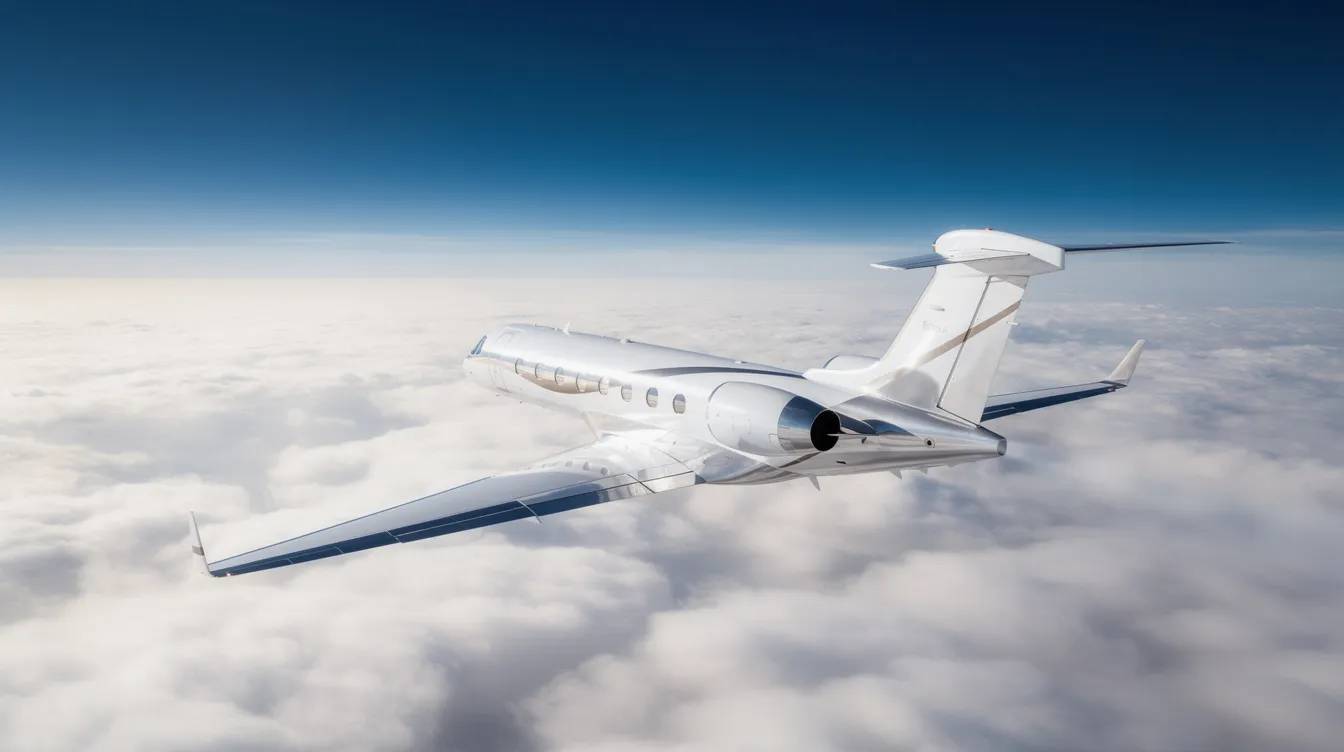
Few aircraft in history command the same reverence as the Boeing 747. For over five decades, this wide-body jumbo jet has defined long-haul air travel, carrying hundreds of millions of passengers across oceans and continents at altitudes where the sky turns indigo and the curvature of Earth becomes visible. But what exactly is the cruising altitude of a 747, how does it affect everything from fuel burn to passenger comfort, and why does it matter whether you're flying commercial or stepping aboard a private jet?
This article breaks down the numbers, the engineering, and the real-world implications of how high a 747 flies-and what that means for travelers who demand more from every flight.
Quick answer: typical cruising altitude and speed of a Boeing 747
Cruising altitude refers to the level segment of flight, typically between 30,000 and 41,000 feet for a Boeing 747, where the aircraft maintains steady-state flight for optimal fuel efficiency and speed.
The typical cruising altitude for a Boeing 747 ranges between 30,000 and 41,000 feet, with most passenger flights settling into the 35,000 to 39,000 ft band during the main cruise portion. The Boeing 747-400 is certified to fly up to 45,100 feet, while the 747-8 holds a service ceiling around 43,000 ft. In practice, airlines rarely push either variant to those absolute limits during routine operations.
A Boeing 747 typically cruises at Mach 0.85 60.86, translating to a cruising speed of approximately 570 mph at standard cruise levels. The Boeing 747-8 can reach a maximum cruising speed of 660 mph under favorable conditions. Optimal cruising altitude balances fuel consumption, speed, and aerodynamic safety margins-it's not simply a matter of climbing as high as the engines allow.
Cruising altitude is the level segment of flight after climb and before descent, where the airplane maintains steady-state flight optimized for fuel economy and consistent ground speed. Here's a quick reference:
Variant | Typical Cruising Altitude (ft) | Typical Cruise Speed | Service Ceiling (ft) |
|---|
747-400 | 35,000 39,000 | Mach 0.84 60.86 (~570 mph) | ~45,100 |
747-8 Intercontinental | 40,000 42,000 | Mach ~0.855 (~615 mph) | ~43,000 |
Why cruising altitude matters for high-end and business travelers
Altitude isn't just a number on the flight deck display. It directly influences flight time, turbulence exposure, fuel burn, and route flexibility. Higher altitudes generally help aircraft improve fuel efficiency and speed by operating in thinner, colder air where engines run more efficiently and aerodynamic drag drops. For executives on tight schedules, these factors compound into tangible time and comfort differences.
Consider door-to-door time on a route like New York to London. A 747 in commercial service, including ground transport to a major hub, security queues, boarding, and customs on arrival, often totals 14 16 hours. A private jet cruising at a similar altitude and speed-Mach 0.85 or above-but departing from a secondary airport with a private terminal can reduce total travel time to 9 11 hours, illustrating why chartering a private jet can be worth it. The cruise segment itself is nearly identical; the difference lives on the ground.
Flying above most weather and commercial traffic also enables smoother rides and more predictable arrival times. BlackJet Jet Card members benefit from cruise levels and speeds comparable to jumbo jets, paired with tailored departure times, airport choices, and same-day flexibility that commercial service simply cannot offer.
How high do Boeing 747 variants fly? (747-100 to 747-8)
The name "Boeing 747" spans several generations, each with slightly different cruising altitude profiles shaped by engine technology, wing design, and aircraft weight.
Earlier variants-the 747-100, -200, and -300-shared service ceilings around 43,000 to 45,000 ft but operationally cruised lower, typically in the low-to-mid 30,000s, constrained by older engines and heavier airframes. The 747SP, designed for ultra-long-range routes, featured a shorter fuselage and a redesigned wing that allowed it to cruise at higher altitudes than its siblings, sometimes reaching above 41,000 ft with lighter payloads.
The 747-400 changed the game. Its first flight took place on April 29, 1988, introducing a modern glass flight deck, winglets, and more powerful engines. The passenger version typically cruises between 35,000 and 40,000 ft, stepping up as fuel burns off. The 747-400D, a domestic variant for Japanese carriers, can seat up to 660 passengers in a single-class configuration-enormous capacity that directly affects maximum takeoff weight and initial cruise level. The 747-400F freighter variant boasts a maximum payload of 274,100 pounds. The 747-400ER can fly 500 miles farther than the standard -400, extending range on long-haul routes. The last passenger 747-400 was delivered in April 2005.
The 747-8 Intercontinental represents the final evolution. With a maximum takeoff weight of approximately 987,000 pounds, GenX engines, raked wingtips instead of traditional winglets, and improved aerodynamics, this variant often cruises at FL400 FL420 when weight allows-slightly faster and more fuel-efficient than previous variants at comparable altitudes.
Service ceiling vs typical cruising altitude
Service ceiling is the maximum altitude at which an aircraft can sustain a modest climb rate-typically around 100 feet per minute-under standard atmospheric conditions. It is a certified limit, not an operational target.
While the Boeing 747-400 is certified up to around 45,100 feet, airlines typically cruise it between 35,000 and 41,000 ft. Flying too high can reduce engine thrust and lift margin due to thinner air, leaving insufficient safety margins for maneuvering or weather avoidance. The gap between service ceiling and typical cruise exists for good reason.
Service ceiling represents structural and engine performance limits under ideal conditions.
Typical cruise sits 4,000 10,000 ft below ceiling to preserve engine performance headroom.m
At the upper end of the altitude envelope, the margin between stall speed and maximum speed narrows-a condition pilots call "coffin corner"
Air traffic control constraints and odd/even flight level assignments further keep aircraft flight patterns within standard bands.
How a 747 climbs from takeoff to cruising altitude
From takeoff to top of climb, a Boeing 747's journey upward follows a carefully sequenced set of phases. A Boeing 747 typically takes off at 160 knots, though typical takeoff speed for a 747-400 is 155 180 knots depending on aircraft weight, runway length, and ambient temperature. Takeoff speed varies with weight and conditions-a fully fueled transoceanic departure will require higher rotation speeds than a lighter regional hop.
After liftoff, flaps retract, and the airplane begins its initial climb. Below 10,000 ft, speed is limited to 250 knots indicated airspeed in most jurisdictions. Above that, the crew accelerates-often to around 320 knots indicated-before transitioning to a Mach number climb schedule near 28,000 30,000 ft. For a 747-400, that transition typically settles at Mach 0.84.
A fully loaded Boeing 747 typically starts its cruise at lower altitudes-perhaps FL320 or FL330-because the wings need enough lift to support the heavy airframe. Step climbs allow the Boeing 747 to ascend to higher altitudes as fuel is consumed and aircraft weight decreases. On a 12-hour transpacific sector, the crew might climb from FL330 to FL350, then FL370, and eventually FL390 or above, each step unlocking better fuel economy.
Landing speed for a 747 is approximately 145 150 knots, or roughly 166 172 mph, a figure that depends on landing weight and configuration.
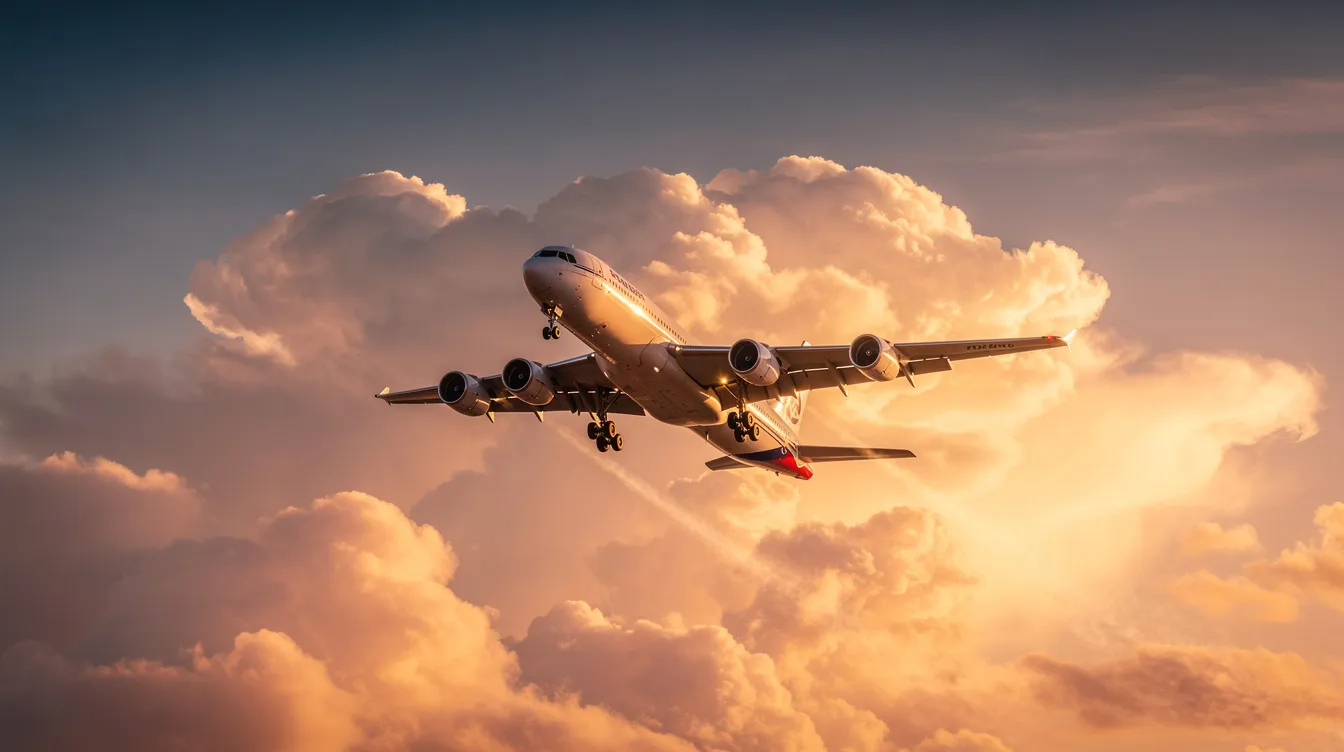
Cruising altitude, cruising speed, and fuel burn
The relationship between cruising altitude, cruising speed, and fuel burn defines the economics of every long-range flight in a jumbo jet.
Reduced air density at higher altitudes lowers aerodynamic drag on the aircraft, allowing the same thrust to produce more speed. Simultaneously, jet engines operate more efficiently at higher altitudes due to colder temperatures, which improve thermodynamic cycle performance. The result: climbing to the right altitude saves fuel, reduces emissions, and maintains competitive ground speed.
But there are trade-offs. Flying faster than long-range cruise- say, at Mach 0.86 instead of the more economical Mach 0.84-increases fuel consumption disproportionately. NASA research has shown that staying at a non-optimal altitude (31,000 ft vs an optimum near 39,000 ft) can cost approximately 14% more fuel per mile on a 747-400. That penalty underscores why step climbs and real-time altitude optimization matter.
A 747-400 on a 10+ hour transoceanic flight might begin cruise at FL330 burning upward of 24,000 pounds of fuel per hour, finishing above FL390 where fuel burn drops below 20,000 pounds per hour as the airplane lightens. Modern private jets in BlackJet's programs apply identical principles-optimizing altitude and cruise speed for both time savings and greater fuel efficiency-, and many routinely cruise well above airline traffic,c as explained in our guide to how high private jets fly compared to commercial flights.
Cruising altitude of a 747 vs typical commercial airliners
Where does the 747 sit among other commercial passenger planes? Most long-haul airliners cruise in a similar band, but differences in wing shape, engine performance, and maximum takeoff weight create meaningful variation.
Commercial passenger planes usually cruise around 35,000 feet. The Airbus A350 and Boeing 777 can cruise at 43,100 feet-matching or slightly exceeding the 747-8's service ceiling. The Airbus A380 has a cruising speed of Mach 0.85, virtually identical to the 747-400. Modern twin-engine jets cruise around Mach 0.82 to 0.85, putting them in the same speed neighborhood, though the 747-8 is slightly faster in typical operations.
Despite its four-engine layout and aging design lineage, the 747's cruise altitude and maximum cruising speed remain competitive with many of the best private jets in the world:
Aircraft Model | Typical Cruise Altitude (ft) | Typical Cruise Speed (Mach) |
|---|
Boeing 777-300ER | FL350 430 | ~0.84 |
Boeing 787 Dreamliner | FL350 430 | ~0.85 |
Airbus A350-900 | FL350 430 | ~0.85 |
Boeing 747-400 | FL350 410 | 0.84 60.86 |
Boeing 747-8I | FL400 420 | ~0.855 |
Air traffic control slots aircraft into standard odd/even flight levels in 1,000 or 2,000 ft increments regardless of type, so a 747 shares airspace with twin-engine wide-body airliners on every major route.
Cruising altitude of a 747 vs private jets
Many modern private jets regularly cruise higher than jumbo jets. Private jets often fly at altitudes of 45,000 to 51,000 feet-well above the traffic and weather that affect commercial operations.
The contrast is striking. A 747-400's typical cruise of 35,000 39,000 ft places it among the densest commercial traffic bands, while long-range private jets like the Gulfstream G650 (ceiling ~51,000 ft) and Bombardier Global 7500 operate in significantly thinner traffic. At 41,000 ft, a G650's cabin maintains pressure equivalent to just 3,000 ft-far more comfortable than the 6,000 8,000 ft cabin altitude typical of commercial airliners at similar flight levels.
Altitude advantages for private jets include smoother air, fewer weather deviations, shorter routing into secondary airports, and reduced exposure to congested ATC sectors. BlackJet Jet Card members commonly fly at these higher altitudes, enjoying 747-like cruise speed with a more exclusive, flexible experience through carefully selected aircraft, including private jets optimized for around 20 passengers when group size and mission profile demand larger cabins.
Despite similar cruise speeds-Mach 0.83 to 0.90 for top speed-private jets usually beat jumbo jets on total journey time. The difference isn't in how fast they fly at altitude, but in how much time is saved on the ground before and after the flight.
How high do military aircraft and other special missions fly compared to a 747?
The 747's cruising altitude sits in a "middle-high" layer of the atmosphere. Military aircraft span a far wider range.
Fighters and reconnaissance platforms routinely exceed 50,000 60,000 ft. The U-2 spy plane operates above 70,000 ft; the SR-71 Blackbird historically cruised near 85,000 ft. Air Force transport aircraft like the C-17 Globemaster, however, cruise closer to commercial flight levels-around 28,000 35,000 ft.
Modified 747s in military and government service-including the VC-25A, used as Air Force One, and the E-4B airborne command post-cruise at similar altitudes and speeds to airline-operated 747s. The airplane's proven high-altitude performance made it a natural platform for these critical missions, much like modern VIP airliners that serve as private jets for groups of up to 50 passengers.
For broader context:
Turboprop airliners typically cruise below 25,000 ft
Helicopters operate around 2,000 10,000 ft
Supersonic jets like the Concorde cruised near 60,000 ft at Mach 2.04, in a class entirely apart from subsonic high-speed flight.
The 747 occupies the sweet spot where commercial viability, engine performance, and passenger comfort converge-above weather, below the domain of specialized military aircraft.
Cabin pressure and comfort at 747 cruising altitude
Though a 747 may cruise at 35,000 41,000 ft, passengers experience a cabin altitude closer to 6,000 8,000 ft. Pressurization systems compress outside air to maintain a breathable, comfortable environment despite the near-vacuum conditions at sea-level equivalent altitudes far below the airplane's actual position.
On the 747-8I, Boeing improved cabin air quality with higher humidity levels and enhanced environmental controls compared to the 747-400. The upper deck of the 747, long favored by airlines for premium classes, benefits from a slightly smaller cross-section that some passengers find quieter and more intimate.
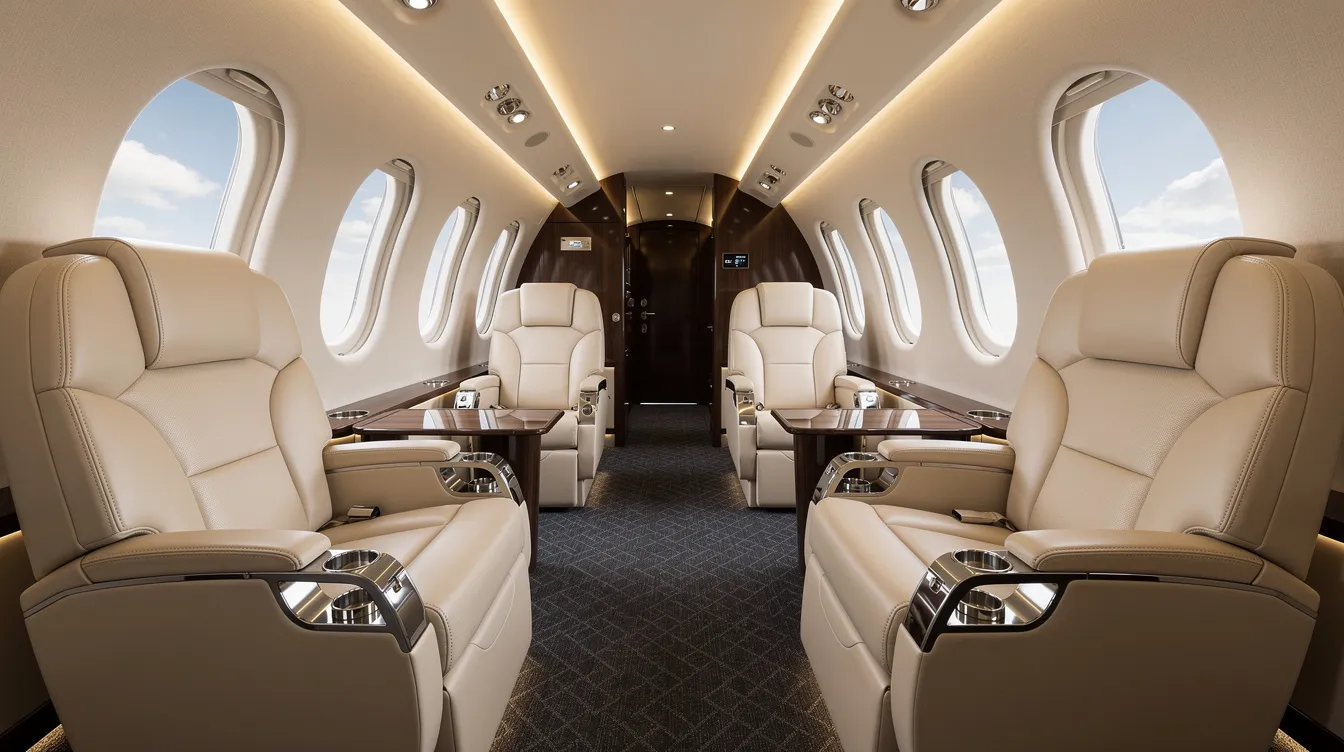
Modern private jets push comfort further. Aircraft like the Gulfstream G650 and other 16-seat private jet options built for comfort and convenience maintain cabin altitudes as low as 3,000 ft at cruise-closer to ground-level conditions. Lower cabin altitude reduces fatigue, dehydration, and jet lag, which is why executives often prefer private aviation for working and resting en route.
BlackJet's focus on comfort and productivity at altitude extends to careful aircraft selection across cabin classes, ensuring that every flight delivers an environment optimized for how passengers actually want to spend their time-whether that means conducting a video call, reviewing a deal, or simply arriving rested-and is underpinned by its premium private jet card programs.
How weather, weight, and routing affect a 747's exact cruising altitude
No single "right" cruising altitude fits every Boeing 747 flight. Several factors shift the actual level flown on any given sector.
Aircraft weight is the primary driver. A 747-400 departing at near-maximum takeoff weight cannot climb to FL390 immediately-the wings wouldn't generate enough lift at that density altitude. Initial cruise might be FL320 or FL330, with step climbs following as fuel burns off and weight savings accumulate over the first few hours.
Jetstream winds and weather systems are the second key factor. Dispatchers and pilots analyze forecast winds to select altitudes where tailwinds boost ground speed on eastbound flights or where headwinds are minimized on westbound sectors. On the North Atlantic tracks between London Heathrow and New York, for example, a 747 might accept a non-optimal flight level early in cruise because ATC assigns specific tracks and altitudes based on traffic flow. Later, as the plane lightens and traffic thins, the crew requests higher levels�9similar to how private aviation clients weigh private jet pricing and aircraft options when balancing time, comfort, and route flexibility.
Key factors influencing chosen cruise altitude:
Aircraft weight at departure and projected fuel burn rate
Wind conditions at multiple flight levels
Turbulence layers reported by preceding traffic
ATC track assignments and traffic density
Temperature deviations from standard atmosphere affecting engine performance
Cruising altitude and safety: certification, margins, and emergency procedures
Safety standards determine every altitude limit published for the 747. Structural design, engine performance, and cabin pressure systems are tested to altitudes well beyond normal operations to build generous safety margins.
Boeing's certification process for each variant-from the first aircraft in the 747 family through the 747-8-involves demonstrating that the airframe can withstand loads at the upper end of its altitude envelope, that engines produce sufficient thrust for maneuvering, and that pressurization can maintain safe cabin conditions even with one system failed.
Depressurization scenarios receive particular scrutiny. At a high cruising altitude, a 747 must be able to descend rapidly to a breathable level-around 10,000 ft-while remaining fully controllable. Pilots follow strict speed and altitude constraints (VMO/MMO) that were validated during extensive test flight campaigns. The trailing edge devices, wing sweep geometry, and powerful engines are all engineered to perform predictably across the full operating range.
The same rigor applies to modern private jets. BlackJet Certified Safety Standards ensure that every operator in the network meets or exceeds FAA and international certification requirements, regardless of whether the aircraft cruises at 39,000 ft or 51,000 ft, and are a core pillar of our recommendations on the best jet cards for frequent flyers.
Historic test flights and how the 747 proved its cruising performance
The first aircraft to carry the 747 designation made its first flight on February 9, 1969, piloted by Jack Waddell from Boeing's Everett factory. That initial test flight and the campaign that followed focused on confirming high-altitude stability, stall margins, high-Mach buffet boundaries, and climb performance-the foundational data that defined every subsequent variant's cruising altitude envelope.
Pan Am inaugurated 747 commercial service on January 22, 1970, flying New York to London. Delta Air Lines and China Airlines were among the many carriers that would eventually operate the type on long-range routes worldwide, just as NetJets would later popularize structured jet card programs with transparent costs on the private side of the market.
The 747-400 underwent additional thousands of test hours after its 1988 first flight to validate improved wing design with winglets, updated avionics, and extended range capability. The 747-8I completed its first flight in March 2011 and received certification in December 2011. Flight testing confirmed typical cruise Mach numbers around 0.84 60.855 and safe operation up to the published service ceilings, validating improvements from GenX engines, raked wingtips (replacing the -400's winglets), and refined wing sweep geometry along the trailing edge.
Today's published cruising altitudes rest on decades of engineering, certification, and operational refinement.
Fuel burn, emissions, and sustainability at 747 cruise levels
Cruising altitude directly influences fuel burn and therefore emissions for a four-engine jumbo jet. Operators choose long-range cruise speed settings and optimized flight levels to minimize fuel consumption per nautical mile on ultra-long sectors, balancing time and environmental impact.
Despite weight savings from composite materials in the 747-8 and efficiency gains over earlier models, a quad-engine 747 still burns more fuel per hour than a modern twin-engine widebody. A 747-400 consumes roughly 24,000 pounds of fuel per hour at high gross weight-a figure that drops as the plane lightens. Selecting the correct altitude throughout cruise is one of the most effective levers operators have, just as choosing more economical private aircraft options can be one of the most effective levers for budget-conscious flyers.
Sustainability practices that reduce emissions at cruise 6and make even more affordable private jet options greener over time 6include:
Route optimization software that selects fuel-efficient altitudes and waypoints
Continuous descent approaches that avoid level-offs during arrival
Sustainable aviation fuel blending where available
Real-time weather data integration to avoid turbulence-related altitude deviations
BlackJet integrates carbon-neutral flights into its Jet Card programs, offsetting emissions from private jets that cruise at similar altitudes. For international travel on private jets, this means every nautical mile is accounted for-sustainability built in, not bolted on-and is a defining feature of the BlackJet 25+ Hour Jet Card.
Door-to-door performance: 747 jumbo jets vs BlackJet private flights
Imagine a business executive flying New York to London. On a 747 in commercial service, the itinerary looks like this: drive to JFK, arrive two hours early, clear security, board with 400+ passengers, cruise at FL370 for roughly seven hours, land at London Heathrow, queue through immigration, collect luggage, transfer to central London. Total elapsed time: 14 16 hours.
Now consider the same trip through BlackJet. Depart from a private terminal at Teterboro or Westchester. No lines, no crowds. Board a long-range jet, cruise at FL450 at Mach 0.85-matching the 747's cruise speed-and land at Farnborough or Luton. Clear customs in minutes. Total elapsed time: 9 11 hours, whether you charter the whole aircraft or simply buy a seat on a private jet through shared-flight solutions.
The cruising altitude and speed are nearly identical. The difference is everything that happens on the ground. BlackJet's Jet Card members get 24/7 digital booking, real-time flight support, and aircraft selection matched to mission profile. Whether the need is a midsize jet option for a three-hour domestic hop or a heavy jet for a transatlantic crossing on a 550-hourjet card program, the platform delivers the right plane for the right route.
For high-net-worth individuals and corporate travelers, the strategic advantage isn't flying faster-it's eliminating wasted hours.
Frequently asked questions about 747 cruising altitude and speed
What is the typical cruising altitude of a 747-400?
The Boeing 747-400 typically cruises at 35,000 to 40,000 feet, with the exact level depending on weight, weather, and ATC clearance. On long sectors, it starts lower and steps up as fuel burns off.
What is the maximum altitude a Boeing 747 can fly?
The 747-400 has a service ceiling of approximately 45,100 ft. The 747-8 is certified to about 43,000 ft. Neither variant routinely operates at these maximums during scheduled flights.
How does cruising altitude affect cruising speed and fuel burn?
Higher altitudes reduce aerodynamic drag and improve engine efficiency, allowing the airplane to maintain the same Mach number with less fuel burn. However, flying above the optimum altitude narrows safety margins and can actually increase fuel consumption.
Can a 747 fly higher than a private jet?
Generally, no. Most private jets cruise at 45,000 51,000 ft, above the 747's typical operating range. The 747's larger size and weight keep it in lower cruise bands.
How fast does a 747 fly at cruise compared to private jets?
A 747 cruises at Mach 0.85, or about 570 mph. Top speed for the 747-8 reaches approximately 660 mph. Long-range private jets cruise at similar Mach numbers-0.83 to 0.90-so the speed difference is minimal.
Why don't airlines always cruise at maximum possible altitude?
Safety margins, ATC restrictions, and aircraft weight all prevent routine operations at service ceiling. The plane needs reserve climb capability, and heavier aircraft simply cannot reach the upper end of their altitude envelope early in a flight.
Does Air Force One fly at the same altitude as a normal 747?
Yes. Modified Boeing 747s used as Air Force One cruise at similar altitudes and speeds to airline-operated 747s, typically in the FL350 FL410 range.
What is a step climb?
A step climb is a planned altitude increase during cruise, executed as fuel is consumed and aircraft weight decreases. It keeps the 747 at or near its optimum altitude for fuel efficiency throughout long-range routes.
How BlackJet turns high-altitude performance into a strategic advantage
The physics of cruising altitude are universal. Whether it's a 400-seat 747 or a 12-seat long-range jet, the same principles of air density, engine performance, and wing design govern how efficiently an airplane moves through the upper atmosphere.
BlackJet's Jet Card model gives clients access to aircraft that match or exceed 747 cruise performance-without the compromises of commercial schedules, crowded terminals, or fixed departure times. Every flight benefits from the same altitude optimization that airlines spend millions refining, delivered through a platform built around flexibility, privacy, and precision, with transparent Jet Card membership pricing that makes costs predictable.
The pillars are straightforward: certified safety through top-tier operators, carbon-neutral flights as standard, and a mobile booking platform that puts real-time route and altitude optimization at your fingertips, all supported by clear, structured jet card pricing models.
Elevate your travel-effortlessly. Explore how BlackJet's Jet Card programs and flexible 25-hour jet card options deliver 747-level performance with private jet convenience on your next transcontinental or intercontinental journey. Discover what it means when refined, meaningful travel becomes your new standard.


 Sign up with google
 Sign up with Apple