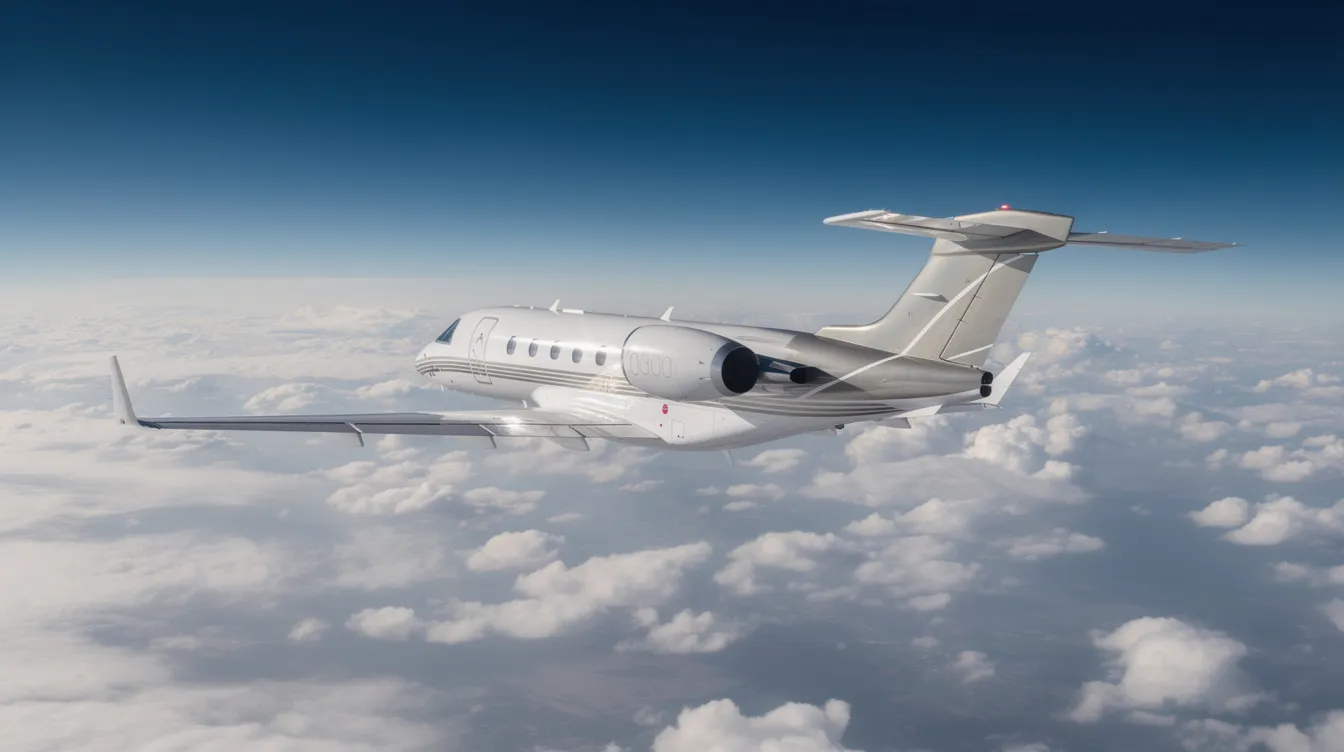
For the discerning traveler who measures success in hours reclaimed rather than miles covered, understanding the real-world performance of the aircraft you fly on is not optional-it is strategic. The Cirrus Vision Jet has redefined what a personal jet can do, and its cruise speed sits at the heart of that story. Here is everything you need to know about the Cirrus Vision Jet cruise speed in knots, from published specifications to the practical realities that shape every flight.
Cirrus Vision Jet Cruise Speed in Knots – Quick Answer
The Cirrus Vision Jet (SF50) typically cruises at 300 to 311 knots true airspeed depending on model, altitude, and atmospheric conditions. Here is a quick breakdown of the key numbers:
The original Cirrus Vision (G1) cruises close to 300 KTAS near FL280 under standard atmospheric conditions.
The G2 Vision Jet and G2+ reach a maximum cruise speed of about 311 knots at FL310 under standard conditions and mid-weight.
The latest G3 variant targets a maximum cruise speed of 317 knots, though real-world verification is still emerging.
Owner pilots and professional crews generally plan for a practical cruise speed of roughly 300 KTAS to account for real-world variables such as weight, routing, and temperature.
True airspeed (KTAS) is the speed through the air mass; groundspeed-what you see on flight-tracking apps-differs based on wind. A 300 KTAS cruise into an 80-knot headwind results in only 220 knots over the ground.
The Vision Jet's jet speed is faster than most single-engine turboprops but slower than traditional twin-engine light jet models like the Citation CJ series, placing it in a distinctive performance niche.
For BlackJet clients, this ~300-knot cruise speed translates into efficient one-to-three-hour regional trips that dramatically reduce door-to-door time versus commercial business class-without the complexity of aircraft ownership.
Overview of the Cirrus Vision Jet Family and Generations
The Cirrus Vision Jet holds the distinction of being the world's first single-engine certified personal jet, initially designed for the owner-pilot segment but now increasingly deployed in premium charter and Jet Card operations. Cirrus Aircraft engineered the SF50 to bridge the gap between high-performance piston aircraft and traditional business jets.
G1 (2016)
The first jet aircraft in this class to receive FAA type certification. Service ceiling of approximately FL280, max cruise around 300 KTAS, and the introduction of the Cirrus Airframe Parachute System to the jet category.
G2 (2019)
A higher ceiling of FL310 with RVSM approval, improved speed reaching approximately 311 KTAS, autothrottle integration, and aerodynamic refinements. First deliveries began in early 2019.
G2+ (2021)
Enhanced takeoff performance in hot and high-density altitude conditions, increased useful load, and slightly extended range. Cruise speed remains near 311 KTAS in favorable conditions.
G3 (~2026)
Avionics upgrades including CPDLC, refreshed interior, and early indications of a max cruise bump to around 317 KTAS.
Core Design and Performance
Core design elements include the Williams FJ33-5A engine, the distinctive V-tail configuration, a pressurized cabin seating up to seven occupants in a flexible 2+3+2 layout, and a typical NBAA IFR range of around 1,000 to 1,200 nautical miles. The Vision Jet has a maximum range of 1,200 nautical miles under optimal conditions. The rate of climb is 1,609 feet per minute at max takeoff weight, allowing it to reach efficient cruise altitudes quickly.
For BlackJet clients, Vision Jets fit perfectly for premium regional trips where agility, efficiency, and safety matter more than sheer cabin size. Learn more about what makes single-engine jets compelling for modern private travel.
How Cruise Speed in Knots Is Defined and Measured
Understanding what "Cirrus Vision Jet cruise speed in knots" actually means requires a brief look at how aviation measures speed. The numbers in marketing materials and performance charts refer to true airspeed at cruise altitude-not groundspeed.
Indicated Airspeed (KIAS)
The reading on the flight deck instruments. It reflects dynamic air pressure and is used for structural limits and approach speeds. The Vision Jet's maximum operating limit speed is 250 knots indicated airspeed (VMO).
True Airspeed (KTAS)
The actual speed of the aircraft through the surrounding air mass, corrected for altitude and temperature. This is the number cited in performance specs: 300 to 311 KTAS for the Vision Jet.
Groundspeed
TAS adjusted for wind. With a 50-knot tailwind, a 300 KTAS cruise yields 350 knots over the ground. Into a 50-knot headwind, that same cruise becomes only 250 knots groundspeed.
Mach Number
At higher altitudes, speed is also expressed as a fraction of the speed of sound. The maximum operating Mach for the Cirrus Vision Jet is 0.53 Mach, which governs speed limits near FL310.
Long-Range Cruise
When pilots prioritize fuel economy over speed, the long-range cruise speed of the Cirrus Vision Jet drops to approximately 240 knots-useful for stretching range on marginal-weather days.
Temperature deviations from ISA (International Standard Atmosphere) directly affect achievable true airspeed and fuel consumption. On hotter-than-standard days, the FJ33-5A engine produces slightly less thrust, and the aircraft may not reach its published maximum cruise at a given altitude.
G2 Vision Jet Cruise Speed Performance at Typical Altitudes
The G2 Vision Jet and G2+ represent the performance sweet spot of the SF50 family. At FL310-the G2 Vision Jet's maximum operating altitude of 31,000 feet-the aircraft typically cruises at 309 knots under standard conditions and mid-weight. Under ideal parameters, the G2 Vision Jet can cruise between 305 and 311 knots.
Step-Climb Profile
Reaching FL280 typically takes 15 to 20 minutes depending on weight and outside air temperature. Climbing further to FL310 adds time and fuel, especially on warmer days or when departing at near-maximum takeoff weight.
Maximum Cruise vs. Normal Cruise
At "max cruise" power settings, pilots see approximately 309 to 311 KTAS at FL310. Reducing power slightly to "normal cruise" settles the aircraft into the 295 to 305 KTAS range, balancing speed against economy.
Fuel Consumption
At high-speed cruise at altitude, fuel consumption is about 60 US gallons per hour. At lower altitudes or in hotter conditions, fuel flow can climb to 75 to 80 gallons per hour for comparable speeds.
Real-World Planning Speed
Charter operators and experienced Cirrus owners typically plan around 300 KTAS to build in realistic margins for climb, descent, routing, and ATC constraints.
G2/G2+ Advantages
RVSM certification enabling FL310 access, autothrottle for precise power management, and aerodynamic tweaks all help pilots more consistently achieve high-200s to low-300s KTAS in daily operations.
Cruise speed varies based on weight and atmospheric conditions, which is why published maximum performance and real-world trip times can differ by 10 to 15 minutes on a typical 500 nm leg.
Why Some Pilots See Only 220 Knots: Common Misunderstandings About Vision Jet Speed
Online forums frequently feature claims that the Vision Jet "only does 220 knots." This misunderstanding usually stems from confusing groundspeed with true airspeed-or from flying in non-optimal conditions.
Headwinds at Altitude
A pilot flying at 300 KTAS into an 80-knot winter jet stream headwind will see only 220 knots groundspeed on ADS-B trackers. The aircraft is performing exactly as designed; the wind is doing the rest.
Lower Cruise Altitudes
ATC restrictions or weather may keep the aircraft at FL220 or FL240, where TAS is significantly lower than at FL310. The airframe needs its higher ceiling to achieve published maximum cruise numbers.
Hot-Day and Heavy-Weight Operations
High outside air temperatures reduce engine thrust and aerodynamic efficiency. Combined with near-max takeoff weight, the aircraft may not climb to its optimal altitude quickly, leading to extended time at slower intermediate speeds.
Economy Power Settings
Some pilots deliberately trade 10 to 20 knots of cruise speed for better fuel economy, especially on longer legs. This is a strategic choice, not a limitation.
Display Confusion
The Garmin Perspective-based avionics on the Cirrus Vision show KIAS, TAS, and groundspeed simultaneously. Casual readers of forum posts may misread which figure is being reported.
The stall speed of the Cirrus Vision Jet with flaps is 67 knots-a figure that underscores how much performance range exists between minimum controllable speed and max cruise. The aircraft is genuinely capable of approximately 300 KTAS and above; real-world decisions about comfort, fuel, weather, and routing simply dictate a slightly lower chosen cruise speed on many flights.
Safety First: Cirrus Airframe Parachute System, Emergency Autoland, and Speed Trade-offs
Speed means little without safety to back it up. The Vision Jet carries two systems that fundamentally reset the safety equation for personal jet travel.
CAPS
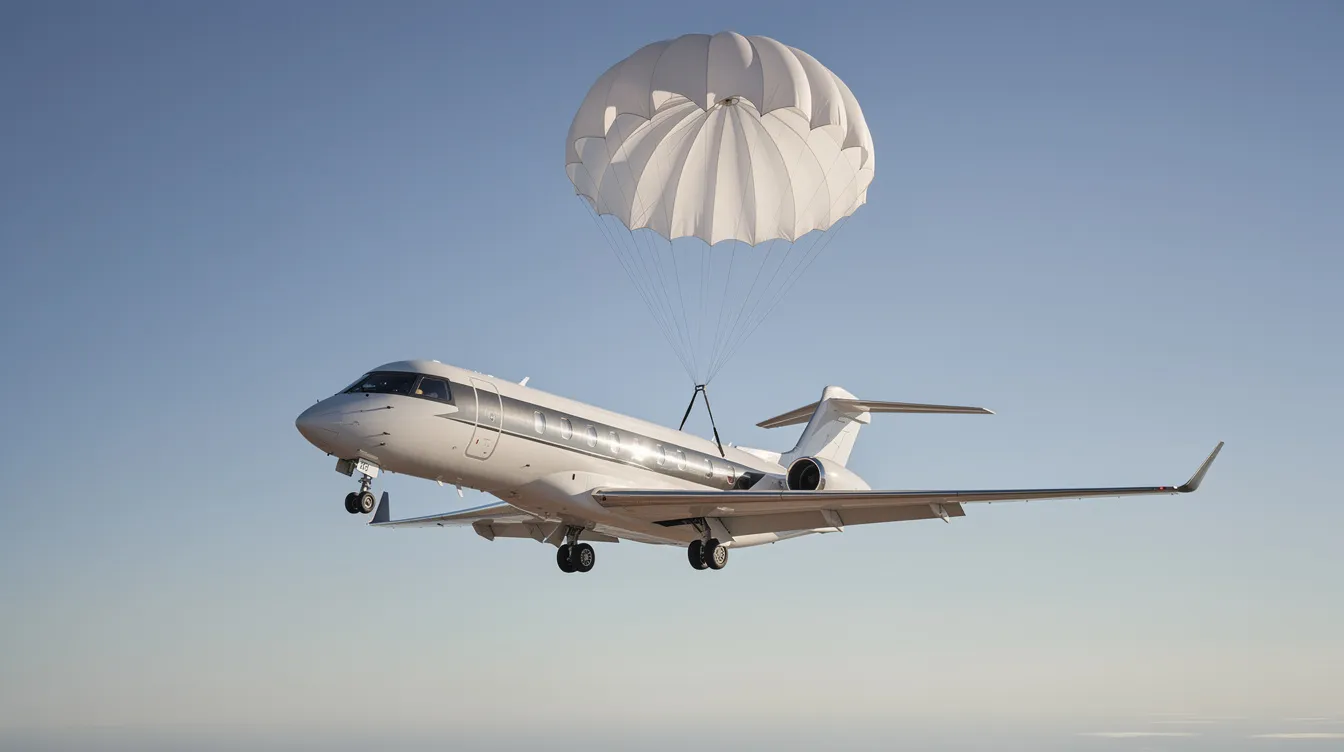
The Cirrus Airframe Parachute System is the first whole-aircraft parachute system on a jet. In severe emergencies-structural failure, engine loss, or pilot incapacitation-the pilot (or a passenger) can deploy the parachute to bring the entire aircraft to the ground under canopy. CAPS adds weight and structural design considerations, but Cirrus and operators accept any minor impact on theoretical jet speed in exchange for unmatched safety. This system is standard on every Vision Jet variant.
Safe Return Autoland System
On later Vision Jet models, the Garmin Safe Return emergency autoland system can land the aircraft automatically if the pilot becomes incapacitated. Safe Return is activated with a cabin ceiling switch-designed so even a passenger with no human input beyond pressing the button can initiate the sequence. The Safe Return system navigates to the nearest safe airport, configures the aircraft for approach and landing, and communicates with ATC throughout the process. Learn more about why safety protocols matter in private aviation.
Single-Pilot Confidence
These systems make the Vision Jet especially suitable for single-pilot operations and high-net-worth family use-a safety ethos that aligns with BlackJet's emphasis on rigorous safety protocols and certifications across its fleet.
While these safety systems are not primarily about increasing cruise speed, they enable more confident use of the aircraft's full jet speed envelope. Pilots and passengers can fly at FL310 and 300+ KTAS knowing that multiple layers of protection exist if something goes wrong.
Comparing Vision Jet Cruise Speed to Turboprops and Other Light Jets
Where does the Cirrus Vision Jet sit in the broader performance landscape? Understanding its position helps clients match aircraft to mission.
Aircraft category | Approximate cruise speed | Operating cost context |
|---|
Cirrus Vision Jet | 300–311 KTAS | Approximately $1,200 per flight hour, including fuel, maintenance reserves, and variable expenses |
TBM 910/960 | Approximately 300–330 KTAS | Turboprop operating economics; may be comparable in speed or slightly faster than the Vision Jet. |
Pilatus PC-12 | Approximately 270 KTAS | Turboprop operating economics; generally below Vision Jet speed |
HondaJet, Citation CJ series, and Embraer Phenom 300 | 400+ KTAS | Typically $2,000–$3,500 per hour for twin-engine light jets |
Cirrus SR22 and other high-performance piston aircraft | Approximately 180–190 KTAS | Piston category; the Vision Jet offers a substantial speed increase |
What the Comparison Means for Travelers
Vs. single-engine turboprops: While some turboprops match Vision Jet speed, the Vision Jet offers a jet-like climb profile, a higher ceiling up to FL310, and a smoother noise and vibration profile.
Vs. light jets: The HondaJet, Citation CJ series, and Embraer Phenom 300 cruise at 400+ KTAS-significantly faster in absolute terms. However, they carry substantially higher operating costs and require larger runways. The Vision Jet's improved speed over turboprops comes with operating economics closer to the turboprop category.
Vs. piston aircraft: High-performance pistons like the Cirrus SR22 cruise around 180 to 190 KTAS. The step up to Vision Jet cruise speed-roughly 300 KTAS-cuts flight times nearly in half on comparable legs, a meaningful upgrade for Cirrus owners moving up the performance ladder.
For BlackJet Jet Card members, Vision Jets complement other aircraft categories in the fleet. Clients can match aircraft type to mission: a Vision Jet for agile regional hops, a midsize or large-cabin jet for transcontinental flights-all under a single membership with jet convenience built in.
Range, Payload, and How Cruise Speed Shapes Trip Planning
The interplay between cruise speed, range, and payload on the Cirrus Vision Jet is central to effective flight planning. Heavier loads and higher speeds increase fuel burn, potentially reducing effective NBAA IFR range from the brochure maximum.
Sample Mission
A 700 nm business trip at 300 KTAS takes approximately 2 hours and 20 minutes airborne. The same distance at a typical turboprop speed of 270 knots adds roughly 15 to 20 minutes. Including climb, descent, and taxi, the block time difference widens further.
Speed vs. Range Trade-Off
Near maximum cruise, fuel consumption runs approximately 60 gallons per hour. Pulling back to long-range cruise (~240 KTAS) can extend range significantly but adds meaningful time. On most 400 to 800 nm missions, maximum cruise is the preferred setting because the time savings outweigh the marginal fuel cost.
Wind Strategy
Experienced operators use upper-air wind forecasts to select flight levels where true airspeed and groundspeed are most favorable-sometimes accepting a slightly lower altitude to avoid a strong headwind layer.
Payload Considerations
With full fuel for maximum range, useful load constraints may require limiting passenger or baggage weight. For a typical four-passenger business trip of 500 to 700 nm, this is rarely an issue; it becomes a factor primarily on near-maximum-range legs.
BlackJet's operations team uses performance data, forecast winds aloft, passenger count, and a deep understanding of the different types of private jets to select the optimal aircraft and cruise profile-ensuring clients get both speed and reliability on every flight.
Inside the Flight Deck: Garmin Perspective, Automatic Database Updates, and Cruise Efficiency
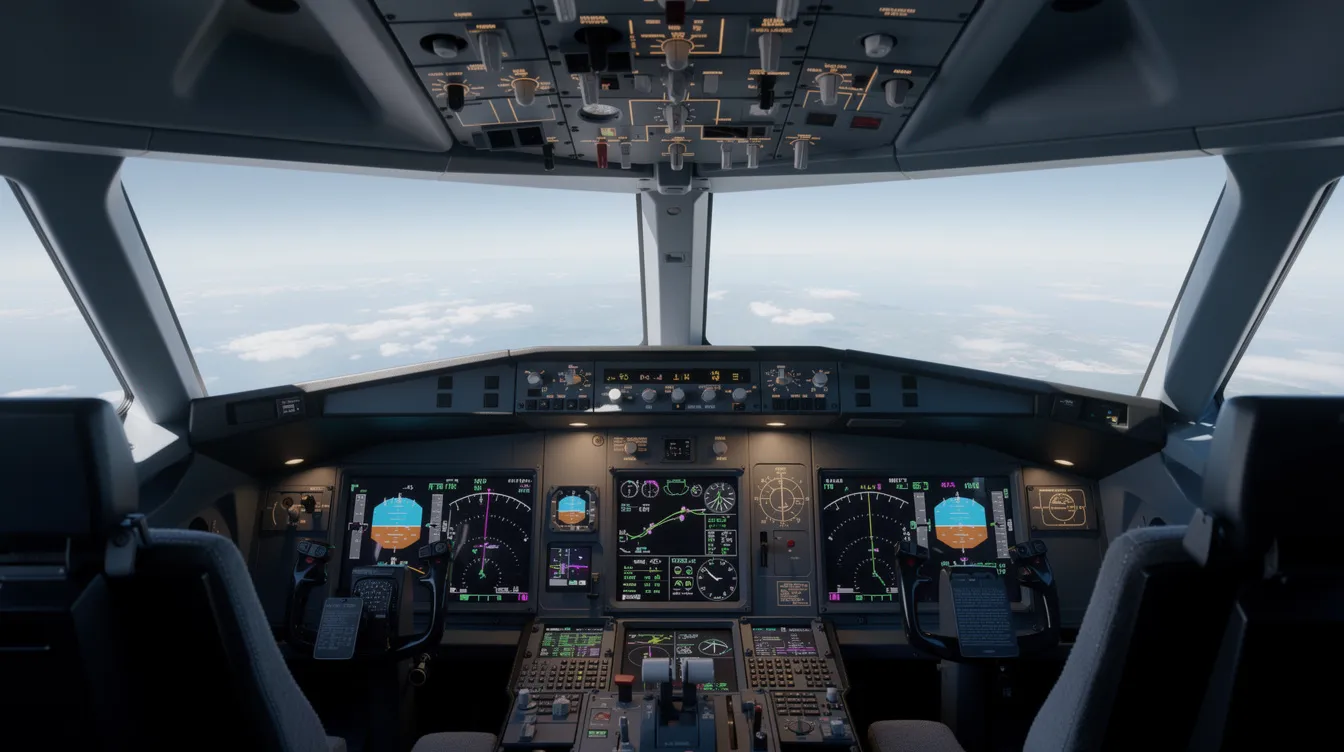
The Cirrus Vision Jet flight deck is built around the Garmin Perspective Touch+ avionics suite, a G3000-based system tailored specifically for single-pilot use. It transforms cruise efficiency from an aspiration into a repeatable outcome.
Autothrottle
Introduced with the G2, the autothrottle maintains precise cruise speed and manages thrust automatically, keeping the Vision Jet close to its planned 300 to 311 KTAS without constant manual adjustments. This is particularly valuable during altitude changes or when encountering temperature gradients.
Weather Radar and Datalink
Integrated weather radar, real-time datalink weather, and synthetic vision allow pilots to identify and avoid turbulence, icing, and convective activity-maintaining cruise altitude and speed rather than diverting to lower, slower levels.
Automatic Database Updates
Connected cockpit features ensure current navigation, obstacle, and airspace data, reducing pilot workload and supporting safer, more predictable cruise operations. These automatic database updates are a quiet but critical enabler of efficient flight planning.
Envelope Protection
Garmin ESP (Electronic Stability and Protection) provides overspeed and underspeed warnings, along with terrain-avoidance alerts, giving pilots confidence to operate near optimal performance parameters.
BlackJet mirrors this technology-forward philosophy with its own digital booking tools and real-time flight support, creating a seamless experience from the moment a client plans a trip to the moment they reach cruise altitude.
Owner Pilot vs Jet Card and Charter: Who Gains Most from Vision Jet Cruise Speed?
The Vision Jet appeals to two distinct audiences, and understanding the difference is key to making the right access decision.
The Owner Pilot Profile
Typically stepping up from a high-performance SR22 or turboprop, flying 100 to 250 flight hours per year for personal use and business travel.
Values the Cirrus Airframe Parachute System, excellent visibility through large panoramic windows, and straightforward systems designed for single-pilot operations.
Benefits from ~300-knot jet speed for same-day out-and-back business trips within 500 to 700 nm, weekend family getaways, and the ability to fly above weather at FL280 to FL310 with a higher ceiling than most turboprops.
Accepts the commitment of recurrent training, maintenance management, and annual fixed costs as the price of having the aircraft available on demand.
The Jet Card and Charter Client
High-net-worth individuals and executives who want personal transportation at jet speed without managing aircraft ownership.
BlackJet's Jet Card programs deliver access to Vision Jet performance and jet comfort for shorter regional sectors, while offering midsize and large jets when the mission demands more range or cabin width.
The strategic advantage: clients can effectively "right-size" each trip, selecting Vision Jet cruise speed and efficiency when ideal, and scaling up for longer legs-all with predictable pricing, professional management, and aircraft availability guaranteed.
Operating Cost, Jet Speed, and When a Vision Jet Makes Financial Sense
Performance data is meaningless without financial context. Here is how the Vision Jet's operating economics compare.
Hourly Cost
The hourly operating cost is approximately $1,200 per flight hour, encompassing fuel, maintenance reserves, and variable expenses. This is significantly lower than most twin-engine light jets, which typically run $2,000 to $3,500 per hour, and sits within the broader ranges you see when comparing jet card cost per hour across programs and aircraft categories.
Annual Ownership Cost
For active owners, the annual operating cost is around $780,787-a figure that includes fuel, maintenance, insurance, hangar, crew, and engine reserves. The annual fixed cost is approximately $54,723 based on 100 flight hours, while the annual variable cost runs about $91,030 at that same utilization rate.
Acquisition
The Vision Jet's equipped price was $3.25 million in 2023, making it among the most accessible entry points into jet ownership. For a deeper look at pricing, see Understanding the Price of Cirrus Vision Jet.
Speed vs. Cost per Mile
Flying at maximum cruise slightly increases fuel flow compared to economy settings, but it reduces crew time, scheduling constraints, and the need for overnight stays-often resulting in lower total trip cost.
The Ownership Threshold
These fixed costs only make sense beyond a certain annual utilization threshold, generally estimated at 150+ flight hours per year. For many business travelers flying 25 to 75 hours annually, BlackJet's Jet Card or on-demand model is more efficient, and those closer to 100 hours a year should evaluate the full cost of a 100-hour jet card as an alternative to outright ownership-offering access to Vision Jet-class aircraft while paying only for hours flown, with professional management, safety oversight, and carbon-neutral flights included.
Passenger Experience at Jet Speed: Cabin, Comfort, and Perceived Speed
For passengers, speed is not a number on the flight deck-it is time reclaimed, turbulence avoided, and productivity gained.
Smooth Ride at Altitude
Cruising at FL280 to FL310, the Vision Jet flies above most weather systems and turboprop traffic. The result is a smoother, quieter ride with less turbulence than lower-altitude alternatives.
Cabin Features
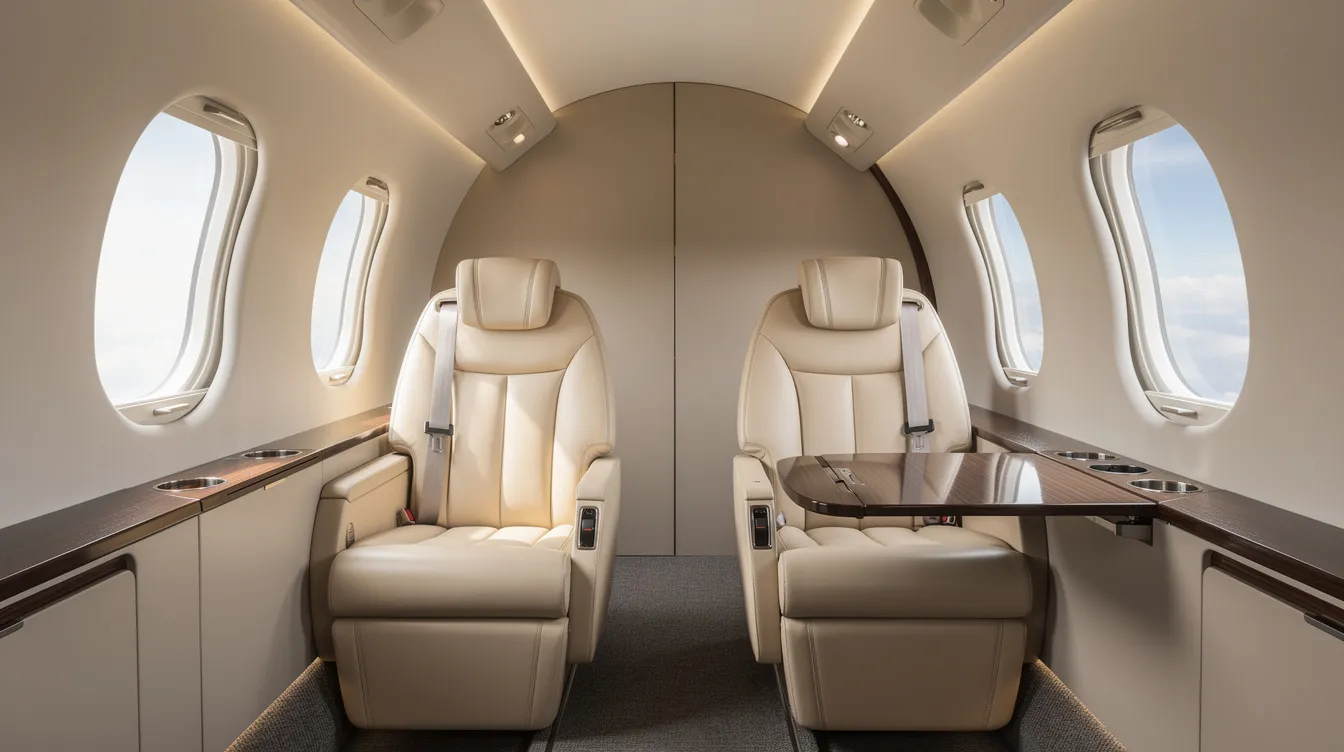
Seating for up to six adults (up to seven occupants including the pilot) in configurations that range from club-style to forward-facing. Large panoramic windows flood the cabin with natural light, and pressurization maintains a comfortable cabin altitude even at FL310.
Time Perception
To passengers, jet speed means shorter legs, easier same-day returns, and more productive time on board. A 600 nm trip that might consume an entire day via commercial connections becomes a two-hour flight with time to spare.
Psychological Comfort
Safety systems like CAPS and the safe return autoland system provide reassurance, letting passengers relax into the passenger experience rather than worrying about the fact that they are in a single-engine aircraft. The cabin ceiling switch for Safe Return is visible and accessible-a tangible reminder that multiple safety layers exist.
BlackJet curates operators using aircraft like the Cirrus Vision Jet that meet strict safety and comfort standards, drawing on expertise with top affordable private planes and VLJs to ensure a consistently premium experience across every flight in the program.
Regulatory Milestones, Safety Record, and Performance Certification
Published performance numbers for the Vision Jet are not marketing estimates-they are validated through rigorous flight testing and regulatory oversight.
Certification and Regulatory Milestones
October 2016: FAA type certification of the SF50 Vision Jet (G1), marking it as the world's first single-engine certified personal jet in its class.
January 2019: G2 certification with RVSM approval, unlocking FL310 for more efficient cruise altitudes and enabling maximum performance at higher flight levels. Autothrottle and modified thrust schedules between 24,000 and 31,000 feet were key additions.
2020–2021: Certification of the Garmin Safe Return emergency autoland and the G2+ variant with improved takeoff performance and payload capacity.
Safety Record and Performance Validation
Safety record: CAPS has been deployed in real emergencies across the Cirrus fleet. Service bulletins addressing early technical issues-such as angle-of-attack sensors and cabin systems-have been resolved through manufacturer updates and mandatory inspections.
Performance validation: Max cruise speed, climb rates, service ceilings, and approach speeds are all certified under FAA and EASA standards. When the spec sheet says 311 KTAS at FL310, that figure has been demonstrated and verified under controlled conditions.
BlackJet partners only with operators who fly aircraft meeting stringent safety and maintenance standards, often exceeding minimum regulatory requirements. Verified performance metrics-including cruise speed-are part of that due diligence and factor into recommendations on the cheapest private aircraft and budget-friendly options for different mission profiles. Explore how BlackJet approaches safety across its fleet.
Choosing the Right Aircraft for Your Mission: When the Vision Jet Is the Smart Play
Not every trip calls for a Vision Jet-and not every trip needs something larger. The key is matching aircraft to mission.
Vision Jet Excels When
The leg is 400 to 1,000 nm, where 300+ KTAS cruise materially shortens the day.
The passenger count is three to five plus bags, with standard or better runway lengths available.
Time-sensitive itineraries demand same-day turns-for example, a morning New York-to-Midwest business meeting and evening return.
The priority is efficiency, safety, and speed rather than a large cabin or ultra-long range.
Other Categories Are Better When
Very short runways or heavy cargo favor turboprops with superior field performance.
Nonstop legs exceed 1,200 nm, or the group needs onboard workspace and cabin width that only midsize or large-cabin jets provide.
International routes require range, crew rest facilities, or specific regulatory equipment.
BlackJet operates as a strategic advisor in these decisions. The team evaluates city-pair distance, passenger count, runway constraints, schedule pressure, and jet card pricing structures and benefits to recommend whether a Cirrus Vision Jet, light jet, or larger aircraft is the optimal choice for each specific flight.
Elevate your travel-effortlessly. Explore BlackJet's Jet Card programs to see how Vision Jet performance and a full spectrum of private jet categories can fit your travel patterns, on your schedule.
Frequently Asked Questions About Cirrus Vision Jet Cruise Speed
What is the Cirrus Vision Jet cruise speed in knots?
The Cirrus Vision Jet typically cruises at 300 to 311 knots true airspeed (KTAS), depending on its generation, altitude, weight, and atmospheric conditions. The G2 and G2+ can reach about 311 KTAS in favorable conditions, while operators commonly plan around 300 KTAS for real-world trips.
How fast is the Vision Jet compared with a turboprop?
The Vision Jet is faster than many single-engine turboprops, which commonly cruise at roughly 260 to 290 knots, although some high-performance turboprops can match or exceed its speed. It generally cruises slower than twin-engine light jets such as the HondaJet or Citation CJ series, which can exceed 400 KTAS.
Does wind affect the Vision Jet’s cruise speed?
Wind changes groundspeed, not the aircraft’s true airspeed through the air mass. For example, a Vision Jet cruising at 300 KTAS into an 80-knot headwind may make about 220 knots over the ground; a tailwind increases groundspeed. Weight, temperature, altitude, and routing also affect achievable cruise performance.
What safety systems are available on the Cirrus Vision Jet?
The Vision Jet features the Cirrus Airframe Parachute System (CAPS), the first whole-aircraft parachute system on a jet. Later models also offer Garmin Safe Return autoland, activated by a cabin-ceiling switch. The system can select and navigate to the nearest safe airport and land the aircraft automatically, avoiding terrain and weather along the way.
Is a Jet Card a practical alternative to owning a Vision Jet?
For travelers who fly privately but do not want to manage aircraft acquisition, maintenance, crew, and annual fixed costs, a Jet Card can provide prepaid access to private aircraft. BlackJet members can select aircraft suited to each itinerary, with digital booking, real-time support, rigorous safety oversight, and carbon-neutral flights. Explore BlackJet’s Jet Card programs to find an access model aligned with your travel needs.
Conclusion: Cirrus Vision Jet Cruise Speed in Knots and How BlackJet Delivers Its Advantages
The Cirrus Vision Jet cruise speed in knots-typically 300 to 311 KTAS, with the G3 pushing toward 317-places this aircraft squarely in the sweet spot between turboprop efficiency and light jet capability. It is a genuine jet-speed platform, powered by a single Williams FJ33-5A engine, wrapped in safety systems that no other aircraft in its class can match.
Speed: 300 to 311 KTAS in real-world operations, with maximum performance reaching higher under optimal conditions-enough to operate efficiently on regional missions of 400 to 1,000 nm.
Safety: CAPS and the Safe Return autoland system set the standard for personal jet safety, enabling confident single-pilot IFR operations and reassuring passengers who value both speed and security.
Smart access: BlackJet integrates aircraft like the Vision Jet into a broader Jet Card and charter offering that delivers safety, technology, and carbon-neutral flights without the complexity or annual cost burden of aircraft ownership.
Elevate your regional travel with BlackJet. Join BlackJet's Jet Card program for seamless, premium private travel-safety, sustainability, and flexibility built in.


 Sign up with google
 Sign up with Apple