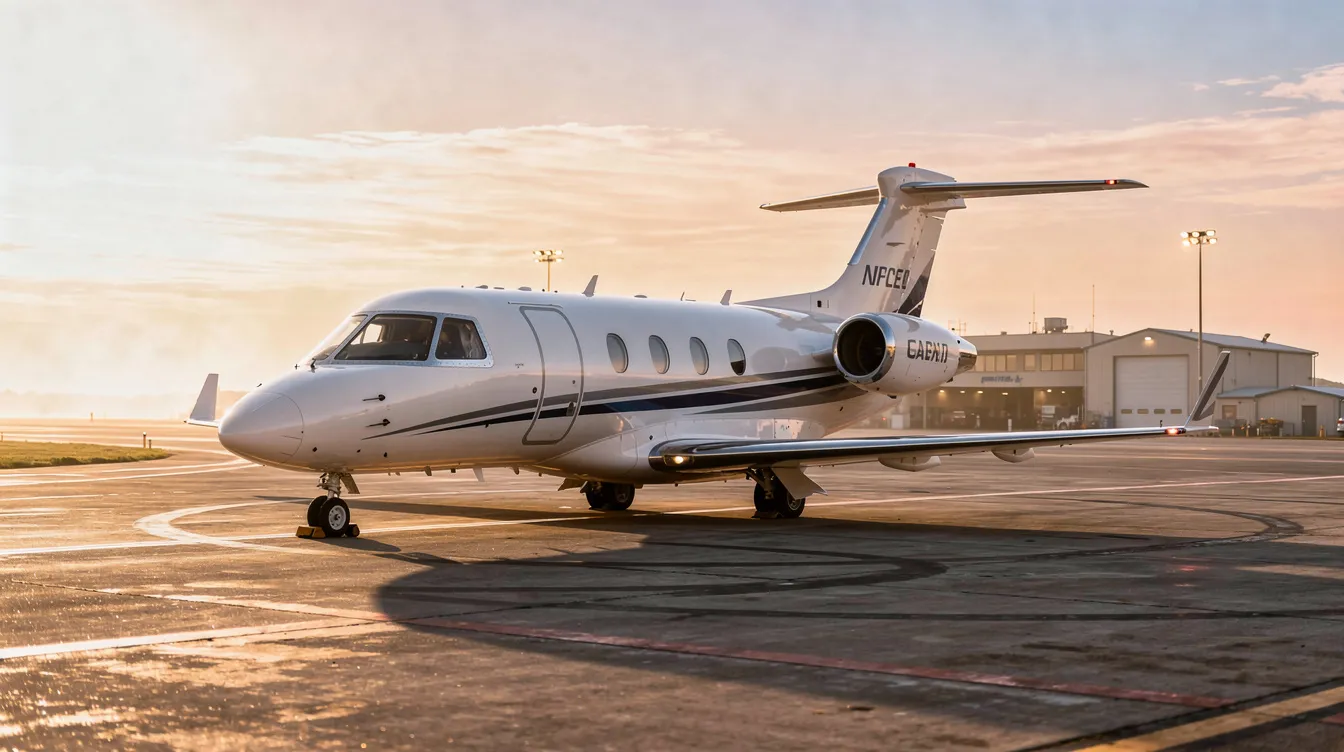
The Cessna C501 helped define what a practical, owner-operated business jet could be. Decades after production ended in 1985, this light jet still flies regional missions across the globe. Here is what discerning travelers and Jet Card members need to know about the aircraft, its capabilities, and how it fits into modern private aviation through BlackJet. This guide is intended for private aviation clients, owner-pilots, and anyone considering chartering or operating a Cessna 501 Citation I/SP.
Performing Security Verification Before Accessing C501 Charter Options
When you visit a serious private aviation website to browse Cessna Citation availability or pricing, the platform's security service runs automated checks before any live inventory is displayed. Performing security verification means the system filters malicious bots, applies rate limiting, and runs fraud checks. Each request generates a response ID in the security logs that verifies the session is legitimate. If you search multiple Citation flights in a short window, you may briefly see a waiting screen before a successful verification confirmation appears on the page.
This process is designed to protect member data and ensure that what is displayed reflects real, accurate pricing, because strong digital security is as essential as flight safety for every BlackJet Jet Card client.
Overview of the Cessna 501 Citation I/SP (C501)
The Cessna 501 Citation I/SP is a twin-engine turbofan light jet that helped bring jet travel within reach of owner-pilots and small to mid-sized company flight departments. The model designation is straightforward: the 501 is the single-pilot certified variant of the earlier Citation I (Cessna 500). Single-pilot operation means the aircraft is certified to be safely flown by only one pilot, reducing operating costs. It is primarily used for personal transport and light charter operations, typically configured to seat six passengers in an executive layout.
The first flight of the Citation I/SP occurred on September 15, 1969, as part of Cessna's original Fanjet 500 program. The airplane was certified in September 1971, with the single-pilot 501 variant entering service in 1977. A total of 312 Citation I/SP aircraft were produced before production ended in 1985. Compared to modern business jets like the Citation CJ series, which fly faster, carry updated avionics, and offer quieter cabins, the C501 is a legacy model valued for its simplicity and low acquisition cost among affordable private jet options.
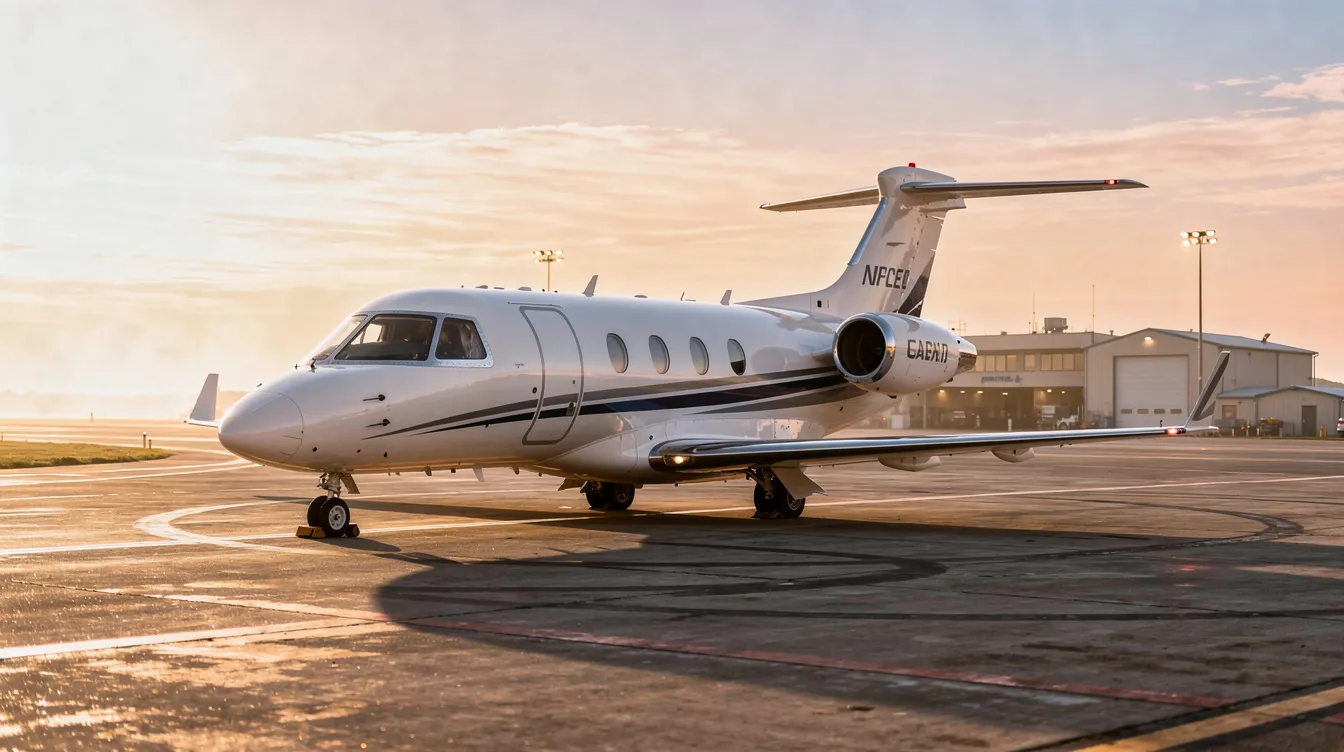
Development History: From Citation I to 501 Citation I/SP
In the late 1960s, Cessna set out to design a jet as easy to operate as a twin turboprop but with higher speed and cruising altitude capability. The company moved quickly from the mockup stage to a flying prototype, and the resulting airplane competed directly with turboprops like the Beechcraft King Air by offering jet performance with similar operational simplicity.
The evolution followed a clear path: the Citation 500 required two pilots, but market demand for reduced crew costs led Cessna to develop the 501 Citation I/SP, which entered the market by October 1977. FAA single-pilot certification reshaped the economics-owner-operators could now fly a jet without a copilot, and the form of private aviation we recognize today was built on that foundation. This model contributed to the broader Citation family that eventually delivered aircraft ranging from entry-level light jets to long-range business jets.
Cabin and Passenger Experience in the C501
The C501 cabin is compact and practical, built for flights of one to three hours rather than the expansive luxury of the largest private jets. The Cessna 501 Citation I/SP seats six passengers in a typical club-style configuration with fold-out worktables, a basic refreshment center, and a belted lavatory seat aft. Cabin height is approximately 4 feet 7 inches, adequate for small groups, though headroom is limited compared to newer models.
Consider four executives flying from Dallas to New Orleans for a same-day meeting. They bypass commercial check-in, fly direct to a smaller executive airport, and save over two hours of ground time in each direction-a point where the C501's access to shorter runways and secondary airports becomes a genuine strategic advantage. BlackJet may recommend a 501-class light jet for exactly these cost-sensitive, short-segment missions.
Performance, Range, and Operating Capabilities
The C501 is optimized for regional hops with small passenger loads. Key performance figures:
Specification | Detail |
|---|
Maximum speed | Approximately 345 knots |
Cruise speed | 320–350 knots |
Service ceiling | 41,000 feet |
Range | 910–1,328 nautical miles |
Maximum takeoff weight | 11,850 lbs |
Fuel burn | 120–150 gallons per hour |
Takeoff distance | ~3,500 feet |
The design allows it to operate from shorter runways around 3,500 feet, and it excels at accessing smaller airports that larger jets cannot reach, similar to how private plane rideshare options leverage small-field access for efficiency. With full fuel, the payload is constrained. Plan for lighter baggage when flying at maximum range. A New York–Chicago flight (~750 nm) is well within the aircraft's envelope; a Boston–Miami leg pushes the limit and may require adjusting the flight profile or reducing passengers.
When BlackJet arranges a Cessna Citation or comparable light jet, runway length, altitude, temperature, and payload are reviewed for every mission to ensure safe margins.
Citation I vs. Citation I/SP (C501): Key Differences
The Citation I (Model 500) and the Citation I/SP (Model 501) share a common airframe, but the 501 was certified for single pilot operations-a distinction that increased its appeal to owner-pilots and reduced hourly crew costs. Late R I/SP aircraft also gained thrust reversers, a slightly longer wingspan, and increased operating weights.
The cockpit was configured to manage workload for a single pilot: simplified panels, autopilot integration, and streamlined checklists. Still, many charter operators choose to operate with two pilots for safety and insurance consistency. BlackJet maintains a preference for dual-pilot crews on legacy types, ensuring that each flight is produced to the highest standard of risk management.
Safety Record, Incidents, and Modern Operating Standards
The C501 has been involved in notable accidents since its introduction, and sources consistently note that human factors-not mechanical failure-are the primary problem, aligning with broader analyses of private jet safety and risk. Spatial disorientation during instrument meteorological conditions and task saturation in single-pilot operations are recurring themes.
Seven people died in a Cessna 501 crash on May 29, 2021, at Percy Priest Lake, Tennessee, where the pilot lost control due to a somatogravic illusion shortly after takeoff. Four people died in a Cessna 501 crash on February 8, 2020, again after the pilot lost control due to spatial disorientation. The Cessna 501 also experienced an in-flight breakup during a training flight, further underscoring the importance of crew discipline and modern avionics.
These accident data have informed improved procedures across the fleet. Modern operators mitigate risk through dual-pilot crews, advanced simulator training, strict instrument-currency requirements, and avionics retrofits. BlackJet verifies every partner operator against recognized standards and requires a minimum time-in-type before a pilot can fly any legacy Citation.

The C501 in Today's Private Jet Market
Today,y the C501 occupies a niche: mostly owner-flown or used for specialized charter, where low acquisition cost matters more than cabin refinement. It is favored by owner-pilots and small to mid-sized businesses for regional missions. Many airframes have been upgraded with glass cockpits, ADS-B, and WAAS GPS to remain compliant and improve situational awareness.
Compared to newer, faster light jets in BlackJet's network-CJ2, CJ3, Phenom 300-the C501 is less expensive to acquire but carries higher per-minute maintenance overhead on aging structures and engines. For some trips, BlackJet may recommend a newer light jet in the same cost band to deliver better comfort, dispatch reliability, and lower noise.
How a C501‑Class Light Jet Fits into BlackJet Jet Card Travel
Light jets like the C501 align naturally with BlackJet's 25+ Hour Jet Card programs, where members prepay for hours and deploy them for regional flights-Miami to Nassau, London to Zurich-without the complexity of ad-hoc charter. Fixed hourly rates simplify budgeting, especially for frequent short-leg trips historically served by this class of aircraft.
While a client can request a specific model, BlackJet focuses on matching the mission profile to the optimal category. A Jet Card member flying three executives to two cities in a single day uses a light jet to eliminate overnight stays and maximize productive hours. Behind every booking, BlackJet performs safety checks and security verification on operators, platforms, and crew.
Technology, Safety Verification, and Sustainable Operations
Modern private aviation is defined as much by digital standards and environmental accountability as by the airplane itself, especially within BlackJet’s premium private jet services. BlackJet uses technology to vet every flight: operator audits, pilot background checks, and continuous monitoring that function like the verification steps a secure website applies to every session. Even on a legacy light jet like the C501, flights arranged through BlackJet meet current compliance norms.
Every flight-whether on a Citation I, a C501, or a newer jet-is offset to achieve carbon-neutral performance, a sustainability focus now common even among the best private jets in the world. BlackJet measures actual fuel burn, purchases verified carbon credits, and ensures sustainability goals are met at no additional cost to the member.
Frequently Asked Questions About the Cessna 501 Citation I/SP
How does the C501 compare to newer Citation light jets like the CJ1 or CJ2?
The C501 was built between 1977 and 1985 and has a smaller cabin, older avionics, and a lower cruise speed. CJ-series jets typically climb faster, cruise above 400 knots, and offer quieter, more modern cabins, more in line with long-range private jet capabilities.
What is the ideal trip length for a C501?
Flights of 300–800 nm (one to two hours) maximize efficiency. For legs beyond 1,200 nm or with heavy baggage, a large-cabin jet for 20 passengers or similar aircraft should be considered.
Is the C501 still safe to fly?
Yes, when properly maintained and operated by crews meeting modern standards-ADS-B, GPS, current inspections, and dual-pilot configurations where appropriate.
Can I specifically request a C501 through BlackJet?
Members may express a preference, but BlackJet matches by aircraft class and mission requirements to ensure the safest, most consistent experience, whether you’re chartering a whole aircraft or simply buying a seat on a private jet. Contact the advisory team to discuss your specific needs at www.blackjet.com.
Choosing the Right Aircraft: When a C501 Makes Sense
Selecting the right jet depends on distance, passenger count, baggage, schedule, and budget. Beyond traditional charter, some travelers consider jet card membership pricing or shared private jet rideshare solutions. A C501-class light jet suits short regional hops with three to five passengers in daylight, good-weather conditions. For night or IMC-intensive operations, longer legs, or teams needing advanced connectivity, BlackJet advisors will steer toward a newer, more capable model often featured among the best jet card options for frequent flyers. With a Jet Card, members lock in access across aircraft classes-not a single vintage model-so the right airplane is always within reach, especially when they understand 50-hour jet card pricing and value.
Elevate Your Travel with BlackJet
The C501's legacy illustrates how private aviation evolved from an exclusive luxury into a strategic tool for the discerning traveler. BlackJet builds on that heritage with rigorous safety oversight, digital security verification, carbon-neutral flights, and seamless booking technology. Whether you fly a classic Citation or a next-generation light jet, every journey is shaped by the same commitment to precision and accountability, a standard reflected even when comparing NetJets jet card costs and programs.
Explore BlackJet Jet Card programs and reshape your travel standard-access the right aircraft, on your terms, every time, while considering how they compare to top private jet companies worldwide.


 Sign up with google
 Sign up with Apple