Private jet access is no longer defined only by ownership, celebrity status, or corporate flight departments. For high-net-worth families, founders, investors, and executive teams, the better question is not whether private flight is possible, but which access model gives you the most control, safety, and cost efficiency.
In this guide, we’ll answer the question “can you rent a private plane” with practical detail: what it costs, how the process works, which aircraft category fits each mission, and why BlackJet’s Jet Card programs offer a more predictable alternative to one-off private jet charter.
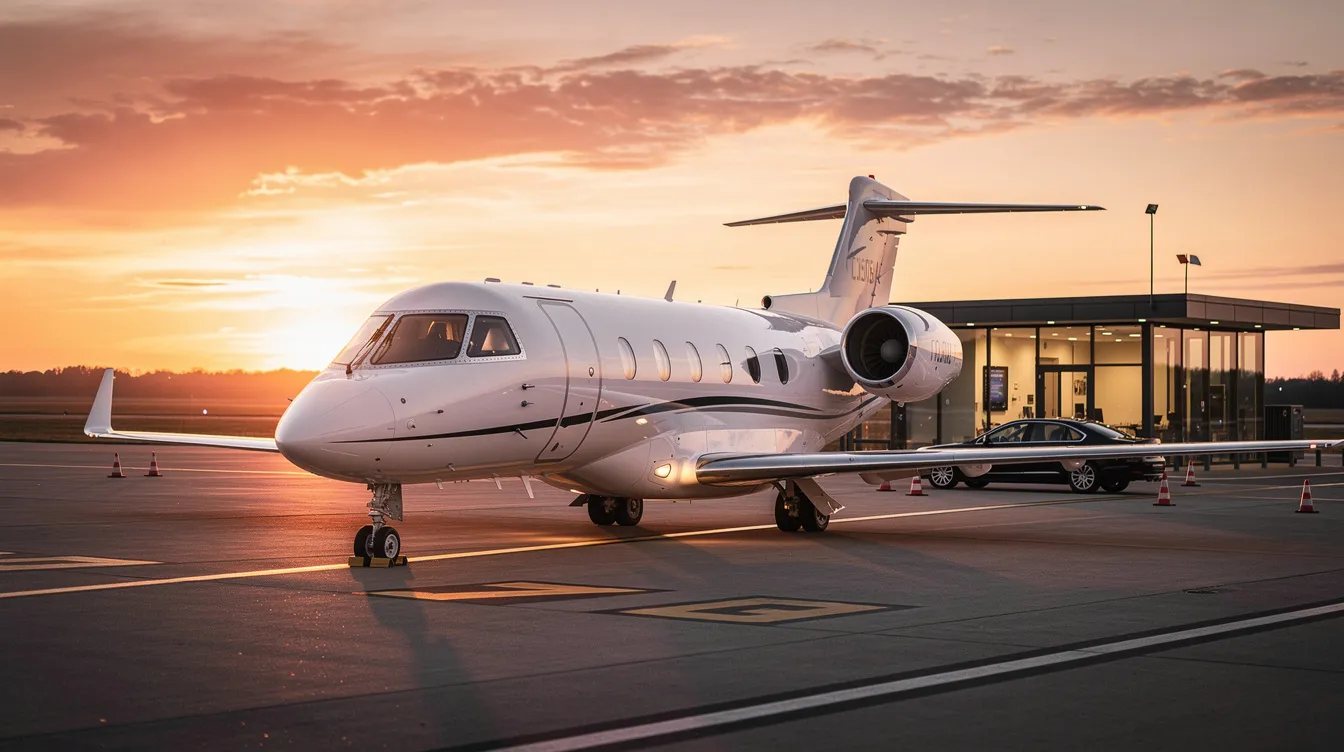
Can You Really Rent a Private Plane Today?
Yes, you can rent a private plane today, and the process is more accessible than most travelers expect. The modern private aviation market includes on-demand chartering, jet cards, semi-private flights, empty-leg bookings, and fractional ownership, each serving a different level of frequency, flexibility, and budget.
Flying private allows travelers to bypass the long waits and crowded spaces of commercial airports, significantly enhancing convenience and time savings. Instead of arriving hours early for commercial flights, many private flyers arrive at a private terminal 15–20 minutes before departure, meet the crew, and board directly.
Private aviation also opens access to over 5,000 airports across the United States, compared to approximately 500 served by commercial airlines, allowing for more direct routes and reduced travel time. The FAA’s airport category data helps explain why private aircraft can often land much closer to your final destination than commercial airlines.
Here’s what renting a private plane means in practice:
You can book a private charter for a specific trip and rent the entire aircraft.
You can use jet cards to prepay for flight hours at fixed hourly rates with guaranteed availability.
You can book empty leg flights when an aircraft is repositioning, sometimes at discounts of up to 75%.
You can choose semi-private flights, which allow purchasing individual seats on regional jets, flying from private terminals without paying for an entire aircraft.
You can explore fractional ownership, where individuals or companies purchase a share of an aircraft and receive access to a specific number of flight hours annually without bearing the full costs of ownership.
On-demand private jet rental prices typically range from $2,000 to $14,000+ per billable hour, influenced by aircraft size, distance, and real-time logistics. In 2026, turboprops may begin around $2,500 per flight hour, while ultra-long-range aircraft can exceed $14,000 per hour depending on demand, configuration, and route.
For example, New York to Miami on a light jet may cost roughly $12,000–$18,000 all-in, while New York to London on a long-range jet or ultra-long-range aircraft can reach $90,000–$150,000+. Travelers comparing these missions often benefit from a detailed private jet price list overview. BlackJet gives members a more structured way to access these aircraft through Jet Card membership, combining safety standards, digital booking, real-time support, and carbon-neutral flights.
Why Rent a Private Plane Instead of Flying Commercial?
Private jet travel is not only about luxury. For executives, investors, families, and public figures, it is a strategic advantage: control over time, privacy, routing, and the working environment.
Consider a Manhattan-based CEO with meetings in Chicago, Dallas, and Austin. With commercial air travel, the itinerary may require multiple terminals, fixed airline schedules, overnight stays, and lost productivity. With a BlackJet 25-hour Jet Card, the same executive can depart from Teterboro or Westchester County Airport, land closer to each meeting, and continue working between stops.
A typical comparison might look like this:
Commercial route: Manhattan to LaGuardia, TSA, boarding, delays, arrival at ORD, ground transfer into Chicago.
Private route: Manhattan to Teterboro, private FBO arrival, direct charter flight into Chicago Midway or another convenient airport.
Time saved: often several hours door-to-door, especially when multiple cities are involved.
Productivity gained: confidential calls, board materials, legal documents, and deal work can happen in a private cabin.
Traveling by private jet can enhance productivity, as passengers can work or hold meetings in a private cabin without the distractions found in commercial flights. Unlike commercial cabins, private aircraft allow sensitive conversations, controlled guest lists, secure handling of high-value items, and discretion for public figures.
Private jet travel provides flexibility in scheduling, allowing travelers to choose departure times that suit their needs, unlike commercial flights with fixed schedules. Private jet options provide flexibility in travel schedules, allowing passengers to choose departure times and routes that suit their needs, unlike commercial flights with fixed schedules.
The advantages over first-class commercial are clear:
You choose departure times, not airline timetables.
You can reach smaller regional airports, resort airports, factory-adjacent fields, and remote project sites.
You avoid crowded terminals and most airline disruptions.
You control who is on board.
You can pair a private flight with ground transportation arranged around your schedule.
You gain all the benefits of privacy, speed, and direct routing without owning an aircraft.
For leisure travel, this means reaching Aspen, Bozeman, Naples, or a private island connection with fewer compromises. For business travel, it means arriving prepared rather than depleted.
How Much Does It Cost to Rent a Private Jet?
Private jet cost depends on aircraft type, route, flight time, aircraft availability, taxes, fees, and operational logistics. The headline hourly rate is only the starting point; the total charter cost should include fees, taxes, handling, crew, and aircraft positioning when applicable.
In 2026, typical on-demand jet rental ranges look like this:
Aircraft Category | Typical Hourly Rate (USD) | Typical Use Cases |
|---|
Turboprops / Very Light Jets | $2,000–$3,000 | Short regional flights, up to 8 passengers |
Light Jets | $3,000–$5,000 | Short to medium-haul, 4–8 passengers |
Midsize / Super Midsize Jets | $4,500–$8,000 | Transcontinental flights, 7–10 passengers |
Heavy / Ultra-Long-Range Jets | $8,000–$16,000+ | International, long-haul, 10–16 passengers |
VIP Airliners (BBJ, ACJ) | $15,000–$25,000+ | Large groups, ultra-long-haul, 30+ passengers |
The average cost to charter a private jet in the United States falls between $5,000 and $10,000 for a typical 2-hour domestic flight on a midsize jet, including base hourly rate, fuel surcharges, landing fees, and crew costs. Actual charter costs can move higher when demand is strong, aircraft supply is limited, or the trip requires repositioning
Here are common 2026 examples, which align closely with broader benchmarks on how much it costs to rent a private jet:
New York (TEB) to Miami (OPF) one-way on a light jet: roughly $12,000–$18,000 all-in.
Los Angeles (VNY) to New York (TEB) on a super midsize jet: roughly $30,000–$45,000, with premium aircraft and peak dates often higher.
New York to London on an ultra-long-range jet: often $90,000–$150,000+, depending on date, aircraft configuration, crew planning, and airport selection.
Shorter flights may not always equate to lower costs due to fixed expenses like crew positioning and landing fees, making them proportionally more expensive per mile. Short leg fees, daily minimums, and minimum billable flight time can mean a 35-minute private flight is billed as 60, 90, or even 120 minutes.
BlackJet Jet Card members gain greater pricing discipline because jet cards offer a prepaid block of flight hours, allowing users to book flights at fixed hourly rates with guaranteed availability, making them ideal for frequent travelers who want a deeper understanding of jet card pricing structures, costs, and benefits. Instead of shopping multiple operators for every specific trip, members use contracted terms across cabin classes.
What Factors Influence Private Jet Rental Pricing?
Jet rental pricing is a mix of hourly rates, aircraft logistics, airport fees, taxes, and operational procedures. Two similar routes can produce very different quotes if the aircraft is in a different city, the crew is timing out, or the departure airport has higher handling costs.
Key pricing factors include insights similar to those used when evaluating the cheapest private jet options, entry-level aircraft, and other affordable private jet choices for cost-conscious travelers:
Aircraft category: A turboprop costs less than a light jet, a midsize jet costs less than a heavy jet, and long-range jets require more fuel, crew planning, and maintenance support.
Aircraft size: More seats, greater range, stand-up cabins, larger baggage holds, and higher performance typically increase hourly cost.
Distance and duration: Longer routes increase flight time, while very short routes may trigger short-leg fees.
Passenger count and baggage: Private aircraft face strict weight, space, and balance limitations compared to commercial airliners. More passengers, skis, golf clubs, musical instruments, or production equipment may require a larger cabin.
Airport selection: Major airports often cost more than smaller regional airports. The fees airports charge can include landing, ramp, security, and handling items.
One-way vs round trip: One-way trips may require empty leg flights or aircraft positioning, where the aircraft flies empty before or after your paid leg flights.
Aircraft location: If the aircraft is already nearby, the quote is often more efficient. If not, repositioning may add substantial cost.
Common fees include:
Landing fees and handling charges at fixed base operators.
Crew expenses, including hotels, meals, and local transport.
Hangar fees when weather, snow, or overnight parking requires covered storage.
Fuel surcharges when jet fuel or Jet-A pricing rises above operator thresholds.
Catering, Wi-Fi, deicing, international permits, and customs handling.
Federal excise tax and segment fees.
Mandatory government taxes and fees, such as the US Federal Excise Tax (FET) of 7.5% and various segment fees, can significantly impact the total cost of private jet rentals. Private flight quotes often exclude significant backend operational expenses such as federal excise taxes, fuel adjustments, and airport landing fees, so always ask whether the quote is all-in.
For U.S. domestic private jet charters, the federal excise tax is generally 7.5%, and per-passenger segment fees may apply to each takeoff-to-landing segment. The IRS transportation tax guidance is the official reference for current tax treatment.
Ad-hoc private charter pricing changes quote by quote. BlackJet Jet Card pricing is designed around fixed hourly rates, standardized terms, transparent pricing, and a clearer view of what is included, which simplifies budgeting for frequent flyers.
Aircraft Types: From Light Jets to Ultra Long Range
Choosing the right private jet is not about selecting the largest cabin by default. It is about matching range, runway performance, passenger count, baggage, and comfort to the mission.
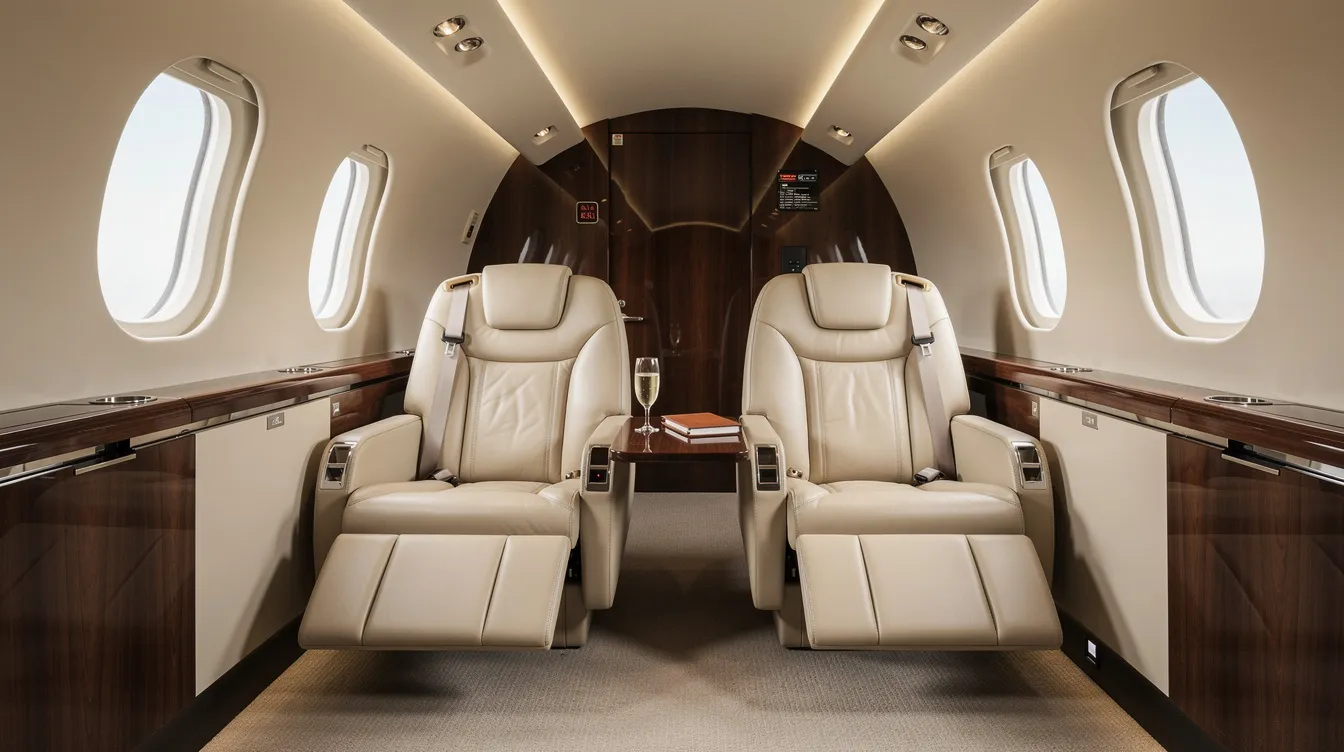
Turboprops and very light jets are ideal for shorter regional missions, and many travelers use a focused guide to the best small private aircraft for different mission profiles or review the key features of a $5 million private jet when comparing options. Turboprop aircraft, such as the Beechcraft King Air, are known for their efficiency and ability to operate from shorter runways, making them ideal for regional travel. They often seat 4–8 passengers and can be practical for Dallas–Houston, London–Paris, or island routes where runway length matters.
Light jets typically accommodate 4 to 8 passengers and are suitable for short to medium-haul flights, with a range of up to 1,500 miles within the broader family of types of private jets for every traveler. Aircraft such as the Citation CJ3+ or Embraer Phenom 300 are popular for New York–Miami, Los Angeles–Aspen, or Atlanta–Palm Beach. Light jet costs often offer the best value when the passenger count is modest, and the route is under three hours.
Midsize jets can typically fly up to 2,450 miles, making them a good choice for transcontinental flights, such as from New York to Los Angeles. Aircraft such as the Citation Latitude, Hawker 800XP, or Learjet 75 usually seat 7–9 passengers and offer more baggage capacity, cabin comfort, and weather flexibility than smaller aircraft.
A super midsize jet, such as a Praetor 500, Challenger 350, or Citation Longitude, typically seats 8–10 passengers and is well-suited for New York–Los Angeles, London–Dubai, or longer domestic routes where cabin space matters in the context of understanding private jet sizes and how they fit different journeys. These aircraft provide more range, better speed, and often improved Wi-Fi and cabin amenities.
Heavy jets are designed for long-haul travel, capable of flying distances of 7,000 miles or more, and are often used for international flights. Heavy and long-range jets may seat 10–16 passengers and can include larger galleys, enclosed lavatories, sleeping configurations, and stand-up cabins, with some of the top 16-seat private jet options offering especially generous cabins. These aircraft are appropriate for transatlantic missions and demanding corporate itineraries.
Ultra-long-range jets, like the Gulfstream G650ER, are capable of non-stop intercontinental travel, connecting major cities without the need for refueling. Ultra-long-range aircraft such as the Gulfstream G600, Global 6500, Gulfstream G650ER, and similar models support routes like New York–Tokyo or Los Angeles–Sydney, depending on winds, payload, and permissions.
At the top of the market, a Boeing Business Jet and other VIP airliners sit within the broader universe of the largest private jets available for sale or charter and can deliver large-cabin comfort for heads of state, touring groups, or global corporate delegations. These aircraft are not necessary for most travelers, but they show the breadth of private aviation capability.
With BlackJet, members can move between cabin classes under one relationship: light jets for regional travel, midsize jets for business corridors, and ultra-long-range aircraft for international missions.
Charter, Jet Card, or Ownership: Which Private Jet Model Fits You?
Private jet travel options include chartering, fractional ownership, and jet cards, each catering to different travel needs and budgets. The right model depends mainly on annual flight hours, schedule complexity, service expectations, and appetite for ownership risk.
On-demand charter is a pay-as-you-go method for renting an entire aircraft for a specific trip, offering maximum scheduling control. It is best for occasional travelers flying under roughly 25 hours per year. You pay for each charter flight individually, but aircraft availability, pricing, cancellation rules, and terms can vary across multiple operators.
Jet Card and membership programs are designed for frequent flyers who value predictability. BlackJet’s 25-hour and 50-hour jet card programs give members prepaid access, fixed hourly rates, guaranteed aircraft availability within defined booking windows, and support across multiple aircraft categories. This is often the best fit for travelers flying about 25–100+ hours per year.
Fractional jet ownership allows individuals or companies to purchase a share of an aircraft, providing access to a specific number of flight hours annually without the full costs of ownership, while also offering meaningful tax benefits of fractional jet ownership for qualifying business use. Full or fractional ownership may make sense for very high utilization, but it involves capital outlay, depreciation, maintenance, crew, insurance, scheduling, and hangar commitments.
Chartering a private jet is often more cost-effective for those who fly less than 200 hours per year, as ownership entails high fixed costs that may not be justified for infrequent flyers — particularly when the cheapest private aircraft and budget-friendly options or structured private jet leasing arrangements with flexible terms can already cover many missions. That is why many high-net-worth individuals now prefer flexible access models such as BlackJet instead of committing to the same aircraft year after year.
A few examples:
A family taking 10–12 leisure trips per year may find a Jet Card easier than sourcing separate quotes for every holiday, while occasional travelers might simply buy a seat on a private jet via shared or semi-private options or explore affordable private plane rideshare services when schedules align.
An executive with monthly coast-to-coast board meetings can use BlackJet for consistent service without aircraft ownership risk.
An aircraft owner may still use BlackJet for overflow lift when their own aircraft remains in maintenance or is already assigned to another trip.
For most travelers who fly regularly but do not need full ownership, BlackJet offers the balanced middle ground: premium access without the burden of owning the asset.
How to Rent a Private Plane Step by Step
Renting a private plane requires coordination with an operator or broker to provide trip details and payment. The private jet charter booking process typically involves a simple four-stage approach, including inquiry, selection of quotes, booking confirmation, and pre-flight coordination, similar to the frameworks used by top private jet companies for luxury travel and service, and detailed in a broader analysis of whether chartering a private jet is truly worth it.
Here is the process in practical terms:
Define your trip. Prepare dates, route, preferred departure window, passenger count, baggage, pets, catering, ground transportation, and any special requirements.
Choose your access model. A one-off private charter may work for a single trip; a BlackJet Jet Card may be better if you expect multiple trips during the year.
Request a quote. Provide flight details to a BlackJet aviation advisor or through digital tools so the team can evaluate aircraft options and routing.
Review aircraft options. Compare light jets, midsize jets, heavy jet options, and long-range jets based on range, cabin, cost, luggage, and runway needs.
Confirm safety and certification. Operators should hold a valid Federal Aviation Administration (FAA) Part 135 certificate and be rated by independent auditors such as ARGUS or WYVERN.
Finalize booking. Review the contract, payment terms, cancellation policy, FBO addresses, passenger manifest, and show time.
Coordinate pre-flight details. Confirm catering, passenger IDs, pet documentation, ground transfers, and any special luggage.
When booking a private jet, travelers can often check in as little as 15 minutes before departure, significantly reducing wait times compared to commercial flights. On the day of travel, you typically arrive at fixed base operators rather than the commercial terminal, park nearby or pull up curbside, and board shortly after arrival.
Example: A BlackJet member arranging a Friday afternoon private charter from Los Angeles (VNY) to Jackson Hole (JAC) for a ski weekend would provide passenger count, skis, bags, return timing, and catering preferences. BlackJet would then match the mission to an aircraft with the right performance, baggage space, and winter operations capability.

Understanding Additional Fees, Taxes, and Short Leg Charges
Base hourly rates do not always tell the full story. The total cost of a private jet charter includes various factors such as aircraft type, distance, and additional fees like landing and handling charges, which should be clearly outlined in the booking process.
Additional costs for private flights can include catering, Wi-Fi, and overnight fees for the flight crew beyond the base charter rate. Private jet rental costs can increase due to additional charges such as fuel surcharges, landing fees, overnight crew expenses, and catering preferences, which may add 20–40% on top of the base hourly rate.
Key charges to understand include:
Federal Excise Tax: The US Federal Excise Tax of 7.5% applies to most domestic private jet charters. Segment fees may also be charged per passenger on each takeoff-to-landing segment, so a New York–Miami–New York round trip with six passengers can include segment fees for 12 passenger segments.
Landing, ramp, and handling fees: These vary by airport size, aircraft weight, and FBO. A large international airport may be more expensive than Republic Airport, Teterboro, or another reliever airport.
Crew expenses: If the aircraft remains overnight, operators may bill hotels, meals, and transportation for each crew member. A two-night ski weekend can add a meaningful cost if lodging is scarce.
Hangar fees: Cold-weather destinations may require hangar space for safety and deicing efficiency.
Fuel surcharges: Operators may add fuel surcharges when jet fuel exceeds pricing thresholds or when fuel logistics are more complex at remote airports.
Short leg fees: A 30-minute hop may still trigger a 60- or 90-minute minimum because crew, maintenance, and operational costs do not scale down perfectly.
Aircraft positioning: If the jet must fly empty to pick you up or return to base, those legs may be billed at full or discounted rates.
International fees: Customs, permits, handling, overflight permissions, and local taxes can apply to international missions.
Choosing a nearby airport can sometimes lower the total charter cost. For example, shifting from a congested major hub to a reliever airport may reduce positioning time, handling fees, and delays.
BlackJet Jet Card members benefit from clear contracted terms that define what is and is not included in the hourly rate, reducing billing surprises compared with purely ad-hoc charters.
Safety, Technology, and Sustainability in Modern Private Jet Travel
Safety, technology, and sustainability are no longer optional extras in premium private aviation. They are core requirements for corporate travel departments, family offices, and discerning travelers who expect every detail to be managed with discipline.
Safety begins with regulatory compliance. Reputable U.S. charter operators fly under FAA Part 135, which governs maintenance, pilot qualifications, duty time, operations, and recordkeeping. Charter flights are heavily regulated, and the operator must adhere to FAA regulations and hold industry safety credentials. You can review the FAA’s explanation of Part 135 operations for more background.
Beyond FAA requirements, independent ratings such as ARGUS and WYVERN help evaluate operators. BlackJet works with rigorously vetted operators, safety-certified aircraft, and crews that meet strict standards, aligning with broader insights into how safe private jets are compared with other forms of air travel. A valid air carrier certificate, documented operational procedures, and current safety audits are essential markers of a serious provider.
Technology improves the member experience. BlackJet’s digital platform allows members to request, confirm, and manage flights 24/7, review aircraft and route options, and coordinate passengers, catering, and support. Real-time flight support helps manage weather, delays, crew logistics, and disruptions before they become problems.
Sustainability also matters. Private aviation has an environmental impact, and responsible providers should address it directly. Sustainable Aviation Fuel is expanding, carbon offset programs are becoming more common, and more efficient aircraft can reduce fuel burn per mission.
BlackJet ensures every Jet Card flight is carbon-neutral through verified offset programs at no extra effort to the member. For example, a multinational team traveling by carbon-neutral private charter to a sustainability conference can preserve schedule control while aligning the journey with corporate environmental commitments, especially when leveraging affordable private plane options and access models in the context of a global fleet of more than twenty thousand private jets worldwide that increasingly emphasize efficiency and sustainability.

BlackJet Jet Card: A Smarter Way to Rent a Private Jet
The BlackJet Jet Card is designed for travelers who want private jet access without the volatility of one-off charters or the responsibility of ownership. It sits between ad-hoc rental and full aircraft ownership, giving members predictable access, elevated service, and consistent standards.
BlackJet Jet Card features include, in addition to the core benefits outlined in broader 25-hour jet card guides on features and costs:
25-hour and 50-hour options for frequent business and luxury leisure travelers.
Access to multiple cabin classes, from light jet options to ultra-long range aircraft.
Guaranteed aircraft availability within defined booking windows.
Fixed hourly rates that help protect members from seasonal spikes and last-minute markups.
24/7 aviation advisors and concierge support.
Mobile and web booking tools for itineraries, passengers, catering, and ground transfers.
Real-time support for schedule changes, diversions, and irregular operations.
Carbon-neutral flights are built into every Jet Card journey.
The financial advantage is straightforward. Members avoid depreciation, maintenance, crew payroll, insurance, and hangar obligations while still accessing a global network of aircraft through a single relationship. For annual planning, known hourly rates make the private jet cost easier to forecast, especially when compared with benchmarks from a 50-hour jet card cost and value analysis.
For frequent flyers, this combination of access, safety, technology, sustainability, and personalized service is often more practical than owning an aircraft and more consistent than sourcing a new private jet charter for every trip.
Is Renting a Private Plane Worth It for You?
Renting a private plane is worth considering when your time, privacy, security, and schedule control justify the premium over commercial air travel. The value is not only the cabin; it is the ability to reclaim hours, reduce friction, and arrive prepared.
Use these thresholds as a starting point:
Most travelers should also ask:
How much is one recovered business day worth?
Do I need privacy for confidential work or family security?
Are my routes poorly served by commercial airlines?
Do I often travel with pets, children, equipment, or high-value items?
Would predictable cost structures improve annual travel planning?
Private jet charter services typically allow for more luggage than commercial airlines, accommodating special items like sports equipment or musical instruments without the usual restrictions. Travelers can often fly with pets on private charters, provided they meet specific health and documentation requirements, making it a more accommodating option than commercial flights.
Cancellation policies for private flights can be strict, with terms often varying between 10 hours and several days before departure. This is another reason frequent travelers often prefer Jet Card terms, where rules are clearer, and support is more consistent.
FAQs About Renting a Private Plane
How far in advance do I need to book a private jet? Domestic private flights can often be arranged within 24–48 hours, and some may be possible the same day. Ultra-long range international flights, holiday travel, and major event travel usually benefit from early booking because permits, crew planning, slots, and aircraft availability are more complex.
Can I rent a private jet for a same-day, last-minute trip? Yes, same-day private jet rental is possible when aircraft and crew are available. BlackJet’s support team helps urgent travelers evaluate nearby aircraft, routing, and timing quickly, although last-minute trips may cost more due to positioning and limited supply.
What documents do I need to fly on a private charter? Domestic flights require a government-issued photo ID that is REAL ID-compliant, while international flights require a passport with sufficient validity. International travelers may also need visas, and children may require additional documentation depending on the route.
Can I bring my pet on a private jet? In many cases, yes. Pets can often travel in the cabin on a private jet, provided health records, vaccination documents, and destination-specific requirements are met before departure.
How many bags can I bring? Baggage limits depend on aircraft size, compartment volume, passenger count, and aircraft weight. Light jets and turboprops have tighter limits, while heavy jets and long-range jets — including many of the best private jets for around 20 passengers — offer more space for luggage, skis, golf clubs, or specialty items.
What happens if my plans change? Change and cancellation terms vary by provider, aircraft, and timing. Jet Card programs usually offer more transparent rules than ad-hoc private charter contracts, but travelers should always confirm deadlines, penalties, and rescheduling options before booking.
Are empty leg flights a good way to save money? Empty leg flights can be attractive because they occur when an aircraft flies empty to reposition for its next paid client, offering discounted seats of up to 75%. The trade-off is flexibility: timing, routing, and aircraft choice — ranging from light jets to some of the largest private jets available — are dictated by the repositioning need, not your ideal schedule.
How to Get Started with BlackJet
The best way to begin is to understand how often you fly, where you fly, and which cabin experience fits your life. BlackJet advisors can review your common routes, passenger counts, luggage needs, pets, international travel patterns, and preferred aircraft classes to recommend the right access model.
To explore BlackJet:
Share your annual travel profile, including business, family, and leisure routes.
Request an indicative quote for a sample mission, such as New York–Miami for a weekend or London–Dubai for a business itinerary.
Compare one-off charter costs with BlackJet’s 25-hour and 50-hour Jet Card programs.
Evaluate the value of fixed hourly rates, guaranteed availability, carbon-neutral flights, and 24/7 support.
Decide whether BlackJet can turn private jet travel into a reliable, strategic part of your life rather than a one-time indulgence.
Conclusion: Unlock the Strategic Advantage of Renting a Private Plane
Renting a private plane today is far more than an indulgence—it is a strategic tool that empowers high-net-worth individuals, executives, and discerning travelers to reclaim time, enhance productivity, and travel on their own terms. With diverse access models like on-demand charter, jet cards, and fractional ownership, private aviation offers tailored solutions that align with every travel frequency and mission profile.
BlackJet’s Jet Card programs stand out by delivering predictable pricing, guaranteed availability, and seamless digital booking, all backed by uncompromising safety standards and a commitment to sustainability through carbon-neutral flights. Whether flying regional turboprops or ultra-long-range jets, members benefit from a curated experience that balances luxury with operational excellence.
In a world where time is the ultimate currency, renting a private plane with BlackJet transforms travel from a logistical challenge into a competitive advantage. Discover how refined, flexible, and responsible private aviation can elevate your journey—making every flight not just a trip, but a meaningful extension of your lifestyle and business strategy.
Elevate your travel, effortlessly. With BlackJet, private flight becomes a controlled, refined, and sustainable extension of your schedule, supported by rigorous safety standards, intuitive technology, and premium access across the aircraft categories that matter most.


 Sign up with google
 Sign up with Apple