Boeing has produced some of the world's largest aircraft and operates the world's biggest factory, transforming long-haul aviation, connecting continents, and reshaping how hundreds of millions of people cross the skies each year. But for those who value their time, the experience of navigating crowded hubs in Seattle, London, or Dubai aboard a commercial wide-body can feel like a contradiction—surrounded by extraordinary engineering yet stripped of control over schedule, routing, and privacy.
This article is for private aviation enthusiasts, business travelers, and anyone interested in how Boeing's largest aircraft and factory influence private jet travel. Understanding Boeing's largest achievements helps travelers appreciate the innovations shaping both commercial and private aviation.
Why Boeing's "Largest" Matters to Elite and Private Jet Travelers
Boeing’s largest aircraft and production facilities are exceptional achievements by the company: the Everett factory is the world’s largest building by volume, and aircraft like the Boeing 747 and incoming 777X define Boeing largest in practical terms. They set benchmarks for range, reliability, safety certification, and efficiency that shape the wider aviation market, including the private jets accessed through a Jet Card program.
For high-net-worth leisure travelers, frequent business flyers, executives, and private aviation enthusiasts, those benchmarks are more than aerospace trivia. The avionics, materials science, sustainability efforts, and operating protocols proven on Boeing’s largest commercial platforms directly influence the safety, reliability, and performance of the business jets you board at a quiet FBO. This introduction covers Everett’s scale, Boeing’s biggest aircraft, factory tours, certification and safety standards, and the connection between large Boeing jets and the flexibility, privacy, and convenience of premium private travel with BlackJet Jet Cards.
The World's Largest Building: Boeing's Everett Factory Explained
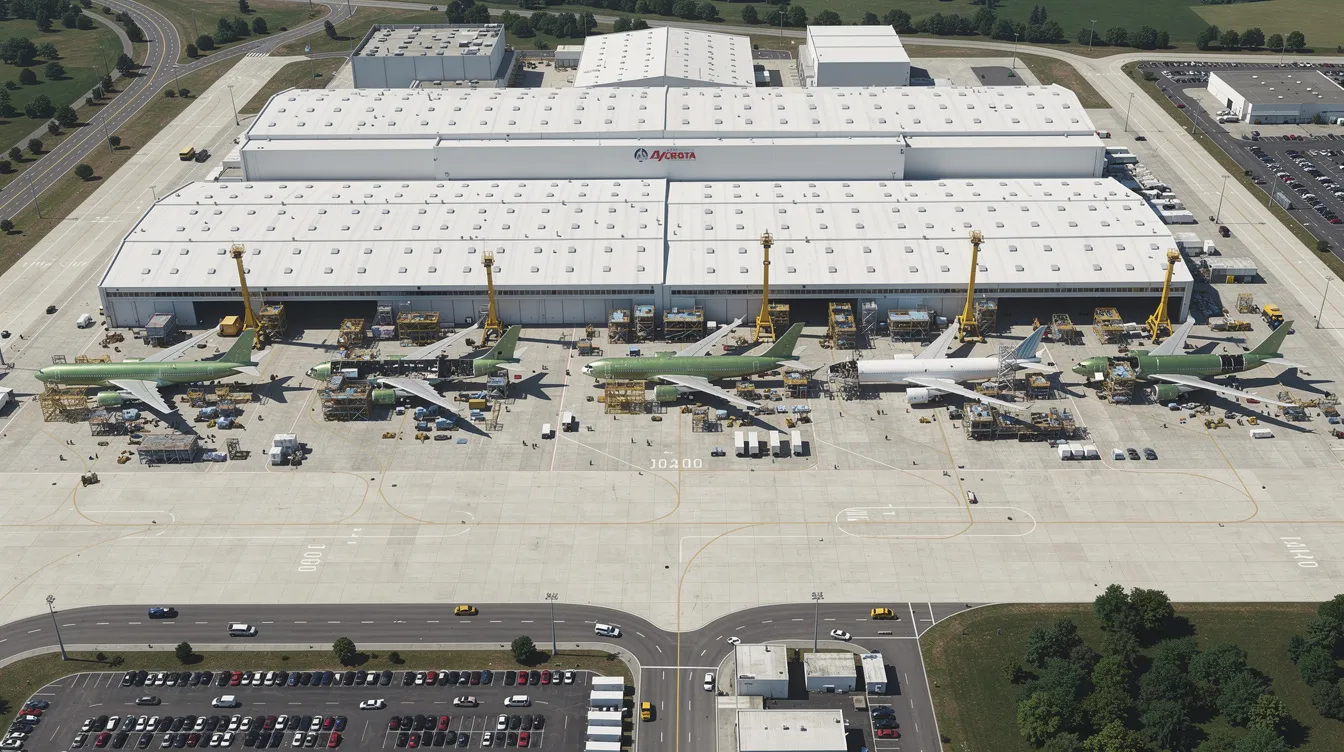
Boeing's Everett factory in Everett, Washington holds the Guinness World Record as the world's largest building by interior volume. Originally built in 1967 to manufacture the Boeing 747, the facility has expanded several times and now encloses approximately 472 million cubic feet-roughly 13.3 million cubic meters of interior space.
The numbers are staggering:
Metric | Figure |
|---|
Interior volume | 472 million ft³ / 13.3 million m³ |
Floor area | 399,480 square meters (~4.3 million ft²) |
Total site area | 1,025 acres |
Building height (interior) | ~114 feet |
Overhead cranes | 26, running on 31 miles of track |
Employees on site | ~30,000 |
The site spans a total of 1,025 acres-large enough to contain multiple city blocks or more than 75 American football fields under one roof. It sits about 25–30 miles north of downtown Seattle, adjacent to Paine Field, which now hosts select commercial service and private flight operations.
Inside, Boeing commercial airplanes are assembled across six production lines. The factory has built the 747, 767, 777, and 777X, and previously housed 787 Dreamliner assembly before that program moved to South Carolina. The mass-production and testing processes validated on this factory floor underpin the safety standards that also influence every business jet flying in similar airspace.
Where Giants Are Born: Inside Boeing's Everett Factory Floor
Step inside Boeing's Everett factory and you enter an industrial city under one roof-operating around the clock with tightly choreographed assembly lines that move at roughly 1.5 inches per minute.
The production process unfolds in broad stages. Fuselage sections and wings arrive by rail, barge, or specialized transport. The Dreamlifter, a modified version of the 747-400 used for oversized cargo transport, was instrumental in moving composite sections during the 787 era. Once components reach Everett, the sequence proceeds through:
Fuselage joining - Major barrel sections are aligned and fastened in multi-story jigs.
Wing-body integration - Wings, weighing tens of thousands of pounds, are lifted by overhead cranes and mated to the fuselage.
Systems installation - Engines, avionics, hydraulics, and flight control systems are fitted.
Interior and final touches - Seats, galleys, lavatories, and airline-specific configurations go in.
Paint, testing, and delivery - Each aircraft undergoes rigorous ground and flight checks before rollout.
Historically, the building has housed Boeing 747 production (until December 2022), 767 lines including freighter and KC-46 tanker variants for the Air Force, the 777 family, and now the 777X. The 787 line moved to Boeing's facility in South Carolina by 2021.
Many of the safety standards, materials, and avionics systems validated here eventually filter into business jets that BlackJet cardholders rely on for long-range missions.
The Boeing 747: The Giant That Needed the World's Largest Factory
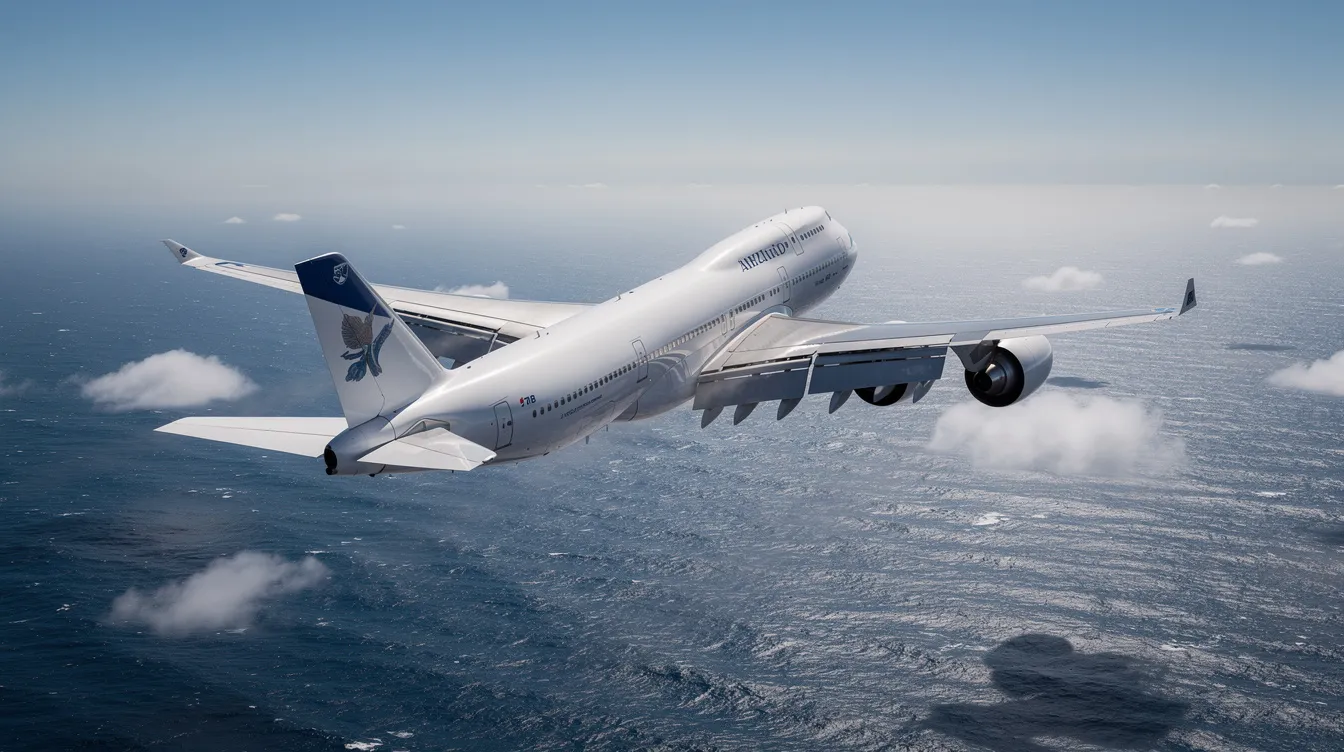
The Boeing 747-"Queen of the Skies"-was conceived in the mid-1960s to meet surging demand for mass transoceanic air travel. Its first flight took place on February 9, 1969, and the aircraft entered service with Pan Am the following January. Building it required a factory of unprecedented scale, which is precisely why the Everett factory was constructed.
The 747 revolutionized air travel. Its distinctive upper deck hump, four engines, and capacity of 366 to 467 passengers (depending on variant) effectively democratized long-haul flight. For the first time, hundreds of people could cross an ocean on a single aircraft at a cruising speed above 550 mph.
The final variant, the 747-8, pushed "largest" even further. At 250 ft 2 in long, it remains the longest commercial airplane Boeing has built. The 747-8 has a wingspan of 68 ft 4 in, a maximum take-off weight of 975,000 lb, and can carry up to 467 passengers. It is the heaviest aircraft manufactured in the U.S. The last 747-a cargo aircraft for Atlas Air-rolled out of Everett in December 2022, ending a production run of roughly 1,574 units over half a century.
Several governments operate VIP 747-8I variants as head-of-state transport, featuring private suites, bedrooms, and conference rooms-blurring the line between commercial airplanes and exclusive flight. For today's discerning travelers, however, a quiet, tailored cabin on a right-sized private jet often delivers more value than even the finest first-class seat on a 747.
From 747 to 777X: Boeing's Largest Commercial Airplanes Today
The 777 family now anchors Boeing's long-haul fleet. The original 777 completed its first flight in June 1994 and entered service with United Airlines in 1995. The 777-300ER-seating up to roughly 396 passengers with a range over 7,200 nautical miles-became the workhorse of international routes for airlines like Lufthansa, Emirates, and Cathay Pacific.
The Boeing 777-9 is the world's largest twin-engine jet and the centerpiece of Boeing's future wide-body strategy. It is designed to replace the 747 and compete with the Airbus A350-1000, positioned as a modern, fuel-efficient replacement for older four-engine planes. Key specifications:
Specification | Boeing 777-9 |
|---|
Length | 251 ft 9 in (76.72 m) |
Wingspan (extended) | 71.8 m (235 ft 5 in) |
Maximum takeoff weight | 351,530 kg (775,000 lbs) |
Maximum range | ~8,000 nautical miles (15,000 km) |
Typical seating | 375 to 450 passengers (two-class) |
Fuel efficiency | ~20% improvement vs predecessors |
The Boeing 777-9 features folding wingtips to fit in standard airport gates-a first for a commercial jet of this size. Assembly is centered in Boeing's Everett factory, and the flight test program has logged over 4,000 hours. Boeing's largest aircraft, the 777-9, has not yet entered commercial service; after a notable certification-testing milestone in August, first delivery is still expected in 2027.
These innovative new technologies-advanced composites, next-generation GE9X engines, improved aerodynamics, and lower cabin altitude concepts-set expectations for comfort that private jet clients now demand even on smaller aircraft, as well as on the newest generation of cutting-edge private jets.
Boeing Everett Factory Tour: Experiencing the World's Largest Up Close
For serious aviation enthusiasts, the Boeing Everett factory tour is one of the most compelling industrial experiences in the world. Operated through the Boeing Future of Flight facility in Mukilteo, Washington (originally opened in 2005), the tour offers a rare glimpse into how wide-body jets move from raw components to finished airplanes and inspires some travelers to explore the largest private jets available for sale and charter.
The experience typically includes:
An introductory film on Boeing's history and engineering philosophy
A coach ride from the visitor center to the Everett factory
Guided walks above the factory floor with panoramic views
Narrative from tour guides covering Boeing's production history and current operations
The factory tour offers views of the 777 and 777X assembly lines, along with other active production bays. Tours first began around 1968 for the original 747 program. By the late 2010s, more than 150,000 visitors landed at the facility annually. Tours paused during the COVID-19 pandemic (2020–2023) and were later reconfigured.
Practical notes: the tour site is about 30 miles north of downtown Seattle, advance reservations are strongly recommended, age and security restrictions apply, and photography inside the factory is restricted in certain zones.
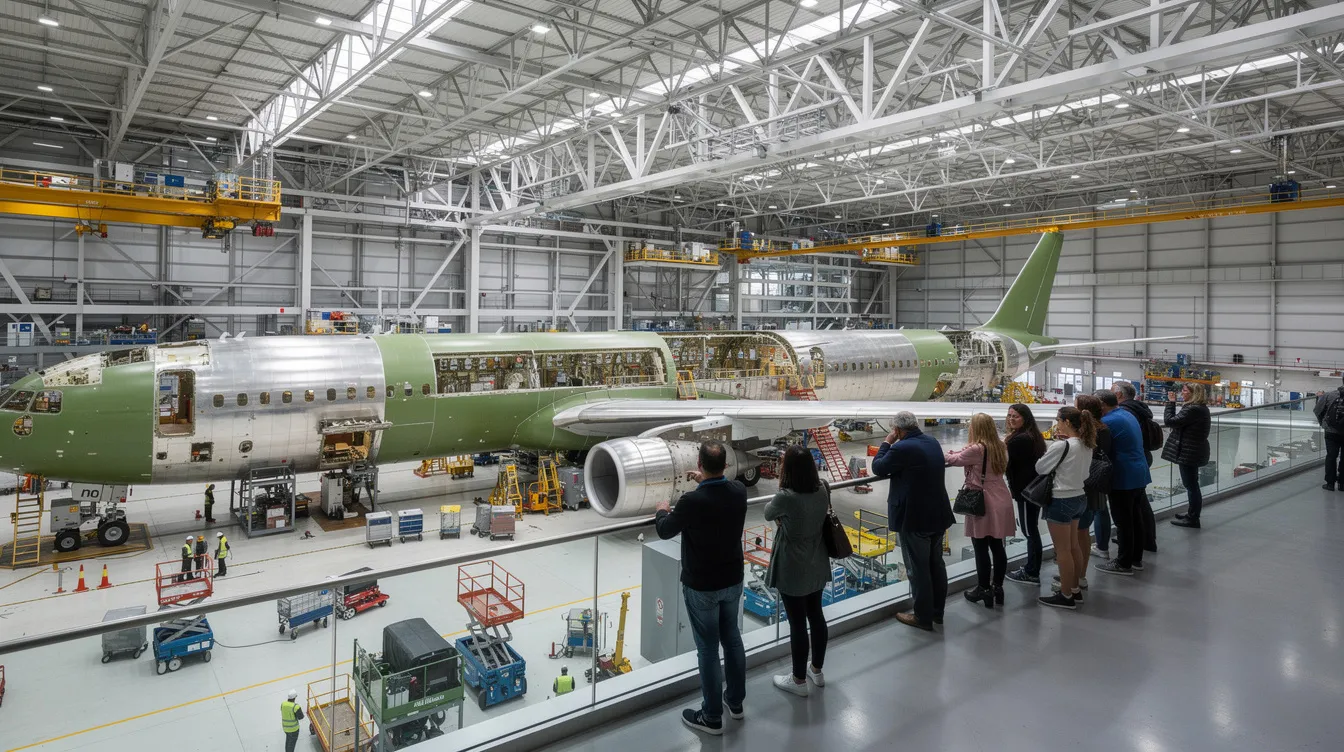
The curated, large-scale tour experience contrasts sharply with the intimate simplicity of boarding a private jet at a quiet FBO-where the aircraft, crew, and service are focused entirely on a small party of travelers.
Beyond the Factory Floor: Boeing Future of Flight, Galleries, and Sky Deck
The Boeing Future of Flight center serves as the public gateway to Boeing's Everett operations. Its approximately 28,000-square-foot gallery features interactive exhibits spanning engineering, sustainability, and the company's commercial and military programs.
Highlights include:
Future of Flight Gallery - Interactive displays on aerodynamics, materials science, and cabin innovation mockups
Aircraft history exhibits - Celebrations of the 747 "Queen of the Skies," the 787 Dreamliner, and upcoming concepts
Sustainability showcases - Panels on Sustainable Aviation Fuel (SAF), electric propulsion research, and autonomous flight initiatives
Sky Deck - A roughly 9,000-square-foot rooftop viewing area with sightlines over Paine Field, the Everett factory, the flight line, and the North Cascades
From the Sky Deck, visitors can watch test flight departures and daily operations-a powerful technology connection between exhibit and reality. The space is ideal for observing aircraft being flown on production acceptance flights or repositioning for customers.
The sustainability themes on display align closely with what BlackJet delivers today. Both Boeing and BlackJet emphasize a lower-emission future: BlackJet's carbon-neutral flights and growing interest in SAF mirror the innovations spotlighted throughout the Future of Flight center.
How Boeing's Largest Commercial Airplanes Shape the Passenger Experience
Large Boeing aircraft-the 747, 777, 787, and future 777X-reshaped what passengers expect from long-haul air travel. Wider cabins enabled multiple premium classes. Improved pressurization (notably on the 787, with cabin altitude equivalent to roughly 6,000 feet) reduced fatigue. Quieter engines, modern LED mood lighting, and evolving seat designs-from lie-flat beds to enclosed suites-elevated the experience from transport to hospitality.
Yet even the finest commercial first-class cabin comes with trade-offs:
Fixed departure times and routes
Hours spent in congested hubs
Limited control over catering, companions, or schedule changes
Shared space with hundreds of other passengers
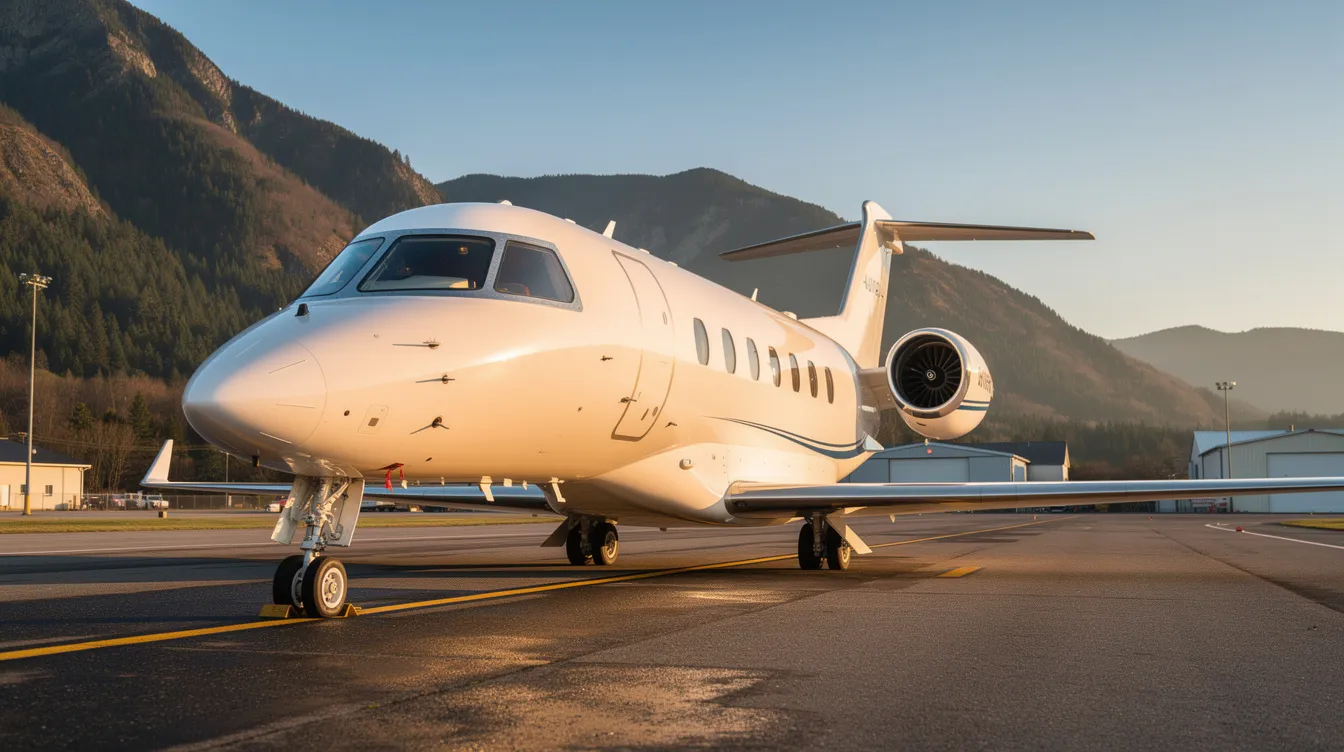
Private jet travel inverts these constraints. Fewer seats mean far more personalization, particularly on small private jets designed for flexible luxury travel. Catering is bespoke. Scheduling is on-demand. And routing can bypass major airports entirely, using secondary fields and FBOs that shave hours off a journey—whether you charter the whole aircraft or simply buy a seat on a private jet through shared or semi-private options.
Many business jets share avionics suppliers, interior design philosophies, and safety oversight cultures with Boeing's commercial programs, giving private flyers confidence in the underlying technology—a connection that’s especially clear when you look at the top 10 private jets in the world and their Boeing-inspired innovations. BlackJet clients can select cabin class by mission-a light jet for a regional hop, a super-mid for a coast-to-coast meeting, or a large-cabin aircraft for transcontinental routes-effectively choosing the scale that best replaces a commercial wide-body for their specific trip.
Boeing Business Jets and VVIP Configurations: Jumbo Scale, Private Mindset
Boeing Business Jets (BBJ) represent the bridge between Boeing's largest commercial platforms and ultra-luxury private use. Launched in the late 1990s, BBJ configurations are based on 737, 777, 787, and 747 airframes-manufactured using the same production standards and then outfitted by licensed completion centers with interiors that rival five-star hotels.
Typical BBJ features include, especially on configurations designed for larger groups of travelers who might otherwise charter private jets for up to 50 passengers:
Palatial lounges and conference rooms
Master suites with ensuite showers
Multi-zone cabins for dining, work, and rest
Advanced communications and entertainment systems
The BBJ 747-8 holds the Guinness World Record for the largest private jet, with cabin floor space exceeding 4,700 square feet. Approximately 11 BBJ 747-8s were delivered to private customers, with several operated by heads of state in Kuwait, Turkey, Morocco, and Qatar. These are among the largest private or VVIP aircraft ever flown and illustrate what’s possible when designing private jets optimized for around 20 passengers who expect widebody-level comfort.
While BBJs on 747 or 777 platforms are extraordinarily rare and typically not part of standard Jet Card fleets, they set the aspirational standard for privacy and customization that trickles down into more widely available business jets. BlackJet enables "BBJ-level thinking" on a practical scale: instead of operating a massive widebody, members leverage flexible Jet Cards to access right-sized cabins for each mission while still expecting concierge-level service and privacy, with a clear understanding of options thanks to an in-depth private jet price list overview.
Commercial Service vs Private Jet Access: Scale, Flexibility, and Strategy
Commercial wide-body routes are engineered for hub-to-hub efficiency. Private jet travel is built for point-to-point speed, delivered by leading private jet companies known for safety and service. The distinction matters most when time is the scarcest resource.
Factor | Commercial Wide-Body | Private Jet (Jet Card) |
|---|
Scheduling | Fixed timetables | On-demand departure |
Airport access | Major hubs only | 5,000+ airports and FBOs |
Privacy | Hundreds of passengers | Your group only |
Cost model | Per-ticket pricing | Prepaid jet hours |
Routing | Hub connections | Direct, point-to-point |
Boeing's largest aircraft underpin the global network that many BlackJet clients still occasionally use for certain long-haul legs. But for urgent business or discrete leisure trips, private aviation becomes a strategic complement rather than a luxury add-on.
Consider this scenario: a C-suite executive needs to visit three manufacturing sites-in Dallas, Chicago, and Toronto-within 48 hours. Even first class on a 777 can't match the routing flexibility of a well-structured Jet Card program, where tools like a 50 hour Jet Card cost guide help decision-makers compare predictable pricing that allows direct flights between secondary airports, eliminating layovers and saving an entire business day.
Reputable private operators adhere to rigorous third-party safety standards (ARGUS, WYVERN, IS-BAO) and increasingly adopt carbon offsets and SAF-aligning with the same industry-wide sustainability push visible at Boeing's Everett operations. BlackJet is the tool sophisticated travelers use to "resize" their aircraft choice from Boeing's largest jets to nimble private cabins depending on the mission, supported by clear Jet Card pricing structures that keep costs predictable.
Safety, Certification, and Innovation: From Boeing Test Programs to Private Jets
Boeing's largest programs undergo some of the most exhaustive certification processes in aviation history. The 777-9's flight test program alone has surpassed 4,000 flight hours as of mid-2025, covering handling qualities, lightning strikes, stability, electromagnetic interference, engine performance, and flutter testing-all before the model enters commercial service.
Historical precedents reinforce this rigor. The 747-8 underwent extensive test flight campaigns beginning in 2010, including structural stress testing and software refinements. The 787 pioneered composite fuselage certification. Each program required years of collaboration with the FAA and EASA before passengers ever boarded.
The same safety culture-system redundancy, rigorous maintenance protocols, crew training, and continuous airworthiness monitoring-is mirrored in top-tier private aviation operators. Innovations that originate in large Boeing jets routinely migrate into business aviation:
Advanced navigation and SATCOM connectivity
Next-generation cockpit displays
Lightweight composite materials
Improved engine management systems
BlackJet's reliance on audited operators and safety certifications ensures that "private" never means "less regulated." Every aircraft in the fleet undergoes continuous monitoring, and every crew meets recurrent training requirements that parallel the discipline Boeing demands at the commercial level.
Planning a Trip to Boeing's Everett Factory as a Private Aviation Enthusiast
Everett is a must-visit destination for anyone passionate about aviation, including those who regularly fly private but want to understand how the world's largest aircraft are manufactured and how that scale compares to owning or accessing 10 million dollar private jet options.
Planning checklist:
Best time to visit: Late spring through early fall (May–September) for the best weather and longest daylight in the Pacific Northwest
Getting there: Fly commercial into Seattle-Tacoma International, or charter a private jet into Paine Field or Boeing Field for a faster, more direct arrival—potentially using affordable light and very light private planes for shorter regional hops
Tour duration: Plan for a half-day, including the Future of Flight exhibits and the factory tour itself
What to pair it with: Seattle waterfront dining, wine country near Woodinville, or a private seaplane excursion through the San Juan Islands
A BlackJet member might use a Jet Card to fly into the region on a Friday, tour Boeing's Everett factory on Saturday, and continue to another West Coast city the same weekend-without touching a crowded hub in between. That kind of seamless routing is precisely what private jet access delivers, especially when you match your itinerary to the best small private aircraft for each mission.
On the tour itself, expect to follow strict etiquette: no loose items on the factory floor, attentive listening to tour guides, and no photography in restricted zones—just as there are best practices for choosing the cheapest private aircraft options without compromising safety or professionalism. It is an active industrial environment manufacturing some of the most complex machines on earth, and respect for that operating environment is expected.
From the World's Largest to Right-Sized Luxury: How BlackJet Elevates Your Travel
Boeing's Everett factory and its largest jets prove what is possible at industrial scale-engineering precision, relentless safety culture, and a commitment to efficiency and sustainability that advances with every new model. From the iconic Boeing 747 to the world's largest twin-engine 777X, from the factory floor to the Future of Flight galleries, these achievements define what modern aviation can be.
BlackJet applies that same spirit to individual travelers. The core pillars are straightforward:
If you admire what Boeing builds at the world's largest factory but value your time and privacy above all else, it may be time to explore how a Jet Card can turn global networks into tailored itineraries. Discover how BlackJet can reshape your travel. And if you’re just beginning to explore private flying, understanding the cheapest private jet options for new travelers can make that first step more accessible.
As Boeing continues to innovate in large commercial airplanes and sustainability, BlackJet will continue translating those advances into more efficient, seamless, and responsible private journeys-sized precisely for you.


 Sign up with google
 Sign up with Apple


