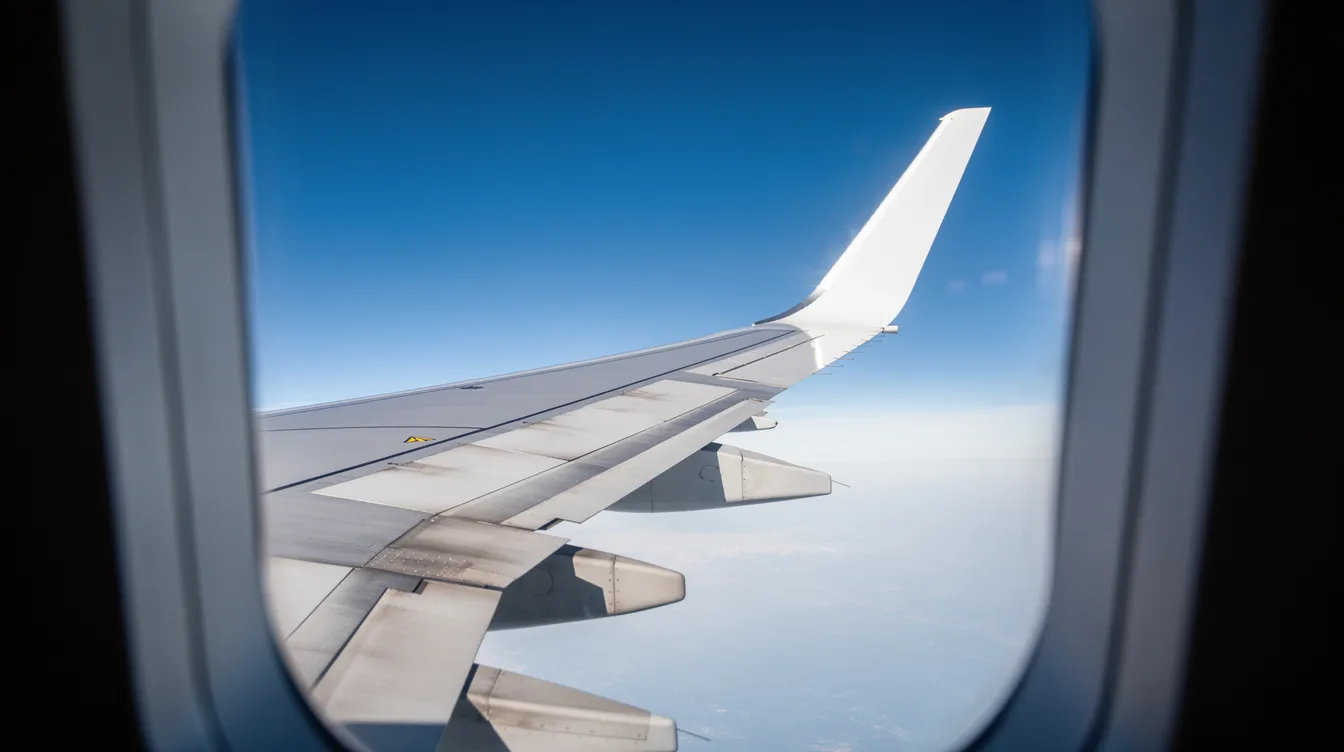
Winglets are upward-curved extensions found at the wing tips of many modern aircraft, and on the Boeing 737-900, they do measurable work. These vertical surfaces reduce the strength of wingtip vortices, lowering induced drag and cutting fuel consumption by 3% to 5% on longer flights. For airlines operating the 737-900 and 737-900ER, that translates into real savings in fuel cost, extended range on medium-haul routes, and improved climb performance from airports like Denver or Mexico City where altitude and heat tax engine output.
Quick Overview: Why Boeing 737-900 Winglets Matter
Alaska Airlines operates 79 Boeing 737-900ER aircraft as of mid-2026. Virtually all of them are equipped with blended or split scimitar winglets, and the results are measurable: each aircraft saves roughly 34,000 gallons of fuel per year after the winglet retrofit, according to Alaska's own sustainability reporting. That fuel reduction directly impacts cabin comfort, route economics, and the airline's ability to fly city pairs like Seattle to Chicago or Seattle to Anchorage with full cabins and competitive fares.
For travelers comparing an Alaska Airlines first class seat on a 737-900 to a private jet through BlackJet’s premium private jet card programs, the differences extend beyond the winglet. A 737-900 operates on fixed airline schedules, carries 177 passengers, and routes through crowded terminals. A BlackJet Jet Card flight carries 6 to 12 passengers, departs from private terminals, and lets travelers arrive 15 to 20 minutes before departure, reflecting the predictable pricing and flexibility outlined in comprehensive jet card cost guides. This article covers the winglet technology, the performance numbers, the seat map, and where private aviation becomes the strategic upgrade.
Evolution of Winglets on the Boeing 737 Family
The Boeing 737 has evolved through three major phases: Classic (-300/-400/-500), Next Generation (NG: -600/-700/-800/-900/-900ER), and MAX. The NG generation introduced redesigned wings, CFM56-7 series engines, and structural modifications that could support winglet installation. Blended winglets were first certified for retrofit on the 737-700 and -800 in 2001. The 737-900 and 737-900ER followed later in the decade.
Alaska Airlines was the launch customer for the Boeing 737-900 and became an early adopter of winglet technology across its fleet. In November 2007, Alaska flew its first aircraft with blended winglets on the 737-900, estimating annual savings of about 100,000 gallons per airplane. That initiative expanded to the 737-700, 737-800, and eventually all eligible NG aircraft, optimizing Alaska's West Coast and medium-haul network out of its Seattle hub.
Types of Winglets Used on the Boeing 737-900
Two winglet designs appear on the Boeing 737-900 and 737-900ER in active service: blended winglets and split scimitar winglets.
Blended winglets feature a smooth, continuous upward-curving design that reduces drag. They became common on 737NG aircraft starting in the early 2000s and add vertical span without increasing the aircraft's gate footprint on the apron or taxiway.
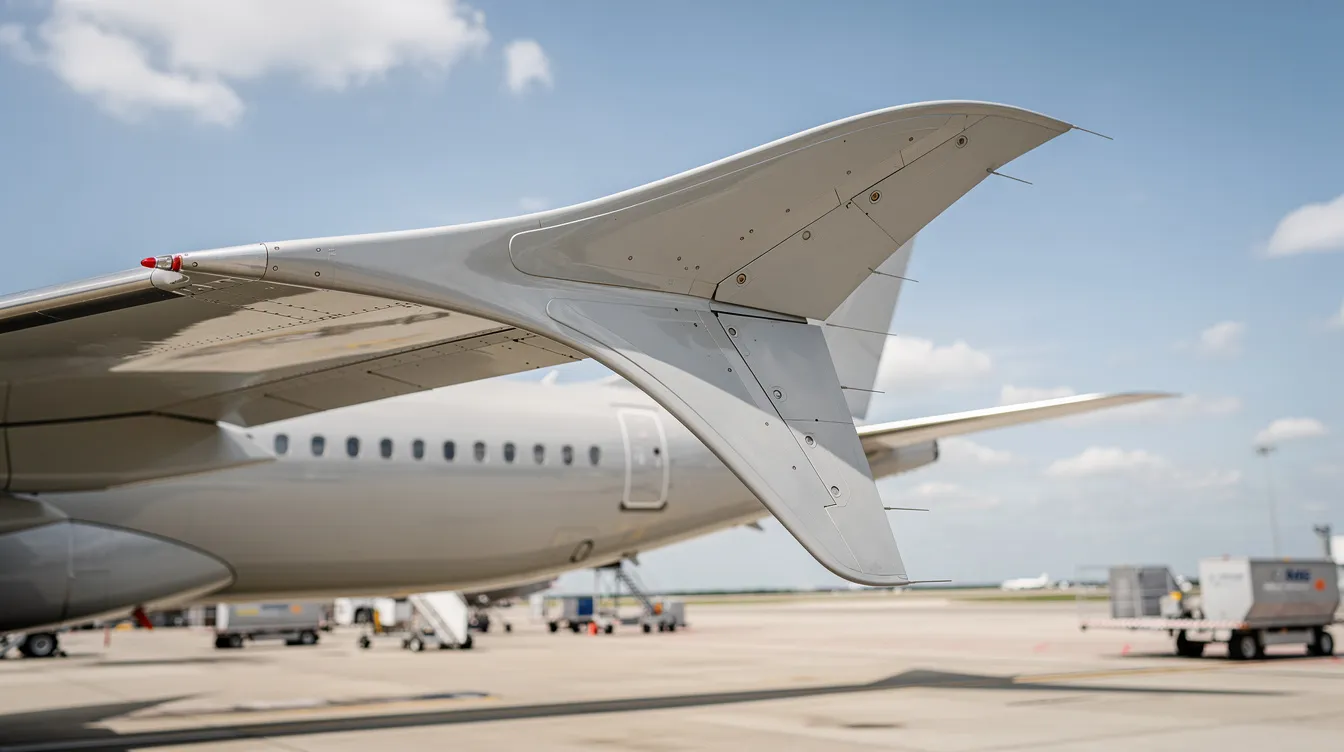
Split scimitar winglets arrived later. The FAA awarded the supplemental type certificate for the 737-900ER variant in August 2014. The split scimitar winglets design includes an upward winglet and a downward ventral strake for improved aerodynamic efficiency, plus a reshaped upper tip. The 737-900 can be retrofitted with split scimitar winglets for increased efficiency, though the modification adds roughly 98.8 kg (218 lbs) of empty weight per aircraft. The Boeing 737-900ER features winglet technology that reduces drag by 5.5% in the split scimitar configuration, compared to a clean wing.
Different Alaska Airlines 737-900ER aircraft may display either style. Travelers can sometimes spot the difference from the gate: the split scimitar has that distinctive lower blade beneath the wingtip. While the basic Boeing airframe is identical, the winglet variant subtly alters performance characteristics and, to a lesser degree, the turbulence feel for passengers seated near the wings.
Aerodynamic Science Behind 737-900 Winglets
How Winglets Reduce Drag
Induced drag is created by the interaction of high-pressure air beneath the wing and low-pressure air above it. At the wingtips, this pressure difference generates swirling vortices; think of them as mini-tornadoes trailing behind the aircraft. These vortices waste energy that the engines must continuously replace with thrust.
Winglets reduce aerodynamic drag by managing airflow around the wingtips. They act like vertical extensions that recapture some of that lost energy, and winglets improve climb performance by increasing the effective aspect ratio of the wing. The result is a longer "virtual wingspan" without requiring wider gate spacing or taxiway modifications. Winglets help improve fuel efficiency in aircraft by lowering induced drag, which translates into less fuel burned at cruise altitude, better climb rates from hot-and-high airports, and a slightly smoother ride at altitude.
Approximate Savings by Configuration
Blended winglets vs. no winglets: 3% to 5% fuel burn reduction
Split scimitar vs. blended: an additional 1.8% to 2% reduction
Total savings vary by route length, altitude, and airline operating profile
Fuel Efficiency and Range: Real-World Impact
Operational Benefits of Winglets
Winglets help airlines operate the Boeing 737-900 and 737-900ER more efficiently on dense routes. United Airlines projected savings of approximately 57,000 gallons of jet fuel per 737-900ER per year after retrofitting with split scimitar winglets, corresponding to roughly 600 tons of CO2 per aircraft annually. Alaska Airlines reported fleet-wide savings of 4.5 million gallons in 2018 alone once all eligible 737s were retrofitted.
Winglets contribute to extended flight range or increased payload capacity for aircraft by lowering fuel burn. The 737-900ER with winglets and auxiliary fuel tanks can reach approximately 3,265 nautical miles, giving airlines more flexibility with how they balance passengers, cargo, and fuel on longer flights. Airlines operating the 737-900 achieve fuel efficiency with 85%+ load factors, which means the per-seat emissions drop further when cabins are full.
Winglets can lead to reduced carbon dioxide emissions per flight due to lower fuel consumption, and they help organizations reduce operational costs associated with fuel consumption. For context, BlackJet takes a different approach to the same sustainability goal: BlackJet ensures carbon-neutral flights for all Jet Card journeys, even though private jets carry fewer passengers per trip. The mechanism differs, but the commitment to lower-impact travel is shared.
Cabin Comfort and Noise: Does a Winglet Change the Ride?
Passenger Experience with Winglets
Winglets are an exterior aerodynamic feature, but they produce subtle effects inside the cabin of a Boeing 737-900. Improved climb performance allows winglet-equipped aircraft to reach cruise altitude faster, spending less time in denser, bumpier air below 25,000 feet. Reduced drag at cruise means engines run at slightly lower thrust settings, which can lower noise by a small margin.
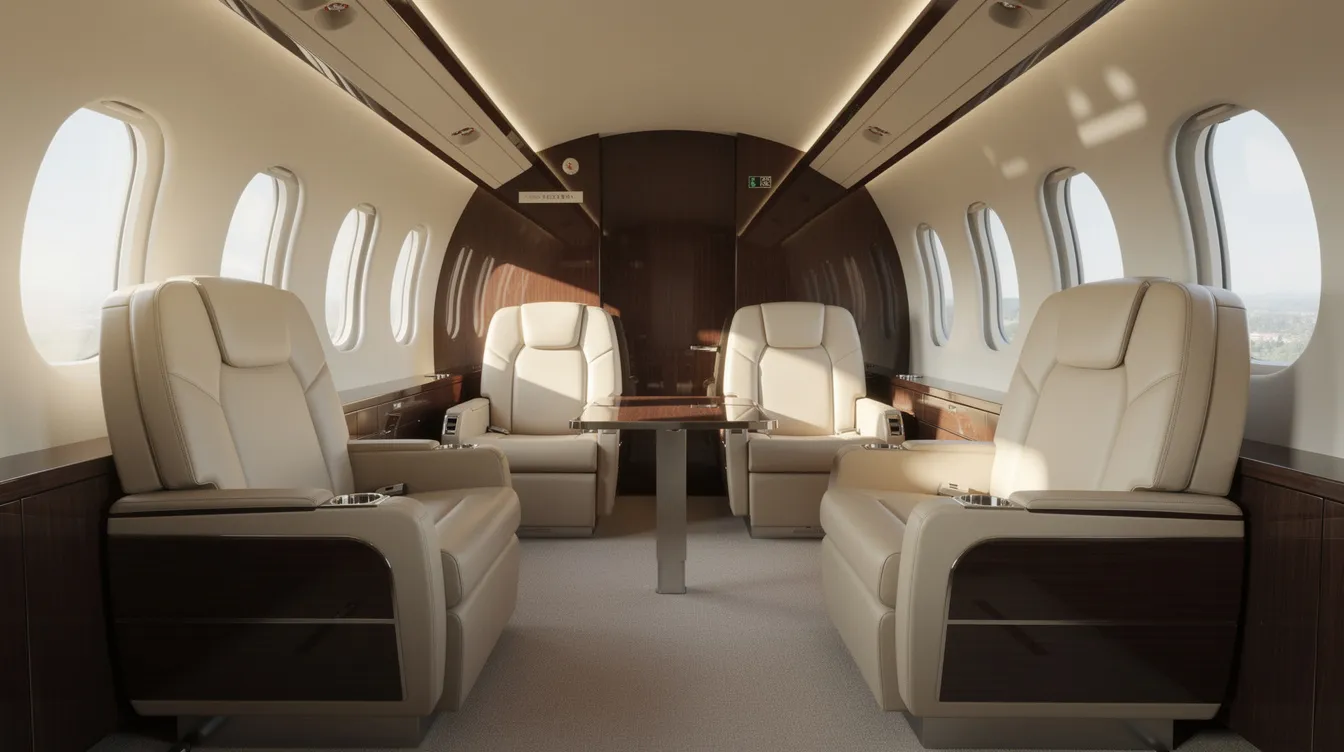
Some passengers report a slightly smoother ride in seats near the wings, though seat location and airline interior choices matter more than the winglet type. Alaska Airlines equips its 737-900 cabins with the Boeing Sky Interior, LED mood lighting, and leather Recaro seats. These upgrades interact with winglet-driven efficiency to improve perceived cabin comfort across first class, Premium Class, and main cabin.
The contrast with private aviation is measurable. A typical BlackJet midsize jet cabin seats 6 to 8 passengers, runs quieter engines relative to cabin volume, and pressurizes the cabin to a lower effective altitude. Where the best first class seat on a 737-900 puts you in a 2-2 layout with 170+ other travelers, a private cabin gives each occupant dedicated room, near-silent conversation-level noise, and no boarding queue, with multiple types of private jets for every traveler to match different trip profiles.
Alaska Airlines Boeing 737-900 and 737-900ER: Winglets and Seat Maps
Alaska Airlines was the launch customer for the Boeing 737-900 and has relied on winglet-equipped 737-900/900ER aircraft for its Seattle hub operations for nearly two decades. The airline finalized installation of split scimitar winglets on all eligible 737 aircraft by 2017.
The current Boeing 737-900 seat map typically shows:
Cabin | Seats | Layout | Pitch | Seat Width |
|---|
First Class | 16 | 2-2 | ~41 in | ~21 in |
Premium Class | 24-42 | 3-3 | ~35 in | ~17 in |
Main Cabin / Economy | ~138 | 3-3 | ~31-32 in | ~17 in |
The Boeing 737-900 typically seats 177 passengers in two classes. It features 178 leather Recaro seats with seatback power outlets, and the aircraft includes larger overhead bins that hold 48% more bags than older bin designs. The first class cabin has 16 seats with a pitch of 41 inches. The Boeing 737-900ER variant can carry up to 220 passengers in a high-density economy class configuration, though Alaska opts for a mixed-class layout.
For travelers choosing the best first class seat, rows 1 through 4 sit forward of the wing. Seats in rows near the overwing exit (rows 16-17) offer extra legroom but limited recline. Those seeking a quieter, more stable ride should sit as close to the wing root as possible, where flexing and turbulence are minimized.
The display of routes these aircraft cover, from Seattle to San Francisco, Phoenix, JFK, and Anchorage, reflects the versatility that winglet-driven range makes possible.
Comparing 737-900 First Class vs Private Jet Access with BlackJet
Alaska Airlines first class on the 737-900/900ER is a premium commercial experience: recliner-style class seats in a 2-2 layout, complimentary food and drink service, a pretty good selection on the menu (fruit, cheese, and a delicious meal option on longer flights), and Wi-Fi. But it is not a private experience. You share the cabin with other customers, wait in security lines at the airport, and board on the airline's schedule.
BlackJet's Jet Card programs offer prepaid access to private jets, with options including 25-hour and 50-hour flight packages, following the same core principles explained in complete guides to jet card pricing and benefits. Members can access multiple cabin types, from light jets to midsize cabins, through 24/7 digital booking tools or even explore how to buy a seat on a private jet for occasional use outside a Jet Card structure.
Consider a concrete scenario: a business executive flying Seattle to Salt Lake City. On a 737-900, the trip involves arriving at Sea-Tac Airport 90 minutes before departure, gate boarding, a two-hour flight, and arrival at a busy terminal. Commercial flights can take approximately 9 hours door-to-door when layovers, connections, or delays are factored in on less direct routes. A BlackJet Jet Card flight on a light jet departs from a private FBO, and private jets can reduce travel time to about 6 hours on comparable missions, especially when travelers leverage the most affordable private jet options that still meet their comfort and schedule needs. The executive boards in 15 minutes, works in a private cabin with no seatmates, and lands at a closer regional airport.
For many high-net-worth travelers and executives, 737-900 first class remains useful for straightforward point-to-point trips with booking. BlackJet complements or replaces those flights on days when schedule control, privacy, or multi-city itineraries matter more.
Safety, Sustainability, and Technology: Winglets vs the Wider Travel Ecosystem
Winglets are one component in a broader safety and sustainability picture for both airlines and private aviation, and they complement the high standards described in analyses of private jet safety and risk.
The Boeing 737NG family has a hull-loss rate of 0.08 per million departures, placing it among the safest aircraft type families in commercial service. Winglets are FAA-certified modifications that pass rigorous structural and flight testing before any airline installs them.
On sustainability, winglets cut fuel burn and emissions at the fleet level. BlackJet ensures carbon-neutral flights through verified offset programs, covering every Jet Card trip regardless of aircraft size. Jet Card programs provide real-time support for travelers alongside these sustainability commitments, echoing the advantages highlighted in guides to the best jet cards for frequent flyers.
On the technology front, airlines use apps for managing 737-900 bookings on a phone or device, while BlackJet provides 24/7 digital booking tools for Jet Card members, covering on-demand scheduling, aircraft selection by cabin class and mission, and live flight tracking, which is especially valuable for travelers researching a 100-hour jet card cost and structure. BlackJet conducts a multi-layer safety review for operator selection, vetting carriers against ARGUS, Wyvern, and IS-BAO standards before any aircraft enters the network, similar to the due diligence discussed in guides to Flexjet jet card pricing and options.
When to Choose a Boeing 737-900 Flight vs Private Jet
Winglet-equipped 737-900s excel on high-density routes with established airline service. Private jets excel in flexibility, privacy, and access to smaller airports.
Stay on the 737-900 when:
You are traveling solo on a well-served city pair (Seattle to San Diego, Delta hub connections)
Budget matters and loyalty mile accumulation is a priority
Your departure and arrival airports are major hubs with nonstop 737 service
Choose a BlackJet private jet when: travelers are also weighing the value of structured programs like a 50-hour jet card and its costs.
Your trip involves same-day stops in multiple cities
Your destination lacks nonstop Boeing 737 service from your departure point
You need confidential cabin space for meetings or sensitive calls
Group travel for 4 to 8 people makes the per-person cost competitive with commercial first class, and larger parties can step up to private jets suitable for 15 passengers when needs expand
Many BlackJet clients still fly commercially, including on Boeing 737 flights, and use Jet Cards as a tool for the trips where time, privacy, or complexity tips the equation, while others occasionally charter 16-seat private jets for larger teams.
Frequently Asked Questions About Boeing 737-900 Winglets
Do winglets make my Boeing 737-900 flight safer?
Winglets are about efficiency and performance, not correcting a safety deficiency. The 737NG family's safety record stands on its own; winglets improve fuel burn and climb capability.
Can I feel any difference in turbulence on a winglet-equipped 737-900?
Any difference is subtle. Ride quality depends far more on weather, flight planning, and your seat location than on whether the aircraft has blended or split scimitar winglets.
Are Alaska Airlines Boeing 737-900 and 737-900ER aircraft all equipped with winglets?
Virtually all active mainline aircraft are equipped, though styles differ. Alaska completed its split scimitar winglet retrofit program by 2017; a few aircraft nearing retirement may still carry blended winglets.
How do winglets on the 737-900 compare with private jet efficiency?
Airliners are efficient per seat at high load factors. Private jets carry fewer passengers but serve different missions. BlackJet offsets emissions on every Jet Card flight, delivering carbon-neutral travel regardless of passenger count.
If I usually fly first class on a Boeing 737, when should I consider BlackJet?
Key triggers include frequent trips with tight schedules, routes requiring connections on commercial airlines, the need for privacy or confidential conversations, or the desire to bypass crowded terminals with private FBO access at your departure gate, especially if you’re curious about the top private jets in the world and how they compare with commercial first class.
Conclusion: Winglets, Comfort, and the Next Level of Air Travel
Boeing 737-900 winglets deliver measurable gains: 3% to 5% lower fuel burn, extended range for Alaska Airlines and other carriers, and operational cost reductions that keep fares competitive on routes out of Seattle and beyond. The seat map, the cabin comfort of Recaro leather seats, and the appreciated detail of larger overhead bins all contribute to a pretty good commercial flying experience.
But those improvements exist within the fixed framework of commercial operations: published timetables, crowded lavatories, coach-class boarding queues, and identical arrival procedures at busy terminals. For travelers who already seek better seats on aircraft like the Boeing 737-900, the next step is access to aircraft that depart on their schedule and land where they need to be, sometimes through established providers whose NetJets jet card costs and benefits set a benchmark for the market.
Explore BlackJet's Jet Card membership for flexible, carbon-neutral private jet access that complements or replaces select Boeing 737 trips, whether you’re flying between U.S. hubs or arranging bespoke private jet charters in Karachi and other international gateways. With 25-hour and 50-hour options, real-time support, and a new standard in safety certification, BlackJet delivers control, privacy, and time savings that no winglet alone can provide, even for large groups that might otherwise consider private jets for up to 50 passengers.


 Sign up with google
 Sign up with Apple