The Boeing 737-900 stands as one of commercial aviation’s most recognizable workhorses—a stretched, high-capacity variant that fills routes across North America and beyond. Yet for discerning travelers, understanding its cabin layout and comfort limitations reveals why many executives increasingly complement their commercial flying with private jet access.
Key Takeaways
The Boeing 737-900 is a popular narrow-body aircraft that represents the longest variant of the Boeing 737 Next Generation (737NG) series. Here’s what you need to know:
The Boeing 737-900 entered commercial service in 2001 after an initial order by Alaska Airlines, which was the launch customer, marking the start of deliveries and fleet integration for this model. It typically seats 177 passengers in a two-class layout and up to 189 in single-class configurations.
Seat maps for the 737 900 vary significantly by airline, with differences in pitch, seat width, cabin layout, and in-seat power directly affecting comfort and productivity on flights.
While the Boeing 737 offers solid operational efficiency for airlines, travelers seeking privacy, flexibility, and productive work environments often compare it to private jet solutions like BlackJet’s Jet Card programs.
The 737-900ER variant is an update to the original 737-900, featuring enhancements such as increased fuel capacity and range, making it a more fuel-efficient, modern successor to the Boeing 757-200 for high-demand domestic and medium-haul routes.
BlackJet provides carbon-neutral private flights with rigorous safety standards and mobile booking, positioned as a strategic upgrade over commercial Boeing travel for time-sensitive journeys, and competing with some of the most expensive private jet options in terms of experience but with more flexible access models.
Overview of the Boeing 737-900
Launch and Development
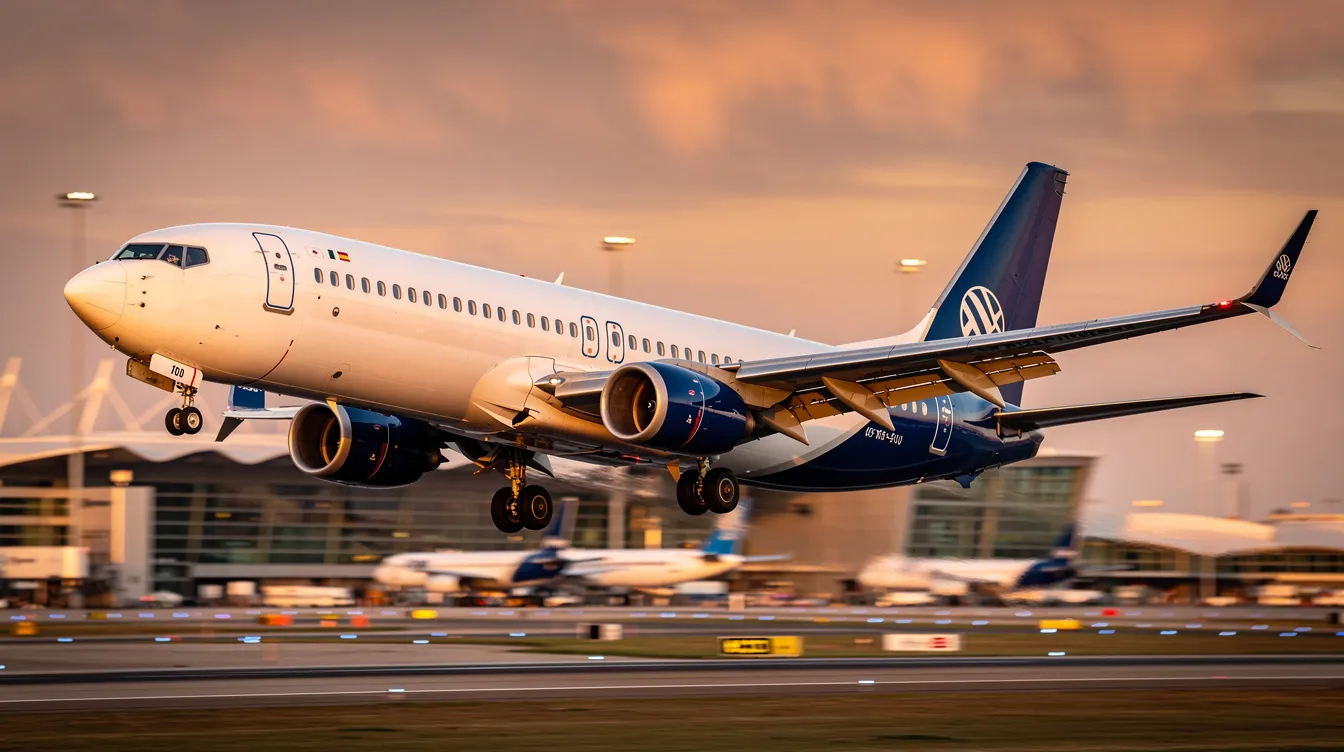
The Boeing 737-900 emerged as the stretched member of the Boeing aircraft family within the 737 Next Generation lineup, building on a design lineage that traces back to the late 1960s. With a length of 138 feet 2 inches (42.11 meters), it holds the distinction of being the longest variant of the 737 Next Generation series.
Alaska Airlines was the launch customer, taking delivery of the first aircraft in April 2001 from Boeing’s Renton, Washington, factory. The type was later enhanced by the 737-900ER, fitted with auxiliary fuel tanks that extended range capabilities for transcontinental service.
Typical seating capacity sits around 177 passengers in a standard two-class layout. The 737-900ER variant can carry up to 220 passengers when configured with additional exit doors, making it adaptable for high-density operations. The airplane can accommodate up to 189 passengers in a single-class configuration.
Over 95% of the parts of the Boeing 737-900 are identical to other 737NG models, allowing for shared maintenance procedures across fleet operations. This commonality made it attractive for airlines already operating the type.
Performance Specifications
Key performance specifications include:
Maximum takeoff weight (MTOW): Approximately 194,700 pounds (88,500 kg), enabling it to carry a significant payload
Range: Over 3,000 nautical miles (5,600 km), allowing for transcontinental service and versatile route deployment
Cruising speed: Mach 0.78 (511 mph) with a maximum speed reaching Mach 0.82, balancing efficiency and timely travel
Engines: CFM56-7B turbofan engines providing enhanced fuel efficiency versus earlier 737 Classic models
The max takeoff weight (MTOW) of the Boeing 737-900 is similar to that of the 737-800, allowing it to carry a significant payload. Design improvements, such as raising the MTOW and fuel capacity, have raised the performance metrics of the 737-900, making it more versatile for airline operations.
The 737-900 series requires higher takeoff and landing speeds and more precise handling to prevent tail strikes compared to shorter variants—a technical consideration that underscores its stretched fuselage design.
Cabin Comfort Features
The 737-900 features advanced winglets, which contribute to aerodynamic improvements and increased fuel efficiency. In the European market, the Boeing 737-900 competes with Airbus models like the A320 series, with airlines in Europe valuing its range, efficiency, and upgraded interior features.
Boeing 737-900 Cabin Layout and Seat Map
Cabin Configurations by Airline
Seat maps for the 737-900 differ significantly by airline. Delta, United, and Alaska Airlines each configure their cabins differently, impacting comfort, privacy, and productivity for premium travelers.
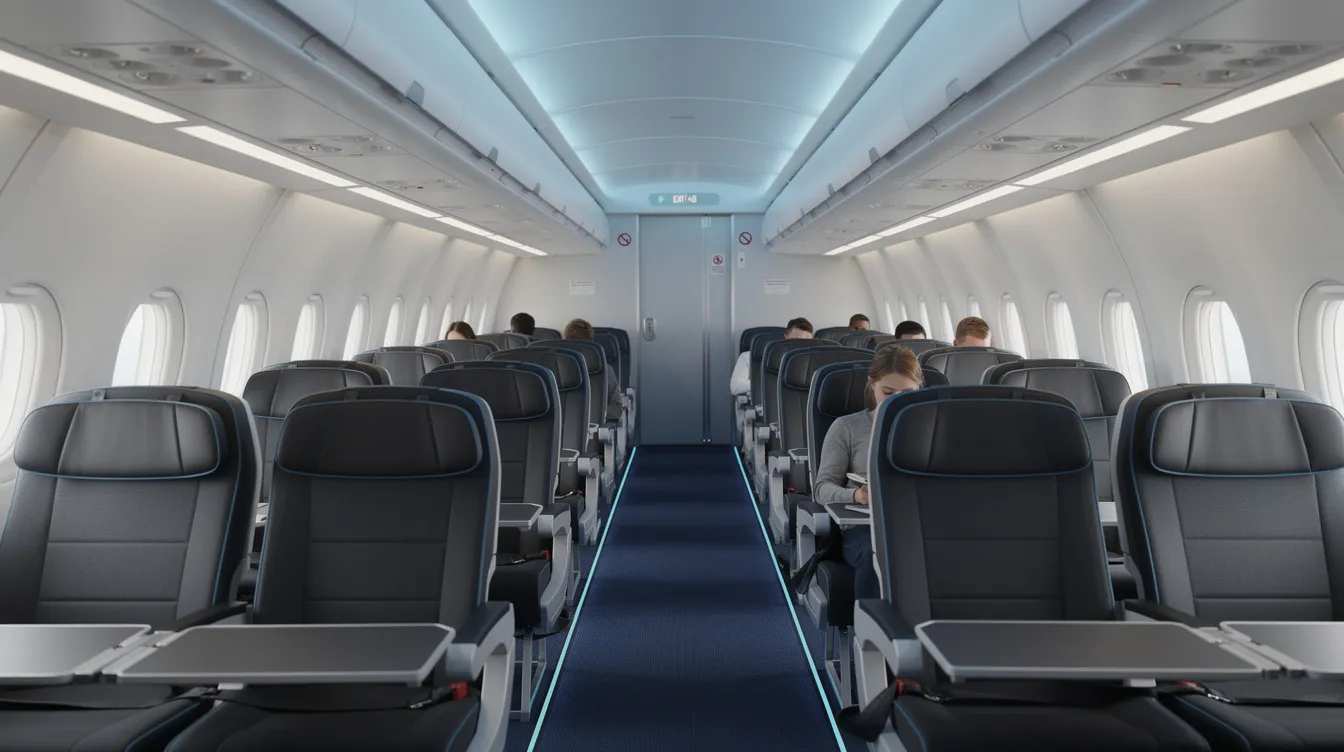
A typical 737-900 seat map displays a forward First or Business Class cabin in a 2-2 layout, followed by Economy or Economy Plus in 3-3 rows, whereas some frequent private fliers instead turn to unlimited private jet flight memberships that decouple their experience from fixed airline cabin layouts. Galleys are positioned at the front and rear, with lavatories distributed throughout—often including a lavatory on the left side near the boarding door and sometimes mid-cabin facilities on selected carriers.
Seat Map Details
Airlines publish 737-900 seat maps online showing:
Pitch (row spacing) measurements, taken from the same point on each seat for consistency
Seat width specifications, measured between the inner sides of the armrests
Recline capabilities
Proximity to exits, galleys, and lavatories
Power outlet availability
Common configurations include Delta’s 180-seat arrangement (20 First Class, 160 Main Cabin) and United’s 178-seat layout with Polaris Business and Economy Plus sections. These details help travelers identify preferred rows versus positions to avoid.
Premium and Extra-Legroom Options
Extra-legroom sections typically appear just behind the premium cabin and at exit rows—favored spots for business travelers seeking additional comfort without upgrading to First Class. Modern 737-900 cabins often feature Boeing Sky Interior with sculpted sidewalls, LED mood lighting, and larger overhead bins capable of holding standard roller bags upright.
Understanding Seat Data and In-Seat Features on the 737-900
Seat Dimensions and Layout
Accurate seat data matters for frequent travelers comparing the Boeing 737 to other aircraft or evaluating whether private jet access might better serve their needs.
Cabin Class | Seat Pitch (inches) | Seat Width (inches) |
|---|
Economy | 30-32 | 17-18.25 |
Extra-Legroom Economy | 34-36 | 17-18.25 |
First/Business | 37-38 | 20-21 |
Seat recline represents the maximum angle from the upright position. Rear-cabin and last-row seats often have limited recline due to lavatories and bulkheads positioned directly behind them.
In-Seat Features and Amenities
The Boeing 737-900 is equipped with features such as seatback power outlets for charging devices, enhancing passenger comfort during flights. Newer or refurbished aircraft include USB ports, universal AC power, adjustable headrests, and either personal IFE screens or streaming-to-device systems with Wi-Fi connectivity.
How to use this data when booking:
Choose rows with higher pitch numbers for added legroom
Avoid seats adjacent to galleys for quieter environments
Verify power outlet availability for your specific aircraft version
Check for limited-recline warnings on the last rows
737-900 Cabin Features Shown on Seat Maps
Modern Boeing 737 seat maps now display more than seat numbers—they provide a comprehensive view of the entire onboard environment.
Detailed 737-900 seat maps mark key cabin features including galleys, standard and accessible lavatories, bassinet positions, emergency exits, and premium service areas. This information helps travelers make informed selections before reaching the airport.
Special seating designations may include:
Preferred seats with enhanced legroom
Bassinet-equipped rows for passengers traveling with infants
Restricted-recline positions near bulkheads or exits
Wheelchair-accessible lavatory proximity
Wi-Fi availability appears on airline aircraft pages, sometimes with qualitative ratings distinguishing basic messaging from streaming-capable connectivity. Delta and United have retrofitted most 737-900 fleets with gate-to-gate connectivity, though speeds vary from 50 to 200+ kbps depending on the provider.
When interpreting a seat map, look for color-coded indicators (green for recommended, yellow for caveats, red for avoid) and icons denoting power access, extra width, or service proximity. This practice streamlines booking decisions and maximizes comfort on your next trip.
Comparing Boeing 737-900 Commercial Travel vs Private Jet Access
The 737-900 excels as a high-capacity, airline-optimized plane serving dense routes efficiently, while some corporations instead explore leasing private jets for flexibility when they need bespoke schedules and branding. For time-sensitive and privacy-focused travelers, however, a private jet offers an individually optimized solution.
Boarding and Schedule Control
A 737-900 operates on fixed airline schedules through crowded terminals. A BlackJet Jet Card member can depart from private terminals (FBOs), typically arriving just 15-20 minutes before takeoff. This eliminates security lines that often add 1-2 hours to total travel time.
Productivity and Privacy
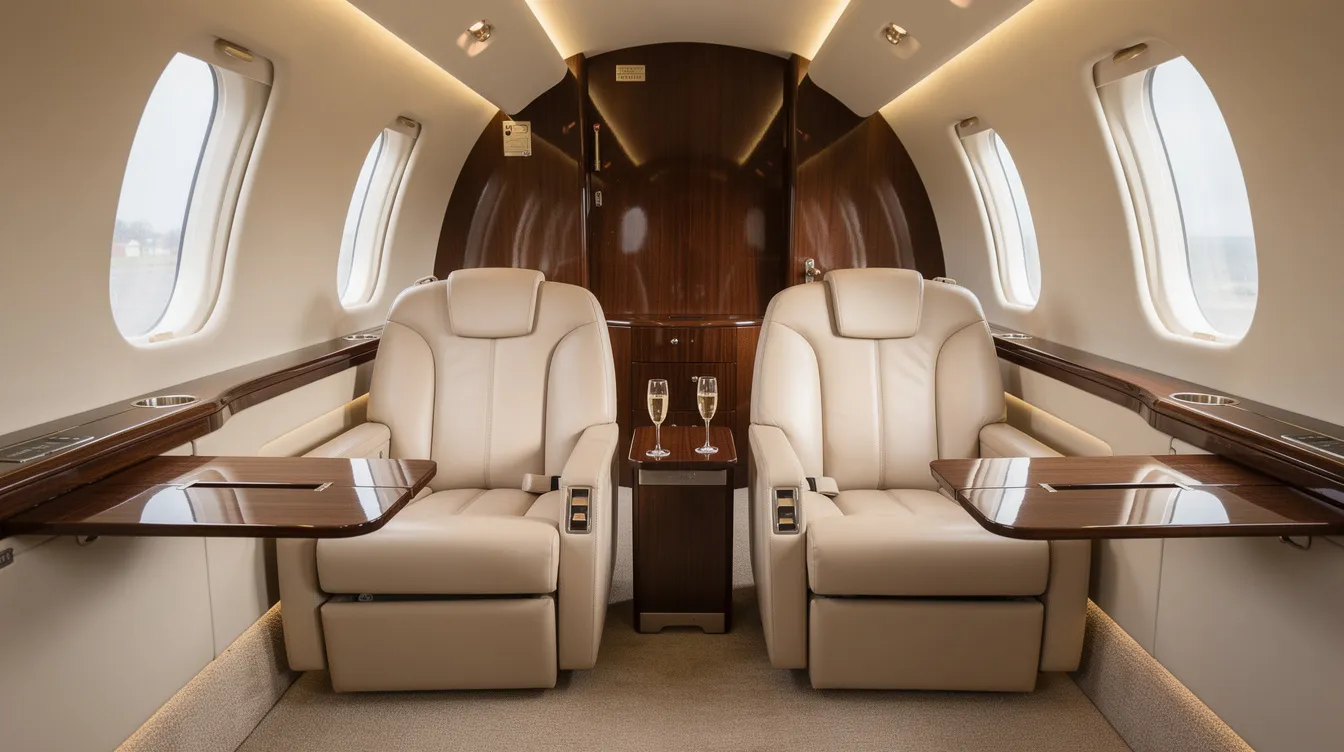
Even the best 737-900 seat map places you among 170+ passengers in close quarters, whereas private jets typically cruise higher and faster, as explained in guides on how high a private jet flies compared to commercial aircraft. A midsize or large-cabin private jet through BlackJet carries 6-12 passengers maximum, providing a confidential workspace, quieter cabins rated at 50-60 dB versus commercial’s 65-75 dB, and secure connectivity.
Time Savings Example
Consider an executive flying a same-day round-trip between Los Angeles and Seattle—both cities served by 737-900 flights. Commercial travel totals approximately 9 hours door-to-door (including airport time). A BlackJet midsize jet condenses this to roughly 6 hours, enabling same-day meetings without overnight stays.
Cost Positioning
While a 737-900 commercial ticket has a lower per-seat price, understanding the private jet price landscape and a detailed guide on how much it costs to rent a private jet shows how private jet access via BlackJet can represent a strategic investment for high-value trips. When factoring in saved hotel nights, productivity gains, and the ability to visit multiple sites in a single day, the effective cost becomes competitive for groups of 4-6 travelers.
Safety, Sustainability, and Technology: 737-900 Airlines vs BlackJet
Both commercial aircraft, like the 737-900, and private jets operate under stringent safety regulations. BlackJet adds curated safety vetting and carbon-neutral commitments beyond standard requirements.
Airline Safety Context
The 737NG family maintains a hull-loss rate of approximately 0.08 per million departures—significantly lower than earlier 737 generations. Large airlines follow FAA and EASA oversight with comprehensive maintenance programs and manufacturer inspection directives. There is a critical link between the integrity of structural components and the effectiveness of maintenance practices, which directly impacts overall aircraft safety.
BlackJet Operator Selection
BlackJet selects operators through a proprietary, multi-layer safety review referencing industry ratings from ARGUS, Wyvern, and IS-BAO certifications, aligning with industry analysis on how safe private jets are. This approach exceeds minimum regulatory compliance, providing Jet Card members with confidence that every flight meets enhanced standards.
Sustainability Approach
Airlines operating the 737-900 achieve fuel efficiency through high load factors (often 85%+) and winglet technology that reduces drag by approximately 5.5%, while travelers considering smaller missions may instead evaluate the best small private aircraft that balance efficiency and flexibility. BlackJet ensures each Jet Card flight is carbon neutral through verified offset programs—at no additional cost to members.
Technology Comparison
Feature | Commercial 737-900 | BlackJet Jet Card |
|---|
Booking | Airline apps, fixed schedules | 24/7 digital platform, flexible timing |
Support | Call centers, queue-based | Real-time human concierge |
Itinerary Changes | Fees apply, limited options | Built-in flexibility |
Connectivity | Variable Wi-Fi quality | Consistent high-speed options |
How BlackJet Jet Cards Complement or Replace 737-900 Travel
BlackJet Jet Cards offer a flexible alternative for travelers who normally fly premium cabins on 737-900 routes but seek greater control and consistency over their journeys, much like travelers evaluating a 50-hour jet card cost guide to lock in predictable private flying budgets.
The core model provides prepaid hourly packages—25-hour or 50-hour blocks, and even 100-hour style commitments—that lock in predictable access and transparent jet card pricing across multiple aircraft categories, similar in structure to a detailed 100-hour jet card cost breakdown. Options range from light jets for regional hops to large-cabin jets suitable for transcontinental and select international flights.
Members can strategically mix usage:
Use commercial Boeing 737 flights for straightforward point-to-point economy trips, while weighing whether chartering a private jet is worth it for tighter schedules or higher-stakes travel
Reserve BlackJet private jets for tight schedules, multi-city tours, or trips requiring discretion, leveraging options for buying a seat on a private jet when full-aircraft charter isn’t necessary
Combine approaches based on the specific demands of each week
Illustrative Scenario
A family typically flying a 737-900 to a leisure destination in 3-3 Economy rows might instead book a midsize jet through BlackJet or explore budget-friendly private aircraft options for a holiday week, applying strategies for flying private more cheaply without sacrificing comfort. They fly direct to a regional airport closer to their villa, board without crowds, and transport baggage and pets privately—an experience impossible to replicate on commercial flights.
For travelers accustomed to navigating 737-900 seat maps and premium cabins, exploring how a BlackJet Jet Card and other top jet card programs for frequent flyers could reframe a portion of annual flying from scheduled airline travel to tailored, carbon-neutral private aviation represents a meaningful upgrade in how you experience every trip.

FAQ
These questions address common inquiries about the Boeing 737-900 and how it compares to private jet solutions like BlackJet.
Is the Boeing 737-900 a comfortable aircraft for business travel?
Comfort on the 737-900 depends heavily on seat selection, cabin class, and airline configuration, and some travelers instead compare these cabins to the largest private jets available when prioritizing space and luxury. First and Business Class cabins with 37-38 inch pitch and 20+ inch seat width prove suitable for shorter domestic trips under 3-4 hours. Savvy travelers use detailed 737-900 seat maps to identify rows with enhanced pitch, power outlets, and quieter positions away from galleys and lavatories. For longer sectors or trips requiring confidential calls, many executives transition from 737-900 premium cabins to long-range private jets through services like BlackJet for greater privacy and schedule control.
How can I read a 737-900 seat map to find the best seat?
Look for exit rows offering additional legroom, bulkhead positions with fewer neighbors in front, and color-coded recommendations on third-party tools that distinguish “good” from “avoid” seats, much as you would when evaluating the best private jets in the world for cabin comfort and layout. Steer clear of seats directly in front of lavatories or galleys—these places experience higher noise and foot traffic throughout the flight. Check for limited-recline icons on the last rows or exit rows with restrictions. Frequent travelers benefit from maintaining a personal shortlist of preferred rows on each airline’s 737-900 configuration.
What routes are commonly flown by the Boeing 737-900?
In North America, the 737-900 and 737-900ER serve dense domestic routes including West Coast-East Coast connections, high-demand regional city pairs, and medium-haul international flights to Canada, Mexico, and the Caribbean, whereas large-group travelers may instead consider private jets for around 20 passengers to combine flexibility with similar capacity. Airlines deploy the type where passenger demand supports its 177-189 seat capacity, but widebody aircraft would be excessive. This makes it a staple on business-heavy routes, even as some travelers migrate certain trips to specific types of private jets for different missions when they need added privacy or schedule control. Private jets through BlackJet can route into smaller regional airports not served by 737-900 schedules, often landing closer to a client’s end destination, and can scale up to private jets configured for about 30 passengers when group size demands more capacity.
When does it make sense to choose a private jet instead of a 737-900 flight?
Private jets become strategically superior for multi-city days with tight timing, last-minute schedule changes, destinations without direct Boeing 737 service, or situations requiring discretion, such as board meetings or sensitive negotiations, especially when chartering large private jets for up to 50 passengers to keep teams together. For travelers already purchasing last-minute premium tickets on 737-900 routes, comparing options such as NetJets jet card costs shows how a BlackJet Jet Card can be cost-competitive when factoring in the total value of saved time, eliminated hotel stays, and productivity gains. Consider mixing both options—maintaining some 737-900 airline travel while shifting high-stakes trips to BlackJet’s carbon-neutral private fleet.
Does BlackJet operate Boeing 737 aircraft, or only smaller private jets?
BlackJet focuses on curated private jet access across light, midsize, super-midsize, and large-cabin business jets rather than operating standard airline-configured Boeing aircraft like the 737-900, positioning itself alongside other leading private jet companies while emphasizing tech-enabled access and carbon-neutral operations. For very large groups requiring airline-style seating, BlackJet can, in some cases, arrange charter of larger aircraft through approved operators, including private jet options for about 15 passengers, but its core Jet Card experience centers on business aviation cabin classes. Whatever the aircraft type, BlackJet maintains consistent standards around safety audits, carbon-neutral operations, and 24/7 tech-enabled support for customers, even when advising clients on the most affordable private jet options or broader affordable private plane choices to match specific route and budget profiles.
Elevate your travel on your terms. With BlackJet, private flight becomes accessible through Jet Card programs featuring rigorous safety certification, carbon-neutral performance, and flexibility that scheduled airlines simply cannot match, whether you are exploring 10-million-dollar private jet options or simply seeking smarter access models. Discover how refined travel becomes your new standard.
Conclusion: Elevate Your Travel Experience Beyond the Boeing 737-900
For discerning travelers, the Boeing 737-900 represents a dependable, efficient commercial aircraft serving many vital routes across North America and beyond. Yet, when time is of the essence and privacy, flexibility, and comfort are paramount, private jet access offers a strategic advantage that commercial service cannot match.
BlackJet transforms the private aviation experience by delivering seamless access to a curated fleet of business jets through flexible Jet Card programs. With rigorous safety standards, carbon-neutral flights, and 24/7 digital booking and concierge support, BlackJet redefines how executives and high-net-worth travelers approach their journeys. Whether complementing your existing Boeing 737-900 travel or replacing select trips with private jet convenience, BlackJet empowers you to elevate every flight on your terms.
Discover how effortless, premier private travel can be by exploring BlackJet’s offerings at blackjet.com. Unlock exclusive access to private aviation that balances luxury, sustainability, and operational excellence—making every trip not just a flight, but a strategic advantage, including innovative private plane rideshare options that lower cost without sacrificing time savings.
Elevate your travel — effortlessly. Join BlackJet’s Jet Card program today and experience private flight with unmatched safety, sustainability, and flexibility, whether you’re evaluating premium private jets for sale in the UK or booking private jet charters in Karachi for your next international trip.


 Sign up with google
 Sign up with Apple