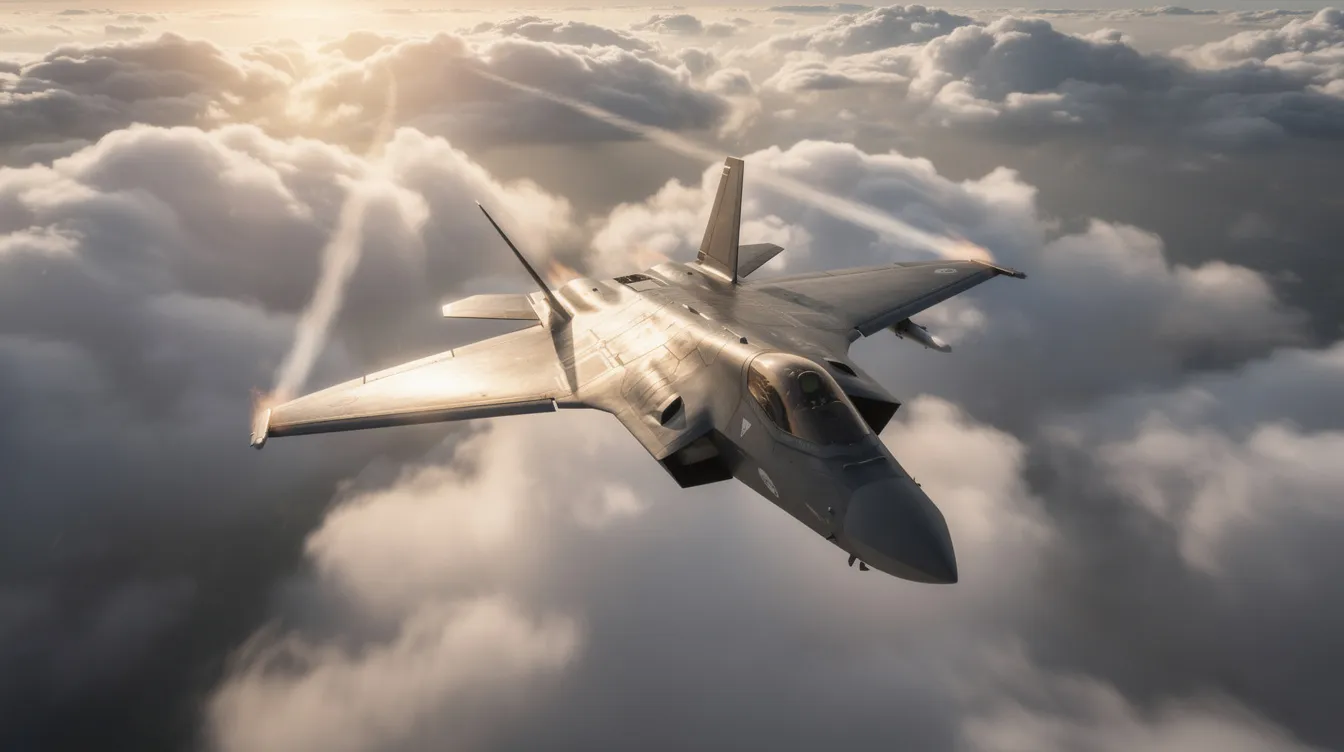
Few images in aerospace carry more weight than the silhouette of a black fighter plane cutting through darkness, radar-invisible, mission-focused, and designed to deliver air superiority on its own terms. From the angular F-117 Nighthawk that redefined modern combat to the F-35 Lightning II that dominates today's skies, these aircraft represent decades of engineering devoted to stealth, precision, and strategic advantage. Their influence extends well beyond defense. Advances in avionics, materials science, and global security doctrine eventually filter into civilian aviation, raising the bar for navigation systems, safety protocols, and operational discipline across the aerospace industry. BlackJet channels that same philosophy into private travel: offering carbon-neutral flights, fighter-jet-inspired safety culture, and technology-driven responsiveness through Jet Card programs built for discerning travelers who treat their time as a strategic asset.
Origins of the Black Fighter Plane Concept
The lineage of the black fighter plane stretches back to World War II, when aircraft used dark paint schemes and doped fabric finishes for night operations. Early radar experiments during the 1940s through the 1960s revealed that color alone was insufficient for evasion-what mattered far more was an airplane's shape and the way its surface interacted with electromagnetic waves. In 1962, Soviet physicist Pyotr Ufimtsev published his foundational paper on the physical theory of diffraction, demonstrating that radar return is governed primarily by edges and flat surfaces rather than an aircraft's overall size. That insight gave engineers at the U.S. Air Force and its contractors the mathematical tools to design fuselage geometries that scatter or absorb radar energy, dramatically reducing an aircraft's radar cross-section. Low-observable design minimizes detection by radar and sensors in modern planes, while Radar-Absorbent Material, commonly called RAM, is applied as a stealth coating to further suppress reflections. Stealth technology reduces an aircraft's radar cross-section, or RCS, making it exponentially harder for adversaries to track.
The word "black" in this context means more than color. Black projects refer to classified research and development programs in aerospace-secret budgets, hidden test facilities, and aircraft whose very existence was denied for years. Yet the heritage of Black aviators in military flight predates stealth entirely. The Tuskegee Airmen were the first African American military pilots in the U.S., training at the segregated Tuskegee Army Air Field in Alabama before flying combat missions in World War II. Black pilots used the Curtiss P-40 Warhawk in combat during WWII, and the Tuskegee Airmen later flew the P-51 Mustang for long-range bomber escort duty across Europe. Jesse Brown was the first Black aviator in U.S. Navy history, further expanding the legacy of courage and excellence in military flight. These pioneering aviators proved that capability, discipline, and precision-the same values stealth programs would later enshrine in technology-define what it means to command the skies.
The innovations born from stealth research and survivability engineering now form the technological backdrop for today's advanced, safety-focused private jets, where clients expect system redundancy, precision navigation, and the kind of operational rigor once reserved for defense aviation.
Have Blue, Senior Trend, and the Birth of the F-117 Nighthawk
In the mid-1970s, Lockheed's Skunk Works-the legendary advanced development division near an air force plant in Burbank, California-built two experimental prototypes under the classified Have Blue program. These small, faceted aircraft were designed not for speed or maneuverability but for one purpose: defeating radar. The F-117's faceted shape was due to 1970s-era computer limitations, which could only calculate radar reflections off flat panels rather than curved surfaces. The first flight of Have Blue took place on December 1, 1977, validating the concept that angular geometry could dramatically reduce radar detection. Both prototypes eventually crashed due to mechanical failures, but the data confirmed that a production-ready stealth attack aircraft was feasible.
Based on those results, the Air Force launched the Senior Trend program-a full-scale development effort led by Ben Rich at Skunk Works. The first pre-production F-117 completed its first flight on June 18, 1981, and production began in 1982 at a secure Air Force plant facility. The F-117 reached initial operating capability in 1983, with sequential deliveries continuing through 1990 for a total of 64 airframes. Pilots trained and operated from the Tonopah Test Range in Nevada, northwest of Las Vegas, under extreme secrecy; the Air Force did not officially acknowledge the aircraft's existence until November 1988.
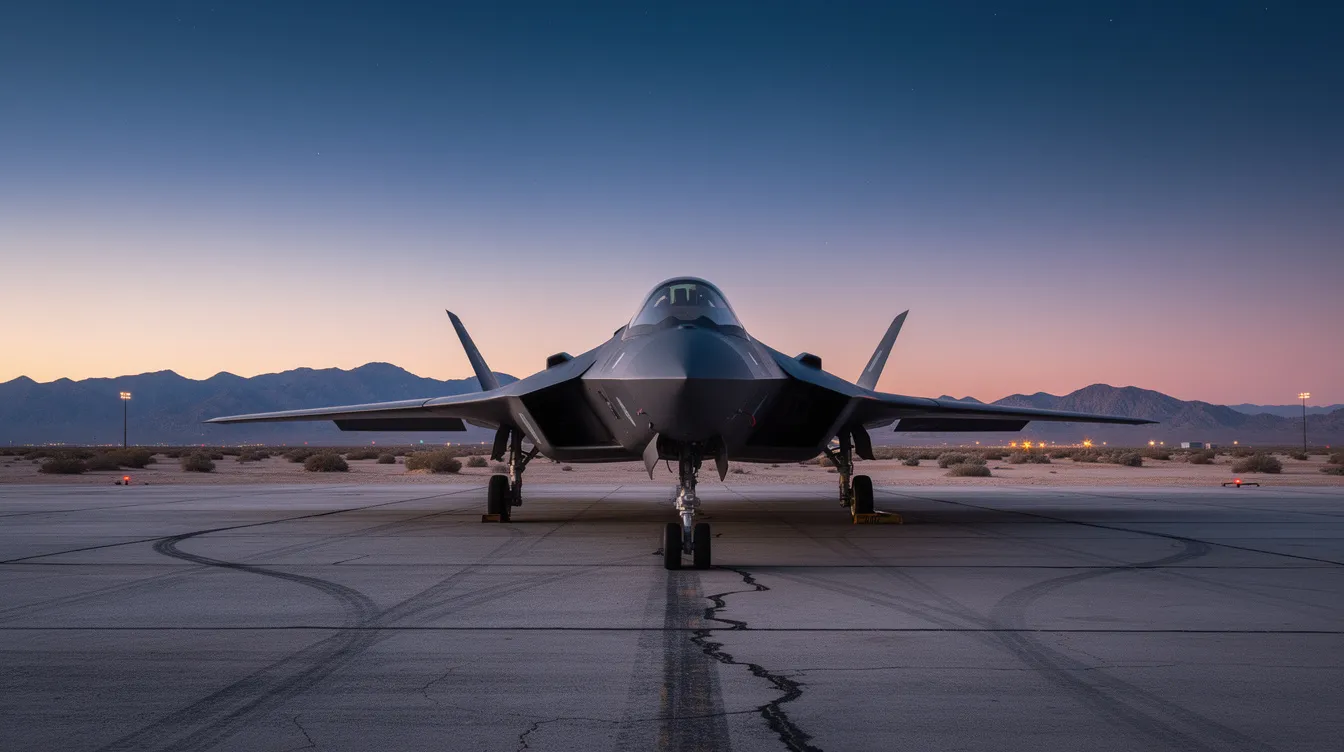
The F-117 was designed to minimize infrared signature and featured internal weapon bays that preserve radar-deflecting profiles, preventing external weapons from disrupting its carefully shaped fuselage. With an RCS around 0.001 m², the Nighthawk's IR signature and radar footprint were vanishingly small. Its matte black finish, sharp angles, inward-canted vertical stabilizers, and fly-by-wire controls made it the archetypal black fighter plane, though it was technically classified as an attack aircraft. RAM coatings across its surface further absorbed incoming radar energy. The aircraft's secretive Nevada operations, hidden from the world for years, parallel the kind of discreet, precision-driven travel that BlackJet clients rely on: quiet, point-to-point access for high-stakes business needs.
Operational History: Black Jets in Combat and Global Security
Stealth aircraft fundamentally changed air force doctrine. Instead of requiring massive fighter sweeps to clear defended airspace before bombers could operate, commanders could now send "black" planes deep into enemy territory to deliver direct hits on high-value targets with minimal exposure. Stealth technology complicates an adversary's ability to target aircraft, shifting the balance of any air campaign before the first conventional sortie launches.
The F-117 was first used in combat during the 1989 invasion of Panama, striking the Rio Hato airfield during Operation Just Cause. Its defining moment came during the 1991 Gulf War. F-117s flew 1,300 sorties during Operation Desert Storm and dropped 2,077 bombs against some of the most heavily defended targets in the Middle East, including critical command-and-control nodes in Baghdad. Despite representing a small fraction of coalition planes, the Nighthawk delivered a disproportionate share of precision strikes, proving that a single airplane with low observability could accomplish what dozens of other aircraft could not. Pilots operating from Holloman AFB and forward bases executed missions with remarkable consistency, accumulating over 6,905 flight hours in combat.
In 1999, during Operation Allied Force over Yugoslavia, one F-117 was shot down on March 27, revealing that even stealth does not guarantee invulnerability against evolving surface-to-air missile systems and layered defense networks. The loss reminded defense planners that air dominance requires continuous adaptation. F-117s continued flying combat missions in Iraq and Afghanistan through the early 2000s before the last F-117s were retired in 2008 after a phased decommissioning. Even post-retirement, some airframes apparently remain flight-worthy, used for limited aggressor training and research roles into the 2030s, as noted by coverage in Space Forces Magazine and other aerospace publications.
These missions shaped the development of modern multirole fighters like the F-35, which integrate stealth with real-time data-sharing to maintain air superiority across contested environments. The parallel to private aviation is instructive: just as air forces coordinate complex stealth operations across multiple theaters, BlackJet coordinates complex multi-leg itineraries with real-time support, protecting clients' time and security with the same operational discipline.
The F-35: Air Superiority, Data, and Economic Growth
The Lockheed Martin F-35 Lightning II is a fifth-generation fighter jet operated by the U.S. Air Force, Navy, Marine Corps, and over a dozen allied nations. The F-35 Lightning II is a modern military fighter prioritized for stealth, combining low observability with capabilities that span air, land, sea, space, and cyber operations. As a connected fighter aircraft, it functions as both sensor and relay, gathering intelligence from its advanced digital avionics suite, fusing radar, infrared, and electro-optical data into a single battlespace picture, then distributing that information across joint forces via secure datalinks.
The F-35's role as "quarterback of the skies" mirrors a principle BlackJet applies in private aviation: centralized, real-time data coordination. Just as the fighter shares sensor fusion data to give allies a decisive advantage, BlackJet uses digital platforms and operations centers to orchestrate seamless travel for its members.
From an economic perspective, F-35 production and sustainment drive significant economic growth through global partnerships. Over 1,325 aircraft have been built as of early 2026, with projections exceeding 3,100 across partner nations by 2035. International supply chains spanning aerospace, electronics, composites, and software generate jobs and technology transfer worldwide, though development costs have been substantial and closely tracked. While fighter jets operate in contested airspace to protect global security, BlackJet's fleet operates under strict civilian safety certification, yet benefits from the same advances in navigation, avionics, and situational awareness that make the F-35 such a powerful force in modern defense.
From Combat Cockpit to Private Cabin: How BlackJet Adapts Military Innovation
A black fighter plane executing a night strike mission and a BlackJet aircraft carrying an executive across time zones serve vastly different purposes, but both demand uncompromising precision, reliability, and readiness. The cockpit discipline that keeps a commander and crew alive in combat translates directly into the operational standards that keep private travelers safe and on schedule.
BlackJet integrates several practices drawn from military aviation. Advanced avionics and navigation systems-GPS-aided inertial navigation, terrain awareness, enhanced weather radar-derive from military-certified technologies refined over decades. Pilots are recruited under rigorous experience thresholds: type ratings, recurrent training, night and instrument flight rules proficiency, mirroring the discipline expected of Air Force flight crews. Predictive maintenance and fleet monitoring use real-time engine performance data, structural fatigue analysis, and component wear tracking to preemptively address issues, consistent with military readiness profiles that keep weapons systems mission-capable.
BlackJet's 25+ Hour Jet Card programs function as the civilian equivalent of guaranteed "mission-ready" aircraft. A 25-hour Jet Card or 50-hour Jet Card gives members prepaid, on-demand access to multiple cabin classes-light, midsize, super-midsize, and large-without ownership complexity. Clients deploy these flight hour blocks for time-critical trips: a New York-to-London board meeting, a multi-city European roadshow, or a same-day Washington-to-Chicago shuttle where schedule control and privacy rival the strategic advantages of military air superiority.
BlackJet Jet Cards vs. Owning a Jet vs. On-Demand Charter
Unlike state-owned fighter jets assigned to a specific mission and commander, private travelers must choose their access model carefully. The decision between full ownership, ad-hoc charter, and Jet Cards has significant implications for cost, flexibility, and quality of experience.
BlackJet Jet Cards provide predictable hourly rates and guaranteed availability. Members understand Jet Card cost structures, know what they will pay per flight hour, and can book aircraft in record time through 24/7 mobile platforms and dedicated flight support that mirrors military-style operations centers. A single membership unlocks access to multiple aircraft categories, so a client can select a light jet for a regional hop and a large-cabin airplane for a transatlantic leg without managing separate contracts. This ability to train resources on what matters-arriving prepared, not managing logistics-is exactly what frequent travelers who rely on the best Jet Card programs need.
Full jet ownership offers maximum control but comes with capital-intensive purchase costs, fixed expenses for crew salaries, hangaring, insurance, and maintenance, and the operational burden of managing an asset that depreciates whether it flies or sits, as outlined in a comprehensive private jet price list of ownership and charter options. When mission profiles change, fewer trips one quarter, more the next quarter- owners absorb the cost regardless.
On-demand charter provides flexibility with zero ownership commitment, but pricing fluctuates with season and demand, aircraft quality varies between operators, and availability can drop at peak times, making it essential to understand when chartering a private jet is worth it. For executives accustomed to the certainty of structured operations, the charter's inconsistency creates friction.
BlackJet's Jet Cards represent the smart tactical choice: fighter-jet-like readiness without the operational burden, consistent service without ownership complexity, and the freedom to operate across cabin classes as needs evolve, supported by transparent Jet Card pricing structures.
Access Model | Cost Structure | Flexibility | Availability | Operational Burden |
|---|
Jet Card | Prepaid hourly blocks | High - multiple aircraft | Guaranteed availability | Low - managed by BlackJet |
Full Ownership | High upfront + fixed | High - total control | Dependent on the owner | High - full management responsibility |
On-Demand Charter | Variable pricing | High - no commitment | Variable - peak demand issues | Medium - booking and logistics required |
Safety and Certification: Civilian Discipline at Military Standards
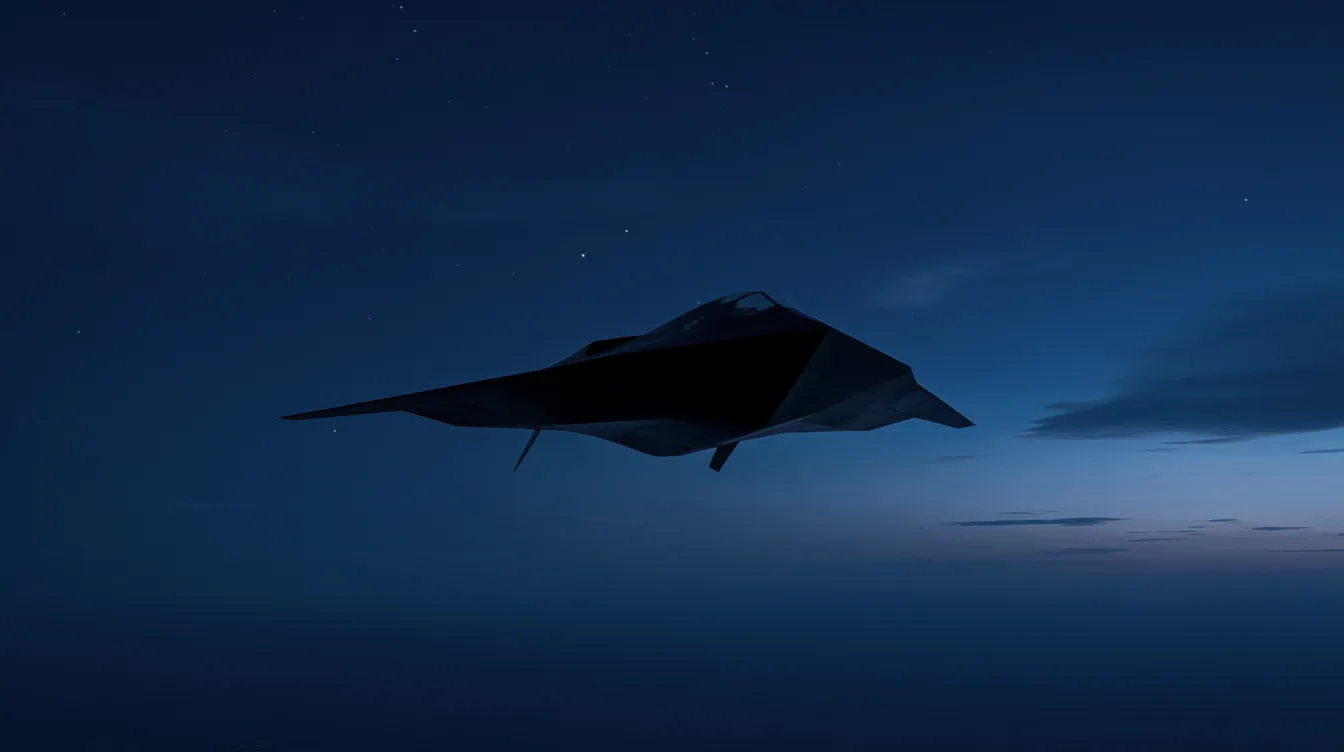
Modern fighter jets and BlackJet's private fleet share one non-negotiable priority: safety above all else. In combat aviation, redundancy is built into every system-hydraulics, flight controls, avionics-and crews train relentlessly to handle failures. BlackJet applies that same philosophy to civilian operations.
BlackJet works exclusively with operators holding top-tier third-party safety ratings, including ARG/US Platinum, Wyvern Wingman, and IS-BAO certification, while also helping cost-conscious travelers explore the cheapest private aircraft and budget-friendly access models. These audits evaluate maintenance schedules, component replacement cycles, pilot qualifications, and safety management systems with the same rigor that defense organizations apply to deploy flight-ready assets. Operators must maintain stringent crew experience thresholds and standardized pre-flight checklists that echo military inspection protocols.
Real-time flight tracking, weather analysis, and contingency planning are managed from a centralized operations center, similar in principle to command-and-control infrastructure for a fighter wing, but focused on passenger comfort and security. If weather deteriorates or airspace restrictions emerge, alternate routing is pushed proactively to clients and their teams. This structure appeals to executives accustomed to risk management, aligning private travel with corporate governance and duty-of-care policies.
Sustainability in the Age of High-Performance Aircraft
Both military and private aviation face growing scrutiny over emissions. Fighter jets consume enormous amounts of fuel on every mission, and business jets draw public attention for their per-passenger carbon footprint. As fleets grow in number and capabilities, the pressure to reduce environmental impact intensifies.
Modern aircraft, military and civilian, improve fuel efficiency through advanced aerodynamics, lighter composite materials, and optimized flight profiles that minimize unnecessary fuel burn. Engineers continue refining these components across both sectors, with heat-resistant alloys and carbon-fiber structures reducing airframe weight without sacrificing strength.
BlackJet's commitment to carbon-neutral flights means automatic carbon offsetting for every trip at no extra cost to members, even for those exploring the cheapest private jet options and accessible charter models. Emissions are calculated per flight based on aircraft type, distance, fuel burn, and weight, then balanced through verified offset projects-reforestation, renewable energy, and carbon capture-certified by organizations like Gold Standard and Verra. Clients can also request sustainable aviation fuel where available, aligning personal travel with ESG and corporate responsibility goals.
The result: the prestige of a "black jet" experience-speed, discretion, control, paired with active environmental stewardship. In a world where accountability matters, BlackJet ensures that flying private does not mean ignoring the future.
Technology & Digital Command: From Combat Networks to Booking Apps
Fighter jets like the F-35 depend on integrated networks that share data instantly across air, land, and sea units. Sensor fusion centralizes inputs from radar, infrared, and electro-optical systems into a common operational picture, giving every pilot in the formation real-time awareness of threats and opportunities across the battlespace.
BlackJet applies the same philosophy of connectivity to private aviation. Mobile booking platforms allow members to schedule flights, choose aircraft categories, buy a seat on a private jet, and manage itineraries in minutes. Real-time operational updates-covering delays, weather shifts, and airport restrictions-are pushed directly to clients and their teams, enabling faster decision-making. Integration with concierge services, ground transport, and corporate travel tools creates a seamless experience from departure to destination.
This "command center in your pocket" approach gives travelers the same information advantage that networked fighter squadrons rely on: the ability to adapt plans instantly based on live conditions, without waiting for callbacks or navigating fragmented systems. For BlackJet members, that means fewer surprises, tighter schedules, and complete control over every leg of the journey.
Use Cases: Turning Air Superiority into Executive Advantage
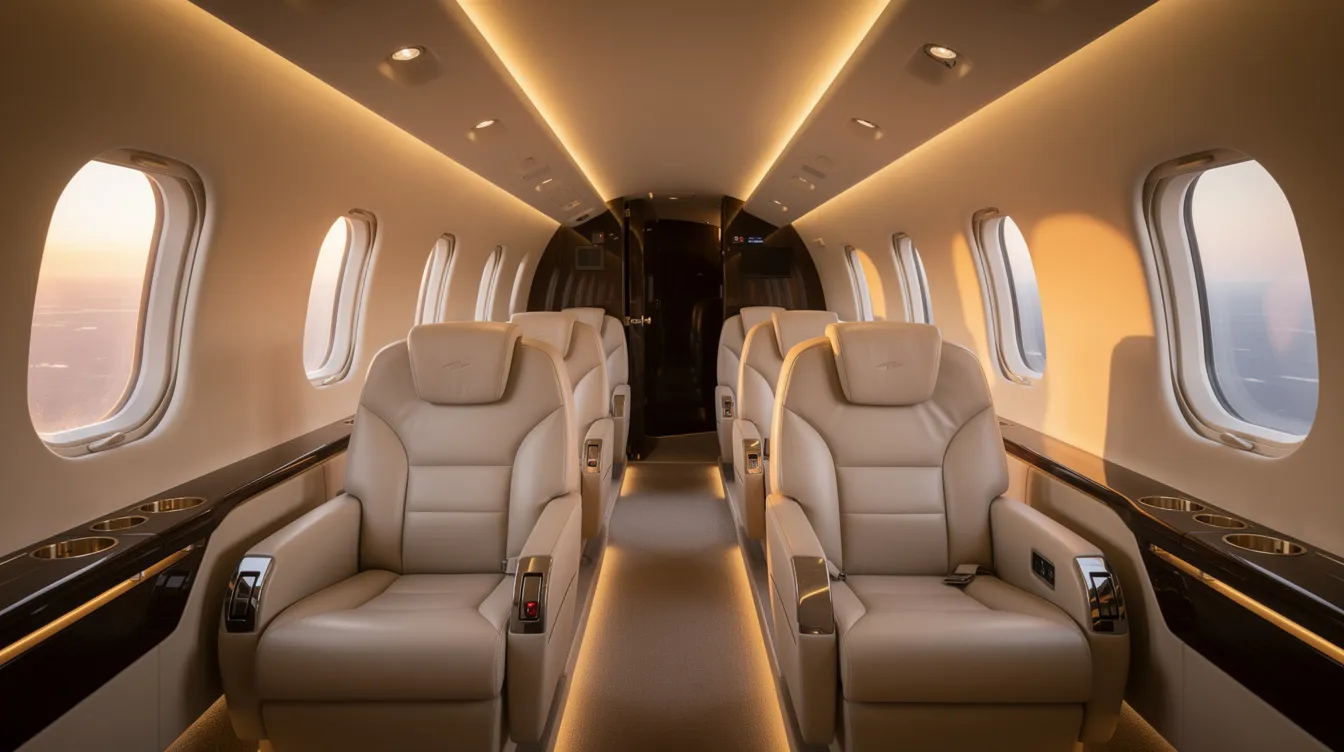
While an air force seeks air superiority, BlackJet clients seek time superiority-arriving exactly where they need to be, precisely when they need to be there.
Consider a CEO with a 25-hour Jet Card who needs to attend investor meetings in New York, a regulatory briefing in Washington, D.C., and a board dinner in Chicago, all in a single day. Commercial options would require overnight stays, layovers, and hours lost at terminals. With BlackJet, the executive departs each city on her schedule, lands at private terminals minutes from her meetings, and returns home the same evening. Every flight hour is accounted for, every transition seamless.
A global security consultant faces a different challenge: summits in London, Riyadh, and Abu Dhabi over three days. BlackJet's operations team plans the multi-leg itinerary across the Middle East, arranging large-cabin private jets suitable for groups of up to 50 passengers for the longer overwater segments and midsize jets for regional hops. Overflight permissions, airport slots, and ground logistics are coordinated around the clock, much like a deployment plan, but focused on getting one person to three critical meetings without a single wasted hour.
A family of high-net-worth travelers uses a 100-hour-style Jet Card strategy compared against a 50-hour option for a summer itinerary across Europe. BlackJet optimizes routing to minimize ground transfers, selects super-midsize aircraft for passenger comfort, and schedules departures to avoid high-traffic hubs. The per-hour rate, locked in at purchase, provides cost predictability that an ad-hoc charter cannot match. The family travels at their pace, on their terms.
In each scenario, the principles are the same: mission planning, precision timing, and operational readiness, applied not to war but to life at the highest level, with savvy travelers even planning around Jet Card tax deduction strategies.
FAQ: Black Fighter Planes and BlackJet Private Aviation
What defines a "black fighter plane"?
A black fighter plane is an aircraft engineered for stealth-low observability to radar, infrared, and visual detection. This involves specialized fuselage shaping, radar-absorbent coatings, and internal weapons bays. The "black" label also references classified black budget programs under which many of these aircraft were developed in secrecy.
How did programs like Have Blue and Senior Trend influence modern aviation?
Have Blue validated faceted stealth geometry in 1977, proving that angular shapes could dramatically reduce radar cross-section. Senior Trend turned that research into the operational F-117, establishing design principles, materials, and flight-test protocols still central to fifth-generation fighters and influential in civil aviation standards for navigation and safety.
Are any military aircraft available for private use?
No. Military stealth aircraft like the F-117 and F-35 are state property under strict government control. Private jets are certified under civilian authorities such as the FAA and EASA, built for safety and comfort rather than combat survivability. The two categories are fundamentally different in certification, purpose, and operation.
How does BlackJet ensure safety compared to commercial airlines?
BlackJet partners exclusively with operators holding top-tier safety certifications, enforces strict pilot qualification thresholds, and maintains real-time flight oversight from a centralized operations center. Third-party audits from organizations like ARG/US and Wyvern provide independent verification that standards meet or exceed commercial benchmarks.
What is a Jet Card and how does it work?
A Jet Card is a prepaid block of flying hours, typically 25 or 50 hours, that guarantees access to private aircraft across multiple cabin classes at fixed hourly rates. Members book via mobile or dedicated support, with 24/7 availability and consistent service, without the capital commitment of ownership.
How does BlackJet keep flights carbon neutral?
Every BlackJet flight includes automatic carbon offsetting at no additional cost. Emissions are measured per trip based on aircraft type, distance, and fuel burn, then balanced through verified offset projects in reforestation, renewable energy, and carbon capture.
Is private jet travel only for ultra-high-net-worth individuals?
While the cost is high, Jet Cards make private aviation accessible to frequent travelers who value time over expense. When factoring in hours saved from commercial delays, overnight stays, and security queues, the economics shift, particularly for executives and consultants who fly multiple segments per year and treat travel as an investment in productivity.
Conclusion: Command the Skies on Your Terms with BlackJet
From the faceted silhouette of the F-117 Nighthawk to the sensor-fused cockpit of the F-35 Lightning II, black fighter planes have reshaped global security through stealth, data, and air dominance over the span of decades, much as leading providers like NetJets and their Jet Card programs have reshaped expectations in private aviation. Those same principles-precision, technological superiority, safety, discretion-now define what sophisticated travelers expect from private aviation.
BlackJet delivers that legacy: Jet Card access to a curated fleet across cabin sizes, including aircraft comparable to the top private jets in the world, safety protocols rooted in military-grade rigor, carbon-neutral operations at no extra cost, and technology-enabled control over every leg of the journey. This is not simply a luxury. It is a strategic tool for those who refuse to cede control of their schedule, their security, or their standards.
Explore BlackJet's Jet Card programs and discover how seamless, sustainable private air access becomes your personal form of air superiority. Connect with our team and start flying on your terms.


 Sign up with google
 Sign up with Apple