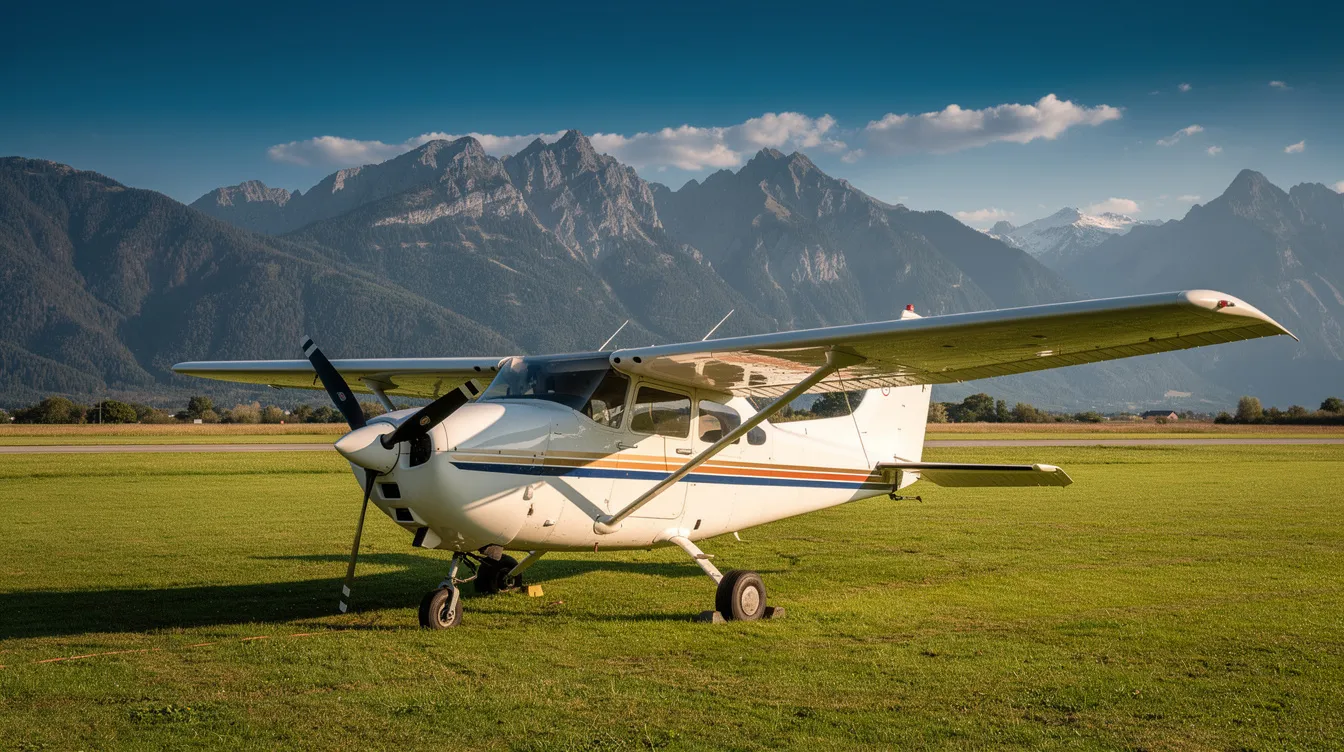
For owner-pilots and aviation buyers, useful load is the number that separates a weekend toy from a serious traveling machine. While brochures highlight seats, speed, and panel photos, it's the pounds you can actually carry-people, bags, and fuel-that define whether a single-engine plane can do the job you need it to do. This guide breaks down the most useful single-engine plane options for 2025–2026, compares their real-world capabilities, and explores when private jet access through a program like BlackJet becomes the smarter strategic move.
Key Takeaways: Best Useful Load Single-Engine Planes (Answer First)
Useful load is the metric that separates aspirational flying from practical mission completion. For serious owners of single-engine piston aircraft, it's the single number that dictates whether you can carry four adults with bags and enough fuel to make the trip, or whether someone gets left behind. Many BlackJet clients began their aviation journey in piston singles before recognizing that as missions grew in distance, frequency, and time sensitivity, a jet card delivered more value per dollar.
Here's what you need to know:
Useful load equals maximum takeoff weight minus empty weight. It includes fuel, passengers, and baggage. A plane with six seats but only 900 lb of useful load after full fuel may realistically carry just two adults and light bags. Seats don't matter if weight math says no.
Top high-useful load single-engine piston airplanes for 2025–2026:
Aircraft | Typical Useful Load | Key Strength |
|---|
Cessna 206 Turbo Stationair HD | 1,500–1,600+ lb | Rugged hauler, short strips, cargo doors |
Piper PA-32 / Cherokee Six / Saratoga | 1,450–1,550 lb | Family + cargo versatility |
Beechcraft Bonanza A36/G36 | 1,200–1,350+ lb | Speed + payload balance |
Cessna 182 Skylane (late models) | 1,000–1,150 lb | Accessible step-up, short-field capable |
Diamond DA50 RG | ~1,200–1,250 lb | Modern technology, diesel efficiency |
By contrast, a light jet charter through BlackJet carries 5–7 passengers with full baggage, no weight-and-fuel tradeoffs, and cruise speeds two to three times faster than any piston single. Weight and balance is the crew's responsibility, not yours.
For private owners flying under 1,000 nm, high-useful-load piston singles remain compelling. But frequent business and luxury travelers consistently gain more strategic value from a BlackJet Jet Card on light and midsize jets, especially when schedule certainty and productivity matter.
What "Useful Load" Really Means on Single-Engine Piston Aircraft
Many first-time buyers fixate on seats and cruise speed when shopping for their first airplane. Experienced operators and charter providers like BlackJet start with a useful load and mission profile, because those numbers reveal what the aircraft can actually do on a given day.
The formula is straightforward: useful load equals maximum takeoff weight minus basic empty weight. That resulting number must cover three competing demands: fuel, passengers, and baggage capacity. Every pound of fuel you carry subtracts from people and bags. Every extra passenger means less fuel or fewer bags.
Consider a concrete example. A late-model Cessna 182T Skylane has a maximum gross weight of roughly 3,100 lb and a basic empty weight of around 1,920–1,970 lb, yielding a useful load of approximately 1,110–1,140 lb. Fill the fuel tanks to their 88-gallon capacity (about 528 lb of fuel), and you're left with roughly 600 lb for people and bags. That's two average adults and modest luggage, not the "four-seat airplane" the brochure promises.
Payload with full fuel vs. typical fuel: Most high-useful load missions don't fly with full tanks. On a 2.5–3-hour leg, pilots often carry 50–60 gallons instead of 88, freeing 150–200 additional pounds for passengers and gear. Understanding this tradeoff is central to planning in general aviation.
On charter jets in BlackJet's programs, weight and balance calculations are handled entirely by a professional crew. Passengers simply specify people and luggage. No spreadsheet, no fuel math, no density altitude anxiety.
Density altitude (hot days at high-elevation airports), short strips, and IFR fuel reserves (typically 45 minutes extra) all reduce how much of the book's useful load is actually available. A plane advertised at 1,200 lb useful load might effectively deliver 950 lb on a 95°F day at 6,000 ft elevation. ADS-B Out compliance has been mandatory in the U.S. since 2020, and the equipment adds a few pounds too small individually, but everything counts when you're flying to the margins.
Best High-Useful-Load Single-Engine Planes in 2025–2026
This is the core ranking of the best useful load single-engine planes in active production or wide availability during 2025–2026, with concrete specs and mission roles rather than marketing language.
Rankings are based on useful load, cabin comfort, range, and suitability for real missions: family trips, short business flights, short strips, and backcountry operations. The list includes rugged haulers like the Cessna 206 Stationair, family workhorses like the Piper Cherokee Six and Saratoga, premium options like the Beechcraft Bonanza G36, and modern technology leaders like the Diamond DA50 RG and Cirrus aircraft.
While these single-engine piston airplanes can rival small turboprops on payload for regional missions, they are fundamentally different from the light and midsize jets BlackJet clients typically fly for multi-city business trips. Each subsection below covers a specific aircraft model with its typical useful load range, mission profile, and honest pros and cons.
Cessna 206 Turbo Stationair HD: "SUV of the Skies"
The Cessna T206H Turbo Stationair HD is the benchmark high-useful load single-engine piston aircraft, commonly regarded as the industry standard for hauling heavy loads. Popular from the early 2000s through 2026 for utility, backcountry, and charter work, it is the airplane other haulers are measured against.
Key specifications:
Useful load: Cessna 206 Stationair has a useful load of over 1,500 lbs, reaching roughly 1,623 lb in utility configuration with stripped interiors.
Seating: Up to 6, with a wide cabin and rear double-doors for easy cargo loading.
Cruise speed: Roughly 145–160 knots, with 700–900 nm range with reserves.
Gear: Rugged fixed gear designed for unpaved runways, floats, and ski operations.
High-payload single-engine planes prioritize raw carrying capacity, and the 206 exemplifies this philosophy. It handles demanding missions on short strips, unpaved runways, and float or ski configurations while carrying gear such as bikes, survey equipment, or camp supplies. The operational simplicity of its fixed gear means fewer moving parts and lower inspection costs compared to retractable-gear singles.
For BlackJet clients accustomed to light jets, the 206 offers near-SUV cargo flexibility but requires accepting lower cruise speeds, more weather sensitivity, and a pilot workload that turbine or jet aircraft eliminate.
Piper PA-32 Cherokee Six / Lance / Saratoga: Family and Cargo Haulers
The Piper PA-32 line-Cherokee Six, Lance, Saratoga-stands as one of the classic high-useful load single-engine planes for family and business flying, produced from the late 1960s through the 2000s and still widely available on the used market.
Key specifications:
Spec | PA-32 Variants |
|---|
Useful load | 1,450–1,550 lb across common variants |
Cabin | 6-place with club seating on many Saratogas |
Cruise speed | 135–155 knots |
Range | 700–900 nm, depending on engine and fuel tanks |
Fuel burn | 15–18 gph |
The Piper Turbo Saratoga II TC became a 2000s favorite among owner-pilots who needed turbocharged, efficient performance and de-ice options for pushing into IFR weather. Its significant payload capacity makes it practical for carrying four adults plus baggage and reasonable fuel on 3-hour legs.
The tradeoff is real: higher fuel burn and maintenance costs vs. the load capability that smaller singles can't match. Routine maintenance expenses vary from $3,000 to $10,000+ annually on these airframes, depending on age and usage.
Many owner-pilots who "outgrow" a PA-32 on range, speed, or duty cycle transition to fractional or jet card programs rather than upgrading to more complex piston twins with two engines, because the complexity, insurance, and training demands of twins often exceed the benefit for missions under 1,000 nm. For frequent travelers comparing options, understanding the best jet cards for frequent flyers and how to maximize your jet card tax deductions helps clarify where a program like BlackJet fits versus outright aircraft ownership.
Beechcraft Bonanza A36 and G36: Speed, Range, and Solid Useful Load
The Bonanza A36 (produced from the 1970s through the 2000s) and its modern G36 successor (current production into 2025–2026) represent the premium tier of single-engine planes, balancing high performance with meaningful useful load in a refined low-wing airframe.
Key specifications:
Older A36 models (1970s–early 1980s): With lighter interiors, early models can reach approximately 1,350–1,400 lb useful load.
New-build G36 (2023–2025): Beechcraft Bonanza G36 has a useful load of 1,200–1,300 lbs due to heavier modern avionics and interior appointments.
Cruise speeds of 175–180+ knots and ranges up to 800–1,100 nm with long-range tanks.
Some 1970s–early 1980s A36 Bonanzas are especially prized for family trips because they can realistically seat 4–5 adults with baggage on 3-hour legs while holding IFR reserves. The Bonanza's legendary durability and strong resale values make it a benchmark high-performance single.
Pilot proficiency matters here. A retractable gear, high-power Bonanza rewards experienced IFR pilots. Owners are commonly advised to build 50+ flying hours VFR plus an instrument rating with 25 hours actual IMC before regularly carrying family in all weather.
Contrast this with private jet travel via BlackJet: similar trip profiles-New York to Chicago, Los Angeles to Aspen-can be executed in about half the flight time on a light or midsize jet, with crew, dispatch, and de-icing handled by professionals rather than the owner-pilot.
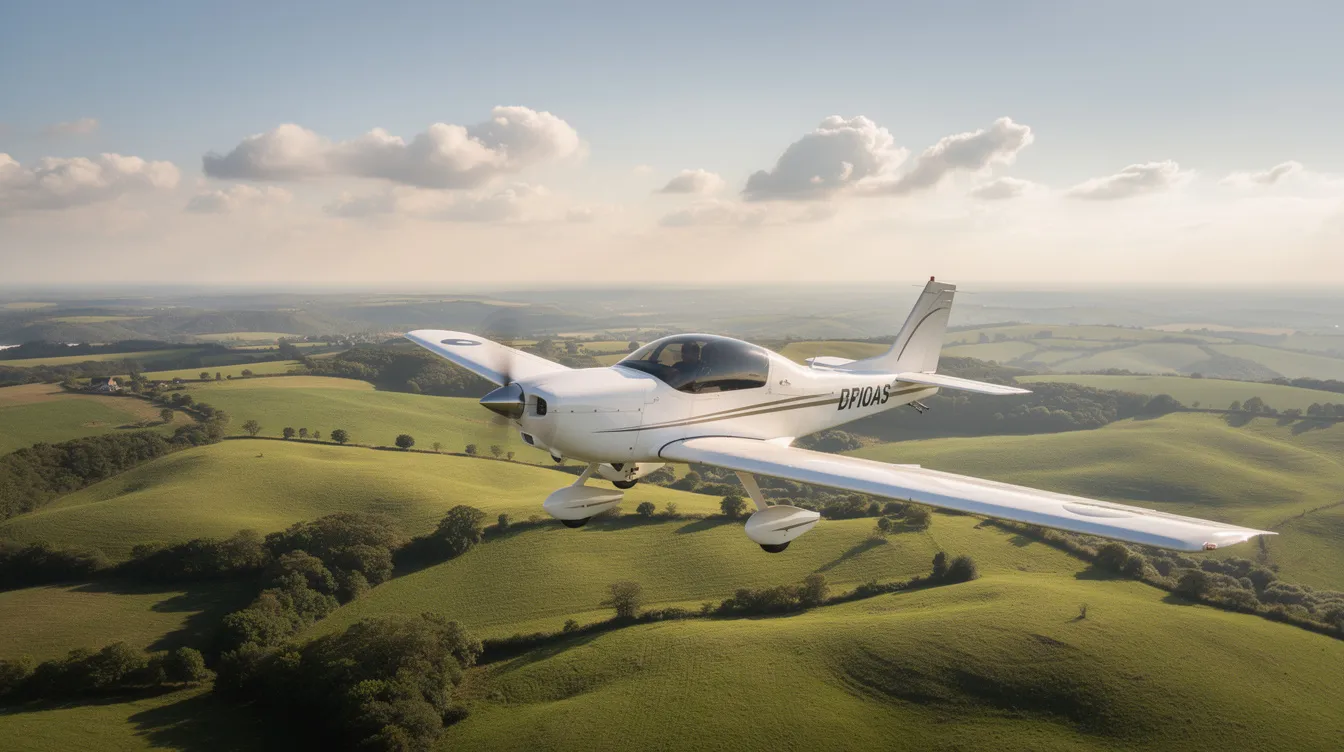
Cessna 182 Skylane: Short Strip Utility with Solid Payload
The Cessna 182 Skylane is the natural "step-up" from the ubiquitous Cessna 172, which has over 44,000 units built since 1956, offering more power, better useful load, and strong short-field capability for pilots transitioning from initial training to serious cross-country flying.
Key specifications:
Late-model 182T (2020–2024) useful load: typically 1,000–1,150 lb.
Cessna 182 Skylane has a maximum gross weight of 3,100 lb (not to be confused with useful load).
Cruise speed about 135–145 knots with ranges around 800–900 nm.
Capable of operating from many short strips that the average jet cannot use.
For many private owners, a 182 comfortably carries 3 adults, baggage, and fuel for a 2.5–3-hour leg, making it a practical "first real traveling airplane" after basic trainers. It offers impressive fuel efficiency compared to larger haulers, burning roughly 10–13 gph depending on power settings, less fuel per hour than any PA-32 or Bonanza.
The 182 is also one of the most common single-engine piston airplanes in training fleets and rental lines, giving pilots an accessible way to experience higher useful load and short-strip performance before committing to ownership.
Scenario comparison: A Cessna 182 trip from Dallas to Santa Fe takes roughly 3.5 hours of flight time, with weather diversions possible and no onboard lavatory. The same route on a BlackJet light jet takes about 1.5 hours, with enhanced comfort, air conditioning, and the ability to work or rest en route-a meaningful difference for time-sensitive personal travel or business.
Diamond DA50 RG and Other Modern High-Useful Load Piston Singles
The Diamond DA50 RG entered the U.S. market in 2024 and has gained meaningful traction by 2025–2026 as one of the most modern high-useful load piston singles available, offering a unique blend of efficiency and advanced technology.
Key attributes:
Useful load approximately 1,200–1,250 lb, depending on options.
Continental diesel engine burning Jet-A fuel, delivering fuel-efficient operation and global fuel availability.
Composite airframe, retractable gear, cruise speed in the 170-knot range.
Glass cockpit with Garmin G1000 NXi, synthetic vision, and advanced autopilots with envelope protection that prevent stalls and unusual attitudes.
Many single-engine planes feature advanced safety technologies, and the DA50 RG exemplifies this trend with cutting-edge features, including touchscreen controllers and modern avionics integration. While the DA50 RG's useful load doesn't match a 206 or PA-32, its mix of efficiency, cabin size, and safety systems makes it attractive to tech-focused private owners who want a "mini personal business aircraft" with low operating costs relative to its performance class.
Other modern piston singles deserve mention. The Cirrus SR22T achieves cruise speeds up to 213 knots with a useful load of 1,100–1,300 lbs, and Cirrus aircraft feature whole-aircraft parachute systems known as the Cirrus Airframe Parachute System, or CAPS. The caps parachute system has achieved over 90% success rates in deployments, providing an extra layer of safety that no other piston single offers. Modern single-engine planes often include advanced avionics systems that were unimaginable a decade ago. Meanwhile, the Piper M350 is the only pressurized aircraft in its single-engine piston category-a notable distinction for pilots who need pressurized aircraft capability without stepping up to turboprops.
Note that newer models across all manufacturers tend to be fully equipped with heavier panels and interiors, which chips into useful load compared to stripped early models. Checking each airplane's actual weight, not book numbers, via its maintenance history and last weigh-in, is essential before purchase.
Mission Profiles: Matching Useful Load to How You Actually Fly
The "best useful load single-engine plane" is entirely mission-dependent. Flight training, family travel, short strips, and long-range business flying all demand different compromises. Single-engine aircraft are simpler to maintain than multi-engine models, and they provide flexibility for personal trips and short business flights-but the right aircraft depends on what you're actually doing.
Typical missions and ideal matches:
Initial training and hour building: Lighter trainers like the Cessna 152/172, Piper Warrior (Piper Archer has a useful load of 800–1,000 lbs), and Diamond DA40 are where most pilots log their first flight and early flying hours. Useful load matters less here than cost-effective flying and prop clearance on student landings.
Family weekend trips (3–5 people, bags, 2–3-hour legs): PA-32s, Bonanzas, and Cessna 206s shine. A Bonanza G36 with 1,200+ lb useful load can handle four adults with baggage and partial fuel for a comfortable cross-country hop. Rear seats in the PA-32 and 206 offer genuine room for adults, not just children.
Backcountry and short-strip flying: Useful load plus short-field performance matter more than cruise speed. The Cessna 182, 206, and specialized bush planes prioritize getting in and out of rough strips safely over going fast.
Owner-flown business trips under 1,000 nm: Fast singles like the Cirrus SR22T or Bonanza G36 combine decent payload with cruise speeds approaching or exceeding 200 knots, making long-distance travel viable in a single-engine airplane, though some owners will instead evaluate how much it costs to charter a small plane for longer, time-sensitive missions.
Many BlackJet members previously owned these piston singles and now reserve them for hobby flying, while using BlackJet Jet Cards for time-critical business or multi-city itineraries. Exploring BlackJet’s 25+ Hour Jet Card shows how fixed hourly rates on mid and larger cabin jets can transform longer, more demanding trips. For travelers focused purely on point-to-point efficiency, upgrading from an owner-flown single engine to a crewed light or midsize jet often doubles or triples effective business hours gained per day-time that compounds across a year of flying.
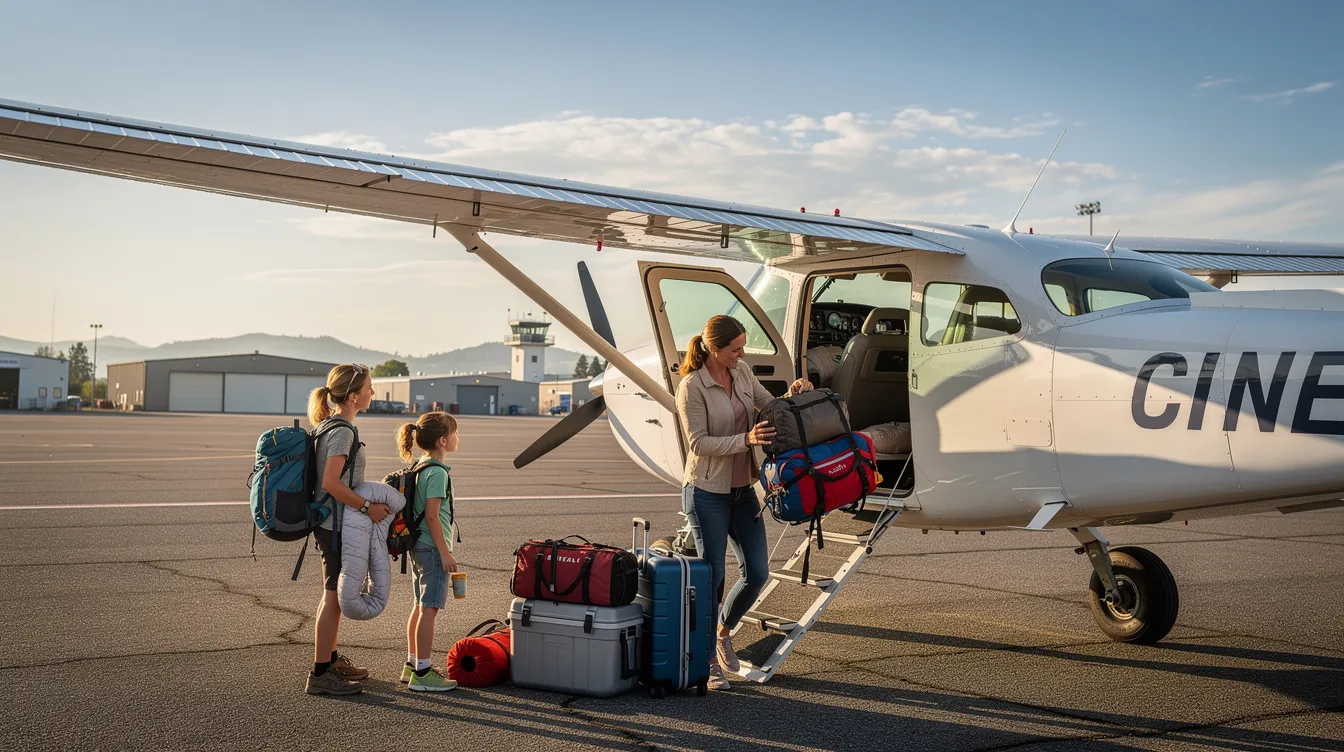
Useful Load vs Ownership Reality: Costs, Training, and Safety
A big, useful load number on paper doesn't automatically translate to safe, economical operations. Training, operating costs, and maintenance discipline all matter-sometimes more than the spec sheet.
Annual cost ranges for typical high-useful load piston singles (PA-32, Bonanza, 206) provide only one side of the equation; a broader view of private jet price lists and access models helps clarify whether stepping up to jet cards or charter offers better long-term value for your specific missions:
Cost Category | Typical Annual Range |
|---|
Annual ownership costs (total) | $20,000 to $40,000+ |
Hangar fees | $3,000 to $8,000 |
Insurance | $2,000 to $8,000+ per year |
Routine maintenance & annual inspections | $3,000 to $10,000+ |
Fuel (100 hours of flying) | $12,000 to $16,000 |
Engine overhaul reserve | $40,000–$60,000+ every 1,800–2,000 hours |
Single-engine planes usually cost less to insure compared to twin-engine planes, and single-engine planes have lower ownership and operating costs overall. Single-engine heavy haulers are generally simpler to maintain, reducing unexpected downtime. But the numbers still add up fast, especially for higher-horsepower airframes where fuel burn climbs above 15 gph.
Training requirements matter:
An instrument rating is essential to use a high-useful-load single-engine plane's full mission potential.
Experienced owners recommend 50+ hours of VFR before tackling regular IMC with passengers.
Recurrent training-proficiency checks, emergency procedure practice mirrors in spirit the checks BlackJet crews undergo regularly.
Safety considerations: NTSB data consistently show that most general aviation accidents trace to pilot error, not mechanical failure. Modern avionics-Garmin G1000, synthetic vision, envelope protection-mitigate some risks but not all. Single-engine planes remain fundamentally limited in engine-out scenarios compared to multi-engine or jet aircraft.
By contrast, BlackJet's partner operators use professional crews, strict Part 135-level standards, and structured maintenance programs, shifting safety responsibility from the owner-pilot to a certified team, a difference explored in depth when you assess how safe private jets are versus general aviation. For pilots who love to fly, that's a tradeoff. For executives who need to arrive, it's a clear advantage.
From Single-Engine Piston to Private Jet Access: Where BlackJet Fits
Many BlackJet clients began in single-engine piston aircraft, logging hours in Cessna 182s, Cirrus aircraft, Bonanzas, or PA-32s as their entry point into private aviation. Over time, as business demands grew and the flying experience evolved from hobby to transportation requirement, they sought a faster, lower-friction solution.
How BlackJet's Jet Card and membership model works:
Prepaid hours (e.g., 25-hour and 50-hour programs) across multiple cabin classes, structured under transparent jet card pricing that defines hourly rates, membership fees, and any additional charges.
Guaranteed availability within set notice windows.
All-inclusive, carbon-neutral pricing that removes uncertainty around maintenance and fuel. Understanding jet card costs reveals how predictable this model can be versus ownership's variable surprises, and a closer look at jet card cost per hour clarifies how different aircraft categories compare on a per-trip basis.
Comparing a 700–900 nm business trip in a high-useful-load piston single vs. a BlackJet light or midsize jet illustrates not just speed but overall trip economics; a deeper cost comparison of chartering a private jet shows when stepping up from piston ownership becomes financially rational.
Time savings: Often 2× faster door-to-door. A Bonanza covers 800 nm in roughly 5 hours; a light jet does it in under 2.5 hours when routed efficiently using tools like a private jet flight time calculator, which is where committing to a 50-hour jet card program can make sense for executives flying similar legs multiple times a month.
Productivity: Quiet cabin, Wi-Fi, stand-up room on mid-cabin aircraft offer the ability to work in a quiet cabin, something no piston single can match, even though a smaller 25-hour jet card can still deliver these benefits for travelers who fly less frequently.
Fatigue: Reduced pilot workload and pressurized cabins at typical cruise altitudes of 35,000–45,000 feet mean arriving rested, not depleted, underscoring how high private jets fly compared to commercial flights.
Safety and certification: BlackJet only partners with operators meeting strict safety and maintenance standards. Crew training, simulator checks, and recurrent evaluations mirror or exceed airline-style procedures-an entirely different safety framework than a single pilot managing weather, navigation, and systems alone, and a key distinction when you compare private charter flights and their meaning in practice to scheduled airlines. The core BlackJet private jet card and charter platform is built around these standards, combining safety with predictable access and service.
Sustainability: While modern piston singles like the DA50 RG use efficient Jet-A burning diesel engines, BlackJet goes further by ensuring every jet flight is carbon-neutral through verified offset programs at no extra cost to the member, even when clients choose budget-friendly private aircraft options, explore affordable private plane rideshare options, or select smaller jets to keep overall trip costs in check.
Technology: 24/7 digital booking via mobile and web, real-time flight support, and the ability to choose aircraft category based on payload needs, light jet vs. super-midsize, instead of being locked into a single-engine plane's limits. There is no such thing as "weight math" for BlackJet passengers.
Ownership vs Jet Card: Which Makes Sense for You?
Owning a high-useful-load single-engine plane is the right call when you fly 100–150+ hours per year personally and genuinely enjoy the pilot role. A jet card or on-demand charter is superior when travel is about time, privacy, and productivity, not stick-and-rudder satisfaction.
Single-engine piston ownership makes sense when many buyers are also comparing the best small private aircraft for different mission needs before committing to a specific model.
You fly primarily within 300–600 nm and value overall utilization of your own airplane, often cross-shopping top affordable private planes that blend reasonable acquisition cost with useful load and range.
You enjoy piloting and want hands-on involvement in the aircraft.
You're comfortable managing maintenance, scheduling, annual inspections, and recurrent training obligations.
You fly into short strips or backcountry destinations that jets can't reach.
A BlackJet Jet Card is usually the better solution when:
You or your executives fly regionally or internationally multiple times per year, perhaps even considering the best long-range private jet options for sale if nonstop intercontinental capability is a priority.
Your priority is schedule control, privacy, and arriving rested, not flying the airplane yourself, making the structure of jet card cost per hour more relevant than fuel burn or maintenance bills; in some cases, an unlimited private jet flights membership is also evaluated alongside traditional jet cards.
You value predictable hourly pricing and converting fixed ownership costs into variable, trip-based expenses, perhaps via a 100-hour jet card program that matches a high annual flight volume, or by comparing how competitors structure similar products, such as Flexjet jet card costs or NetJets jet card pricing models.
Weather flexibility, crew redundancy, and pressurized comfort matter for your missions, which makes understanding private jet charter pricing, the cost to charter a small plane, and even how to buy a seat on a private jet essential when you compare charter, jet cards, and full ownership side by side.
Over a 10-year horizon, the total cost of owning a capable high-useful load single-including purchase, late model upgrades, hangar, insurance, engine overhauls, pilot staffing, and avionics refreshes-can approach or exceed the cost of a well-structured jet card program that delivers far more speed, comfort, and operational certainty per trip, especially when you factor in the underlying cost to rent a private jet and broader private jet pilot and operation costs on a per-mission basis.
Some high-net-worth individuals do both: keep a piston single for local fun, cost-effective weekend flying, and short strips, while leaning on BlackJet for serious business and family travel beyond 300–400 nm. Exploring the cheapest private jet options and even 10-million-dollar private jet choices for luxury travelers alongside ownership costs often reveals that a blended strategy is more efficient than relying on a single solution. It's not an either/or-it's about matching the right tool to each mission.
FAQs on Useful Load, Single-Engine Planes, and Private Jet Alternatives
Which single-engine planes offer the best useful load today?
The Cessna 206 Stationair leads with 1,500+ lb, followed by the Piper PA-32 family at 1,450–1,550 lb, the Beechcraft Bonanza A36/G36 at 1,200–1,350 lb, the Cessna 182 Skylane at 1,000–1,150 lb, and the Diamond DA50 RG at approximately 1,200–1,250 lb. Each aircraft offers a different mix of speed, comfort, and exceptional performance for specific missions, so "best" depends entirely on how you fly.
How much useful load do I really need for a family of four? And if your plans regularly involve larger groups, you may instead study what a 12-seater private jet costs and entails before committing to any specific aircraft strategy.
Budget roughly 170–200 lb per adult, 80–120 lb per child, plus 30–50 lb of baggage per person. A family of four with bags needs approximately 750–950 lb before fuel. Add 300–400 lb of fuel for a 2.5-hour leg, and you need at minimum 1,050–1,350 lb of useful load. Aircraft like the PA-32 or Bonanza handle this well; a Cessna 182 works only with careful fuel planning. For families who want zero compromise, a light jet via BlackJet carries everyone plus bags without the weight calculus.
Are single-engine planes safe for night and over-water flights? For very large families or executive teams, stepping up to private jets that carry around 20 passengers or reviewing the best private jets for 15 passengers can add both redundancy and capacity that no single-engine aircraft can match.
They can be, with proper equipment, training, and conservative planning. Night VFR requires functioning instruments, lighting, and currency. Over-water flights beyond gliding distance demand life vests, rafts, and honest risk assessment. Many experienced pilots choose to avoid extended over-water legs in piston singles entirely. For routes involving significant water crossings, a twin-engine or jet aircraft, like those in BlackJet's fleet, provides meaningful redundancy. The only option that eliminates single-engine risk is multi-engine equipment with professional crews.
Can I use a chartered single-engine plane for initial training? And if your needs extend to off-sites, roadshows, or events with dozens of attendees, private jets for up to 50 passengers and other large private jets for around 30 passengers may be more appropriate than multiple small aircraft legs.
Most flight training happens at flight schools using dedicated training aircraft, not chartered singles. Charter or ownership is more common post-license, when pilots seek to build flying experience in more capable aircraft. However, some owners use their high-useful load singles for transition training and instrument rating work, which is an efficient way to build proficiency in the airplane you'll actually fly.
If I already own a high-useful-load piston single, why would I need a jet card? For some, a medium- to long-term private jet leasing arrangement or even occasional large group solutions—such as chartering a private plane for 100 passengers—can bridge the gap between ad hoc charter and full ownership when jet card utilization is uncertain.
Speed, dispatch reliability, weather flexibility, and the ability to work in-flight. Your Bonanza or PA-32 is superb for 300-nm weekend trips where you enjoy the flying experience. But when you need to be in three cities in two days, or fly 800 nm for a morning meeting and return the same evening, a jet card delivers results your piston single simply cannot. The two complement each other rather than compete.
How do I start with BlackJet if I'm coming from general aviation? If you routinely fly in or out of India, understanding private jet prices in rupees will help you align BlackJet access options with regional cost structures and taxes before you commit, and frequent flyers may also want to compare these options to unlimited private jet flights memberships offered in other markets.
The path is simple: schedule a consultation, review your typical mission profiles (distances, frequency, passenger counts), and BlackJet recommends a jet card tier matched to your actual travel patterns. Many members start by replacing their longest, most weather-sensitive piston trips with jet card flights-and quickly discover the time and energy savings reshape how they think about travel entirely.
Conclusion: Choosing the Right Aircraft Strategy for Your Missions
Understanding useful load is essential whether you're buying a single-engine piston aircraft or specifying payload for a private jet charter. It's the number that tells the truth about what an airplane can actually do, regardless of how many seats the brochure shows.
For owner-pilots, aircraft like the Cessna 206, PA-32, Bonanza, Cessna 182, and Diamond DA50 RG remain among the best high-useful load single-engine planes available in 2025–2026. Each one serves a distinct mission profile, and choosing well means matching the airplane to how you actually fly, not how you imagine flying.
For high-net-worth individuals and executives focused on time, safety oversight, and comfort, BlackJet's carbon-neutral jet card programs often deliver more strategic value than owning a single-engine plane solely for transportation. The question isn't whether piston singles are good aircraft-they are. The question is whether your missions have outgrown what a piston single can efficiently deliver.
Consider how often you fly, how far, and how much schedule certainty matters. Then align your choice of ownership, jet card, or both with those real-world requirements.
Ready to explore what's next? Discover BlackJet Jet Card options or speak with BlackJet about upgrading from piston single ownership to seamless private jet access on your next mission.


 Sign up with google
 Sign up with Apple