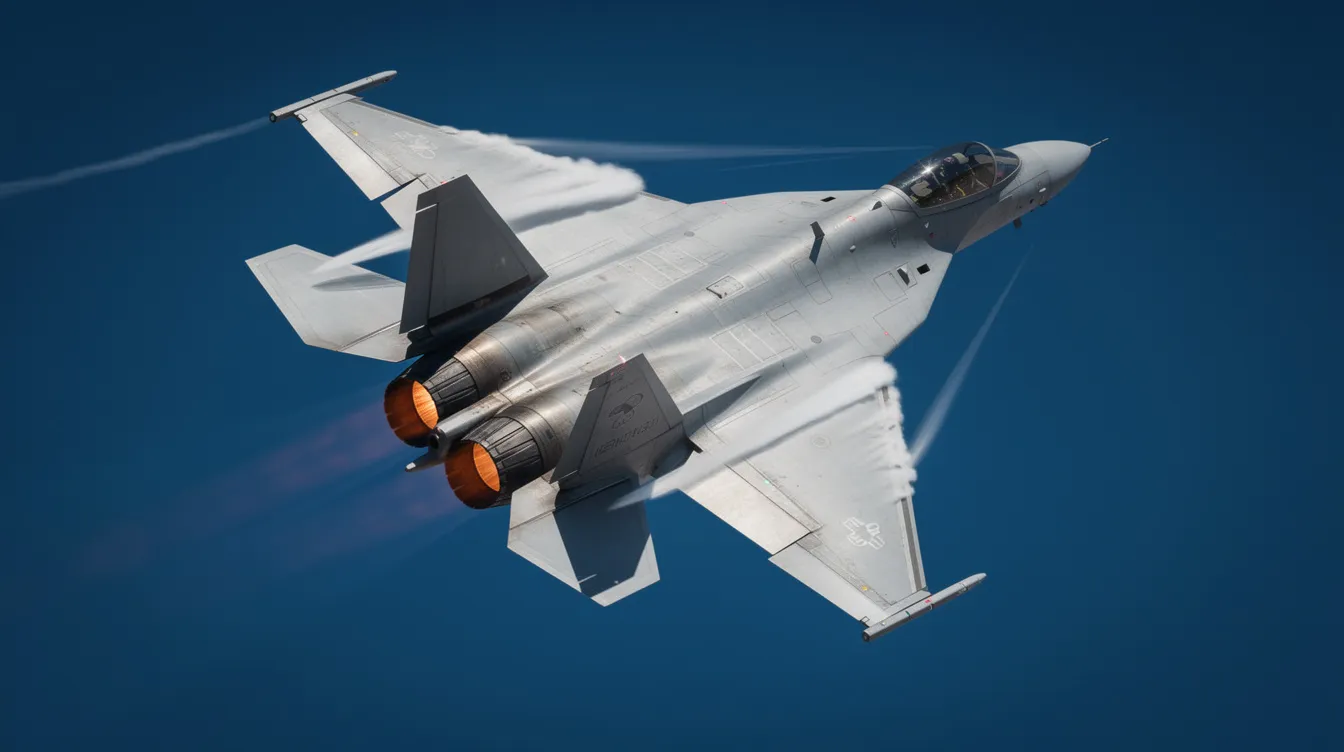
Looking for the best fighter jets in the world? Ranking the top jet fighter platforms in 2026 is never straightforward. Each aircraft is designed for a different combination of stealth, speed, agility, and payload - and no single jet dominates every category. The leading contenders among modern fighter jets include the Lockheed Martin F-22 Raptor, F-35 Lightning II, Chengdu J-20, Sukhoi Su-57, Eurofighter Typhoon, and Dassault Rafale.
This guide is for aviation enthusiasts, defense analysts, and private jet travelers interested in how military aviation technology shapes both air combat and luxury travel.
What makes this subject fascinating beyond defense circles is how the same performance pillars - safety, technology, precision, and reliability - shape the world of private aviation. Lessons from stealth coatings, sensor fusion, and redundancy built into these planes filter into business jet avionics, composite materials, and maintenance culture. While fighter jets are built to protect national skies, private jets optimize for a different mission: strategic time savings, privacy, and tailored schedules. At BlackJet, we study aviation technology at every level to deliver an experience grounded in the same engineering rigor pilots demand at Mach 2.
How We Rank the Best Fighter Jets
No single fighter jet wins across every metric. Modern fighters are categorized by generation levels, focusing on stealth and payload capacity. Fighter jet generations refer to broad technological eras, with each new generation introducing advancements such as stealth, sensor fusion, and increased payload capacity. Fifth-generation fighter jets prioritize stealth and advanced sensor fusion, while 4.5-generation fighters provide high-performance multi-role capabilities at lower cost. Our ranking weighs stealth (radar cross section), agility, weapons payload, speed,d range, avionics, and operational fleet size. Stealth refers to technologies that reduce an aircraft's detection by radar systems, while sensor fusion merges data from various sensors to provide pilots with a comprehensive view of the battlespace. We focus on aircraft circa 2026 - not historical experimental aircraft or prototypes.
An expensive fighter jet price tag alone is not a quality metric, but cost does reflect technological ambition. The F-22 Raptor costs over $140 million per unit; the F-35 program's total cost is estimated at $1.196 trillion. These figures illustrate the scale of investment behind air superiority in the world today.
The 10 Best Fighter Jets in 2026
Below is our ranked assessment. Rankings prioritize operational relevance, advanced technology, and fleet scale - not prototype status. Top modern fighter jets include hypersonic abilities and sustained supersonic flight, and advanced electronic warfare systems are included across every new aircraft on this page. Stealth technology reduces aircraft detection by radar systems, while sensor fusion merges data from various sensors, providing an advantage in aerial combat. The capability to jam enemy radars is essential for modern air combat, and supermaneuverability allows fighters to perform extreme maneuvers in dogfights.
1. Lockheed Martin F-22 Raptor: Stealth & Agility Benchmark
The F-22 Raptor is regarded as the premier air superiority fighter in the world. First flight in 1997, operational with the USAF since the mid-2000s, the F-22 Raptor's production ended after only 187 units - making it rare and unmatched. Its radar cross section is comparable to a marble, its top speed reaches approximately Mach 2.25, and it can supercruise near Mach 1.8 without afterburners. The F-22 Raptor costs over $140 million per unit, and US law bans its export, underscoring the classified capabilities inside every cockpit. Its layered safety and redundancy philosophy mirrors the multi-layer safety checks BlackJet prioritizes in private jet operations - every detail verifies readiness before launch, much like the rigorous engineering behind the best private jets in the world that serve business and luxury travelers.
2. Lockheed Martin F-35 Lightning II: Most Advanced Multirole Fighter Jet
The F-35 Lightning II features unmatched sensor fusion and low observability design across three variants (A/B/C) built for the USAF, Marines, and Navy. The F-35 has over 880 units in active service globally, making it the most widely delivered 5th-generation fighter jet. It serves as an airborne quarterback sharing critical targeting data with allies through secure data links. The F-35 has a radar cross-section equivalent to a golf ball and a unit cost of about $110 million. While not the fastest (around Mach 1.6), its combination of stealth, avionics, and network-centric warfare capabilities remains unmatched. 5th-generation fighters include advanced avionics and multi-role versatility - the F-35 embodies that point more than any other platform in production.
3. Chengdu J-20 Mighty Dragon: China's Stealth Flagship
China's PLAAF operates 250 Chengdu J-20 fighter jets - the country's first operational 5th-generation stealth aircraft. The Chengdu J-20 has a weapons payload of 24,000 lbs carried in large internal bays, and the Chengdu J-20 can reach speeds of Mach 2 with an indigenous engine program under active development. Designed for long-range air superiority and strike across the Western Pacific, the J-20 remains a strategic national asset with no export customers signed.
4. Sukhoi Su-57 Felon: Russia's 5th-Generation Contender
The Su-57 has approximately 30 units in service as of 2026, making it the smallest 5th-generation fleet among major powers. Its 3D thrust-vectoring nozzles deliver agile performance, and its blended wings and internal weapons bays aim to reduce radar cross section - though most analysts watch it as less stealthy than the F-22 or F-35. Algeria has signed for the Su-57E export variant. The Su-57's design philosophy favors aerodynamic performance alongside partial stealth, reflecting a different answer to the stealth-versus-maneuverability chase.
5. Boeing F-15EX Eagle II: Payload King of the Skies
The F-15EX Eagle II has exceptional weapons payload capabilities for strike missions. The F-15EX can carry almost 30,000 lbs of weapons - including over 20 air-to-air missiles - making it the heaviest-lifting fighter jet in active service. With a top speed around Mach 2.5, updated AESA radar, and a fly-by-wire cockpit, it operates as an "arsenal plane" escorting stealth fighters. The USAF plans a fleet exceeding 200 units by the early 2030s, ensuring this fast, capable workhorse remains operational for decades.
6. Eurofighter Typhoon: European Air Superiority Workhorse
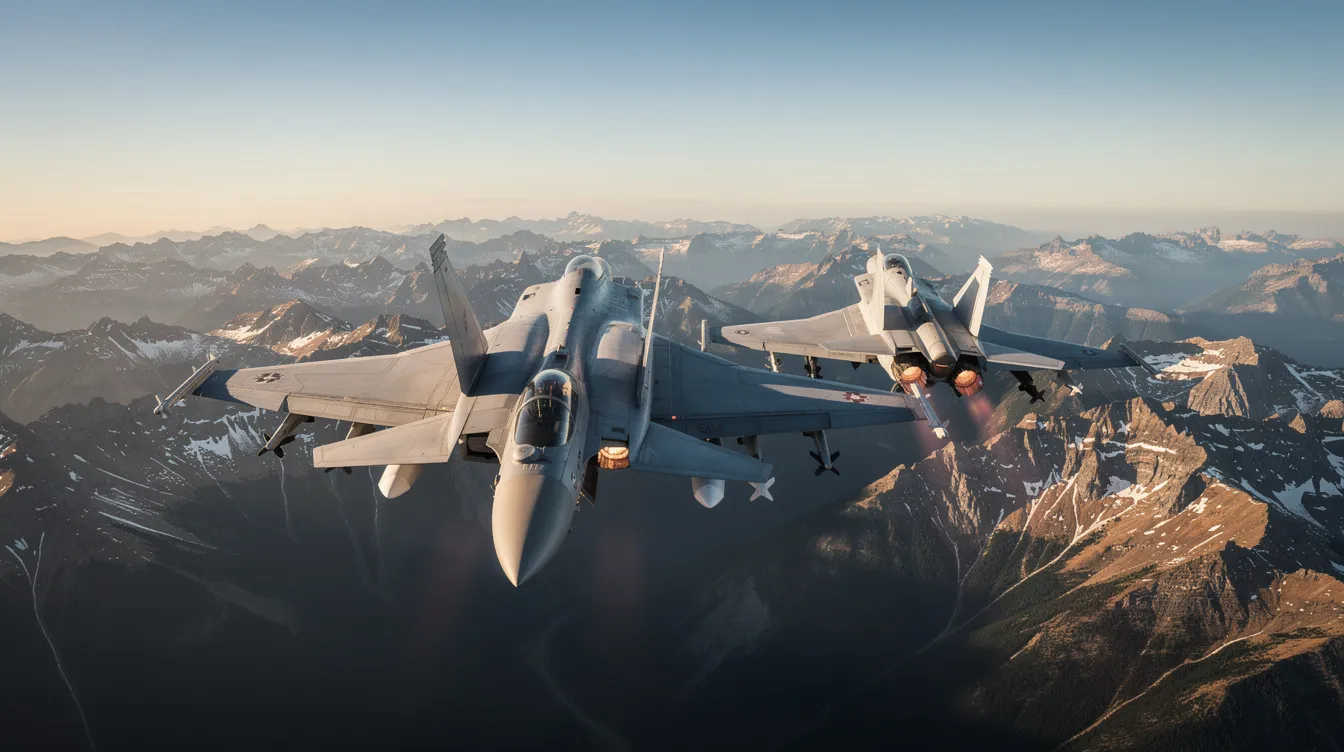
The Eurofighter Typhoon can supercruise at Mach 1.5 and reach Mach 2+ at altitude, making it one area where European engineering competes directly with American designs. Over 680 aircraft have been delivered to nine countries, including the UK, Germany, Italy, Spain, and several export customers. Its delta-canard configuration, modern AESA radar, and ability to control loyal wingman drones keep it relevant alongside stealth fighters. Continuous modernization programs - electronic warfare improvements, enhanced human-machine interface - ensure the Typhoon remains a competition-ready multirole platform well into the 2030s.
7. Dassault Rafale: "Omnirole" French Fighter Jet
Rafale is known for its agility and advanced electronic warfare capabilities, particularly its SPECTRA self-protection suite. Multirole versatility is essential for modern air forces and is performed by jets like Rafale, which handle air superiority, strike, reconnaissance, and nuclear deterrence. Operators include France, India, Qatar, Egypt, Greece, Croatia, and Indonesia. Ongoing F4-standard upgrades improve detection of low-observable targets. The Rafale's balanced approach to survivability and flexibility parallels how BlackJet curates different aircraft categories - light, midsize, large cabin - for diverse mission profiles, similar to how travelers compare private jet sizes for specific journeys when tailoring comfort, range, and budget.
8. F-16 Fighting Falcon (Block 70/72)
The F-16 remains among the most produced and ubiquitous fighter jets in the world, with over 2,000 still operational across countries, including the USAF, NATO allies, Israel, and Asia-Pacific air forces. Modern Block 70/72 models feature AESA radar, upgraded cockpit displays, and extended airframe life, turning a 4th-generation design into a 4.5-generation workhorse. Its relatively low cost, ease of maintenance, and proven combat history across numerous conflicts make it the reason many air forces continue to fly it.
9. Sukhoi Su-35: Supermaneuverable Heavy Fighter
The Su-35 reaches a top speed near Mach 2.25 with a weapons load exceeding 17,000 lbs. Thrust-vectoring engines give it agility in high-energy dogfights and long-range patrols, though it lacks stealth. Main users include Russia, China, and Egypt, with around 100+ produced. It remains Russia's backbone heavy fighter until Su-57 production scales.
10. Boeing F/A-18E/F Super Hornet
The Super Hornet is the US Navy's primary carrier-based fighter, with a payload capacity of over 17,000 lbs, and the EA-18G Growler electronic attack variant alongside it. Block III enhancements add conformal fuel tanks, improved networking, and upgraded cockpit systems. Carrier operations demand extreme reliability - paralleling the strict maintenance and dispatch standards in premium private aviation.
Honorable mention: the Saab JAS 39E Gripen is known for its low maintenance costs and operational flexibility, making it an attractive option for smaller air forces waiting for affordable next-generation models.
Best Fighter Jet by Category: Speed, Technology, and Cost
Category | Winner | Key Stat |
|---|
Fastest in service | MiG-25 Foxbat | Top speed of Mach 3.2 |
Best technology | F-22 Raptor | Marble-sized RCS, supercruise, sensor fusion |
Most expensive program | F-35 Lightning II | ~$1.196 trillion lifecycle |
Best multirole | Dassault Rafale / Eurofighter Typhoon | Combination of agility, payload, and EW |
The distinction between experimental aircraft (like the X-15, which reached ~4,520 mph but never served as an operational fighter) and production fighters matters. Among operational planes, the MiG-25 Foxbat has a top speed of Mach 3.2 - faster than anything in active service today. Modern designs trade raw speed for stealth, range, and sensors. Private jets don't approach Mach 1, but long-range business aircraft routinely cruise near Mach 0.85–0.90, balancing comfort and fuel efficiency at a point optimized for life on board, not combat, with total trip economics shaped by the underlying private jet price list and access model.
Fighter Jet Innovations in Private Aviation
A front-line fighter pilot and a CEO share one demand: immediate, reliable performance with zero room for failure. Advances in composite materials, fly-by-wire controls, and engine efficiency developed for military aircraft eventually inform modern private jet design. BlackJet partners only with operators meeting rigorous certification standards, aligning with aviation best practices developed across both military and civil sectors. Our digital booking tools and real-time flight support provide a "mission-control" style experience - situational awareness displayed on your device, not unlike what pilots see in a modern cockpit, and reflect the end-to-end service focus of BlackJet's premium private jet card and charter programs.
Security and Safety Protocols
In private aviation, performing security verification means rigorous screening of operators, aircraft, crew qualifications, and maintenance records - not a website CAPTCHA checking for malicious bots. BlackJet works only with audited operators complying with recognized standards (ARG/US, Wyvern, IS-BAO), creating a multi-layer security service for clients. The pre-flight process includes discrete identity checks, aircraft assignment, weather and route analysis, and a final verification of a successful go/no-go decision. This mirrors fighter jets' pre-sortie checks: layered redundancy where every system verifies readiness. Think of it as a response ID for every element of your flight - each unit confirmed before departure, echoing the rigorous oversight travelers should expect when choosing among the top private jet companies for luxury travel. A bot cannot replicate this human-in-the-loop discipline; it requires trained professionals who treat safety as non-negotiable, just as front-line air forces do.
BlackJet Jet Cards vs Owning a Jet: Strategic Access, Not Static Assets
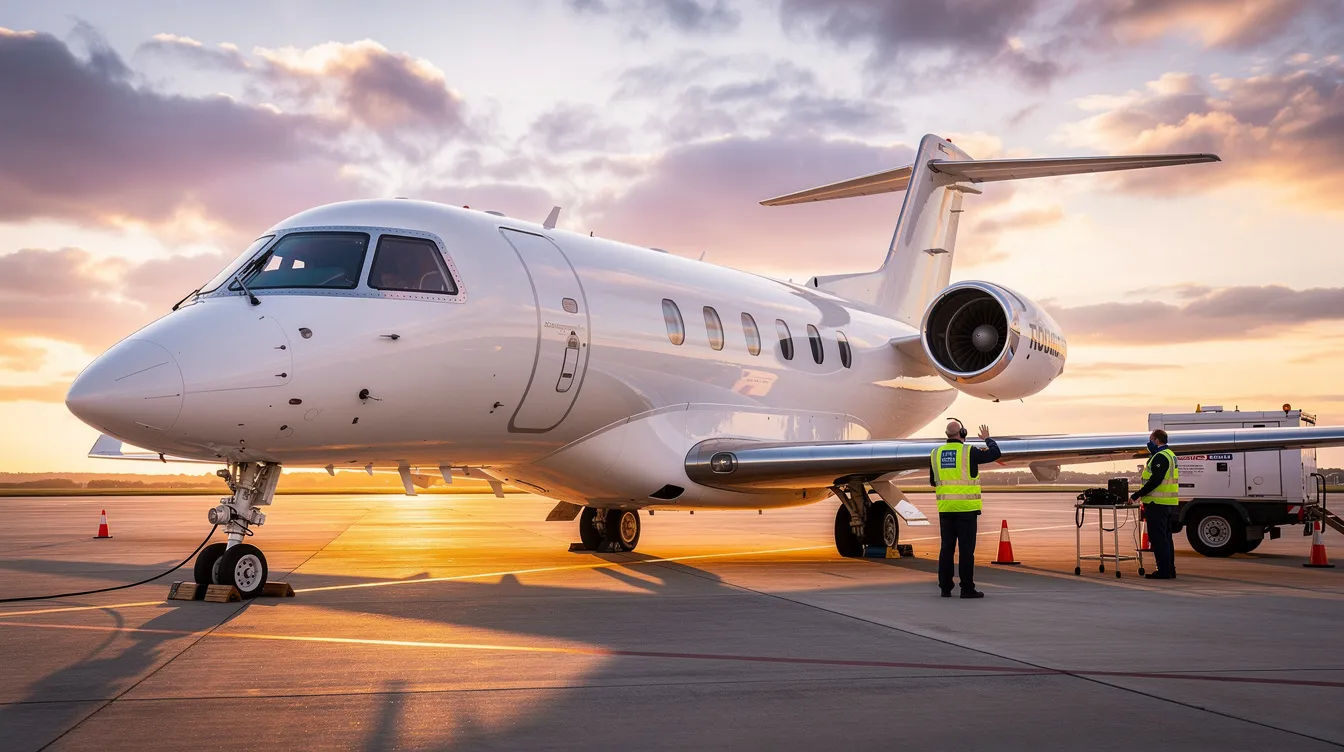
Just as an air force selects between F-22, F-35, or F-15EX depending on the mission, discerning travelers should match the right aircraft to each trip - without waiting on a single asset. BlackJet's Jet Card programs (25-hour, 50-hour, or custom tiers) provide prepaid access across multiple cabin classes with no capital expenditure or depreciation risk, following the same principles outlined in our broader guide to jet card cost and membership pricing. Consider a New York–to–London executive using a large-cabin jet for an overnight board meeting on a BlackJet 25+ Hour Jet Card, or a family flying Los Angeles to Aspen on a light jet for a long weekend. Half the value is flexibility; the other half is predictable cost, especially when you understand how programs like a 50-hour jet card are priced and structured. Our mobile booking platform and 24/7 support eliminate the overhead of ownership - you fly, we handle the rest.
Sustainability and the Future of High-Performance Flight
Both military and civil aviation face pressure to reduce emissions. While fighter jets prioritize combat performance, their engine and aerodynamics research drives more efficient technologies later adopted in private space. BlackJet delivers carbon-neutral flights by default through verified carbon offsets, efficient aircraft selection, and optimized routing for routes worldwide, including bespoke private jet charters from cities like Karachi. Emerging technologies - sustainable aviation fuel, more efficient engines, hybrid-electric concepts for regional aircraft - suggest private aviation may lead early adoption, and we intend to be at the front of that development, even as we help travelers explore the cheapest private aircraft and budget-friendly options that align cost savings with responsible operations.
FAQ: Fighter Jets and Private Jet Access
What is the best fighter jet in the world right now?
The F-22 Raptor remains the premier air superiority fighter for pure air-to-air dominance, while the F-35 Lightning II leads in multirole versatility with over 880 units delivered globally, just as certain providers stand out when you compare the best jet cards for frequent flyers in private aviation.
What is the fastest fighter jet in service?
The MiG-25 Foxbat holds the record at Mach 3.2, though it is largely retired. Among current fighters, the F-15EX reaches approximately Mach 2.5, speeds that make even frequent users of a 100-hour jet card program appreciate how private aviation optimizes for comfort and efficiency rather than raw velocity.
Why are modern fighter jets so expensive?
R&D for stealth materials, advanced avionics, precision engines, and decades of sustainment drive costs. The F-35 program alone totals an estimated $1.196 trillion through its lifecycle, a scale that puts private aviation expenses into perspective when you review any detailed private jet price list and ownership versus access comparison.
How do private jets compare to fighter jets in speed and safety?
Private jets cruise near Mach 0.85–0.90 - far below fighter speeds - but prioritize comfort, range, and schedule reliability. Safety in private aviation derives from rigorous certification, crew training, and maintenance audits, whether you are chartering an entire aircraft or simply buying a seat on a private jet through shared or semi-private options.
What is a Jet Card, and how does BlackJet's program work?
A Jet Card provides prepaid access to private jets by the hour across cabin classes, avoiding ownership costs. BlackJet offers 25-hour and 50-hour tiers with 24/7 support, carbon-neutral operations, and access to safety-certified operators, following the same pricing logic you’ll see in our complete guide to 25-hour jet cards, our overview of 50-hour jet card cost and value, and a broader guide to jet card pricing structures. Visit our www page to learn more.
Conclusion: Choosing the Best Jet - Military Legends vs Your Next Private Flight
Just as air forces match the right fighter jet to each mission - whether it demands the stealth of an F-22, the versatility of an F-35, or the raw payload of an F-15EX - discerning travelers should match the right private jet solution to each trip. Fighter jets showcase extremes of speed, stealth, and agility across the history of aviation, but private jets optimize for what matters in your life: reliability, comfort, and strategic time savings rooted in the same engineering excellence.
BlackJet delivers curated, safe, and carbon-neutral private jet access powered by rigorous standards and modern technology - without the capital burden of aircraft ownership. Explore BlackJet's Jet Card programs and discover how premier private jet access can reshape your travel.


 Sign up with google
 Sign up with Apple