The Bell 407 stands as one of the most versatile civil utility helicopters in operation today. From mountain helipads to offshore platforms, this single-engine turbine aircraft bridges the gap between fixed-wing efficiency and true door-to-door access. Here is what discerning travelers and aviation professionals need to know about its performance, evolution, and role in premium private travel.
Bell 407 at a Glance
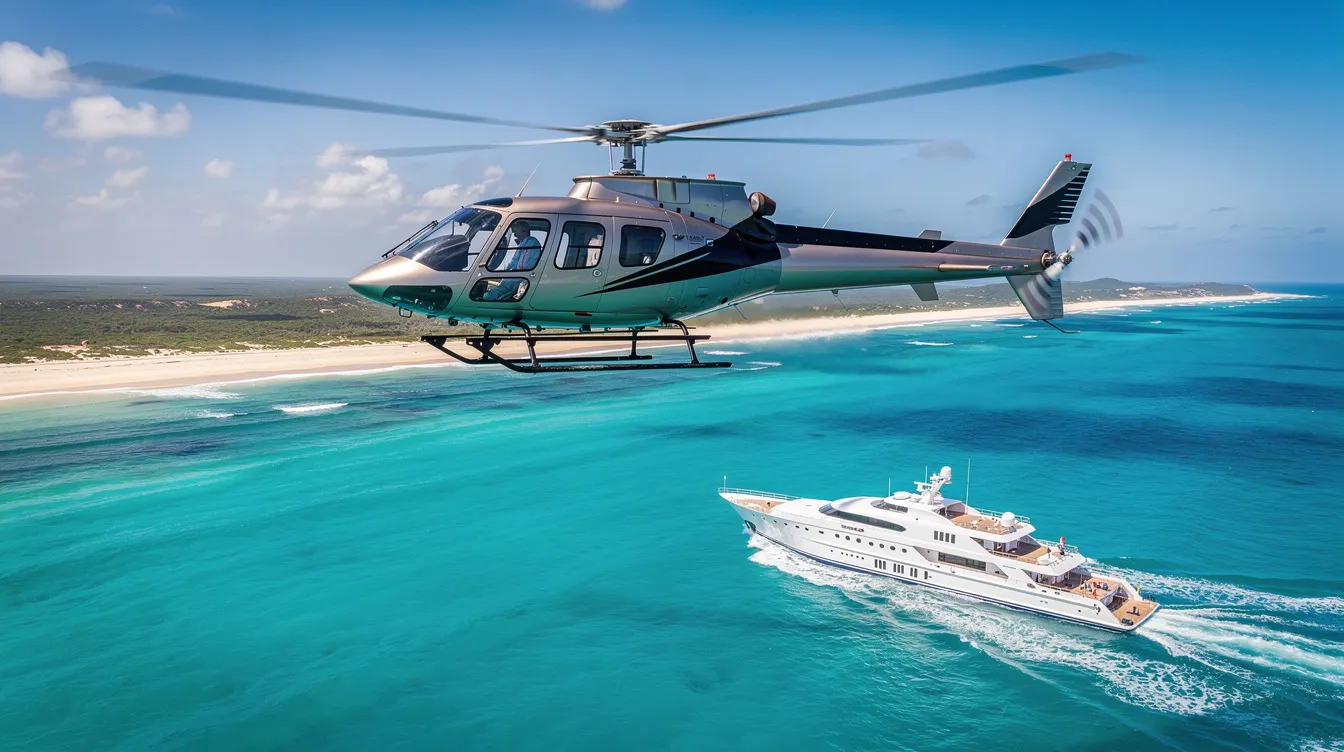
Since full production began in 1996, Bell Helicopter has delivered the Bell 407 into corporate, EMS, law enforcement roles, and utility operations across six continents. While BlackJet specializes in fixed-wing private jets and jet card access, many of our clients interface with Bell 407 operations for last-mile transfers to remote resorts, yachts, or business sites where runways simply do not exist.
Core facts worth noting:
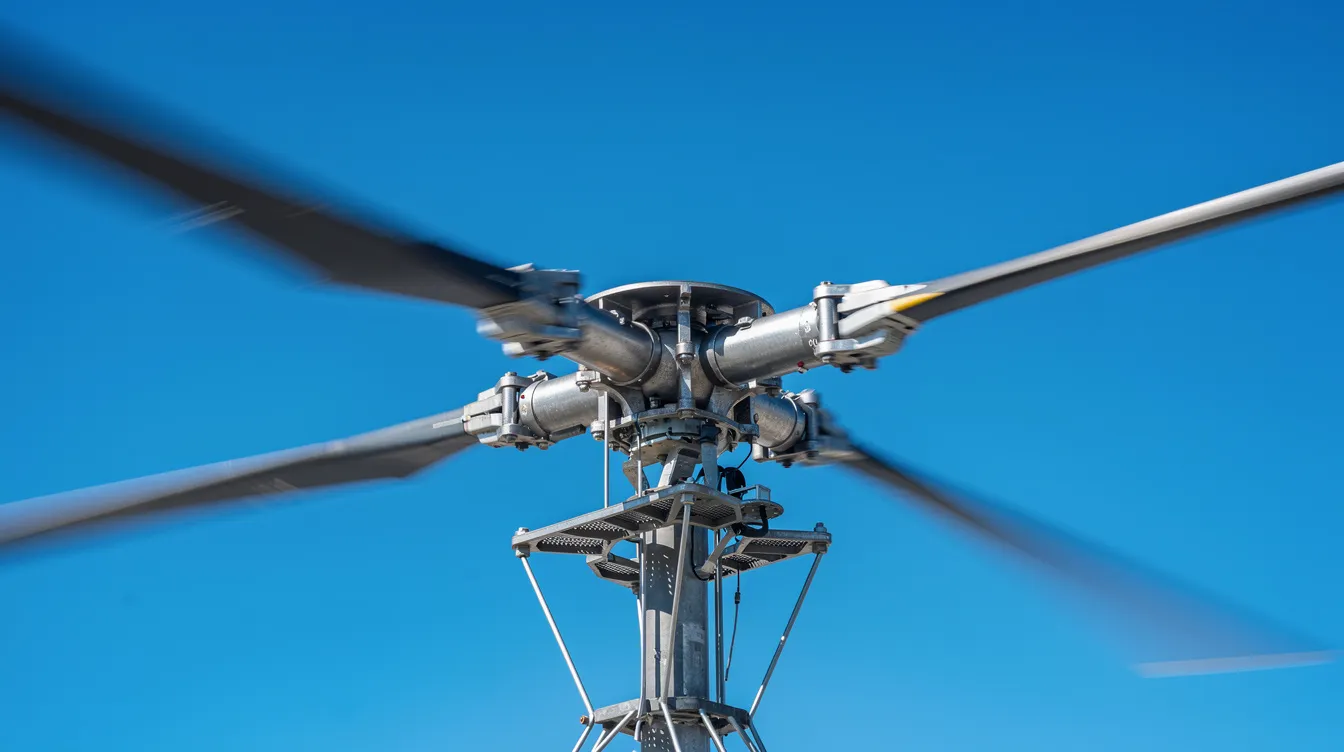
Single-engine turbine helicopter with a four blade composite main rotor system
Seating for one pilot plus up to six passengers
Maximum cruise speed of 133 knots (approximately 246 km/h)
Range of roughly 330–350 nautical miles on standard fuel
Where a light jet like a Cessna Citation covers 1,000+ nautical miles at 400 knots, the Bell 407 excels in terrain-limited access. Combine a BlackJet jet card flight to a regional airport with a short Bell 407 transfer directly to a city center or private property, and you eliminate hours of ground travel that commercial aviation simply cannot avoid.
Design and Development of the Bell 407
This section focuses on the technical evolution of a particular airframe that Bell planned and developed directly from the LongRanger airframe, not marketing narrative.
In 1993, Bell began work on the model as a replacement for the Bell 206L LongRanger, retaining the basic fuselage configuration while modernizing key systems. Early demonstrations involved a modified 206L-3 fitted with a new rotor system and widened cabin fairings. During development testing, Bell undertook attaching the OH-58 Kiowa Warrior rotor head to the LongRanger airframe.
The four blade composite hub main rotor was derived from the OH-58D Kiowa Warrior program, with extra blades serving as the key design change over the Bell 206L setup. Compared with the two-blade semi-rigid rotor on the Bell 206L, this design delivers a smoother ride, lower vibration, and higher service ceiling, making it the only helicopter type in the light single class to offer this rotor heritage from military testing.
The Rolls Royce engine powering the aircraft is the Allison 250-C47 series turboshaft, providing approximately 862 shp at takeoff. Later variants introduced the Rolls-Royce 250-C47E/4 with an upgraded engine configuration and dual-channel FADEC for improved hot-and-high performance and available power margins.
The first prototype flew on 29 June 1995. The Bell 407 received certification from Transport Canada on February 9, 1996, followed by FAA certification on February 23, 1996. The first production Bell 407 was delivered in February 1996 at Heli-Expo in Dallas, marking the start of full-rate production.
Cabin improvements over the Bell 206L include a fuselage roughly eight inches wider, windows approximately 35% larger, and improved sound insulation, all critical for corporate and VIP use.
Variants: From Bell 206L to 407GX, 407GXi and Military Derivatives
The Bell 407 family has spawned several civil and military variants, each tailored to different missions and avionics standards. Two key upgrades in particular reshaped the model's popularity among corporate operators and public-safety agencies.
The Bell 206L LongRanger IV utilized a two-blade rotor and lower-power engines. Sales dwindled as operators sought better performance, and the type was finally withdrawn from production. Many upgraded their largest fleet holdings from Bell 206L to the 407 for superior hot-and-high capability and lifecycle economics.
The Bell 407GX was introduced in 2011 with the Garmin G1000H glass cockpit, synthetic vision, and HTAWS. This avionics refresh was quickly certified and brought situational awareness comparable to many business jets.
The Bell 407GXi was launched in 2018 with the Rolls Royce 250-C47E/4 engine featuring dual-channel FADEC for engine control, Garmin G1000H NXi avionics, and IFR-capable configurations. It remains the current flagship civil variant through the present day and the foreseeable future.
The GXP variant (circa 2015) offered incremental performance gains in high-density-altitude conditions, sitting between the GX and GXi in the product timeline.
Approximately 40 Bell 407s have been upgraded to Honeywell HTS900 engines through an STC engine upgrade offered by Eagle Copters, demonstrating potential buyers' interest in extending airframe life through various upgrades. This STC engine upgrade has helped operators access new markets and performance envelopes.
Military customers operate derivatives including the 407M, the cancelled ARH-70 armed reconnaissance helicopter, and the Bell 417 (also cancelled). Iraq operates 30 Bell 407 helicopters against militants, underscoring the platform's broad range of mission flexibility. These remain niche compared with mainstream civilian use.
Corporate and VIP operators typically prefer later-generation 407GX/GXi variants for reliability, glass cockpit familiarity, and the OEM swiftly reserialized support network that Bell Textron maintains globally.
Performance, Capacity and Mission Profiles
Performance numbers matter most when tied to real missions. Whether the aircraft serves air ambulances, law enforcement roles, utility operations, or executive transport, the Bell 407's specifications translate directly into operational capability.
Max cruise speed: approximately 133 knots. Range: 330–350 nautical miles with standard fuel. Endurance: roughly four hours at sea level. Hover ceiling of 13,550 feet IGE, and the Bell 407's service ceiling increased to over 13,500 feet OGE under standard conditions.
Its maximum gross weight for internal load is 5,000 lbs, with a max takeoff weight configuration supporting most aircraft types of mission equipment. The helicopter can carry external loads up to 6,000 lbs via a cargo hook, serving utility and construction operations. The Bell 407 can carry a maximum external load of 6,000 lbs.
The cabin configuration seats one pilot plus six passengers across approximately 85 cubic feet of cabin volume, plus 16 cubic feet of aft baggage. Options include club seating for VIP layouts or utility configurations depending on operator needs.
Wide doors and large cabin openings aid EMS stretcher loading, corporate passengers with luggage, or heavy camera and survey equipment.
For high-net-worth travelers, this means flying from a regional airport to a mountaintop lodge, island resort, or offshore yacht where no other helicopter type or fixed-wing jet can land. Prices hold well for operators offering this access in premium markets.
Safety technologies on modern Bell 407s include glass cockpits, synthetic vision, a radar altimeter, FADEC engine control, and options like Precise Flight Pulselite® which reduces bird strikes during flight. The Bell 407 features a four-blade main rotor for improved safety and handling characteristics compared with older two-blade designs.
Production Data and Global Fleet Overview
Production data tells a clear story of sustained demand. Bell produced the 407 at full production rates from 1996 onward, and the total fleet now exceeds 1,600 units delivered by early 2023. During a Haas-Qou boom around 2012–2015, over 100 units were produced annually, with production stabilizing in subsequent years compared to that peak as the market matured.
The Bell 407 has been delivered to over 57 countries. The largest national fleet resides in the United States, where the largest fleet accounts for well over half of the world's fleet. Canada holds the second-largest fleet, with significant civil registrations also found in China and the Far East; in one market, Bell adjusted its serial-number sequence because the number four was considered unlucky.
Over 300 Bell 407s are used as air ambulances globally. More than 170 units serve in law enforcement roles. Corporate, VIP, and utility operations account for the remaining mission split across commercial helicopters.
In the secondary market, late-model 407GX and 407GXi units see strong price resilience. Valuation depends on serial number, total engine hours, avionics version, and maintenance records. Potential buyers increasingly prioritize whether FADEC is single- or dual-channel, and the trial Bell flight experience during pre-purchase evaluation.
For BlackJet clients, understanding this production and fleet landscape helps our team select partner operators with the newest, best-maintained Bell helicopters where a helicopter transfer is requested.
Bell Helicopter (Bell Textron) Background
Bell remains one of the foundational names in rotary-wing aviation. Founded in 1935 by Lawrence Bell, the company progressed from the Model 30 in 1941 through iconic platforms like the Bell 47 and UH-1 Huey. Today Bell operates under Bell Textron Inc., headquartered in Fort Worth, Texas, and the time remains right for this heritage to matter to private fliers concerned with safety and support.
Bell's current product range spans from legacy models to modern commercial helicopters,s including the 407, 412EPX, 429, 505, and the 525 Relentless, plus an extensive military portfolio. With over 100 authorized service facilities worldwide, training centers, and parts distribution hubs, Bell's support network ensures high dispatch reliability. These OEM programs help operators keecosts predictablets, which directly benefits premium travelers who value punctuality and safety. This aligns with BlackJet's emphasis on vetting only operators with robust manufacturer backing.
Bell 407 in Premium and Corporate Travel
Picture this: a BlackJet jet card member departs New York aboard a light jet, arriving in Aspen in under four hours. Rather than a 90-minute winter drive on narrow mountain roads, a Bell 407 waits on the ramp, delivering the traveler to a remote ski-in estate in twelve minutes. Hours saved. Stress eliminated.
Typical premium use cases include corporate executive shuttles between city centers, hotel and resort transfers, point-to-point hops between private properties, and aerial real estate surveys that highlight how chartering a private jet is worth it for time-sensitive travelers. VIP cabin layouts feature leather seating, soundproofing, climate control, and optional connectivity equipment, though exact fit-out varies by operator.
Customers in private aviation often prefer not to own a helicopter outright. For most BlackJet members, on-demand helicopter charter coordinated through our team is more cost-efficient than direct ownership, where high fixed costs for hangar, maintenance, insurance, and crew demand utilization levels that occasional travelers rarely meet. Many of these clients also review a broader private jet price list and access options before deciding how much flying to commit to. Frequent business travelers value flexibility, privacy, safety, and luxury, all achievable through coordinated charter without the burden of ownership.
Sustainability matters too. Pairing efficient, modern helicopters like the Bell 407GXi with BlackJet's carbon-neutral fixed-wing flights can maintain a lower overall carbon profile versus fragmented commercial itineraries with long ground segments. Many travelers compare jet card cost and membership pricing to decide whether to offset emissions via fewer, more direct flights rather than fragmented routings. While Bell 407s are not part of BlackJet's owned fleet, our role is as an expert integrator and trip architect, ensuring seamless, vetted access across aircraft types and categories.
Integrating Bell 407 Flights with BlackJet Jet Cards
BlackJet's core offering centers on jet card programs providing prepaid access to private jets, including options like 25-hour or 50-hour flight access across diverse cabin types. Our dedicated BlackJet 25+ Hour Jet Card extends that fixed-rate flexibility to mid, super-mid, and large cabin aircraft. Private aviation is characterized by a membership or subscription model for access, and helicopter integration extends that philosophy into terrain where jets cannot reach.
A member books through the BlackJet mobile booking platform or concierge. Our team then coordinates a Bell 407 segment via trusted partners for last-mile access, with synchronized scheduling between jet and helicopter legs.
Logistics include ramp-side transfers where permitted, luggage handling, and contingency planning for weather or ATC constraints.
Real-time support is a common feature in private aviation services, and BlackJet's 24/7 operations team monitors both fixed-wing and helicopter legs, adjusting routings and ground transport if a segment is delayed.
Jet card customers typically require access to diverse cabin types for medium and long-range legs, while Bell 407 or similar types serve as tactical connectors for short, terrain-limited routes, and many evaluate a detailed 50-hour jet card cost guide before committing to higher-usage programs.
Safety certification is a critical aspect of any recommended helicopter partner. Sustainable aviation initiatives often include carbon-offset flights, and any helicopter legs are included in the overall safety review and carbon-offset accounting.
The convenience of stepping off a BlackJet-arranged jet directly into a waiting Bell 407 to reach a boardroom, villa, or marina represents the seamless, multi-modal travel experience that defines modern private plane charter and the broader economics outlined in our guide to chartering a small private plane.
FAQs: Bell 407 and Private Aviation with BlackJet
Is the Bell 407 the same as a Jet Ranger? Not exactly. The Bell 206 JetRanger and its stretched variant, the Bell 206L LongRanger, preceded the 407. The Bell 407 was developed directly from the LongRanger airframe but features a completely different four-blade main rotor, a more powerful Rolls-Royce 250 engine, a wider cabin, and modern avionics. It is a distinct, more capable helicopter type, though it shares lineage with the Jet Ranger family.
How safe is flying on a Bell 407 compared with small jets? Modern Bell 407 variants equipped with Garmin G1000H NXi glass cockpits, dual-channel FADEC, synthetic vision, and a tail rotor camera offer exceptional situational awareness. BlackJet works only with helicopter operators meeting strict safety standards, including recognized third-party audits and robust SMS programs, with pilots holding type-specific training hours, similar to the criteria applied when evaluating the top private jet companies for safety and service.
Can I pay for Bell 407 transfers with my BlackJet Jet Card hours? Jet card hours typically apply to fixed-wing aircraft. Helicopter segments are quoted separately but integrated into the same itinerary and billing support, so the experience remains seamless from booking through arrival, whether you are buying an entire aircraft or simply purchasing a seat on a private jet for select legs.
What missions is the Bell 407 best suited for? The 407 excels in short-range transfers under 300 nautical miles, carrying up to six passengers to mountain helipads, island resorts, urban rooftop helipads where legal, and offshore platforms. Its power and hover ceiling make it effective in environments where most aircraft types cannot operate, and it frequently connects with larger aircraft on charter flights for 100 passengers or more when groups split legs between jets and helicopters.
How does BlackJet ensure sustainability when helicopters are involved? BlackJet ensures every fixed-wing journey is carbon neutral at no extra cost, including itineraries on the largest private jets for sale and charter that often fly intercontinental routes. For rotorcraft segments, we favor operators flying efficient, late-model aircraft and optimize routing to minimize fuel burn. Carbon-offset programs cover the jet leg, and we are actively expanding offset coverage to include coordinated helicopter transfers.
Conclusion: The Bell 407 Jet Ranger in Modern Private Aviation
The Bell 407 Jet Ranger remains a cornerstone of versatile, efficient, and safe helicopter operations worldwide. Its blend of military-derived rotor technology, reliableRolls-Roycee powerplants, and modern avionics makes it uniquely suited for demanding missions in corporate transport, emergency medical services, law enforcement, and premium private aviation. For high-net-worth and frequent travelers leveraging BlackJet's jet card programs, the Bell 407 offers an essential last-mile solution, bridging the gap between fixed-wing jets and remote destinations inaccessible by runway.
Integrating Bell 407 helicopter transfers with private jet itineraries enhances travel flexibility, saves valuable time, and elevates the overall luxury experience. Supported by robust safety standards, global OEM maintenance networks, and sustainability initiatives, the Bell 407 aligns perfectly with the discerning traveler's expectations for privacy, punctuality, and environmental responsibility.
As private aviation continues to evolve, the Bell 407's proven performance and adaptability ensure it will remain a preferred choice for operators and travelers seeking seamless, multi-modal journeys. Whether accessing mountain resorts, island retreats, or urban helipads, the Bell 407 Jet Ranger exemplifies the strategic advantage of combining rotary and fixed-wing aviation for unparalleled convenience and efficiency.
Explore how BlackJet can connect you to this premier helicopter experience alongside our exclusive jet card offerings, and discover a new dimension of private travel tailored to your lifestyle and business needs.


 Sign up with google
 Sign up with Apple