Airline Careers, Pay Scales, and Why Top Talent Moves to Private Aviation
Understanding airline job salary data is essential whether you're an aspiring cabin crew member mapping out your first career move or a seasoned professional weighing a transition into premium private aviation. In 2024–2025, commercial flight attendant salary ranges span from roughly $27,000 at entry level to $115,000 or more for senior crew flying international routes—while cabin crew in business aviation can see total compensation exceed $130,000 annually with day-rate structures and client-funded expenses.
This article delivers the flight attendant salary breakdown first—answering the core query with real numbers—then widens the lens to cover pilots, engineers, and other high-paying airline roles before showing how those figures compare to private jet careers with operators like BlackJet. Salaries in the U.S. airline industry vary widely based on role and experience, and the data below reflects that reality with precision.
Flight Attendant Salary in 2024–2025: What Cabin Crew Really Earn
The median flight attendant salary was $67,130 in 2024, according to the Bureau of Labor Statistics. The average flight attendant salary sits at $68,370 per year, though what a flight attendant earns can vary depending on experience, route, and airline policies. Entry-level flight attendants earn around $27,000 annually at some regional carriers, while the top 25% of flight attendants made $98,160 in 2024—and senior flight attendants can earn up to $115,000 per year when overtime, international premiums, and allowances are included.
Commercial Flight Attendant Pay at a Glance
Seniority Level | Estimated Hourly Rate | Estimated Annual Range |
|---|
Entry-level (1–2 years) | ~$27–$40/hr | ~$27,000–$50,000 |
Mid-career (5–7 years) | ~$50–$70/hr | ~$65,000–$80,000 |
Senior flight attendant (10+ years) | ~$80–$100+/hr | ~$90,000–$115,000+ |
Block Hours and Pay Calculation
Flight attendants earn about $29.88 per hour on average, but that number only tells part of the story. A flight attendant is typically paid for "block hours"—the time that begins once the aircraft door is closed and ends when it opens at the destination. Pre-flight boarding duties, deplaning responsibilities, and some ground time have historically been unpaid, though recent contracts are beginning to change that.
Additional Compensation and Benefits
Flight attendants can earn additional income through:
Per diem allowances: Per diem payments range from $1.50 to $2.75 per hour of duty time away from home, often lightly taxed or untaxed. United's latest contract sets domestic per diem at $2.97/hour and international at $3.54/hour.
Holiday and overtime premiums: Flight attendants can earn extra money during holidays or overtime periods, which can add thousands annually.
Language bonuses: Bilingual flight attendants earn more than their monolingual peers, especially on international routes where language-of-destination skills are valued.
Boarding pay: United's 2026 tentative agreement introduced boarding pay at 50% of the hourly rate for scheduled boarding time, adding approximately 7.4% to overall compensation.
Health insurance is typically included in flight attendant compensation packages, and flight attendants receive standby travel perks with small fees—one of the most cited benefits of the career. Senior flight attendants can earn over $80 per hour, and with experience, flight attendants can earn up to $100,000. Compensation for flight attendants and pilots often varies significantly based on flight hours and seniority, so the starting salary for a new hire can differ sharply from later pay as an airline hires and develops crew over time, and the figure earned by a 15-year veteran at the same airline can differ by a factor of three or more.
Seniority and Career Progression
A flight attendant's pay increases incrementally with each year of service until reaching a top-out, typically around the 13th year. Each year unlocks higher hourly rates, more vacation days, and greater schedule control. Senior flight attendants can secure premium routes—New York to London, Los Angeles to Tokyo—that significantly raise annual income through extended per diem, international premiums, and wide-body aircraft pay.
A New York-based flight attendant flying long-haul transatlantic routes, logging 80–90 block hours per month, can realistically reach low-to-mid six figures after a decade of seniority.
Many people ask whether flight attendants get paid good money. Compared to other service roles, the answer is generally yes—but schedules, unpaid ground time, and the reality that compensation is based on block hours rather than total time at work mean real hourly earnings can be more difficult to calculate than they first appear. For a deeper breakdown, see our guide on how much airline attendants get paid.

What Affects Flight Attendant Pay: Airline Type, Base City, and Senior Flight Attendant Roles
The same job title—flight attendant—can produce drastically different income depending on airline category, route network, and base location. Average salaries in the airline industry vary widely by job role and can be influenced by geographical location, and cabin crew compensation is no exception.
Airline Category Matters
Airline salaries are influenced by factors including aircraft type, seniority, and whether the airline is regional or major. Here's how it breaks down:
Regional carriers: Often begin flight attendants closer to $40,000–$50,000 with slower pay progression. Regional airlines typically offer lower compensation than major airlines, and advancement can take longer.
Major legacy airlines (American, Delta, United) commonly reach $80,000–$100,000+ for senior flight attendant roles. United's latest contract, for example, sets Year 13+ pay at $100.13 per flight hour.
International airlines: Typically pay more than regional carriers, and Gulf or Asian flag carriers may offer tax-free salaries, housing support, and higher allowances—a budget-conscious way for crew to maximize take-home pay.
Base City and Cost-of-Living Adjustments
Flight attendants earn higher wages in metropolitan areas. Flight attendants in New York can earn over $86,000, driven by the concentration of premium international routes departing from JFK and Newark. Bases in San Francisco, Los Angeles, and Florida hubs also trend higher than smaller domestic stations, though Florida's lower cost of living can make the effective income stretch further.
Seniority, Specialization, and Control Over Your Schedule
Many positions operate on a seniority-based pay system, where pay increases with years of service. Each year unlocks higher hourly rates, more vacation days, and greater schedule control. A senior flight attendant can secure premium routes—New York to London, Los Angeles to Tokyo—that significantly raise annual income through extended per diem, international premiums, and wide-body aircraft pay.
Working international routes typically pays more than domestic flights, and lead roles within airlines offer higher pay opportunities. Specialized positions like purser, cabin service director, or language-qualified crew typically command higher pay than standard flight attendant roles because they help ensure passenger safety and service standards.
The contrast with private aviation is notable: private jet cabin crew serving high-net-worth clients often earn more per duty day—$500–$800 domestically and $1,200+ for international travel—but roles are fewer, and expectations for discretion and bespoke service are considerably higher. Learn more about private jet stewardess salary benchmarks.
Beyond Flight Attendants: Highest-Paying Airline Jobs and How They Compare to Private Jet Careers
While flight attendant salary is competitive, many of the highest airline job salary figures sit in technical, cockpit, and leadership roles. Pilots are generally the highest-paid airline employees, but the range across aviation careers is striking.
Pilot Salaries
Role | Average Salary Range |
|---|
Airline Captain (major carrier, wide-body) | $300,000–$500,000+ |
Airline Pilot / First Officer (major carrier) | $90,000–$200,000+ |
The median annual wage for airline pilots was $226,600 in 2024, according to BLS data, and high-ticket sales roles on the ground—such as those outlined in private jet sales salary guides—can rival or even exceed cockpit compensation at the very top end. Pilots typically earn between $90,000 and $480,000 depending on aircraft type, seniority, and carrier. Senior captains at major airlines can earn over $500,000 annually when profit sharing, overtime, and international per diem are included. Employee pay increases with experience and promotion from first officer to captain in the pilot role, and pilot shortages have driven significant pay increases recently in the aviation industry.
Entry-level First Officers at certain US regional airlines have historically started below $30/hour, though recent contracts have pushed starting pay substantially higher.
Engineering and Technical Roles
Role | Average Salary Range |
|---|
Avionics Engineer | ~$130,747/year |
Aeronautical Engineer | $100,000–$120,000+ |
Aircraft Maintenance Manager | $85,000–$110,000 |
Aircraft Mechanics | ~$60,267/year |
Highly technical roles like aeronautical engineers often exceed $100,000 in pay, while ground staff salaries generally range between $16 and $30 per hour, depending on the role and location. These roles usually require more formal education—engineering degrees, ATPL licenses, or MBAs—than cabin crew positions, which often have minimal degree requirements and shorter training processes.
Ground Staff Compensation
Role | Average Salary Range |
|---|
Ground Staff | $16–$30/hour |
General Aviation Industry Roles | ~$44,812–$46,500/year |
Private Aviation: The Premium Segment
Corporate pilots, private jet flight attendants, and operations managers working for business aviation brands often earn at the top end of airline salary ranges, and many cabin crew ultimately target private plane stewardess jobs as a next step once they’ve mastered premium commercial service—including large-group charter environments that may use private jets for up to 50 passengers. A compensation study by CBAA found that corporate aviation flight crews average $131,373 in base salary versus $107,911 for commercial airline and charter crews—a roughly 22% premium.
Private Jet Cabin Crew vs. Commercial Cabin Crew
Role | Average Annual Compensation |
|---|
Commercial senior flight attendant (major airline) | ~$95,000/year plus travel perks and benefits |
Corporate/private jet cabin crew (VIP clients) | $100,000–$140,000+ with day-rate pay, tips, and international travel allowances |
For those exploring private jet pilot salary data or broader private plane jobs, a deeper dive into private jet pilot employment costs shows how salaries fit into overall ownership and operating expenses—and related roles like private jet broker salary potential highlight just how broad the earning spectrum is across the private aviation ecosystem when you understand the wider private jet price list and access models. Private aviation demands an elevated level of service, flexibility, and discretion that goes well beyond standard airline duties.
Private Aviation vs. Commercial Airlines: Salary, Lifestyle, and BlackJet's Jet Card Edge
Commercial airline jobs provide stable, union-backed pay scales and clear seniority tracking. Private aviation offers higher earning ceilings, more bespoke service environments, and closer relationships with repeat clients. The trade-off varies depending on what matters most to you—whether you're crew or a traveler—and understanding BlackJet’s premium private jet card and charter offering is central to evaluating how private aviation can complement or replace commercial flying.
How the BlackJet Jet Card Model Creates Consistent Demand
BlackJet's Jet Card programs allow frequent business travelers to pre-purchase 25 or 50 hours of flight time across multiple aircraft categories and cabin classes, and a dedicated guide to jet card membership pricing can help clarify how costs compare across providers, including how 50 hour jet card costs stack up on a per-trip basis, what distinguishes a 100 hour jet card cost structure for ultra-frequent flyers, and how broader jet card pricing frameworks break down fees and hourly rates. This means steady, predictable demand for pilots, cabin crew, and operations staff—unlike ad-hoc charter work, which can be volatile- and products like the BlackJet 25+ Hour Jet Card further reinforce that consistency with fixed hourly rates; a broader overview of 25-hour jet card features and costs can help travelers decide if this structure fits their flying profile. For professionals in private aviation, this translates to more consistent income and scheduling stability, factors that are intended to bridge the gap between the security of airline employment and the earning potential of private operations.
Lifestyle Differences That Matter
Factor | Commercial Airlines | Private Aviation |
|---|
Crew size | Large teams, fixed bases | Smaller teams, flexible assignments |
Pay structure | Hourly block time + per diem | Day rates, per-trip compensation |
Unpaid time | Boarding, ground delays often uncompensated | Generally compensated for full duty day |
Service scope | Procedural, high-volume | Bespoke, luxury-level hospitality |
Schedule control | Seniority-based bidding | Client-driven, often on-call |
Job security | Union contracts, stable | Fewer roles, variable demand |
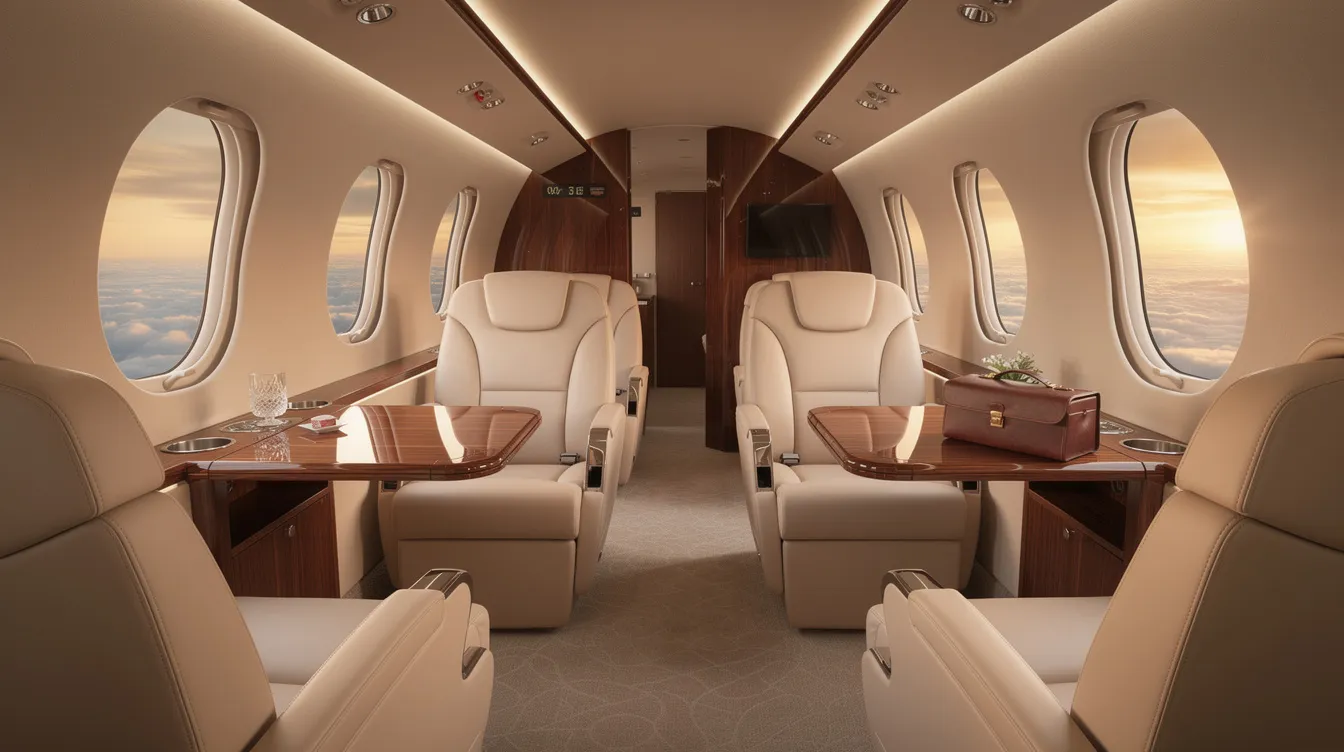
Private jet cabin crew are typically expected to manage fine dining, custom menus, multilingual service, and concierge-level hospitality for a plane carrying just a handful of passengers, often serving repeat clients who rely on the best jet cards for frequent flyers to guarantee aircraft availability. The role is more difficult to define than a standard airline position—it blends the responsibilities of a flight attendant, personal assistant, and sommelier. Expenses like hotels, meals, and ground transport are generally covered by the operator or client, which means more of your income stays in your account.
BlackJet's Core Pillars: Safety, Sustainability, Technology
BlackJet ensures every journey meets rigorous standards while operating alongside some of the best private jets in the world in terms of comfort, performance, and safety. The company's proprietary safety certification goes beyond FAA minimums, and every flight is carbon neutral at no extra cost to travelers—a factor that matters increasingly to high-net-worth clients who want to fly without compromising on environmental responsibility. Advanced digital booking tools and real-time flight support simplify scheduling for both travelers and operations teams, removing friction from the experience.
A Scenario Worth Considering
Imagine a senior commercial flight attendant with 12 years of experience, based in New York—earning approximately $95,000 annually with full benefits and free standby travel. She transitions to a BlackJet-supported private jet role, using her long-haul service expertise to serve a CEO commuting monthly between New York and London on a 25-hour Jet Card. Her day rate on international legs is $1,200+, her expenses are covered, and her schedule allows more time at home between trips. Over the course of a year, her income exceeds $120,000—with a more curated, high-touch service environment and fewer doors to manage.
This isn't a hypothetical reserved for a handful of elite crew. As demand for private jet access grows among executives—and as Google searches for "airlines jobs salary" and related data continue to climb, including interest in the cheapest private jet options—the pipeline from commercial to private aviation is widening.
Whether you're tracking salary benchmarks to begin your aviation career or you're a high-net-worth traveler who values the caliber of crew that private aviation attracts, the numbers point in one direction: upward.
Key Takeaways
The average salary for a flight attendant in the U.S. is $68,370, with a median annual salary of $67,130 as of 2024.
Seniority is the largest factor in cabin crew compensation—pay varies depending on years of service, airline type, and route network.
Pilots are the highest-compensated role in the airline industry, with senior captains exceeding $500,000 at major carriers.
Private aviation cabin crew and corporate pilots consistently out-earn their commercial counterparts, though roles require elevated service standards and flexibility.
BlackJet's Jet Card model creates consistent demand for premium aviation professionals while delivering seamless, safe, and sustainable travel for members.
Conclusion: Elevating Careers and Travel Through Aviation Salary Insights
Understanding airline job salaries—from entry-level flight attendants to senior pilots and private jet crew—reveals a dynamic landscape shaped by experience, airline type, and service specialization. For aviation professionals, this knowledge informs career decisions and highlights the growing premium of private aviation roles, where elevated service, safety, and sustainability converge with superior compensation.
For travelers and industry insiders alike, BlackJet exemplifies how private jet access redefines convenience and luxury, backed by proprietary safety standards and carbon-neutral flights. As demand for premium travel rises, so too does the opportunity for aviation professionals to thrive in roles that blend sophistication with competitive pay.
Whether you are launching your career or seeking to elevate your lifestyle through private aviation, the data underscores one truth: strategic choices in this sector unlock unmatched potential and prestige. Discover how BlackJet can reshape your travel or career journey with exclusive Jet Card programs designed for discerning travelers and elite professionals.


 Sign up with google
 Sign up with Apple


