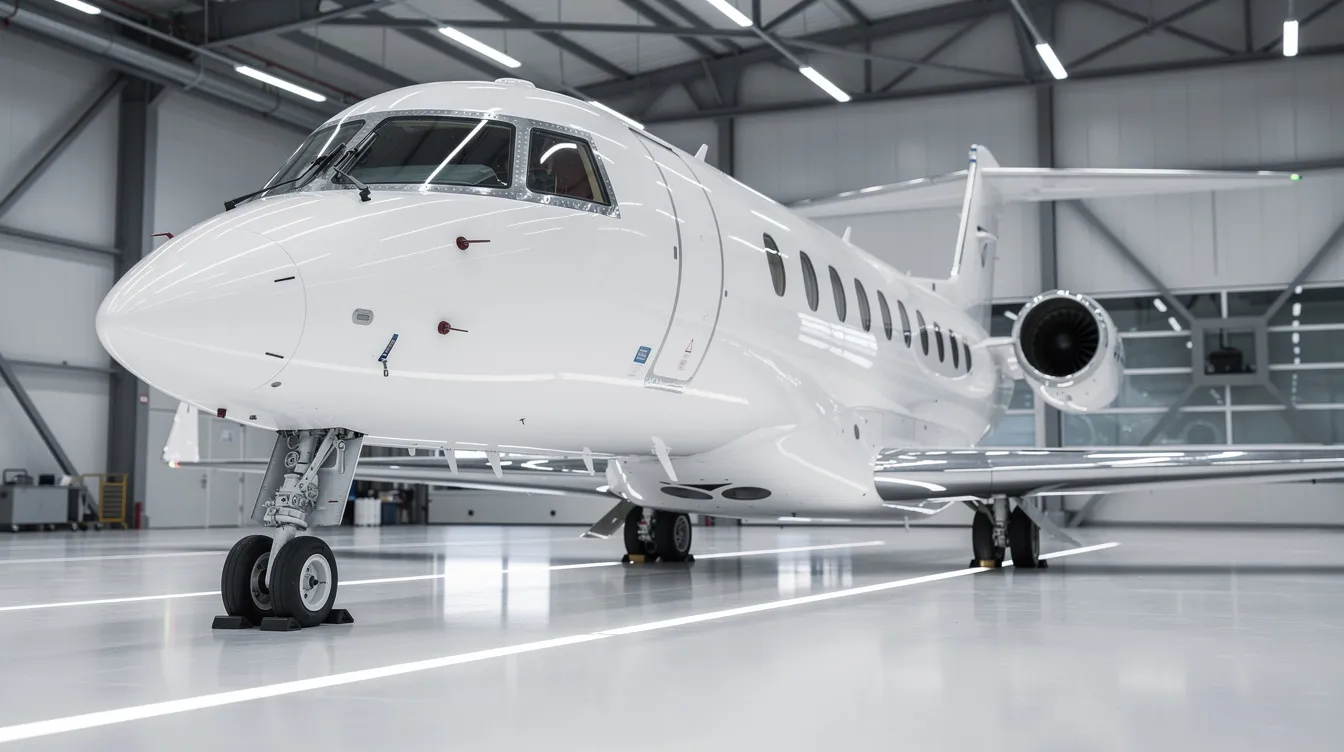
For BlackJet members, stepping onto a private jet means entering a carefully managed ecosystem of safety, performance, and financial protection. Aircraft liability insurance sits at the center of that ecosystem - not as regulatory paperwork, but as a strategic shield that protects passengers, assets, and personal wealth every time an airplane leaves the ground.
This guide is designed for private jet travelers, aircraft owners, and anyone interested in understanding how liability insurance protects their interests in private aviation.
1. Why Aircraft Liability Insurance Matters for Private Jet Users
Commercial airline passengers fly under a carrier's blanket corporate insurance policy without a second thought. In private aviation, the equation shifts. Whether you are an aircraft owner, a charter client, or a jet card member, the operation of that aircraft carries distinct liability exposure that demands dedicated aviation insurance with adequate liability limits.
Aircraft liability insurance protects against legal claims from aircraft incidents - covering bodily injury, death, and property damage arising during flight, on the ramp, or during boarding. Serious aviation accidents can reach millions in costs, and even minor aviation incidents can exceed $100,000, which means a $1 million liability coverage limit may not cover all claims. Liability insurance helps protect personal assets from aviation-related lawsuits, making high limits essential for high-net-worth travelers.
Consider a concrete example: a 2025 business trip from Teterboro to Miami where a runway excursion on landing damages airport lighting, penetrates a hangar, and injures a ground handler. Under a robust insurance policy, third-party liability pays for property repairs, medical claims, and legal defense costs - while hull coverage separately addresses physical damage to the aircraft itself.
BlackJet is not an insurer. As a jet card and membership provider, BlackJet partners exclusively with charter operators that carry robust aviation insurance policies - typically with liability limits of $50 million to $100 million or higher - so members fly under strong protection without managing policies themselves. Operators in the BlackJet network are vetted for safety ratings, recurrent training programs, and minimum coverage thresholds, turning insurance from a checkbox into a genuine risk-management tool.

2. Core Components of an Aviation Insurance Policy
Aircraft liability insurance protects aircraft owners from financial responsibility due to accidents, covering bodily injury, property damage, and legal claims arising from aircraft operations.
Every comprehensive aviation insurance policy rests on two pillars: aircraft liability coverage and hull coverage for the aircraft hull. Understanding both is essential for any person involved in the aviation business - whether as an owner, operator, or informed member.
Aircraft liability coverage typically includes:
Passenger liability insurance, which covers injuries to passengers onboard the aircraft
Public liability coverage, which addresses injuries or damages to third parties on the ground
Property damage liability, which pays for repairs to damaged property caused by the aircraft
Medical payments coverage, which provides immediate coverage for minor injuries to occupants
Coverage options that include additional protection for specific needs, such as personal effects or cargo
Policies may structure limits as per-passenger sub-limits under an overall occurrence cap, or as Combined Single Limit (CSL) policies that merge public and passenger liability into one limit - offering stronger protection when multiple passengers are involved.
Hull coverage protects against physical damage to the aircraft from collision, weather, ground incidents, or hangar damage. Aircraft hull liability insurance covers physical loss or damage risks, typically on an agreed-value basis. Policies have deductibles ranging from $50,000 to $1 million depending on aircraft value and mission profile, whereas liability coverage generally carries no deductible for the insured.
For business jets, operators commonly carry liability limits between $50 million and $100 million, with large-cabin or transatlantic aircraft often reaching $200 million to $500 million. A single-engine piston aircraft, by contrast, might carry limits in the $3 million to $25 million range—a structure that aligns with the strong safety record of private jets when paired with robust risk management and training standards.
Non-owned aircraft liability is necessary for pilots flying aircraft they do not own - renters, borrowers, or club members who lack coverage under the owner's policy. BlackJet members, however, rely on the operating carrier's policy rather than purchasing separate non-owned coverage. BlackJet monitors that every partner operator maintains an active aviation insurance policy with appropriate limits before placing member flights.
3. Types of Aircraft Liability Coverage & How Claims Work
Liability coverage is not one-size-fits-all. Limits, structures, and add-ons vary by aircraft type, mission profile, and whether you are an owner, charter client, or jet card member.
Common liability structures include:
Structure | Example | Best For |
|---|
Per-occurrence with passenger sub-limit | $1M occurrence / $100K per passenger | General aviation, lower-risk operation |
Combined Single Limit (CSL) | $5M–$100M with no passenger cap | Business jets, VIP flights, multiple high-net-worth passengers |
Smooth limit with premises liability | Full limit plus hangar/ramp coverage | Corporate flight departments, FBO operators |
Optional coverages may include personal injury liability (libel, slander, privacy breaches) and war/terrorism endorsements for flights through elevated-risk airspace.
How a claim typically unfolds:
An aircraft accident or incident occurs
The operator provides immediate notice to their broker or insurance company
The insurer appoints aviation-specialist attorneys and investigators
Flight logs, weather data, maintenance records, and crew qualifications are reviewed
Settlement negotiations or litigation proceed; legal defense costs are paid by the insurance policy if the insured is sued.
Liability coverage pays for legal costs and settlements up to limits; your liability insurance provides legal defense costs in addition to coverage limits in many policy structures.s
Aviation accidents can cost over $100,000 for minor incidents. In a scenario like a mid-size jet overrun at Aspen - damaging runway infrastructure, injuring a passenger, and destroying a perimeter fence - hull coverage addresses damage to the airplane (minus deductible), while aircraft liability pays property damage, medical claims, and defense costs.
For BlackJet members, the operator's insurer handles investigation and defense entirely. BlackJet's operations team coordinates logistics - replacement aircraft, rebooking, onward travel - to keep disruption minimal. Corporate flight departments and family offices that sometimes charter outside a jet card program should review certificate of insurance details, including named insureds, limits, and additional insured endorsements, and understand how jet card membership pricing structures may bundle these protections into a predictable cost framework.
4. Special Situations: Non-Owned Aircraft, International Flights, and War Risks
Modern private aviation often blends owned flying, charter, and jet card access - creating cross-border liability questions and non-owned aircraft exposure that demand careful attention. Some states have their own requirements for aircraft liability insurance, and many airports require proof of liability coverage for access or financing.
Non-owned aircraft liability protects individuals or companies when flying aircraft they do not own. This is separate from the owner's aircraft insurance and is essential for ad-hoc charter, dry leases, or club airplane use. BlackJet eliminates this complexity: every flight is arranged only with vetted Part 135 carriers that maintain their own aircraft liability and hull coverage, so members need not purchase separate non-owned policies, even as the underlying private jet pricing and access models vary between ownership, charter, and membership structures.
International operations introduce additional requirements. In the EU, Regulation (EC) No. 785/2004 mandates minimum insurance per passenger (250,000 SDRs, approximately €300,000), per-aircraft third-party limits scaled by maximum take-off weight, and coverage for baggage and cargo. Operators flying a BlackJet member from New York to London to Zurich in 2026 must ensure their insurance meets these mandatory minimums for every European leg.
War and terrorism risk coverage has become increasingly subject to premium surges - 300% to 500% increases in high-risk flight information regions since 2022. Insurance carriers may include seven-day cancellation clauses, and some airspaces are now excluded entirely, which is why many travelers compare leading private jet companies and their risk policies before committing to a long-term program. BlackJet's membership standards require that partner operators maintain compliant international liability coverage, including war-risk endorsements where applicable. Members can request evidence of insurance for corporate risk and legal teams at any time.

5. How BlackJet Members Can Fly Confidently (Without Managing Policies)
The entire point of a BlackJet Jet Card is to deliver premier private jet access without the cost, complexity, or exposure of aircraft ownership. That extends to insurance: members access robust liability coverage through the operating carrier's policy, with zero paperwork on their end, particularly with structured offerings like the BlackJet 25+ Hour Jet Card that balance flexibility with predictable protection.
BlackJet evaluates every operator for safety ratings (ARG/US, Wyvern, IS-BAO where eligible), maintenance records, pilot expertise, minimum liability insurance thresholds by aircraft category, and continuous monitoring of policy renewals and coverage options, all within a framework of transparent jet card pricing structures that keep total risk and cost visible to members. Every flight arranged through BlackJet is carbon-neutral by default - environmental responsibility and risk management go hand in hand for today's discerning aviation companies and clients.
For readers who own or are considering owning an aircraft, including those evaluating more economical private aircraft options, a few guidance points apply:
Work with an aviation-specialist broker or agency with deep knowledge of aviation products and coordinate with tax professionals to capture potential jet card-related tax deductions when flights support business activity
Review liability limits annually and align coverage with personal net worth and corporate exposure, especially if you hold a 100-hour jet card for frequent travel that concentrates significant flight activity in a single program.
Ensure hull coverage reflects realistic replacement value and accounts for savings on deductible structures, particularly if you pair occasional ownership flying with a 25-hour jet card solution for overflow or supplemental missions.s
Confirm that pilots meet all policy pilot-clause requirements to avoid denial under any circumstances, including when flights are supplemented by a 50-hour jet card program operated by a third-party carrier.
Do jet card users need their own liability insurance? Generally, no - the operator's policy covers the event. Before a special mission (such as a ski trip to a high-altitude airport) or when exploring alternatives like buying a single seat on a private jet, members should feel free to contact BlackJet's team to confirm that the operator's coverage addresses the specific risk profile. BlackJet can share relevant operator policy details with members' corporate risk or legal resources upon request, providing general information and transparency that reflect BlackJet's commitment to protection at every level, whether you are comparing in-house coverage to large providers like NetJets jet card programs and costs.
Frequently Asked Questions About Aircraft Liability Insurance
Q1: What does aircraft liability insurance cover?
Aircraft liability insurance covers bodily injury, death, and property damage caused by the operation of an aircraft. It protects the aircraft owner or operator from legal claims resulting from accidents or incidents involving the aircraft.
Q2: Do private jet travelers need their own liability insurance?
Generally, no. Private jet travelers flying under a jet card or charter program like BlackJet are covered under the operator’s robust liability insurance policy, which meets or exceeds industry standards, similar to the protections built into top-performing jet card programs for frequent flyers.
Q3: What is the difference between hull coverage and liability coverage?
Hull coverage protects against physical damage to the aircraft itself, such as collision or weather damage. Liability coverage protects against legal claims for injury or property damage caused by the aircraft’s operation.
Q4: How much liability coverage is recommended for business jets?
Business jets typically carry liability limits ranging from $50 million to $100 million, with larger or international operations sometimes requiring up to $500 million to adequately protect against potential claims.
Q5: What is non-owned aircraft liability insurance?
Non-owned aircraft liability insurance provides coverage for pilots flying aircraft they do not own, such as rented or chartered planes. BlackJet members rely on the operating carrier’s insurance, eliminating the need for separate non-owned policies, even on larger group itineraries using private jets sized for around 20 passengers.
Q6: Are there special insurance requirements for international flights?
Yes. International operations, especially within the EU, may mandate minimum liability limits and additional coverage such as war and terrorism risk endorsements. Operators must comply with these requirements to ensure coverage validity, which is particularly important for large-group private jet charters of up to 50 passengers operating across multiple jurisdictions.
Q7: How does liability insurance handle legal defense costs?
Liability insurance policies typically cover legal defense costs in addition to the coverage limits, ensuring that the insured is protected from the financial burden of lawsuits related to aircraft incidents.
Q8: Can liability coverage limits be insufficient?
Yes. Even a $1 million liability limit may not cover all claims in a serious accident. High-net-worth individuals and corporate operators often choose higher limits to adequately protect their assets.
Q9: How does BlackJet ensure insurance coverage for its members?
BlackJet partners exclusively with vetted Part 135 operators who maintain active, robust aircraft liability and hull insurance policies. BlackJet continuously monitors these policies to ensure member flights are covered under strong protection.
Q10: How can I verify the insurance coverage of an operator?
Members or corporate risk teams can request evidence of insurance from BlackJet for any operator. BlackJet provides transparency and documentation to confirm compliance with coverage requirements.
Conclusion: The Essential Role of Aircraft Liability Insurance in Private Aviation
Aircraft liability insurance is more than a regulatory requirement—it is a strategic asset that safeguards private jet travelers, owners, and operators against the unpredictable financial risks of aviation. For BlackJet members, this insurance underpins every journey, ensuring peace of mind through robust coverage, expert risk management, and seamless integration with premier safety standards.
By partnering exclusively with operators who maintain comprehensive liability policies tailored to the unique demands of private aviation, BlackJet transforms insurance from a complex obligation into a transparent, reliable shield. This approach allows members to enjoy effortless, luxurious travel with confidence, knowing their protection extends beyond the aircraft to their personal and corporate assets.
Whether you own an aircraft or access private jets through a jet card program, including innovative unlimited private jet membership models or more budget-conscious private jet options, understanding and prioritizing aircraft liability insurance is critical. It protects against costly legal claims, supports compliance across countries, and adapts to evolving risks such as international operations and war zones.
Discover how BlackJet can elevate your private aviation experience by combining safety, sustainability, and financial security—join our Jet Card program today and fly with unparalleled peace of mind.


 Sign up with google
 Sign up with Apple