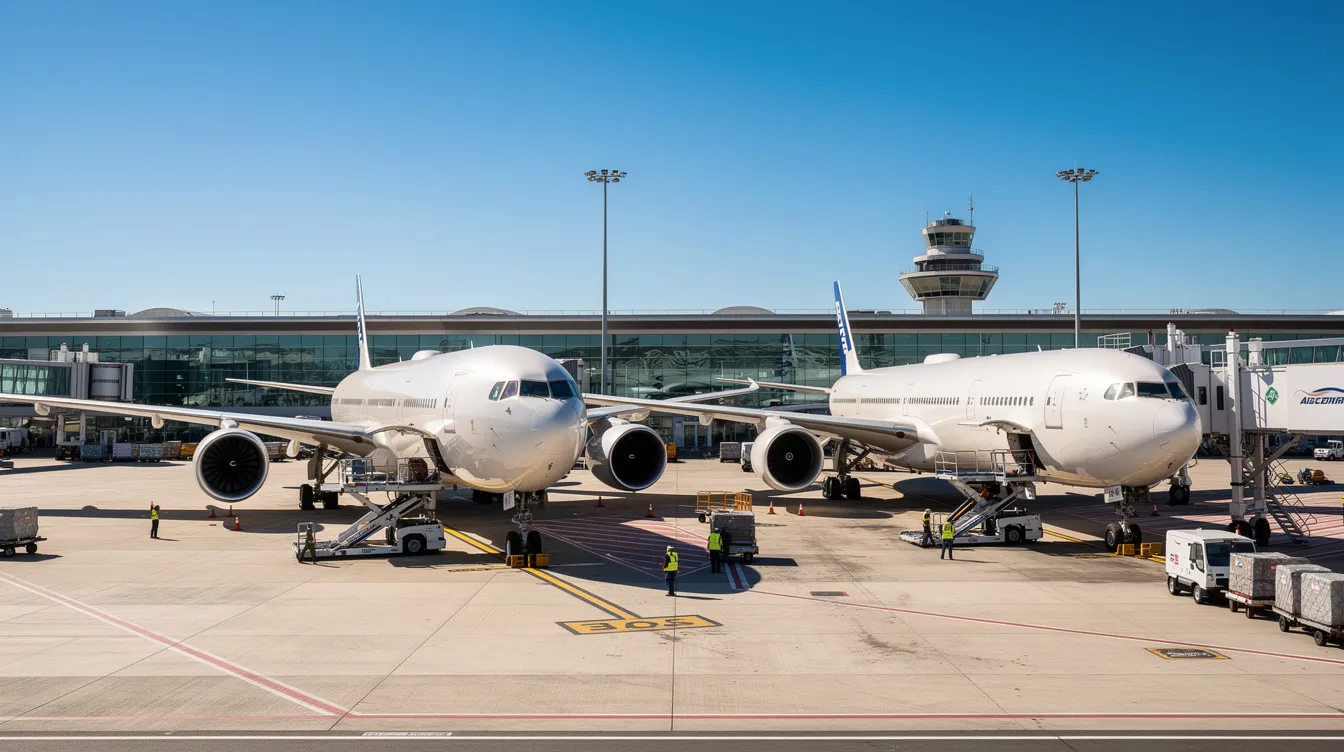
The Airbus A380 and Boeing 747 are iconic four-engine commercial aircraft that defined long-haul travel for generations. This guide is for aviation enthusiasts, frequent travelers, and anyone considering the differences between these iconic aircraft and private jet alternatives. Understanding the differences between the A380 and 747 helps travelers make informed choices about comfort, efficiency, and travel experience. Both reflect significant engineering advancements in their respective eras, yet they serve different roles today. In aviation, the term "superjumbo" refers to very large, four-engine commercial aircraft like the A380 and 747, which are designed to carry hundreds of passengers over long distances. This straight comparison breaks down the physical dimensions, performance, cabin experience, and economics of these two aircraft—and explores why discerning travelers increasingly look beyond the superjumbo toward private aviation.
A380 vs 747: Quick Answer For The Curious Reader
If you only have a minute, here is what you need to know about these two planes:
The Airbus A380 is the larger airplane overall. It dominates in wingspan, weight, height, and total cabin floor area. The Boeing 747-8, however, is slightly longer at 250 feet 2 inches compared to the A380's 238 feet 7 inches.
The Boeing 747 was launched in 1970 with Pan Am, while the Airbus A380 was launched on October 25, 2007, with Singapore Airlines. The difference in debut spans nearly four decades of aviation evolution.
The A380 can carry a maximum of 853 passengers in an all-economy layout; the 747-8 has a maximum passenger capacity of 605. Typical seating for the A380 is around 525 passengers, and typical seating for the 747-8 is approximately 467 passengers in three-class configurations.
Today, A380s fly primarily with carriers like Emirates, Korean Air, and British Airways on dense long-haul routes. The 747 is now mainly a freighter, with only a handful of airline operators still running passenger service.
For travelers who prefer control, privacy, and efficiency over sheer scale, BlackJet's Jet Card programs offer access to private jets that turn any long flight into a seamless, personalized experience-without the crowds of a superjumbo.
Origins Of Two Icons: How The Boeing 747 And Airbus A380 Came To Be
These two aircraft emerged from fundamentally different eras and strategic bets. Here is how each came to life.
The Boeing 747 was designed to accommodate the growing demand for long-haul travel in the 1960s. Boeing originally developed the airframe partly for a U.S. Air Force transport competition it failed to win, then pivoted the design toward commercial service. The result was the original jumbo jet, which entered service in January 1970 and earned the title "Queen of the Skies."
Over five decades, the 747 evolved through multiple generations-747-100, -200, -300, -400, and finally the 747-8-plus combi and freighter variants. A total of 1,571 Boeing 747s were built and delivered before Boeing 747 production concluded in 2023. The 747 became an exceptionally versatile platform, serving various roles including freighter, VIP transport, and even carrying the Space Shuttle.
Airbus, standing as a European consortium challenger, launched the A3XX program in the 1990s to compete directly in the very large aircraft segment. That program evolved into the A380, a bold plane designed for large passenger loads at slot-constrained airports. A total of 253 Airbus A380s were built and delivered.
The A380 was built to alleviate congestion in major airports-hubs like London Heathrow (British Airways), Dubai (Emirates), and Incheon (Korean Air)-where limited landing slots made it logical to move more passengers per flight. This hub-and-spoke model seemed like the future of aviation at the time.
What happened next slowly undermined both superjumbos. Fuel-efficient twins like the Boeing 777-300ER and Airbus A350 allowed airlines to fly point-to-point routes more frequently with smaller aircraft, eroding demand for ultra-large four-engine types. Airbus A380 production ended in 2021. Boeing ended the 747 line in 2023.
In comparison: the 747 family serves passenger and cargo roles across a long life spanning over 50 years-a versatile workhorse. The A380 was an amazing, audacious engineering achievement, but its single-generation production run and lack of a successful freighter variant limited its legacy. Long live the jumbo spirit that both embody.
Size And Dimensions: Is The Airbus A380 Bigger Than The Boeing 747?
In almost every measurable dimension except length, the A380 is the larger aircraft. Here is the breakdown.
The A380-800 has a length of 238 feet 7 inches (72.7 m), a wingspan of 261 feet 8 inches (approximately 79.8 meters), and a height of about 79 feet (24.1 m). The Boeing 747-8 Intercontinental is longer at 250 feet 2 inches (76.3 m) but has a shorter wingspan of 224 feet 7 inches (68.4 m) and stands only 63 feet 6 inches tall (19.4 m).
The A380 features a full length upper deck-two complete passenger decks running nearly the entire fuselage. The 747-8's upper deck is smaller and only partial, covering the forward fuselage as a distinctive "hump" originally designed to allow the nose to swing open for cargo loading in freighter variants.
The A380 has more cabin floor area than the 747, which is why it can accommodate wider seats in economy class, broader aisles, and expansive premium zones. This is possibly the most noticeable difference when you board either plane.
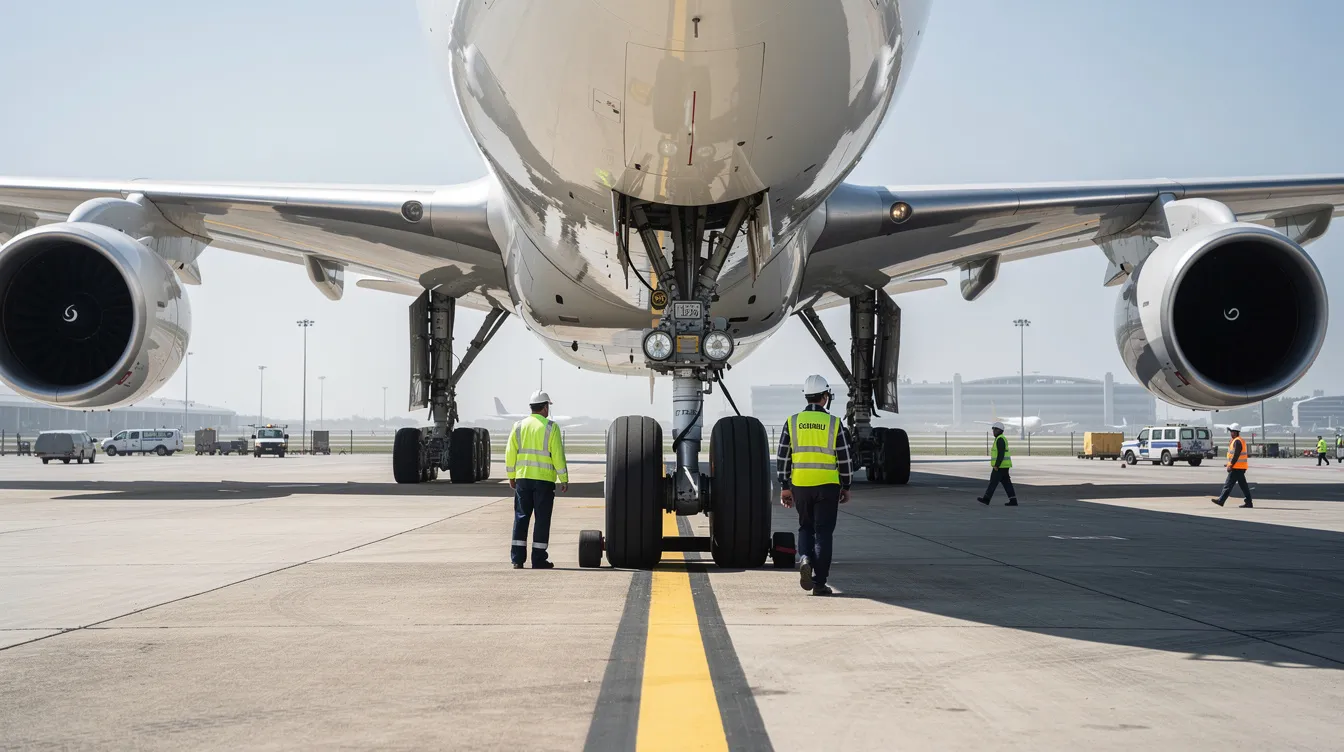
Landing gear reflects the weight difference: the A380 has 22 wheels compared to the 747-8's 18 wheels, distributing its far greater mass across runway surfaces.
Airport compatibility matters. The A380's massive wingspan and height required many airports to build dual-jetbridge gates, widen taxiways, and reinforce pavement. The 747-8, on the other hand, could often use existing 747 gates with minimal modification, giving it a forward advantage in operational flexibility.
Weight, Payload And Performance: Superjumbo Muscle Compared
Both aircraft are designed primarily for long-haul international travel, but the A380 carries substantially more weight in every category.
The A380 has a maximum take-off weight of 1,268,000 lbs (575 t). The 747-8 has a maximum take-off weight of 987,000 lbs (448 t)-a gap of roughly 281,000 lbs. That is the weight equivalent of a fully loaded Boeing 737.
Operating empty weight for the A380 sits at approximately 610,200 lbs (277 t), with a maximum payload around 209,700 lbs (95 t). The 747-8 carries a maximum payload of about 167,700 lbs (76 t). In bulk, the A380 simply moves more people, luggage, and cargo per trip.
Both rely primarily on advanced aluminum alloys with limited composite usage compared to modern twinjets like the Boeing 787 or Airbus A350. This partly explains why newer, lighter aircraft have overtaken them economically.
The maximum range of the Airbus A380 is approximately 8,000 nautical miles. The 747-8 covers slightly less at around 7,730 nautical miles. Cruise speed is similar-both fly at roughly Mach 0.85. Real-world range, of course, depends on seat configuration, cargo, and wind conditions including headwinds and tailwinds.
High temperature and altitude performance matters for route planning. Airports like Johannesburg or Dubai in summer impose weight restrictions on departing aircraft. The A380's larger wing and lower wing loading can help in less dense air, but both superjumbos face significant maximum take off weight penalties in hot conditions.
Engines And Technology: Quadjet Powerhouses
Both aircraft are equipped with four engines for thrust-a configuration that once represented the pinnacle of long-haul reliability but now faces economic headwinds from quieter engines on efficient twinjets.
The A380 uses Rolls-Royce Trent 900 or Engine Alliance GP7200 engines, each producing approximately 70,000–80,000 lbf of thrust. The A380 has a total thrust of around 320,000 lbf across all four engines.
The 747-8 is powered exclusively by General Electric GEnx-2B engines, each delivering about 66,500 lbf. The 747-8's engines provide a total thrust of 266,000 lbf-sufficient for its lighter airframe.
Cockpit philosophy differs sharply. The A380 features full fly-by-wire controls with Airbus sidestick inputs, ECAM monitoring, and flight envelope protection. The 747-8 retains the more traditional Boeing control column with partial fly-by-wire augmentation-a difference pilots personally notice within seconds of sitting down.
The A380 has thrust reversers only on its two inboard engines, while the 747 passenger variants typically deploy reverse thrust on all four. This affects landing technique, noise footprint, and runway distance requirements.
Looking forward, neither quadjet architecture is being replicated in new commercial programs. Modern widebodies rely on two engines to cover the same range with substantially lower operating costs.
Cabin Layout, Comfort And Passenger Experience
Imagine a long flight from London to Singapore overnight. The aircraft you fly on shapes every hour of that journey.
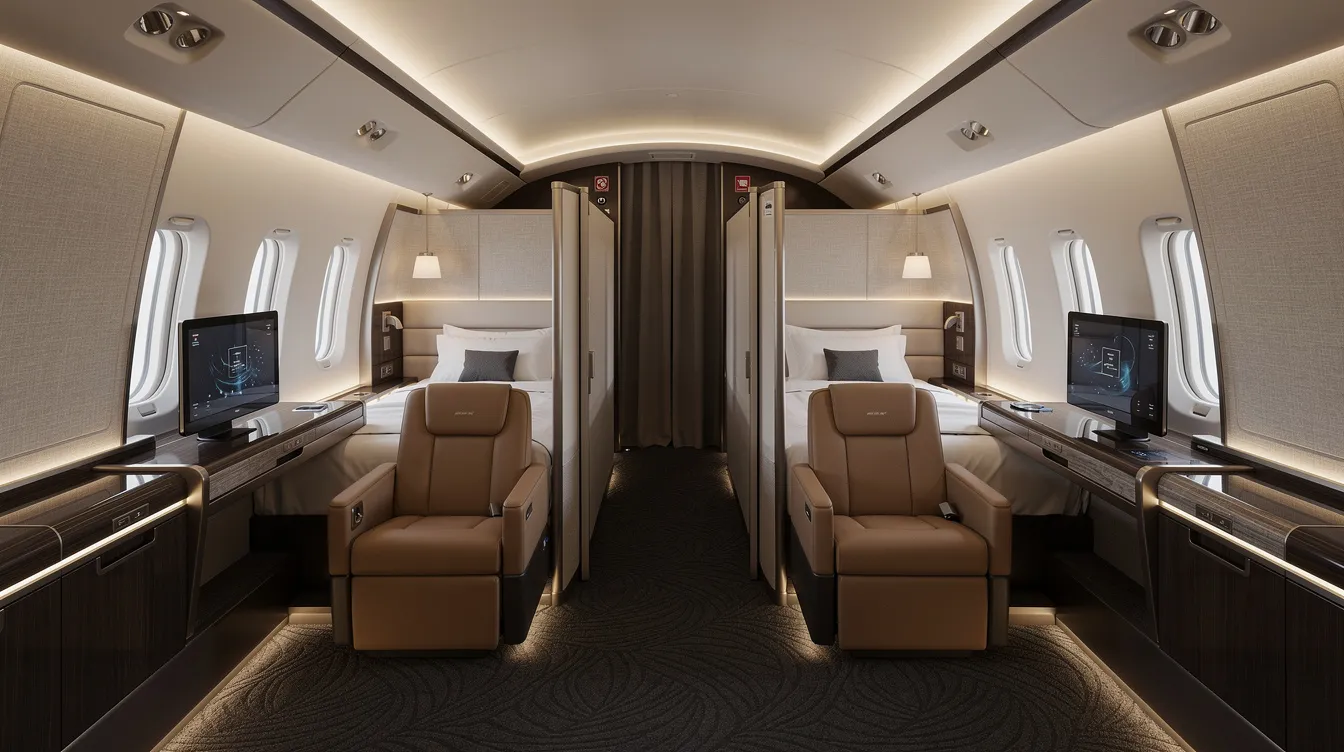
The A380's full double deck allows airlines to configure expansive layouts: ten-abreast economy on the main deck, premium cabins on the upper deck, and amenities like onboard bars and shower spas. Emirates, for instance, installs private first-class suites with closing doors and rainfall showers. Korean Air and Singapore Airlines similarly use the upper deck for flagship premium products.
The A380's upper deck allows for more passenger space dedicated to premium travelers, creating a quieter, more exclusive zone that some describe as a "private jet within an airplane."
The 747's distinctive hump creates a different atmosphere. British Airways historically used the upper deck for intimate first-class or business-class cabins-a cozy experience, but the 747-8's upper deck is smaller and only partial, limiting what airlines can do with it.
The A380 offers a quieter cabin experience compared to smaller jets and is quieter than the 747. A380 cabin humidity levels are better than the 747, reducing fatigue on trips exceeding ten hours. The A380 provides a smoother ride than the 747-its size and wing design make it feel remarkably stable in turbulence, almost like a cruise ship in the skies, helping passengers reach their destination feeling less fatigued after a long flight.
At the rear of a 747, especially older variants, passengers can feel more dynamic flexing during rough air. Kids and light sleepers tend to notice this over a longer time in flight.
Airline Operators: Emirates, Korean Air, British Airways And Beyond
The world's leading airlines adopted these two aircraft very differently.
Emirates is the largest A380 operator by far, building its entire Dubai hub strategy around high-capacity A380 routes to destinations like London, New York, Sydney, and Bangkok. At peak, Emirates operated over 120 A380s-more than any other airline combined.
British Airways uses A380s on key Heathrow trunk routes such as London–Los Angeles and London–Dubai. Korean Air historically operated both A380s and 747s, reflecting a flexible strategy for regional and intercontinental service from Seoul Incheon-routes like Seoul–New York and Seoul–Paris.
Lufthansa brought part of its A380 fleet back into service as long-haul demand recovered post-pandemic, deploying them on routes from Munich and Frankfurt.
Many airlines slowly retired passenger 747s through the 2010s. Delta phased out its last 747 in 2017. The COVID-19 pandemic accelerated retirements across the board-though cargo demand kept 747-8F freighters very much alive. Operators like Cargolux and UPS continue to rely on the 747 to carry outsized freight each week.
The 747 family serves passenger and cargo roles, but the balance has tipped decisively toward cargo. For the A380, no viable freighter variant ever materialized-the A380F concept failed to attract enough orders and was cancelled.
Economics, Routes And The End Of The Superjumbo Era
The economic logic that created both superjumbos ultimately turned against them.
Four engines mean high fuel burn, high maintenance, and the need to consistently fill 400–500+ seats. Airlines must maintain load factors near 90–95% on A380 routes to break even-a dead zone of profitability if demand dips even slightly.
The A380 relied on hub-to-hub, slot-constrained routes. The 747 had broader historical use across passenger, combi, and cargo markets, giving it more economic flexibility.
Aircraft like the Boeing 787 and Airbus A350 allowed airlines to run more frequent, point-to-point flights between secondary cities with lower risk. This trend undercut the business case for ultra-large four-engine types.
Airbus announced the end of A380 production in 2019, with the final delivery in 2021. Boeing delivered the last 747-8F freighter in early 2023. Both programs are now closed.
The 747 retains a vital cargo role the A380 never captured. The 747's hinged nose door and main deck design let it carry oversized freight-engine parts, satellites, heavy machinery-that no other aircraft can handle. The A380's full double-deck passenger architecture made a freighter conversion structurally and economically impractical.
A380 vs 747 From A Private Aviation Perspective
While the A380 and 747 represent peak commercial capacity, private travelers usually prioritize something different: control, privacy, and time.
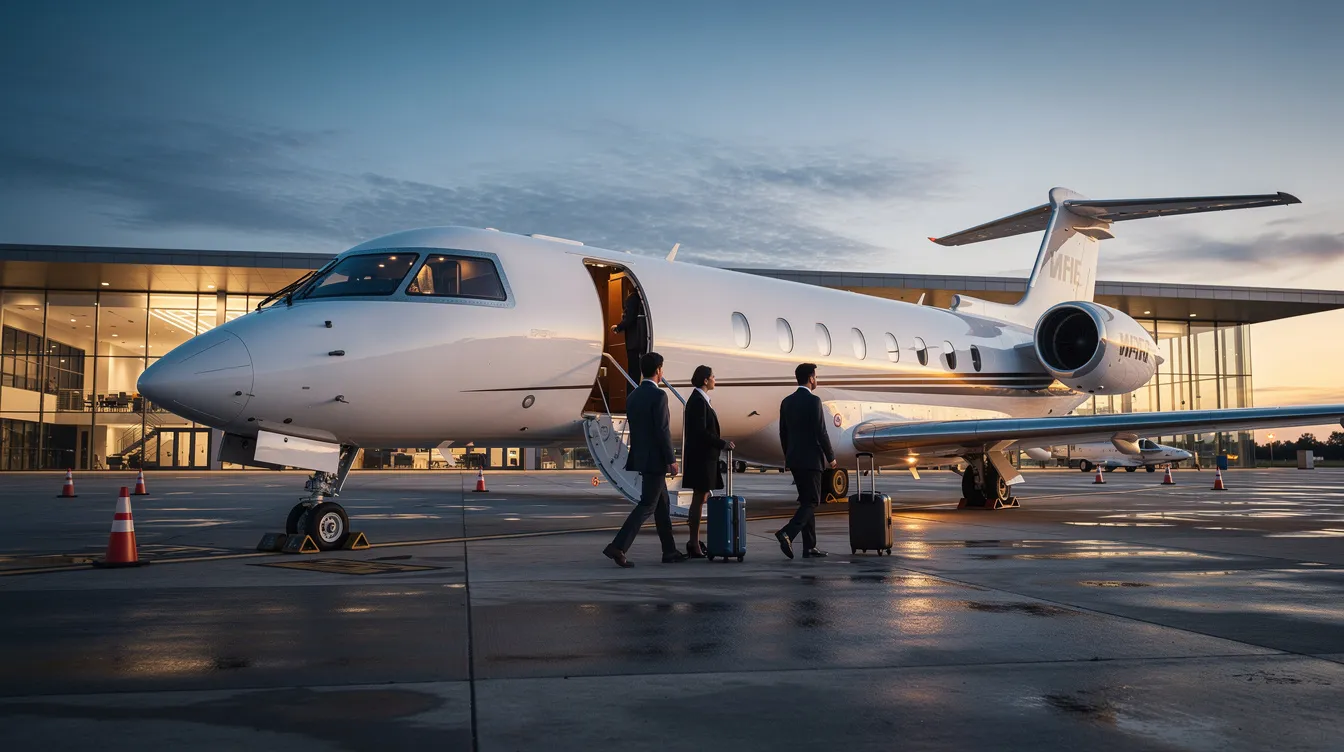
Consider the experience of boarding a packed A380: multiple jet bridges, security queues, gate announcements, and a cabin shared with 500+ passengers. Now contrast that with walking straight to a waiting private jet at an FBO, where there is no conventional security line, no boarding group, and no waiting.
For a corporate team of 8–10 traveling from New York to London, a large-cabin private jet accessed through a BlackJet Jet Card turns a multi-hour airport process into a controlled, efficient departure. The executive who might otherwise choose a British Airways A380 or Korean Air service instead gains flexible departure times, direct access to closer airports, and productive cabin time.
BlackJet's fleet access spans multiple aircraft categories-from light jets for regional hops to ultra-long-range large-cabin jets capable of intercontinental legs that overlap with A380 and 747 routes, but with far fewer passengers on board.
The difference is not about matching the scale of a superjumbo. It is about right-sizing the aircraft to your mission-an approach that often proves more efficient for business trips and family travel alike.
Safety, Technology And Sustainability: Superjumbos vs Modern Private Jets
Both superjumbos maintain strong safety records.
The A380 has had no hull-loss accidents to date-one of the cleanest records in commercial aviation history. The 747 family has decades of reliable service across thousands of long-haul flights, supported by rigorous maintenance frameworks.
BlackJet applies similarly rigorous standards to private aviation through its BlackJet Certified program, which includes operator vetting, ARGUS and Wyvern audit protocols, and standardized safety certification.
Environmental considerations matter. Four-engine superjumbos can achieve competitive per-seat efficiency when full, but on lightly loaded routes they become less efficient. Private aviation addresses this through right-sizing-selecting the smallest aircraft that fulfills the mission.
BlackJet's carbon-neutral commitment and 25+ Hour Jet Card mean every Jet Card flight includes carbon offsetting at no extra cost, a straightforward approach to sustainable travel.
Choosing Your Experience: When Superjumbos Make Sense And When Private Jets Win
The better choice depends entirely on your priorities.
Flying on an A380 or 747 in premium cabins still makes sense for solo travelers or couples on high-demand routes where airlines like Emirates or British Airways offer exceptional first-class products. If you want an onboard shower or a cocktail bar at 40,000 feet, these superjumbos deliver.
Private jets win decisively for multi-city trips over a few days, time-critical business travel, destinations poorly served by A380 or 747 routes, or privacy-sensitive flights. Imagine a board meeting schedule requiring New York–Frankfurt–London–Zurich in 48 hours-exhausting or impossible on fixed commercial schedules, but straightforward with a BlackJet Jet Card and tailored departure slots.
At a cost level, commercial first-class tickets on flagship A380 routes can run $15,000–$25,000 per person one-way. Split a large-cabin charter among 6–8 travelers, and the per-person cost approaches commercial premium pricing-with vastly more flexibility and zero airport hassle, especially when you understand the broader private jet price list and access options.
Serious frequent travelers should at least evaluate Jet Card programs alongside commercial premium cabins, using a clear guide to jet card costs and structure to compare value. The capacity of a superjumbo is remarkable; the control of a private jet is transformative.
FAQs: A380 vs 747 And Private Jet Alternatives
Is the Airbus A380 bigger than the Boeing 747? Yes. The A380 is wider, taller, and heavier. The Boeing 747-8 is 250 feet long, the A380 is 238 feet-so the 747 is longer-but in every other dimension the A380 leads, while for private travel there are private jet options for up to 50 passengers that rival narrowbody airliners in size.
Which is more comfortable for long flights? The A380 generally delivers a quieter, smoother, more humidity-controlled cabin. Comfort also depends heavily on airline configuration and seat class, or on which 10 million dollar private jet options you choose if you prefer ownership or bespoke access, or even private plane rideshare solutions if you want to balance comfort with shared costs.
Why are airlines retiring four-engine jets? Modern twin-engine widebodies achieve similar range with lower fuel burn, lower maintenance costs, and greater route flexibility-making quad-engine economics hard to justify, just as understanding jet card pricing structure helps travelers justify private aviation costs or decide instead to buy just a seat on a private jet.
Can a private jet match the range of an A380 route? Many ultra-long-range private jets now cover 6,000–7,700 nautical miles. Aircraft like the Bombardier Global 7500 and Gulfstream G650ER handle most intercontinental missions, and several 16-seat private jet options comfortably support these ranges for larger groups, while more economical travelers might look at the cheapest private jet options for shorter missions.
How does flying private with BlackJet compare to first class on an A380 or 747? Private offers complete schedule flexibility, no airport queues, full privacy, and customized service, with private jet options for around 20 passengers when you need to move a larger group or more budget-friendly private aircraft choices when cost control matters. Commercial first class has exceptional onboard amenities but is bound by fixed departure times and shared spaces.
How does BlackJet ensure safety and carbon neutrality? Through its BlackJet Certified operator standards, third-party audits, and built-in carbon offsets on every Jet Card flight, whether you choose a 100 hour Jet Card structure, a smaller commitment, explore unlimited private jet membership models, or compare with NetJets jet card costs.
When should I consider a Jet Card instead of commercial long-haul flights? When you fly long-haul several times a year, when schedule or privacy matters, or when the combined cost and time savings of private travel make it competitive with commercial premium cabins-and when a 50 hour Jet Card cost framework aligns with your expected flying, you apply strategies to fly private more cheaply, compare the best jet cards for frequent flyers, and evaluate top private jet companies as potential partners.
Conclusion: Legacy Of The Superjumbos And The Future Of High-End Travel
The A380 was the ultimate passenger superjumbo. The 747 was the original jumbo jet-a pioneer whose life in the skies spanned over half a century. Both are now closed to new production, but their influence on modern aviation is far from dead.
For enthusiasts, these aircraft remain amazing icons. For airlines, the future belongs to efficient, flexible twinjets. And for travelers who want the comfort and exclusivity once reserved for superjumbo first class-but with far greater control over schedule, routing, and privacy-BlackJet offers an elevated path forward.
Explore BlackJet Jet Card options and discover how private aviation can reshape your travel beyond even the finest commercial cabins.


 Sign up with google
 Sign up with Apple