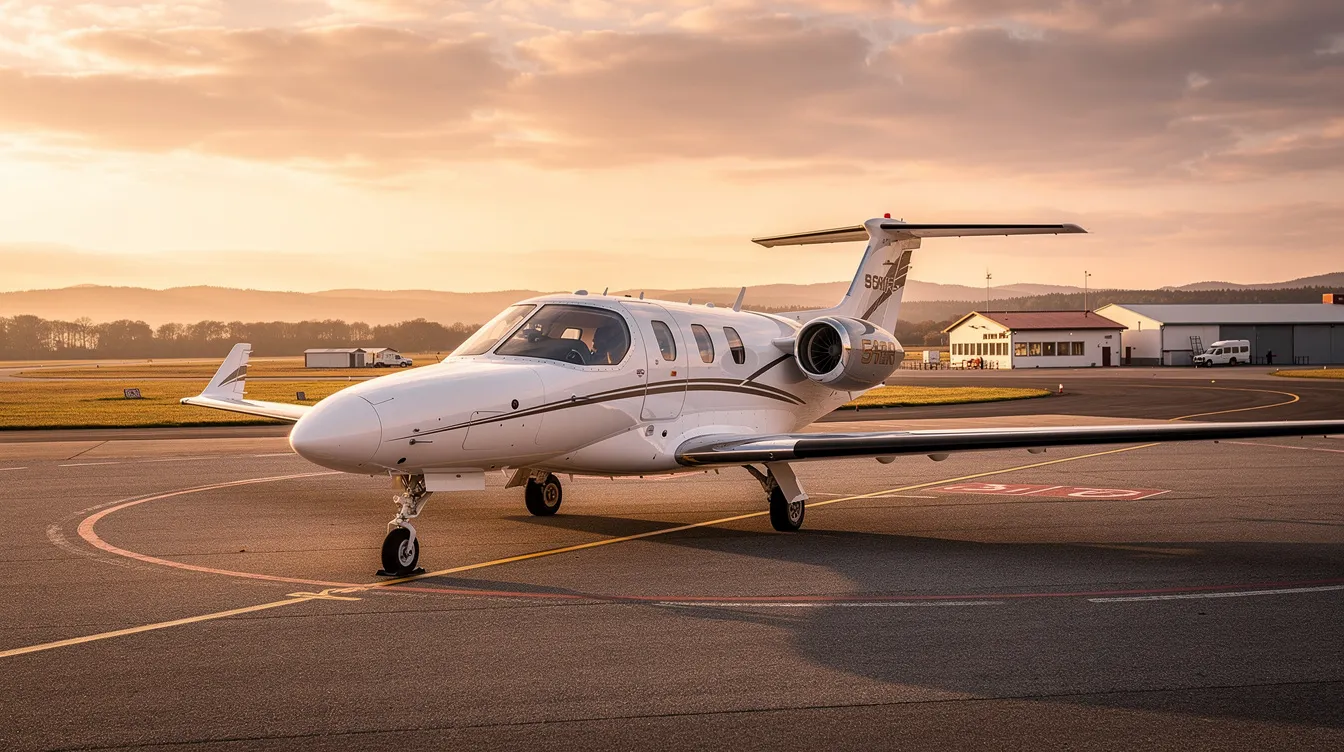
In today’s fast-paced world, private jet access transcends mere luxury—it's a strategic advantage for high-net-worth individuals, corporate leaders, and discerning travelers who value time, convenience, and customization. Unlike commercial aviation, private flights save hours by eliminating long security lines, layovers, and rigid schedules. For example, a business executive flying from New York to Nashville in a six-seat plane recovers nearly half a workday compared to commercial first class. This efficiency translates into increased productivity and seamless travel experiences tailored to your unique needs.
This guide is for prospective buyers, owner-pilots, and business travelers considering a six-seat aircraft purchase or alternative private aviation solutions. We cover leading six-seat aircraft for sale in 2026, cost considerations, and how to choose between ownership and Jet Card programs.
Key Takeaways
Looking to quickly identify the best 6-seat aircraft for sale in 2026? This guide covers the leading options by category—single-engine piston aircraft, twins, turboprops, and light jets—along with the critical factors that separate a smart purchase from a costly mistake. Alongside performance and cost, we highlight pillars of private aviation: safety through rigorous certification, sustainability via carbon-neutral flights, and cutting-edge technology that enhances situational awareness and flight efficiency.
Model | Engine/Powerplant | Range (nm) | Useful Load (lb) | Price Range |
|---|
Beechcraft Bonanza A36/G36 | 285 hp Continental IO-520-B | 765 | 1,400–1,500 | $100,000–$375,000 |
Cessna 206 Stationair | 300 hp Lycoming IO-540 | 730 | 1,700+ | $100,000–$225,000 |
Piper Saratoga PA-32R | 300 hp Lycoming IO-540 | 780 | 1,500–1,600 | $50,000–$175,000 |
Piper Malibu Mirage | 350 hp Lycoming TIO-540-AE2A (turbocharged) | 980 | 1,200–1,400 | $350,000–$900,000 |
Cessna Citation Mustang | 2x Pratt & Whitney Canada PW615F turbofans | 1,170 | 1,200–1,400 | $1.5M–$3.0M |
When comparing any aircraft listing, prioritize three metrics: useful load (target 1,400+ lb for four adults plus bags), range at typical cruise power, and annual operating cost at your projected hours.
Buyers who want the benefits of private aviation without ownership complexity should consider BlackJet’s Jet Card membership programs as a complement or alternative to a personal six-seat aircraft.
Why a 6 Seat Plane is a Strategic Asset, Not Just a Luxury
Consider a New York to Nashville trip—720 nautical miles. In a Beechcraft Bonanza A36, door-to-door time clocks around 4.5 hours, including ground transport. The same route via commercial first class? Eight to ten hours minimum once you factor in security lines, connections, and airport drives. That’s half a workday recovered on every round trip.
A six-seat plane lets business owners, family offices, and entrepreneurs move small teams efficiently while carrying cargo that creates headaches commercially—ski equipment, golf bags, sample cases, or sensitive materials requiring chain-of-custody control. Most six-seat general aviation aircraft can be found in the single-engine piston category, accessing over 5,000 U.S. public airports versus the roughly 500 served by scheduled carriers.
Many BlackJet Jet Card members own or co-own a six-seat aircraft for regional VFR hops while relying on BlackJet for longer-range jet missions, weather-critical trips, or routes where piston aircraft range falls short.
Private flying now competes with commercial, not just on comfort, but on productivity. Board-level discussions happen without TSA scans. Itineraries flex to your schedule, not airline timetables. Dispatch reliability runs around 95% versus airlines’ 80% on-time performance.
How Jet Cards Differ: Flexibility Without Ownership
For travelers flying fewer than 100 hours per year or those who value flexibility, BlackJet’s Jet Card programs offer effortless access to a diverse fleet of aircraft categories, and understanding Jet Card pricing structures helps optimize value across different membership options. Unlike owning a single six-seat plane, Jet Cards provide seamless, on-demand private jet access with proprietary safety certifications, real-time digital booking, and carbon-neutral flights at no extra cost. Members can select aircraft types tailored to each mission—from light jets for regional hops to midsize or large cabins for international travel—without the complexities of maintenance, insurance, or crew management.
Best 6 Seat Single-Engine Piston Aircraft for Sale in 2026
Single-engine aircraft generally offer lower operating costs compared to twin-engine models, with hourly operating costs for six-seat aircraft ranging from $190 to over $600, depending on the model, making them attractive compared with many of the cheapest private aircraft options on the market. This makes them attractive for owner-pilots flying 100–300 hours annually. The aircraft buying process often involves prioritizing mission needs and budget considerations—and these models dominate 2026 listings.
Beechcraft Bonanza A36/G36
The Beechcraft A36 Bonanza features a 285 hp Continental IO-520-B engine and has a maximum range of 765 nautical miles.
Produced from 1970 to 2005, features a 285 hp engine and has a typical used price range of $100,000 to $375,000.
Prized for speed and handling with -7G to +3.8G aerobatic certification, useful load around 1,400–1,500 lb, and cruise near 165–175 KTAS.
Cessna 206 Stationair
The “SUV of the sky” with high-wing design, large cargo doors accommodating 800 lb pallets, and useful load around 1,700+ lb.
High-wing designs like the Cessna 206 are favored for operating from short, grass-strip runways.
Typically used price range of $100,000 to $225,000 and produced from 1964 to 1986.
Excellent choice for backcountry, float operations, and utility missions.
Piper PA-32 Cherokee Six / Saratoga
Produced from 1965 to 1980, has a typical used price range of $50,000 to $175,000 and features a 300 hp engine.
Club seating configuration accommodates adults up to 6’4” in a 52” wide cabin, with a useful load typically 1,500–1,600 lb.
Piper and Beechcraft are popular manufacturers in the six-seat aircraft market.
Piper Malibu Mirage
Updated in 1988, this pressurized single-engine aircraft features a turbocharged Lycoming TIO-540-AE2A engine with 350 hp and offers a maximum range of 980 nautical miles.
Provides an excellent option for pilots seeking longer IFR flights with pressurization and enhanced performance.
Cessna Citation Mustang
Launched in 2002, this entry-level jet seats six passengers and is powered by two Pratt & Whitney Canada PW615F turbofans, delivering a maximum range of 1,170 nautical miles.
Approved for single-pilot operation, it offers a step up into turbine-powered flight with jet speed and efficiency.
Weight and Payload Considerations
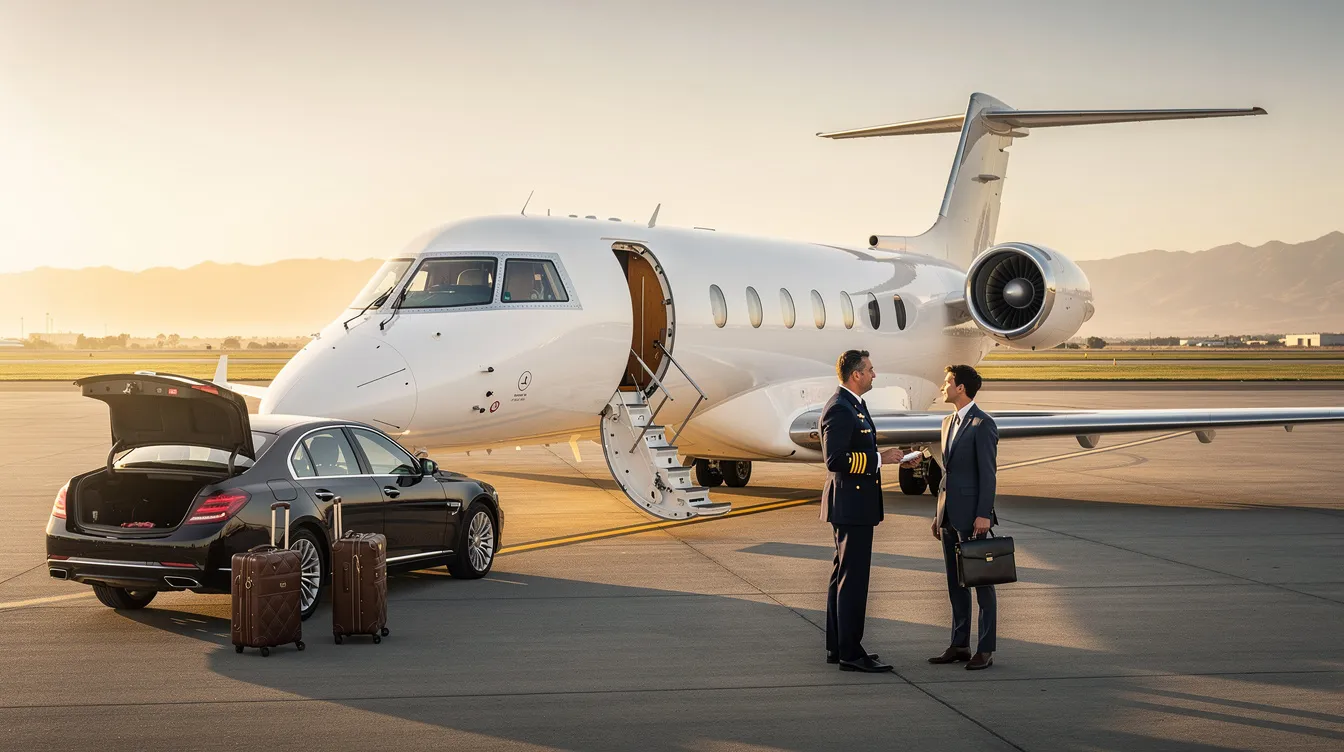
Six-seat planes are often limited by weight, requiring careful differentiation between useful load and actual payload. Many six-seat aircraft may not carry six adults comfortably with a full fuel load. Typically, six-seaters have a useful load of 1,300–1,400 pounds, which must cover passengers, luggage, and fuel.
Example Payload Calculation:
A light family of four (600 lb) + 300 lb baggage on a 700 nm trip needs roughly 600 lb of fuel.
Requires at least 1,500 lb of useful load to fly comfortably without sacrificing range.
Useful Load and Payload Table:
Aircraft Model | Typical Useful Load (lb) | Max Passengers | Full Fuel Payload (approx.) | Notes |
|---|
Beechcraft Bonanza A36/G36 | 1,400–1,500 | 6 | ~800–900 | Good for 4 adults + bags, full fuel |
Cessna 206 Stationair | 1,700+ | 6 | ~1,000–1,200 | Best for cargo, utility, and short fields |
Piper PA-32 Cherokee Six | 1,500–1,600 | 6 | ~900–1,000 | Spacious cabin, club seating |
Piper Malibu Mirage | 1,200–1,400 | 6 | ~700–800 | Pressurized, longer range |
Cessna Citation Mustang | 1,200–1,400 | 6 | ~800–900 | Jet performance, single-pilot certified |
Turboprops and Light Twins: Additional Options
Additionally, turboprops and light twins offer additional speed and redundancy for those with higher budgets, providing more options for buyers balancing performance and safety while still considering the cheapest private jet options that meet their mission needs.
Late-1990s to mid-2010s examples with Garmin G1000 avionics and modern autopilots command premium prices but boost resale value 20–30%. These models feature a cockpit with a user-friendly flight instrument panel, making flying more intuitive for pilots. The advanced G1000 cockpit, especially in High Sierra versions, offers upgraded technology and synthetic vision, enhancing both ease of use and situational awareness. These aircraft can complement BlackJet: owners use them for short, familiar routes while turning to Jet Cards for weather-challenging or long international trips where piston aircraft efficiency drops.
Accessing Off-Market Aircraft: Unlocking Exclusive Opportunities
Many of the best deals for six-seat planes are never listed publicly, making off-market aircraft a valuable option for buyers seeking unique opportunities and better pricing within an overall private jet price landscape that can be complex to navigate. Access to these exclusive off-market aircraft is often facilitated through a global network of private jet brokers and aviation professionals, ensuring discreet, efficient acquisition processes.
Choosing between new, high-performance models and reliable used aircraft is common when purchasing a six-seat airplane. Off-market options expand the buyer’s horizon, allowing tailored solutions that align with mission needs and budget considerations.
Safety, Sustainability, and Technology in Modern Private Aviation
Whether flying a personally owned six-seat plane or booking through BlackJet, safety protocols, environmental impact, and digital tools now represent central considerations for discerning travelers, and many first-time buyers naturally ask about private jet safety realities before committing.
Safety: BlackJet partners with operators holding ARGUS Platinum and Wyvern certifications, ensuring proprietary safety standards exceed industry norms. Pre-purchase inspections on used aircraft catch 80% of issues before acquisition, and modern avionics systems—such as Garmin G1000 with synthetic vision and WAAS LPV approaches—reduce controlled flight into terrain risks by 40%. Travelers comparing top private jet companies often focus on these same third-party standards and safety benchmarks.
Sustainability: BlackJet ensures every journey is carbon neutral—at no extra cost to you—through Gold Standard-certified forestry projects. This commitment to sustainable aviation complements efficient aircraft choices and offsets unavoidable emissions.
Technology: BlackJet’s seamless mobile and web booking platform offers real-time pricing, flight support, and scheduling flexibility. Modern six-seat aircraft increasingly feature factory air conditioning, known icing capability, and advanced filters to expand operational envelopes safely.
Ownership vs. Jet Card Access: When a 6 Seat Plane is (and Isn’t) the Right Move
Understanding when ownership makes sense versus flexible access models requires an honest assessment of annual hours, mission profiles, and appetite for operational complexity.
Decision Thresholds:
Annual Hours | Recommended Approach |
|---|
Under 50 hours | On-demand charter or Jet Card |
50–100 hours | Jet Card is likely more cost-effective |
100–200 hours | Ownership becomes competitive |
200+ hours | Ownership typically justified |
Families flying over 100 hours annually may find six-seater aircraft more economical than chartering. Fixed annual costs for owning a six-seat aircraft can range from $10,000–$20,000 including hangar and insurance. Insurance for six-seat aircraft usually costs 3–5% of the aircraft’s value annually. Annual inspections for six-seat aircraft can range from $10,000 to $30,000, so it’s worth comparing these expenses with the all‑in Jet Card cost per hour offered by membership programs.
For many travelers flying fewer than 75–100 hours per year, a Jet Card with BlackJet proves more cost-efficient than owning a six-seat aircraft, given overhead for hangar, insurance, crew, and maintenance reserves; frequent flyers should evaluate the best Jet Cards for their needs when making this comparison.
Example Scenario:
A CEO flying a six-person team between Los Angeles, San Francisco, and Phoenix could book a BlackJet light jet one week, then scale to a midsize for New York trips—flexibility a personally owned piston aircraft cannot efficiently provide.
Some high-net-worth individuals pair solutions: owning a single-engine piston for local weekend trips while using BlackJet Jet Cards for business-critical, long-range, or weather-sensitive missions, sometimes starting with flexible options like a 25-hour Jet Card program before committing further. BlackJet’s pillars—safety through third-party audits, technology via mobile booking with real-time support, and sustainability through carbon-neutral flights—represent advantages over managing those aspects individually as an aircraft owner.
Run a simple annual cost comparison between aircraft ownership (depreciation, financing, fixed and variable costs) and Jet Card membership to determine which aligns better with your typical routes and projected hours.
FAQ
What is the most versatile 6-seat single-engine piston aircraft for a private owner?
The Beechcraft Bonanza A36/G36 and Cessna 206 Stationair represent two of the most versatile options serving different missions, even though some owners will eventually graduate to top luxury private jets worldwide for longer-range or higher-capacity travel. The A36 Bonanza excels with a higher maximum cruise speed around 165–175 KTAS and refined handling—a great example of decades of production refinement since its first flight in 1970. The 206 Stationair offers superior cargo capability with 1,700+ lb useful load and large doors that can carry equipment other aircraft cannot accommodate. Pilots who value speed and cross-country efficiency choose Bonanza; those needing utility and backcountry capability choose Cessna, while travelers moving much larger teams often compare the best private jets for 20 passengers instead of six-seat aircraft.
How much does it really cost to own and operate a 6-seat piston aircraft per year?
For common models like the Bonanza or Piper Saratoga flying 150–200 hours annually, expect $120,000–$200,000 total annual cost. This breaks down to:
Hangar: $15,000–$20,000
Insurance: $10,000–$15,000
Fuel: $20,000–$25,000 at 12 GPH
Maintenance: $30,000–$40,000
Engine reserves: $25,000–$35,000
An equivalent 150 hours on a BlackJet light jet Jet Card runs approximately $750,000–$900,000—substantially higher, but it eliminates all fixed costs, depreciation risk, and operational management. Prospective members often benchmark this against a 100-hour Jet Card cost guide and other structures before deciding. Contact BlackJet for specific comparisons based on your mission profile.
Is a 6-seat single-engine aircraft safe for family travel compared with twins or light jets?
Safety depends heavily on pilot training, aircraft maintenance, and operating discipline—not merely engine count. AOPA’s 2025 Air Safety Institute data shows single-engine pistons with fatal accident rates of 0.8–1.2 per 100,000 hours, comparable to twins at 1.0–1.5 when IFR-equipped. Modern single-engine aircraft with IFR-capable avionics, autopilots, and de-ice systems flown by proficient pilots maintain strong safety records, though planning for very large groups may call for private jets that carry up to 50 passengers rather than multiple smaller airplanes. Professionally crewed jets accessed via BlackJet add another layer of oversight through verified crew training and maintained airframes.
Should I buy a 6-seat plane if I already use private jets a few times per year?
Evaluate three factors: annual flight hours, mission profile, and willingness to manage an aircraft. If you fly under 75–100 hours annually, expanding Jet Card usage with BlackJet may prove more practical than adding ownership complexity; many travelers in this range compare options using a detailed 50-hour Jet Card cost breakdown before committing. Off-market aircraft can provide buyers with unique opportunities that are not available through traditional listings, allowing for potentially better deals—but the purchase requires capital commitment, serial number tracking for maintenance, and ongoing management. For many travelers, keeping jets accessible through BlackJet while avoiding piston ownership makes sense.
Can I specify aircraft type or size when flying with BlackJet instead of owning my own plane?
BlackJet Jet Card members can request specific aircraft categories—light jets comparable in cabin size to a six-seat aircraft, or larger cabin classes, including helicopters when needed—particularly through structured options like the BlackJet 25+ Hour Jet Card. BlackJet uses its vetted network of powered turbine aircraft to match each trip with options meeting safety, performance, and comfort requirements, whether it’s a regional hop in the U.S. or specialized private jet charters in Karachi and other global hubs. Members gain access to multiple aircraft types rather than being limited to whatever single airplane sits in their hangar—enabling immediate delivery on diverse missions from regional hops to transcontinental flights, alongside other access models such as buying a seat on a private jet when whole‑aircraft charter isn’t necessary.
Elevate your travel—effortlessly. Whether you purchase a six-seat plane or choose flexible access, the goal remains the same: reclaiming time, privacy, and schedule control. With BlackJet, private flight becomes accessible on your terms through Jet Card programs delivering rigorous safety, carbon-neutral performance, and unmatched flexibility across aircraft categories.
Explore BlackJet’s Jet Card programs and discover how refined, meaningful travel becomes your new standard.
Conclusion: Unlocking the True Value of a 6 Seat Plane for Sale
Owning a six-seat aircraft is more than a statement of luxury—it’s a strategic asset that enhances productivity, flexibility, and travel freedom. Whether you choose a high-performance piston like the Beechcraft Bonanza A36, a versatile utility plane such as the Cessna 206 Stationair, or an entry-level jet like the Cessna Citation Mustang, understanding your mission profile, budget, and operational needs is crucial. Balancing ownership with alternatives like BlackJet’s Jet Card programs allows you to optimize travel across diverse scenarios—combining the convenience of your own aircraft for regional trips with seamless access to jets for longer or weather-sensitive missions.
BlackJet elevates private aviation by offering members exclusive access to a global fleet, backed by proprietary safety certifications, carbon-neutral flights, and cutting-edge digital booking technology. This approach redefines what it means to fly private: effortless, sustainable, and tailored to your schedule.
Discover how BlackJet can transform your travel experience. Visit blackjet.com today to explore premium Jet Card programs that unlock unparalleled flexibility, safety, and luxury—making private flight a practical, strategic choice for the discerning traveler.


 Sign up with google
 Sign up with Apple