
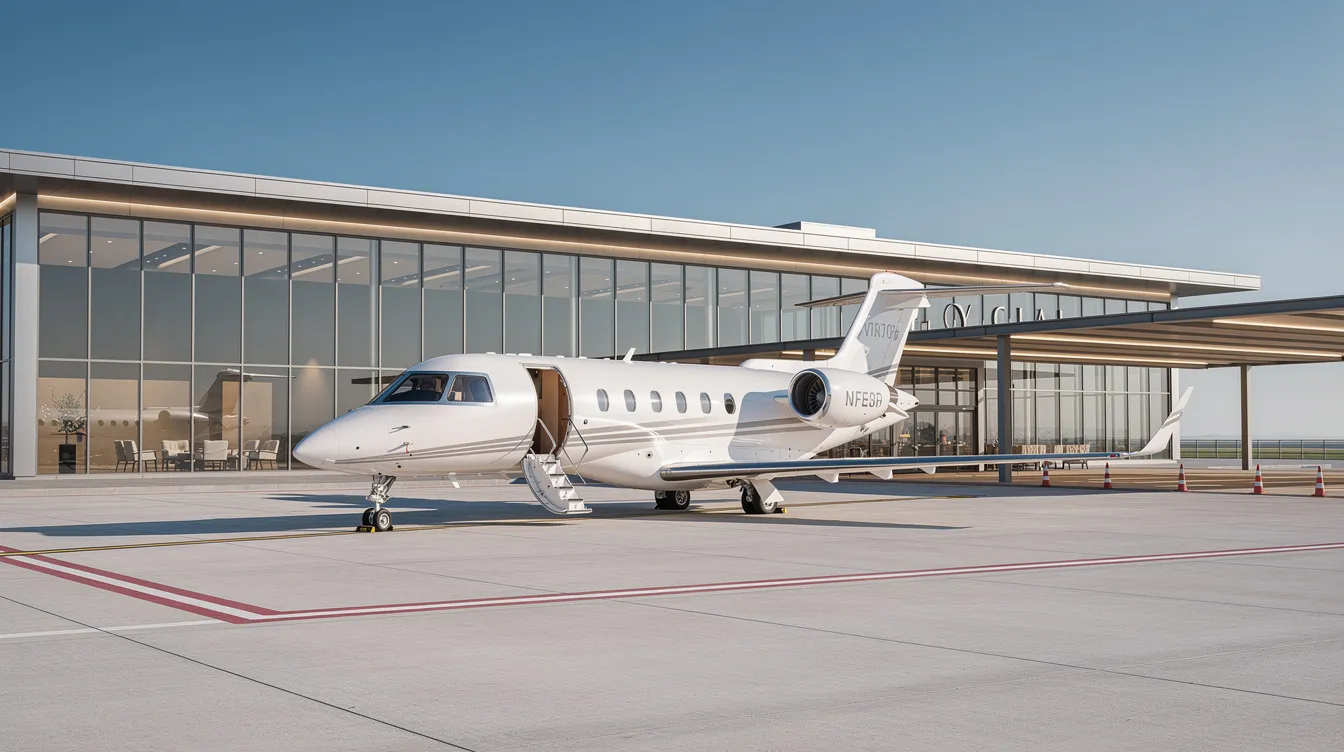
A private jet membership is an agreement that gives a customer access to private aviation under defined pricing and booking terms; a jet card is one type that may use a block of hours, a funded balance, or a pay-as-you-fly structure. This guide focuses on jet cards and on the access model used by BlackJet, the company that introduced the jet card model more than a decade ago and positions itself as the creator of the original Jet Card. You will follow one hour block from purchase through booking to the final statement. You will see what drives total cost, which contract terms deserve a written answer, and how a card compares with on-demand charter and fractional ownership.
Private Jet Membership and the Jet Card Defined
"Private jet membership" works as an umbrella term. Providers apply it to programs that look alike in marketing copy and behave very differently on a statement. Buyers often compare offerings from BlackJet, NetJets, Wheels Up, and Sentient Jet, and the structures behind those names are not identical. The main formats are:
Fixed-rate hour cards. You buy or commit to a block of hours and fly at a set hourly rate for each cabin category.
Funded or debit-style balances. You deposit dollars, and each trip draws down the balance at the applicable rate.
Pay-as-you-fly cards. A smaller upfront commitment secures card terms, and trips are billed as they are flown.
Annual-fee clubs. Recurring membership fees buy access and member pricing, with each trip charged separately.
Scheduled-seat products. You buy individual seats on set routes rather than the whole aircraft.
Exact terms vary by provider, so the program label tells you less than the agreement behind it. A jet card is a private aviation access program whose agreement sets how flight time or trip charges are purchased and used. It provides contractual flight access, not a share of an aircraft. A jet card buys access under an agreement; fractional ownership buys an interest in an aircraft or share under a separate ownership arrangement.
BlackJet offers two core products, the BlackJet 25-Hour Jet Card and the BlackJet 50-Hour Jet Card, with access across four cabin categories: Light, Midsize, Super-Midsize, and Large Cabin. Card Owners can move up or down in jet size from trip to trip at stable, fixed rates. Neither card is an ownership interest, and neither promises a specific aircraft. Each trip is matched to a BlackJet Certified aircraft and operator. For a shorter primer, read our jet card basics.
How Jet Card Hour Blocks and Balances Work
A purchased hour block, a dollar balance, and a pay-as-you-fly commitment can each be accounted for in a different way. An hour-based jet card tracks flight time against a purchased or contracted block, but billable time, minimums, aircraft changes, and unused-hour rules depend on the agreement. On a card sold as prepaid flight hours, each trip reduces the hour block. On a pay-as-you-fly card, each trip is billed on its own. The accounting runs in five stages:
Purchase or funding of the card.
A trip request with route, timing, and passengers.
Calculation of billable time under the contract.
Deduction from the balance, or a separate charge on pay-as-you-fly terms.
Reconciliation on the trip statement.
Billable flight time is the time a contract charges for a trip, which may differ from airborne time through stated allowances, rounding, or minimums. Ask how the agreement treats taxi time, whether a per-leg or daily minimum applies, and how partial hours round. Ask what happens to your rate on an upgrade or a switch between cabin classes.
Hypothetical 25-hour block at $10,000 per billable hour (illustration only, not a BlackJet quote or a representation of BlackJet accounting):
Event | Billable hours used | Value of hours used | Remaining hours | Remaining prepaid flight value |
|---|---|---|---|---|
Card purchase | 0.00 | $0 | 25.00 | $250,000 |
Trip A | 2.50 | $25,000 | 22.50 | $225,000 |
Trip B | 1.25 | $12,500 | 21.25 | $212,500 |
The example assumes one cabin class and no minimums, taxi additions, taxes, surcharges, or other fees. The $212,500 is illustrative prepaid flight value, not cash available for refund, and real contract accounting can differ. Keeping hours and dollars in separate columns makes errors easy to catch on a real statement. BlackJet Card Owners can review account details and card information on the Card Owner web platform, and our guide on how to track jet card hours covers reconciliation and your flight-hour balance in more detail.
Expiration, replenishment, refundability, transferability, and unused balances are separate questions, and each deserves its own written answer. A card's unused hours and its fixed hourly rate can have different time limits, so both provisions should be checked separately. On the BlackJet 50 Jet Card, hours never expire and hourly rates are guaranteed fixed for 12 months. Those two terms belong to the 50-hour product, so confirm the 25-hour card's provisions in its own agreement.

How Booking a Jet Card Flight Works
Booking starts with the trip details, not a promise of a particular tail number. A booking request should specify the route, timing, passengers, baggage, and cabin needs; the provider then confirms the available aircraft and applicable terms.
Choose and review a program. Read the card terms before your first request.
Submit the trip. Give departure and arrival airports, dates, and a departure window.
Describe the load. List passenger count, baggage, pets, accessibility needs, and other requirements.
Request a cabin and an estimate. Name your preferred category and ask for itemized flight hours and charges.
Review the proposal. Check the operating carrier, aircraft type, timing, terms, and charges.
Confirm the booking. Accept in writing through your program's channel.
Reconcile the statement. Compare final billed hours and fees against the estimate.
BlackJet gives Card Owners several ways into that sequence. The BlackJet app, available on the Apple App Store and Google Play, supports instant booking, detailed flight information, and 24/7 live chat. Card Owners can request quotes and book by text message or through the Card Owner web platform, with a client team available around the clock. The app shows in real time when an aircraft has completed its safety checks and gives instant access to a pre-flight BlackJet Certified Safety Report. Instant digital booking describes how fast you can submit and manage a trip; confirmation of a specific aircraft depends on the card's booking window and operational conditions.
Short-notice, multi-passenger trips show why category matters. BlackJet's light jet category seats up to seven, yet six passengers with full bags may exceed what a given light jet can carry on a three-hour leg with required fuel reserves. Seating configuration, baggage volume, route, runway length, weather, and operational limits determine the actual aircraft and whether the trip works at that hour. A midsize or super-midsize cabin may be the practical answer, and the estimate should show how many flight hours that choice bills.
Aircraft category is a cabin-size grouping, not a promise that a particular aircraft model or configuration will operate every trip.
BlackJet cabin categories (category maximums from BlackJet's published fleet information; actual seating, payload, and range vary by aircraft, configuration, fuel, and conditions):
Category | Example BlackJet Certified models | Passengers (category maximum) | Average speed | Average range |
|---|---|---|---|---|
Light | Citation CJ3+, Phenom 300, HondaJet, Learjet 70/75 | Up to 7 | 516 mph | 1,149 statute miles (New York to Atlanta) |
Midsize | Citation XLS+, Praetor 500, Hawker 800XP, Learjet 75 | Up to 8 | 463 mph | 1,790 statute miles (Austin to New York) |
Super-Midsize | Challenger 350, Gulfstream G280, Citation Longitude, Praetor 600 | Up to 8 | 555 mph | 3,950 statute miles (Los Angeles to Boston) |
Large Cabin | Gulfstream G650, Falcon 8X, Global 7500, Legacy 650 | Up to 12 | 535 mph | 5,100 statute miles (New York to London) |
Availability for any of these categories depends on your agreement and the day's conditions. Our private jet booking guide covers trip logistics in more depth.
What Does a Jet Card Cost? Pricing and Hourly Rates
A jet card's upfront price is not necessarily the total cost of the flights you plan to take. An hourly rate is a price per contract-defined billable flight hour; it is not necessarily the complete price of a trip or the upfront cost of a card. Clear jet card pricing keeps those two numbers apart.
BlackJet published card figures, as reviewed in June 2026 (starting points for a quote, not a new offer):
Product and cabin | Block | Payment model | Published upfront figure | Hourly rate | Tax and fuel treatment | Other known charges | Source and date | Open questions | |
|---|---|---|---|---|---|---|---|---|---|
BlackJet 25 Light Jet Card | 25 hours | Pay-As-You-Fly | $50,000 | $5,484 | Rate includes fuel surcharge and Federal Excise Tax | Confirm in quote | BlackJet published pricing, June 2026 | How the upfront amount applies to flights | |
BlackJet 25-Hour Jet Card | 25 hours | Fully-Funded | $225,000 | Confirm in quote | Confirm in quote | Confirm in quote | BlackJet published pricing, June 2026 | Cabin and rate applied to the funded amount | |
BlackJet 50 Mid Jet Card | 50 hours | Pay-As-You-Fly | $95,000 | $8,038 | Rate includes fuel surcharge and Federal Excise Tax | Confirm in quote | BlackJet published pricing, June 2026 | How the upfront amount applies to flights | |
BlackJet 50 Super-Mid Jet Card | 50 hours | Pay-As-You-Fly | $95,000 | $10,384 | Rate includes fuel surcharge and Federal Excise Tax | Confirm in quote | BlackJet published pricing, June 2026 | How the upfront amount applies to flights | |
BlackJet 50 Large Cabin Jet Card | 50 hours | Pay-As-You-Fly | $95,000 | $13,131 | Rate includes fuel surcharge and Federal Excise Tax | Confirm in quote | BlackJet published pricing, June 2026 | How the upfront amount applies to flights | |
BlackJet 50-Hour Jet Card | 50 hours | Fully-Funded | $450,000 | Confirm in quote | Confirm in quote | Confirm in quote | BlackJet published pricing, June 2026 | Cabin and rate applied to the funded amount |
BlackJet lists its hourly rates as inclusive of fuel surcharge and Federal Excise Tax, two line items many buyers otherwise have to track separately. The BlackJet 50 Jet Card pairs those rates with a 12-month rate guarantee and hours that never expire. Card Owners can switch between cabin sizes at stable, fixed rates, and eligible round trips can qualify for efficiency discounts of up to 15%. Every Card Owner flight is offset to be carbon and emissions neutral at no cost to the client.
Do not add a card's upfront price to its hourly rates to estimate a total. Ask BlackJet how the upfront amount is applied: whether it funds flight time, how it is credited, and how trips draw it down. None of the figures above should be read as an annual fee or a refundable deposit until the agreement documents their treatment. To compare jet card pricing, identify what is paid upfront, how flights are billed, which taxes and fuel charges are included, and which costs remain variable.
Private jet membership pricing for a year of travel starts with your own numbers. A BlackJet annual estimate is built from expected use across its 25- and 50-hour cards. To request a BlackJet quote for a year's travel, provide estimated flight hours, routes, passenger and baggage needs, booking notice, and preferred aircraft categories; ask for an itemized proposal and current terms.
Taxes, Fuel, Peak Days, and Other Fees to Check
Two cards with the same hourly rate can produce different trip totals. The gap comes from additional fees and from billing rules that change the hours charged. Potential charges include:
Applicable federal taxes, including segment amounts
Fuel surcharges or fuel adjustments
Airport, landing, and handling charges
Repositioning, the cost of moving an aircraft to your departure point
Peak-day premiums
Deicing
International fees, customs, and overflight charges
Catering and special requests
Change and cancellation charges
Some costs never appear as a line item. Daily or per-leg minimums, taxi allowances, rounding, and aircraft upgrades can raise billed hours or change the applicable rate instead of showing up as a separate charge.
A fuel surcharge is an additional or separately identified fuel-related charge whose calculation and inclusion depend on the contract. BlackJet's published rates for the products in the pricing table include the fuel surcharge and Federal Excise Tax, and its program materials describe no repositioning fees on standard bookings. Those inclusions apply to the specified products, so confirm current terms and what qualifies as a standard booking before assuming they cover every trip charge.
Federal transportation taxes follow their own rules. The IRS Form 720 instructions list a 2026 tax of $5.30 per domestic segment and $23.40 per person on international flights that begin or end in the United States. Whether those amounts apply to a particular flight is a question for the written quote and a qualified tax adviser. Our jet card tax guide covers the broader picture.
Deicing needs its own question. Ask whether it is included, passed through at cost, capped, or subject to your approval; costs vary by airport, conditions, aircraft, and provider. Never decline required safety treatment to save money. A complete jet-card comparison should account for billable-time rules and any applicable tax, fuel, peak-day, airport, deicing, and cancellation charges.
Inclusions and additional fees to confirm:
Charge or billing rule | What to ask | Included in BlackJet published rate | Separate or variable | Evidence |
|---|---|---|---|---|
Fuel surcharge | Is it fixed, indexed, or capped? | Yes, for listed products | Confirm for other products | BlackJet published pricing, June 2026 |
Federal Excise Tax | Which taxes sit in the rate and which are added? | Yes, for listed products | Segment amounts: confirm in quote | BlackJet pricing; IRS Form 720 instructions |
Repositioning | What counts as a standard booking? | None on standard bookings, per program materials | Confirm for nonstandard trips | BlackJet program description |
Peak days | Which dates carry premiums or longer notice? | Confirm in quote | Confirm in quote | Written agreement |
Deicing | Included, passed through, or capped? | Confirm in quote | Varies by airport and conditions | Written agreement |
Airport and handling | Which fees pass through to the Card Owner? | Confirm in quote | Varies by airport | Written agreement |
Minimums and taxi | Is there a daily or per-leg minimum or a taxi allowance? | Confirm in quote | Affects billed hours | Written agreement |
Changes and cancellation | What notice avoids a charge? | Confirm in quote | Depends on timing | Written agreement |
Availability, Booking Windows, and Peak-Day Rules
A guarantee in a jet card agreement is a contractual commitment with conditions. It does not cover a specific tail number, and it cannot promise that weather will permit departure. Guaranteed availability is meaningful only when its notice period, service area, aircraft category, peak-day conditions, and remedies are understood. A booking window is the minimum notice required by a contract for a particular availability commitment to apply.
BlackJet's program materials describe guaranteed availability during peak demand. Its Large Cabin Jet Card adds guaranteed, extended access to European destinations including Rome, Paris, Milan, and Frankfurt, with fixed rates for domestic U.S. and European flights and London serving as a hub for onward travel. Ask BlackJet for the notice periods and conditions attached to each commitment in your agreement.
Standard and peak-day booking window lengths
Geographic service area and eligible airports
Covered cabin categories, blackout dates, and capacity limits
Coverage for simultaneous flights
Responsibility for a required upgrade or substitution, and any rate change
Remedies or recovery help if an eligible request cannot be filled
For a short-notice trip, the decision path is simple. If the request falls inside the guaranteed window, the card's commitment applies. If it falls outside, ask whether the flight is available on a best-efforts basis and at what price before you confirm.
Program rules do shift over time. AIN reported in July 2024 that fixed- and capped-rate card prices rose 1.8% in the first half of that year, and that providers were trimming peak days, daily minimums, and lead times. Treat that as dated history, not a current trend, and read your own contract. For questions about smaller blocks, see our 25-hour card guide.
Jet Card vs. Charter and Fractional Ownership
The central difference is whether you buy individual trips, contractual flight access, or an aircraft ownership interest. Charter is purchased trip by trip, a jet card establishes contractual access and billing rules, and fractional ownership adds an aircraft interest and ongoing ownership-related costs.
Five private aviation access models compared:
Model | Upfront commitment | Billing | Ownership | Operating responsibility | Flexibility |
|---|---|---|---|---|---|
On-demand charter | None beyond the trip | Quoted per trip | None | Charter operator | High; price and aircraft vary each time |
Jet card (fixed-rate or pay-as-you-fly) | Card purchase or funded block | Hourly rates by cabin under contract | None | Operating carrier on each trip | Cabin switching; terms set in advance |
Deposit or annual-fee membership | Membership fee or deposit | Member pricing per trip | None | Operating carrier | Depends on fee terms |
Fractional ownership | Share purchase | Monthly management fee plus occupied hourly charges | Aircraft interest | Program manager under ownership documents | Set annual hours; term and exit rules |
Whole aircraft ownership | Aircraft purchase or lease | All fixed and variable operating costs | Full | Owner or management company | Maximum control; full cost exposure |
Fractional Share Sizes and Pricing Math
Fractional ownership is an arrangement in which a buyer acquires a defined aircraft interest and receives program flight access under related agreements. Anyone researching fractional jet ownership pricing and share sizes should map the full cost stack: share acquisition, annual allocated hours, monthly management fees, occupied hourly charges, taxes or surcharges, the contract term, and exit rules that shape resale value and depreciation risk. A share normally provides program access under its documents, not exclusive use of one specific aircraft.
Share arithmetic is straightforward once a program states its annual hours. If an agreement assigns 800 annual program hours to a whole aircraft, a 1/16 share corresponds to 50 hours and a 1/8 share to 100 hours. The 800-hour figure is an assumption for illustration, not an industry standard, and actual allocations and pricing vary. BlackJet's jet cards provide flight access rather than ownership shares, and our fractional ownership guide covers the share model in more depth.
Comparing NetJets, Flexjet, and PlaneSense Quotes
NetJets, Flexjet, and PlaneSense each sell fractional programs, and their terms change over time. Request the same data points from each provider and compare them side by side.
Quote-request matrix for fractional providers:
Item to request | Why it matters | NetJets, Flexjet, PlaneSense |
|---|---|---|
Available share sizes and annual hours | Sets your yearly flying allowance | Provider quote required |
Aircraft type | Drives cabin, range, and hourly cost | Provider quote required |
Upfront share price | Capital outlay at entry | Provider quote required |
Monthly management fee | Fixed cost whether or not you fly | Provider quote required |
Occupied hourly rate | Variable cost per flight hour | Provider quote required |
Service area and notice rules | Determines where and how fast you can fly | Provider quote required |
Interchange rights | Access to other aircraft types | Provider quote required |
Term and exit terms | Resale value and depreciation exposure | Provider quote required |
How to Choose a Membership and Review Safety
A jet card offers structured access with rates and terms set in advance, which suits travelers who can estimate their hours. Trip-by-trip private jet charter may be simpler when plans are irregular. Neither is automatically cheaper, so compare your own travel pattern against current private charter prices before committing. Fit factors to weigh:
Expected annual flight hours
Route mix and typical trip length
Passenger and baggage needs
Usual booking lead time
How often cabin size changes between trips
Travel on peak days and holidays
Tolerance for upfront commitments, deposits, or membership fees
Contract Checklist Before You Buy
Booking
Standard and peak-day lead times
Service area and eligible airports
Simultaneous bookings
Substitution and upgrade rules
Billing
Rate-lock duration
Minimums and taxi allowances
Taxes and fuel treatment
Deicing, airport, and repositioning fees
Billing setup and authorized users
Safety
Legal operating carrier and certificate details
Aircraft type and registration
Current third-party audit status
Exit
Unused hours and refund rules
Cancellation and recovery terms
Transferability of the balance
Who Operates Your Flight
The operating carrier is the company with operational responsibility for the flight, which may differ from the company selling or arranging access. Ask for the carrier's legal name, certificate details, and aircraft information on every trip. Many for-hire charter flights in the United States run under FAA Part 135. The FAA describes a five-phase certification process with three gates, and its general requirements include exclusive use of at least one aircraft and air taxi registration for interstate on-demand operations.
Voluntary ratings sit on top of that regulatory baseline. According to ARGUS's Platinum page, its highest rating involves a two-day on-site evaluation and requires a mature Safety Management System. Wyvern runs its own operator ratings, and a PilotPort overview stresses that such ratings supplement an FAA certificate and that current audit status and operator identity should be verified.
BlackJet acts as the access and procurement partner, arranging flights with certified operators that hold operational responsibility for each trip. Its BlackJet Certified program is a four-part process that individually certifies every operator, aircraft, pilot, and flight, with pilot standards that exceed FAR Part 135 requirements across multiple categories. BlackJet states that fewer than 30% of the more than 575 charter jet operators in the U.S. have passed this certification.
The program draws on more than 10 years of proprietary data, including over 300 million data points on aircraft, pilots, airports, and operations. A Safety Advisory Board of former FAA and NTSB leaders works alongside Chief Safety Officer Jake Miller. Before purchasing a jet card, review the operating carrier, availability conditions, total billing rules, unused-hour provisions, and cancellation terms in writing.

Frequently Asked Questions
How Does a Private Jet Membership Work for Booking and Pricing?
A private jet membership gives customers access under a contract that specifies how trips are booked and billed. Depending on the program, you may buy hours, fund a balance, pay for flights as they occur, or pay a separate membership fee. Charges beyond the hourly rate vary by agreement. BlackJet Card Owners book through the app, by text message, or on the Card Owner web platform.
How Much Does a 25-Hour Jet Card Cost?
The cost of a 25-hour jet card depends on the payment structure, aircraft category, hourly rate, and included charges. BlackJet's published pricing, as reviewed in June 2026, lists a 25-Hour Pay-As-You-Fly card at $50,000 with a Light base rate of $5,484 per hour (including fuel surcharge and Federal Excise Tax) and a Fully-Funded 25-Hour card at $225,000. Ask how the upfront amount applies to flights before comparing jet card pricing across providers. Our jet card pricing guide goes further.
Do Jet Card Hours Expire?
Jet card expiration rules vary by program, and an hours balance can have a different term from the fixed hourly rate. On the BlackJet 50 Jet Card, hours never expire and rates are guaranteed fixed for 12 months. Confirm the terms for any other card in its own agreement.
Can I Book a Private Jet at the Last Minute?
A last-minute request may be possible, but guaranteed availability depends on the agreement's notice period and other conditions. Outside the guaranteed window, flights are typically arranged on a best-efforts basis. Peak days, service areas, and aircraft substitutions can affect feasibility and price, so ask before confirming.
Are Fuel, Taxes, and Deicing Included?
Fuel, tax, and deicing treatment depends on the specific rate and contract. BlackJet's published hourly rates for its listed products include the fuel surcharge and Federal Excise Tax. Request an itemized quote that confirms those inclusions and explains how any deicing or segment charges are calculated.
How Is a Jet Card Different From Fractional Ownership?
A jet card provides contractual flight access; fractional ownership adds an aircraft interest and associated ownership costs. Fractional buyers face share acquisition costs, monthly management fees, occupied-hour charges, and resale risk at exit. A jet card avoids those ownership layers.
How Can I Get a Private Jet Membership Quote for a Year?
Request a BlackJet quote using your expected annual hours, routes, passenger needs, cabin preferences, and booking notice. Ask for a written annual-use estimate covering upfront payments, flight charges, additional fees, and the applicable card terms. The estimate reflects BlackJet's card products, not a subscription. Call 1-866-321-5387 or email info@blackjet.com.
Conclusion
A private jet membership is only as clear as the agreement behind it. Jet cards work best when you can separate three things: what you pay upfront, how each trip is billed, and which terms govern unused hours, availability, and fees. BlackJet brings those pieces together with published hourly rates that include fuel surcharge and Federal Excise Tax, a 50-hour card whose hours never expire, cabin switching at fixed rates, app and text booking, 24/7 support, and the four-part BlackJet Certified vetting process. Every Card Owner flight is offset for carbon and broader emissions at no added cost.
Request a BlackJet Jet Card quote for your travel plans. Share your estimated annual hours, usual routes, travel dates or typical notice, passenger and baggage needs, cabin preferences, and any billing requirements, then ask for a written breakdown of options and terms. Reach the BlackJet team at 1-866-321-5387 or info@blackjet.com.
How This Guide Was Prepared
BlackJet product figures come from BlackJet's published product and pricing information as compiled in a June 2026 review. They are not new quotes, and the written agreement and a current quote control. The hour-balance table, fractional share math, and cost sensitivity use invented numbers labeled as hypothetical. Regulatory and tax context comes from the FAA and IRS, with safety-rating context from ARGUS and an independent explainer. Competitor terms are marked as requiring a provider quote, since they were not independently verified.
References
Charter Jet Card Hourly Prices Increase while Rules Relax (AIN) - Historical 2024 jet card price movement and program-rule changes
14 CFR Part 135 Certification Process (FAA) - Five-phase, three-gate certification framework
General Requirements for Certification (FAA) - Part 135 aircraft and air taxi registration requirements
Instructions for Form 720 (IRS) - 2026 federal air transportation segment tax amounts
ARGUS, Wyvern and IS-BAO Ratings Explained (The Pilot Port) - Role of voluntary safety ratings and the need to verify audit status
ARGUS Platinum (ARGUS) - Description of the Platinum audit and its Safety Management System requirement