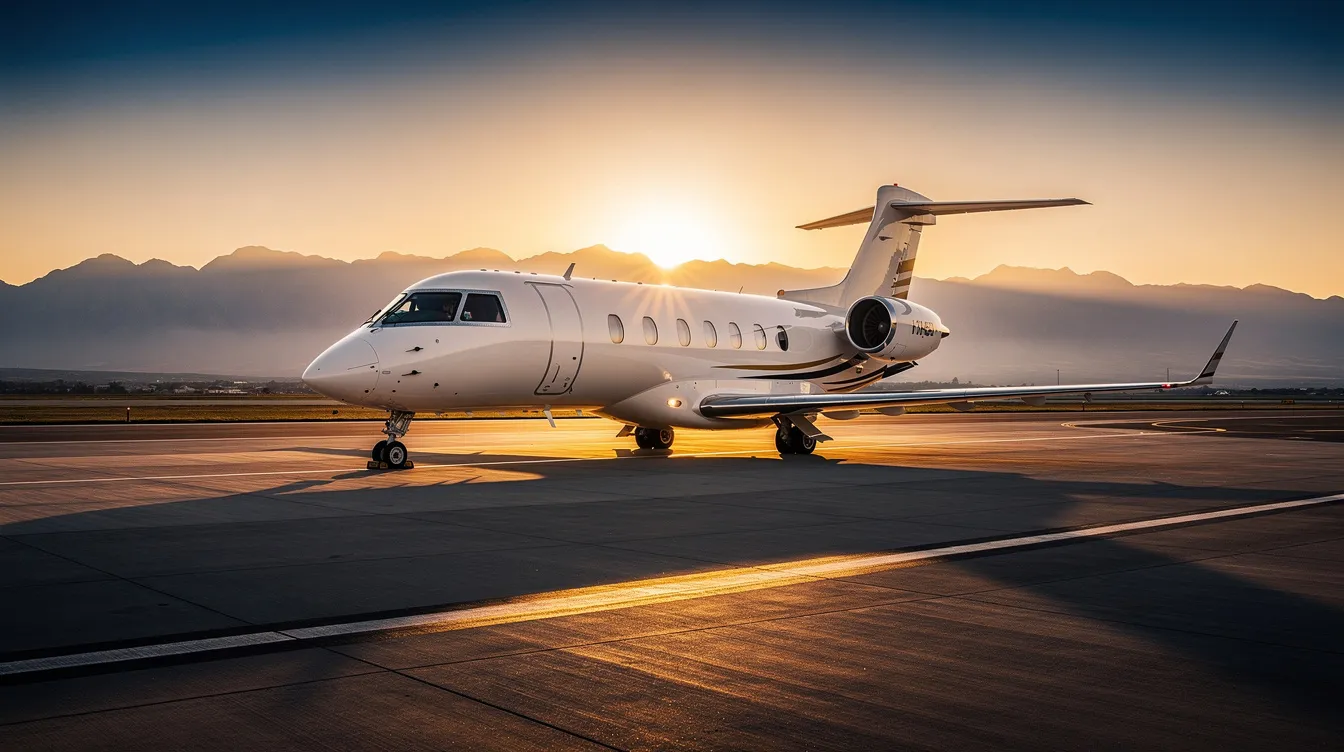
Choosing the right private jet operator is one of the most consequential decisions a frequent flyer can make. The operator behind your aircraft determines everything from pilot qualifications to maintenance rigor to the experience inside the cabin. This guide breaks down how private jet operators work, what safety standards to demand, how pricing actually functions, and how to match an access model to your travel patterns.
Strategic Advantages of Flying with Private Jet Operators
For executives and ultra-high-net-worth travelers, private jets represent a strategic tool that compounds time, privacy, and schedule control into measurable returns. A commercial round-trip day meeting from New York to Chicago can consume 14 or more hours door-to-door. By private aviation, that same trip shrinks to roughly six hours—reclaiming an entire workday. Private jet operators provide customized air travel solutions tailored to diverse clientele, and the advantages extend well beyond comfort.
Private flights eliminate commercial airport queues, security theater, and connection layovers, letting you save time on every leg of a trip.
Schedule control means departures align with your calendar, not an airline's, so you can choose the exact travel date and adjust a return date when plans change. Cancellations or itinerary shifts happen on your terms.
Privacy onboard enables confidential conversations, contract reviews, or simply uninterrupted rest—something no business class cabin can guarantee.
Access to thousands of smaller airports brings you closer to final destinations, cutting ground transit that commercial routes force.
A private jet operator is specifically an entity holding an FAA Part 135 or Part 91K certificate—meaning it actually flies, crews, and maintains the aircraft. This is distinct from brokers who arrange flights operated by someone else.
BlackJet operates as a premium private aviation company offering Jet Card access to a vetted network of multiple operators rather than owning a single fleet, combining flexibility with rigorous safety oversight to support flexible private travel.
How Private Jet Operators Actually Work
The private aviation ecosystem involves several distinct players, and understanding who does what protects both your safety and your money.
Aircraft owners hold title to the plane. They may be individuals, trusts, or corporations. Ownership alone does not make someone an operator.
Operators are the entities that hold FAA certificates, employ pilots, maintain the fleet, and log flight hours in their own name. Every legitimate charter operator must hold an FAA Part 135 Certificate for legal operations. Part 135 operators must meet specific safety and maintenance standards set by the FAA.
Part 91 governs purely private flights not flown for compensation. Part 91K applies to fractional ownership programs with stricter crew duty and rest rules. Part 135 covers on-demand private jet charter and some Jet Card flying where compensation is involved.
Aircraft management companies handle maintenance and operations for private plane owners who prefer not to manage day-to-day logistics themselves.
Direct operators own and control aircraft, while charter brokers source flights from various operators. Confirming operational control is vital when arranging private jet travel through brokers—you need to know who is actually flying the plane.
Real-world examples: NetJets and Flexjet operate under Part 91K as large fractional operators with in-house fleets, and many buyers evaluate them using dedicated resources on NetJets jet card cost and programs. Solairus Aviation operates under Part 135 as a management and charter operator. The operating carrier—not the marketing brand—determines safety standards, maintenance quality, and pilot training protocols.
Types of Private Jet Operators and Access Models
Travelers rarely "just pick a plane." They choose among distinct access models, each tied to specific operators and cost structures, which are laid out in detail in a broader private jet price list and options guide. The right model depends on how many flight hours you fly annually, your typical routes, and your tolerance for commitment.
Traditional private jet charter is on-demand, trip-by-trip pricing with no long-term contracts. On-demand charter flights allow booking flights without long-term obligations and invite a careful look at whether chartering a private jet is worth it for your routes and schedule. Best for travelers flying fewer than 25 hours per year. Jet charter brokers act as intermediaries who source aircraft and operators for clients, but you sacrifice pricing consistency and priority access.
Fractional ownership means buying 1/16 or more of a specific aircraft through providers like NetJets or Flexjet. Expect commitments of 50 to 100+ hours annually, significant capital outlay, monthly management fees, and contracts spanning five to ten years. This subscription model works for those flying 100+ hours who want guaranteed availability of a consistent cabin type.
Jet card programs offer prepaid access to private jets in blocks—typically starting at 25 hours of flight time. Jet cards provide flexibility for flight cancellations with short notice and often include guaranteed access, though notice windows or peak-day limits may apply depending on the program, so understanding jet card cost per hour is critical when comparing offers. Some jet card programs require a minimum commitment of $100,000, making it essential to understand jet card pricing and related costs alongside a broader view of 50 hour jet card cost and value. BlackJet's 25-hour and 50-hour programs fall into this category, providing fixed hourly rates across cabin types. Membership programs provide fixed hourly rates and access to aircraft networks.
Regional membership model providers like Jet Linx and Nicholas Air maintain locally based fleets with membership fees and strong footprints in specific U.S. regions. These work well for frequent flyers on domestic routes who want consistent crew and low repositioning costs, while some travelers even explore unlimited private jet flight memberships for maximum flexibility.
Outright aircraft ownership gives full control but carries the highest fixed cost burden—acquisition, depreciation, hangar, crew salaries, insurance, and maintenance, including substantial private jet pilot and crew costs. For most travelers flying 50 to 300 hours per year, jet cards or fractional programs with depreciation considerations deliver better utilization without the operational headaches.
Key Safety Standards and Certifications to Demand
Safety is the first filter when evaluating any private aviation provider. Choosing a private jet operator prioritizes safety over the lowest price options—because no cost savings justify compromised airworthiness. Private aviation safety relies heavily on regular independent audits and certification compliance.
FAA requirements for Part 135 and Part 91K operators include stringent pilot duty-time limitations, recurrent training mandates, and approved maintenance programs. Pilot experience standards typically exceed the legal baseline for safety in aviation; reputable operators require 1,200+ total flight hours minimum, with significant time-in-type on the specific aircraft model.
Third-party safety ratings indicate adherence to standards exceeding baseline regulatory requirements. The key frameworks include ARG/US ratings (Gold through Platinum), Wyvern Wingman certification, and IS-BAO Stages 1 through 3. The ARG/US Platinum rating indicates adherence to industry best practices and requires a two-day on-site audit. Wyvern Wingman certification requires rigorous safety audits and ongoing validation. IS-BAO Stage Three certification is recognized for aircraft operations safety, and IS-BAO certification is recognized as the international standard for aircraft operations. Only 5% of private jet operators hold both ARG/US Platinum and Wyvern Wingman certifications.
Always ask for the operating carrier's name, tail number, and current safety ratings before confirming any private flight. Flying internationally requires verified operator credentials and compliance with regulations in each jurisdiction you'll traverse.
Verification of the operator's financial stability is important for long-term commitments in private aviation. Insurance coverage is essential to protect passengers during private jet travel, and operators must carry adequate liability insurance, often starting at $50 million for light jets.
BlackJet's network only includes operators with robust safety oversight and modern safety management systems. This vetting—covering crew qualifications, historical performance, and SMS implementation—helps underline that private jets are a highly safe way to travel and is a core part of the Jet Card value, whether for small cabins or large-group aircraft like private jets for 50 passengers. Safety certifications such as ARGUS Platinum and WYVERN Wingman enhance trust in air travel providers across the BlackJet network.
Aircraft Categories: From Light Jets to Large Cabin Jets
The "right" operator often depends on the aircraft type you need for a given mission. Operators must match the aircraft type to the specific mission requirements of clients, and aircraft age and configuration impact the suitability for each trip.
Light jets such as the Phenom 300 and Citation CJ4 seat four to seven passengers. Light jets have an average range of 1,700 miles, making them ideal for regional business travel like New York to Boston or Dallas to Houston. Light jets can access hundreds of airports not available to larger jets, dramatically reducing ground time and often rank among the best small private aircraft options for short-haul missions.
Turboprop aircraft like the King Air 350 cruise at 300+ mph and serve shorter routes cost-effectively, particularly into smaller airfields, and often appear among the cheapest private jet and turboprop options and other affordable private plane options for budget-conscious travelers.
Midsize and super midsize jets—think Citation XLS+ or Challenger 350—carry seven to nine passengers. Mid-size jets typically seat 5 to 9 passengers for 2,000 to 3,500 miles, covering routes like New York to Aspen or Chicago to Napa.
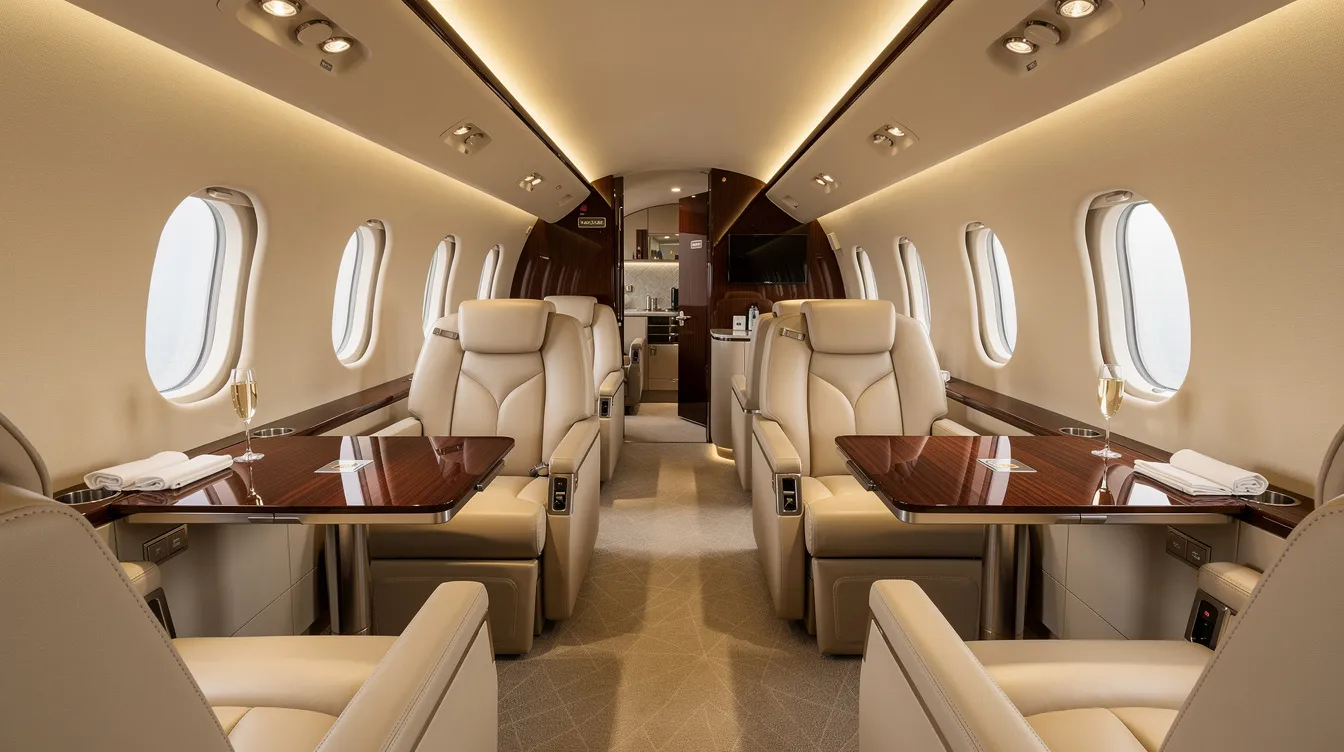
Large cabin jets such as the Gulfstream G450 and Bombardier Global 6000 comfortably accommodate 10 to 14 passengers with intercontinental range. Large-cabin jets can fly over 7,000 miles non-stop, handling New York to London or Los Angeles to Honolulu and are common choices when evaluating 12-seater private jet costs and options. Large-cabin jets include amenities like private lavatories and internet for productive international flights.
Some private jet operators specialize by cabin class-light-only fleets versus large-cabin-focused operators—which affects availability, pricing, and expertise, particularly for those considering the largest private jets for sale or charter for global missions.
A BlackJet member might use a light jet for a Tuesday morning hop from Teterboro to Miami and a large cabin jet for a Friday transatlantic trip to London, all under the same Jet Card program with a single point of contact.
Comparing Leading Private Jet Operators and Networks
The industry is dominated by several large brands alongside hundreds of smaller niche operators, and many travelers compare them using rankings of the top private jet companies for luxury travel. The Top 30 private jet companies flew 1,725,728 hours in 2025, capturing 30.84% of all flight hours that year.
NetJets and Flexjet ranked first and second for five consecutive years. NetJets increased annual flying by 176,255 flight hours since 2021, while Flexjet's annual flight hours increased by 106,206 over the same period. Both operate as fractional ownership providers with massive in-house fleets built around predictable business travel patterns and are frequently evaluated alongside 10 million dollar private jet ownership and access options and featured among the top private jet companies for luxury service.
Vista-umbrella providers like VistaJet and XO function as a global network offering large cabin jets and fast app-based private jet charter, often relying on multiple operators across their fleet. FlyExclusive was named North America's Leading Private Jet Charter Company for 2026.
Jet Linx and Nicholas Air serve as regional membership-based private aviation providers with strong footprints in select U.S. regions—Jet Linx through its base network and Nicholas Air through strength in the Southeast and Midwest.
Broker platforms like Victor, Magellan Jets, PrivateFly, and Paramount Business Jets sit between travelers and operators, aggregating aircraft across many fleets; Paramount Business Jets also emphasizes transparent, itemized pricing and operator disclosure. Their quotes often resemble the structures outlined in guides on how much to rent a private jet and broader private jet charter pricing fundamentals. Aviation experts at these firms search and source options, but the operating carrier still controls the flight experience.
BlackJet's model contrasts by offering Jet Card access that prioritizes consistency, safety vetting, and transparent rates while leveraging multiple operators for better availability. The result is a single membership that spans the world without tying you to one company's fleet limitations.
Pricing, Flight Hours, and True Cost of Private Jet Access
Most prices in private aviation are quoted per flight hour, but the total cost of any specific trip depends on the access model, aircraft category, and program structure, whether you're exploring ultra-luxury cabins, comparing private jet pricing in new regions such as India and private jet prices in rupees, or reviewing the cheapest private aircraft options. Private jet trips require evaluating regulatory compliance and transparency in pricing before committing to any spend.
Realistic hourly rate ranges: light jets run approximately $3,000 to $5,000 per hour, midsize $5,000 to $8,000, and large cabin jets $8,000 to $15,000+, plus taxes and applicable fees. Private jet quotes vary significantly based on included services and fees, so travelers should compare jet card cost per hour when evaluating programs.
Typical annual flight hours profiles: 10 to 20 hours suits occasional leisure travelers, 25 to 75 hours fits core Jet Card users, and 100 to 300+ hours aligns with fractional or shared-ownership candidates, making it important to understand jet card pricing structures and benefits and how 100-hour Jet Card cost structures work before committing.
Fractional ownership layers on capital commitment, monthly management fees, and hourly operating fees beyond the flight cost itself, but it can also offer meaningful tax benefits of fractional jet ownership. This model makes financial sense mainly above roughly 100 hours per year.
Private jet charter and Jet Cards price in repositioning, de-icing, overnight crew charges, and international fees. For example, a New York to Miami flight on a light jet (~2 hours) might run $15,000 to $19,000 before surcharges, while chartering a small plane on shorter routes may still trigger minimums and fixed fees. A Los Angeles to Las Vegas hop (~1 hour) could push higher due to daily minimums and landing fees. Operators must provide itemized quotes to avoid hidden charges in private jet pricing and should be evaluated against a broader private jet price list of costs and options. Typical services offered by private jet operators include customized catering and ground transportation coordination.
BlackJet's approach: prepaid jet cards in 25-hour and 50-hour blocks with transparent, carbon-neutral hourly rates that lock in budgeting for discerning travelers, exemplified by its BlackJet 25+ Hour Jet Card and strategies for flying private more affordably. No surprise fuel surcharges, no opaque fee structures.
Working with Multiple Operators vs. a Single Fleet
High-frequency flyers often debate whether to align with one operator's fleet or use a Jet Card that taps into multiple operators. Both approaches have merits, and the right choice depends on your priorities.
A single-operator relationship delivers consistent cabins, standardized amenities, and familiar crewmembers—especially valuable for clients hosting business partners or branded client trips.
Access to multiple operators offers better aircraft availability on peak days, more choice among light jets and large cabin jets, and route flexibility spanning North America and Europe. Personalization in services enhances the customer experience in private aviation, whether you're buying out the aircraft or simply purchasing a seat on a private jet, and a multi-operator model can tailor each flight to its specific trip requirements.
Cost optimization comes from mixing providers: use regional operators for short domestic hops where cost savings matter, and larger international specialists for transatlantic routes where range and cabin size are paramount.
BlackJet's Jet Card model is built specifically to leverage multiple operators behind the scenes while providing a single point of contact, unified safety standards, and consistent personalized service expectations, mirroring the broader benefits of its premium private jet card programs and flexible options like leasing a private jet for longer-term needs.
Consider this scenario: a member flies New York to Miami on a light jet Monday morning and Los Angeles to London on a large cabin jet the following Friday—all under the same BlackJet program, one invoice, one team managing every detail.

Technology, On-Demand Booking, and Real-Time Support
Modern private aviation is increasingly defined by digital tools as much as aircraft hardware. The best operators and Jet Card providers compete on how seamlessly they merge technology with hands-on service.
Mobile booking platforms enable instant flight confirmations, and users can book private jets within minutes using mobile apps. Mobile platforms often provide real-time pricing and availability, giving members complete transparency before they commit. Some platforms allow last-minute bookings for urgent travel needs, while mobile booking tools enhance flexibility for changing travel plans.
What matters behind the interface: live operations teams, proactive weather rerouting, ground handling coordination, and crew scheduling. Operational flexibility is crucial for handling weather disruptions and mechanical issues in aviation. Operators must provide timely updates during flight disruptions to keep travelers informed.
Real-time flight support is available 24/7 for travelers through BlackJet's platform, combining digital booking tools with human support. Real-time support enhances flexibility for last-minute changes, and real-time support is crucial for managing unexpected cancellations—ensuring a member is never stranded without options, whether on U.S. routes or international trips such as private jet charters in Karachi.
Connectivity expectations onboard continue to rise. Many operators now offer Wi-Fi, and some are adopting Starlink-level high-speed internet, enabling productive business travel at 40,000 feet, which pairs naturally with tech-forward models such as unlimited private jet flight memberships.
Sustainability and Carbon-Neutral Private Aviation
The environmental impact of private jets is real, and discerning travelers increasingly demand that their operators address it with substance rather than slogans. Sustainable aviation practices are becoming essential in private aviation.
Operators track fuel burn per flight hour and use that data to calculate carbon dioxide emissions for each leg.
Common mitigation approaches include carbon offsets verified through credible third-party registries, sustainable aviation fuel blends, and more efficient routing to reduce empty-leg repositioning flights.
Carbon-neutral flights are increasingly offered by private aviation companies. BlackJet structures its programs so that every private flight is carbon neutral by default, with offsets included in the Jet Card pricing—at no extra cost to the member.
Claims should be specific and verifiable. Look for operators who name their offset registries, publish fuel burn data, and invest in SAF procurement rather than offering vague "green" promises.
How to Choose the Right Private Jet Operator for Your Needs
The "best" operator or program depends entirely on where, how often, and with whom you fly. Here is a practical search framework.
For executives: calculate your typical annual flight hours, map your primary routes (New York to London versus Los Angeles to San Francisco), identify your preferred aircraft category, and assess your need for confidentiality or enhanced security.
For families and leisure travelers: evaluate pet policies, baggage allowances for items like skis and golf clubs, child seating options, and seasonal travel patterns around holidays and school breaks.
Compare safety accreditations across providers, demand transparency on who operates each flight, and review contract terms carefully—peak days, cancellation windows, and international surcharges all affect your money and experience.
Start with a trial: book on-demand charter flights or a smaller Jet Card block of 25 hours before committing to large fractional ownership stakes. This lets you evaluate the operator's responsiveness, aircraft condition, and crew quality firsthand.
BlackJet is an optimal starting point for frequent travelers who want predictable, carbon-neutral access across multiple vetted operators without the complexity—or capital requirements—of ownership, especially for those comparing the best jet cards for frequent flyers.
Frequently Asked Questions about Private Jet Operators
What is a private jet operator?
A private jet operator is a company that holds the FAA Part 135 or Part 91K certificate, responsible for flying, crewing, maintaining, and managing private aircraft operations. They differ from brokers who arrange flights but do not operate the aircraft.
How do I verify the safety of a private jet operator?
Ask for the operator’s certificate number, insurance coverage, pilot qualifications, and third-party safety ratings such as ARG/US Platinum, Wyvern Wingman, or IS-BAO certification. Only about 5% of operators hold both ARG/US Platinum and Wyvern Wingman certifications.
What are the different access models for private jet travel?
Common models include on-demand charter (pay per trip), jet card programs (prepaid blocks of flight hours), fractional ownership (buying a share of an aircraft), and outright ownership. Each suits different flight frequency and flexibility needs.
How does pricing typically work with private jet operators?
Pricing is usually hourly based and varies by aircraft category, route, and included services. Light jets range from $3,000 to $5,000 per hour, midsize jets $5,000 to $8,000, and large cabin jets $8,000 to $15,000 or more.
Can I book last-minute private jet flights?
Yes, many operators and Jet Card programs offer last-minute booking options, often supported by mobile booking platforms with real-time availability and pricing.
What safety certifications should I look for?
Look for ARG/US Platinum, Wyvern Wingman certification, and IS-BAO Stage Three certification. These indicate adherence to rigorous safety and operational standards.
Are private jet flights sustainable?
Many operators, including BlackJet, offer carbon-neutral flights through verified carbon offsets and sustainable aviation practices, included at no extra cost to the traveler.
What types of aircraft are available?
Operators provide a range from light jets (ideal for short regional hops) to large cabin jets (suited for long-range international flights), plus turboprops for cost-effective short trips.
How do I choose the right operator?
Consider your travel frequency, typical routes, aircraft preferences, safety standards, and flexibility needs. Trial bookings or smaller Jet Card blocks can help evaluate service quality.
What is the difference between an operator and a broker?
An operator owns and flies the aircraft under regulatory certificates. A broker arranges flights by contracting with operators but does not control the flight or aircraft directly.
BlackJet Jet Cards: A Smarter Path into Private Aviation
BlackJet bridges the gap between ad-hoc charter and full ownership, offering a Jet Card membership model that delivers the consistency of a fleet program with the flexibility of a multi-operator network while complementing traditional private jets for sale in the UK and other ownership paths.
Programs include 25-hour and 50-hour Jet Cards with fixed hourly rates across cabin types, powered by a curated network of private jet operators who meet strict certification and audit standards.
Safety commitment: BlackJet partners only with operators holding robust credentials—with full operator disclosure available on request. Only 5% of operators hold both ARG/US Platinum and Wyvern Wingman certifications, and BlackJet's vetting ensures its network reflects that top tier.
Convenience: 24/7 booking via mobile and desktop, real-time support from a dedicated team, and guaranteed or priority access even during peak travel dates.
Every BlackJet flight is carbon neutral through built-in offsets, giving members an elevated yet responsible way to fly across domestic and international routes.
Explore BlackJet membership, request a private consultation, or review sample itineraries tailored to your annual flight hours and routes. The right partner doesn't just get you there—it redefines how you move through the world.


 Sign up with google
 Sign up with Apple