
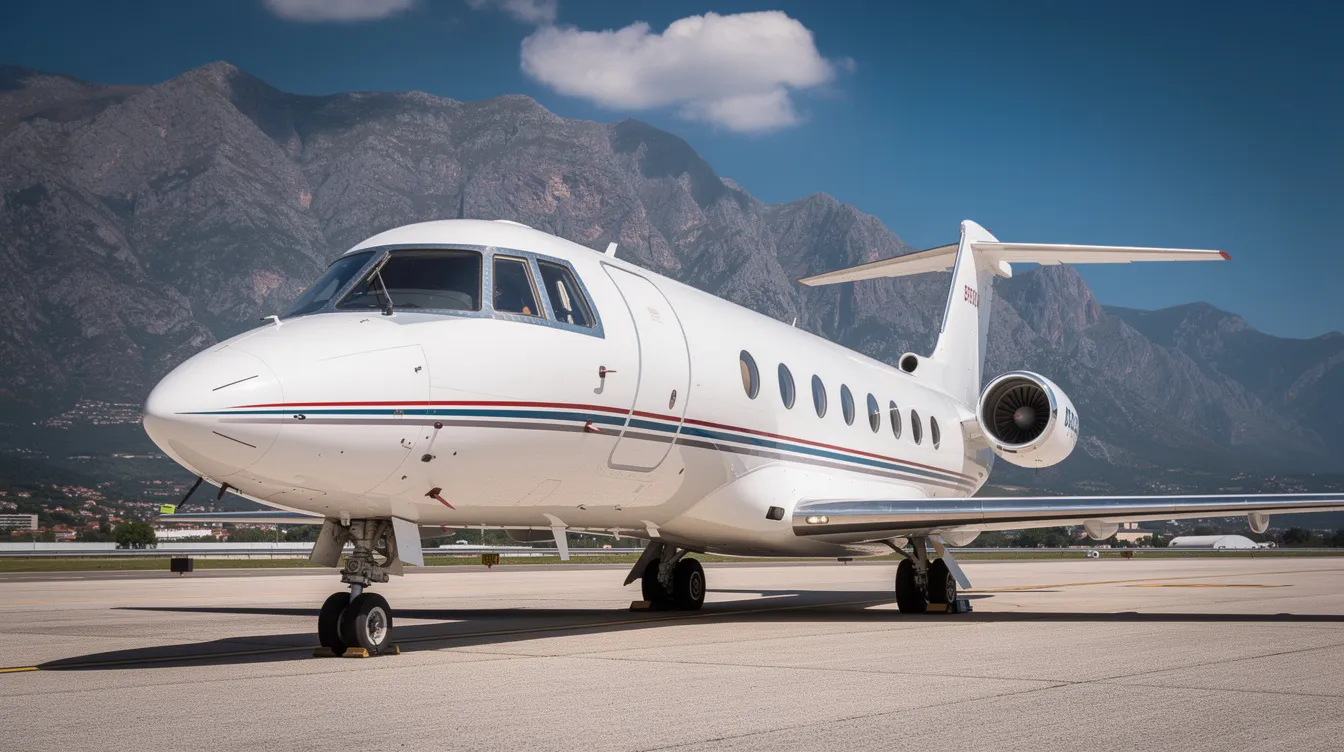
The allure of old jets for sale is undeniable. A well-maintained 1980s Learjet or a classic Gulfstream GIII carries the kind of character that no factory-fresh airframe can replicate. And with asking prices that sit at a fraction of new-production models, it's easy to see why ambitious buyers keep circling these listings in 2027.
But purchasing a vintage aircraft is not the same as buying a vintage watch. The sticker price is just the beginning, and what comes after—maintenance exposure, regulatory compliance, crew costs, and downtime—often reshapes the equation entirely. This guide walks you through where to find old jets for sale today, what they actually cost to own and operate, and when a Jet Card through BlackJet is the smarter path to private aviation.
Where to Find Old Jets for Sale and Ownership Alternatives
Quick Answers: Where to Find Old Jets for Sale Today
In 2027, three forces drive buyers toward vintage business jets. First, cost savings: classic airframes built between the late 1960s and early 2000s regularly sell for 85–95% below the list price of comparable new-production models. A well-maintained 1985 Learjet 35A might list for under $700,000, while a new light jet commands $10 million or more. Second, nostalgia and pride of ownership—certain buyers have deep affinities for specific designs, heritage interiors, and the craftsmanship of a particular era. Third, with new business jet backlogs stretching into 2028 and beyond, some buyers simply cannot wait and turn to the pre-owned market for immediate solutions.
Yet there is a parallel path that an increasing number of frequent flyers choose first: structured access through a Jet Card. Rather than purchasing and maintaining an aging aircraft, Jet Card holders pay only for the hours they fly—while a provider like BlackJet handles safety, maintenance, and fleet management behind the scenes. Understanding both paths is essential before committing capital to any aircraft purchase.
Here is a snapshot of what the old jets for sale market looks like right now, but you should also understand the broader private jet price list, costs, and access options before committing to ownership.
Typical "Old Jet" Listings in 2027
Aircraft example | Typical asking price | Key factors affecting price |
|---|---|---|
1985 Learjet 35A | $500,000–$900,000 | Airframe hours, engine program enrollment, and avionics condition |
1992 Cessna Citation II | Often under $600,000 | Engine status, maintenance records, and equipment |
1989 Hawker 800A | $1.1 million–$1.5 million | Equipment, including RVSM and ADS-B compliance |
1979 Dassault Falcon 20F | Under $1 million for average-condition examples; up to $3–4 million for heavily upgraded aircraft | Engine upgrades, glass cockpit, and airframe condition |
1981 Gulfstream GIII | $1.5 million–$4 million | Overhaul status and interior refurbishment |
These figures are indicative examples, not current verified offers. Confirm availability, records, specifications, and pricing directly with the seller or broker.
Where Old Jets for Sale Are Found
Aviation marketplaces host listings for used jets, including practical details and seller contacts. The main channels include:
Online aircraft marketplaces — Platforms like GlobalAir, AvBuyer, fyiAero, and AeroClassifieds aggregate vintage jet listings with specifications, photos, and pricing information. Some sellers even list aircraft on platforms as broad as eBay, though dedicated aviation sites offer better tools for evaluating records and condition.
Specialty brokers — Brokers who focus on 1970s–1990s business jets maintain off-market networks and guide buyers through inspections, negotiation, and regulatory compliance. They are especially valuable for rare or low-production models.
Auction houses and sealed-bid events — Less common for jets than for piston-engine aircraft, but government surplus auctions, corporate liquidations, and court-ordered sales occasionally surface bargains. Many older jets are available through government surplus auctions, though these carry higher risk due to limited inspection windows and sometimes incomplete documentation.
Ownership vs. Jet Card: At a Glance
Before you dive deeper into listings, here are the key decision triggers:
If you fly under 150–200 hours per year, ownership of an old jet is typically cost-inefficient once you factor in fixed costs—hangar fees, insurance premiums, crew salaries, and scheduled maintenance. A Jet Card program is often more economical at this utilization level.
If you want predictable costs and availability, a Jet Card avoids direct aircraft downtime and many budgeting surprises inherent in aging airframes. Jet cards offer prepaid access to private jets across multiple cabin types, with common programs available in 25-hour and 50-hour options.
If you want to restore or own a specific vintage model for personal, brand, or heritage reasons—say, a 1980 Gulfstream GIII that you flew early in your career—purchasing may still make sense. Just go in with eyes open about the full financial picture.
BlackJet does not sell aircraft. Instead, it provides structured access to light, midsize, and large-cabin jets—including older but fully modernized airframes—through prepaid Jet Card hours. For many travelers, this delivers the experience of private aviation without the asset risk and operational burden that buying a legacy private jet inevitably brings, given its higher maintenance exposure and operational liabilities.
Types of Old Private Jets for Sale and What They Really Cost
When the aviation market refers to "old jets," it generally means aircraft built between the late 1960s and early 2000s. Many of these airframes are still flying safely in 2027 after engine overhauls, structural inspections, and avionics retrofits. But the gap between what you pay at closing and what you spend over the following years is where most buyers get surprised.
Aircraft categories include helicopters, fixed-wing, and jets—and even within the jet category, the range of what's available on the resale market is enormous, from vintage business jets to the cheapest private aircraft options aimed at budget-conscious flyers. The ACH145 is categorized as a helicopter, the 1974 Beechcraft B-60 Duke is a fixed-wing aircraft, and the 2002 Cessna 172SP is a single-engine aircraft. When buyers search for old jets for sale, they're typically looking at turbine-powered business jets—though occasionally, ultralight jet designs like the 2016 Sonex Aircraft Subsonex JSX-2, which is a jet aircraft, blur the line between categories.
Here's what the realistic landscape looks like across three cabin classes, and how that compares to the cheapest private jet options available today when purchase and operating costs are fully considered.
Light Jets (1970s–1980s)
Models like the 1982 Cessna Citation I (501SP), 1987 Beechcraft Beechjet 400A, and 1985 Learjet 35A populate this segment.
Asking prices: $350,000–$900,000
What drives price: Total airframe time, engine cycles remaining before overhaul, engine program enrollment (JSSI, OEM programs like Williams TAP), and whether avionics have been upgraded from original analog panels to modern glass cockpits (Garmin G5000, Collins Pro Line 21)
Hourly operating cost: A Learjet 35A runs approximately $1,700 per flight hour at 200 hours annually when engine programs are favorable, but climbs to roughly $4,160 per hour at 250 hours annually when you spread fixed costs differently across fewer missions (GlobalAir)
Annual ownership budget: Approximately $900,000 per year for a Learjet 35A at 200 hours, escalating past $1.4 million if you double utilization
Engine condition significantly affects the value of an older jet, just as aircraft type and usage patterns shape Jet Card cost per hour in private aviation. A light jet with mid-time engines enrolled in a comprehensive program might sell for $200,000 more than the same model approaching overhaul with no coverage.
Midsize Jets (1980s–1990s)
The 1989 Hawker 800A and 1993 Cessna Citation III are representative of this class.
Asking prices: $1.1 million–$1.5 million for well-equipped examples; some recent Hawker 800A sales closed near $1.495 million
Annual operating budget: Around $832,735 per year for a Hawker 800A at approximately 250 hours annually, a figure that many buyers compare against comprehensive Jet Card pricing structures before deciding to own.
Hourly variable costs: Roughly $2,100–$2,200 per flight hour
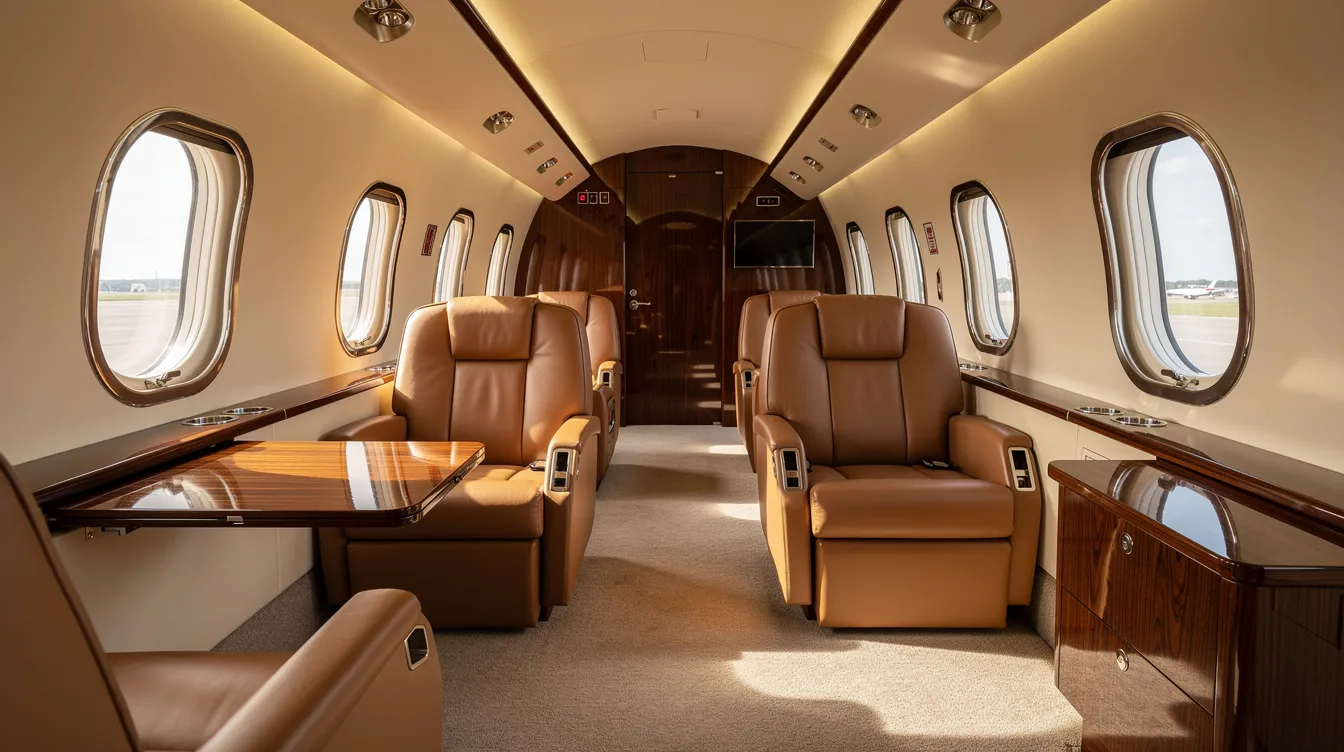
Charter flights can accommodate various passenger capacities, and midsize jets typically seat 7–9 passengers. Private jets provide luxury amenities for travelers, including enclosed lavatories, refreshment centers, and fold-out work surfaces. But on a privately owned 30-year-old airframe, maintaining those amenities requires ongoing cabin refurbishment investment.
Large-Cabin Jets (1970s–1980s)
Heritage aircraft like the 1979 Dassault Falcon 20F and 1981 Gulfstream GIII represent the high end of vintage jet ownership.
Asking prices: Under $1 million for poor-condition examples; $3–4 million when heavily overhauled with modern engines, glass cockpits, and refurbished interiors
Operating costs: $4,000–$6,000+ per flight hour due to higher fuel burn and maintenance complexity
Market context: Pre-owned large-cabin jet transaction volume fell approximately 38% between August and October 2026 compared to the same period in 2025, increasing negotiation power for buyers
Legacy jets often consume more fuel than modern aircraft, increasing operational costs substantially—especially on large-cabin types with older turbofan engines designed in an era when fuel efficiency was secondary to performance.
The Hidden Costs Buyers Must Budget For
The purchase price of older jets is often a fraction of ongoing operational costs. Here's what catches buyers off guard:
Engine overhauls: Full overhaul cycles on older turbofan engines can run hundreds of thousands of dollars per engine.
Obsolete parts: Jets over 20 to 30 years old often suffer from obsolete parts and long lead times, forcing owners into costly aftermarket sourcing or custom fabrication.
Calendar-based aging: Components deteriorate even when unused—seals, avionics modules, and structural elements corrode or degrade with time.
Avionics retrofits: Adding ADS-B Out compliance (mandatory in U.S. controlled airspace since January 1, 2020, per 14 CFR §91.225 and §91.227), RVSM certification for flight above FL290, and modern autopilot or flight management systems can cost $200,000 to over $1 million.
Missing logbooks: Missing logbooks can complicate the aircraft purchase process significantly. Gaps in maintenance records reduce resale value, may affect engine program enrollment, and can make insurance more difficult to obtain.
Older jets may lack modern avionics required for current airspace regulations, and older private jets often require specialized maintenance and inspections due to age. Private jets must comply with FAA safety regulations, and aircraft undergo regular maintenance checks for safety compliance. Pilots must have specific certifications for private jet operation, adding crew qualification costs to the ownership equation.
A compliant pre-purchase inspection is essential before closing a deal. This involves a thorough evaluation performed by a qualified maintenance facility—typically costing $25,000 to $75,000 depending on aircraft size—that examines structural integrity, corrosion, engine health, avionics functionality, and compliance with all outstanding Airworthiness Directives. Older jets require careful evaluation of airworthiness and maintenance history before any offer is received or accepted.

Mission Matching: When Does Ownership Make Sense?
Consider an entrepreneur flying New York to Miami 20 times per year. That's roughly 40 flight hours annually on a 1990s Citation—well under the 200-hour threshold where ownership economics start to work. The annual fixed costs alone (hangar, insurance, crew on retainer) would likely exceed $400,000 before a single gallon of fuel is burned. A BlackJet 25-hour Jet Card covering a similar cabin class provides the same mission capability at a fraction of the commitment, with no aircraft-management responsibilities.
For transcontinental or transatlantic missions—Los Angeles to Honolulu, New York to London—older large-cabin jets with the range and equipment to handle oceanic routes can make sense for owners flying 300+ hours annually, though travelers moving larger groups often consider the best private jet for around 20 passengers instead of buying a legacy airframe. But even here, the owner bears the burden of ensuring MNPS compliance, oceanic survival equipment, and high-altitude certification—all areas where a Jet Card fleet managed by professionals removes friction.
Private jet charters offer flexible travel options and can be a useful supplement even for owners—chartering a different cabin class when their own aircraft is in maintenance or when the mission demands more range or capacity, or even just buying a single seat on a private jet when that better fits the trip profile.
The bottom line: the sticker price on an old jet can be deceiving. Lifetime cost of ownership, inspection findings, and downtime can easily exceed the initial purchase price many times over, which is why an increasing number of high-net-worth travelers now favor Jet Cards over buying aging aircraft.
How BlackJet Compares to Owning an Old Jet: Safety, Sustainability, and Jet Cards
Instead of tying seven figures of capital to a 30–50-year-old airframe—and accepting the operational rights and responsibilities that come with it—BlackJet members use premium private Jet Card programs for on-demand access to multiple aircraft types. BlackJet manages safety certification, fleet maintenance, regulatory compliance, and sustainability in the background, so members focus on where they need to be and when—very much in line with the best Jet Cards for frequent flyers and their benefits.
This isn't simply a convenience play. It's a fundamentally different risk profile. An owner of a 1989 Hawker 800A shoulders every mechanical surprise, every regulatory deadline, and every insurance renewal. A BlackJet Jet Card member receives access to aircraft that meet applicable standards, subject to program terms and availability, regardless of the airframe's birth year.
BlackJet's Jet Card Structure
Prepaid blocks of hours usable across light, midsize, and large-cabin jets. Jet cards provide access to multiple cabin types so members can match aircraft to mission without owning multiple airframes, with Jet Card membership cost structures designed for predictable spending.
Transparent hourly rates that include specified services and availability within defined notice windows, making it easier to compare Jet Card cost per hour across providers and understand overall Jet Card pricing and benefits. For program details, see BlackJet Jet Card Pricing.
24/7 digital booking tools: Jet Card users benefit from 24/7 digital booking tools via mobile app and web platform, with real-time support included for last-minute changes. Private jet charters can be booked digitally 24/7, and charter services often include real-time flight support.
To understand the full mechanics, this guide explains how Jet Cards work in practice and complements broader resources on Jet Card pricing structures and benefits.
Safety and Certification vs. Private Ownership
Safety certifications are essential for private aviation companies, and this is where the gap between organized fleet access and individual old-jet ownership becomes stark.
BlackJet partners with operators holding safety ratings such as ARGUS Platinum or Wyvern Wingman—third-party auditing programs that assess operator safety culture, maintenance practices, pilot training, and dispatch reliability, similar to standards followed by top private jet companies worldwide.
Older jets within the BlackJet network must adhere to applicable maintenance schedules and inspections. Private aviation includes safety measures like terrain awareness systems, TCAS, and enhanced ground proximity warning on appropriately equipped aircraft.
By contrast, an individual owner of a 1980s or 1990s jet must hire maintenance expertise, schedule major inspections, manage Service Bulletins and Airworthiness Directives, and coordinate with the FAA—all while the aircraft may sit idle, generating hangar costs.
The verification burden—ensuring every AD is current, every inspection window is met, and every crew member's training is up to date—consumes significant time and management attention that many owners underestimate before purchase.
Sustainability and Carbon-Neutral Flights
Sustainable aviation aims to reduce carbon emissions across the industry, and the aviation sector has committed to net-zero emissions by 2050. BlackJet's sustainability approach includes:
BlackJet states that its flights will be offset to carbon-neutral status by default in 2027, at no extra charge to the member. Carbon-neutral flights are a key sustainable aviation practice.
This is achieved through verified carbon offset projects and, when available, the use of Sustainable Aviation Fuel (SAF). SAF can reduce lifecycle emissions by up to 80% compared with conventional jet fuel.
Innovative technologies are essential for sustainable aviation advancements, and BlackJet tracks emerging solutions as they become commercially viable.
Compare this with the typical environmental profile of a privately owned older jet: legacy engines can burn more fuel per nautical mile, and an owner would need to arrange and fund any offset program independently. See the world’s best private jets emphasizing efficiency and advanced technology for further context.
Owning an Old Jet vs. BlackJet Jet Card
Consideration | Owning an old jet | BlackJet Jet Card |
|---|---|---|
Capital | Aircraft purchase plus maintenance reserves | Prepaid flight hours rather than aircraft acquisition |
Aircraft choice | One aircraft type based at a home airport | Access across cabin classes, subject to program terms |
Downtime | Owner manages scheduled and unscheduled maintenance | Provider coordinates alternative aircraft subject to availability |
Operating responsibilities | Owner manages crew, compliance, insurance, and maintenance | Operational management is handled through the operator network |
Sustainability | Owner arranges offsets, if desired | Carbon-neutral flights included according to BlackJet's stated program |
Safety oversight | Owner oversees aircraft compliance and operator arrangements | Operator qualifications and safety oversight are part of the managed access model |
Use Cases: Jet Card in Action
Scenario A — The Private Equity Managing Partner
A managing partner flies New York to Dallas to San Francisco twice monthly. That's roughly 20 round-trip segments per month, totaling approximately 160–200 flight hours annually—a utilization level where a 100-hour Jet Card cost analysis becomes particularly relevant. Owning a 1990 Hawker 800A at a $1.2 million acquisition cost plus $830,000 in annual operating costs means spending over $2 million in year one alone, before unexpected maintenance or avionics upgrades. Many travelers compare this with the cost and value of a 50 Hour Jet Card. A 50-hour BlackJet Jet Card, renewed as needed, offers midsize-cabin access at predictable per-hour rates without aircraft depreciation risk, while the BlackJet 25+ Hour Jet Card offers a lower initial commitment.
Scenario B — The Family with Seasonal Travel
A family of four plus elderly parents flies regionally to Aspen in winter and internationally to the South of France in summer, sometimes needing aircraft comparable to large private jets suitable for 20 passengers when extended family or friends join. Rather than owning a single mid-cabin aircraft that may lack the range for transatlantic legs or the cold-weather equipment for Rocky Mountain operations, Jet Card users can choose a light jet for the 90-minute Aspen hop and a large-cabin jet for the eight-hour transatlantic crossing, subject to aircraft availability and program rules. No second aircraft purchase or second hangar is required, and there is no need to manage the readiness of a decades-old airframe. Groups can also consider private jets configured for up to 50 passengers when needed.
Frequently Asked Questions About Old Jets for Sale
Are old private jets for sale a good investment?
An older jet can suit a buyer who flies frequently, values a particular aircraft, and can budget for maintenance, crew, insurance, hangar fees, and upgrades. The purchase price may be only a fraction of total ownership costs. Compare the full annual budget and expected utilization with alternatives such as charter or a prepaid Jet Card before committing.
What should I inspect before buying a vintage jet?
Arrange a compliant pre-purchase inspection with a qualified maintenance facility. Review complete airframe, engine, and avionics logbooks; engine condition and overhaul status; maintenance history; applicable Airworthiness Directives; and compliance with current airspace requirements. Missing records or obsolete components can affect airworthiness, insurability, resale value, and the cost of bringing an aircraft up to standard.
How much does it cost to operate an old jet?
Costs vary by aircraft, condition, utilization, and mission. In addition to fuel, budget for crew, insurance, hangarage, scheduled and unscheduled maintenance, engine reserves, parts, and avionics upgrades. These expenses can exceed the aircraft’s purchase price over time, so obtain an independent operating-cost estimate before making an offer.
Is a Jet Card better than buying an older private jet?
A Jet Card may be a better fit for travelers who fly fewer than roughly 150–200 hours a year or prefer predictable costs without managing an aircraft. BlackJet Jet Cards provide prepaid access to multiple cabin types, 24/7 digital booking, and real-time support. Ownership may make sense for high-utilization buyers who want a specific aircraft and are prepared to manage its operating responsibilities.
Are older private jets safe to fly?
An aircraft’s age alone does not determine whether it is safe. Airworthiness depends on its maintenance, inspection, and repair history, equipment, and regulatory compliance. Verify the aircraft and operator, confirm required pilot qualifications, and ensure maintenance is current. With a Jet Card, ask about operator safety certification and the provider’s aircraft standards.
Can a Jet Card offer more sustainable private flights?
BlackJet includes carbon-neutral flights through verified carbon offsets and may use Sustainable Aviation Fuel when available. SAF can reduce lifecycle emissions by up to 80% compared with conventional jet fuel, though availability varies by location. Compare this managed approach with the fuel efficiency and emissions plans of an older jet you are considering buying.
Your Next Step
If you're currently browsing old jets for sale and weighing the numbers, a short conversation can clarify whether acquiring a vintage aircraft or joining a Jet Card program will better serve your 2027 travel profile—in terms of cost, safety, sustainability, and overall experience.
Elevate your travel—effortlessly. With BlackJet, private flight isn't reserved for a select few. It's accessible on your terms through Jet Card programs built on rigorous safety standards, carbon-neutral performance, and flexibility. Explore BlackJet's Jet Card program and discover how refined, meaningful travel becomes your new standard.